REVIEW · MOAB
Arches National Park Back Country Adventure from Moab
Book on Viator →Operated by Adrift Adventures · Bookable on Viator
Arches gets a back door. This Jeep-based backcountry Arches adventure from Moab brings you past the usual viewpoints and into off-pavement angles, with air-conditioned comfort and stops that feel like insider country. Along the way, you’ll also roll through the newer Utah Raptor State Park area to spot dinosaur tracks, take in the La Sal Mountains, and learn why this whole place forms the way it does.
What I like most is the mix of big-view arches and small moments, like getting time at the Windows area and then bouncing down back roads for the kind of views you can’t casually stumble into. I also love that the tour is paced for photos and short walks, not a forced march. And if you’re in the right Jeep with a guide like Ric Ortera, Mark, Bill, or Karl, you’ll feel like someone is translating the scenery into stories fast.
One drawback to weigh: it’s bumpy. You’ll be off-road in an elevated 4×4 on rockier terrain, and it’s not recommended if you have motion sickness or vertigo.
In This Review
- Key things that make this tour worth your time
- Backcountry Arches from Moab: how the experience actually feels
- Entering Arches through the Willow Springs back door
- Utah Raptor State Park and the dinosaur-track moment
- The salt-bed idea: why arches show up here
- Eye of the Whale and the backcountry stops you usually miss
- Windows Section and other photo-friendly viewpoints
- Sand Dune Arch Trail: a short walk with big payoff
- The Jeep Rubicon advantage: air-conditioning, seat rotation, and comfort
- What to expect from the guide (and why it changes the day)
- Cost and value: what $210 buys you in Moab time
- Who this tour is best for
- Tips to make your day smoother
- Should you book this Arches backcountry Jeep tour from Moab?
- FAQ
- How long is the Arches backcountry Jeep tour from Moab?
- Where do I meet for the tour?
- Is admission covered for Arches National Park?
- Do I need timed entry tickets?
- What’s included in the price?
- What’s not included?
- What kind of vehicle is used?
- Is the tour suitable if I get motion sick?
- What should I bring?
- How many people are in the group?
Key things that make this tour worth your time
- Private-feeling Arches access via Willow Springs Road
- Utah Raptor State Park stop with dinosaur tracks and La Sal Mountain views
- A guided route designed for arches photos plus short walk breaks
- Enclosed, air-conditioned Jeep Rubicons with seat rotation
- Small group size (up to 12) for easier conversation and less crowd pressure
- Short, focused stop plan (about 4 hours total) instead of all-day driving
Backcountry Arches from Moab: how the experience actually feels
This is the kind of tour that fixes a common Arches problem: you drive in, you hit the famous pullouts, and you still feel like you only saw the park from one direction. With a Jeep Rubicon that can handle off-pavement routes, you trade some “main-road” efficiency for a much better set of angles.
You get an enclosed vehicle, air-conditioning, and the practical comfort of water and snacks already sorted. That matters in Moab, because even on a pleasant day, the sun can wear you down quickly. The park’s colors are stunning, but you’ll enjoy them more when you’re not baking in the backseat.
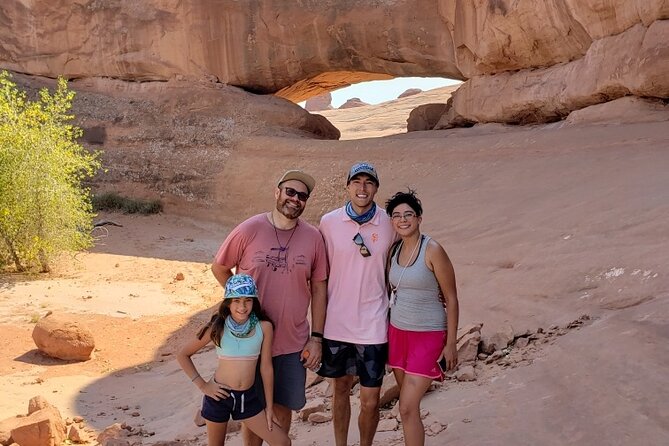
Group size stays small, and that changes the vibe. You’re not stuck watching the guide from behind a curtain of hats and backpacks. You can actually talk, ask questions, and get time for photos without feeling rushed.
You can also read our reviews of more tours and experiences in Moab.
Entering Arches through the Willow Springs back door
You start in Moab at 378 N Main St, and the drive begins heading north on US 191. You pass the Arches entrance along the way, which is interesting for a quick reality check: Arches started as a National Monument, then became a National Park in 1971. That shift is more than trivia; it helps explain why the park feels so protected yet still accessible.
Here’s the value of the “back door” approach: your special use permit lets you enter Arches through Willow Springs Road rather than doing everything from the standard front-country entry points. For most people, Arches is a park of stop-and-photo pullouts. For you, it becomes a route with movement, changes of elevation, and repeated opportunities to look back on the country you’ve already crossed.
Also, timed entry tickets aren’t required for this trip. That removes one more “gotcha” from your planning, especially if you’re already juggling other Moab reservations.
Utah Raptor State Park and the dinosaur-track moment
One of the most memorable parts is the drive through the Utah Raptor State Park area. Even if you don’t know anything about the science, it’s still a great pause because it adds another layer to the Arches story.
You’ll see dinosaur tracks in this area and take in views toward the La Sal Mountains. You also get a tie-in to Native American history in the region, described as a place where people lived thousands of years ago. I like that the tour doesn’t treat the land like a theme park set. It frames the scenery as something used and understood long before modern visitors arrived.
Practically, this stop also breaks up the momentum. You’re not just rushing from one arch viewpoint to another. You get that “step back and look around” feeling, which makes the rest of the day hit harder.
The salt-bed idea: why arches show up here
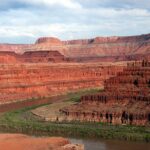
Arches National Park sits over an underground salt bed, and that salt bed is described as the foundation that helps create the arches, spires, and sandstone fins you’re there to see. It’s the kind of explanation that makes the park stop feeling random.
Instead of thinking of arches as separate attractions, you start noticing how the terrain “wants” to shape itself. You’ll still enjoy the formations for their looks, but you’ll also understand what you’re seeing in a bigger, structural way.
This matters on a tour like this because you’re moving. You’re not just standing in one place. As the Jeep rolls to different viewpoints, the salt-bed explanation gives you a mental map for what changes mean.
Eye of the Whale and the backcountry stops you usually miss
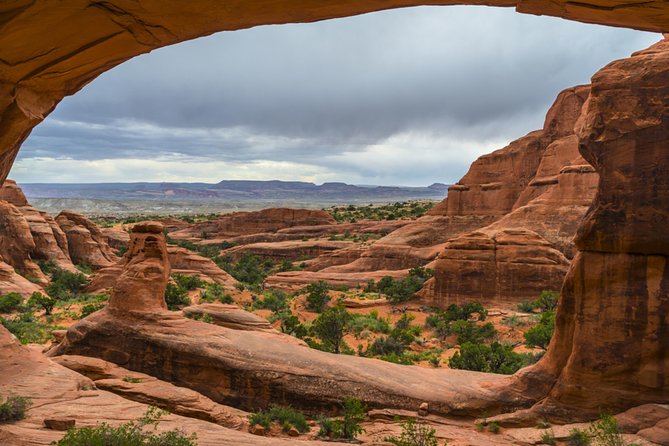
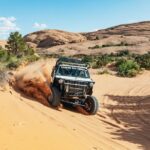
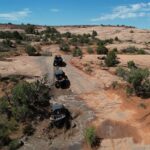
In the backcountry portion, one of the named highlights is Eye of the Whale (backcountry). This is exactly the kind of stop that justifies a 4×4 tour: you’re going off the paved roads in a vehicle built with the clearance for special routes.
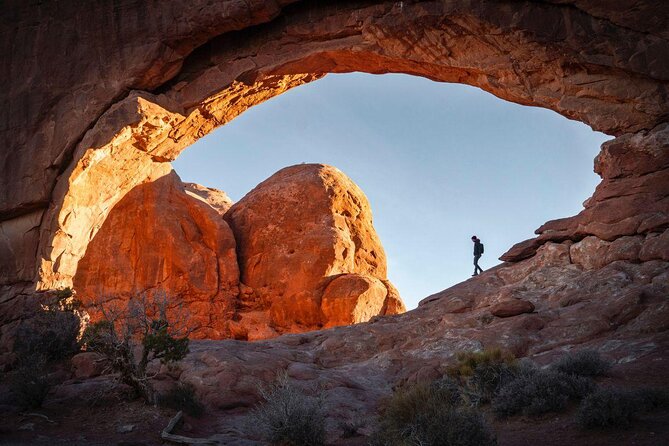
You’ll also see other named formations and viewpoints, including places described as pavement stops such as Balanced Rock, Sand Dune Arch, Delicate Arche Viewpoint, and the Windows Section. The wording in the plan matters. Some moments are a short scenic pullout where you can stand, frame photos, and soak it in. Other moments involve that backcountry approach where the view feels closer and more personal.
My advice: go into this tour ready to look in multiple directions. In Arches, it’s easy to stare at the famous feature in front of you and miss how the surrounding fins, fins-like sandstone shapes, and the “empty” spaces between formations form the bigger picture.
Windows Section and other photo-friendly viewpoints
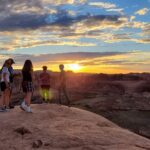
You’ll spend a longer window of time at the Windows area. Plan on about 40 minutes there, which is plenty if you like photos and short walks, but not so much that you start feeling bored or overheated.
The Windows Section is one of those “from one angle, it’s stunning; from another, it’s different” places. The value of a guided approach is that you’re not guessing where the best vantage point is. You also get to understand what to look for as you rotate your position.
For the pavement stops, the tour is designed around short viewing time rather than long hikes. That makes this option feel like a smart choice if you want Arches without committing to half-day or full-day trail effort.
Sand Dune Arch Trail: a short walk with big payoff
One of the most “feel it with your feet” moments is the Sand Dune Arch Trail stop. It’s described as about 20 minutes for the trail portion, and it’s framed as an arch you can find tucked between rocks.
This is where you’ll notice the tour still includes light hiking time. It’s not a strenuous scramble, but you should come ready for uneven ground. Sturdy footwear matters because you’re stepping on rocks, not groomed paths.
Even if you’re not a hardcore hiker, this stop is a great way to experience the park as more than just viewpoints. You’re moving your body and your perspective shifts naturally, which makes photos come out better too.
The Jeep Rubicon advantage: air-conditioning, seat rotation, and comfort
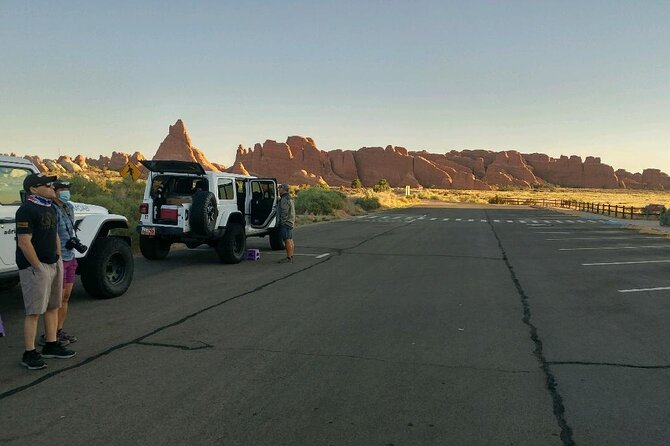
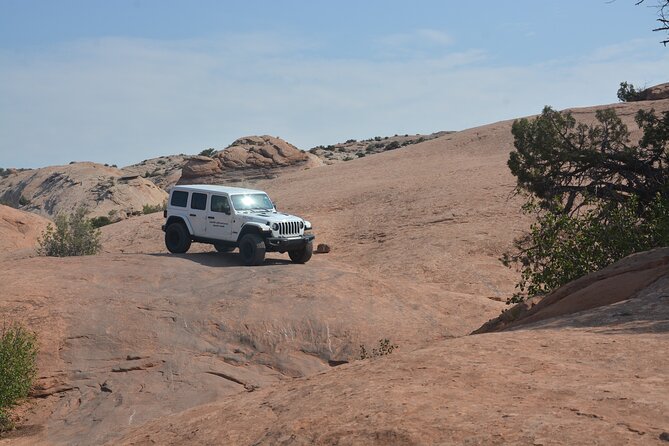
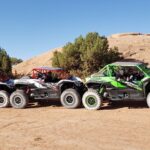
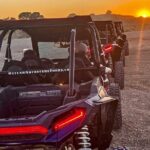
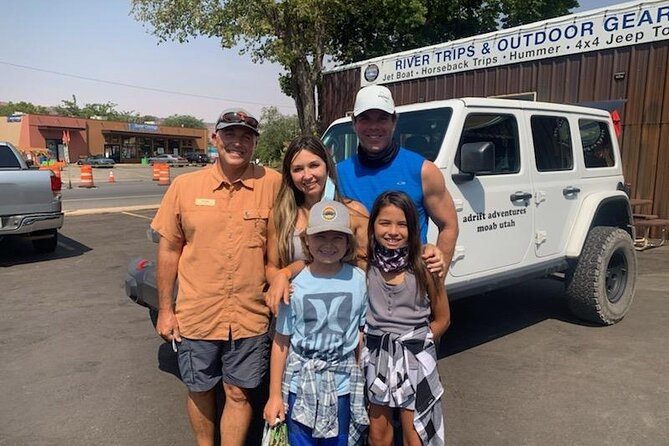
Let’s talk vehicle details, because they’re not small. Your rides are in enclosed Jeep Rubicons with air-conditioning, which is a huge deal in Moab. You’ll be able to cool down between stops, and it makes the day feel less like an endurance event.
You also won’t be stuck in the same seat the whole time. The guide/driver rotates passengers through the four passenger seats, so one person isn’t permanently stuck in the “most bouncy” position. That’s a thoughtful touch for comfort, especially if your group includes people who get uncomfortable in backseat movement.
That said, here’s the reality check: it’s off-road and bumpy. The tour is explicitly described as not recommended for motion sickness or vertigo. Even if you’re fine with rough roads, expect your body to get jostled. One of the best ways to enjoy it is to treat the bumps as part of the fun, not a problem to fight.
What to expect from the guide (and why it changes the day)
Guides are the secret sauce here. The tour plan clearly puts the guide at the center—experienced, and ready to keep the day moving while giving context.
In the field, that means you don’t just get names. You get explanations for what you’re seeing and why the park looks the way it does. You also get practical help with where to stand and how to take photos at the right moment.
The guide is also responsible for safe driving through off-road terrain. Past experiences with guides like Ric Ortera, Mark, Bill, Karl, and Randy point to a style that mixes safety, fun, and story-telling without dragging the day to a crawl.
Cost and value: what $210 buys you in Moab time
At $210 per person for about 4 hours, this isn’t a budget activity. But it’s also not trying to be one. The value comes from a bundle of things that add up fast in Moab:
- A 4×4 vehicle built for off-road access
- An experienced guide who can show you where to look and how to enjoy the stops
- Ice, water, and snacks already included (so you aren’t scrambling mid-day)
- Transport in an enclosed, air-conditioned Jeep
- A small-group setup, which can reduce time spent waiting around
Not included are things like lunch, and there’s no hotel pick-up or drop-off. But if you’re already based in Moab, the meeting point at 378 N Main St is easy to plan around.
In my view, the smartest way to judge the price is this: you’re paying to cut through the “guesswork” of finding backcountry-feeling views on your own. And you’re paying for the vehicle capability that lets you actually get there.
Who this tour is best for
This tour works well for many people because it combines short viewing time with a few light trail minutes. Most people can participate, and the stops are structured so you aren’t spending the whole day hiking.
It’s a strong fit if you:
- Want Arches views without fighting the crowds at every pullout
- Like the idea of off-roading but still want frequent photo stops
- Appreciate air-conditioned comfort between rugged terrain
- Prefer a guided day that explains what you’re seeing
It may not be a good fit if you:
- Have motion sickness, vertigo, or a strong dislike of bumpy rides
- Need fully paved, low-jostle routes
- Are tall or heavy and want to double-check fit. If you’re over 6’2″ and/or 225+ lbs, the tour advises you to consult the office before you go.
Tips to make your day smoother
Bring your basics. The plan is clear on what you’ll want in the real world: water bottle (with free refills), sunglasses, sunscreen, sun protection, and sturdy footwear for the short trail moments.
A day pack is helpful for keeping your camera gear and water accessible. If you bring cameras or camcorders, note that they’re at your own risk, so consider how you’ll secure them during a bumpy ride.
Timing-wise, since the tour is about 4 hours, don’t overbook the rest of your day. You’ll likely feel like you’ve done more than “just a drive” once you factor in the off-road segments and photo breaks.
Also, keep expectations flexible. The experience is weather-dependent and the day is designed around good conditions in the park.
Should you book this Arches backcountry Jeep tour from Moab?
If your priority is Arches with better angles and less crowd pressure, I think this tour earns its spot. The back-door access via Willow Springs Road, the Utah Raptor State Park dinosaur-track stop, and the chance to get off paved roads in an enclosed, air-conditioned Jeep is a strong combo for a half-day.
Book it if you like:
- Photo-friendly stops with short walking
- A guide who can turn geology and place into something you understand
- Off-roading as part of the fun, not just a means to an end
I’d skip it if you know bumps will ruin your day. Motion sickness and vertigo are the big flags. Also, if you want a quiet, gentle outing with minimal movement, this likely won’t match that style.
FAQ
How long is the Arches backcountry Jeep tour from Moab?
The tour runs about 4 hours (approx.).
Where do I meet for the tour?
You meet at 378 N Main St, Moab, UT 84532, USA, and the tour ends back at the meeting point.
Is admission covered for Arches National Park?
The plan says admission ticket is free for the Arches National Park stop. For the Windows and Sand Dune Arch Trail stops, admission tickets are listed as not included.
Do I need timed entry tickets?
Timed entry tickets are not needed for this trip.
What’s included in the price?
Included are an experienced guide, ice, water, and snacks, parking at the office, and transport by 4×4 vehicle.
What’s not included?
Hotel pick-up and drop-off and lunch are not included.
What kind of vehicle is used?
The tour uses enclosed and air-conditioned Jeep Rubicons with four passenger seats, and guests rotate seats during the trip.
Is the tour suitable if I get motion sick?
It’s not recommended for those with motion sickness, vertigo, or similar issues.
What should I bring?
Bring a water bottle (free refills available), sunglasses, sunscreen, sun protection (hat/visor), sturdy footwear for hiking, a day pack, and cameras/camcorders if you want photos (at your own risk).
How many people are in the group?
The tour has a maximum of 12 travelers.