REVIEW · NASHVILLE
Best of Nashville City Sightseeing Tour on Double Decker Bus
Book on Viator →Operated by Gray Line Tennessee · Bookable on Viator
One hour can give you Nashville’s layout fast. This Gray Line double-decker tour is built for quick orientation, with open-air top-deck views and live commentary from a driver-guide as you roll past landmarks like the Ryman Auditorium and Vanderbilt University. The main catch: if weather turns (rain happens), the upper deck can be unavailable.
I like how simple the setup is: you meet at the Gray Line Ticket Booth on 1st Avenue, pick your seat, and get dropped back where you started so you can keep exploring with a better sense of where everything is. For many people, it’s also an easy win because the bus ride is short (about an hour) and the tour is in English.
In This Review
- Quick Key Points Before You Go
- A One-Hour Orientation on the Only Open-Air Double-Decker
- Price and Value: Does $34.95 Make Sense?
- Meeting at Gray Line on 1st Ave S: Where You’ll Sit Matters
- The Route in Real Life: From Centennial Park to Lower Broadway
- Centennial Park and the Parthenon Replica: Why This One Works
- Country Music Hall of Fame: More Than a Billboard Stop
- Ryman Auditorium: Bluegrass Roots Without the Confusion
- Nashville Football at Nissan Stadium: Big-Time Sports in the Mix
- Vanderbilt University: A Campus Look That Changes the City Feel
- Riverfront Train Station and the Downtown Core
- Historic Lower Broadway and Printer’s Alley: The Places People Wander
- Music City Center and the Arts Blocks Nearby
- Centennial Park Again, Plus a Music-Industry Museum Feeling
- Quick Note on How Long You Really Spend at Each Place
- What You’ll Do After the Bus: Your New Nashville Map
- Weather, Comfort, and Small Practical Tips
- Who Should Book This One, and Who Might Skip It
- FAQ
- FAQ
- How long is the Nashville double-decker city tour?
- Where is the meeting point for the tour?
- Is the tour open-air?
- What happens if it rains?
- What is included in the ticket price?
- Is hotel pickup or drop-off included?
- Should You Book This Tour
Quick Key Points Before You Go

- See 100+ landmarks in about an hour without spending the day walking
- Live narration from a driver-guide, designed to be funny and easy to follow
- Open-air top deck for photos when conditions allow
- Downtown-focused route so you get your bearings quickly before you pick neighborhoods
- Max group size of 40, which keeps the experience feeling less chaotic
- Guides you might hear named Jolene, JT, or Mike, known for clear, entertaining storytelling
A One-Hour Orientation on the Only Open-Air Double-Decker
Nashville has a way of making you feel busy even when you’re just driving around. This one-hour bus tour is a smart antidote. You get a moving overview of downtown and the surrounding sights, then you can decide what to circle back to later on foot or with a car.
The best part is that you’re not just looking at buildings. The narration ties the streets to stories, so things like Lower Broadway and Music City Center stop being vague names and start meaning something. If you enjoy humor mixed into the facts, you’ll probably like the delivery style too. In the comments left by people who rode, guides such as Jolene, JT, and Mike show up again and again for keeping the tone light while staying informative.
You can also read our reviews of more tours and experiences in Nashville.


Price and Value: Does $34.95 Make Sense?
At $34.95 per person for about one hour, this isn’t a “cheap and cheerful” activity. It’s more like buying time. You’re paying for three things at once:
- Transport across a cluster of landmarks without planning parking or hops between stops
- A live guide running commentary, so you’re not trying to read a guidebook while moving
- An efficient overview that helps you choose what’s worth a deeper visit later
If you’re spending limited time in Nashville, the value is strongest when you treat this as your first-day orientation. People often use tours like this to avoid wandering blindly. Instead, you come away with a mental map: which areas feel historic, which are built for crowds, and which landmarks you should plan around next.
One consideration: since the tour is designed to cover a lot quickly, it’s mostly a look-and-learn experience, not a “get out and explore” one. If you want long stops or lots of walking, you’ll likely want to pair this with separate visits afterward.
Meeting at Gray Line on 1st Ave S: Where You’ll Sit Matters
This starts at 108 1st Ave S, Nashville (Gray Line Ticket Booth). You’ll board the double-decker and choose your seat. The tour is offered in English, and you’ll receive confirmation when you book. It’s also set up with a mobile ticket, which keeps the morning smooth.
Here’s the practical difference between seating choices:
- Inside seats (with panoramic windows): best when it’s windy, cold, or rainy. One rider even noted they preferred the front area near the window because it blocked wind better.
- Top deck (open-air): best for skyline views and photos when weather cooperates. On sunny days, people rave about being up top.
There’s also a useful pacing angle. The bus doesn’t feel like it’s racing through stops. Riders specifically note that the driving speed made it easier to see what you’re passing and to hear the guide clearly. That matters because the narration is timed to the sights you’re rolling by.
The Route in Real Life: From Centennial Park to Lower Broadway
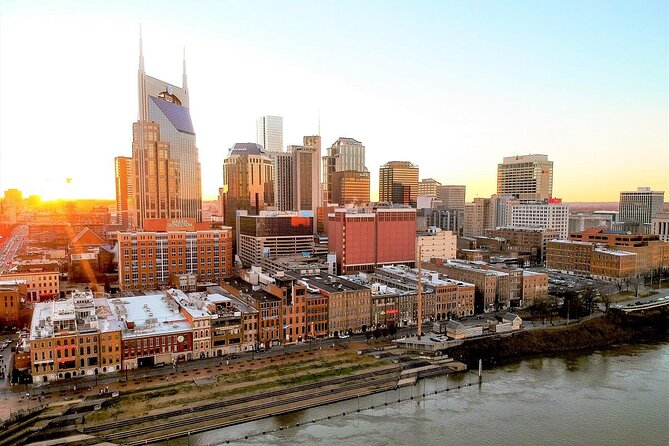
The tour is downtown-focused and built around landmark clusters. You’ll cover major icons and nearby context without needing to jump between multiple attractions first.
You’ll also get a long list of points of interest—95+ to 100+ depending on the way the route is counted—so expect a lot of name-dropping. The value is that you’ll hear what each place is and why it matters, even if you don’t stop there.
Centennial Park and the Parthenon Replica: Why This One Works
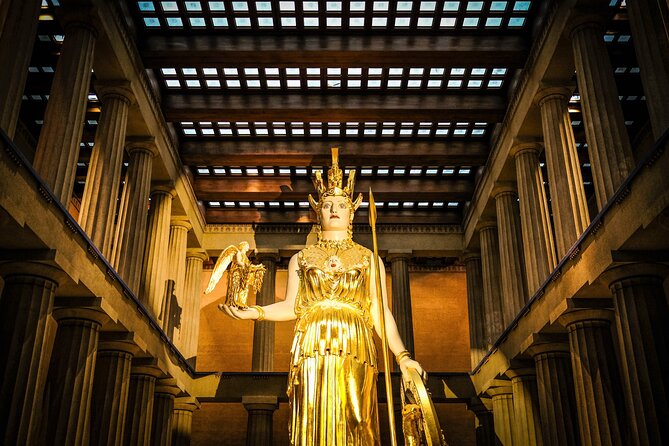
A highlight stop is Centennial Park, which is home to the Parthenon. In the description shared for the tour, Centennial Park is tied to everyday outdoor time too: jogging paths, grassy space for picnics, and even a small lake for paddle boating.
The Parthenon itself is a full-scale replica of the one in Athens, Greece. That’s a fun detail because it gives you a “why is this here?” hook when you’re staring at something that looks classical but is very much Nashville. The grounds around it also include statues of historic figures and the graves of President Polk and his wife, which is the kind of note that makes a drive-by stop feel like more than just a photo spot.
A small drawback to keep in mind: since it’s a bus tour, you’re viewing from the route. If you want to actually walk the grounds, you’ll need to plan a separate visit.






Country Music Hall of Fame: More Than a Billboard Stop
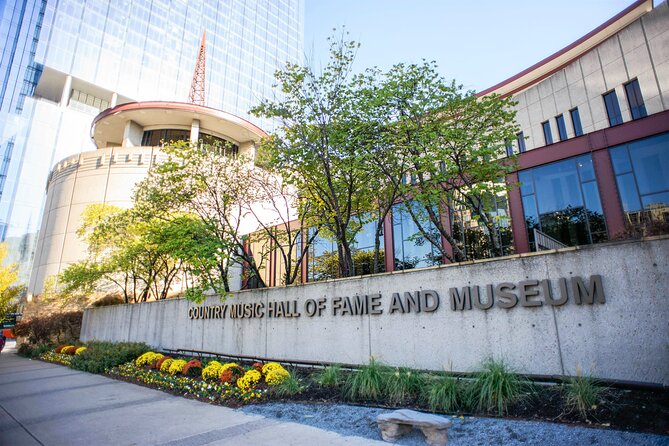
Next up is the Country Music Hall of Fame and Museum. This is one of those places that many visitors know by name, but the tour framing helps you understand the depth.
The tour description points out the museum safeguards over 2.5 million artifacts and has two floors of gallery space with both permanent and limited-engagement exhibits. Even if you don’t go inside, that’s useful context. From the bus, you’re not just seeing a building. You’re seeing a place that’s curating a huge chunk of the genre’s physical story.
If you’re a music fan, this is where you’ll likely start planning your next step. You might notice what era or angle you’re most drawn to and decide to go deeper later.
Ryman Auditorium: Bluegrass Roots Without the Confusion
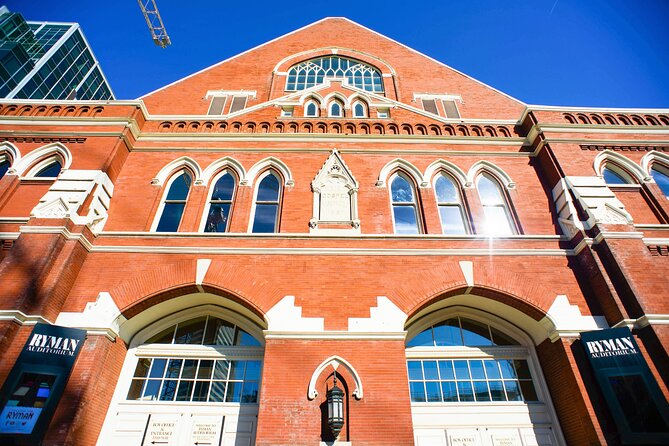
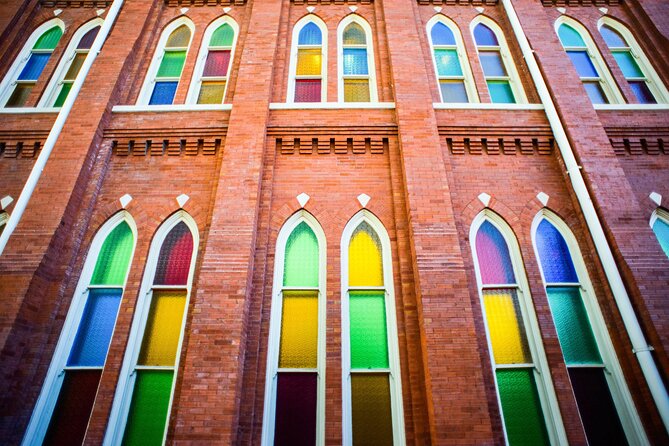
The tour also covers the Ryman Auditorium, and it’s not presented as just another famous venue. The narration angle given here ties the Ryman to bluegrass origins—specifically the spot where bluegrass was born, including a classic set of connections like where Johnny Cash met June Carter and how it nearly disappeared at one point.
Even if you’re not a bluegrass encyclopedia, these storytelling cues make the Ryman feel more grounded. It becomes a “this is why the city’s music scene has a backbone” stop, not just a stop on a photo checklist.
Nashville Football at Nissan Stadium: Big-Time Sports in the Mix
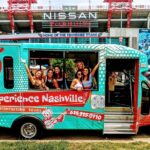
You’ll pass by Nissan Stadium, home of the Tennessee Titans. The point of including it on this kind of route is simple: Nashville isn’t only music museums and theaters. It also has major stadium energy that shows up in how the city moves on game days.
You’ll get views as you roll past, but you won’t spend time inside the stadium. If you care a lot about NFL games, you’ll likely want to look up schedules separately.
Vanderbilt University: A Campus Look That Changes the City Feel
The bus tour also includes views around Vanderbilt University. This matters because campuses change a city’s vibe. You get a contrast in architecture and land use compared to pure downtown commercial strips.
From a tour like this, you’re mostly building mental geography—where the “college Nashville” sits relative to the music-and-entertainment core.
Riverfront Train Station and the Downtown Core
The route includes Riverfront Train Station and other downtown centers, which helps connect Nashville’s movement history to its present-day layout. It’s one more “why this area looks like this” layer.
Even if you never take a train trip here, understanding that these hubs sit in the city’s anatomy helps you appreciate why downtown forms the way it does.
Historic Lower Broadway and Printer’s Alley: The Places People Wander
Two areas are especially worth paying attention to from the bus:
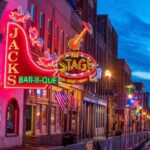
- Historic Lower Broadway: This is the classic “walkable for music energy” stretch, and bus views help you understand where the density begins and ends.
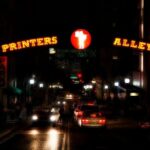
- Printer’s Alley: The tour description calls it a small, gritty street lined with some of Nashville’s best bars and restaurants.
This is where the tour becomes practical. Once you’ve seen the location from the bus, you can later pick a walking loop with less guesswork. You’re less likely to end up wandering in the wrong direction just because the area feels similar at street level.
Music City Center and the Arts Blocks Nearby
The tour also passes the Music City Center, described as a convention complex in downtown Nashville. Even if your trip isn’t centered on conferences, it’s a key downtown landmark because it shapes foot traffic and nearby services.
Another strong cultural stop is the Frist Center for Visual Arts. Here the tour framing is specific: it occupies one of Nashville’s historic landmarks, the former main post office. That makes the building itself part of the story. If you’re the type who likes “old structure, new use,” this is one to remember.
Centennial Park Again, Plus a Music-Industry Museum Feeling
The tour also covers the general area around Centennial Park again through its broader park context, and it includes the Musicians Hall of Fame and Museum. That museum is described as honoring musicians from stars to studio players, across all genres.
This is a good fit for visitors who want to understand Nashville beyond just stages and celebrity names. It reinforces the idea that Nashville’s music machine includes a lot of roles, not just the headline performers.
Quick Note on How Long You Really Spend at Each Place
Because this is a one-hour loop, you’re not standing in a line outside each attraction. You’re seeing the landmarks as you pass and hearing the narration tie them together. That’s exactly why the tour works well as a first step: it helps you avoid committing time to the wrong places early in your trip.
What You’ll Do After the Bus: Your New Nashville Map
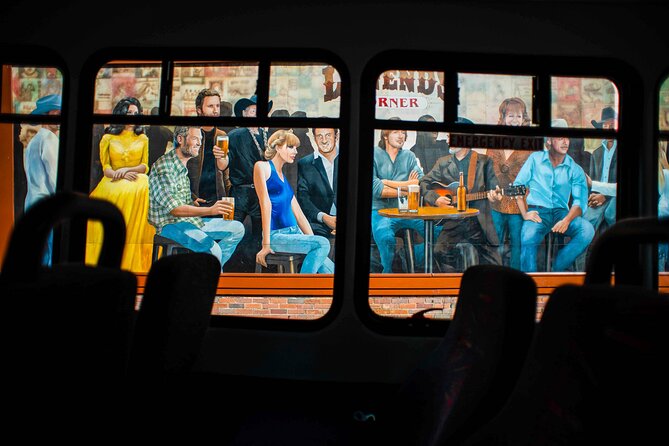
The best way to use this tour is to treat it like a planning tool. As soon as you’re dropped back at the meeting point, sit down for a few minutes and do two things:
- Pick 2–3 stops you want to see up close later.
- Decide which neighborhoods you want to walk through when you have better daylight or better weather.
Why this helps: Nashville changes block by block. From the bus, many places look like “downtown” blobs. After, you’ll notice patterns: which streets feel more historic, which areas feel built for late-night activity, and which spots are more about culture and museums.
It also reduces decision fatigue. If you arrive with no plan, you’ll burn half a day figuring out what’s where. This tour cuts that down.
And if you’re traveling as a group, the bus makes it easier to agree on a direction afterward. People come off the top deck with photos, you come off the inside ride with context, and everyone has a shared story to use when choosing the next activity.
Weather, Comfort, and Small Practical Tips
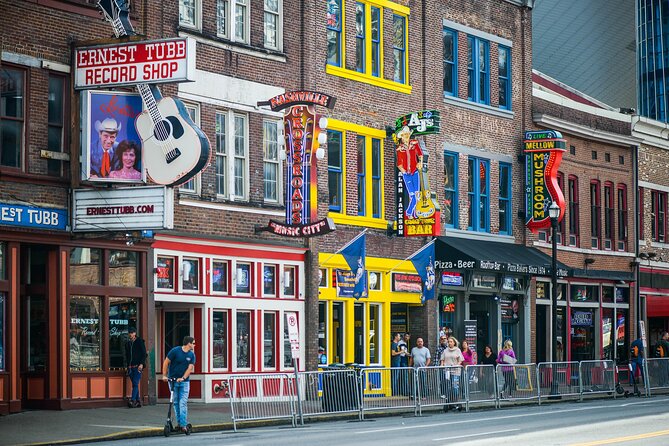
This tour is designed for real-world touring conditions. It’s a good-weather experience, and one rider noted that on a rainy day the upper deck wasn’t available. So dress for the day you actually get. If it’s cold, the open-air top deck can still be doable if you’re ready for wind.
One practical tip that comes up in the way people talk about seating: if you’re sensitive to cold, being closer to the front/window area can help cut wind.
Also, the tour runs with a maximum of 40 travelers, which generally keeps it from turning into a chaotic stampede on the bus. Still, it’s wise to arrive a few minutes early so you’re not rushing to choose seats.
Who Should Book This One, and Who Might Skip It
Book it if:
- You want a fast orientation for your first day in Nashville
- You like the idea of seeing a lot quickly and then picking your favorites
- You want live narration instead of just a map and audio app
- You’d enjoy open-air photos from the top deck when weather allows
Skip it if:
- You’re looking for lots of hands-on time at multiple attractions
- You already have a very clear plan for your day and only need one or two specific sites
- You hate being on a vehicle for most of the hour, even if it’s part of the sightseeing
If your schedule is tight, I’d treat this as your “get the lay of the land” move. The one-hour format keeps it from eating your whole day, and the route covers enough iconic names to give you something to aim at afterward.
FAQ
FAQ
How long is the Nashville double-decker city tour?
It lasts about 1 hour.
Where is the meeting point for the tour?
Meet in front of the Gray Line Ticket Booth at 108 1st Ave S, Nashville, TN 37201, USA.
Is the tour open-air?
It includes an open-air top deck on the double-decker bus, and you can also sit inside with views through panoramic windows.
What happens if it rains?
The upper deck can be unavailable in rainy weather, and you’ll still be able to enjoy the tour from inside.
What is included in the ticket price?
Included are the 1-hour city bus tour on a double-decker bus, the open-air double-decker experience, seeing 100+ Nashville points of interest, top attractions such as Ryman Auditorium and Vanderbilt University, and a professional driver-guide.
Is hotel pickup or drop-off included?
No, hotel pickup and drop-off are not included.
Should You Book This Tour
Yes, if you want to get oriented fast and make your next steps in Nashville easier. The mix of live driver-guide commentary, open-air photo potential, and a route packed with major landmarks makes this a strong first-day choice, especially when you only have a day or two.
If you’re the type who hates vague touring and prefers fixed plans, use this tour for discovery first, then switch to targeted visits right after. That’s where the real value of the one-hour loop shows up.