REVIEW · FREEDOM TRAIL
Boston: Official Freedom Trail® Walking Tour
Book on GetYourGuide →Operated by Freedom Trail Foundation · Bookable on GetYourGuide
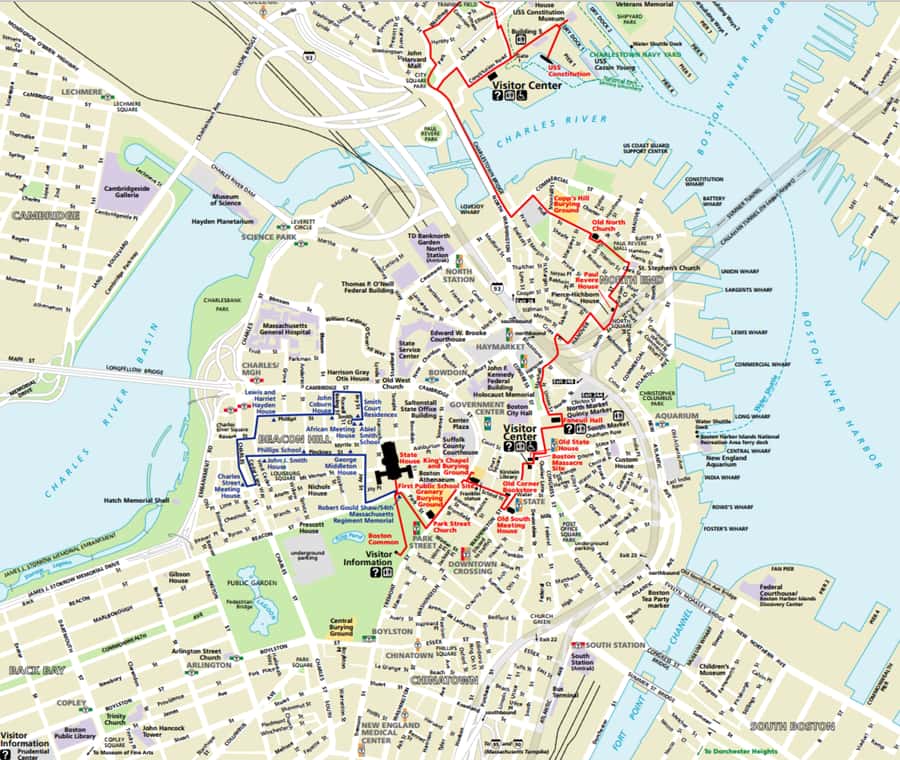
Red line, real revolution, zero museum fatigue. This official Freedom Trail walking tour threads the story of America’s break with Britain through the heart of downtown Boston, from green parks to grim street memory. You’ll follow the famous red line with period-costumed guides and spend about 1 mile on foot.
I especially like two things: first, the way the tour makes the landmarks feel connected, not like separate photo stops. Second, the Boston Common start and the Boston Massacre site stop put you right where the emotional tone changes from public life to public outrage. The tour also focuses on Big Ideas, from representative government to speechmaking at places like Faneuil Hall.
One heads-up: it’s not the whole Freedom Trail in one go. You cover 11 of the 16 official sites in about 90 minutes, so if you’re aiming to tick every single stop in one afternoon, you’ll need to plan a second walk.
In This Review
- Key highlights at a glance
- What You Actually Get From This Freedom Trail Walk
- Meeting the Tour: Starts at Boston Common or Faneuil Hall
- Stop by Stop: Boston Common and the Moment the Story Turns
- A quick note on what you’ll see and what you won’t
- Faneuil Hall and the Old State House: Speeches and Public Anger
- Granary Burying Ground and Paul Revere’s Final Resting Place
- The Oldest Public School Site: When Education Becomes the Point
- Guide Style Makes a Difference: Humor, Voice, and Q&A
- Price and Value: Is $18 Worth It?
- Practical Tips: How to Enjoy the Walk Without Getting Grumpy
- Who This Tour Fits Best (and Who Should Skip It)
- Should You Book the Boston Freedom Trail Official Walking Tour?
- FAQ
- How long is the Boston Freedom Trail Official Walking Tour?
- How many Freedom Trail historic sites does the tour cover?
- Does the tour include entrance fees for every stop?
- Are there any ticket-line perks?
- Where do the tours depart from?
- Do I need to choose a specific date and time?
- What should I bring, and is video recording allowed?
- What’s the cancellation window?
Key highlights at a glance
- 18th-century costumed guides that turn “what happened” into a story you can picture
- 11 of 16 official sites covered in roughly a 1-mile walk
- Boston Common plus Boston Massacre—park calm to street-side consequence
- Granary Burying Ground and Paul Revere’s burial for a human ending to the revolution tale
- Lots of time for questions and photos during the walk
- Alternative direction option with the Reverse Walk Into History option
What You Actually Get From This Freedom Trail Walk
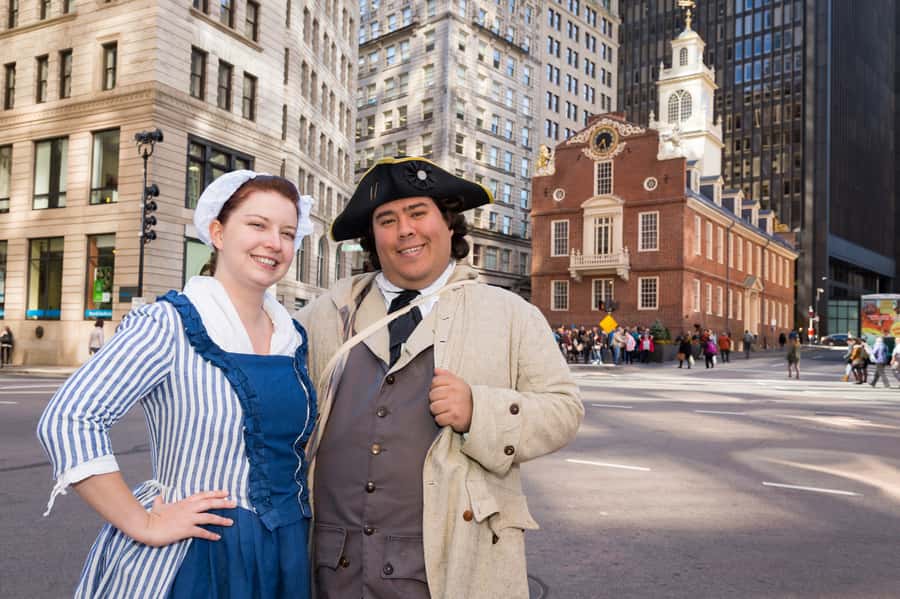
This is a practical introduction to the Freedom Trail for people who want more than a self-guided stroll. You get a guided walk that links the major moments—public spaces, political speeches, violent flashpoints, and the people you learn about in school—but it does it at sidewalk speed. You’re not sitting indoors for hours. You’re outside, moving, and hearing how the pieces fit together.
At about 1.5 hours, it’s long enough to feel like a real tour, but short enough to keep the rest of your day flexible. That matters in Boston, where the best sightseeing often happens in bursts: a walk, a quick coffee, another stop, then back out to explore.
The value also comes from what’s included. You’re paying for a guided route that covers 11 official sites, plus period-costumed guides. Even if you’ve read about the revolution before, the guide adds the “why it mattered” layer that’s hard to get from signage alone.
Meeting the Tour: Starts at Boston Common or Faneuil Hall

The departure points can vary depending on the option you book. The big pattern is simple: tours leave frequently from two places—Boston Common Visitor Information Center, and also the ArtsBoston booth at Faneuil Hall.
If you’re the type who likes to arrive with time to spare, plan on getting there a bit early so you can get oriented before the group starts. Because with a walking tour, you don’t want to be the person sprinting up to the sidewalk while everyone else is already lined up.
A helpful detail: you don’t need to specify a date/time in the way you might for some tours. With your ticket, you’re guaranteed a spot on one of the Freedom Trail Foundation tours any date any time. Still, tour times can change with little notice, so build in a little slack on your day.
Stop by Stop: Boston Common and the Moment the Story Turns
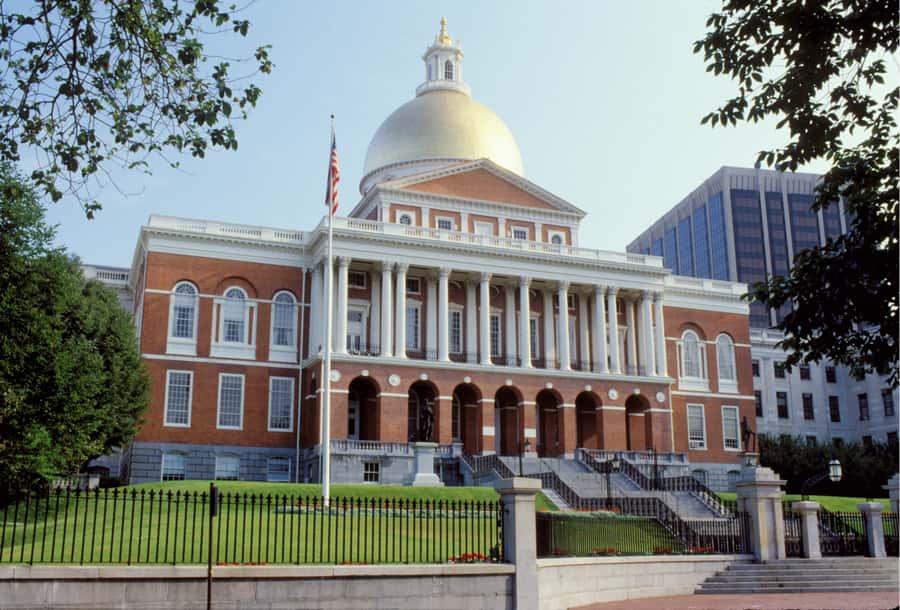
Most days, you begin near Boston Common, and that choice sets the tone. Boston Common is described as America’s first public park, and that’s more than a trivia line. It’s a reminder that the revolution wasn’t just about battles. It was also about public space—who gets to gather, who gets to speak, and what ordinary people believed the city should become.
From there, the route moves into the more tense part of the revolutionary narrative. You’ll pay respects at the Boston Massacre site. This stop matters because the story isn’t only about slogans. It’s about fear, anger, and how a single night can change public opinion.
You’ll also hear tales as you walk in the footsteps of people connected to the founding era, including Paul Revere, Samuel Adams, Crispus Attucks, and John Adams. The guide’s job is to connect the names to the streets, so the history feels less like a list and more like a sequence of choices.
A quick note on what you’ll see and what you won’t
The tour features 11 of the 16 official Freedom Trail historic sites. So you’ll hit major anchors, but you won’t cover every single red-line stop in one ticket. That’s not a flaw—it’s the tradeoff for a short, high-energy walk.
Faneuil Hall and the Old State House: Speeches and Public Anger
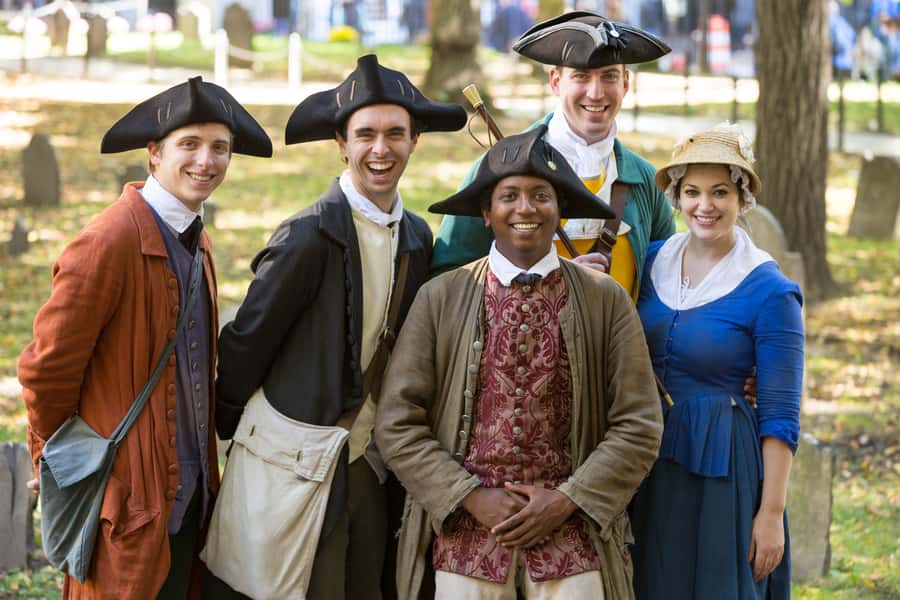
This tour doesn’t treat the revolution like a sealed chapter. You’ll spend time around Faneuil Hall, including time in its precincts to hear the stories of patriotic orators like Samuel Adams and James Otis advocating for independence and revolution in the name of liberty.
What I like about that approach is that it explains politics as theater. You’re learning how persuasion worked in the 1700s: loud rooms, public debate, and the power of repeating an idea until it becomes a movement. It’s not just that people disagreed. They argued in places where crowds could feel the momentum.
Then the narrative moves toward the Old State House area, with a reference to the blood in the snow outside that landmark on the night of the Boston Massacre. That detail turns the day’s tone darker. It’s the kind of moment a plaque can’t fully communicate, but a guide can frame in a way that sticks.
For photos, this is a good section to slow down. Even if you’re not taking many pictures, it helps to look up at the architecture around you. The buildings are part of the story you’re hearing, not just background.
Granary Burying Ground and Paul Revere’s Final Resting Place
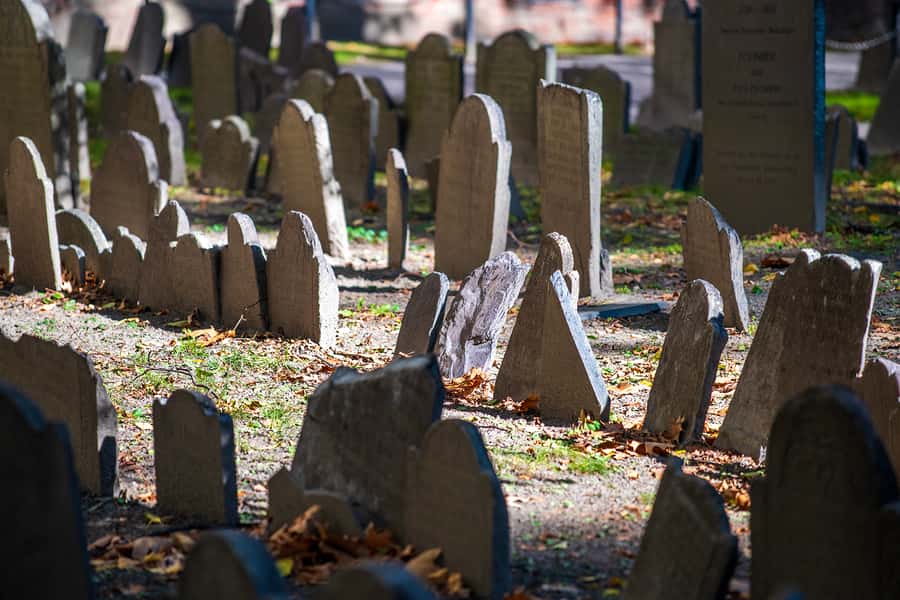
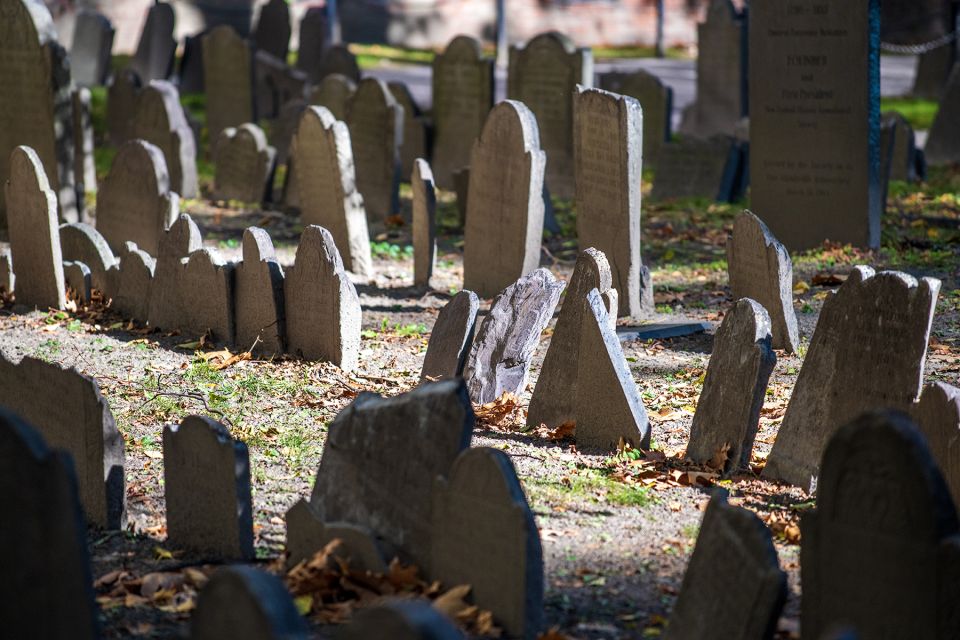
One of the standout stops is the Granary Burying Ground, including Paul Revere’s final resting place. This section is emotionally different from the public squares. Instead of crowds and speeches, you get names you can visit like you’re meeting the aftermath face to face.
That cemetery stop is valuable because it gives you closure to the people you’ve been hearing about. It’s easy to treat revolution as action only—marches, arguments, and clashes. But burial grounds pull you back to the human scale: risk, consequence, and the fact that history ends up in specific plots, not just in textbooks.
If you like tours that make you feel the timeline, this is the part that often makes it “real.” You stop hearing the revolution as a set of scenes and start seeing it as a set of lives.
The Oldest Public School Site: When Education Becomes the Point
Another highlight is the site of the oldest public school in the United States. This is easy to miss if you only chase the biggest battlefield headlines, but it’s a smart inclusion.
The guide’s framing connects education to representative government and the idea that a functioning society needs informed citizens. In other words: the revolution wasn’t only about breaking away from a ruler. It was also about building a system where ordinary people could understand and participate.
For practical travelers, this stop also helps break up the pace. You’re not stuck only in battle-related stops. You get a different angle on how the revolution thought about everyday life.
Guide Style Makes a Difference: Humor, Voice, and Q&A

This tour leans hard on the guide experience. Names that show up with standout praise include Jeremiah Poope, James Sullivan, and Britnee. There’s also mention of Sean, and a guide credited as Rob Cream, aka Isiah Thomas.
What those names have in common is delivery. You’ll hear the stories with energy and humor, and you’ll often get a clear, projected voice that works even when the city noise rises. If you’re the type who wants to ask questions, pay attention to the fact that the format includes time for questions and photographs, not just a one-way lecture.
One small drawback you might encounter: group size. Some people note larger groups, and when the group is big, it can be harder to get your exact question answered. If you’re picky about that, aim for a tour time that fits your comfort level and be ready to ask your question at the most natural pause moments.
Price and Value: Is $18 Worth It?
At $18 per person for about 1.5 hours, the price is fair when you look at what’s covered.
Here’s the value math that matters:
- You’re paying for a guided route that includes touring 11 of the 16 official sites.
- You get period-costumed guides, which turns “you should visit this place” into “now I understand why it matters.”
- You also get a skip-the-ticket-line perk listed for the tour, which can be helpful for any stops where lines can slow you down.
What’s not included is equally important. Entrance to Freedom Trail sites that charge admission fees—Old South Meeting House, Old State House, Old North Church, and the Paul Revere House—is not included. That means you shouldn’t expect every landmark to be entered for free.
But you can still get solid value from the ticket. You’ll see major places, hear the stories, and get context that makes even an exterior-focused stop feel complete. If you want to go inside the fee-charging sites, you can plan to buy those admissions separately—after you know what interests you most.
Practical Tips: How to Enjoy the Walk Without Getting Grumpy
This is a walking tour, so your comfort choices directly affect your experience.
Bring:
- Comfortable shoes
- Water
Plan for:
- Standing and walking in an urban setting for roughly 1.5 hours.
- Cold weather if that’s your travel season. People get the most out of the tour when they dress for it instead of trying to tough it out.
Also note:
- Video recording is not allowed.
And if you’re the “photo person,” you’ll be happiest with photos taken during the natural breaks and stop moments. The tour is designed to give you time for pictures and questions, but it won’t be a slow wander where you can stop every 30 seconds.
Who This Tour Fits Best (and Who Should Skip It)
This walking tour is a strong match if you want:
- A guided overview of key revolutionary-era Boston stops in a short window
- A tour that connects the people (Revere, Adams, Attucks) to specific streets and landmarks
- A chance to ask questions instead of reading signs at random
You might think about choosing a different plan if:
- You want to cover the entire Freedom Trail in one day from start to finish. This one covers 11 of 16 sites in about 1 mile.
- You’re very sensitive to group size. When the group is large, interaction can feel more limited.
If you’re deciding between directions, the Reverse Walk Into History option is worth considering. Same trail idea, different pacing, and it can change how the story lands.
Should You Book the Boston Freedom Trail Official Walking Tour?
I’d book it if you want a focused first pass at revolutionary Boston that saves you from guessing what matters most. For $18, you get a short, walkable route, period-costumed guides, and real context around Boston Common, the Boston Massacre site, Granary Burying Ground, and the oldest public school site—plus the speechmaking energy around Faneuil Hall.
If you’re the kind of traveler who loves self-guiding and doesn’t want a group at all, you can still do the Freedom Trail on your own. But if you want your visit to feel like a story with names, stakes, and meaning, this guided format is an efficient way to get it.
Book it early in your Boston trip if you can. Then you’ll know what you want to revisit later on your own.
FAQ
How long is the Boston Freedom Trail Official Walking Tour?
It lasts about 1.5 hours.
How many Freedom Trail historic sites does the tour cover?
The tour features 11 of the 16 official Freedom Trail historic sites.
Does the tour include entrance fees for every stop?
No. Entrance to sites that charge admission fees is not included, including Old South Meeting House, Old State House, Old North Church, and the Paul Revere House.
Are there any ticket-line perks?
The tour lists a skip-the-ticket-line benefit.
Where do the tours depart from?
Tours leave hourly on the hour from the Boston Common Visitor Information Center, and hourly on the half-hour from the ArtsBoston booth at Faneuil Hall.
Do I need to choose a specific date and time?
You do not need to specify a date/time. With your ticket, you are guaranteed a spot on one of the Freedom Trail Foundation tours any date any time.
What should I bring, and is video recording allowed?
Bring comfortable shoes and water. Video recording is not allowed.
What’s the cancellation window?
Free cancellation is available up to 24 hours in advance for a full refund.