REVIEW · DENALI NATIONAL PARK
Denali Park Zipline Adventure
Book on Viator →Operated by Denali Park Zipline · Bookable on Viator
The treetops in Denali feel close enough to touch. This half-day zipline course runs just outside Denali National Park, with seven ziplines strung through boreal forest and framed by Alaska Range views.
I like how the guides run a safety-first operation without sucking the fun out of it. I also like that you get a real chance to pause and take in the scenery thanks to the hands-free braking system on the line.
One thing to be honest about: this is still physical. You’ll climb up to platforms (including the Ascending Bridge Tower), and it’s not a match for back or heart problems, or anyone who can’t handle heights and endurance.
In This Review
- Key things that make this Denali zipline worth your time
- Denali Park ziplining: what makes this course feel special
- Price and value: what $208.99 buys you in 3 hours
- Pickup in Denali and the off-road ride to the platforms
- Gear up: what you do before you fly
- Inside the course: suspension bridges, the Ascending Bridge Tower, and long zip lines
- Suspension bridges: where the real focus happens
- Ascending Bridge Tower: the “climb” moment
- Ziplines: length, pacing, and views
- The dual racer and hands-free braking: how you enjoy the ride
- Weather, timing, and what to pack for a Denali day that changes fast
- Who should book this zipline, and who should skip it
- Who should consider another plan
- Should you book the Denali Park Zipline Adventure?
- FAQ
- How long is the Denali Park Zipline Adventure?
- What’s included in the tour price?
- What safety gear do you provide?
- How many ziplines and bridges are on the course?
- Do I need a certain weight to ride?
- Is the tour offered every day?
- Is the tour canceled for bad weather?
- Can I cancel for a full refund?
Key things that make this Denali zipline worth your time
- Small group size (max 10) helps you move through the course with less waiting
- Six suspension bridges plus seven ziplines means more than a quick line-and-done
- Certified guides provide gear and step-by-step instruction so first-timers can keep up
- Hands-free braking lets you relax your hands and focus on the views
- Hotel pickup in the Denali area keeps your day simple
- Weight limits (70–280 lbs) and the need to list your weight when booking keep the run safe
Denali Park ziplining: what makes this course feel special
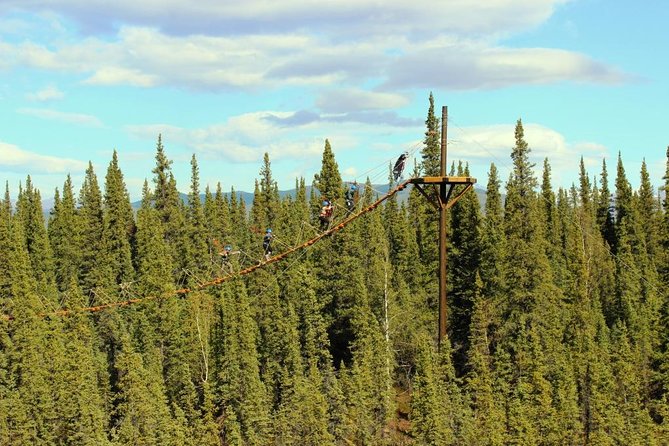
This isn’t a generic backyard zipline. The course is built for real tree height and real crossing moves, with suspension bridges that force you to slow down, place your feet, and trust your harness.
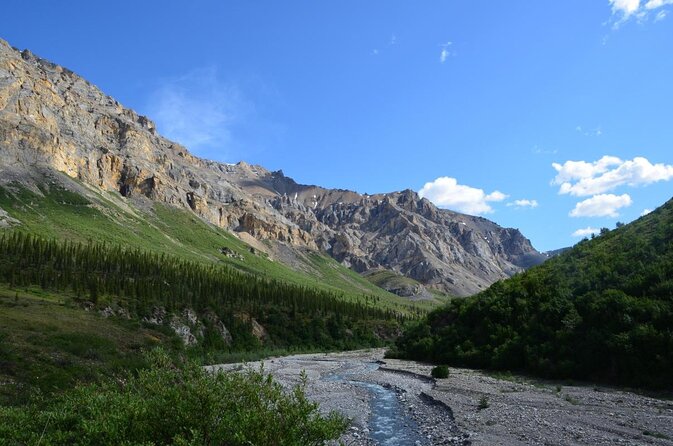
It also helps that the setting does the work for you. When you’re zipping through the boreal forest and then looking out toward the Alaska Range, you get the feeling of being out in the wild without spending all day hiking.
And because it’s a small group, the vibe stays friendly. You’re not just watching other people go while you wait your turn.
You can also read our reviews of more tours and experiences in Denali National Park.
Price and value: what $208.99 buys you in 3 hours
At $208.99 per person for about 3 hours, you’re paying for a guided, gear-intensive adventure—not just a single ride. You’re getting:
- round-trip transportation from select Denali-area hotels
- helmets, gloves, and harnesses
- professional certified guides
- a full circuit of 6 bridges and 7 ziplines (more than half a mile / about 1 km total)
Where the value really shows up is that you don’t have to plan logistics. Pickup, transfer, equipment, and course coaching are built in. If you’re trying to balance Denali sightseeing with one adrenaline-focused activity, this is a practical fit.
Pickup in Denali and the off-road ride to the platforms
Your day starts with hotel pickup in the Denali area at times tailored to where you’re staying. The earlier departures leave sooner for places farther from the meeting area.
Here’s the practical tip: show up close to the listed pickup window. The tour runs daily, and you’ll be on a tight schedule once the group is loaded.
You’ll ride in a sturdy off-road vehicle that travels a trail through the wilderness to reach the zipline course. This transfer matters more than people expect. It’s the part that sets your expectations for what’s coming—uneven ground, bumpy roads, and that unmistakable remote feeling.
Some groups also report a short ATV/side-by-side style ride as part of the transfer experience. Even if your specific route varies, plan for a rugged ride either way.
Gear up: what you do before you fly
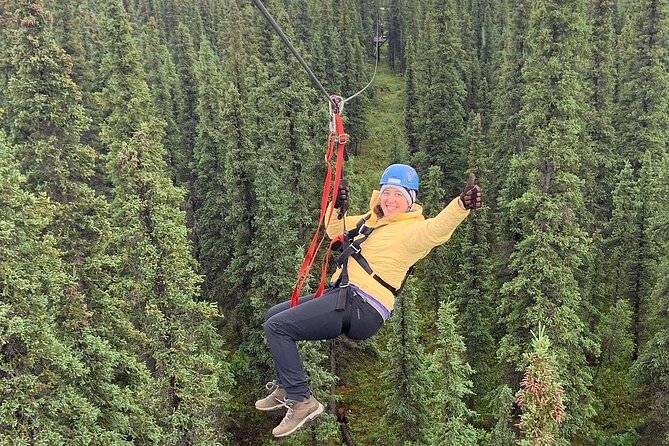
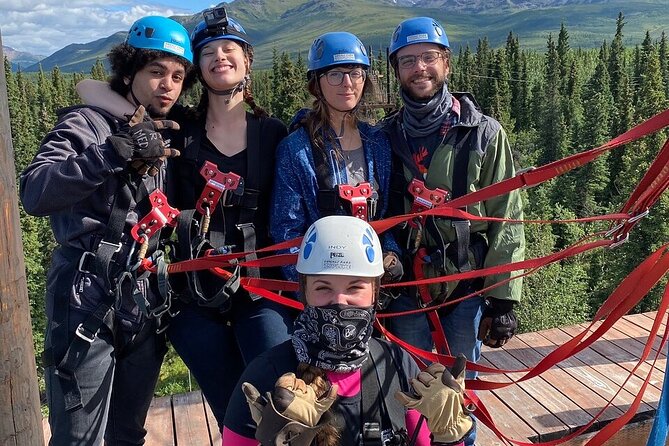
Once you arrive at the zipline course, you get outfitted right away. The tour provides all the key safety items:
- helmet
- gloves
- harness
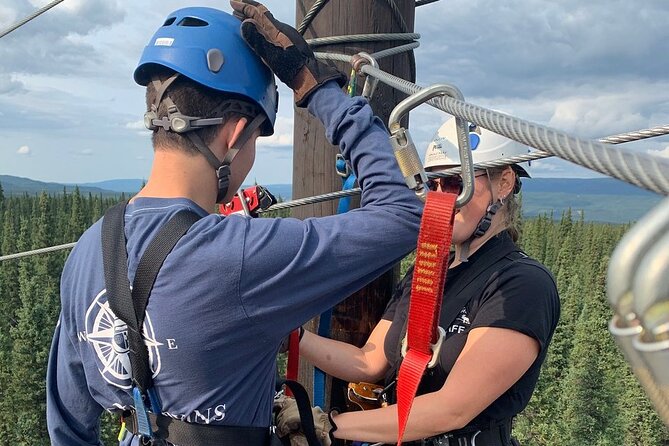
Then you get a safety briefing and instruction on how the course works. This is where the guides really shape the experience. The difference between fun and scary is usually not the zipline—it’s whether you understand what to do at each step, and whether your gear feels properly set.
You’ll move through a sequence: get clipped in, adjust your position, then cross bridges and launch onto ziplines with the guide controlling the rhythm. The best part is that you’re not thrown into chaos. First-time riders often do well when the guide keeps you calm and checks your setup at key moments.
Inside the course: suspension bridges, the Ascending Bridge Tower, and long zip lines
The heart of the tour is six suspension bridges and seven ziplines laid out as a half-day obstacle course through trees.
Suspension bridges: where the real focus happens
Bridges aren’t just a warm-up. Suspension bridges force you to concentrate on balance and foot placement. That means they can feel like the most mentally demanding part, especially if you’re not used to heights or moving on uneven footing.
The upside: once you get over the first bridge jitters, the rest feels more natural. It’s a learn-as-you-go kind of challenge.
Ascending Bridge Tower: the “climb” moment
One standout feature is the Ascending Bridge Tower, designed so you can climb up into the treetops. The course keeps you moving, but this is where you’ll notice the physical requirement most.
If you want a quick self-check: can you handle short climbs and steady steps while wearing gear? If yes, you’ll likely find the tower energizing instead of exhausting.
Ziplines: length, pacing, and views
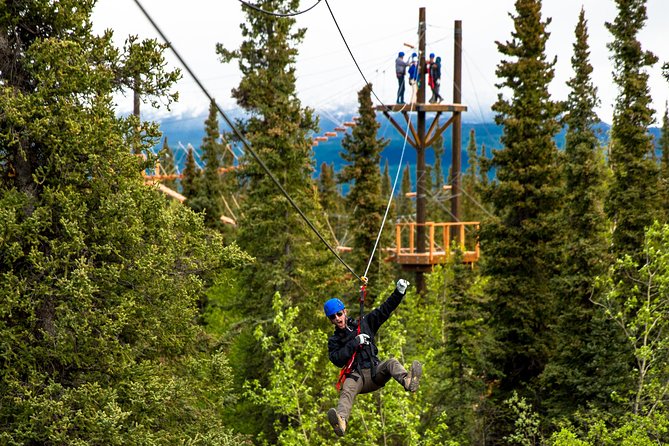
After the bridges come the ziplines—covering a distance of more than half a mile (about 1 km) total. That’s enough airtime to feel like you did more than one novelty ride.
And while you’re crossing, you get sweeping views of the Alaska Range and the boreal forest below. You’re not looking at a screen. You’re looking at real terrain.
The dual racer and hands-free braking: how you enjoy the ride
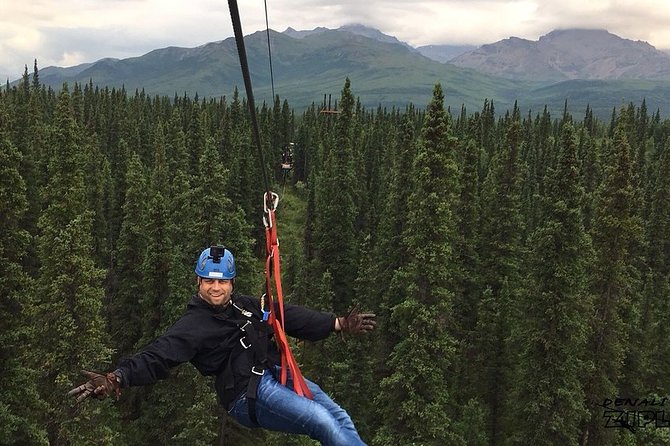
On the final segment, there’s a dual racer zipline that lets you line up with a friend and zip along side-by-side. It’s a fun way to make the end feel like a mini event rather than just the last line.
Then there’s a detail I genuinely appreciate: hands-free braking. That changes the whole feel of the ride. Instead of gripping and bracing through every second, you can relax your hands and take in what’s around you as you slow down.
It also helps your nerves. Most people fear the moment right before the transition—when you’re thinking too hard about control. Hands-free braking shifts your attention back to the experience.
Weather, timing, and what to pack for a Denali day that changes fast
The tour operates rain or shine, so you need to dress for conditions you can’t predict. Denali-area weather can swing quickly, and damp chill plus harness time can feel colder than you expect.
Pack for grip and comfort. You’ll be climbing and moving on the course, so shoes with solid traction matter. Dress in layers you can peel off if you warm up, but keep something wind-resistant if the transfer ride brings a chill.
Also, think about your hands. You get gloves from the tour, but if you’re prone to cold fingers, bring a pair of warm socks or extra layers for the waiting portions.
If wildlife passes through the area on your transfer day, keep an eye out. People have reported wildlife sightings in the general course area during transfers, so it’s worth staying alert while you ride.
Who should book this zipline, and who should skip it
This is a strong choice if you want:
- an adrenaline activity that’s only a half-day (about 3 hours)
- expert guidance instead of winging it
- big views without long treks
- a small-group feel (max 10)
It can also be a good first-zipline option. The guide instruction is built around helping you understand the steps, and the harness setup keeps you attached while you move through the course.
Who should consider another plan
The tour is not recommended for participants with back problems, heart issues, or other serious medical conditions.
It also asks for a moderate physical fitness level. If climbing makes you anxious, try to be realistic about the Ascending Bridge Tower and the overall endurance of crossing bridges and zipping continuously.
Weight matters here too. You must be between 70 and 280 lbs, and you need to list your weight when booking.
And if you’re bringing kids: children must be accompanied by an adult. (That’s the rule, and it keeps expectations clear.)
Should you book the Denali Park Zipline Adventure?
Book it if you want a guided Denali-area adventure that mixes real physical challenge with real scenery, without eating your whole day. The combination of small group size, multiple bridges and ziplines, and certified guides makes it feel like more than a quick thrill.
Skip it (or pick a gentler activity) if you know your body won’t handle climbing and repeated balance tasks, or if you fall into the medical categories listed as not recommended.
If you’re on the fence, a smart move is booking early. This one is typically snapped up well in advance (on average around 75 days), and daily departures mean you might still find something that fits, but the best times can go first.
FAQ
How long is the Denali Park Zipline Adventure?
It runs about 3 hours (approx.).
What’s included in the tour price?
You get round-trip transport from select Denali-area hotels and professional certified guides, plus all required safety gear on the course.
What safety gear do you provide?
You’ll be given a helmet, gloves, and a harness.
How many ziplines and bridges are on the course?
The course includes seven ziplines and six suspension bridges, for a total distance of more than half a mile (about one kilometer).
Do I need a certain weight to ride?
Yes. You must weigh between 70 and 280 lbs, and you must list your weight when booking.
Is the tour offered every day?
Yes. It operates daily, with several departure times to suit your schedule.
Is the tour canceled for bad weather?
No. It operates rain or shine.
Can I cancel for a full refund?
Yes. You can cancel up to 24 hours in advance for a full refund.