
REVIEW · JACKSON
From Jackson Hole: Yellowstone Old Faithful, Waterfalls and Wildlife Day Tour
Book on Viator →Operated by BrushBuck Wildlife Tours · Bookable on Viator
Geysers and bison in one long day. This Jackson Hole small-group tour strings together Grand Teton wildlife viewing in the early morning and big Yellowstone hits like Old Faithful and the Lower Falls of the Grand Canyon of the Yellowstone, guided by a naturalist who explains what you’re seeing.
I love how the early pickup gets you moving while animals are often more active, and how the stops are timed so you’re not stuck guessing what to chase next. I also love the practical touches: binoculars for wildlife viewing and a picnic-style lunch that keeps you fueled without turning the day into a scavenger hunt.
One consideration is that it’s a long day with lots of driving, plus Yellowstone weather can change fast, so you’ll want layers and patience—especially when you’re waiting for geysers.
In This Review
- Key things that make this tour work
- Yellowstone without the guesswork: why this routing feels efficient
- The 5:30 to 6:30 a.m. start: wildlife odds go up
- Grand Teton and Jackson Lake: part view, part context
- Yellowstone’s Lower Loop: where the day actually delivers variety
- Old Faithful and Old Faithful Inn: more than one big moment
- Grand Canyon of the Yellowstone and Lower Falls: the big waterfall payoff
- Fountain Paint Pots and West Thumb: color, steam, and the science of mud
- Hayden Valley: the best shot at big wildlife encounters
- Lunch, snacks, and the small-group reality
- Price and value: what you’re paying for
- Who this tour fits best (and who should rethink it)
- A practical packing list that will save your day
- Should you book this Yellowstone Old Faithful, Waterfalls and Wildlife Day Tour?
- FAQ
- How long is the Yellowstone Old Faithful, Waterfalls and Wildlife Day Tour?
- Where do you pick up in Jackson Hole?
- What time does the tour start?
- Is lunch included?
- Do I need to pay Yellowstone National Park fees?
- What’s the group size?
- Are children allowed?
- Can you accommodate dietary needs or allergies?
- Are service animals allowed?
Key things that make this tour work
- Small group (max 11) means less crowding and more time for questions and spotting.
- Early start through Grand Teton gives you a real wildlife window before Yellowstone gets busy.
- Naturalist-led geology and ecology talk turns stops into understanding, not just photo ops.
- Old Faithful + Lower Falls + multiple geyser basins hits the big Yellowstone variety.
- Easy walks on boardwalks and paths keep the day active without being a hike marathon.
- Partial admissions handled on-site (like Old Faithful and a few other stops) can reduce what you pay at each stop.
Yellowstone without the guesswork: why this routing feels efficient
Yellowstone is huge, and doing it “on your own” often turns into a series of rushed decisions: where to go next, how long lines will be, and whether you’re missing wildlife because you picked the wrong pull-off. This tour solves most of that by rolling you from the Jackson Hole area into the park with a small team and a guide who knows how to read the day.
The vehicle matters. You’re in an enclosed, air-conditioned van, which is a big deal when mornings are chilly and afternoons can feel windy. It’s also built for a full day of stops, not hop-on/hop-off commuting, so you get more time at the points that count.
And yes, you’ll still spend a lot of hours looking out the window. But the payoff is that you get to focus on what you came for: wildlife, geothermal features, and the waterfalls.
You can also read our reviews of more tours and experiences in Jackson.
- Grand Teton Wildlife Safari in a Enclosed or Open-Air Vehicle (season dependent)
★ 5.0 · 1,212 reviews
The 5:30 to 6:30 a.m. start: wildlife odds go up
Pickups run early, starting around 5:30–6:30 AM depending on season. That’s not just for convenience. It’s the practical way to see more wildlife because early light and calmer conditions often mean animals are easier to spot.
On the drive through Grand Teton National Park, the tour pauses for wildlife viewing along the way. This is a smart strategy because it layers the day: you’re not waiting until Yellowstone is done to start seeing animals. You also get that sense of building momentum, with the morning beginning as a real wildlife safari rather than a checklist.
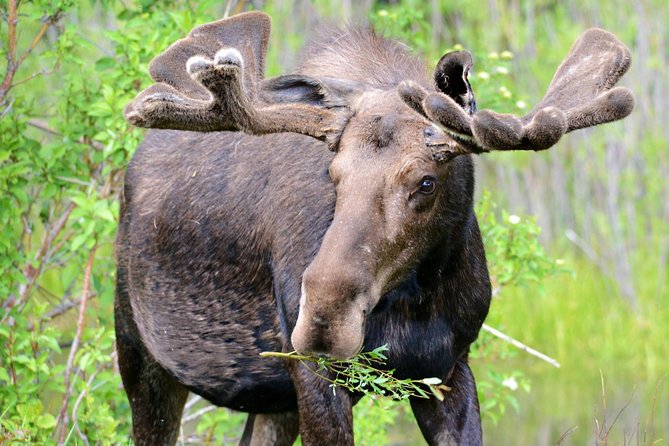
What you’ll likely look for includes big mammals such as bears and elk, plus other park regulars like moose and bison when conditions line up. Even when you don’t see a specific animal, the guide’s job is to help you notice what’s there—tracks, habitat hints, and the spots where animals tend to move.
Grand Teton and Jackson Lake: part view, part context
One of the nice things about including the Tetons route is that it adds context to Yellowstone. The day’s drive isn’t only “getting there.” You’ll pass through areas tied to major water features, including Jackson Lake in Grand Teton National Park.
Jackson Lake’s size and shape are tied to dam history: the dam was originally built in 1911, enlarged in 1916, and rebuilt by 1989. It’s the kind of detail you’d never stumble into on a self-guided drive, and it helps you understand why water looks and behaves the way it does in this region.
You also get a stop at Oxbow Bend in Grand Teton National Park—one of those classic bends where Mount Moran frames the background and the Snake River curves into the foreground. On non-windy mornings, you can sometimes catch mirror-like reflections. Even if the water isn’t cooperative, it’s still a strong “pause and reset” moment before the Yellowstone leg ramps up.
Yellowstone’s Lower Loop: where the day actually delivers variety
Once you enter Yellowstone proper, you’ll work through the Lower Loop, which is designed to give you a mix of wildlife country, geothermal basins, and major scenery. You’ll also hear commentary that connects history, ecology, geology, and wildfires to what you’re watching from the roadside and boardwalks.
The Lower Loop is a great choice because Yellowstone’s geothermal energy isn’t scattered randomly—you can see how hot-water systems and volcanic rock shape the park. The tour leans into that. You’re not just told where to stand; you’re helped understand why the terrain looks like it does.
There’s also a wildlife angle built into the timing. The tour targets areas that often produce sightings, and it keeps moving when it needs to. Still, you’ll never feel like you’re sprinting from stop to stop. Instead, the rhythm tends to be: drive, watch, scan, stop, short walk or boardwalk segment, then back in the van.
Old Faithful and Old Faithful Inn: more than one big moment
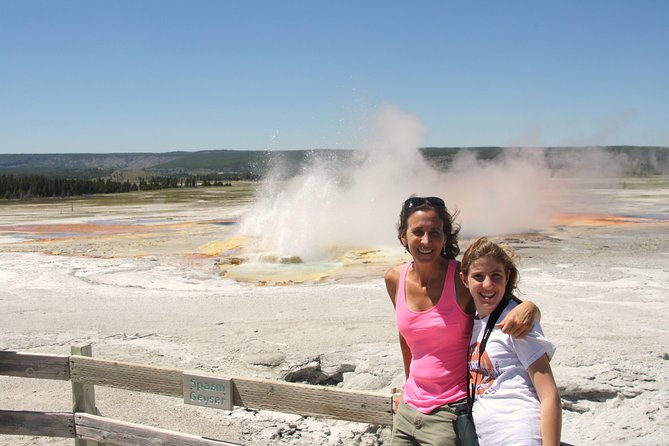
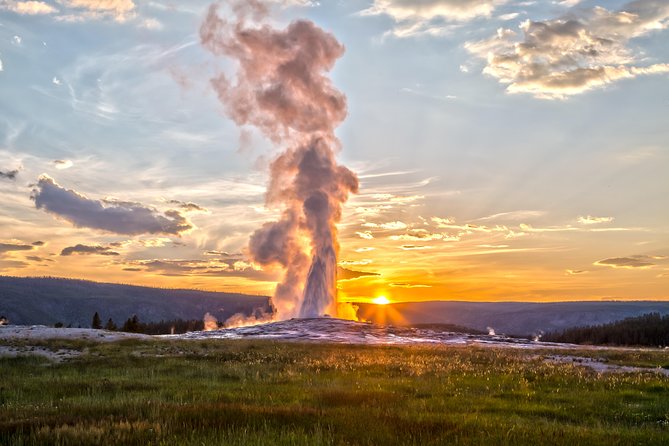
Old Faithful is the headline, and the tour treats it like one. You’ll watch the eruption from a nearby wooden boardwalk, which is exactly what you want for a clear view and a good waiting spot.
The timing here matters. Old Faithful has eruptions that are frequent enough for the name to make sense, but no two moments are identical. Waiting with a guide who can explain the system makes the wait feel shorter and more interesting than just staring at steam.
Right after, you’ll also have time at Old Faithful Inn, including its historic interior. The Inn was built in 1903–1904 using local logs and stone from what is now Yellowstone National Park area. It’s considered the largest log structure in the world. In the lobby you’ll notice a massive stone fireplace and a hand-crafted clock made from copper, wood, and wrought iron.
If you care about “how places were built,” this is one of the most satisfying parts of the day. It turns Old Faithful from a single eruption into a story about the people who shaped tourism here.

Grand Canyon of the Yellowstone and Lower Falls: the big waterfall payoff
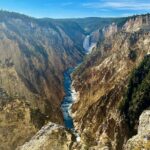
The tour goes to the Grand Canyon of the Yellowstone area and then heads toward Lower Falls, the park’s biggest waterfall at 308 feet.
What I like about this stop is that the guide can explain what’s behind the drama. The canyon colors come from hot water acting on volcanic rock, and there’s a historical layer too: the Minnetaree name was based on yellow stone (translated by French trappers as roche jaune). You get an extra layer of meaning when you know the color isn’t just “pretty”—it’s chemistry and heat doing their thing.
Lower Falls is also a classic place where you can feel how fast time moves in geology terms. The canyon has been downcut rapidly more than once, possibly tied to glacial outburst floods. Even if you don’t remember every detail, it changes the way you look at the canyon walls.
Fountain Paint Pots and West Thumb: color, steam, and the science of mud
Between big waterfalls and big geysers, the tour slips in a stop that helps break up the crowds and reset your eyes: Fountain Paint Pots.
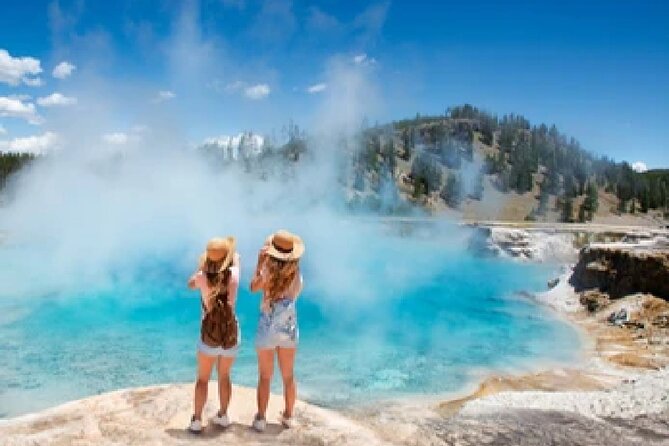
These are mud pots in the Lower Geyser Basin. The colors—rich reds and vivid yellows and browns—come from oxidation states of iron in the mud. It sounds technical, but it’s an easy mental picture once you’re there: the ground is changing, and the minerals are showing you that change.
Then later you’ll head to West Thumb Geyser Basin. This area sits alongside Yellowstone Lake, and you’ll walk the boardwalk to see geothermal pools up close. It’s a different feel from Old Faithful’s dramatic timing. Here, it’s more about observing patterns: how steam vents, how water looks, and how the shoreline and hydrothermal activity connect.
A nice bonus is the Yellowstone Lake segment on the Grand Loop Road between Fishing Bridge and Grant Village, which gives you breathing room and a broader sense of the park’s water system before you move back into geothermal territory.
Hayden Valley: the best shot at big wildlife encounters
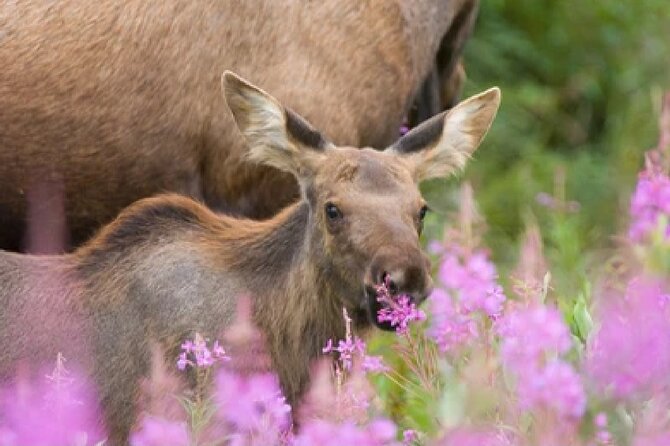
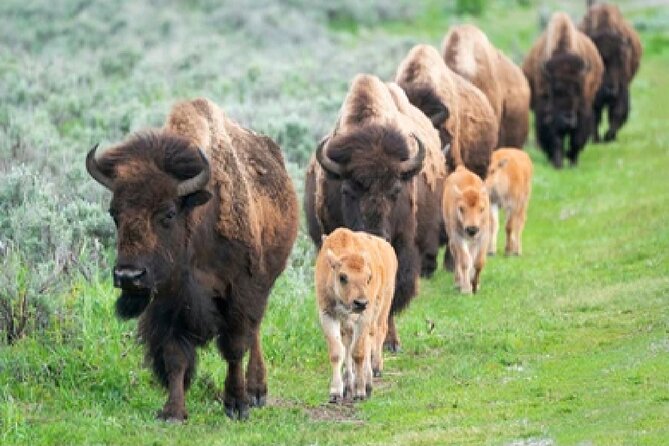
Hayden Valley is where a lot of Yellowstone’s wildlife energy concentrates, and this tour treats it as a core wildlife stop. The area is known as a strong bison zone and it’s also a common place to spot predators and other mammals depending on the day.
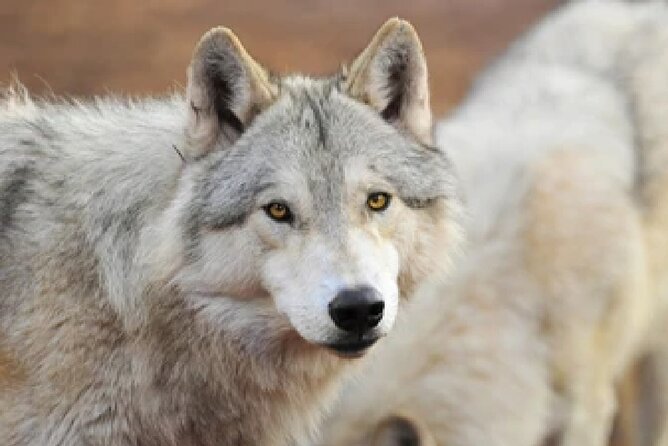
From your vehicle, you’ll watch for animals such as bears and wolves when conditions are right, along with elk and bison. You might also spot smaller critters and birds, since the guide keeps scanning and uses the group’s binoculars effectively.
Even when wildlife is quiet, Hayden Valley can still deliver because it’s visually open. You’re not trapped by thick forests or limited sightlines. You’re in a better position to spot movement and to track where animals might be heading.
Lunch, snacks, and the small-group reality
A picnic-style lunch is included, served by the guide, with snacks and beverages also provided. This is a big deal on a full-day park plan because it prevents the typical Yellowstone problem: you burn time hunting food, then you get stuck hungry at the wrong moment.
You’ll also have binoculars per person/scope for the group, which turns wildlife viewing from a hope into a skill you can use right away. If you’ve ever been on a tour where you can’t see what everyone is pointing at, this feature matters.
The van rides are comfortable enough for a long day. And from the overall tone of the experience, guides tend to build in practical stops when needed—so the focus stays on spotting and learning instead of stress.
Price and value: what you’re paying for
At $329 per person, this isn’t a cheap add-on. But it’s also not only paying for “transport and tickets.” You’re paying for a guided routing that covers a lot of Yellowstone highlights plus wildlife-focused driving through the Tetons.
Here’s how the value math shakes out:
- You get professional interpretive guiding for a full day, including geology and ecology explanations.
- You get hotel pickup and drop-off in the Jackson Hole area, which removes a chunk of the hassle and timing issues.
- You get included food (picnic-style lunch) plus snacks and beverages.
- You get binocular support, which can dramatically improve your viewing.
- Some specific stop admissions are included, such as Old Faithful, Old Faithful Inn, Fountain Paint Pots, Hayden Valley, and West Thumb Geyser Basin—while park fees (about $40) are still typically on you at the gate.
So you’re paying for coordination. If you’re comfortable driving yourself, you might be able to spend less. But if you want less decision fatigue and more time actively watching, the structure becomes the value.
Who this tour fits best (and who should rethink it)
This tour is a good match if:
- You want a tight, guided plan that hits Yellowstone’s major geothermal and waterfall stops.
- Wildlife is a top priority, and you like the idea of scanning in multiple zones during daylight.
- You prefer short boardwalk walks and easy pathways rather than long hikes.
- You’d rather study the park with a naturalist than try to figure it out solo.
You might rethink it if:
- You want a very flexible schedule with long independent stops. This is a structured day.
- You’re traveling with young kids, since children 5 and younger aren’t allowed.
- You’re extremely sensitive to early mornings. The start is early every day of operation.
Also, the experience requires good weather. If it can’t run well due to weather, you’ll be offered a different date or a full refund. It’s also non-refundable if you cancel for personal reasons.
A practical packing list that will save your day
- Wear sturdy walking shoes for boardwalks and uneven geothermal ground.
- Bring a jacket and layers. Mornings can be chilly, and conditions shift.
- Have a camera ready, but also keep your phone charged. You’ll likely want photos at Old Faithful boardwalk viewpoints and canyon overlooks.
- If you use binoculars often, bring eye comfort accessories, but the tour provides binoculars/scope for group use.
- Use the included lunch and snacks to stay steady. Waiting for Old Faithful can take time, and you’ll enjoy the day more if you’re not hungry.
Should you book this Yellowstone Old Faithful, Waterfalls and Wildlife Day Tour?
If your Yellowstone wish list includes Old Faithful, Lower Falls, geothermal basins like Fountain Paint Pots and West Thumb, plus real wildlife searching through the Tetons first, this tour is a strong fit. The small group size (max 11), hotel pickup, interpretive guidance, and the mix of stops make it a practical way to see a lot without driving yourself into decision overload.
Book it if you want guidance, comfort, and maximum time spent looking out the window. Skip it or consider another style of trip if you crave total freedom and long independent stops, or if early mornings feel like a dealbreaker for you.
FAQ
How long is the Yellowstone Old Faithful, Waterfalls and Wildlife Day Tour?
The tour runs about 13 hours (approx.).
Where do you pick up in Jackson Hole?
Pickup is available from most hotels in the Jackson Hole area, including Teton Village, Jackson, and Wilson. If you’re staying outside those towns, you’ll need to meet at pre-arranged locations.
What time does the tour start?
The listed pickup window is 5:30 AM to 6:30 AM.
Is lunch included?
Yes. The tour includes a picnic-style lunch plus snacks and beverages.
Do I need to pay Yellowstone National Park fees?
Yes. National Park fees are not included and are approximately $40. You can buy your park pass at the park gate. Some specific stop admissions are listed as included.
What’s the group size?
The tour has a maximum of 11 travelers.
Are children allowed?
Children 5 years and younger are not allowed.
Can you accommodate dietary needs or allergies?
Yes. You can share dietary requirements in the Special Requirements box during checkout, or by emailing after booking through Manage my Booking.
Are service animals allowed?
Yes, service animals are allowed.
You Might Also Enjoy

More Tour Reviews in Jackson
- Grand Teton Wildlife Safari in a Enclosed or Open-Air Vehicle (season dependent)
★ 5.0 · 1,212 reviews
Not for you? Here's more nearby things to do in Jackson we have reviewed
- Grand Teton Wildlife Safari in a Enclosed or Open-Air Vehicle (season dependent)
★ 5.0 · 1,212 reviews