REVIEW · PORTLAND
Harbor Lights and Sights Cruise
Book on Viator →Operated by Portland Discovery Land & Sea Tours · Bookable on Viator
A waterfront viewpoint beats any postcard. This Portland Harbor cruise blends lighthouse history with real working-bay scenery as you glide through Casco Bay sights. You’ll get a guided sweep of the harbor’s key landmarks, from the oldest lighthouse in Maine to islands that feel a world away from downtown.
I especially like the practical onboard setup: a bar, snacks, and comfortable restrooms make the trip feel easy, even in cool weather. I also like the way the narration ties the visuals together, so you’re not just staring at buildings and buoys—you’re getting the why behind what you see.
One thing to plan for: this is a cruise, so wind and choppy water can happen. Bring layers, and don’t let a gray forecast trick you into expecting a calm, sunny sightseeing stroll.
In This Review
- Key highlights to know before you go
- Entering Portland Harbor at 170 Commercial St: A Simple Start
- 1 Hour 45 Minutes Over Casco Bay: What the Timing Gives You
- Maine’s George Washington Lighthouse Stop: Why This One Matters
- The 1897 and 1855–Era Lighthouses: Shipping Channel Clarity
- Hog Island Ledge and Fort Sumter–Style History in Casco Bay
- The 1905 Lighthouse Twin and Northern Entrance Views
- Islands, Diamond Pass, and the Halfway Rock Seal Habitat
- Onboard Comfort and the $54 Value: More Than a Pretty Ride
- Who This Cruise Fits Best (And Who Might Want Something Else)
- Best Photo and Comfort Tips That Actually Matter
- Should You Book Harbor Lights and Sights Cruise?
- FAQ
- How long is the Harbor Lights and Sights Cruise?
- Where does the tour start?
- What will I see on the cruise?
- Is there food or drinks onboard?
- What language is the tour offered in?
- What if weather is bad?
- Can I get a refund if I cancel?
Key highlights to know before you go
- Maine’s oldest lighthouse commissioned by George Washington, with strong photo angles
- Bug Light and other classic stations along the Portland shipping channel
- Hog Island Ledge and a Civil War–era fort modeled after Fort Sumter
- Casco Bay islands like Peaks, House, Cushing, and the Diamond Islands
- Halfway Rock seal habitat, with a good chance to spot wildlife depending on conditions
- Onboard comfort: bar, snacks, and restrooms included during your sailing
Entering Portland Harbor at 170 Commercial St: A Simple Start
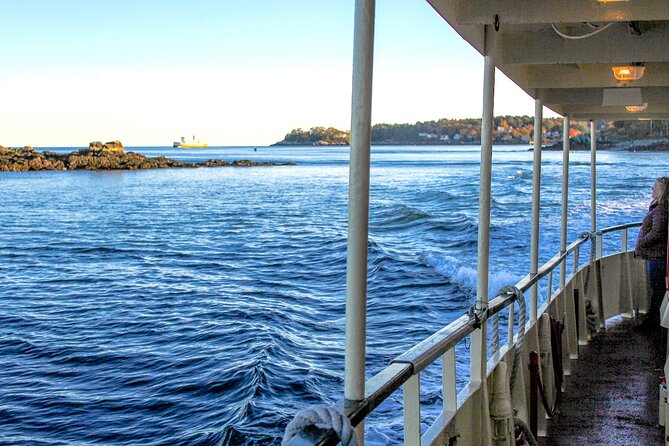
The tour starts at 170 Commercial St, Portland, ME 04101, right where the city turns into working water. That’s a good thing. You don’t need a car, you don’t need to hunt parking, and you don’t need to line up across multiple stops. You just get on the boat and let the harbor do the talking.
The cruise runs about 1 hour 45 minutes, which is just long enough to cover major landmarks without turning into a half-day production. It’s also a nice length for mixed groups: kids, grandparents, and lighthouse fans can all stay engaged without anyone getting cabin fever.
With a maximum group size of 80 travelers, you should still feel like you’re part of a crowd, but not in a chaotic way. The boat layout matters here. If you’re serious about photos, plan to arrive early so you can choose your spot comfortably before you cast off.
You can also read our reviews of more tours and experiences in Portland.
- The Real Portland Tour: City and 3 Lighthouses Historical Tour with a Real Local
★ 5.0 · 1,448 reviews
1 Hour 45 Minutes Over Casco Bay: What the Timing Gives You
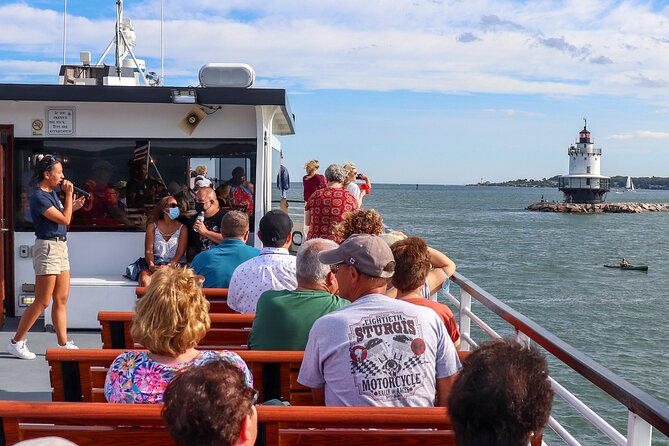
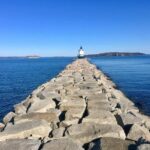
This is a “see a lot, learn while you see” cruise. The pacing works because it stays focused on the harbor corridor: lighthouses, forts, and island passes. You’re not driving past landmarks with long gaps between viewpoints. Instead, you’re moving along the water where these places actually make sense.
That timing also helps with weather. Yes, wind can hit you, but you’re only out for about two hours. If it’s cold, you’ll feel the bite—but you’re not stuck out there for an entire afternoon. It’s a practical sweet spot for a coastal day.
Also, since it’s commonly booked about 18 days in advance, it’s smart to reserve early, especially if you’re traveling during peak fall scenery or weekends when Portland draws big crowds.
Maine’s George Washington Lighthouse Stop: Why This One Matters
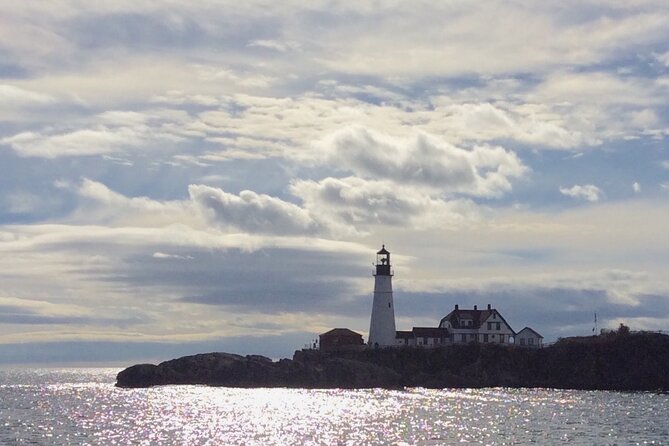
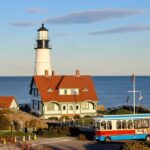
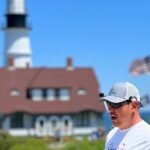
One stop on your route is Maine’s oldest lighthouse, commissioned by George Washington. Even if you don’t know anything about lighthouses, you’ll feel the significance fast. It’s one of the most photographed lights in the region, and that’s not just hype. The structure is visually strong, and the harbor setting puts it into context.
This kind of lighthouse isn’t just a pretty tower. It’s tied to early American navigation and the idea of guiding ships safely along a busy coastline. When you see it from the water, you also understand something important: these lights were placed where they could do real work, not where they’d look best from land.
Photo tip that’s worth acting on: if you’re aiming for the cleanest views, take your spot early and pay attention to which side of the boat gives you a better line of sight. The harbor is full of angles, and the right seating can make the difference between a sharp shot and a blurry one.
The 1897 and 1855–Era Lighthouses: Shipping Channel Clarity
Next comes a lighthouse constructed in 1897, marking the west side of the Portland shipping channel. This is the practical half of the lighthouse story. Instead of focusing on romance, this stop shows how navigation systems were built into the coastline. You’ll likely notice the difference between scenery you visit and infrastructure that still matters.
Then you’ll see the lighthouse constructed in 1855, designed by Thomas Walter, who also designed the US Capitol dome and the East and West Wings. That’s a fun connection, because it links a famous American architectural name to a maritime landmark you’d never expect. You’re watching history made from the same design brain that influenced major civic buildings.
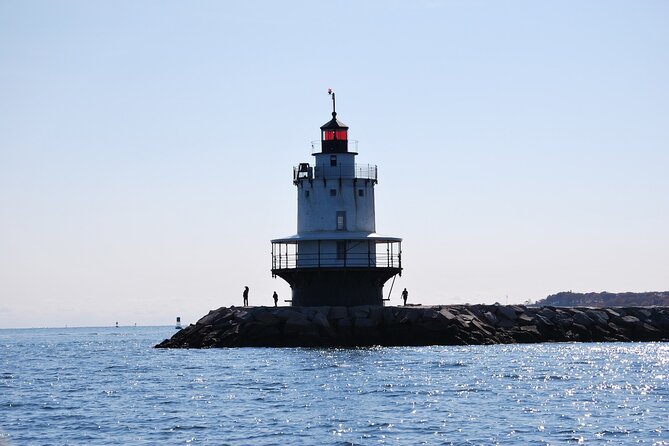
And right alongside this stop is Bug Light, often described as a smaller lighthouse around the area, featuring six Corinthian columns around its base. That detail matters. Corinthian columns aren’t random decoration; they signal a level of care and craftsmanship that makes the lighthouse feel more like a monument than a utility.
A key takeaway for your brain: these lighthouses aren’t just “things you see.” They’re markers that help explain how ships moved through Portland’s waters, where entrances and boundaries needed clear signals.
Hog Island Ledge and Fort Sumter–Style History in Casco Bay
A highlight for history lovers is the Civil War–era fort in Casco Bay on Hog Island Ledge. The fort is described as being modeled after Fort Sumter in Charleston, South Carolina, which gives you a mental map: it’s part of a broader US coastal defense story.
What makes this stop especially interesting is the way its role shifted later. It was used as a storage facility in WWI and WWII. That’s a powerful reminder that coastal sites often keep changing jobs over time, responding to new needs rather than becoming museum pieces.
From the water, fort ruins and ledges can look smaller than you imagine. But that’s exactly why a cruise works. You get the correct scale of the coastline’s shape and the difficulty of navigating around ledges like Hog Island Ledge. This is where you start thinking like a ship crew, not like a tourist.

The 1905 Lighthouse Twin and Northern Entrance Views
Another stop features a historic lighthouse on Casco Bay constructed in 1905. It’s described as a twin of Graves Light off Boston, and it marks the northern entrance into Portland Harbor.
This is where the cruise gives you a sense of the harbor’s geography. Portland Harbor isn’t one single scene. It’s entrances, boundaries, and routes. Seeing a lighthouse positioned at an entrance helps you understand how ships transitioned from open water into a more controlled, safer harbor approach.
If you like symmetry, this twin detail is a nice payoff. It’s also a reminder that maritime engineering often follows patterns across regions—different coasts, similar solutions.
Islands, Diamond Pass, and the Halfway Rock Seal Habitat
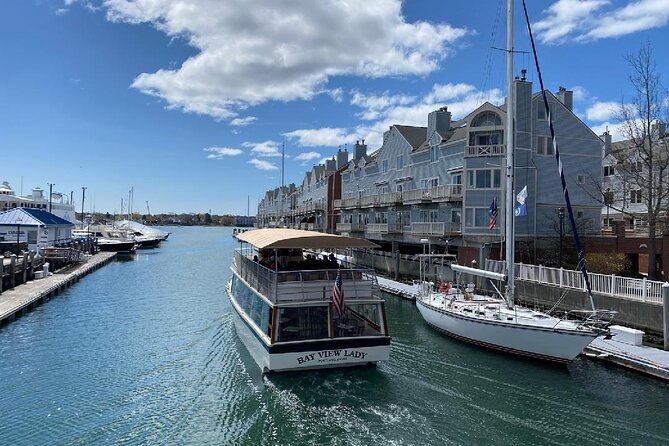
Once you’re past the main lighthouse-and-fort sequence, the scenery expands. You’ll take in island views around Portland and Casco Bay, including Peaks Island, House Island, Cushing Island, Little and Great Diamond Islands, Diamond Pass, and Halfway Rock—a seal habitat.
This part is where you can relax. The narration stays informative, but you also get quieter stretches to look out and enjoy the feel of the bay. Islands from the water look different than they do from shore. You see how close they are to the routes ships take, and you get a better sense of what “being offshore” means.
Wildlife timing is always a question at sea, so don’t treat seals as guaranteed. But a seal habitat stop is still a strong signal that the cruise is built for spotting. If conditions are right, this can become the moment your camera actually earns its keep.
Onboard Comfort and the $54 Value: More Than a Pretty Ride
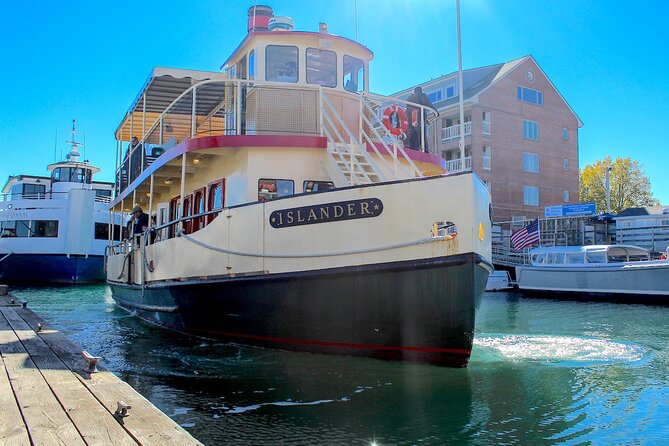
The price is $54 per person, and the real question is whether you’re paying for views only or for a full experience. Here’s what makes the value feel fair:
- You get bar service and snacks during the cruise.
- You have comfortable restrooms onboard, which is not a small deal on a windy outing.
- The route covers multiple major landmarks in about 1h45, which would be hard to reproduce efficiently on your own without planning around parking and traffic.
- The narration is repeatedly praised for tying together the sights, so you’re not just floating through scenery.
Your trip isn’t just a photo session. It’s also a moving history lesson with the added benefit of being visually engaging. If you’ve got a tight itinerary in Portland, this works as a “best of the water” sampler.
One practical warning from real-world sailing: water can get choppy. If you know you’re sensitive to motion, consider that before booking. A short cruise helps, but it doesn’t eliminate wave action.
Who This Cruise Fits Best (And Who Might Want Something Else)
This is a strong match if you want a port view of Portland without the stress of driving. It suits:
- Families who want a manageable time window and restroom access onboard
- Couples looking for a scenic activity that feels different from walking downtown
- Lighthouse fans who like architectural details and historic context
- First-timers in Portland who want the harbor story fast
It might be less ideal if you hate cold wind or you get uncomfortable with boat motion. In that case, you can still go—you just need good layers and realistic expectations about sea conditions.
If you care deeply about audio clarity, pick your spot thoughtfully. Some seating positions can make narration harder to catch, especially in busier sections of the boat. Arriving early helps you choose where you’ll hear best.
Best Photo and Comfort Tips That Actually Matter
You can make this cruise much better with a few choices:
- Arrive early: the boat often feels easier once you’re not trying to pick a spot while everyone else is crowding.
- Aim for the right side when facing forward if you want improved photo opportunities. Harbor angles change fast, and the side you choose can matter.
- Dress for wind: even if the air feels tolerable on land, salt air and moving water can feel colder.
- Plan for layered comfort: bring a warm top you can peel down if you’re inside near the bar area, then pull it back on deck.
And if the day is overcast, don’t panic. You still get the structure and silhouette of lighthouses, plus the islands look crisp against the gray sky.
Should You Book Harbor Lights and Sights Cruise?
If you want a simple, scenic way to understand Portland from the water, I’d book it. For $54, you get major lighthouses, Civil War–era fort history, island scenery, and likely wildlife, plus snacks, restroom access, and bar service during the ride. The overall star rating is high, and the recommendations are strong, which usually means the experience lands for a lot of different types of visitors.
I’d especially choose this if you’re short on time and you want the harbor’s story in one go. On the other hand, if you’re extremely heat-or-cold sensitive or you’re prone to motion sickness, pick your day carefully and dress smart.
FAQ
How long is the Harbor Lights and Sights Cruise?
It runs about 1 hour 45 minutes.
Where does the tour start?
The meeting point is 170 Commercial St, Portland, ME 04101, USA. The tour ends back at the meeting point.
What will I see on the cruise?
You’ll pass major sights including Maine’s oldest lighthouse commissioned by George Washington, multiple other historic lighthouses (including Bug Light with Corinthian columns), a Civil War–era fort on Hog Island Ledge, and island views around Casco Bay, including Halfway Rock seal habitat.
Is there food or drinks onboard?
Yes. There’s a bar and snacks onboard, and there are comfortable restrooms.
What language is the tour offered in?
The tour is offered in English.
What if weather is bad?
This experience requires good weather. If it’s canceled due to poor weather, you’ll be offered a different date or a full refund.
Can I get a refund if I cancel?
You can cancel for a full refund if you cancel at least 24 hours before the experience’s start time.
You Might Also Enjoy
More Tour Reviews in Portland
- The Real Portland Tour: City and 3 Lighthouses Historical Tour with a Real Local
★ 5.0 · 1,448 reviews
Not for you? Here's more nearby things to do in Portland we have reviewed
- The Real Portland Tour: City and 3 Lighthouses Historical Tour with a Real Local
★ 5.0 · 1,448 reviews