REVIEW · KAUAI
Kauai: Hughes 500 4-Passenger Doors-Off Helicopters
Book on Viator →Operated by Airborne Aviation Tours · Bookable on Viator
Doors off over Kauai feels like flying through postcards. What makes this one so interesting is the combo of a Hughes 500 with open-door views and a small group of four, so you spend nearly an hour seeing waterfalls and cliff country up close. I love the photo-friendly, glass-free sightlines from every seat, and I love the way the firefighting-trained pilot talks you through what you’re looking at. The main drawback to plan around: you’re exposed to rain and wind, so bring a real rain layer.
Expect a fast, awe-filled flight loop—canyons, big waterfall drops, and the Na Pali Coast—plus a pass near Kauai’s wettest spot. If you hate being cold or you’re very sensitive to motion, you’ll want to think carefully before you book this doors-off format.
In This Review
- Quick take: what stands out most
- Doors-off in a Hughes 500: why this format is the point
- Meet the crew, get your headset on, and understand the seating rules
- The flight route in plain language: from Jurassic Park to the Na Pali edges
- Manawaiopuna Falls: the Jurassic Park 380-foot moment
- Waimea Canyon’s waterfall math: 10 miles of canyon texture
- Na Pali Coast: 17 miles of seacliffs over 3000 feet
- Hanalei Valley: more waterfalls and rivers, less cliff drama
- Waialeale-area weather: the wettest spot on Earth
- What to pack: rain jacket, warm layers, and camera tethering
- Price and value: why $369 can feel fair (or not)
- Who should book this helicopter flight (and who should pause)
- Quick booking checklist (the stuff that actually helps)
- Should you book the Hughes 500 doors-off tour on Kauai?
- FAQ
- How long is the helicopter tour?
- How many people are on the flight?
- Are all seats window seats?
- Where is the meeting point?
- Can I bring a camera?
- What are the weight restrictions?
- What is the minimum age?
- Does weather affect the tour?
- Are there any restrictions like scuba diving?
- Can I cancel for a full refund?
Quick take: what stands out most
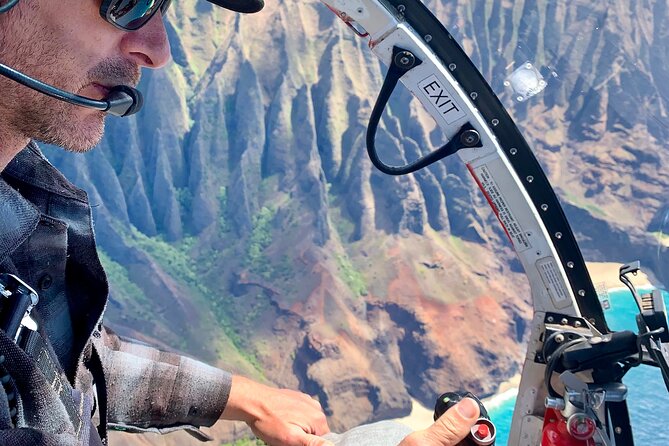
- Every seat is a window seat, and seating is assigned by weight for balance
- Open-door flying gives you the closest views (and cleanest photos) of Kauai’s waterfalls and cliffs
- Tiny group size (up to 4 total) keeps the experience intimate
- Firefighting-trained pilot leads the route and narration
- A one-hour loop hits Jurassic Park’s Manawaiopuna Falls, Na Pali, Hanalei, and Waialeale/Waialeale-area rain country
- Weather matters because you’re not protected from the elements
Doors-off in a Hughes 500: why this format is the point
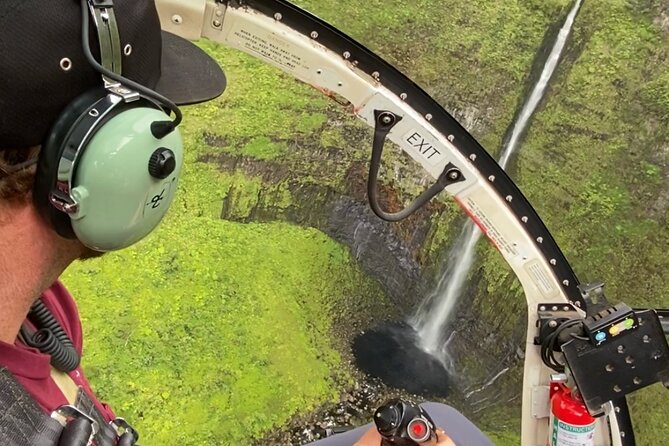
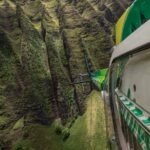
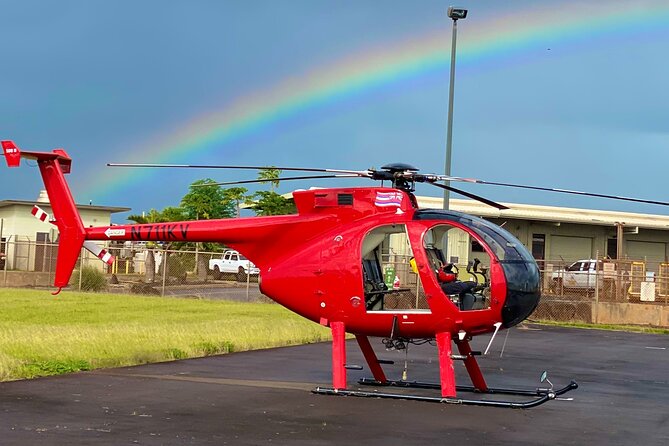
Kauai from the air is already special, but doors-off changes the whole feeling. Instead of watching from behind a barrier, you’re watching from right at the edge of the action. The Hughes 500 they use is set up so that you get window-seat viewing from every position, which is a big deal when you’re paying for a short, high-impact flight. You’re not stuck with a “worst seat” view.
This tour is also designed for speed. In about an hour you cover the kind of terrain that usually takes hours of driving (and multiple stops) to even partially see. From a practical standpoint, that means you can fit this into a packed Kauai schedule without turning your day into a logistics puzzle.
And yes, the visuals are the headline: waterfalls dropping off steep canyon walls, the green canyons, and the Na Pali Coast’s dramatic seacliffs. But what I like most is how direct the route is. You’re not doing a long “waving at the island” flight. You’re doing a focused route meant to show you the signatures—especially the cliff-and-water combination Kauai is famous for.
You can also read our reviews of more tours and experiences in Kauai.
Meet the crew, get your headset on, and understand the seating rules
Check in is early—plan to arrive 30 minutes before your flight time. Your group boards as a shared flight (up to 4 total passengers), and you’ll wear a communication headset once you’re seated. That headset isn’t just for safety; it’s what lets the pilot keep you informed as the scenery changes quickly.
Here’s a key detail that affects your experience: seating is determined by weight & balance. It’s not random. The pilot sits in the left-front position, and the passenger seats are fixed by that balance assignment:
- Passenger 1: front-center window seat
- Passenger 2: front-right window seat
- Passenger 3: left-rear window seat
- Passenger 4: right-rear window seat
Every seat is a window seat, so you won’t feel “stuck” in the middle looking at nothing. But if you’re the kind of person who likes the most dramatic angles, it can still matter where you land in the lineup.
Also, you’re in an open-door helicopter, so dress and comfort matter more than you’d think. Plan for wind chill. Several guests specifically advised dressing warm, and at least one mentioned gloves and a proper rain jacket. The message is consistent: the view is amazing, but the air can be chilly and wet.
The flight route in plain language: from Jurassic Park to the Na Pali edges
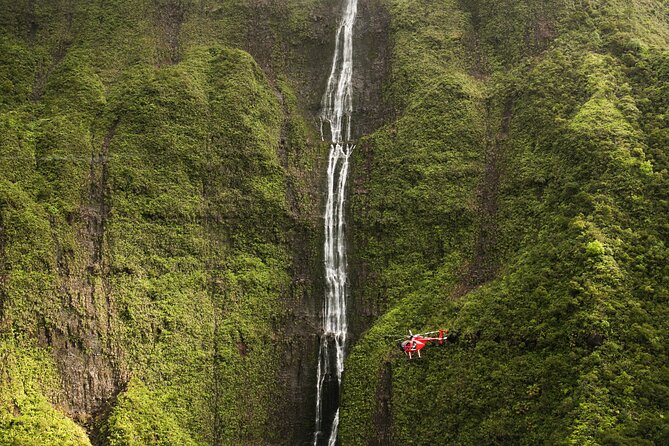
The scenic loop is paced like this: you start with the waterfall features tied to Jurassic Park, then you move into canyon systems with multiple falls, and then you sweep toward the Na Pali Coast. After that, you transition into Hanalei Valley scenery and finish near Waialeale, the island’s famously wet area.
This matters because each area “reads” differently from the air. Waterfall zones look like white threads and streaks against deep green. Canyon country looks textured and layered—like you’re seeing the island’s map in 3D. And the Na Pali Coast is about scale: cliffs that tower hundreds (and in some spots, thousands) of feet, with ocean-blue depth dropping away quickly.
You don’t get long stops to get out and walk around. Instead, you get short, high-focus passes—enough time to photograph and take it in, then off to the next signature.
Manawaiopuna Falls: the Jurassic Park 380-foot moment
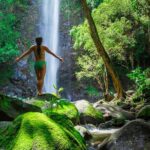
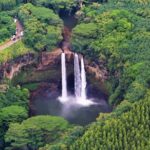
The tour’s first listed highlight is a 380-foot waterfall featured in the Jurassic Park films. From the helicopter you’re not just seeing a “pretty fall.” You’re seeing the drop—how far water falls before it even becomes a pattern on the rock and mist below.
From a value angle, this is smart. Manawaiopuna Falls is hard to fully appreciate from the ground. Up in the air you get the vertical context—where the water enters the canyon walls and where it spreads out through the landscape.
If you’ve seen the movie and have been waiting for the real thing, this is the stop that tends to click fastest. The helicopter perspective makes it feel less like a location and more like a character in the landscape.
Waimea Canyon’s waterfall math: 10 miles of canyon texture
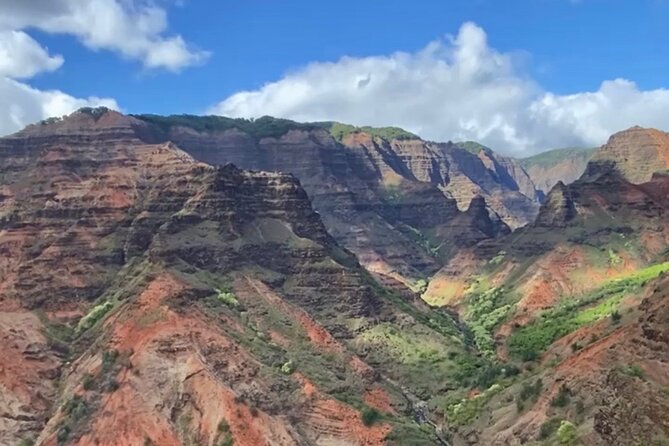
Next you move into canyon country tied to Waimea Canyon State Park. The canyon here is described as about 10 miles long and 3 miles wide, filled with multiple waterfalls.
What you’re really buying with this part of the route is texture. On land, waterfalls can look separated—like different points on a drive. From above, they read as a system. You start to see how many small channels feed into the main drops and how the canyon walls shape the water’s path. It gives you a much clearer sense of why Kauai’s water is such a defining feature of the island.
One practical note: rain can be part of the show. In heavier rain, the canyon can look more saturated and streaked. If it’s clear, you’ll still see lots of detail. Either way, this canyon section is where you’ll likely feel the “I’m seeing something I can’t get any other way” payoff.


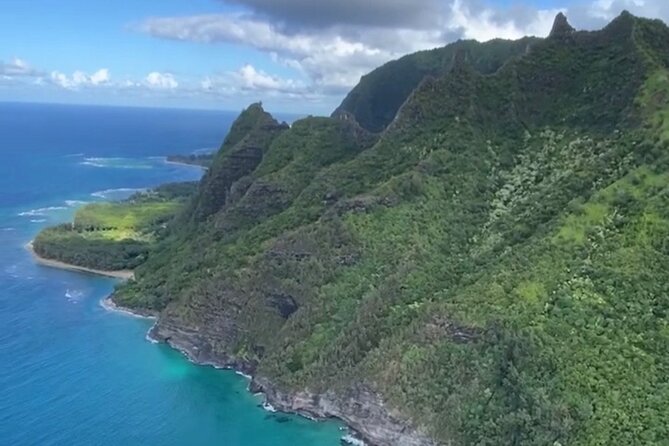
Na Pali Coast: 17 miles of seacliffs over 3000 feet
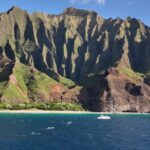
Then comes the main event: the Na Pali Coast. The route notes it as 17 miles long, with massive seacliffs towering over 3000 feet above sea level.
This is where doors-off really earns its keep. The Na Pali Coast isn’t just high; it’s steep. From a helicopter you get that immediate sense of the cliff’s face and the way the coastline bends and disappears into the distance. It’s the kind of view that’s hard to grasp in photos because your brain reads scale differently from up there.
Guests also note that the pilot makes sure everyone has chances for picture time. Even if your seat isn’t perfectly “front row,” the fact that all seats are windows gives you more flexibility than many tours where only a few people get the best lines.
One more reality check: you’re exposed. If you’re sensitive to wind chill, plan for it. If you’re nervous about heights, the open-door setup may feel intense. I’d call this an unforgettable view, but it’s also not the place to force yourself if you already know you’ll panic.
Hanalei Valley: more waterfalls and rivers, less cliff drama
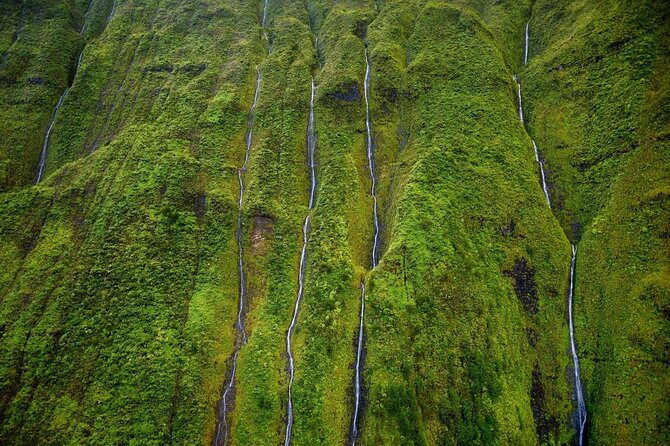
After the Na Pali Coast, the flight shifts to Hanalei Valley. The route describes it as featuring more waterfalls and scenic rivers.
This section is different in mood. Where the Na Pali Coast is about sheer cliff scale, Hanalei Valley gives you a softer pattern: waterways, valley greens, and waterfall moments that feel integrated into the land instead of bursting out of towering walls.
From a photography standpoint, it’s a good complement to the earlier cliff country. You get variety in subject—water that’s still dramatic, but framed by river-like flow and valley shapes.
If you’re the type who wants the island in one coherent story—ocean cliffs, deep canyons, then valley water—this stop helps connect the dots.
Waialeale-area weather: the wettest spot on Earth
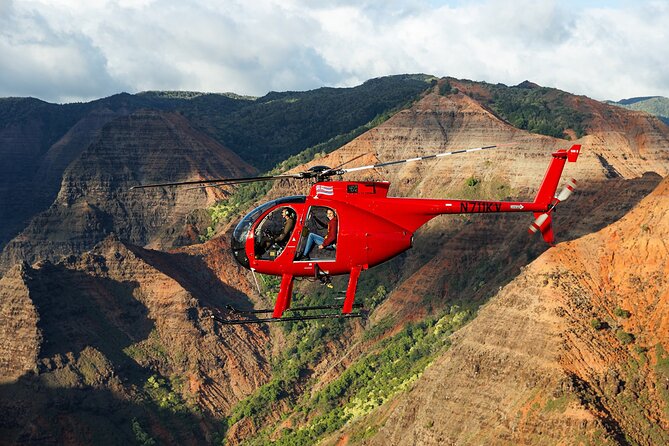
The final highlight is Waialeale, described as the wettest spot on Earth with average rainfall exceeding 450 inches per year.
Even if you never step into that mist on the ground, the helicopter pass gives you a sense of what the climate does to the island. You can often see how water clings to slopes and how the green looks different when the air and terrain are feeding it constantly. It’s not just pretty; it’s evidence.
If you’re visiting Kauai in a drier season, this is one of the places where you might still see evidence of the island’s heavy-water identity. And if it’s raining, well—this is where you get the full Kauai effect.
What to pack: rain jacket, warm layers, and camera tethering
Because it’s doors-off, you need to dress for the outside weather, not the warm comfort you might feel at the airport kiosk. A rain jacket is a must. At least one guest specifically warned that rain protection isn’t provided and that you should expect to get wet.
Warm layers are equally important. Multiple guests advised dressing warm, and one mentioned gloves. Also plan around wind: hats can be awkward once you’re up there, and at least one guest noted that you can’t wear a hat.
For cameras, you’re allowed to bring them, but you’ll need to tether camera devices. That’s not a fun detail—it’s a serious one. Secure gear means you can focus on the shot instead of worrying about what the wind is doing.
A headset helps a lot if you want to hear narration and guidance. Still, keep expectations realistic: the helicopter environment is loud, and you’ll rely on the headset more than you’d rely on normal conversation.
Price and value: why $369 can feel fair (or not)
At $369 per person for about an hour, this isn’t a “cheap thrill.” But value here isn’t about the number of minutes. It’s about the intensity of what you see and how efficiently it’s delivered.
Here’s what you’re paying for:
- Doors-off access to the island’s most dramatic scenery
- Window seats for everyone, not just a lucky couple in the front
- A tiny group (max 4), which keeps the experience personal
- Route density, including Manawaiopuna’s Jurassic Park waterfall and the Na Pali Coast
If you only have one day on Kauai to prioritize skyline views, this format can beat the time-cost of multi-hour alternatives. One guest even framed it as a better time trade than a longer boat day. Your mileage can vary, but the point stands: you’re buying coverage and perspective.
If you’re expecting a guided “culture tour” with long explanations and time on the ground, you might feel like it’s too short. But if your priority is seeing Kauai from the air in a way you can’t replicate any other way, the price starts to make sense fast.
Who should book this helicopter flight (and who should pause)
I’d most strongly recommend this tour if you:
- Want the classic Kauai hits—Na Pali Coast, Waimea Canyon, and waterfall country—in one compact outing
- Like photography and want open-door sightlines
- Prefer a small group experience with four seats total
I’d hesitate if you:
- Know you’re very sensitive to wind, cold, or feeling exposed
- Have serious anxiety about heights or open-door flying
- Want an experience that feels sheltered and slow
Also keep in mind the flight needs good weather. Helicopter tours live and die by conditions, and this one is no exception.
Quick booking checklist (the stuff that actually helps)
- Bring a rain jacket and warm layers
- Plan for wind (gloves can help)
- Expect camera tethering to be required
- Wear clothing you won’t mind getting damp
- Think about your seat preference only lightly, since every seat is a window seat
Should you book the Hughes 500 doors-off tour on Kauai?
If you’re the kind of traveler who wants your first look at Na Pali and waterfall country to come from above, I think this is a strong choice. The big selling point is simple: every seat gets the view, and doors-off gives you a level of connection to the scenery that’s hard to match.
But don’t treat it like a sightseeing flight you can ignore your comfort needs for. This is outdoors, exposed, and wind chill is real. If that doesn’t sound appealing, pick a different style of tour.
If it does sound appealing, book it—and come prepared. This is one of those Kauai experiences that tends to turn into a story you tell for years.
FAQ
How long is the helicopter tour?
The flight is about 1 hour.
How many people are on the flight?
It’s limited to a maximum of 4 travelers total, as a shared tour.
Are all seats window seats?
Yes. The tour notes that every seat is a window seat.
Where is the meeting point?
You meet at Airborne Aviation, 3651 Ahukini Rd, Lihue, HI 96766, USA. The activity ends back at the meeting point.
Can I bring a camera?
Yes, camera devices are welcomed, but they must be tethered.
What are the weight restrictions?
The total weight per passenger is limited to 240 lbs. If a single passenger exceeds 240 lbs, you’ll need to purchase 1 additional seat. For parties of two, the combined weight limit is 400 lbs, and for parties of four, the maximum combined weight allowed onboard is 745 lbs.
What is the minimum age?
Minimum age is 10 years old.
Does weather affect the tour?
Yes. This experience requires good weather. If it’s canceled due to poor weather, you’ll be offered a different date or a full refund.
Are there any restrictions like scuba diving?
Yes. There is a rule of no scuba diving within 24 hours of departure.
Can I cancel for a full refund?
Free cancellation is available up to 24 hours in advance of the experience for a full refund. If you cancel less than 24 hours before the start time, the amount paid will not be refunded.