REVIEW · LA JOLLA
La Jolla Sea Caves Kayak Tour For Two (Tandem Kayak)
Book on Viator →Operated by Hike Bike Kayak Adventures · Bookable on Viator
Kayaking the Sea Caves is surprisingly doable. In La Jolla, you paddle a tandem kayak with a naturalist guide through kelp beds and rocky formations, scanning for birds, seals, sea lions, and sometimes dolphins. If conditions line up, you may also head into the sea caves.
I love the short coaching that gets you moving with confidence, even if you have never kayaked. Guides like Hannah and Alex keep things clear and practical, with plenty of humor and real safety focus from the start.
One thing to consider: cave time is conditional. If the ocean looks too rough or the group needs extra caution, you will likely stay outside the caves and enjoy the wildlife route instead.
In This Review
- Key highlights before you book
- Starting point on Avenida de la Playa: where your tour really begins
- Tandem kayak paddling: how you share one boat
- La Jolla Shores to the sea cave area: the paddle that sets the tone
- Wildlife spotting that feels real, not staged
- When the kelp beds and rocks become the main event
- Sea caves: how entry works and why it’s not guaranteed
- The kayak surf ride back to shore
- What to wear: your comfort plan for a wet, sunny, salty outing
- Price and value: what $75 buys you for 1.5 hours on the coast
- Who should book this La Jolla Sea Caves tandem tour
- Quick answer on whether to book
- FAQ
- Do I need kayaking experience to do this tour?
- Is going into the sea caves guaranteed?
- What is the minimum age and do I need to swim?
- What should I wear if I expect to get wet?
- Are life jackets included?
- Is a wetsuit included?
Key highlights before you book
- Tandem kayak comfort: one tandem boat for two people, so you get built-in support and teamwork right away
- Guides who keep it fun and controlled: you’ll hear local nature and geology stories from folks like Hannah, Alex, Luka, Ike, and Cassidy
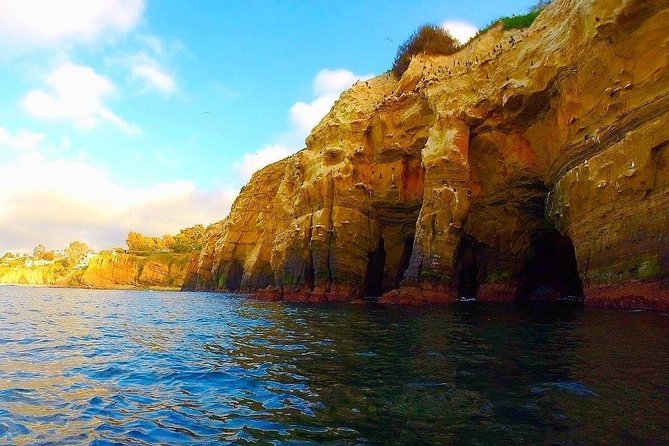
- Kelp forests and rock formations: part of the fun is paddling through sea life habitat, not just chasing a single photo spot
- Sea cave access depends on conditions: the guide decides based on waves, safety, and group skill
- Expect to get wet: you’ll want clothes and shoes you’re okay splashing in
- Marine life can be startlingly close: leopard sharks, sea lions, birds, and sometimes dolphins show up when visibility and timing cooperate
Starting point on Avenida de la Playa: where your tour really begins
Your trip kicks off at a kayak shop at 2222 Avenida de la Playa, La Jolla. The time on the ticket is not the time you should roll up and park. You need to be in the shop one hour before your tour start so they can fit you with gear, get you checked in, and handle the usual La Jolla parking reality.
This tour uses a mobile ticket and runs in English, with morning or afternoon departures. So if you’re trying to line up with your day in San Diego, you can usually pick a slot that avoids the worst timing for other activities.
The biggest practical win here is simple: you do not just show up, grab a paddle, and hope for the best. You get a structured setup first, then you go out.
You can also read our reviews of more tours and experiences in La Jolla.

Tandem kayak paddling: how you share one boat
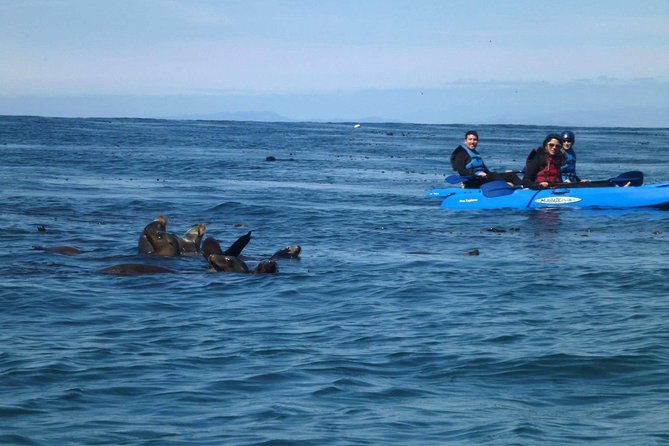
This is a tandem kayak for two travelers. That matters because tandem boats feel different from solo kayaks: you paddle together, you coordinate turns, and you rely on the rhythm you build with your partner and your guide’s instructions.
They provide life jackets, and the tour is designed for people who can swim and want an active, outdoor experience. There’s also a weight limit of 450 pounds per double kayak, so if either of you is close to that, check before you book.
No experience is needed. The process usually looks like this: you meet your guide, get a short paddling lesson and safety talk, and then you head down toward the water to start practicing for real. In a lot of the trips people describe, the guides act like patient coaches, keeping the group together and staying close so first-timers feel steady.
If you’re doing this as a couple or as a team, tandem is a big advantage. You’re not wrestling the kayak alone while trying to take in the scenery.
La Jolla Shores to the sea cave area: the paddle that sets the tone
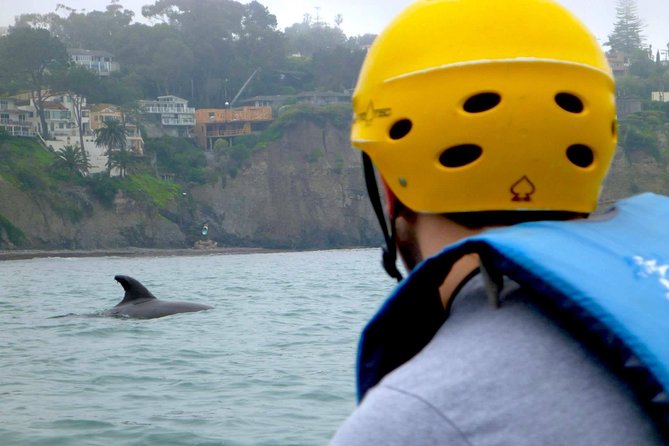
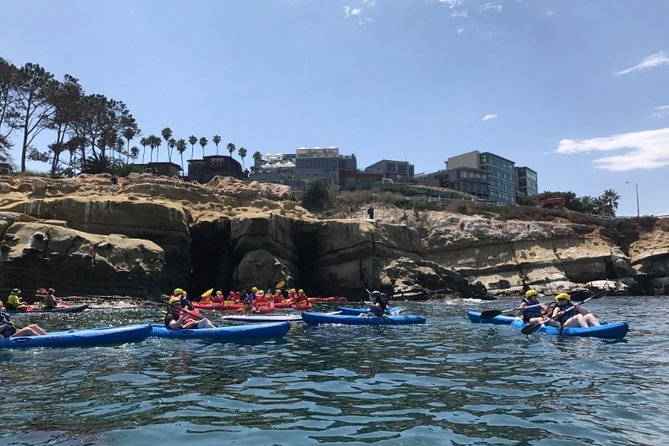
Once you hit the water, you paddle from La Jolla Shores along a rocky coastline. You’ll head toward the La Jolla Sea Caves while your guide watches for wildlife and points out what you’re passing.
This is not a long-distance trip. The value is in the time on the water and the guided attention. You’ll go past rocky formations, and you’ll spend time around kelp beds, which are key habitat for local marine life. Kelp also makes the water feel more alive, even when the surface looks calm.
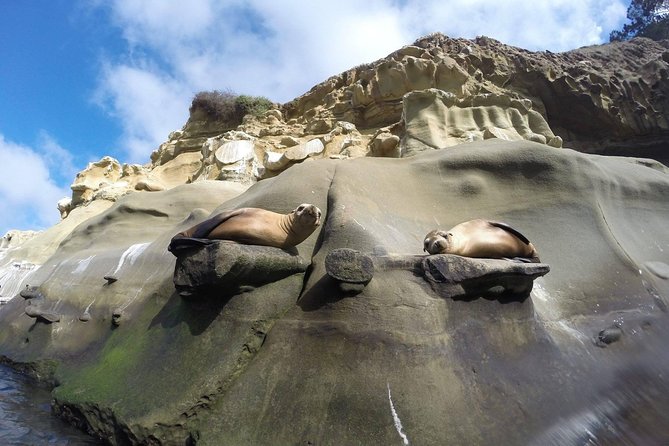
Expect the guide to scan constantly. Many trips like this are built around spotters’ work: birds at the surface, sea lions hauled out along the edges, seals resting near rocks, and occasional dolphins when conditions cooperate.
Wildlife spotting that feels real, not staged
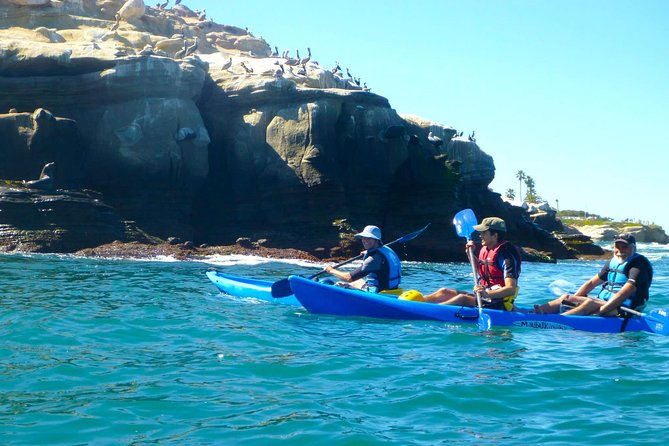
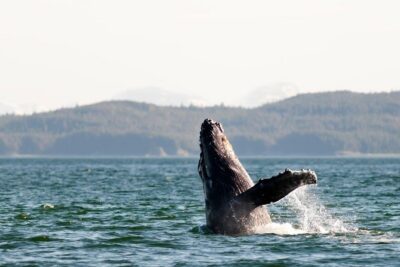
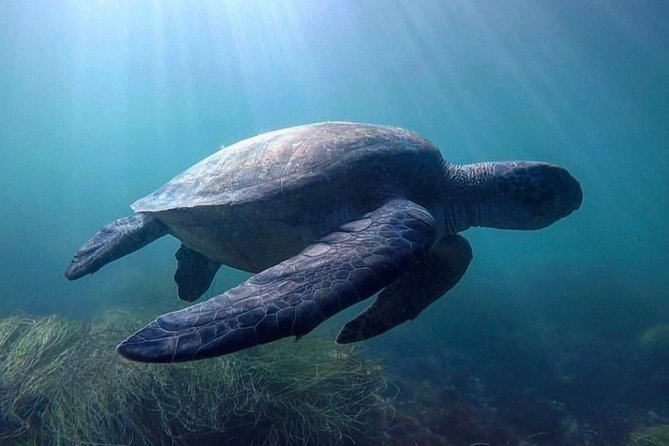
The wildlife experience is the main reason people book this tour, and the route supports it. You might see sea birds, sea lions, and seals as the most common sightings. If you’re lucky, you also may see dolphins nearby, and in rare cases, orca sightings come into play.
From what people describe, you can get surprisingly good views of marine life when the water is clear. Leopard sharks show up for many groups, and people often mention the thrill of seeing them close to the shoreline.
Here’s a practical tip that came up more than once: bring polarized sunglasses if you have them. When glare is strong, it can be hard to pick out shapes underwater, and polarized lenses can make spotting sharks and other fish much easier.
Also, remember how these animals behave. You’re not trying to chase them. You’re drifting through their neighborhood with a guide calling out what to look for at the right moment.
When the kelp beds and rocks become the main event
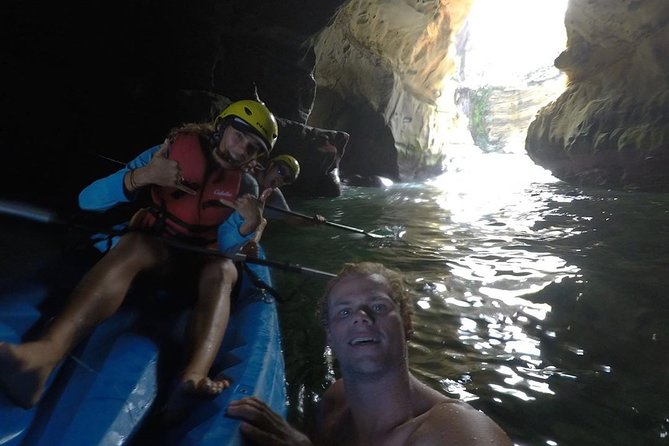
One of the best parts of this tour is that it’s not only about the caves. The paddling includes sections where you move through kelp forests and around unique rock formations. That means you still get the sense of exploring an ecological reserve even if the cave route changes.
In plain terms: kelp is food and shelter. Birds and fish follow it, and larger animals show up to check what’s happening. So even if you don’t get a perfect cave entry, you’re still doing something that feels connected to how the coast works.
If you’re traveling with kids or first-timers, this matters too. It gives you multiple chances for “wow” moments, not just one gated outcome at the end.
Sea caves: how entry works and why it’s not guaranteed
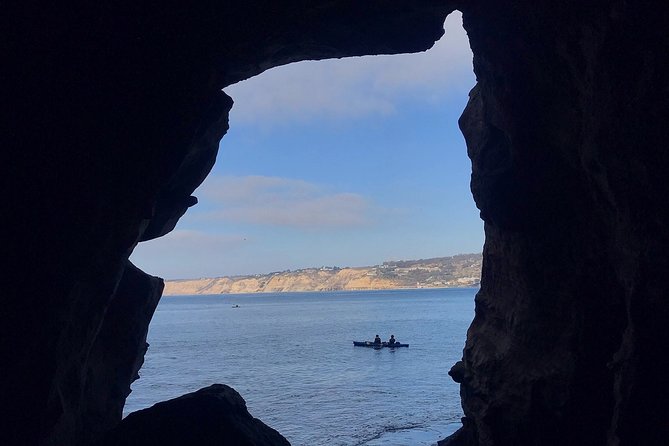
Cave entry is one of the top reasons to book, but it’s also the part you should treat with flexible expectations. Entering the caves is not guaranteed, depending on:
- ocean conditions
- group participants’ ability
- the guide’s safety call
That is not a small footnote. It changes how you plan your mindset. If waves are high, or conditions don’t look stable enough for a group, you may get a route that focuses on wildlife and the coastline instead.
When cave entry does happen, it can be memorable in a very specific way: being inside rocky passages by kayak feels close-up and hands-on. People describe guides who manage the tricky parts with confidence, sometimes even adjusting tactics in the moment to get the group into and out of the cave safely.
But again: safety wins. If the guide says no caves today, you’re still on the water in an ecological reserve and still likely see sea lions, sharks, and other animals.
The kayak surf ride back to shore
You finish with a kayak “surf ride” back to the beach, using the waves to help move you toward shore. This is often where people realize the tour is not just sightseeing. You’re actively participating in the sea’s motion, and that can feel playful once you trust the boat and your guide’s instructions.
Because you’re using wave action, you should plan for your clothes to get splashed and sometimes drenched. The tour also explicitly warns you to expect to get wet.
If you tend to get cold easily, think like a sailor: layers you can live in while soaked matter more than looking perfect.
What to wear: your comfort plan for a wet, sunny, salty outing
This is one of the easiest tours to mess up if you show up unprepared. The fix is also easy.
Wear clothes that can get wet, such as a bathing suit under quick-dry layers. For shoes, choose something that can handle splashes and traction on wet sand, like tennis shoes, river shoes, or flip flops. (Flip flops work for some people, but if you’re nervous about slipping, water shoes with grip are a safer bet.)
They strongly advise bringing a hat, sunscreen, and a towel. And for some travelers, adding one more change of clothes is the difference between a fun afterward and a miserable drive back.
Wetsuits can be an option depending on season. Wet suit rentals are offered during fall, winter, and spring, but they are not presented as a guaranteed included item for every departure. If you’re going at a cooler time, ask ahead when you book so you know whether you’ll be in a rental suit or planning to wear more layers.
One more no-nonsense idea: leave valuables behind. The guidance is clear: do not bring valuables or things that cannot get wet.
Price and value: what $75 buys you for 1.5 hours on the coast
At $75 per group, this tour is priced for what you actually get: equipment, a professional guide, and time on the water in one of San Diego’s most wildlife-friendly coastal areas.
Because it’s a tandem kayak for two, you’re not paying solo-kayak logistics to share a boat. You’re paying for guided route-finding, safety coaching, and spotter work that helps you see more than you would on your own.
It’s also a good value compared to the cost of DIY. Buying gear, learning local conditions, and figuring out safe cave approach rules on your own is not the same category of risk or effort.
One booking reality: it’s commonly reserved about 11 days in advance on average. If you’re visiting during peak season or on a weekend, that suggests you should plan ahead rather than hoping for a walk-in.
Who should book this La Jolla Sea Caves tandem tour
This tour is built for active travelers who like the outdoors and want a guided water experience with a real chance at wildlife sightings.
You’ll likely enjoy it if:
- you and your partner want to paddle together in a tandem setup
- you want a guided intro even with no kayaking experience
- you’re comfortable swimming and understand that caves depend on conditions
- you like short trips with a strong payoff
You should think twice if you hate getting wet, freeze easily, or are expecting an always-guaranteed cave entry. The tour can still be a win without cave time, but you need to go in with flexible expectations.
Families can do well here too. The tour indicates a minimum age of 6 years for a double kayak, and everyone must be able to swim.
Quick answer on whether to book
Book this tour if you want a guided, gear-included way to see La Jolla’s marine world from the water, with a realistic shot at sea caves when conditions allow. It’s also a smart choice if you like the idea of wildlife spotting plus coaching, rather than only chasing one landmark.
Skip it only if cave entry is your one non-negotiable goal and you cannot handle the possibility of waves forcing a coastline-only paddle.
FAQ
Do I need kayaking experience to do this tour?
No experience is needed. You start with a paddle instruction and safety talk before you head out.
Is going into the sea caves guaranteed?
No. Entrance into the caves is not guaranteed and depends on ocean conditions, safety, and participants’ ability as determined by the guide.
What is the minimum age and do I need to swim?
The minimum age is 6 years for a double kayak, and all participants must be able to swim.
What should I wear if I expect to get wet?
Wear appropriate clothes that can get wet, such as a bathing suit, and shoes that can get wet like tennis shoes, river shoes, or flip flops. Hats, sunscreen, and a towel are strongly advised.
Are life jackets included?
Yes. Life jackets are provided.
Is a wetsuit included?
Wet suit rentals are offered during fall, winter, and spring, but wetsuits are not listed as included. You should plan that you may pay extra for a rental depending on the season.