
REVIEW · PAGE
Lower Antelope Canyon Hiking Tour
Book on Viator →Operated by Dixie's Lower Antelope Canyon Tours · Bookable on Viator
Color floods your screen before you even step in. On a Lower Antelope Canyon hike, a Navajo guide brings you through wind-sculpted Navajo sandstone, with staircases and ladders built into the route so you can keep moving toward those classic light-and-color areas.
I love two things about this tour. First, it’s a real, guided walk with about a one-mile loop and an up-and-down route that includes eight ladders with handrails. Second, the guide adds the meaning, not just the scenery—guides like Eli, Archie, and Aaron Yazzie share stories and facts about the canyon’s formation and cultural context, and many tours include music (flute is a frequent favorite) plus hands-on photo directions. The one main thing to consider: this is not a stroll. You’ll handle a rocky-sandy descent and multiple ladder/stair sections, so if stairs are a problem for your knees or balance, plan accordingly.
In This Review
- Lower Antelope Canyon: key things that matter before you go
- Price and what you’re really getting for $94
- Meeting point in Page: how to start without stress
- The first walk into Lower Antelope Canyon: from stairs-in-waiting to awe
- Stairs down, ladders up: your safety setup (and your body’s job)
- Photo spots and the light you can’t fake
- What Navajo guides teach you along the route
- Who should book this Lower Antelope Canyon loop?
- Should you book this tour?
- FAQ
- How long is the Lower Antelope Canyon hiking tour?
- What is the price per person?
- Does the tour include admission?
- Where does the tour start?
- Is there a physical fitness requirement?
- Are there stairs and ladders?
- What’s the bag policy and what about weather or cancellation?
Lower Antelope Canyon: key things that matter before you go
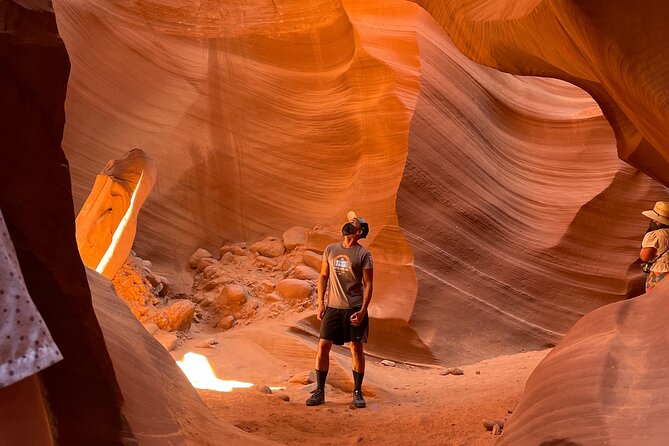
- A Navajo guide runs the show with culture, geology, and botany shared along the way
- Eight ladders with handrails keep the route safer in narrow, steep sections
- About 1.1 miles round trip with a loop that moves at a comfortable-but-focused pace
- Photo help is part of the tour with specific spots and timing considerations
- Groups are capped at 50, which usually helps keep the experience organized
- No bag policy means you travel light and spend less time juggling belongings
Price and what you’re really getting for $94

At $94 per person, this tour isn’t cheap in the “impulse buy” sense. But you are paying for a combo that matters in this canyon: a Navajo guide for interpretation, access/ticket included, and a route that stays guided from check-in to the end of the canyon loop.
What makes the value feel stronger is the time. You’re looking at roughly an hour on the clock, with the actual canyon experience running around 1 to 1.5 hours as you descend, traverse, and return. That’s helpful if your Page day is already packed with other stops. You also get a structured walking loop rather than wandering on your own, which is the difference between seeing a cool wall of rock and understanding where the light and shapes come from.
One more value point: the tour includes the tough parts built into the experience—stairs and ladders—so you don’t need to rent gear or figure out how to navigate the canyon route safely. This is basically “guided canyon access” priced like a guided activity, not like an independent hike.
Tip: this tour is booked about 25 days in advance on average. If you’re visiting in peak season or on a busy week, I’d book earlier rather than later so you’re not stuck with times you don’t want.
You can also read our reviews of more tours and experiences in Page.



Meeting point in Page: how to start without stress
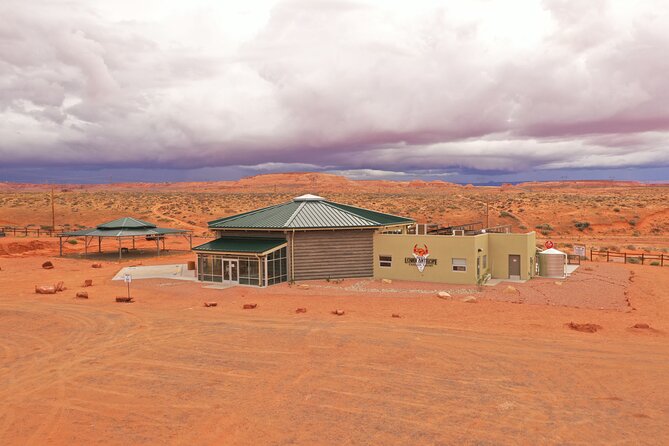
You meet at Dixie’s Lower Antelope Canyon Tours at Indian Route 222, Page, AZ 86040, and the experience ends back at the meeting point. There’s also mention of being near public transportation, which can be useful if you’re not driving from downtown Page.
The practical rhythm goes like this: you check in, then you walk about 10 minutes to reach the canyon entrance area. That’s not just “walking time.” It’s a small warm-up and also a buffer for the group schedule. The canyon itself starts with a descent that’s described as rocky and sandy, so those first minutes are your chance to slow down, settle your footing, and get your shoes ready.
Also remember the no bag policy. This is one of those rules that sounds minor until you show up with a backpack. Plan to bring only what you need for about an hour—camera/phone, a small amount of water if permitted by the operator’s rules, and whatever you can keep secure and accessible without a bag.
The first walk into Lower Antelope Canyon: from stairs-in-waiting to awe
Once you start your route, you’re doing a one-mile loop through multi-colored Navajo sandstone shaped by rain, wind, and erosion. The route isn’t flat. It includes a staircase descent and then an ascent back out, so you’ll feel the canyon in your legs from the start.
From the entrance, the key moment is the descent into the canyon’s largest area. You’ll go down the equivalent of five flights of stairs (about 35 meters). That’s the part that makes the canyon feel different from a “look, but don’t touch” sightseeing stop. You’re moving through the rock, and the canyon’s color shifts as you drop into its deeper sections.
What I like about this setup for first-timers: you don’t have to guess what to do next. The guide leads, and the route is physically structured. That matters because Lower Antelope Canyon gets busy in general, and the whole point is to move through it in an efficient, safer way.
A small but real consideration: the canyon can be noisy in the sense that it’s echo-y, and you’ll be focused on walking and negotiating ladder sections. If you’re hoping for a super quiet, sit-and-listen experience, you might find it harder to catch every word. Still, the guide usually adapts—pointing out formations while you’re moving.
Stairs down, ladders up: your safety setup (and your body’s job)
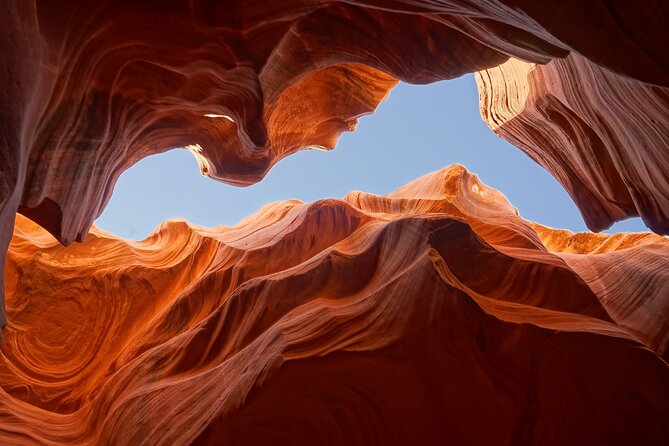
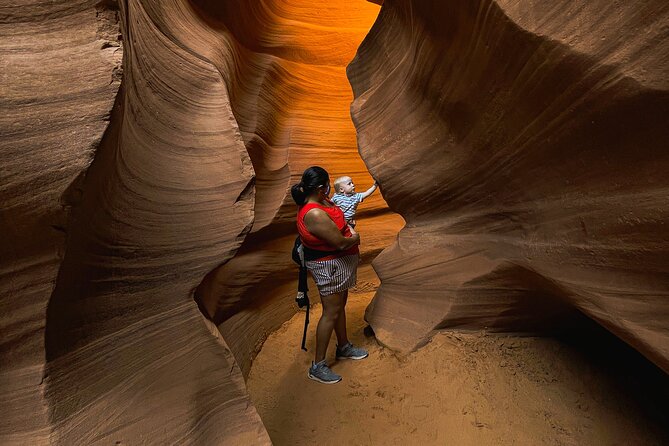
The walking is “all-walking,” but the canyon route isn’t just one level of difficulty. It has one staircase and eight ladders, each with handrails. Those handrails aren’t decorative. They’re there for stability in steep, narrow spots where you’d otherwise be tempted to rush.
Here’s why that matters: a ladder section forces a slower pace, and a slow pace is good for two reasons. One, you keep your footing. Two, you get time to frame photos and actually notice the shapes in the sandstone.
The tour structure also includes multiple “echelons,” meaning you’re moving through step-like levels of the canyon. So even if you aren’t climbing straight up, you’ll still be negotiating changes in elevation. Plan for steady steps, not speed.
What to wear: comfortable shoes are recommended because the approach and entrance areas include rocky and sandy footing. I’d treat this as a shoes-first outing, not a “cute sandals and hope for the best” day. If you’ve got a history of slipping on stairs or you’re traveling with anyone with balance issues, choose a time when you can move calmly and not feel rushed.
Photo spots and the light you can’t fake
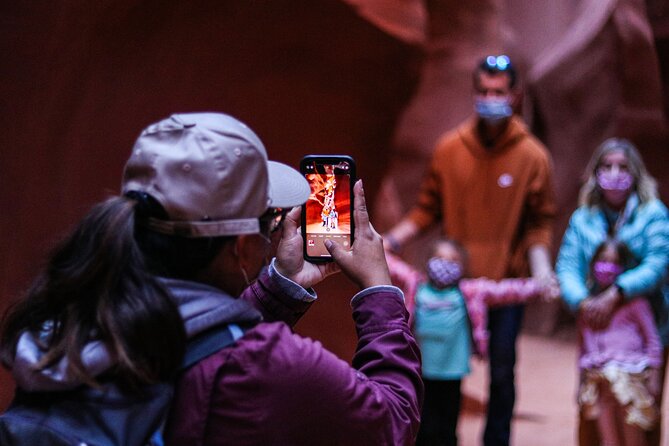
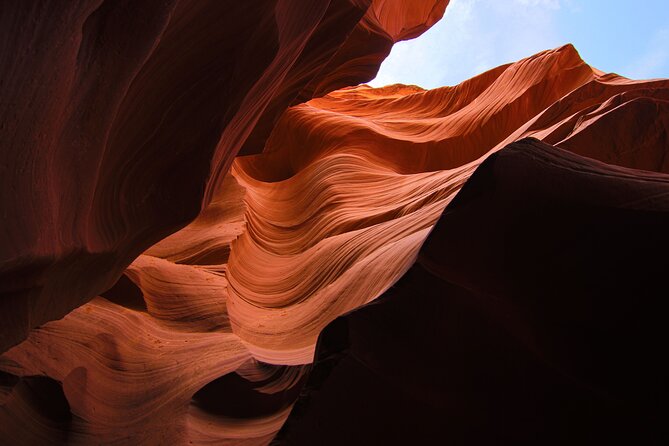
Lower Antelope Canyon is famous for a reason: the sandstone turns into color patterns when light hits at the right angles. But one thing to know before you compare your photos to the internet is simple—sun position changes with the time of year and the time of day.
That affects what you see. The canyon still looks incredible even if the lighting isn’t identical to the photos you’ve seen posted online, but your best shots may not match someone else’s exact “beam” moment. The good news is the guide experience. Many guides are praised for taking people to the best photo positions and timing the stops so you get the strongest view possible without wasting time.
If you want to level up your own shots, here’s the practical approach I’d use: keep your hands free for ladders and handrails, then let the guide direct you to where the light hits. If you scramble to set up a tripod-like setup, you’ll lose the flow. For this tour, a phone held securely or a camera ready in your hands usually works best.
Also, since there’s a no-bag policy, you’ll likely move lighter and faster. That makes it easier to turn and frame photos without bumping into other people or getting stuck.


What Navajo guides teach you along the route
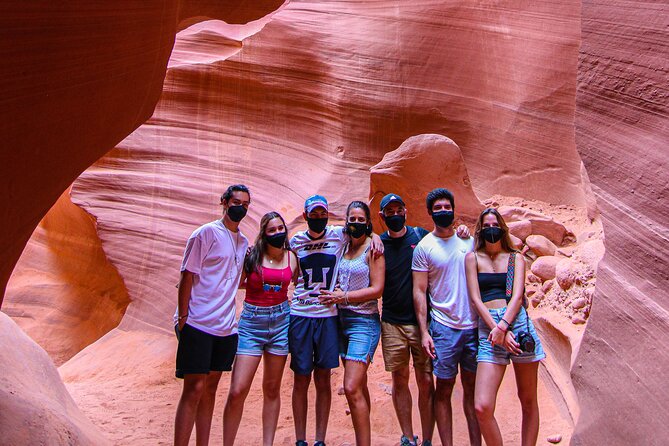
This is not only a canyon walk. The guiding is part education, part cultural context, and part “how to see what you’re standing in.”
You can expect discussion of:
- Geology: how Navajo sandstone forms and how rain, wind, and erosion shape the shapes you’re seeing
- Culture: Navajo cultural connections to place and story
- Botany: plant life in the region and how it survives in this environment
That blend is valuable because it changes your mental picture. Instead of thinking, wow, that’s pretty, you start thinking, this is why it looks like this, and why it matters here. And when the guide points out a formation, you’re not just taking a photo—you’re connecting the image to a reason.
The guides themselves get lots of praise for making that knowledge feel lively. Names that come up again and again include Eli, Archie, Tracy, Eder, Terran, Konnnor, RJ Bluelake, Elijah, Brad, Taylor, Adam, Emitt, Ray, Ian, Kayson, and Kyle. Not every guide will teach the exact same way, but the common theme is clear: you’re supposed to leave with both beauty and context.
Many tours also feature flute music in the canyon. That’s not just entertainment. The acoustics and the quiet intensity inside the rock make it feel like part of the moment rather than a separate performance. If you’re hoping for a “memory that sticks,” that’s the kind of detail that does it.
Who should book this Lower Antelope Canyon loop?
This tour fits best if you want:
- a guided canyon experience with stairs and ladders handled for you
- a structured route (so you’re not figuring out logistics mid-canyon)
- photo stops with on-the-ground guidance
- a guide-led explanation of geology, botany, and Navajo cultural context
It’s also a good match for solo travelers, couples, and families who can manage moderate physical fitness. Reviews show a lot of first-timers and groups that say the pace is well managed, with time for pictures.
Who should think twice:
- anyone who struggles with stairs or ladders, even with handrails
- anyone with serious knee or balance concerns and no ability to take it slow
- people who hate the idea of a rocky/sandy entrance and steady climbing/descending steps
If you’re in that gray area health-wise, I’d choose the calmest approach: shoes that grip, a willingness to move slowly, and a mindset that this is a careful guided walk, not a “power hike.”
Should you book this tour?
Yes, I’d book it if your goal is a memorable, guided Lower Antelope Canyon experience with interpretation, not just sightseeing.
You should book this tour if:
- you want the classic sandstone colors and are okay walking through ladders and stair sections
- you value a Navajo guide who shares culture, geology, and botany while directing photo spots
- you’d rather pay for guidance and structure than figure it out on your own
- you can commit to the time window and come prepared with good footwear (and no bag)
Skip it or choose carefully if stairs and ladders are a real problem for you. The canyon is beautiful, but the route is physically active by design.
If you do book, book early enough that you can pick a time that works for your schedule—and then lean into the guide’s instructions once you’re inside. That’s where the tour turns from a pretty stop into a place you understand.
FAQ
How long is the Lower Antelope Canyon hiking tour?
It’s about 1 hour (approx.), with the canyon experience described as roughly 1 to 1.5 hours as you walk the loop and move through the canyon.
What is the price per person?
The price is $94.00 per person.
Does the tour include admission?
Yes. Admission Ticket is included.
Where does the tour start?
The meeting point is Dixie’s Lower Antelope Canyon Tours on Indian Route 222 in Page, AZ 86040, and the tour ends back at the meeting point.
Is there a physical fitness requirement?
The tour notes that travelers should have a moderate physical fitness level.
Are there stairs and ladders?
Yes. The route includes one staircase and eight ladders, and the ladders have safety handrails.
What’s the bag policy and what about weather or cancellation?
There is a no bag policy. The experience requires good weather, and if it’s canceled due to poor weather, you’ll be offered a different date or a full refund. Cancellation is free up to 24 hours in advance for a full refund.