REVIEW · MAUI
Maui Eco-Raft Tour: Eye-Level Whale or Dolphin Watching – Lahaina
Book on Viator →Operated by Hawaii Ocean Rafting · Bookable on Viator
Whales close enough to feel the ocean’s pulse? This eye-level zodiac raft tour off Lahaina mixes fast-moving fun with hydrophone whale-song listening and real marine naturalist talk, from humpbacks in winter to dolphins in summer. It’s built for unobstructed views and quick, respectful positioning when whales show up.
What I love most is the format: you’re riding a small zodiac raft that sits low on the water, so the horizon and the action are right there at your eye height. Second, the guide team focuses on the living system around Lahaina, with narration that turns a sighting into a story you can actually picture, from whale behavior to coastal wildlife. On some departures, you may hear it led by captains and naturalists like Captain Jack with marine biologist Jess, or Captain Mark with Olivia helping run the show.
One consideration: this is not for everyone. The tour has a strict no babies/under-3 rule, and it’s also not suited for pregnant people or anyone with back or neck injuries due to the boarding setup and ocean conditions.
In This Review
- Key things to know before you go
- Eye-Level Views Off Lahaina: Why This Raft Format Feels Different
- Whale Season vs Summer Dolphin Trips: When You’ll See What
- Front Street Check-In and Boarding: Fast Start, Practical Reality
- On the Water Off Maui: How the Crew Finds Wildlife
- Marine Naturalists, Whale Songs, and the Hydrophone Moment
- What Makes the Sightings Memorable: Photo Ops and Real Behavior
- Getting Wet, Staying Comfortable: Gear That Actually Matters
- Snacks, Drinks, and the Food Reality on Board
- Who Should Book This Raft Tour (and Who Should Skip It)
- Value vs Other Maui Whale Watching: What You’re Buying for $85
- Should You Book This Maui Eco-Raft Tour?
- FAQ
- What season is best for whales on this tour?
- Where does the tour meet in Lahaina?
- How old do kids need to be?
- Is seeing whales or dolphins guaranteed?
- Will I get wet on the raft?
- What if the weather is poor?
Key things to know before you go
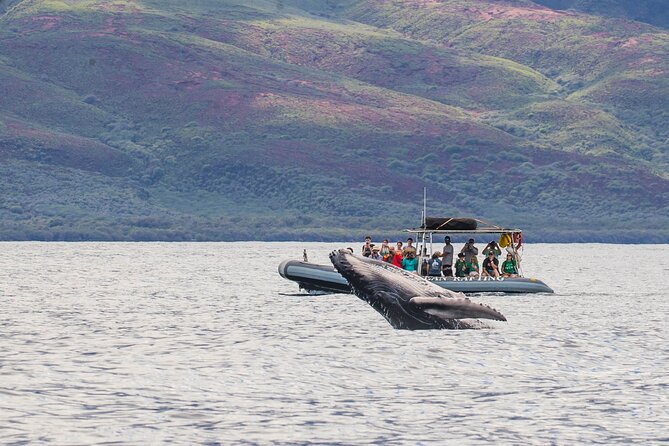
- Eye-level views on a low raft: you’re not craning your neck up at a big boat.
- Hydrophone whale songs in season: you can hear the whales while you watch.
- Small group feel: the raft caps at 25, and many outings feel closer to a tight crew.
- You may get wet: ocean spray and light rain are part of the plan.
- Up-close sightings aren’t promised: wildlife is wild, and the crew follows the animals.
- Summer switches to dolphins and coastal sightseeing: snacks and beverages are included on dolphin tours.
Eye-Level Views Off Lahaina: Why This Raft Format Feels Different
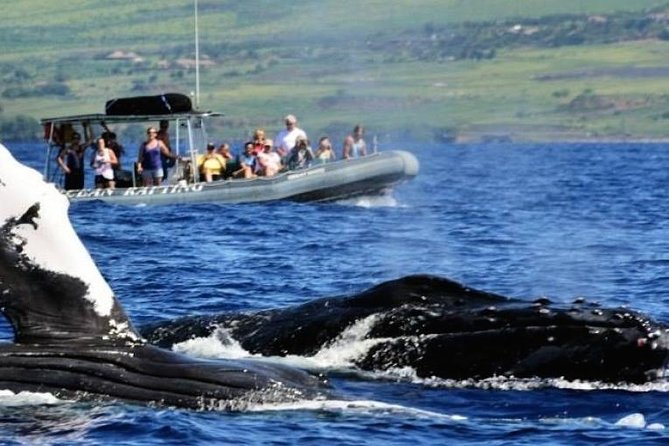
Maui whale watching can feel like two totally different activities. One is watching wildlife from far away while you hunt for a good angle. The other is being at the waterline, where the movement, the surface activity, and the timing all matter.
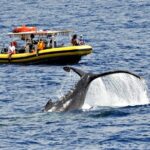
That’s where this tour earns its reputation. You ride a small zodiac-style raft that’s low in the water, so your “wow” moments aren’t trapped behind railings or blocked by higher boat decks. When a whale surfaces, the raft can stop at the sighting, and you’re positioned for photos without the usual scramble to find the one clear spot on a crowded big vessel.
The vibe is also intentionally hands-on. It’s not a stiff lecture. The marine naturalist narration is designed to help you recognize what you’re seeing and what it means—mothers and calves, escorts, and the kinds of surface behaviors that make humpbacks so theatrical in winter. If you’ve never done whale watching before, this format helps you learn fast.
You can also read our reviews of more tours and experiences in Maui.


Whale Season vs Summer Dolphin Trips: When You’ll See What
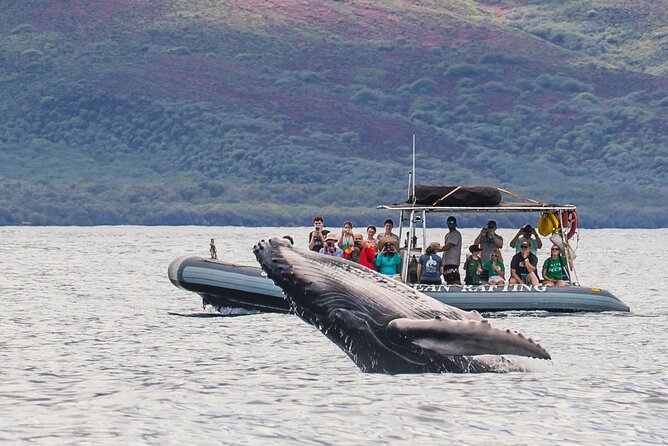
Timing drives everything here. Off Lahaina, humpback whales are the star from December through April. During those months, you can expect the whale-focused version of the tour, including the hydrophone listening for whale songs.
Outside that window—during the warmer months—the tour shifts to dolphin watching and coastal sightseeing. It’s still an ocean outing and still narrate-and-spot territory, but the goal changes from whales to dolphin encounters and what’s happening along the coast.
If you’re trying to plan your trip efficiently, treat this as two different experiences depending on the season. Winter is built around humpback behavior and whale vocalizations. Summer is built around dolphins and coastal scenery, with a more snack-and-sail rhythm.
Front Street Check-In and Boarding: Fast Start, Practical Reality
The tour meets at 1223 Front Street in Lahaina, and it’s designed to run on time. You need to arrive 30 minutes prior to boarding. If you’re late, the boat leaves promptly.
What I like about this setup is that it’s straightforward: you don’t need a long hotel pickup plan, which means you spend less time waiting and more time on the water. Also, the location is central enough that many people find it manageable without a complicated transfer.
Boarding does come with real-world ocean-activity logistics. You’ll need physical mobility to board at the designated spot, and the boat is a low-water raft, not a flat, easy ladder situation. The footwear tip from the field is clear: wear slip-on shoes because you’ll likely remove them when entering the raft.
And yes, you should expect the ocean to do ocean things. The crew provides life jackets for emergencies, but they’re generally not required to be worn during the tour. Still, you’re on a small boat. Move carefully, stay seated when asked, and treat the raft like what it is: a working watercraft on a moving ocean.
On the Water Off Maui: How the Crew Finds Wildlife
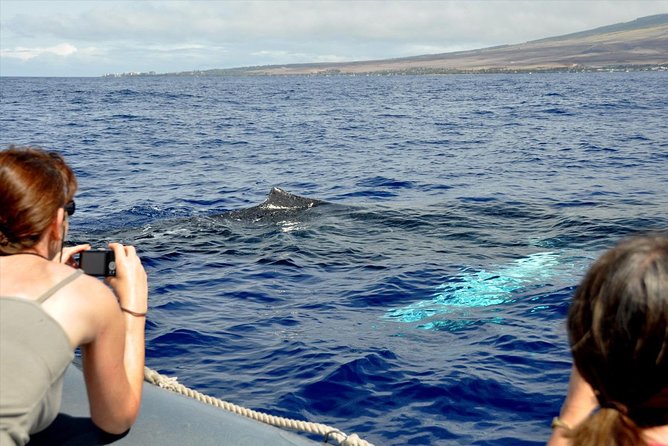
Once you’re aboard, the real “tour” starts: searching for migrating whales in winter, or hunting for dolphins during the summer option. This is not a slow cruise where you just hope something swims by. The captain and crew actively look, then reposition based on what the animals are doing.
A big part of what makes this work is the boat size. With a smaller raft, the crew can maneuver in a way that feels nimble compared with larger vessels. That matters when you’re trying to get eye-level views of a whale surfacing for only seconds, then disappearing underwater again.
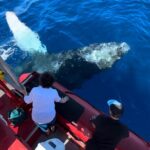
When whales or dolphins are spotted, the raft can stop for better viewing and photos. That stop-and-position style is what turns a good sighting into a memorable one—especially for surface behaviors like tail fluke activity, pectoral fin lifts, and the kinds of repeated breaching that can happen in prime whale moments.
You should also go in with the correct expectation: wildlife sightings are not guaranteed to be “up close.” The tour is designed to maximize your odds and to stay with the animals once found, but the ocean decides what it will show you.
Marine Naturalists, Whale Songs, and the Hydrophone Moment
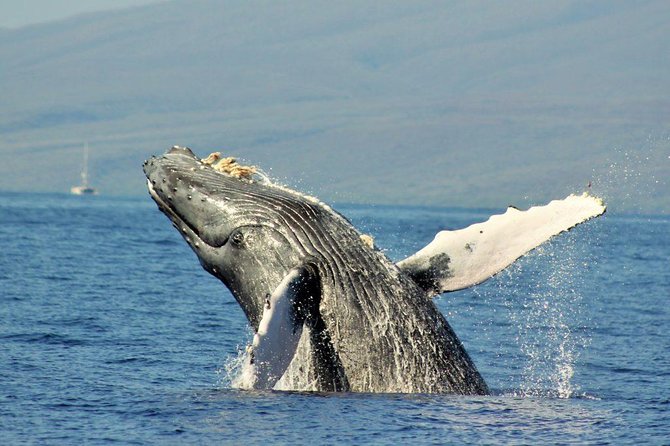
The most practical upgrade here is the marine naturalist narration. You don’t just get told that a whale is nearby. You get context that helps you understand what you’re seeing—behavior, ecosystem connections, and how to read the signs that whales are about to surface.
Then there’s the hydrophone element. In whale season, you get to listen to real whale songs while you watch. That turns the experience from purely visual into something you can feel and track. Even if you’ve heard ocean audio before, hearing whale communication while you scan the waterline is a level up.
From past departures, the narration style has a consistent theme: the crew talks clearly, keeps you oriented to what to look for, and adjusts based on where the whales are active. You may hear guidance and spotting talk from captains like Captain Jack and Captain Mark, with marine biologists such as Jess or Meredith helping identify what’s happening out there.
If you’re bringing kids, this part is a huge win. It gives the sighting a reason, and it helps everyone stay focused instead of just staring at the water in silence.


What Makes the Sightings Memorable: Photo Ops and Real Behavior
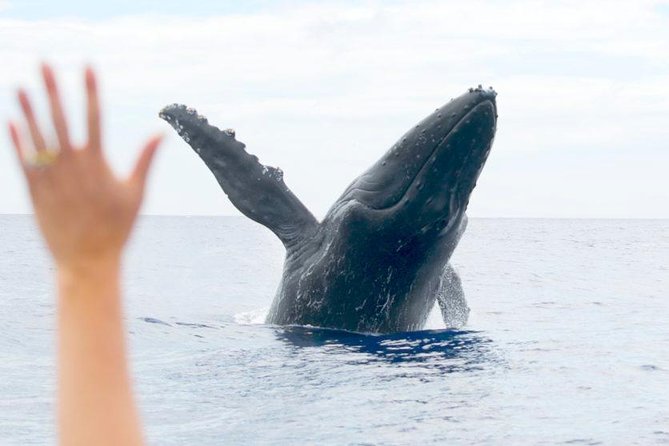
This tour is built for those short, high-energy moments when whales decide to perform. Because the raft is low and eye-level, you don’t have to invent angles. When the raft stops for a whale sighting, it’s typically for a reason: a whale is doing something worth seeing right now.
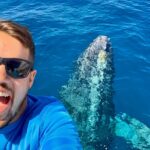
That’s how you end up with scenes people often remember for years—mothers and calves in view, escorts hanging nearby, and repeated surface activity during strong whale activity windows. You might see baby whales breaching, tail flukes flipping, or escort behavior that looks chaotic until you understand it.
For dolphin trips, the emotional payoff is different. Dolphins are often faster, more lateral, and more “show up then move” than whales. Coastal sightseeing helps break up that motion, so you get a mix of scanning the water and taking in what Maui’s shoreline looks like from the ocean.
Either way, the guide’s job is to keep you oriented. When you’re listening to whale songs and the naturalist is talking through behavior, it’s easier to catch the next surface event.
Getting Wet, Staying Comfortable: Gear That Actually Matters
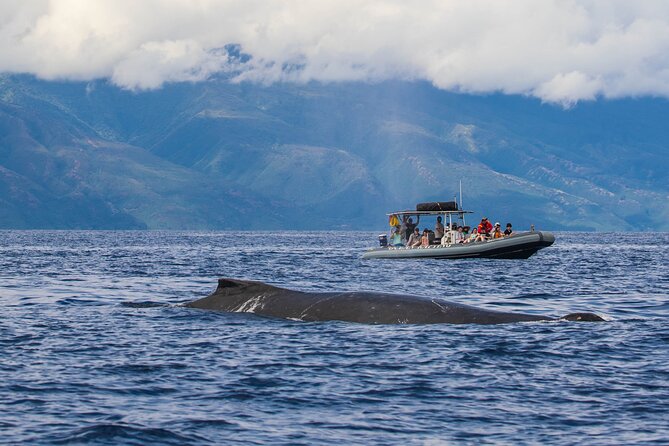
This is an ocean boat. Even on clear days, ocean spray is part of the deal. The tour is described as a low-water boat experience, and it’s common to get light spray and possibly light rain.
That means pack like you’re going to be outside for real:
- Sun protection: shade varies on the boat, so bring a hat and sunglasses. Use reef-safe sunscreen in a rub-on format only.
- Reef-safe rules: no spray sunscreen is permitted. Plan to bring the correct kind before you get to the meeting spot.
- Warm layer: if it’s cold or rainy, bring a jacket. Ponchos have been used on some outings, but your safest bet is to dress for wet wind.
- Shoes: slip-ons are the smart choice since you may need to remove footwear when boarding.
Also, plan your expectations around comfort. You’ll be moving with the raft, sitting in the open-air environment, and taking in ocean air for the full 2.5 hours. If you’re expecting a dry, sheltered lounge experience, you’ll be disappointed.
Snacks, Drinks, and the Food Reality on Board
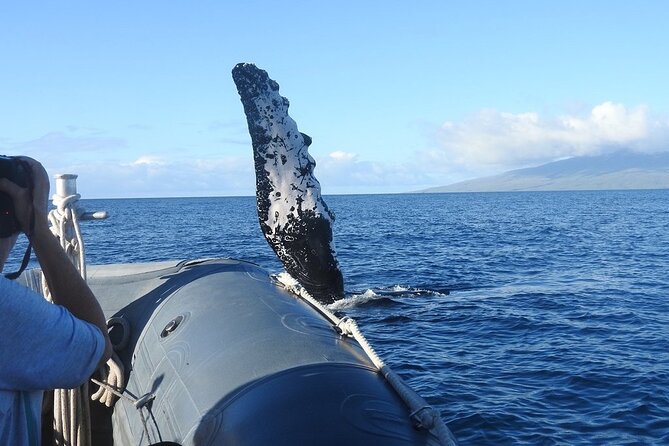
Dolphin tours include snacks and beverages, which makes the summer outing feel more complete if you want to eat something mid-tour.
Whale tours can be a bit more limited on the food side. One practical note you should take seriously: beverages may be light or offered upon request rather than as an automatic full bar setup. So if food matters to you, plan for minimal snacks unless you’re specifically on the dolphin option.
If you want something extra, remember you’ll need to follow the tour’s outside drink rule: BYOB is not included, but plastic or canned items are allowed if you bring them within the stated constraints. Don’t show up with glass. Don’t count on full service.
Who Should Book This Raft Tour (and Who Should Skip It)
This tour is a strong match for:
- People who want eye-level viewing and an active, search-based outing
- First-timers who want narration plus hydrophone audio, not just a boat ride
- Families with kids 3 and older who can handle getting a bit wet and staying seated when asked
- Anyone who likes small-group energy instead of long lines and big-boat chaos
It’s not a match for:
- Pregnant people (not suited for safety reasons)
- Babies and toddlers under 3 (no children under 3 are permitted)
- People with back or neck injuries, because of boarding and movement needs
- Anyone who really needs step-free, super-easy boarding (there’s a mobility requirement for boarding at the location)
If you’re in good physical shape and you’re comfortable on the water in cool or wet weather, you’ll be much happier.
Value vs Other Maui Whale Watching: What You’re Buying for $85
At about $85.16 per person, this isn’t the cheapest Maui option, but it also isn’t priced like a luxury charter. The value comes from the experience design.
You’re paying for:
- The small, low raft format that improves your odds of eye-level sightings
- Marine naturalist narration that helps you actually understand what you’re seeing
- The hydrophone whale-song component during the whale season
- A small-group setting that keeps viewing more personal and interactive
Could you find a cheaper boat ticket elsewhere? Maybe. But if you’ve ever watched whales from a higher-deck distance and felt like you were looking through a fence, you’ll understand why people lean toward smaller, lower platforms. This is the kind of choice that turns a wildlife sighting into a lived experience.
Also, the tour runs for about 2 hours 30 minutes, which is a sweet spot: long enough to find activity, not so long you feel stuck in one spot if the ocean is quiet that day.
Should You Book This Maui Eco-Raft Tour?
If your priority is seeing whales or dolphins with real eye-level views, and you want a marine naturalist plus hydrophone audio during whale season, I think this is an excellent booking choice. It’s also a smart pick if you like the idea of a smaller boat with efficient crew work—people often talk about how guides focus on getting good sightings and keeping everyone oriented during the search.
Book it if:
- You’re traveling in the whale season (December to April) and want whale songs
- You’re traveling in summer and want dolphins plus coastal sightseeing
- You can handle getting a bit wet and you’re ready for active spotting
Skip it if:
- You need an experience that’s dry, easy-boarding, and fully accessible for mobility constraints
- You’re pregnant or you have back/neck limitations
- You’re bringing children under 3
FAQ
What season is best for whales on this tour?
Whale watching is available from December through April. During other months, the tour focuses on dolphin watching and coastal sightseeing.
Where does the tour meet in Lahaina?
The tour meets at 1223 Front St, Lahaina, HI 96761. It ends back at the same meeting point.
How old do kids need to be?
Children must be 3 years of age or older. No children under 3 are permitted.
Is seeing whales or dolphins guaranteed?
No. Up-close wildlife encounters are not guaranteed because animals are in the wild, and the tour depends on what the animals are doing.
Will I get wet on the raft?
Plan to get wet. The tour is low to the water, so ocean spray and light rain can occur.
What if the weather is poor?
This experience requires good weather. If it’s canceled due to poor weather, you’ll be offered a different date or a full refund.