REVIEW · MONTEREY
Monterey Bay: Whale Watching Tour
Book on GetYourGuide →Operated by Discovery Whale Watch · Bookable on GetYourGuide
Whales don’t have to be far away. This Monterey Bay cruise targets animals in a real feeding and migration highway, with a biologist onboard and prime viewing right from the harbor. I like that the trip is built around Monterey Bay National Marine Sanctuary near-shore canyons, and that you get a guided explanation of what you’re seeing.
Two things I especially appreciate: you start the outing by leaving Old Fisherman’s Wharf, where you may spot sea lions while you’re still tied up near the dock, and the onboard naturalist-style commentary helps you track feeding behavior, not just distance sightings. The guides also bring energy—some outings are led by people like Isaiah, and accounts note extra fun touches like sea shanty sing-alongs and helpful guidance for better viewing.
One consideration: the ocean can be cold and choppy, and this tour is not suitable for pregnant women or for people with mobility impairments. If you’re sensitive to motion, plan ahead with layers and remedies available for purchase at the office.
In This Review
- Quick hits before you go
- Why Monterey Bay is a whale-watching standout (and why you should care)
- Getting from Discovery Whale Watch to the harbor action
- Cannery Row to the sanctuary: watching the day change offshore
- What you can expect when the sightings actually happen
- The biologist onboard: how the commentary improves your odds
- Timing by season: feeding whales vs. migrating gray whales
- Comfort, cold water air, and motion sickness reality checks
- Boat size, viewing angles, and how to get your best seat
- Price and value: does $75 buy you a worthwhile Monterey morning or afternoon?
- Who should book this tour, and who should skip
- Should you book Discovery Whale Watch?
- FAQ
- How long is the Monterey Bay whale watching cruise?
- Where do I meet the tour?
- Do I need to fill out a waiver before boarding?
- What’s included in the ticket price?
- Is food included?
- What should I bring?
- Are dogs allowed on board?
- Are restrooms available?
- What about motion sickness?
- Is alcohol allowed on the tour?
Quick hits before you go
- Short, focused time on the water (about 3 to 4 hours depending on option) makes it easier to fit into a Monterey day.
- Monterey Bay’s near-shore canyon setup is why whales show up so often here.
- Warm drinks are included, which helps on windy, cool mornings and afternoons.
- Seasonal strategy: feeding whales in summer/fall, migrating gray whales in winter.
- Small-ish group feel is part of the appeal, with boats described as about 25 people and not overly crowded.
- Biologist guide onboard turns random sightings into a clearer story of feeding, travel, and conservation.
Why Monterey Bay is a whale-watching standout (and why you should care)
Monterey Bay is famous for a simple reason: it holds strong underwater habitat close to shore. That deep submarine canyon system helps bring food-rich waters into range, so whales don’t just pass by—they can linger around feeding zones.
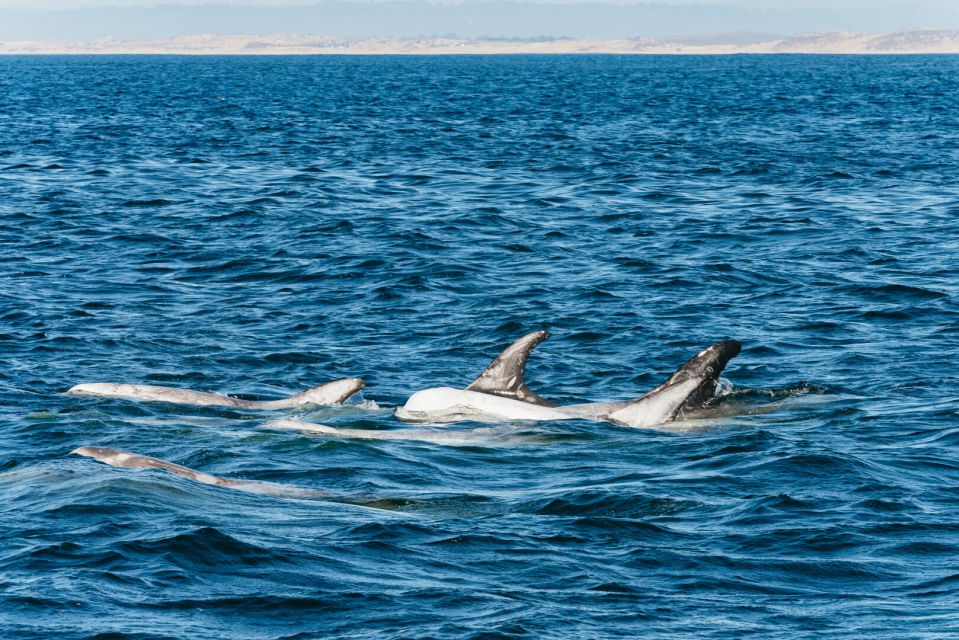
On this cruise, the goal is to spot more than one type of marine life. The species list you can realistically hope for includes humpback whales, blue whales, fin whales, gray whales (in winter), plus orcas at times, along with several dolphin varieties and porpoises. And yes—there’s a good chance you’ll also see the smaller stars of the show, like seals, sea lions, and sea birds, especially when whales are actively feeding.
This matters because whale watching can be frustrating when you’re guessing. Here, you’re not just hunting; you’re learning what to look for and when, with an onboard biologist guide giving you context while the captain searches the area.
Getting from Discovery Whale Watch to the harbor action
You’ll start at Discovery Whale Watch at 66 Fisherman’s Wharf, Monterey, CA 93940. The practical move is to check in at least 45 minutes before departure after you complete the Coast Guard waiver link sent by email for each person in your party.
If you’re driving, park at the Monterey Harbor Waterfront at 245 Washington St. Pay using ParkMobile App or pay stations. Skipping payment can be an expensive lesson—failure to pay is listed as a $49 ticket. Once parked, you’ll walk toward Wharf 1, pass the pink Harbor House, keep going until you see the yellow Crab House, then turn right. Discovery Whale Watch is the blue building on your right.
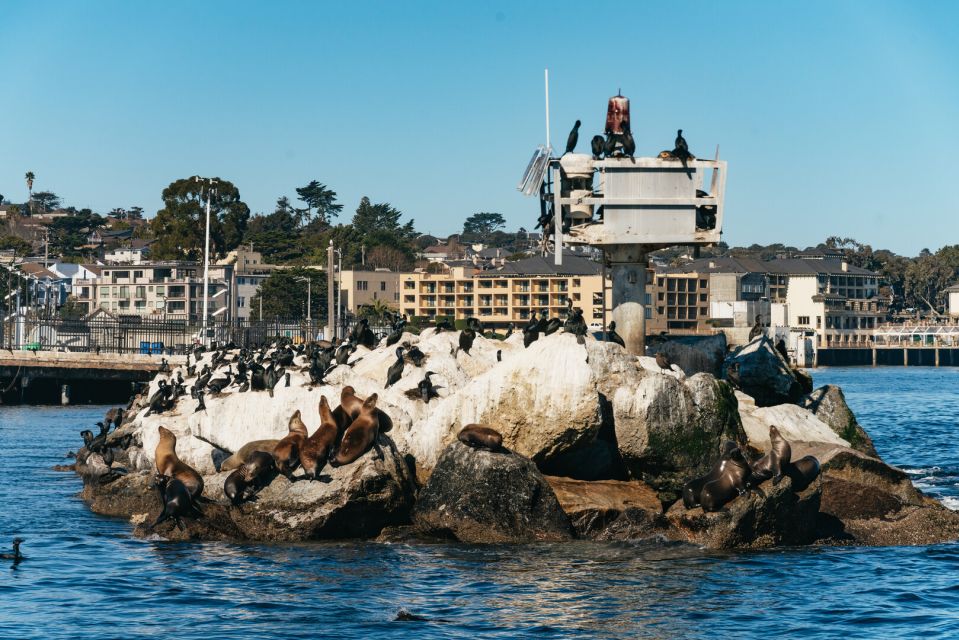
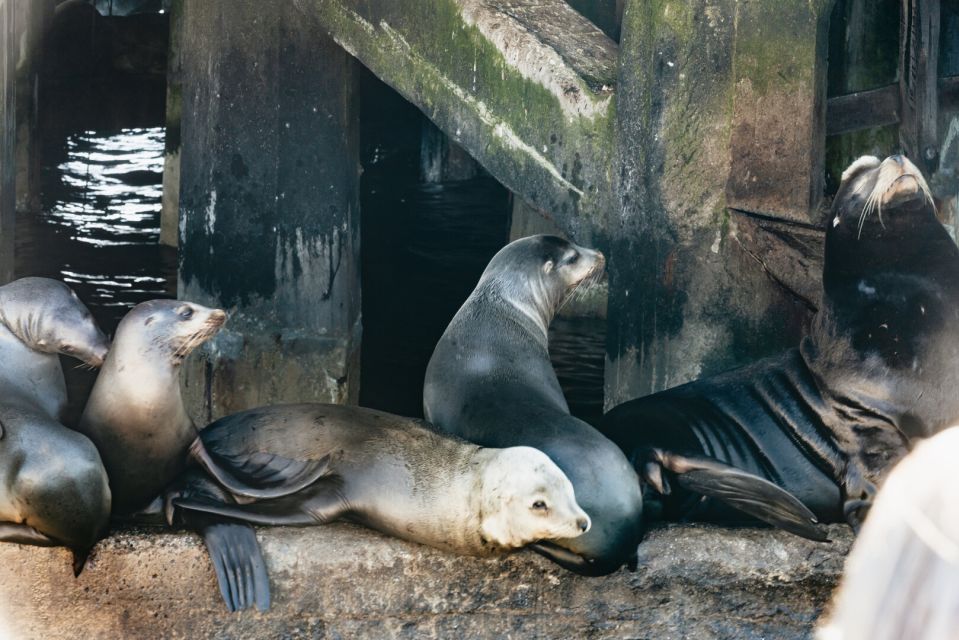
Why start this way? Old Fisherman’s Wharf is lively even before you leave the dock. One of the best little bonuses is that as the boat pulls out, you can see hundreds of California sea lions inside the harbor. It’s a smooth warm-up to the bigger animals you came for, and it gets you thinking like a marine watcher right away.
Cannery Row to the sanctuary: watching the day change offshore
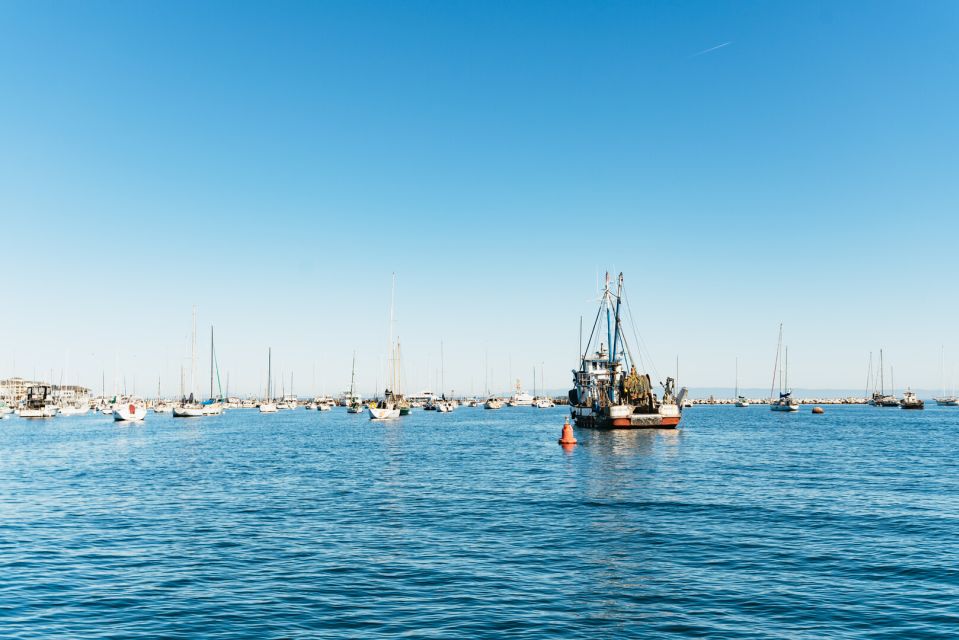
As you pass Cannery Row, you’re basically moving from the postcard Monterey shoreline into the real marine setting. This is where the cruise’s rhythm shifts. Early on, you’re scanning for harbor wildlife; then you’re watching for changes in the water—surface activity, birds reacting, and whales surfacing in the distance.
The route is designed to bring you into Monterey Bay National Marine Sanctuary, a key zone for wildlife viewing. The canyon system close to shore is the reason this works, but from your deck, you’ll feel it in how often you have something to look at. Even when you don’t see a full breach, you might catch whales feeding at the surface or see dolphins riding along with the boat.
You’ll also have clear “waypoints” to anchor your attention: leaving the wharf area, passing Cannery Row, entering the sanctuary zone, and then spending time in the broader Monterey Bay area before heading back to the dock at Discovery Whale Watch.
What you can expect when the sightings actually happen
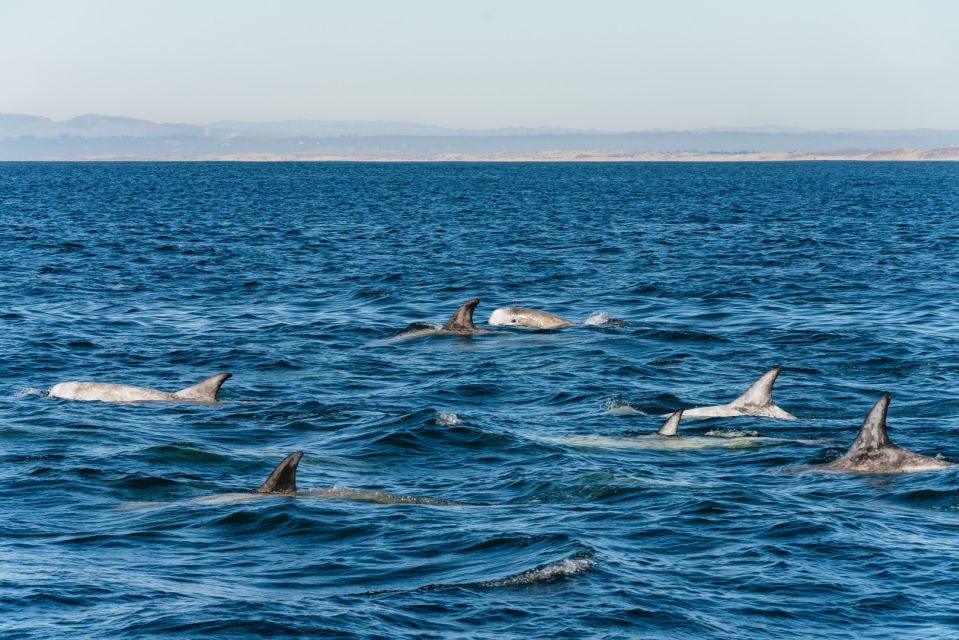
The core of the tour is the search for whales in their natural habitat, and the style of spotting here is very practical. You’re not waiting for one random miracle. You’re looking for feeding behavior and active movement in the sanctuary area, guided by a biologist guide who explains what’s happening and why.
Depending on the season, the emphasis changes:
- In summer and fall, the tour focuses on feeding. That’s when humpback whales are commonly spotted, and it’s also when you might see other whale species feeding in the same general ecosystem. You may also notice seabirds and seals in the mix—signals that prey is near the surface.
- During winter, the tour shifts to the south end of Monterey Bay to track migrating whales, including gray whales.
So what does “feeding” look like in real time? You might see humpbacks actively surfacing, with repeated blows and short periods of visible movement. You could also see spectacular behaviors like breaching or fin slapping, though those moments aren’t guaranteed and depend on the whales’ behavior that day.
For dolphins, porpoises, and even orcas, your best odds come from sustained observation once the captain finds the right area. Dolphins and porpoises often pop up around moving water, while orcas—when present—can show up with strong directional movement and repeated sightings for long stretches.
The biologist onboard: how the commentary improves your odds
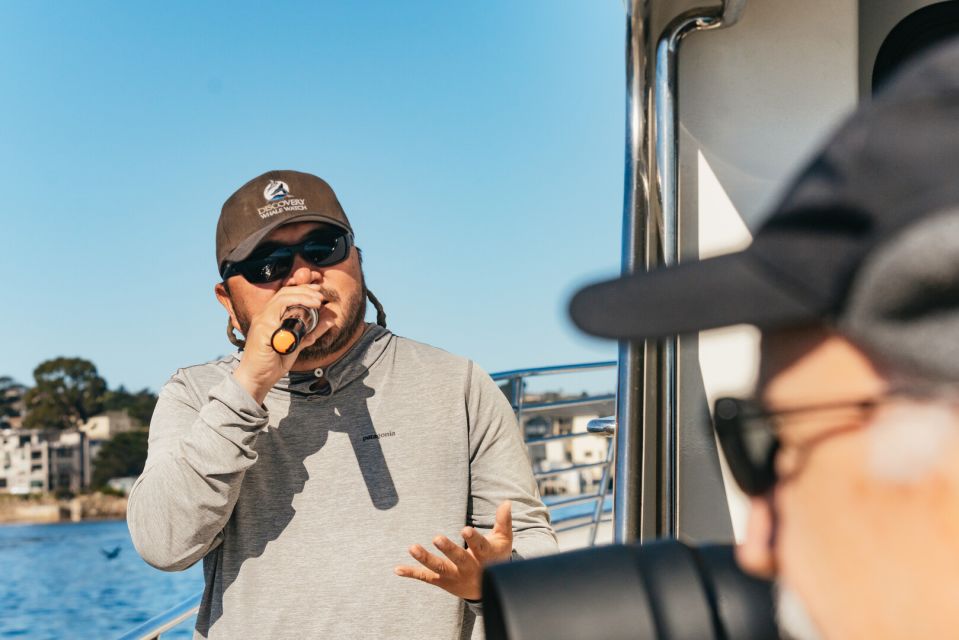
A whale tour becomes a lot more satisfying when you understand what you’re seeing. The biologist guide onboard provides that missing layer, talking about marine life and conservation efforts, and helping you connect surface behavior to feeding or migration.
I also like how this kind of tour treats questions as part of the experience, not an interruption. If you’re wondering what a blow pattern means, why seabirds cluster, or how whales behave near prey-rich water, you have a real chance to get straight answers.
From guide names that come up in real outings—Isaiah, Maddy, and Sophie are specifically mentioned in experience accounts—you can expect a friendly, interactive style. One account highlights Isaiah’s sing-along approach with sea shanties, while others note guides taking photos during the trip and sharing them later.
That “extra service” isn’t just entertainment. When you get a great shot (or even a confusing sighting), having someone explain what you photographed helps you feel like you didn’t just luck into it—you learned something.
Timing by season: feeding whales vs. migrating gray whales
This is one of the most important planning angles for Monterey Bay whale watching. Your month affects not only which whales you’re most likely to see, but what the captain and guide are focusing on.
In summer and fall mornings, the cruise runs about 3.5 to 4 hours. Those tours often target feeding whales—especially humpbacks—so you get a higher chance of seeing active surface moments, along with dolphins and other marine life sharing the same food-rich area.
In winter, the strategy shifts to chasing the migration route. Winter morning tours and year-round afternoon tours are listed as 2.5 to 3 hours, which means less time on the water but still a strong chance to see whales that are passing through, including gray whales at the south end of Monterey Bay.
Bottom line: if you want feeding behavior—active surfacing, more repeated interactions at the surface—aim for summer/fall. If you want migration chances and the special appeal of gray whales, winter is your best bet.
Comfort, cold water air, and motion sickness reality checks
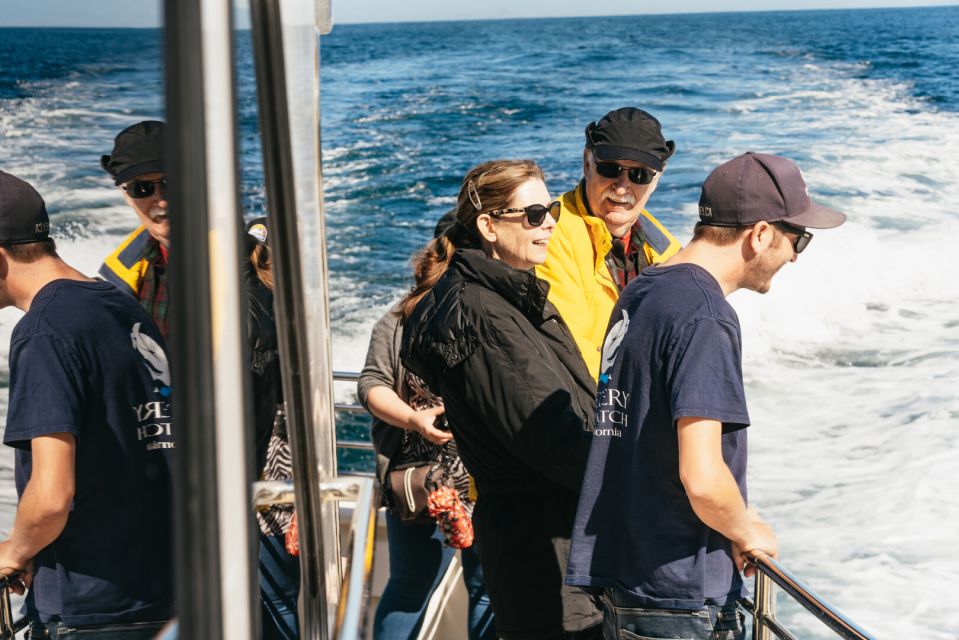
Bring layers. Even in months when the land feels pleasant, the ocean air can turn cool fast, and you’ll be standing outside at the rail more than you think.
The tour includes hot beverages, and the vessel has restroom facilities, so you’re not stuck. That said, it’s still smart to dress like you’re expecting wind.
If you get motion sickness, the office sells remedies on-site before departure, and you’re welcome to bring your own. One experience account mentions ginger candy being used to help someone feeling queasy—so if you feel off, speak up early. The crew tends to respond quickly when someone needs help.
Also note what’s allowed and not allowed:
- Not allowed: smoking, alcohol, and drugs
- Allowed: a small packed lunch and non-alcoholic beverages
- Dogs: friendly dogs are permitted on board
This mix is handy. If you’re traveling with a picky eater or you want to keep your energy up between harbor snacks and whale time, having a packed lunch option gives you control.
Boat size, viewing angles, and how to get your best seat
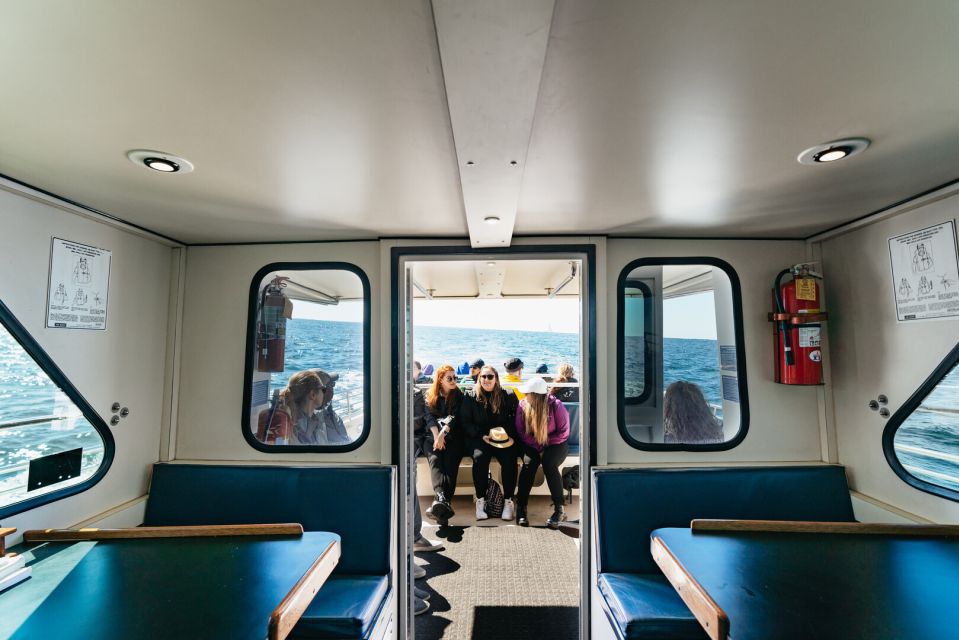
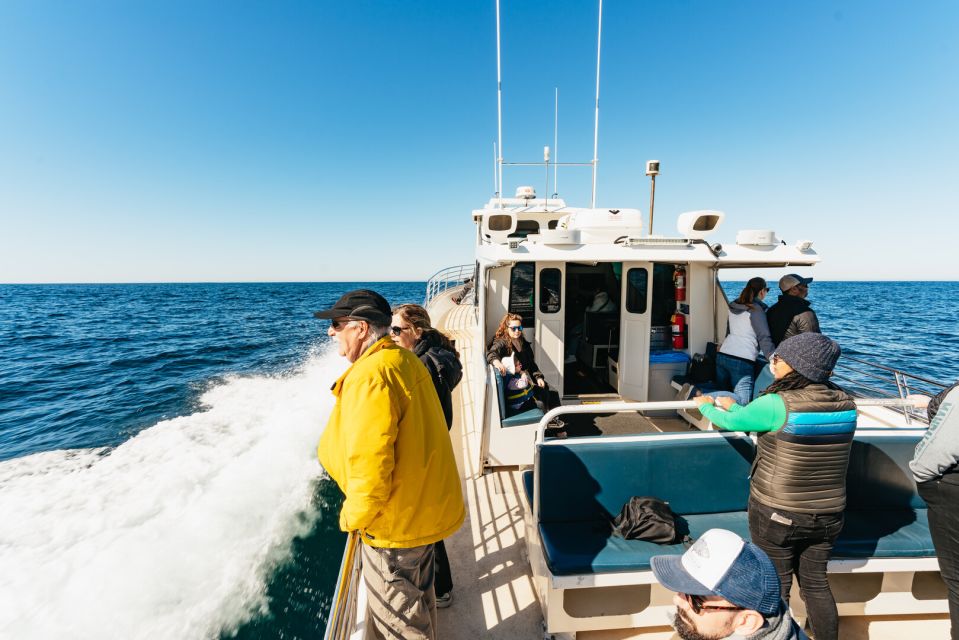
You’ll want good sightlines, and group comfort matters. One of the most praised themes in the experience details is that the boat is sized in a way that feels manageable. Accounts describe a group around 25 people, with the trip not feeling overcrowded, and with space to move for better views.
That means you can shift position without playing a constant game of foot-to-foot shuffling. During active whale sightings, you’ll naturally want to move toward the rail, and having room improves the chance you catch something brief—like a quick breach or a whale surfacing close to the boat.
One small practical tip: plan to spend time both sides of the boat when you’re offered chances to relocate. The best viewing often depends on where the captain positions for sighting angle, and the day can change quickly.
Price and value: does $75 buy you a worthwhile Monterey morning or afternoon?
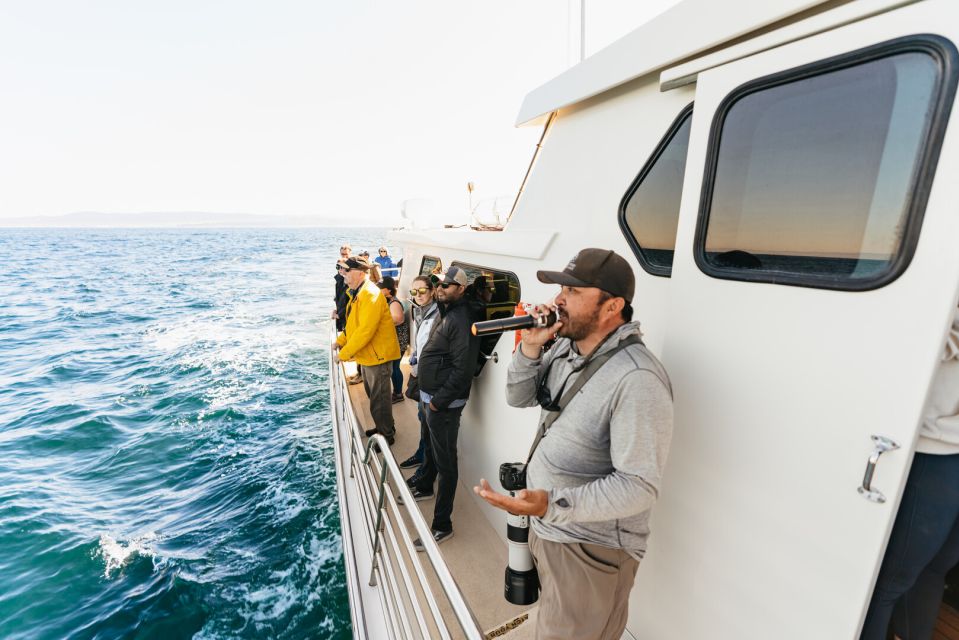
At $75 per person, you’re paying for time on the water, a guided search, and expert interpretation. The value depends on what you want from a whale watch.
If you just want whales as a checklist item, costs can feel steep. But if you want a better-than-lottery experience—multiple species chances, a biologist guide, hot drinks, and a route that targets the right marine zones—then $75 starts to look reasonable.
The other part of value is how much time you’re actually spending on the whale-viewing mission. This cruise is built for a focused window: roughly 3 to 4 hours for many options, and 2.5 to 3 hours for certain winter/afternoon schedules. That’s not a half-day commitment, and it leaves room to also enjoy Monterey between the harbor and the waterfront.
Also, the inclusion of hot beverages and onboard restroom access reduces the “hidden costs” that add up on some tours. Bring your own snacks if you want, but you won’t be stuck paying for every basic need.
Who should book this tour, and who should skip
This cruise is a great match if you:
- Want a structured whale watch with onboard scientific commentary
- Prefer a near-shore Monterey Bay experience, not a long transfer to offshore waters
- Like trips that also bring other wildlife into the frame—dolphins, porpoises, seals, sea lions, and seabirds
- Want an easier day that still feels special (no complex planning beyond showing up ready)
It’s not the best fit if you:
- Are pregnant
- Have mobility impairments (the tour lists this as not suitable)
If you’re traveling with kids, this kind of guided spotting often lands well, because the explanations help sightings feel less random and more meaningful. And if you’re a first-time whale watcher, the combo of close-to-shore habitat and guide help is a strong entry point.
Should you book Discovery Whale Watch?
I’d book it if your ideal day in Monterey includes whales plus learning, not just hoping. The big selling points are practical: a near-shore sanctuary setting, seasonal planning (feeding vs migration), a biologist onboard, and a comfort setup with hot drinks and restrooms.
If you’re on the fence, choose your timing carefully. Summer and fall can be especially good for feeding behavior and repeated surface activity. Winter can be a different kind of win—gray whale migration odds are part of the appeal, even with shorter tour durations.
Finally, show up prepared. Layers, sunglasses, sunscreen, comfortable shoes, and motion-sickness planning turn the trip from stressful to enjoyable. If you’re set up well, this is the kind of Monterey outing where the wildlife can genuinely steal the day.
FAQ
How long is the Monterey Bay whale watching cruise?
It’s listed as 3 to 4 hours depending on the option booked. Some summer and fall morning tours run about 3.5 to 4 hours, while winter morning tours and afternoon tours year-round are about 2.5 to 3 hours.
Where do I meet the tour?
Check in at the Discovery Whale Watch office at 66 Fisherman’s Wharf, Monterey, CA 93940. You should check in at least 45 minutes before departure.
Do I need to fill out a waiver before boarding?
Yes. You’ll receive a Coast Guard waiver link by email to fill out electronically, and each person in your party must complete it (adults complete waivers for minors).
What’s included in the ticket price?
The tour includes the whale-watching cruise (3 or 4 hours depending on option), a biologist guide, and hot beverages.
Is food included?
No. Food is not included, but bringing a small packed lunch and non-alcoholic beverages is allowed.
What should I bring?
Bring a passport or ID card, comfortable shoes, sunglasses, a sun hat, and sunscreen. Also consider layers for cooler conditions on the water.
Are dogs allowed on board?
Yes. Friendly dogs are permitted on board.
Are restrooms available?
Yes. There are restroom facilities on the vessel.
What about motion sickness?
Motion sickness remedies are available for purchase at the office before the tour, and you can bring your own.
Is alcohol allowed on the tour?
No. Alcohol and drugs are not allowed, and smoking is also not allowed.