
REVIEW · LOUISVILLE
ORIGINAL Old Louisville Walking Tour seen in The New York Times!
Book on Viator →Operated by Louisville Historic Tours · Bookable on Viator
Victorian streets tell their own stories. This Old Louisville walking tour gives you a guided path through historic neighborhoods and legendary spots like the Witches’ Tree, with architecture and local character front and center. You’re not stuck reading plaques on your own time. You’re getting the why behind what you see.
I especially like the way the tour turns a big, confusing district into a clear loop of sights, from St. James Court to Millionaires Row. The other strong point is the storytelling quality—guides bring names, motives, and neighborhood details into the walk. One consideration: you’ll be walking with no building entries and you must be able to walk about 90 minutes without a bathroom break, and the start point sits in a transitional area where you might encounter panhandlers or homelessness.
In This Review
- Key highlights to look for before you go
- Old Louisville’s scale hits you fast (and in a good way)
- The $25 value: you’re paying for focus, not just scenery
- Where you meet matters: plan for comfort at the start
- Your route in real life: Old Louisville to Central Park and back
- Stop 1: Old Louisville streets (the long look)
- Stop 2: The Witches’ Tree and the tornado legend
- Stop 3: Conrad-Caldwell House Museum from the street
- Stop 4: Bernheim Mansion Bed and Breakfast on Millionaires Row
- Stop 5: Filson Historical Society and Beaux-Arts grandeur
- Stop 6: Central Park designed by Olmsted
- The guides: why names like David, Gabe, Angelique, Frances, and Brenda show up
- What to notice while you walk (so you get even more out of it)
- Comfort and timing: make the walk easy on yourself
- Should you book this Old Louisville walking tour?
- FAQ
- How long is the Old Louisville walking tour?
- What is included in the $25 ticket price?
- Do you go inside the mansions and museums?
- Where does the tour start and where does it end?
- Is the tour hard if I need frequent bathroom breaks or have mobility concerns?
- What happens if the weather is poor?
Key highlights to look for before you go

- Small group size (up to 20) keeps the walk conversational and not rushed
- Over 1,000 structures across 40 square blocks helps you grasp why Old Louisville matters
- You see mansion exteriors up close while most homes stay private residences
- The Witches’ Tree stop gives you a local legend with actual local footprints (and offerings)
- Frederick Law Olmsted’s Central Park plus a major arts tradition tied to Shakespeare
- Certified guides make the neighborhood make sense, especially if you like architecture and stories
Old Louisville’s scale hits you fast (and in a good way)
Old Louisville is one of the larger historic districts in the United States, with more than a thousand structures spread over about 40 square blocks. On your own, it’s easy to get lost in the prettiness—big homes, neat streets, and no clear idea of what came first or who built what.
On this tour, the guide gives you a map you can carry in your head. You’re walking through a transitional neighborhood, so you’ll also see normal city life mixed into the historic fabric. For example, along Fourth Street near the north edge, you may encounter panhandlers and people experiencing homelessness. That doesn’t change the architecture story, but it does affect your comfort level, especially if you’re new to cities.
If you want a place where the past feels present—through buildings, street layout, and local lore—Old Louisville delivers. And since you’re walking, the district’s size becomes part of the experience. You’re not just looking at a postcard. You’re moving through the area like the original builders and wealthy residents once did.
You can also read our reviews of more tours and experiences in Louisville.
- Old Louisville Ghost Tour as Recommended by The New York Times @ 4th and Ormsby
★ 5.0 · 1,201 reviews


The $25 value: you’re paying for focus, not just scenery
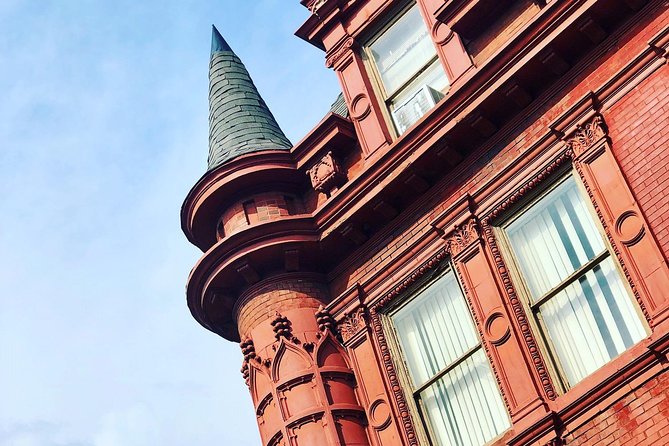
At $25 per person, the price is less about buying admission tickets and more about buying time with a guide. You get a certified guide, a structured route, and a tour length of roughly 1 hour 40 minutes to 2 hours. That matters because the neighborhood is dense with details—Victorian facades, planned streets, and standout homes. With a guide, you spend your time learning what’s worth noticing.
Also, you don’t have to worry about figuring out the route in advance. You get a central start point and a loop that takes you through the main story beats. If you like the idea of getting your bearings fast, this format helps.
One more value point: the guide’s job isn’t just to recite dates. It’s to connect the street sights to people—wealthy titans, local identity, and why some legends became part of the community. That’s the part you can’t reproduce by simply driving around.
Budget note: gratuities are not included, and the listed suggestion is $5.00 per person.
Where you meet matters: plan for comfort at the start
The tour starts at West Ormsby Avenue & South 4th Street (W Ormsby Ave & S 4th St, Louisville, KY 40203). It ends back at the meeting point, which is convenient for your next stop.
Here’s the practical heads-up: that starting area is described as transitional. You might see panhandlers, people experiencing homelessness, and individuals who don’t look like you. I’d treat it like any real-city arrival zone—stay alert, keep your phone secured, and don’t leave personal items loose. Once the walk gets going, the focus stays on Old Louisville’s historic streets and the guide keeps the flow moving.
Comfort also depends on your body. The tour isn’t for people who need frequent breaks. You must be able to walk about 90 minutes without a bathroom break, and the tour is not recommended for visitors with mobility issues.
Finally, this experience requires good weather. If conditions are poor, you’re offered a different date or a full refund.
Your route in real life: Old Louisville to Central Park and back
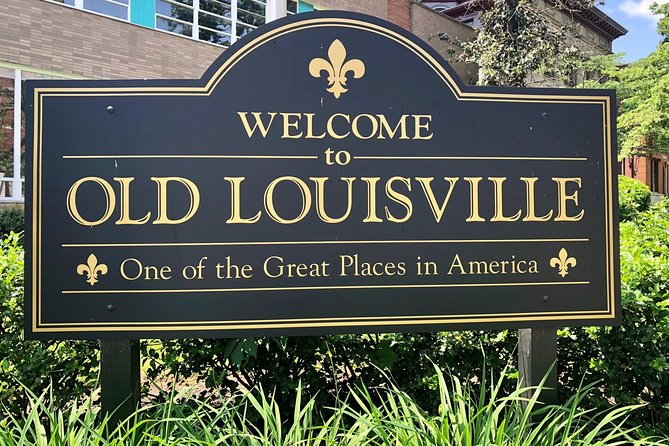
This is a walking tour through a compact, high-detail neighborhood. You won’t be going inside most houses. Many of the residences in Old Louisville are private homes, so the tour focuses on what you can see from the sidewalk and street.
Think of it as an architecture-and-story loop. You’ll learn what to notice as you pass it.
Stop 1: Old Louisville streets (the long look)
The bulk of the tour happens in Old Louisville. You’ll spend about 1 hour 30 minutes walking and hearing how this district grew into one of the most important historic areas in the U.S.
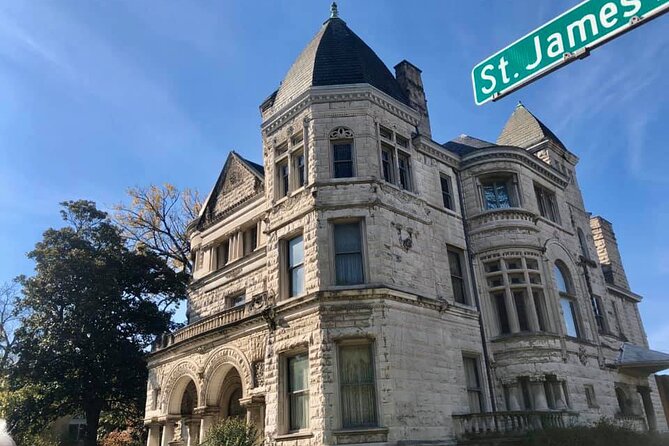
What makes this section work is scale and framing. You’re shown how the neighborhood functions as a whole—its size, its historic character, and how it sits inside a working city. You also get context for later stops, because the tour doesn’t treat the sightings as random. It links St. James Court and nearby streets to the people who shaped the area.
A note that helps set expectations: you don’t enter structures. Most houses are private residences.
One extra option that’s worth knowing: during this part of the tour, you stop in front of the Conrad-Caldwell House Museum. If you want to go inside, you can arrange it separately for a fee.
Stop 2: The Witches’ Tree and the tornado legend
Next you hit the famous local story: The Witches’ Tree. It’s only a short stop (about 5 minutes), but it’s one of those moments that gives Old Louisville personality.
The legend goes like this: a cherished tree used by local witches was chopped down, and townsfolk believed the crones sent a tornado in revenge. Visitors often leave offerings on the twisted trunk as a way of making amends.
You’ll learn the story in a way that feels tied to place, not like a Halloween write-up. It’s also a quick sensory shift from architectural details to folk lore.
If you’re traveling with kids or you just like quirky history, this stop tends to do the job.
Stop 3: Conrad-Caldwell House Museum from the street
After the Witches’ Tree, the tour brings you back to the Conrad-Caldwell House Museum area for another brief exterior stop (about 5 minutes). The mansion itself is not included as part of the tour visit. You’ll be looking from outside, since the tour doesn’t include interior entry for most stops.
This is the point where you decide whether you want more. If you’re the type who loves house museums, you can arrange the interior visit separately with the museum.
The practical takeaway: don’t assume your tour ticket includes mansion entry. It’s a street-focused experience.
Stop 4: Bernheim Mansion Bed and Breakfast on Millionaires Row
Then you get a classic “wow” block: Millionaires Row. The tour stops at the Bernheim Mansion Bed and Breakfast, briefly (about 2 minutes), to show you what makes the Richardsonian Romanesque style recognizable.
One standout feature you’ll hear about is the green men arranged around a triple Roman-arched porch. That detail is exactly the kind of thing that’s easy to miss on your own. With the guide, it becomes a visual checklist.
This is also where the neighborhood’s “wealth in stone” vibe comes through. The tour is at its best when it helps you read architecture like it’s language.
Stop 5: Filson Historical Society and Beaux-Arts grandeur
Next stop is the Filson Historical Society area (about 5 minutes). Here’s what you’ll learn: the building was built in 1905, and it was once the Ferguson Mansion, described as the grandest home in the city.
Architecturally, it’s a Beaux Arts example. Today, it serves as the headquarters for the Filson Historical Society, and you can arrange visits separately.
This stop is useful because it adds variety. You’re not only seeing Victorian-era streets. You’re seeing a later style that shows Louisville’s shifting taste and ambitions.
Stop 6: Central Park designed by Olmsted
The final stop is Central Park (about 5 minutes), and it’s a big deal even if you only spend a few minutes there.
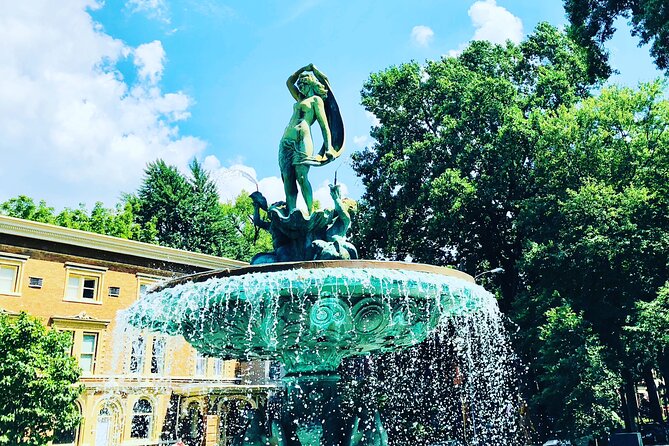
Louisville’s Central Park was designed by Frederick Law Olmsted. It’s about 14 acres with native tree species and shaded walkways. The park also ties into the arts: Shakespeare in the Park has taken place there since 1961, and it’s described as the nation’s oldest free outdoor Shakespeare event.
On a walking tour, the park stop works as a palate cleanser. After mansion fronts and dense architecture, you get a green pocket and a sense of community life. It’s not a long visit, but it gives you a next-step idea: come back later to linger.
The guides: why names like David, Gabe, Angelique, Frances, and Brenda show up
What really lifts this tour is how much personality and clarity guides bring to the walk. Multiple guides get mentioned for strong performance, including David, Gabe, Angelique, Frances, and Brenda.
A few recurring strengths show up in the experience:
- The guides keep a steady pace and stay easy to hear. One review specifically highlighted a guide with a microphone, which can matter when you’re walking and traffic noise is in the background.
- Guides connect architecture and local stories in a way that makes the neighborhood feel personal, not like a textbook.
- Some guides bring lived-in familiarity with the area. One review noted the meaning of a guide who had lived in the neighborhood, which helps explain why the stories land with confidence.
And if you like humor, you’ll probably appreciate that the tour doesn’t feel like a lecture. It feels like a conversation with someone who knows what to point out.
What to notice while you walk (so you get even more out of it)
If you want to squeeze extra value out of your time, focus on these visual targets as you move through Old Louisville:
- Transition areas and street life: This is a real neighborhood, not a museum zone. Notice how historic buildings sit alongside modern street reality.
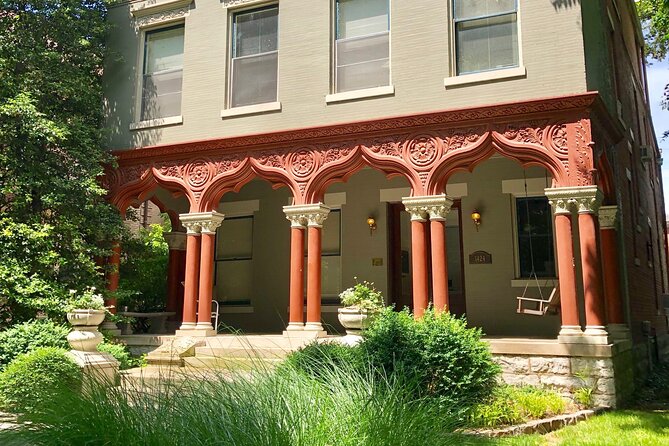
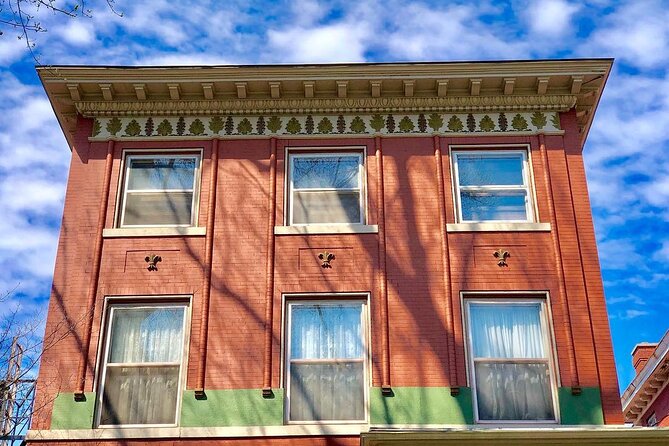
- Victorian details on facades: The tour is built around the Victorian architecture sprinkled across the area.
- Green men and Roman arches at Bernheim Mansion: That triple Roman-arched porch detail is a great “anchor feature.”
- The Beaux-Arts signals near the Filson Historical Society building: Look for how the building looks more formal and civic compared to smaller homes.
- Central Park’s shade and tree feel: Even with a short stop, it’s designed for walking comfort, and the Olmsted influence is part of why that matters.
If you can, bring a small notebook or notes app. The tour moves at a human pace, but once you leave, you’ll want to remember what stood out.
Comfort and timing: make the walk easy on yourself
Because this is a true walking tour, comfort decisions matter.
Wear shoes you trust on uneven sidewalks. You’ll be walking enough that you should treat this like a light hike. Also plan around the bathroom rule: you need to handle the requirement of walking about 90 minutes without a bathroom break.
Bring basic weather gear. The tour requires good weather, and even when the day is fine, shade and sun can change your comfort quickly. Since there’s a shaded park element later in the route, you’ll likely appreciate having water and something light to cover up if it’s warm.
Finally, if you’re the type who likes photos, give yourself a minute at each stop. The route is structured with short stop durations, so trying to shoot for 10 straight minutes at one exterior can throw off your sense of pace.
Should you book this Old Louisville walking tour?
I’d book this tour if:
- you want a guided orientation to Old Louisville without dealing with route planning
- you like architecture, but you also want the stories behind it
- you’re comfortable with walking for about 90 minutes without a bathroom break
- you want a small group experience and a guide who talks in a clear, engaging way (the guide track record is strong)
I’d skip it (or look for another option) if:
- you need mobility accommodations or lots of frequent breaks
- you’re easily unsettled by a starting point in a transitional area
- you specifically want lots of interior house or museum entry, because this tour centers on street views and exterior stops
Bottom line: for $25, you’re paying for a focused guide-led route through one of Louisville’s most distinctive historic neighborhoods, with legendary stops and architecturally meaningful houses you can actually spot. If you go in knowing it’s mainly outdoors and mainly exterior, you’ll likely have a very satisfying walk—and a much clearer picture of what makes Old Louisville tick.
FAQ
How long is the Old Louisville walking tour?
Plan for about 1 hour 40 minutes to 2 hours total, with most of the walking happening in the Old Louisville section.
What is included in the $25 ticket price?
The tour includes a certified guide. You also get the structured walking route and stops. Tickets to enter specific buildings are not included.
Do you go inside the mansions and museums?
No. The tour is designed as a walking tour, and most houses are private residences. You’ll stop in front of sites like the Conrad-Caldwell House Museum, but interior access is not included in the tour price.
Where does the tour start and where does it end?
It starts at West Ormsby Avenue & South 4th Street (W Ormsby Ave & S 4th St, Louisville, KY 40203) and ends back at the meeting point.
Is the tour hard if I need frequent bathroom breaks or have mobility concerns?
It’s not recommended for visitors with mobility issues, and you must be able to walk about 90 minutes without a bathroom break.
What happens if the weather is poor?
This experience requires good weather. If it’s canceled due to poor weather, you’ll be offered a different date or a full refund.
You Might Also Enjoy



More Tour Reviews in Louisville
- Old Louisville Ghost Tour as Recommended by The New York Times @ 4th and Ormsby
★ 5.0 · 1,201 reviews
Not for you? Here's more nearby things to do in Louisville we have reviewed
- Old Louisville Ghost Tour as Recommended by The New York Times @ 4th and Ormsby
★ 5.0 · 1,201 reviews