
REVIEW · EASTERN STATE PENITENTIARY
Philadelphia: Eastern State Penitentiary Admission
Book on GetYourGuide →Operated by Eastern State Penitentiary · Bookable on GetYourGuide
The silence here feels engineered. Eastern State Penitentiary turns a ruin into a lesson, with Steve Buscemi’s audio tour guiding you cellblock by cellblock, and Al Capone’s cell giving a creepy sense of scale. The trade-off is that the building runs on weather, so dress for cold or heat and watch your footing in semi-ruined sections.
I also love the way the visit is flexible: you get an MP3 player and headset and can follow the main route or add stops on escapes, riots, sports, and sexuality. There are interactive exhibits and artist installations too, but you’ll want at least a couple hours.
In This Review
- Key things to know before you go
- Entering Through Fairmount Avenue and Getting Your Headset
- Why Eastern State Was Different: Penitence, Design, and Discipline
- Cellblocks That Still Feel Tight
- Al Capone’s Cell: Famous Name, Chilling Scale
- The Hospital Block: When the Stories Shift from Punishment to Care
- The Voices of Eastern State Audio Tour (Narrated by Steve Buscemi)
- Interactive Experiences, Exhibits, and Artist Installations
- How Long to Plan and How to Pace It
- Price and Value at $21 Per Person
- Practical Tips: Weather, Footwear, and Meeting Your Timing
- Should You Book Eastern State Penitentiary for Your Philly Trip?
- FAQ
- What is included with admission?
- How much does Eastern State Penitentiary admission cost?
- How long should I plan for the visit?
- Who narrates the audio tour?
- Is the audio tour self-paced?
- What languages are available for the audio guide?
- Where do I enter?
- Is the prison accessible for wheelchair users?
- Is it suitable for young children?
- Can I cancel my booking?
- Is there an evening entry option?
Key things to know before you go
- Steve Buscemi narrates The Voices of Eastern State with a stereo soundscape that mixes many voices, including former wardens, guards, and inmates
- You’re not stuck on one fixed path: the audio tour includes a main route plus extra subject stops you can skip or focus on
- Al Capone’s cell is a standout moment, but the design of the cells around it is what makes it truly unsettling
- The long-abandoned Hospital Block is worth planning for, since it changes the tone from crime stories to care, neglect, and consequences
- Plan for no climate control: bring weather-appropriate clothing and solid footwear
Entering Through Fairmount Avenue and Getting Your Headset
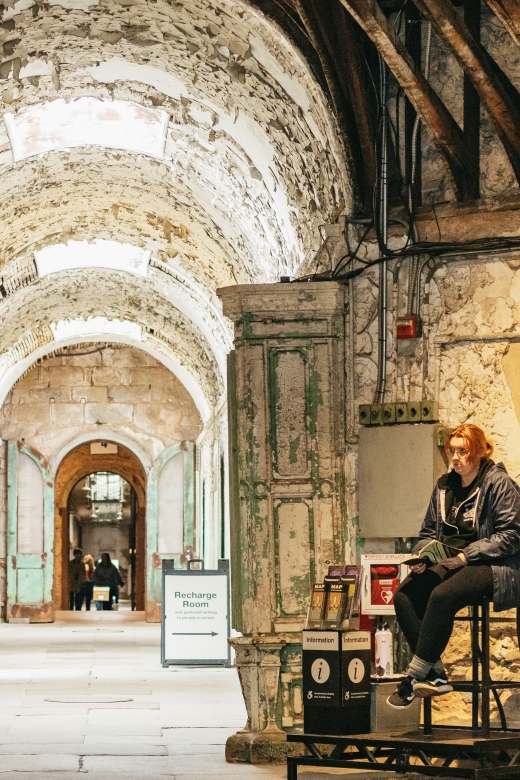
Start at the main entrance on Fairmount Avenue. Once you arrive, you’ll be set up with an MP3 player and headset, which is the core of the experience. The audio tour is included in the admission price, so you can begin right away without hunting for a separate guide.
This is the kind of museum where your visit style matters. The main audio route will get you oriented fast, but the player also includes extra stops for specific themes like escapes, riots, sports, and sexuality. You can follow the planned route, pause to read exhibits, or spend extra time in one cellblock if it grabs you.
Before you walk in, think about how much you want to hear. If you’re the type who likes every story, you’ll go longer. If you prefer a brisk pass, you can skip sections and still leave feeling like you saw the heart of Eastern State.
Why Eastern State Was Different: Penitence, Design, and Discipline
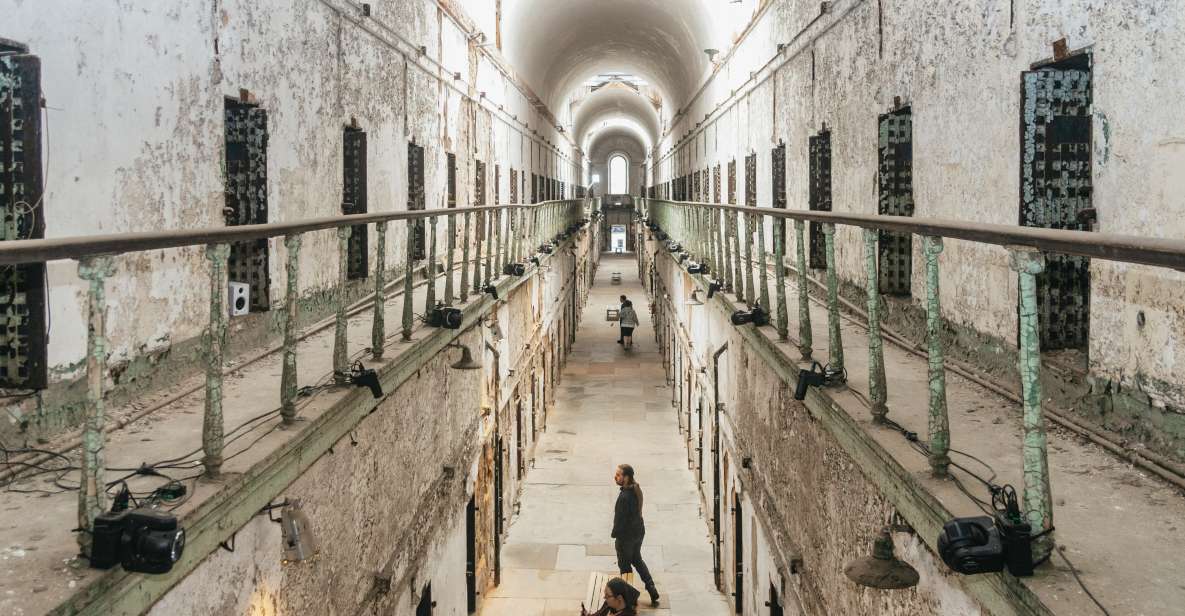
Eastern State Penitentiary opened more than 180 years ago and was designed to do more than punish. It’s often described as the world’s first true penitentiary: a prison intended to inspire penitence, meaning real regret, in prisoners. That idea shapes everything you see, from the isolation layout to the strict discipline built into the architecture.
What makes the place extra interesting is how advanced the building was for its time. It had running water and central heat before the White House, which sounds almost unbelievable once you’re standing in the present-day ruins. The architecture was also meant to control how people moved and how much sound or distraction carried.
You’ll notice the cells are vaulted and sky-lit, which gives a strange contrast: daylight filtering in over spaces that were built for confinement. The building’s grand geometry makes it feel monumental, and the emptiness makes it feel personal. It’s not just a crime site. It’s an experiment in how architecture can shape behavior.
Cellblocks That Still Feel Tight
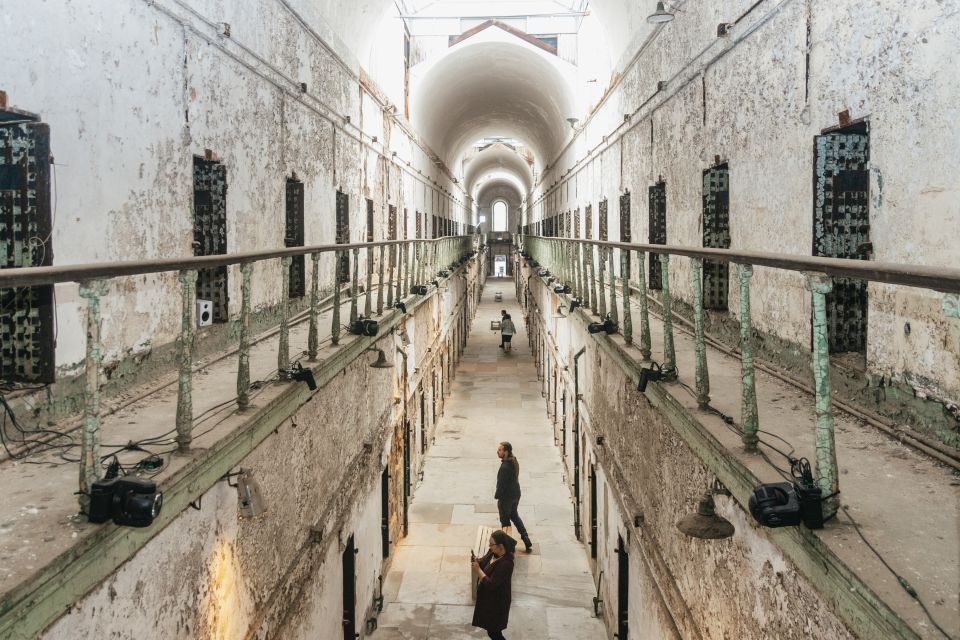
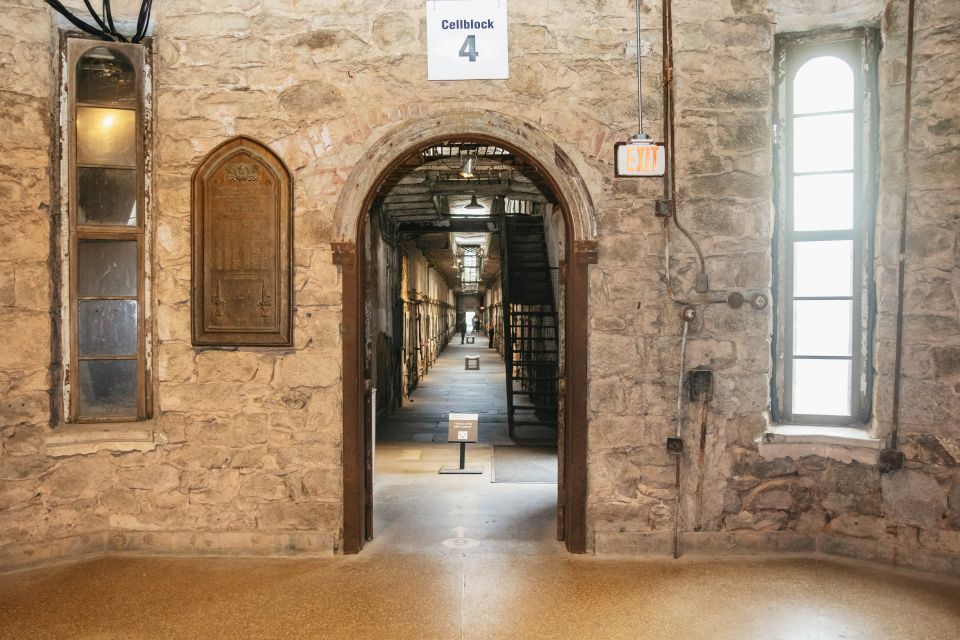
Walking through the cellblocks is where the building stops being a concept and becomes a physical experience. Many cells are small, and the corridors feel structured to keep people separate, supervised, and contained. Even in ruin, you can still sense how the system was designed to close in.
This is also where your pace helps you most. The prison is arranged so you can move on your own, and you can choose to slow down for information boards and interactive elements. If you rush, you’ll miss the details that explain how the discipline worked in practice.
Shoes matter here. Some surfaces are uneven or worn, and the site is in a state of semi-ruin. It’s not a slippery, polished museum floor. It’s an old building, and you’ll feel that in your feet and attention. Plan to walk steadily, not quickly.
Al Capone’s Cell: Famous Name, Chilling Scale
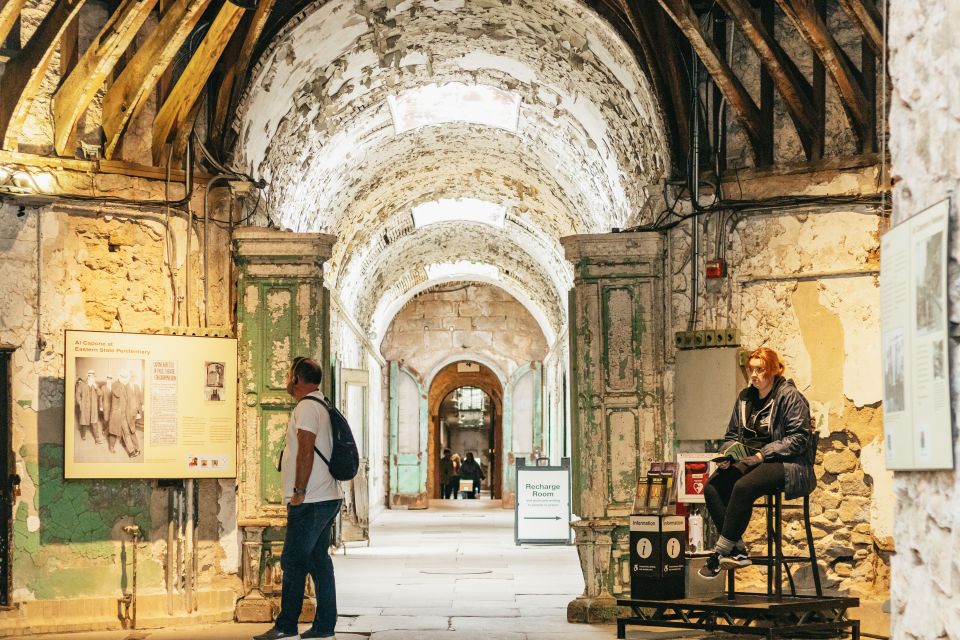
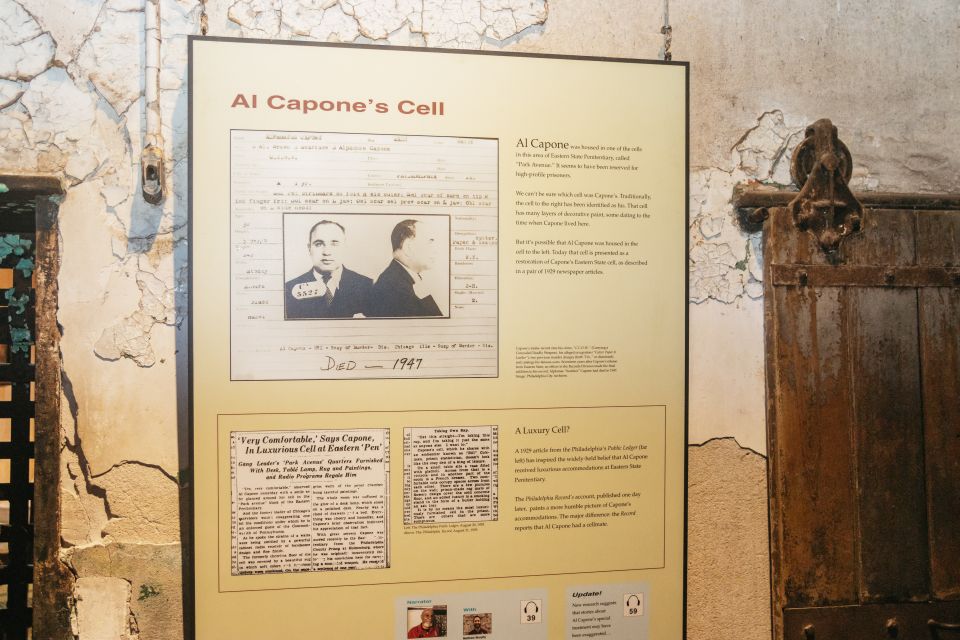
Al Capone’s cell is one of the highlights for good reason. Seeing a notorious name anchored to actual stone walls makes the whole story snap into place. It’s easy to remember the crime headlines, but the cell gives you the reality of the space.
The cell isn’t just a photo-op. It’s part of a bigger point about how the penitentiary worked as a system. The design and isolation weren’t designed around celebrity. They were designed around control, discipline, and the idea of reform through confinement.
I like how this moment sits inside the broader architecture. Capone is the hook, but the prison’s original intent is the lesson. You’ll get more out of the visit if you treat the Capone stop as a doorway into the larger design—how the building held people, watched them, and shaped their days.
The Hospital Block: When the Stories Shift from Punishment to Care
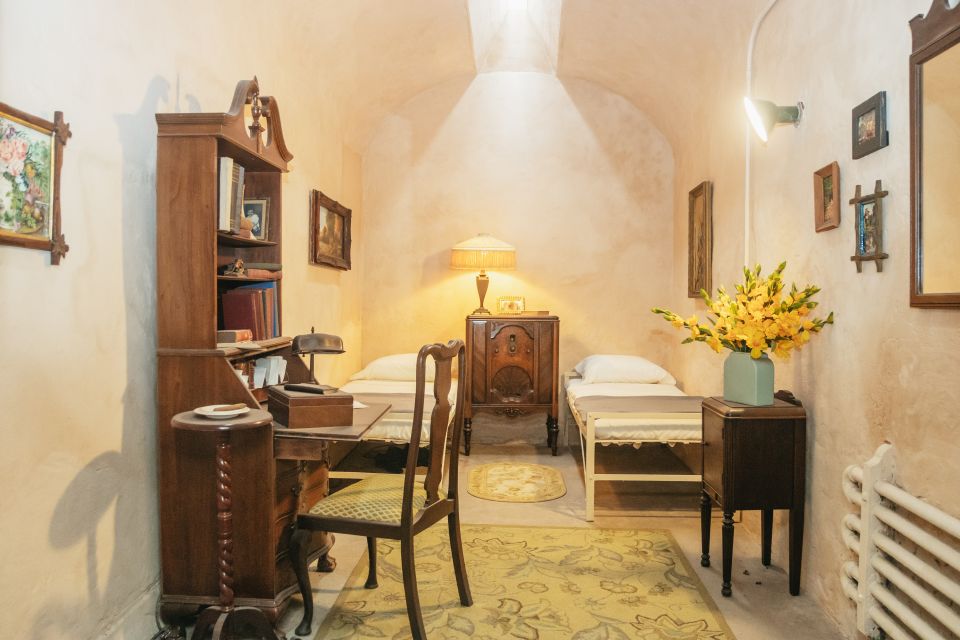
One of the best reasons to visit Eastern State is the long-abandoned Hospital Block. It changes the emotional tone of the tour because it’s not only about crime and confinement. It’s about what happens to the body and mind inside a carceral system.
The prison’s main idea was discipline and penitence, but the Hospital Block adds another layer: illness, injury, and the reality of human needs that don’t disappear behind rules. You can walk through a space that’s been left behind, and that contrast makes the museum feel more honest than a simple crime exhibit.
If you’re someone who likes seeing the full picture of how institutions function, make this part of your route instead of a quick stop. Even if you don’t spend ages reading every board, the Hospital Block is one of those areas where the atmosphere does half the storytelling for you.
The Voices of Eastern State Audio Tour (Narrated by Steve Buscemi)
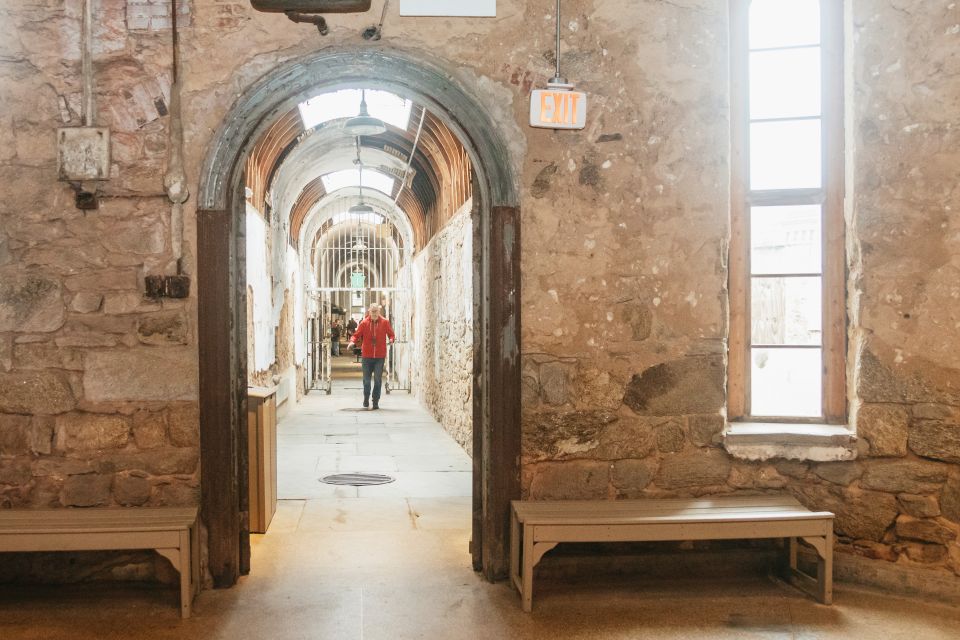
The centerpiece is The Voices of Eastern State audio tour. Your admission includes the audio, and you’re given the MP3 player and headset on arrival. The narration is by actor Steve Buscemi, who’s known from Boardwalk Empire, Fargo, Armageddon, and Ghost World.
What sets this audio guide apart is the sound design. It’s a stereo soundscape that mixes dozens of voices, including stories from 3 former wardens and 25 guards and inmates. That creates a layered effect as you walk through yards and cellblocks, like the building is remembering its own routines.
Here’s the practical part: the audio route includes the main path plus additional stops. Those extra segments cover topics like escapes, riots, sports, and sexuality. You don’t have to listen to everything. Choose what fits your interests, and skip the rest without guilt.
Interactive Experiences, Exhibits, and Artist Installations
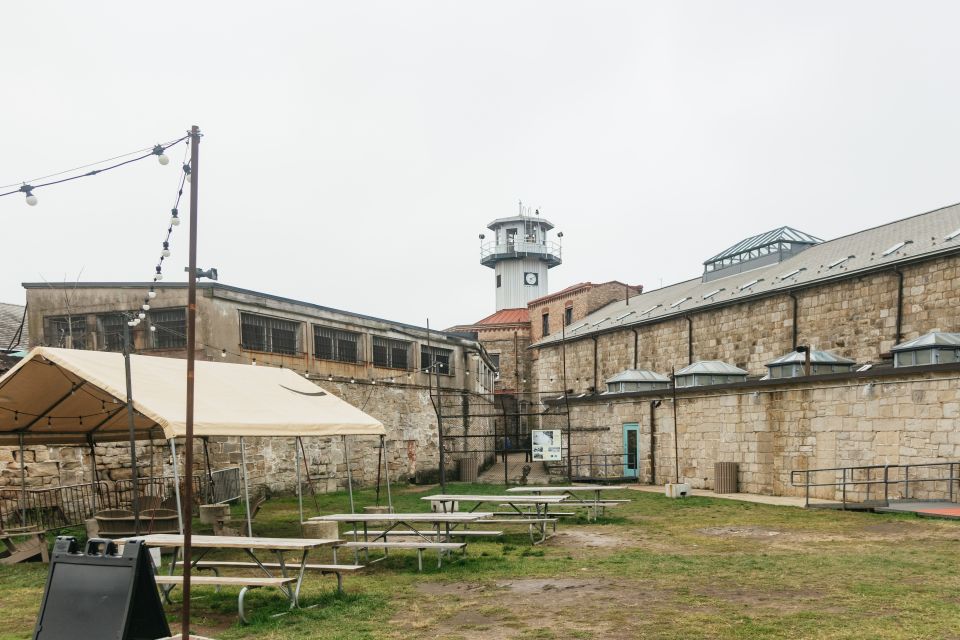
Admission doesn’t end at the audio tour. You’ll also find interactive experiences, history exhibits, and a critically acclaimed series of artist installations. These aren’t just decoration. They help translate a tough subject into something you can process while you’re walking.
This is where Eastern State feels like more than an old building. You’re not limited to restored history-only rooms. You can explore at your own pace, then use exhibits and installations to make sense of what the architecture suggests.
If you’re into modern interpretation, give yourself time between cellblocks. The site is arranged so you can stop, read, and then move on without feeling forced into a rigid flow. Just remember: the more you pause, the longer the visit becomes.
How Long to Plan and How to Pace It
Most people should plan for about 2–3 hours for a satisfying visit. Some visitors report finishing closer to 1–2 hours, especially if they focus mainly on the main route. On the other end, it’s easy to stretch to 4–5 hours if you listen carefully to multiple extra stops and linger with the exhibits and installations.
I recommend a simple strategy: start with the main audio route first. That gives you the prison’s basic geography and key themes. Then decide if you want to add extra stops like escapes or the Hospital Block wing, depending on what kind of stories grab you.
This place rewards a steady pace. You’re walking through semi-ruined spaces, and you’ll want time to look closely, read boards, and take breaks when the weather turns. If you try to cram it into a tight schedule, you’ll feel rushed in the exact spaces where you should slow down.
Price and Value at $21 Per Person
At about $21 per person, Eastern State can feel like a bargain once you realize what’s included. You’re getting admission plus the full Voices of Eastern State audio experience, with an MP3 player and headset. That alone covers the core value because it turns a one-time building visit into a narrated, self-paced tour.
The next value factor is flexibility. Guide-led tours are available subject to availability, but the audio guide means you can still have a smooth experience even if you don’t catch a live guide at the moment. The site also gives you freedom to skip certain topic stops, which helps you avoid wasting time on sections you don’t care about.
Is it perfect value for everyone? If you want a brief, fully guided walkthrough with minimal walking, this might feel like too much space and too much silence. But if you like walking, reading, and choosing your own pace, the price-to-time ratio is strong.
Practical Tips: Weather, Footwear, and Meeting Your Timing
Eastern State operates rain or shine, and the building does not have climate control. That means you’ll feel the weather—hot days, cold days, and windy days included. Bring weather-appropriate clothing and wear footwear you’re comfortable walking in for a while, especially with uneven or aged surfaces.
The meeting point is the main entrance on Fairmount Avenue, so give yourself a few minutes to find staff and get started. Once you have the headset, you can begin immediately. If you’re visiting with someone who likes to read everything, plan extra time, because the site is more than a quick path through cells.
Also check basic site rules before you arrive. Unaccompanied minors aren’t allowed, and the building is not recommended for children under age 7 due to semi-ruin safety hazards. If you’re traveling with older kids, you might find special activities like a scavenger hunt if you ask on site.
Should You Book Eastern State Penitentiary for Your Philly Trip?
Book it if you want a self-paced museum that feels haunting in a real, architectural way. This is one of the most distinctive experiences in Philadelphia because you’re not just looking at history—you’re walking through a design built to control lives, then hearing those stories through The Voices of Eastern State narrated by Steve Buscemi.
Skip it or reconsider if you need climate-controlled comfort, very kid-friendly safety, or a short and tidy tour. The site can be physically demanding, and the mood is serious. But if you’re okay with weather and walking, Eastern State is worth your time and your money.
FAQ
What is included with admission?
Admission includes the Voices of Eastern State audio tour, plus interactive experiences, history exhibits, and artist installations. Guide-led tours are available subject to availability.
How much does Eastern State Penitentiary admission cost?
The price listed is $21 per person.
How long should I plan for the visit?
You can expect to spend around 2–3 hours for the visit, though some people spend less time and others spend several hours longer.
Who narrates the audio tour?
The audio tour is narrated by actor Steve Buscemi.
Is the audio tour self-paced?
Yes. You can tour at your own pace and choose to listen to or skip additional audio stops based on your interests.
What languages are available for the audio guide?
The audio guide is available in English and Spanish.
Where do I enter?
Please enter through the main entrance of Eastern State Penitentiary on Fairmount Avenue.
Is the prison accessible for wheelchair users?
Yes, the activity is wheelchair accessible, and Eastern State Penitentiary offers a wide range of accessibility services.
Is it suitable for young children?
The building is not recommended for children under age 7 due to safety hazards from the semi-ruin condition. Unaccompanied minors are not allowed.
Can I cancel my booking?
Yes. Free cancellation is available up to 24 hours in advance for a full refund.
Is there an evening entry option?
Evening entry and tour are not included.