REVIEW · PHILADELPHIA
Revolution and the Founders: History Tour of Philadelphia
Book on Viator →Operated by Grim Philly Twilight Tours · Bookable on Viator
Philadelphia is the kind of history you can walk through.
This Revolution and the Founders history tour strings together the big icons of Liberty Bell and Independence Hall with the less-obvious places that explain how the country actually took shape. You’ll follow a guide with a history degree, and the route is paced so you still have time to keep exploring after.
What I like most is the balance: you get the headline sites fast, but you also get the “how did this work?” details—Franklin’s role, early banking, the first post office museum, and the political buildings that aren’t always on first-time itineraries. The main drawback to plan for is simple: it’s an outdoor walking tour, and access to major interiors can be limited by crowds/closures, so you’ll feel the cold if the weather turns.
If you’re visiting Philadelphia for the first time (or you want a smart refresher), this is one of those tours that helps you place everything you see later—especially if you’re interested in the founders beyond the statues.
In This Review
- Key things to know before you go
- A Fast, Founder-Focused Walking Route Through Old City
- Meeting Grim Philly and Getting Your Bearings in 2 Hours
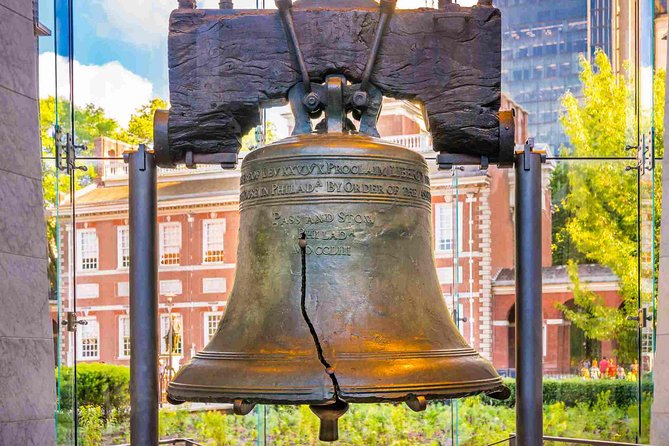
- Liberty Bell: The Crack, the Recast, and the Jubilee Connection
- Independence Hall Timed Passes and a Quick East Wing Look
- Washington’s President’s House and Congress Hall in the Same Story
- Franklin Court, the First Pentagon, and the Practical Genius Angle
- The Post Office Museum, Carpenters’ Hall, and Early Institutions
- Hamilton and Madison-Era Finance: First and Second Banks
- Franklin’s Learning Network, Dolley Madison’s House, and the “People in Place” Feeling
- Outdoor Time, Crowds, and Weather Planning (Yes, It Matters)
- Price and Value: Why $29 Makes Sense for First-Time Philly
- Should You Book This Revolution and Founders Tour?
- FAQ
- How long is the Revolution and the Founders history tour?
- Where does the tour start and end?
- Is the tour offered in English?
- Does the tour run in bad weather?
- Are Independence Hall timed entry tickets included?
- Is Liberty Bell pavilion interior access included?
- What’s the group size?
Key things to know before you go
- History-degree guides who teach, not just point: most guides are history teachers or American history professors.
- Two hours that actually works on a busy day: morning or afternoon options, with the rest of your time left open.
- Liberty Bell shown from the outside first: the exterior pavilion briefing is included, interior access is extra if you want it.
- Independence Hall timed-entry reality check: you’ll get clear instructions, but you still need the free timed pass.
- A long founder list, tied into a story: Washington to Franklin to Hamilton to Madison, with the institutions they built.
- Small-group feel: capped at 24 people, so questions stay possible.
A Fast, Founder-Focused Walking Route Through Old City
This tour is built for time-crunched travelers who want the essentials without losing the thread. In about two hours, you cover key blocks of Old City and walk away with a clearer sense of 1776—then you get follow-ups that explain what happened next.
You’re not just collecting landmarks. The tour ties political events to institutions: how the new government functioned, where ideas circulated, and how practical systems like finance and communication supported the Revolution. That approach is why it works even if you already know names like George Washington or Benjamin Franklin.
The group size limit matters too. With a maximum of 24, you’re less likely to be stuck watching the back of someone else’s head while the guide talks. And because there’s a dedicated start and end point (not a vague “somewhere near the square” situation), you can plan the rest of your day with confidence.
If you hate long lines and slow museum days, this format is a good match. The “walk, stop, explain” rhythm keeps you moving—though you should dress for the weather, because the tour is rain or shine.
You can also read our reviews of more tours and experiences in Philadelphia.

Meeting Grim Philly and Getting Your Bearings in 2 Hours
Your tour starts at Grim Philly Twilight Tours, 523 Market St, Philadelphia. You’ll meet your guide, check in, and get a quick revolutionary-history introduction before the route kicks off in earnest.
That orientation step sounds small, but it changes how the rest of the tour lands. Instead of seeing a cluster of famous buildings, you’ll understand how they connect—where the power was debated, where leaders lived while Philadelphia was the capital, and where decisions had both immediate and long-lasting effects.
The tour ends near the Merchant Exchange Building at 143 S 3rd St, just behind City Tavern. The area is tied to Continental Congress activity, and it’s a handy place to pivot into your own sightseeing afterward.
Most importantly, the schedule is built to leave you free time. After those two hours, you’re not locked into another indoor program. You can head to an attraction that fits your interests—maybe more Revolution sites, or maybe you want to lean harder into Franklin, museums, or the city’s neighborhoods.
Liberty Bell: The Crack, the Recast, and the Jubilee Connection
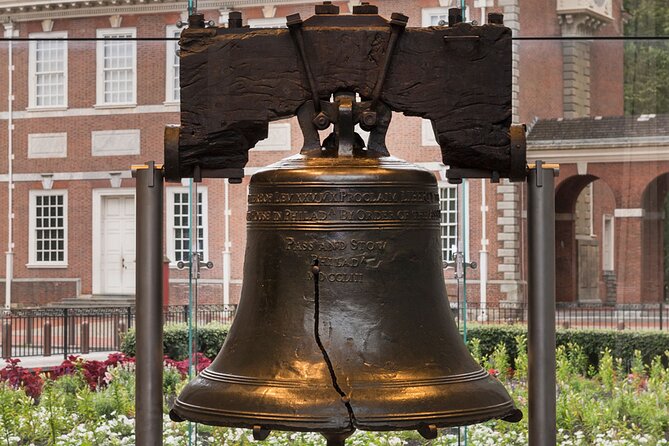
The Liberty Bell stop is your first big “wow” moment—and it’s handled in a practical way. You’ll visit the Liberty Bell in the National Historic Park area, focusing first on the pavilion exterior and the story behind the bell’s creation.
You’ll get the essentials, including how the bell was commissioned in 1752 and cracked on its initial test ring. Two years later, it was re-cast by local workmen John Pass and John Stow. That detail matters because it turns the bell from a symbol into a real object with a real manufacturing hiccup.
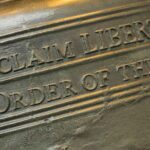
Then comes the part that makes the tour feel more than ceremonial: the lettering. You’ll hear about the wording proclaiming liberty, drawn from a King James Bible passage tied to jubilee—an idea associated with freedom and debt relief. The tour uses this to connect the Revolutionary symbolism to older language people already understood.
One consideration: the Liberty Bell pavilion interior is not part of the included tour time. The tour gives clear guidance if you choose to add that extra hour on return. So if you want maximum time inside, build that into your plan rather than assuming it’s automatic.
Independence Hall Timed Passes and a Quick East Wing Look

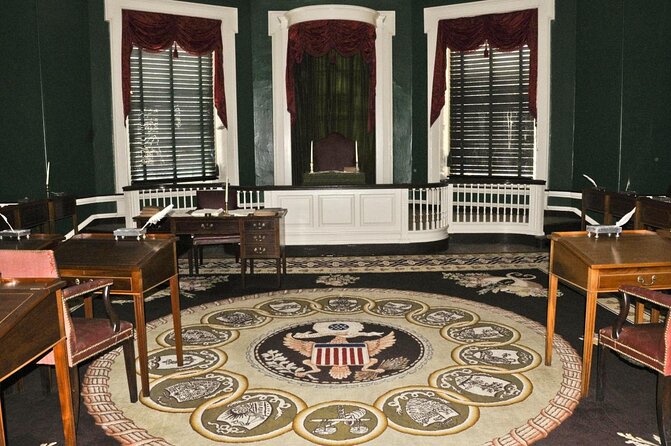
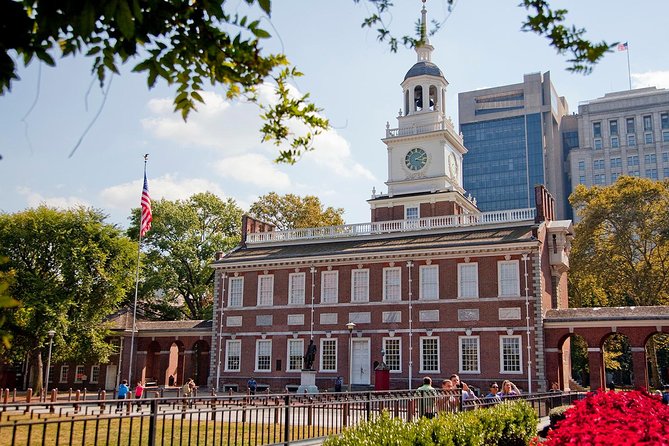
Independence Hall is the centerpiece, and the tour is upfront about access. You’ll visit the complex where the Declaration and Constitution were debated and adopted.
Here’s the practical bit: Independence Hall requires free timed entry passes, and the tour notes you should plan extra time for exploring inside. The walking tour keeps things moving, so you shouldn’t expect a slow, sit-down interior visit.
During the tour, you’ll get a quick pit-stop inside the East Wing of the Independence Hall complex. The East Wing is presented as the oldest and most historic part of the structure, and it served as Supreme Court chambers when Philadelphia was the capital.
Because crowds and closures can affect what’s possible, consider this stop less like a museum appointment and more like a guided “best of what’s available right now” look. You’ll still get the key points and instructions for how to traverse the complex further on your own after the group ends.
If you’re the type who loves checking your itinerary against real-world logistics, this stop is where you’ll appreciate the clear prep. It helps you avoid the common frustration of arriving and realizing timed entry rules exist.
Washington’s President’s House and Congress Hall in the Same Story

After Independence Hall, the route shifts from documents to government-in-action. You’ll visit the building described as America’s first White House, the President’s House, where George Washington and John Adams both served while Philadelphia was the capital from 1790 to 1800.
This stop connects diplomacy and daily governance. Foreign dignitaries and members of Congress and Senate frequented the President’s House for official and unofficial business. That detail helps you picture leadership as something that happened in rooms you can still locate, not just in speeches.
The tour also adds a sharper edge with Benedict Arnold. The itinerary notes Arnold lived in the structure as military governor in Philadelphia after the British evacuation during the American War for Independence. It’s a reminder that the same city that hosted nation-building also hosted betrayal and military aftermath.
Next is Congress Hall, which hosted two presidential inaugurations (Washington and Adams) and served as the home of U.S. Congress during the capital years. It’s another “power corridor” stop—built for understanding how the branches of the new government physically shared the same urban space.
Together, these stops do something most quick history walks don’t: they show you the physical geography of the young United States—where leaders worked, where transitions were celebrated, and where the system tried to stabilize.



Franklin Court, the First Pentagon, and the Practical Genius Angle
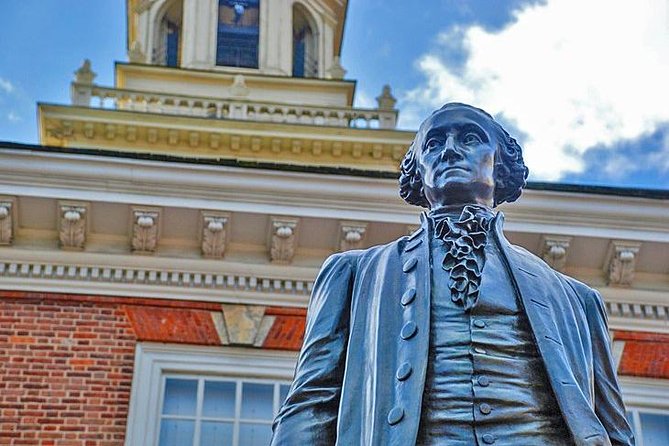
Benjamin Franklin is the connective tissue of this tour, and the route treats him like a full person, not just a portrait. You’ll visit Franklin Court, within Independence National Historical Park, where Franklin is tied to the Constitutional Convention period.
The tour highlights Franklin’s line about staying together during the revolution—shared as a reminder that unity wasn’t a slogan; it was a survival strategy.
Then you’ll see the location presented as America’s first “Pentagon,” where military strategy and intelligence were formulated during the American Revolution. This is a standout kind of stop because it reframes what “strategy” meant back then. It’s not modern warfare. It’s networks, documents, and information shaping decisions.
You’ll also hear about Franklin’s electrical experiments, along with his printing and publishing work. That’s a clever bridge: it links the science, the media, and the politics. Franklin’s world wasn’t separate compartments; it was one system.
And if you’re the type who likes to keep your feet on the ground, the tour’s tone helps. It doesn’t only romanticize. It shows how ideas spread and how evidence and communication supported the revolution.
The Post Office Museum, Carpenters’ Hall, and Early Institutions
One of the most “Wait, that’s real?” stops is the Benjamin Franklin Post Office & Museum. The tour describes it as the only colonial-themed post office operated by the United States Postal Service and the only active post office in the U.S. that does not fly the American flag—because the flag wasn’t yet a thing in 1775 when Franklin was appointed Postmaster General.
You’ll also hear about the postmark still used to cancel stamps: B. Free Franklin. That’s the kind of detail that makes history feel tangible.
Carpenters’ Hall is next, tied to political organizing. The tour presents it as the site of the First Continental Congress (1774) and notes secret winter meetings in December 1775 involving Benjamin Franklin and others, including John Jay and a French spy named Julien Achard de Bonvouloir. The purpose: negotiations for French support—highlighted as crucial for the colonists’ chances in the Revolutionary War.
The itinerary also notes British occupation later in the war, when the building was used by occupying forces. So this isn’t a clean, heroic-only story. It’s a reminder that revolutionary planning sat right next to the real threat of capture.
If you want a tour that ties big events to the infrastructure of rebellion—communication, alliances, and organization—these stops do that job well.
Hamilton and Madison-Era Finance: First and Second Banks
The final stretch leans into economics, which is often where history tours get vague. Here, you get specific anchors: the First Bank of the United States and the Second Bank.
The First Bank stop is linked to Alexander Hamilton, the first Secretary of the Treasury. The itinerary says it was founded in 1797 and highlights architectural design as part of its significance.
Then comes the Second Bank, chartered by President James Madison in 1816 and losing its charter under Andrew Jackson in 1834. The tour uses these facts to bring Hamilton and Jackson into the conversation, including mention of famous duels fought by both men.
Why you’ll likely care: these banking stops explain the story behind policy disputes. The Revolution was political, yes—but it was also about how a country funded itself and argued over who had the power to shape the economy.
If you’ve ever wondered why founders seemed obsessed with money and institutions, this is the part that answers that question without turning it into a textbook.
Franklin’s Learning Network, Dolley Madison’s House, and the “People in Place” Feeling
You’ll finish with Franklin-linked institutions and a look at 18th-century middle-class life.
The American Philosophical Society, founded by Franklin in 1743, is presented as a major learning network tied closely to the University of Pennsylvania. The tour notes early members included George Washington, John Adams, Thomas Jefferson, Alexander Hamilton, Thomas Paine, David Rittenhouse, and the Biddle family, among others. It also points out the adjacent presence of America’s first surgical center nearby—another practical detail showing how scientific and medical activity clustered in early Philadelphia.
Then you’ll see the Library Company, founded by Franklin in 1731, described as the first institution in the world to lend materials to the public. It’s a small but powerful reminder that access to information was built into early civic life.
Finally, the tour includes the Dolley Madison connection: the future First Lady’s home with her first husband, John Todd, from 1791–1793. The itinerary names the Dolley Todd House site, built in 1775, and frames it as a window into the lifestyle of Philadelphia’s middle class.
That wrap-up matters. A lot of founding-father tours forget ordinary life. Here, you’re reminded that the new country wasn’t just created by speeches; it was also carried by families living block to block.
Outdoor Time, Crowds, and Weather Planning (Yes, It Matters)
This tour runs rain or shine, and it’s a walking route. That sounds fine until you’re in December or January and the day starts cold and gray. The tour company’s approach is to keep the group moving and use any nearby opportunities to manage access when buildings aren’t cooperating.
What you should do: dress like you’ll be standing outside at frequent stops. Layers beat one big coat. Gloves help. If you’re trying to maximize interior time at Independence Hall or add Liberty Bell pavilion interior access, plan extra time for it because timed entry and crowds can slow you down.
Also remember: because the tour is designed to cover many stops in two hours, you’re not meant to treat it like a slow museum morning. It’s a guided walk with brief windows of access. That can be perfect if you want a strong overview—and less perfect if you hate quick indoor transitions.
Group pacing helps. With up to 24 people, you’re more likely to get questions answered and not just “listen while walking.” Still, if you’re sensitive to crowds, Independence Hall is the place where you’ll feel the most pressure from other visitors.
Price and Value: Why $29 Makes Sense for First-Time Philly
At $29 per person for about two hours, the value depends on how you travel.
If you’re the type who likes to plan one anchor activity early—then build the rest of the day around it—this price is fair. You’re paying for (1) a guided story with context, (2) a route designed for first-time orientation, and (3) the ability to see multiple founding-era institutions without spending your entire day stuck in line.
The “extra” costs are mainly about optional access:
- Liberty Bell interior is not included in the main time.
- Independence Hall requires free timed entry passes, plus additional time if you want deeper exploration.
So you’re not paying for the tickets themselves, and the tour gives instructions for navigating the complex. That’s a big value lever because timed-entry rules can be confusing on your own.
Also, booking tends to happen in advance on average (about 16 days). If you want a specific time slot, it’s smart to reserve early.
If your budget is tight but you still want a strong Philadelphia “founders” overview, this is one of the better ways to spend a couple of hours without committing to a half-day or full-day museum plan.
Should You Book This Revolution and Founders Tour?
Book it if:
- You want a fast, guided route through Old City with the big names and the institutions that shaped the new nation.
- You like explanations that connect people (Franklin, Washington, Hamilton, Madison) to buildings and systems.
- You want a guided overview so the rest of your Philly time feels less random.
Skip or adjust expectations if:
- You want long interior museum time during the tour. This is more “walk-and-stops” than “all-day doors open everywhere.”
- Weather is brutal for you. You’ll be outdoors in cold or rain because the tour runs rain or shine.
My practical bottom line: if you’re visiting Philadelphia for the first time and you want the Revolution and founders explained in a way that helps you navigate the city afterward, this is a solid choice for the money. It turns famous places into a story you can follow.
FAQ
How long is the Revolution and the Founders history tour?
It’s about 2 hours long.
Where does the tour start and end?
It starts at Grim Philly Twilight Tours, 523 Market St, Philadelphia, and ends near the Merchant Exchange Building, 143 S 3rd St.
Is the tour offered in English?
Yes, the tour is offered in English.
Does the tour run in bad weather?
Yes, it runs rain or shine, and it includes both morning and afternoon departures.
Are Independence Hall timed entry tickets included?
No. Independence Hall requires free timed entry passes, and you’ll receive clear instructions.
Is Liberty Bell pavilion interior access included?
The tour includes an exterior pavilion view and instructions. Interior access is described as an additional option.
What’s the group size?
The tour has a maximum of 24 travelers. Children must be accompanied by an adult, and service animals are allowed.