REVIEW · SEDONA
Sedona Stargazing Tours LLC
Book on Viator →Operated by Sedona Star Gazing · Bookable on Viator
Sedona at night can feel like a secret window. This private stargazing session takes you to the darker skies outside the city and pairs laser-guided constellation learning with big telescope time. I like the hands-on format—laser pointers, then rotating through GPS-aligned telescopes—and I love that you get built-in comfort like wide-view binoculars and seating for a long look. The main catch: the sky depends on real-world conditions, so a bright moon or clouds can change what you can see.
You’ll meet near Oak Creek at 3511 Verde Valley School Rd, Sedona, AZ 86351, and spend about 1 hour 15 minutes outside. It’s run in English, and you’ll get a mobile ticket plus emailed details after you book. A smart consideration is timing: tour starts are tied to sunset, and check-in instructions may ask you to arrive earlier than you expect.
In This Review
- Oak Creek Dark Skies and a Real Astronomer’s Playbook
- The Verde Valley School Meeting Point and How Check-In Really Feels
- Laser Pointers, Constellations, and GPS Telescopes in Plain Sight
- What You’ll Actually See Through the Telescopes
- Cold-Weather Comfort: Chairs, Blankets, and Parkas
- The Guides: Storytelling, Fast Help, and Q&A You Can Use
- Why the Private Format Is More Than a Perk
- Price and Value: Getting More Than One Look at the Sky
- When the Sky Doesn’t Cooperate (And What That Means for Your Night)
- Quick Fit Check: Who This Tour Suits Best
- Should You Book Sedona Stargazing Tours LLC?
- FAQ
- Where does the tour start?
- How long is the stargazing tour?
- How much does it cost?
- Is this a private tour?
- What language is the tour offered in?
- What should I bring for the night?
- What will I do during the tour?
- Will I get confirmation and extra ticket information?
- What happens if the weather is poor?
- How does cancellation work?
Oak Creek Dark Skies and a Real Astronomer’s Playbook
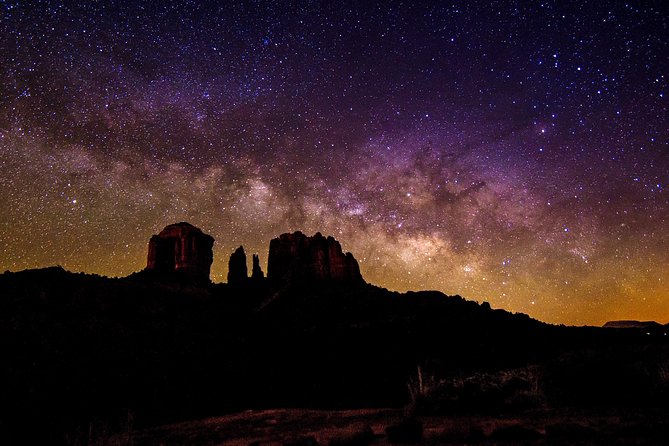
What makes this stargazing tour worth your time is the way it balances story with tools. You’re not just pointed at stars—you’re guided through how to find them, then you get time at telescopes with help keeping targets on-screen.
The value shows up fast. You pay $89 per person for a 1-hour 15-minute experience that includes chairs, binoculars, and telescope viewing time, plus explanations of what’s up in the sky. That’s a lot of “actual looking” for the money, not just a lecture.
One practical drawback: stargazing is weather work. Even with great gear, clouds and a strong moon can limit visibility and make the night feel less dramatic than you were hoping for.
The Verde Valley School Meeting Point and How Check-In Really Feels
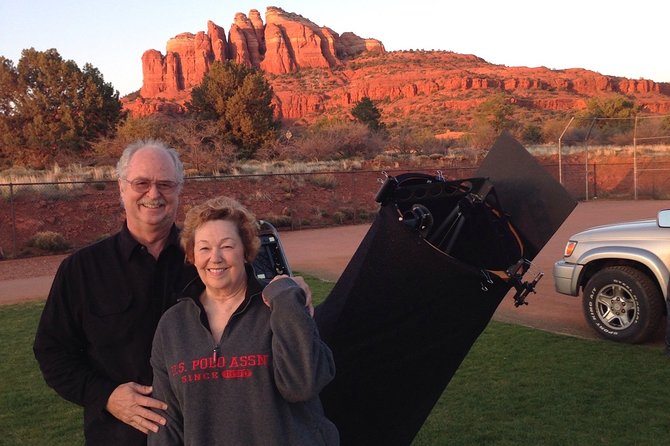
You start at 3511 Verde Valley School Rd, Sedona, AZ 86351, and the tour ends back at the same meeting point. In practice, you’ll head to the observing area near Oak Creek when it’s dark enough to see targets clearly.
The schedule is designed around conditions. Several reviews mention the tour start time being adjusted in the day based on sunset and optimal viewing, and that the check-in window may come earlier than what you first see on your confirmation. My advice is simple: plan to arrive early and be ready to wait a few minutes if your group is being assembled.
Because it’s a private tour/activity, you’re not sharing the experience with random strangers. Your group size can help the guides keep the pace comfortable and make sure everyone gets telescope time.
You can also read our reviews of more tours and experiences in Sedona.
Laser Pointers, Constellations, and GPS Telescopes in Plain Sight
Before anyone touches a telescope, you get orientation. Expect an overview of constellations using a laser pointer, so you can connect the pattern you learned to the sky you’re facing.
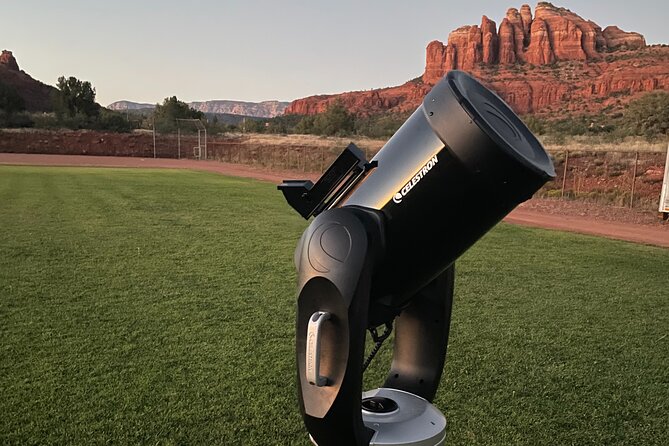
Then the “watching part” starts. You’ll take turns at large, powerful telescopes equipped with GPS auto position, which helps you get to the right celestial objects without constant manual searching. This matters because it turns stargazing from a frustrating scavenger hunt into a smooth, guided session.
Between telescope rounds, you can use wide-view binoculars while relaxing in a comfortable chair. That rhythm is what keeps the tour from feeling like a fast slideshow: you look, rest, listen, then look again.
What You’ll Actually See Through the Telescopes

The sky show here is built around planets, stars, and deep-sky objects. Depending on the night, you can expect views of planets, distant galaxies, nebulas, and star clusters—plus the Moon when it’s visible.
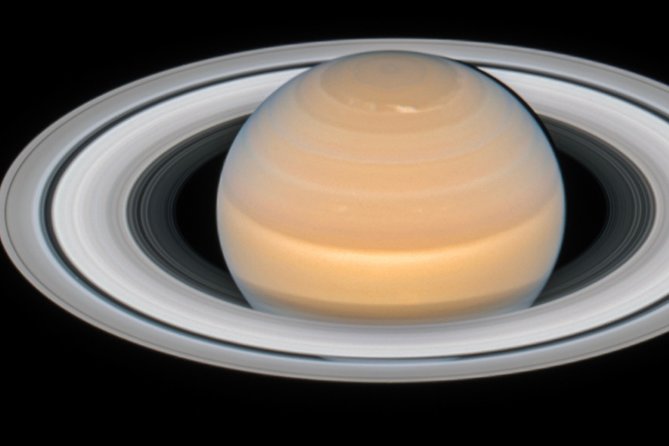
The most repeated “wow” moment is Saturn. Multiple guides got praise for helping people see Saturn’s rings and its moon clearly through the telescopes. One review specifically called out how crystal-clear Saturn was, and that kind of detail is exactly what a telescope setup can do when it’s aimed and focused well.
You’ll also get explanations that connect the object to what you’re seeing right then. Reviews mention laser-guided constellation explanations and zodiac references, which is a nice bonus if you like a mix of science and sky lore.
Just keep expectations realistic: a near-full moon or heavy clouds can reduce contrast. You might still see plenty, but the night can shift from “many faint objects” to more “bright targets and Moon details.”
Cold-Weather Comfort: Chairs, Blankets, and Parkas
Sedona nights can swing cold fast—especially outside the comfort of the town lights. The tour setup is clearly built for that reality.
Reviews repeatedly mention blankets waiting on chairs and, in colder months, staff providing parkas or extra warmth gear. That’s a big deal because comfort affects how long you can focus at the eyepiece. If you’re bundled and settled, you’ll actually enjoy the slow looking, not rush through it.
If you’re visiting in winter, pack warm layers anyway, even if blankets are provided. Think of the provided gear as a safety net, not your only source of warmth.
The Guides: Storytelling, Fast Help, and Q&A You Can Use
This tour runs on people, not just equipment. Reviews praise guides for being fun, engaging, and clearly invested in explaining the night.
Specific names show up often: Wes, Dave, Mr. Sanders, and Richard. Guests praised Wes for storytelling while explaining constellations, and Richard got standout mentions for being both charming and a strong communicator. Dave and Mr. Sanders were also credited for effective explanations and for using the laser pointers to help connect stars to patterns quickly.
The best part is how questions are handled. You’re encouraged to ask what you want to see and to customize what targets you try during the 1-hour experience. That’s how the tour stops feeling generic and becomes personal.



Why the Private Format Is More Than a Perk
A private stargazing tour sounds fancy, but here it matters for practical reasons. When it’s only your group, the guide can manage telescope rotations without rushing, and everyone is more likely to get at least a couple of satisfying looks.
It also improves the quality of Q&A. Instead of a one-size-fits-all script, your guide can tailor explanations to your interests, whether that’s planets, constellations, or learning how to navigate the sky.
If you’re traveling with kids, this format can be especially helpful. Reviews call the experience kid friendly, and the mix of chairs, binoculars, and telescope time gives young stargazers multiple ways to stay engaged.
Price and Value: Getting More Than One Look at the Sky
At $89 per person, you’re paying for three things that add up: dark-sky time, a guide who helps you see what matters, and equipment time with help using it.
A do-it-yourself night can cost less, but you’ll still pay in frustration: finding objects takes time, and the best “faint stuff” is hard without guidance. This tour short-circuits that by using laser orientation first, then GPS-assisted telescopes for targets.
You also get more than “standing around.” The tour includes seating, chair comfort, and binoculars, so even when the telescope schedule is moving, you’re not just waiting. Reviews also point out the gear quality, describing telescopes as advanced and fun to use.
Is it expensive for an hour? Some people felt that way. But if you go into it thinking of this as guided observing with real telescope views—not a casual star walk—you’ll usually feel the value.
When the Sky Doesn’t Cooperate (And What That Means for Your Night)
Stargazing here depends on good weather. If clouds block the view, the tour can be canceled, and you’ll either be offered a different date or a full refund.
Moon phase also matters. A near full moon can brighten the sky and reduce how many faint stars and deep-sky objects you can see. On the flip side, a bright Moon can be amazing through a telescope when conditions allow—people often leave with strong Moon details even if the rest of the sky is less dramatic.
My advice: check forecasts before you go, but also accept that you booked an outdoor experience. If you have flexibility, plan an extra night in Sedona so you can try again if your first attempt is weather-limited.
Quick Fit Check: Who This Tour Suits Best
This is a good fit if you want a guided night with telescope viewing, not just a quick look at the sky. It’s especially appealing for:
- First-time astronomy fans who want practical orientation and real observing time
- Families who want chairs, blankets, and a paced experience
- Couples looking for a calm, educational evening with a clear highlight like Saturn
- People who like asking questions and tailoring what they see during the session
It may be less satisfying if you expect every night to show tons of faint galaxies regardless of weather and moon conditions. The tour is set up to maximize each night’s potential, but physics still wins.
Should You Book Sedona Stargazing Tours LLC?
If you’re in Sedona and you want a night where someone helps you find the sky fast and then lets you actually look through serious optics, I’d book it. The combination of laser-guided learning, GPS-assisted telescopes, and comfortable viewing gear is a strong match for most people’s expectations.
Do book with one mindset adjustment: stargazing is weather-dependent. If your trip dates are tight, you might still have a great night, but you’re rolling with nature. If you can, choose a night when you’re comfortable rescheduling, and dress like you plan to sit outside for a while.
If you can’t get yourself excited about Saturn, Moon details, or constellation spotting, then consider whether you’d rather spend time hiking or doing a Sedona sunset instead. But if those “look through the telescope” moments are the reason you came, this is the kind of tour that delivers.
FAQ
Where does the tour start?
The meeting point is 3511 Verde Valley School Rd, Sedona, AZ 86351, USA. The activity ends back at the meeting point.
How long is the stargazing tour?
The experience runs for about 1 hour 15 minutes.
How much does it cost?
The price is $89.00 per person.
Is this a private tour?
Yes. It’s listed as a private tour/activity, meaning only your group participates.
What language is the tour offered in?
The tour is offered in English.
What should I bring for the night?
You’ll have chairs, blankets (reported in reviews), and binoculars, but you should still dress warmly. Multiple reviews mention being cold and appreciate the extra warmth provided.
What will I do during the tour?
You’ll get an overview of constellations with a laser pointer, then take turns at large telescopes with GPS auto position. Between telescope turns, you can rest in a chair and use binoculars.
Will I get confirmation and extra ticket information?
You should receive confirmation at the time of booking, and after booking you receive information by email about the ticket, including departure details and the address.
What happens if the weather is poor?
The experience requires good weather. If it’s canceled due to poor weather, you’ll be offered a different date or a full refund.
How does cancellation work?
You can cancel up to 24 hours in advance for a full refund. If you cancel less than 24 hours before the start time, the amount paid is not refunded.