REVIEW · DENVER
Twilight Ghost Tour
Book on Viator →Operated by Best Tours of Denver LLC · Bookable on Viator
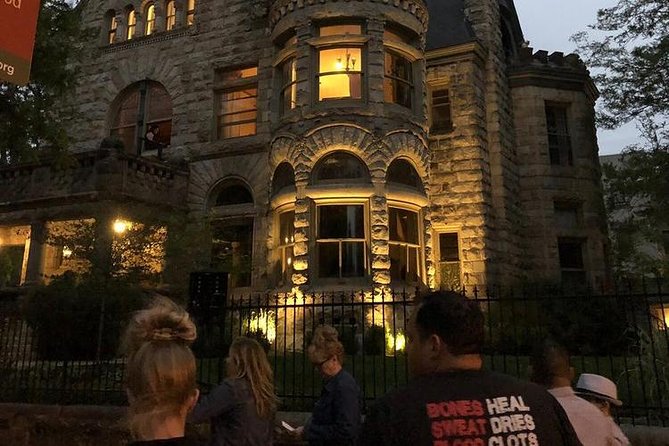
Crisp night air and old mansions set the tone fast. The Twilight Ghost Tour is a guided evening stroll through Denver’s Capitol Hill—all about haunted homes, historic scandals, and what you might spot with your camera when the lights are low. It’s built around real architecture and real addresses, with the fun of ghost stories mixed in.
I love the mix of history plus creep factor. You’ll get background on the people who lived there and why these houses ended up infamous, not just spooky sound effects. I also like the pacing: a tight area, a manageable walk, and frequent stops that make it easy to follow along even if you’re not a big “tour person.”
One drawback to plan for: you won’t go inside the properties. Everything is viewed from the sidewalk or outside areas because the buildings are privately owned, so if you want an indoor-only ghost experience, this may feel a bit outside your expectations.
In This Review
- Key things that make the Twilight Ghost Tour special
- Denver’s Capitol Hill after dark: why this tour hits the right note
- Price and timing: what $28 buys you in real life
- How the nighttime walk runs: meeting point, pace, and safety basics
- Stop 1: Crawford Hill Mansion and the Victorian-socialite feud that starts the chills
- Stop 2: Mark Twain on Poets Row and that Colorado State Capitol view
- Stop 3: Colburn Apartments—Hollywood poets, Charlie Brown’s bar, and bohemian-era lore
- Stop 4: Patterson Inn at 420 E 11th Ave and the medieval-castle vibe
- Stop 5: Pennborough at 1165 Pennsylvania St and Dr. Henry Tilden’s unanswered question
- Stop 6 and Stop 7: Capitol Hill Mansion B&B and the Molly Brown House Museum
- Stop 8: Pennsylvania Street and the idea of Millionaire’s Row as a haunted facade
- Stop 9: Creswell Mansion symbols—when the vibe turns uncomfortable
- Stop 10: Peabody-Whitehead Mansion and the night’s most serious haunting stories
- Stop 11: Sheedy Mansion and the Lady in Red staircase
- Photo tips that actually help on this tour
- Who should book this (and who might want to think twice)
- Should you book the Twilight Ghost Tour?
- FAQ
- How long is the Twilight Ghost Tour?
- How much does the tour cost?
- Do you get to go inside the haunted houses?
- Is the tour suitable for kids?
- Does the tour run in bad weather?
- Are there restrooms along the route?
Key things that make the Twilight Ghost Tour special
- Small group, big attention: capped at 20 travelers, so the guide can keep control and keep the story flowing.
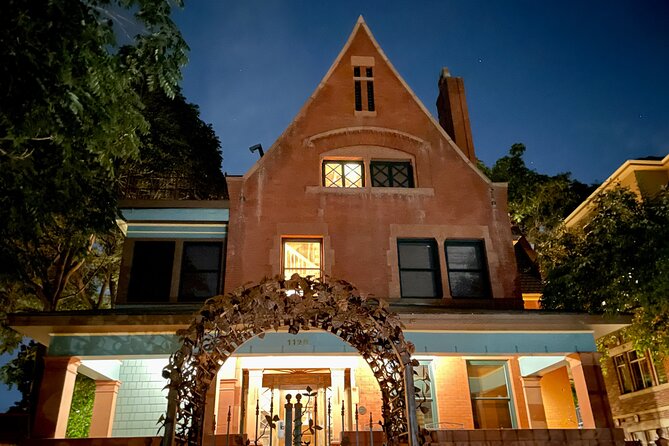
- Capitol Hill at night: the neighborhood’s mansion blocks feel tailor-made for a dark walk.
- Photo-friendly haunted facades: multiple stops are chosen for best camera angles of famous fronts.
- Stories that match the buildings: each stop connects to an occupant, scandal, or legend tied to the address.
- Creepy tech moments: at least one location is known for reports of phones and cameras malfunctioning.
- Best for ages 9+: some tales are intense, but the tour is designed for that age range.
Denver’s Capitol Hill after dark: why this tour hits the right note
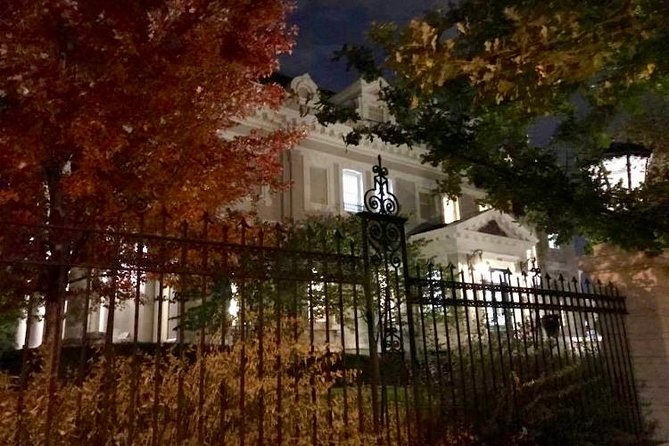
This tour works because it doesn’t rely on fake set pieces. You’re walking past mansions, hotels, and “Millionaire’s Row” type blocks that were already dramatic in daylight. At night, those same facades get sharper shadows, darker windows, and a stronger feeling of being in the middle of a story that never ended.
The guide is the main ingredient. The best versions of this tour keep you engaged with jokes and pacing while still giving you clear, grounded details about who lived where. Multiple guides are known for balancing laughs with chills, so even if you don’t fully buy ghosts, you’ll still get a good evening and a better understanding of the neighborhood.
You can also read our reviews of more tours and experiences in Denver.


Price and timing: what $28 buys you in real life
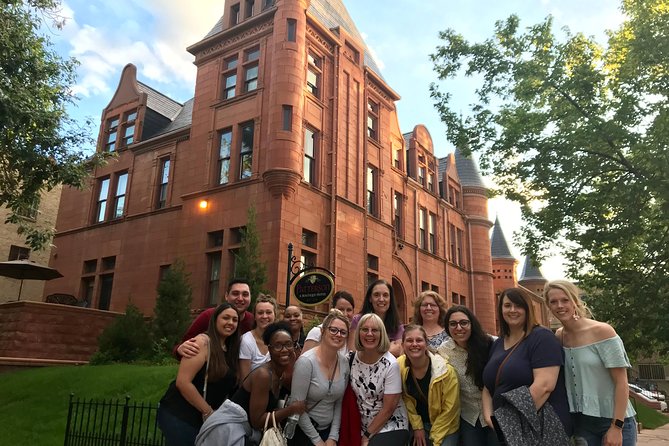
At $28 per person for about two hours, you’re paying for a focused, story-led walk with an escort/host included. The route is designed to be reachable on foot without long stretches between stops, and that matters when you’re out after dark.
Also, the tour’s compact format helps your value. It’s not a half-day production, and it’s not a “drive-by” style experience. You’re getting a sequence of themed locations, with time at each stop to look, listen, and take photos—without feeling like you’re constantly sprinting to the next corner.
One practical note: the tour uses a mobile ticket, and confirmation happens within 48 hours of booking (subject to availability). That’s the kind of smooth setup that keeps your evening stress low.
How the nighttime walk runs: meeting point, pace, and safety basics
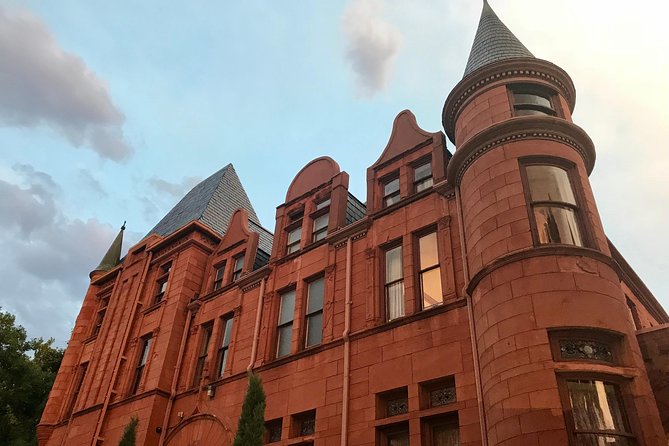
The tour starts and ends back at 901 Sherman St, Denver, CO 80203. You’ll be near public transportation, which is helpful if you’re not renting a car.
You should expect a walking tour with a moderate physical fitness level. Sidewalks can be uneven, and it’s dark at night, so good shoes matter. The guide also emphasizes safe street crossings: only use protected pedestrian traffic crossings and never cross mid-street. That’s not just “polite advice”—it’s the difference between an enjoyable walk and a tense one.
There’s another item people forget until the moment they need it: no restrooms are available along the route. Plan ahead, especially if you’re bringing kids. Since the tour runs rain or shine, bring an umbrella if weather looks sketchy and dress for the cold.
Stop 1: Crawford Hill Mansion and the Victorian-socialite feud that starts the chills
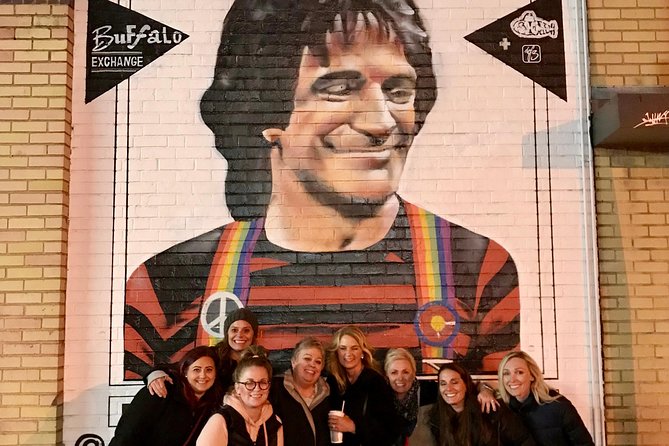
You begin at 100 E 10th Ave, at the Crawford Hill Mansion. This is a big, impressive building—over 19,000 square feet—and it’s tied to the story of Mrs. Louise Sneed Hill, a power figure in Denver high society. The tour frames her as a “queen bee” type presence, ruling through social influence and Victorian snobbery.
This stop also links to Molly Brown’s world. Mrs. Hill is described as Molly Brown’s archenemy and connects to The Unsinkable Molly Brown, which helps you understand why a house like this became part of pop-culture memory. The ghost legend starts here too: a rumored roaming butler, and the tour’s warning about a mangled one.
A key detail for your expectations: the tour does not go into this property. You’ll get the outside experience and the story, not an interior walkthrough.
Stop 2: Mark Twain on Poets Row and that Colorado State Capitol view
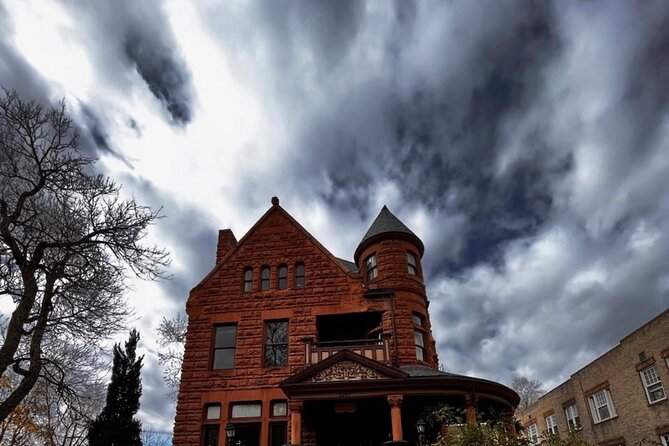
Next you’ll head to Mark Twain, tied to an Art Deco block where homes on the street are named after writers and poets. This part of the tour adds charm without losing the mood. The buildings feel like they were designed to be photographed, even if you only have a smartphone.
From here, you get a great view of the Colorado State Capitol. It’s a nice contrast stop: you’re still in the haunting narrative, but you’re also getting a sense of place—how Capitol Hill’s dramatic government skyline sits near these older homes.


Stop 3: Colburn Apartments—Hollywood poets, Charlie Brown’s bar, and bohemian-era lore
At Colburn Apartments (Stop 3), the story shifts into Denver’s bohemian and creative past. This former hotel is described as the center of a “bohemian period,” where Hollywood elites and eccentric poets spent time.
The names given are the kind that make history feel less abstract: Jack Kerouac (author of On the Road), Neil Cassidy, Allen Ginsberg, and James Burroughs. The tour also points to Charlie Brown’s bar on the property, described as staying much the same since 1928, and connects it to familiar celebrity favorites like Bill Murray and Tony Bennett.
Again, you won’t go inside. But even from outside, the talk gives you a reason to look closely at details you might normally ignore—entrance shapes, building style, and how the street fits the era.
Stop 4: Patterson Inn at 420 E 11th Ave and the medieval-castle vibe
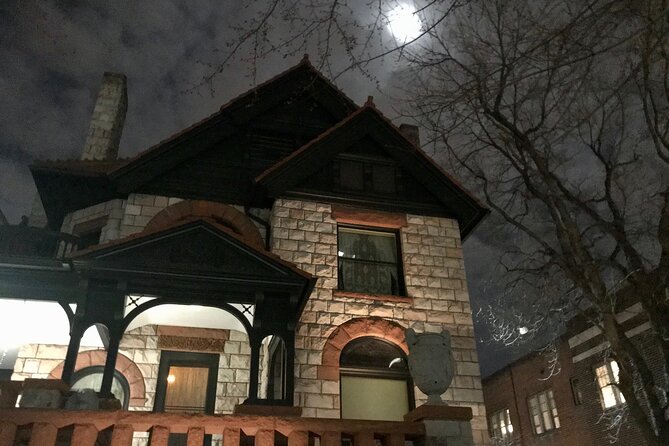
Stop 4 is 420 E 11th Ave, the Patterson Inn. The tour describes it with a Gothic design that feels medieval, and that mismatch is part of the creep. It’s positioned as a local treasure, yet it looks like it doesn’t belong among the neighborhood’s other buildings—an effect that makes it feel even more eerie at night.
This stop also gets media-credit. It’s described as featured on Portals to Hell and documented as one of Denver’s most haunted places. Pop culture continues with another nod to The Bachelor. If you like ghost stories that are tangled up in modern TV culture, this is one of those stops.
You’ll stay outside here too. The “don’t go in” rule is consistent across the tour because the buildings are privately owned, and the experience is built around observation from the sidewalk.
Stop 5: Pennborough at 1165 Pennsylvania St and Dr. Henry Tilden’s unanswered question
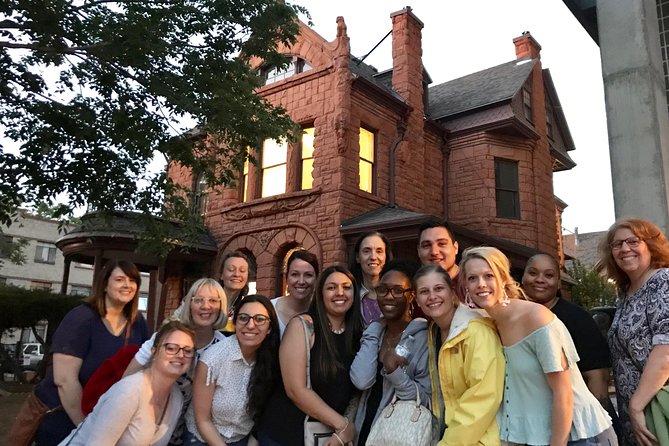
At 1165 Pennsylvania St, you’ll find Pennborough, described as two Victorian mansions that were later joined together. The architecture here matters. When buildings connect like this, it creates angles and corridors you naturally want to stare at, which is exactly the kind of setting ghost stories thrive in.
The tour ties the building to Dr. Henry Tilden, who created a hospital at this location. The legend turns on a classic haunting question: could some former patients still remain? You’re not required to believe in ghosts for this to work. The structure of the story makes you look at the place differently, and you’re left with that uneasy feeling that history can linger.
Stop 6 and Stop 7: Capitol Hill Mansion B&B and the Molly Brown House Museum
Next comes Capitol Hill Mansion Bed & Breakfast Inn, described as a photographers dream with illuminated lighting that creates an ethereal feel. This is one of those stops where the environment helps you set your own mood. If you’ve ever photographed old buildings at dusk, you’ll understand the appeal fast.
Then you move to the Molly Brown House Museum, tied to Titanic survivor Molly Brown. This stop adds multiple haunting-style claims: curtains moving when no one is inside, and people photographing full body apparitions using a cell phone. The guide also frames Molly Brown herself as sometimes roaming the halls.
From your side, here’s what’s worth doing: slow down. Even though you aren’t going inside, these are the kind of properties where small details—windows, entryways, and the way the facade reflects light—become your “proof points” for the evening.
Stop 8: Pennsylvania Street and the idea of Millionaire’s Row as a haunted facade
Stop 8 is Pennsylvania Street, described as the most haunted street in Denver. The tour frames the historic mansions here as a facade for restless spirits, and it notes that the street was formerly nicknamed Millionaire’s Row.
This is a strong stop for anyone who likes the “place as character” style of storytelling. You’re not just hearing about one house—you’re seeing a whole stretch that suggests wealth, privacy, and old secrets living right next to each other.
It’s also one of the best moments to take photos, because you’re getting a longer view of connected mansion fronts rather than a single portrait angle.
Stop 9: Creswell Mansion symbols—when the vibe turns uncomfortable
At Creswell Mansion Denver, the tour takes a left turn. The building is described as the only known marijuana spas in Denver, and the outside is said to be covered in mysterious symbols and “evil carvings.”
The legend here isn’t just ghosts. It’s a feeling: visitors report discomfort, plus the sense that someone is watching from upper windows. Even if you don’t treat it as supernatural, this stop is useful because it shows how designers used symbolism and how the human brain reads shapes differently in the dark.
Again, the tour keeps you on the outside. That outside-only approach is consistent, so you should think of each stop as a guided “look and listen” moment rather than a walkthrough.
Stop 10: Peabody-Whitehead Mansion and the night’s most serious haunting stories
Stop 10 is 1128 Grant St, the Peabody-Whitehead Mansion. This is described as the most haunted dwelling in Denver, with at least 12 documented spirits inhabiting the house. You’ll hear about capturing ghostly orbs and shadow people, and the tour warns that phones and cameras have been known to malfunction.
This is also the stop where the tour’s warning matters most: the stories can be intense, and they aren’t intended for people who are sensitive or younger than about nine. If you’re bringing a child or someone who doesn’t like heavy topics, this is a good time to gauge how the group is doing.
If you decide to photograph at this stop, keep expectations grounded. You can get interesting images anywhere on a night walk, but the bigger point is that your guide will shape the stop so you’re looking with intention.
Stop 11: Sheedy Mansion and the Lady in Red staircase
The last stop is 1115 Grant St, the Sheedy Mansion. It’s described as the largest mansion on the tour with an ominous presence. The story ties the home’s interior and exterior design to a former owner who loved nature, which gives you a way to interpret the building beyond just the supernatural rumors.
The big legend here is the Lady in Red, seen gliding up the main staircase. This stop is built for that final burst of chills before you head back to the meeting point.
Photo tips that actually help on this tour
This tour is repeatedly framed as a photo opportunity, especially for the famous haunted mansion fronts. So do these small things and you’ll enjoy it more:
- Bring a fully charged phone (you may rely on it for photos, and the Peabody-Whitehead stop includes reports of tech trouble).
- Keep your camera steady for night shots. Most phone “ghost photos” come from motion blur or low light artifacts, so hold still for a moment.
- Watch where you’re standing. Uneven sidewalks plus low light can turn a great picture into a stumble.
One bonus: if you’re the kind of person who likes spotting silhouettes and odd shapes, you’ll be primed for it. The tour’s whole structure nudges you to look carefully at entrances, windows, and staircases.
Who should book this (and who might want to think twice)
This tour is a good fit if you want a fun spooky walk paired with Denver neighborhood storytelling. It also suits solo travelers and couples because it’s only about two hours and the route stays close enough to feel cohesive.
It’s also a good pick if you love architecture and old addresses. Even if you don’t care about ghosts, the building styles and the way the guide connects each place to a specific person or era make it more than “jump scares.”
The main “think twice” category is sensitivity or strong reactions. The tour’s best-fit age is 9 and up, and some stories are described as intense. If that’s a concern for your group, consider planning an earlier departure from the most intense stop or just choose a less creepy experience that night.
Should you book the Twilight Ghost Tour?
Yes, if you want an evening in Capitol Hill that feels both historical and fun. For $28 you get a tight, guided walk, a strong storytelling rhythm, and a series of mansion stops designed for night photography—even without going inside any private properties.
Book it with confidence if your idea of a great trip evening includes walking, listening, and looking closely at older Denver buildings. Just pack for the basics: comfortable shoes, warm layers, a charged phone, and an attitude that works with darkness, uneven sidewalks, and stories that can get heavy.
FAQ
How long is the Twilight Ghost Tour?
It runs for about 2 hours.
How much does the tour cost?
The price is $28.00 per person.
Do you get to go inside the haunted houses?
No. You do not go inside the mansions because they are privately owned. You view the locations from outside as you listen to the stories.
Is the tour suitable for kids?
It’s best suited for ages 9 and up, and some stories are described as intense. Children must be accompanied by an adult.
Does the tour run in bad weather?
The tour operates rain or snow or shine and you should dress appropriately. If it’s canceled due to poor weather, you’ll be offered a different date or a full refund.
Are there restrooms along the route?
There are no restrooms available along the tour route, so plan ahead before you start.