
REVIEW · ST AUGUSTINE
Walking History Tour of St. Augustine’s Historic District
Book on Viator →Operated by Spyglass Tours · Bookable on Viator
St. Augustine tells its story in footsteps. This walking history tour moves through the city’s most important sights, from the massive Castillo de San Marcos area to Flagler-era landmarks, with a guide who links the places together. I like that it covers more than the Spanish occupation period, so you’re not stuck on one chapter of the city’s past.
Two things I really enjoy: the small-group feel and the fact that the tour turns into a real conversation. Guides (often Kevin Rose of Spyglass Tours) keep the pace friendly, answer questions, and throw in humor without turning the whole thing into a stand-up show. One heads-up: the tour is sold as about 90 minutes, but it often runs longer, so plan your day with some breathing room.
In This Review
- Key Highlights to Know Before You Go
- Why This St. Augustine Walking Tour Works So Well
- Meeting Point and the Real-Life Pace
- Tolomato Cemetery and the Love Tree: Oldest Roots Underfoot
- Grace United Methodist Church: Flagler-Era Revival in Plain Sight
- Memorial Presbyterian Church: A Beautiful Building With a Heavy Backstory
- Flagler College (Former Ponce de Leon Hotel): Opulence, Reframed
- Plaza de la Constitución: Where Power Lived for Centuries
- City Gate Spirits: An Entrance That Survived
- Castillo de San Marcos National Monument: Fort History You Can See
- How Much Time You Really Need (It Often Runs Long)
- Price and Value: What $25 Buys You
- Who This Tour Suits Best
- A Real Tip: Use the Guide’s Local Context
- Should You Book This Walking History Tour?
- FAQ
- How long is the Walking History Tour of St. Augustine’s Historic District?
- Where do I meet the tour guide?
- Is the tour offered in English?
- Is the group small?
- Do I need separate admission tickets for stops?
- What happens if weather is bad?
Key Highlights to Know Before You Go
- Near two miles on foot, paced for moderate fitness and a group that maxes at 15.
- Castillo de San Marcos exterior history, led by a licensed fort guide with clear construction context.
- Flagler College connection, since the college grew out of the opulent Ponce de Leon hotel.
- Plaza de la Constitución and its government-house role for centuries, recreated in 1933 through WPA work.
- Tolomato Cemetery’s old roots, reaching back before the Spanish arrival in 1562.
- Kevin Rose energy, known for humor, quick answers, and making time for questions.
Why This St. Augustine Walking Tour Works So Well
If you’re the type who likes history with streets attached, this tour is a smart move. St. Augustine has layers everywhere: forts, churches, cemeteries, and the wealth of the Gilded Age stacked right next to older foundations. This tour helps you connect those layers instead of treating each stop like a separate postcard.
I also like the balance of eras. You don’t only get Spanish-period talking points. You get the later “city makeover” story tied to Henry Flagler, plus the city’s evolution into something new and surprisingly modern.
The only real drawback is planning time. The scheduled length is about 1 hour 30 minutes, but you’ll likely spend closer to two hours once questions start flying and the group lingers at key stops.
You can also read our reviews of more tours and experiences in St Augustine.



Meeting Point and the Real-Life Pace
You start at the St. Augustine and St. Johns County Visitor Information Center at 10 S Castillo Dr, and the tour ends back there. That matters because it keeps navigation simple when you’re juggling parking, heat, or bus timing.
Expect a max of 15 people. In a group that size, you don’t feel like you’re in a long line of bodies waiting to hear muffled audio. The vibe stays conversational, and the guide can answer questions on the spot.
Wear comfortable shoes. The walking is close to two miles total, mostly on city sidewalks and streets, and you’ll want solid footing if the pavement gets slick or hot.
Tolomato Cemetery and the Love Tree: Oldest Roots Underfoot

The tour opens at Tolomato Cemetery, and it’s an excellent way to set the tone. This is the oldest cemetery in St. Augustine, with roots that predate the arrival of the Spanish in 1562. You’re not starting with legends—you’re starting with a place where time is literally built into the ground.
From there, the guide brings you past the Love Tree. It’s part of local tradition, but there’s a catch: the tour notes that you should treat it as at your own risk. If you’re the careful type, just treat it like a quick photo moment and keep your focus on the cemetery’s older story.
One practical point: even if you don’t linger long, cemetery stops can involve slow walking and standing still while the guide explains background. If you need to move quickly, give yourself a tiny buffer at the start so you’re not rushing.
Grace United Methodist Church: Flagler-Era Revival in Plain Sight
Next up is Grace United Methodist Church, a Flagler Era church tied to Henry Flagler’s revitalization of the city in the late 1800s. This stop is valuable because it shows what Flagler-era money changed in daily life, not just on hotel balconies.
St. Augustine’s Gilded Age story can feel glamorous on the surface. This church stop helps you see the other side: how wealthy patronage influenced institutions, neighborhoods, and community buildings.
The time here is short, around five minutes, so you’re mostly absorbing the main facts and context rather than doing a long interior visit.
Memorial Presbyterian Church: A Beautiful Building With a Heavy Backstory
Then you’ll reach Memorial Presbyterian Church and hear why it became the city’s most beautiful building, at least in the way your guide frames it. You’ll also hear a heartbreaking story about how it came to be.
This is one of those moments where the stop works even if you’re not a church person. The building’s looks are the hook, but the human story is what makes it stick. If you like history that includes people making hard choices, you’ll probably appreciate this stop a lot.
This stop is allotted more time than the earlier ones—about 10 minutes—so plan to slow down here rather than treating it like a quick photo stop.






Flagler College (Former Ponce de Leon Hotel): Opulence, Reframed
One of the big draws is the Flagler College area, tied to the former Ponce de Leon hotel. This is where St. Augustine’s Gilded Age swagger becomes physical: grand design, big ambitions, and a city trying to reinvent itself.
Even if you don’t go inside (admission may be separate), the stop still helps you understand what Flagler was doing. He didn’t just build a hotel; he set a standard for opulence that reflected the era’s confidence.
The tour only budgets about five minutes here, which means you’ll get the main storyline and likely see the exterior feel. If you want deeper exploring after the tour, this is a great “add-on” target.
Plaza de la Constitución: Where Power Lived for Centuries
Next, you’ll reach Plaza de la Constitución, a place founded in 1599 by Royal Decree. This is the kind of site where you can feel the city’s long administrative life: the Government House served as the seat of power in Florida for nearly 250 years.
What I like here is the timeline clarity. You’re not just hearing about the Spanish presence—you’re hearing how institutions shaped the city across centuries. Then the story takes a modern turn: the plaza was lovingly recreated in 1933 as part of the WPA projects.
This stop is about 10 minutes, and because it’s listed as free, it’s also one of the easiest places to enjoy without worrying about extra entry costs.
City Gate Spirits: An Entrance That Survived
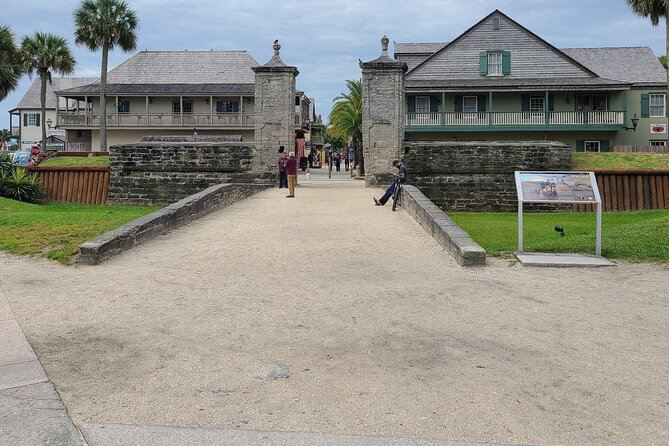
At City Gate Spirits, you’ll learn about the traditional city entrance dating back to 1762. That time stamp matters. It places this gate in a period where St. Augustine’s defenses and access points shaped daily life and regional security.
Even better, your guide explains the brave effort that saved the gate from demolition. That theme—protection and preservation—fits St. Augustine well. Many cities lose old structures to time. St. Augustine has managed to keep enough of its story visible.
This is another quick stop, about five minutes, and it’s listed as free.
Castillo de San Marcos National Monument: Fort History You Can See
The tour’s centerpiece is time at Castillo de San Marcos National Monument. You’ll get a 15-minute guide-led explanation of the forts’ history, including construction and why it mattered to both the city and the nation. You’ll tour the exterior, so you’re learning how the fort works visually, not just reading about it.
If you’ve ever been confused about why forts mattered so much, this part usually clears it up. It turns the stone into a story: design choices, strategic importance, and why this site became a repeating headline in American history.
One thing to remember: the fort stop involves a separate admission ticket according to the tour details. That doesn’t mean you’re locked out of understanding the site, but it does mean you should check entry needs ahead of time so the budget stays predictable.
How Much Time You Really Need (It Often Runs Long)
On paper, you’re looking at about 1 hour 30 minutes. In real life, the tour frequently stretches past that, often reaching over two hours once questions continue and the guide holds the group a bit longer at key storytelling points.
This doesn’t feel like a scam. It feels like the guide is genuinely invested and the route has enough material that it’s hard to rush. Still, give yourself a buffer afterward—dinner reservations and tight museum schedules can collide with an enthusiastic tour.
Bring water. It’s hot in St. Augustine often, and you’ll appreciate having bottled water on hand instead of rationing sips while you’re mid-story.
Price and Value: What $25 Buys You
At $25 per person, the value is strong if you want context, not just walking from one sign to another. You’re paying for a guided thread that ties together cemeteries, churches, government space, and a major fort—across multiple eras.
You may also have small “extra” costs at specific stops. The tour notes that admission tickets are not included for several locations (including Tolomato Cemetery and the Castillo exterior experience). Plaza de la Constitución and the City Gate Spirits stop are listed as free. So your final out-of-pocket cost depends on which places you choose to enter.
If you’re trying to keep things simple and budget-friendly, you can still learn a lot from the guide even when you treat some stops as exterior-only moments. If you’re the type who wants to fully go in, plan a little extra.
Also note demand: this tour is commonly booked about 16 days in advance on average. If you’re traveling in peak season or around weekends, booking earlier gives you more options.
Who This Tour Suits Best
This fits you well if:
- You want a quick orientation to St. Augustine that goes beyond the obvious headlines.
- You like asking questions and hearing answers in plain language.
- You’d rather do one focused walk than hop between multiple self-guided locations.
It might be less ideal if:
- Your schedule is extremely tight and you can’t tolerate a tour running past 90 minutes.
- You don’t like standing and listening in outdoor historic spaces.
- You’re trying to avoid any optional admission costs at multiple stops.
The group size and the guided structure help make this workable for many visitors, including couples and families, as long as everyone can handle a moderate walking day.
A Real Tip: Use the Guide’s Local Context
One practical perk I’d actually use: the guide tends to offer restaurant and attraction suggestions during the tour. Kevin Rose, in particular, comes across as someone who helps you keep the rest of your day from falling apart after the walk.
That’s not just small talk. It’s useful because the historic district can be tricky to navigate when you’re hungry and tired and the heat is doing its thing.
If you want to make this trip pay off even more, take notes on two or three recommendations before you move on.
Should You Book This Walking History Tour?
Yes, if you want the stories tied to the streets and you’re okay giving yourself time for a longer-than-promised walk. The small group, the conversation-style guide, and the mix of Spanish-era context plus Flagler-era transformation make it a solid first-stop history plan.
Book it earlier than you think you need, especially if you’re going in busy periods. And once you’re booked, bring comfortable shoes and water—and don’t schedule your next big commitment immediately after the 90-minute mark.
If you’re the kind of traveler who likes facts, jokes, and a clear sense of how St. Augustine changed over time, this tour is a strong pick.
FAQ
How long is the Walking History Tour of St. Augustine’s Historic District?
It’s scheduled for about 1 hour 30 minutes (approx.), and it can run longer in practice.
Where do I meet the tour guide?
You meet at the St. Augustine and St. Johns County Visitor Information Center, 10 S Castillo Dr, St. Augustine, FL 32084. The tour ends back at the meeting point.
Is the tour offered in English?
Yes. The tour is offered in English.
Is the group small?
Yes. The tour has a maximum of 15 travelers.
Do I need separate admission tickets for stops?
Some stops list admission as not included, while others are free. For example, Plaza de la Constitución and City Gate Spirits are listed as free, while places like Tolomato Cemetery and Castillo de San Marcos National Monument indicate admission tickets are not included.
What happens if weather is bad?
This experience requires good weather. If it’s canceled due to poor weather, you’ll be offered a different date or a full refund.