REVIEW · SAVANNAH
2-Hour Explore Savannah Bike Tour
Book on Viator →Operated by Savannah Bike Tours · Bookable on Viator
Two hours, and Savannah clicks. This small-group bike tour helps you get your bearings fast and cover major sights without the stop-and-go frustration of walking all day. I love that the ride is designed for momentum—Forsyth Park, City Market, and River Street land in one smooth route—plus I love the history stories that explain what you’re seeing as you pass it.
One thing to plan for: two museum stops have admission that’s not included, so your time on bikes doesn’t always mean everything is already paid for. If you want to go inside, bring a little extra budget for Andrew Low House Museum and the SCAD Museum of Art.
In This Review
- Key Highlights I Think You’ll Notice
- Why a 2-Hour Savannah Bike Tour Makes Sense
- Meeting at 502 E Broughton and Getting Set Up to Ride
- Forsyth Park: Fountain Photos and “See and Be Seen”
- City Market: A Fast Overview for Food and Shopping Later
- Johnson Square: Savannah’s Beginnings in 12 Minutes
- Cathedral of St. John the Baptist: Spires and the Irish Story
- Andrew Low House Museum: Where the Girl Scouts Began
- Monterey Square: The Midnight Mystery Moment
- SCAD Museum of Art: Repurposed Buildings and Student Impact
- Historic River Street: Port Life, Plantations, and Trade
- What to Watch For on This Bike Tour
- The Best Part: Guides Who Tell It Like It’s Happening
- Should You Book This Savannah Bike Tour?
- FAQ
- How long is the Savannah bike tour?
- How much does the tour cost?
- What’s included with the tour?
- Are museum admissions included for Andrew Low House and SCAD Museum of Art?
- Where does the tour start?
- What stops are included in the 2-hour route?
- How large is the group?
- Is there a cancellation option if weather is bad?
Key Highlights I Think You’ll Notice
- Forsyth Park Fountain photo moment at the city’s most famous vista in about 10 minutes
- City Market orientation so you can plan food and shopping later instead of wandering blindly
- Flat, easy riding with lots of short stops, ideal if you’re new to biking in a city
- Landmarks with context, from Cathedral spires to the Midnight mystery at Monterey Square
- River Street as a port-city lesson, not just a pretty waterfront stroll
- Guides people rave about, with high energy and smart pacing (Steve, Michael, Will, and Nico show up often)
Why a 2-Hour Savannah Bike Tour Makes Sense
Savannah works with walkers, sure. But it also rewards speed—because the city center is compact, and the real payoff is seeing several different neighborhoods and squares in one outing. This tour is built for that. You’ll trade minutes of “Where do I go next?” for actual time getting there on two wheels.
The $49 price is also easier to justify when you break it down like this: you’re paying for a guide, a structured route, and the ability to hit a lot of iconic stops in about 2 hours. That’s especially good for first-timers who don’t want to spend their best sightseeing hours moving between distant points. You’re also getting practical add-ons like complimentary bottled water, which matters in Savannah sun and humidity.
If you’re deciding between bike vs. walking, here’s the honest angle: walking is slower, and you’ll end up circling squares and major blocks while missing the “overview” feeling. A bike tour gives you the map in your head—then you can come back later, under your own steam, to linger where you really want.
And yes, it’s marketed as a green option. The biggest real-world benefit is simpler: you move through the city quietly and efficiently, so you spend your time looking at Savannah instead of commuting around it.
You can also read our reviews of more tours and experiences in Savannah.



Meeting at 502 E Broughton and Getting Set Up to Ride
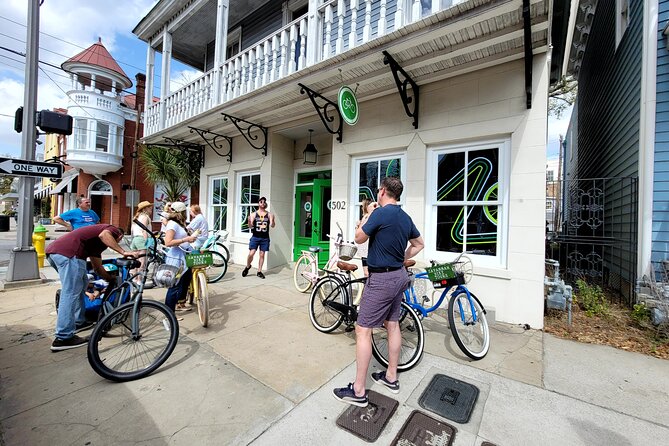
The tour starts and ends at 502 E Broughton St, right in Savannah’s historic core. That matters because you’re not trying to navigate halfway across downtown before your experience begins. You’ll return there at the end, which makes dinner plans afterward easier.
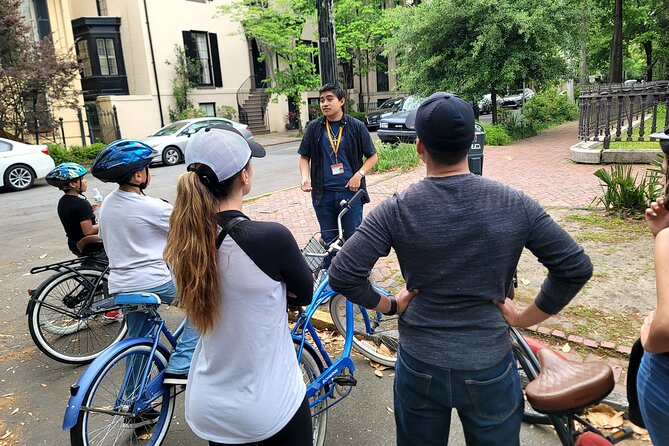
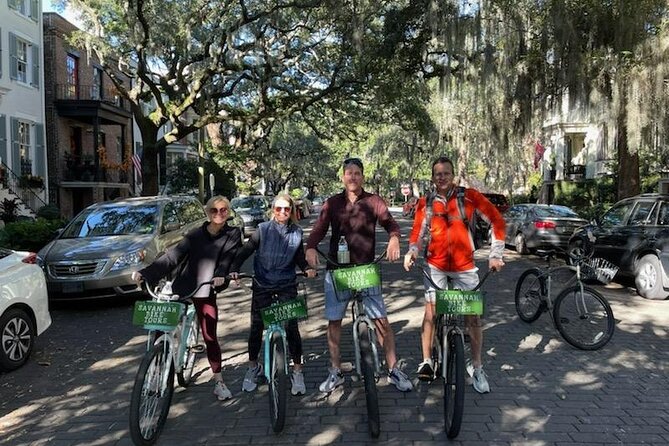
This is a maximum 10 travelers setup. Smaller groups tend to mean shorter waiting gaps, more chances to hear details clearly, and easier adjustments when traffic or pedestrians bunch up. You’ll also be riding with a guide who keeps the group moving and manages safety—especially important since Savannah streets can get busy around squares and popular shopping blocks.
You’ll be given a helmet and you’ll have bottled water during the ride. A number of guide styles seem to fit this tour well: riders often mention high energy, steady pacing, and guides who remember names and keep everyone comfortable when it’s hot.
One more practical point: the tour is in English, and you’ll get a mobile ticket at booking. Confirmation comes at the time you book, and the experience typically gets booked about 14 days in advance on average, so if you’re traveling in peak season, don’t treat it as a last-minute impulse.
Forsyth Park: Fountain Photos and “See and Be Seen”
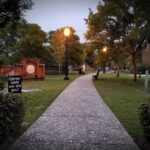
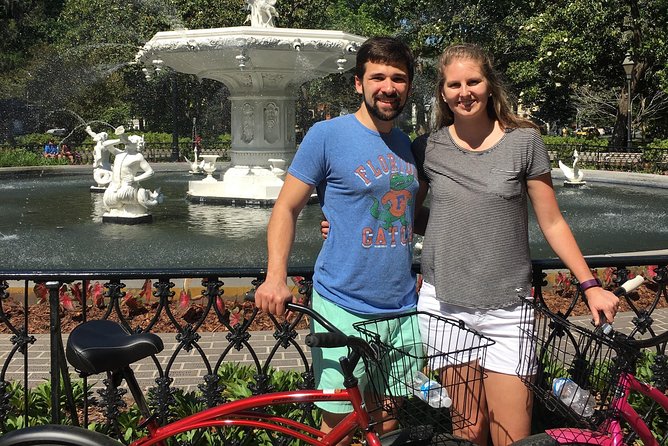
Your first stop is Forsyth Park, with a target time of about 10 minutes. This is where you get that iconic downtown vista—the Forsyth Park Fountain—in a quick, photo-friendly window.
Why this stop works early: it gives you a clean visual anchor for the city. Even if you’ve seen pictures, being there in person helps your brain connect streets and squares to a real map. It’s also a smart start because it’s a classic “middle point” that feels like Savannah—big open space, people out meeting, and that slow Southern vibe.
Look for two things while you’re standing around:
- The fountain view the guide talks about, because that’s the shot everyone ends up wanting.
- The nearby feel of the park as a social hub—Savannah loves a good meeting place, and Forsyth Park is one of the city’s main stages.
The only caution here is simple: if you’re visiting during peak heat, treat this early stop as your cue to pace yourself. Some guides are good at steering groups into shaded breaks later, and you’ll appreciate that planning once the ride continues.
City Market: A Fast Overview for Food and Shopping Later
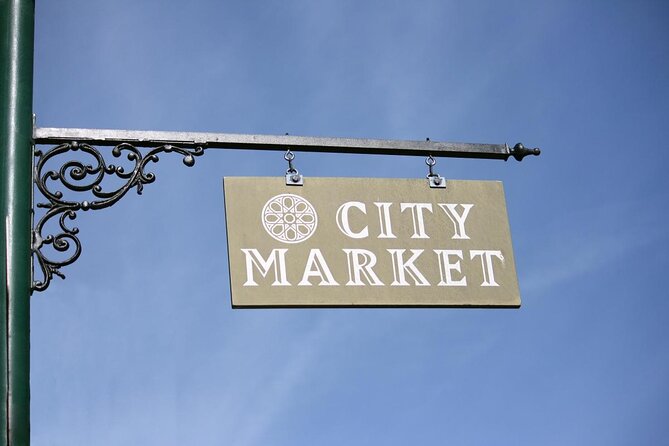
Next up is City Market, about 10 minutes. This stop is less about one single monument and more about orientation. You’ll get a quick overview of the eateries, shops, and entertainment clustered here so you can choose what to do next without guessing.
This is a genuinely useful kind of stop for a short tour. Instead of using your limited time to hunt for ideas, you’ll leave with names, vibes, and a sense of where things are grouped. That can turn a random evening into a plan you actually follow.
A practical way to use this stop: treat it like a scouting lap. Walk a few steps, take in the layout, and think about what you want later—coffee, snacks, dinner, or a rainy-day fallback if the weather turns.
Johnson Square: Savannah’s Beginnings in 12 Minutes
Johnson Square is about 12 minutes, and it’s focused on Savannah’s origins and urban design. This is where the city plan comes into the conversation—how the founder laid out the early structure, and why it’s still a model of how a city can be organized around public space.
This stop can be surprisingly satisfying even if you’re not a “history person.” Squares in Savannah aren’t just decoration. They shape how people move, where they gather, and how the city breathes. When you understand the plan, you stop seeing a random cluster of streets and start recognizing the logic.
What to watch for: the way you can visually connect the square’s space to nearby street patterns. If you’re taking photos, this is also a great stop for angles that show how Savannah’s blocks open up around a central public area.




Cathedral of St. John the Baptist: Spires and the Irish Story
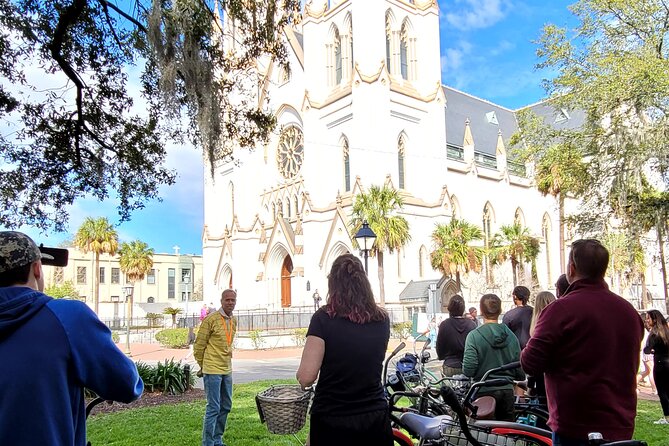
At the Cathedral of St. John the Baptist, you’ll have about 8 minutes. The highlight is photographing the cathedral spires and hearing how the Irish made their mark in Savannah.
This is one of those stops where the short time limit forces you to focus on what matters. You’ll get the outside view, the symbolism explained, and enough context to make the building feel more than just a stop on a list. Cathedral architecture is often about details—so even during a quick stop, try to look up and notice the spire lines and proportions.
If you’re the kind of traveler who enjoys cultural connections, you’ll likely like this stop more than you expect, because the story adds an extra layer to the architecture you’re seeing.
Andrew Low House Museum: Where the Girl Scouts Began

Your next museum stop is Andrew Low House Museum, timed at about 8 minutes. This one centers on a specific origin story: the Girl Scouts of America were founded here.
Important detail for your budget: admission is not included for this stop. That’s the tour’s one-off “watch your wallet” moment, because you might want to go inside longer than the bike-time version allows. If you love museums or want to read more plaques, consider planning to return later on foot.
Still, even if you don’t buy entry right away, this stop can be worth it because the guide’s explanation gives meaning to what you see from the outside. It turns the location into a milestone, not just another historic building.
Monterey Square: The Midnight Mystery Moment
Monterey Square runs about 10 minutes. The tour ties this square to the mystery of Midnight, and you’ll get the essentials of that story as you stand in the location where it unfolded.
Squares in Savannah can feel like “just pretty places” until someone connects them to a narrative. This is that kind of stop. You’ll walk away with a mental movie of what happened here, and that makes nighttime Savannah plans feel more fun later.
If you’re curious, take a quick photo from one or two angles. The square’s layout helps you understand how people gathered around events—especially because Savannah’s spaces often feel designed for that kind of storytelling.
SCAD Museum of Art: Repurposed Buildings and Student Impact
Then it’s SCAD Museum of Art, timed at about 8 minutes. This stop focuses on repurposed buildings—how the art school’s presence fits into Savannah’s existing architecture—and on the impact SCAD has on the city, including how students contribute to identity and the local economy.
As with the Andrew Low House, admission is not included here. So again: if you want to go in for real, plan it for after the bike tour. The bike stop is built for context and quick orientation, not a full museum afternoon.
Even without paying for entry, this is a worthwhile stop if you care about how cities stay alive. A school campus isn’t only about classrooms; it changes foot traffic, events, and energy in the streets. That’s the kind of detail that turns “historic” into “still functioning.”
Historic River Street: Port Life, Plantations, and Trade
Your final sightseeing stop is Historic River Street, about 15 minutes. This is one of the most important blocks to understand in Savannah because it’s tied to the port’s history—modern and historic maritime activity, and how vital the port has been to the local economy.
Here the tour shifts from squares and buildings to how the city made money and moved goods. You’ll hear about plantations, and the types of goods being traded, plus how maritime heritage shaped Savannah’s layout and wealth.
This stop is also your cue to look ahead. River Street is where you’ll likely want to return later for shopping, food, and waterfront wandering. The bike tour doesn’t aim to replace that experience; it gives you the backstory so your later walk makes more sense.
Practical tip: River Street can be crowded, so keep your photos quick and your attention on the guide’s explanation while you’re in motion. You’ll get the best of both: the story now, the slower “linger” time later.
What to Watch For on This Bike Tour
The big “consideration” is money for optional admissions at two stops. If Andrew Low House Museum and the SCAD Museum of Art are on your must-see list, you’ll likely want to budget for entry tickets. The bike tour time is short—so you don’t want to discover you’ve run out of time right when you’re ready to go deeper.
The second thing to be ready for is weather. The experience requires good weather, and while one rider reported finishing during a rain storm, the overall rule is that operators plan around conditions. If you’re traveling during wet season, pack accordingly—light rain gear and a way to keep your phone protected go a long way.
Lastly, biking is easy for most people on this kind of Savannah route. Reviews often mention the ride is flat and not strenuous, and that frequent stops keep things manageable. Still, if you have mobility issues or you’re unsure about biking for two hours with stops, you’ll want to evaluate your comfort level honestly before you commit.
The Best Part: Guides Who Tell It Like It’s Happening
A theme shows up again and again in the feedback: the guide makes the difference. Riders repeatedly highlight guides with high energy, a knack for explaining without sounding like a lecture, and the ability to handle sensitive cultural topics with care.
Names that show up often include Steve, Michael, Will, and Nico. People also mention details like the guide taking photos, remembering names, and making heat manageable—stopping in shade when conditions demand it. That kind of attention matters because it changes a “sightseeing ride” into a real experience.
If you’re hoping to walk away with more than photos—like a mental map and stories you can repeat at dinner—this is the kind of tour where that happens. You get the city’s references, not just its surfaces.
Should You Book This Savannah Bike Tour?
If you’re in Savannah for a short stay, or you want an easy first pass through the historic core, I’d book it. It’s a smart value because you’re paying $49 for structure, guidance, and access to multiple top sights in about two hours, not just bike time.
Book it especially if you want:
- Fast orientation around Forsyth Park, City Market, River Street, and major squares
- A route that keeps you moving without missing the why behind the sights
- A guide who tells stories in a way that sticks
Skip it (or plan your day differently) if you only want museum time. Two stops have admission not included, so you’ll either need to buy tickets separately or treat those stops as “see it now, return later.”
Bottom line: this is one of the cleanest ways to get your bearings fast and start enjoying Savannah for real, right away.
FAQ
How long is the Savannah bike tour?
It lasts about 2 hours.
How much does the tour cost?
The price is $49.00 per person.
What’s included with the tour?
You’ll ride with a small-group guide, use a provided bike and helmet, and you’ll receive complimentary bottled water.
Are museum admissions included for Andrew Low House and SCAD Museum of Art?
No. Admission for Andrew Low House Museum and SCAD Museum of Art is not included.
Where does the tour start?
It starts at 502 E Broughton St, Savannah, GA 31401, USA, and it ends back at the meeting point.
What stops are included in the 2-hour route?
The tour includes Forsyth Park, City Market, Johnson Square, the Cathedral of St. John the Baptist, Andrew Low House Museum, Monterey Square, SCAD Museum of Art, and Historic River Street.
How large is the group?
The tour has a maximum of 10 travelers.
Is there a cancellation option if weather is bad?
Yes. The experience requires good weather, and if it’s canceled due to poor weather, you’ll be offered a different date or a full refund. You can also cancel for a full refund up to 24 hours in advance.