
REVIEW · SAVANNAH
Genteel and Bard’s Savannah History Walking Tour
Book on Viator →Operated by Genteel and Bard · Bookable on Viator
Savannah’s squares come alive on this walk. Genteel and Bard blends a local guide with professionally recorded stories, guided by an audio setup that keeps you focused while you move. It’s an easy way to understand what made Savannah tick from 1733 to today—without getting lost in the grid.
What I like most is the headset audio design. It helps the guide’s voice stay clear even when you’re near crowds, traffic, or other street noise. The second big win for me is the stop-to-stop pacing: you get a tight route through major landmarks and some you might miss on your own.
One thing to plan for: this is still a lot of walking and standing in 2 hours, and the tour can run longer. If you’re sensitive about in-ear style audio, bring something that helps your comfort, because the listening gear can feel like a make-or-break detail.
In This Review
- Key things that make this tour worth your time
- A 2-hour walk that starts on Bull Street
- Clear storytelling via headsets, not crowd noise
- Genteel and Bard: Savannah’s story from 1733 to today
- Chippewa Square: origin stories, Oglethorpe, and the planned city
- Madison Square: Civil War turning points and the Green-Meldrim House
- Mercer Williams House Museum and Monterey Square details
- Savannah Historic District and Jones Street: architecture you can walk through
- Lafayette Square: Girl Scouts, early electricity, and Irish heritage
- Price and what you truly get for $39
- Who should book this history walk
- Tips to make the walk easier (and your memories better)
- Should you book the Genteel and Bard Savannah History Walking Tour?
- FAQ
- How long is the Genteel and Bard Savannah History Walking Tour?
- How much does it cost?
- Where do I meet, and where does the tour end?
- Is the tour offered in the morning and afternoon?
- What’s included for hearing the guide?
- What if my plans change, or weather is bad?
Key things that make this tour worth your time
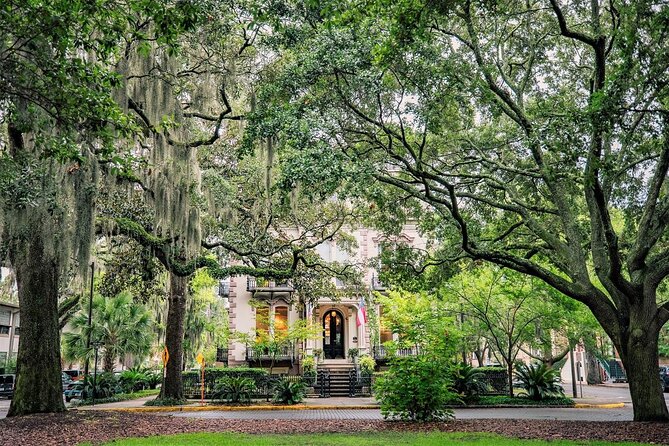
- Live guiding + recorded stories built around historic letters, so the pacing feels story-first, not fact-dump.
- Clear audio headsets so you hear the narration without craning or asking strangers to hush.
- Historic District highlights plus planned-city context, not just photo stops.
- Multiple focus squares (Chippewa, Madison, Lafayette) with people and events you can connect to later.
- Small group size with a maximum of 20 travelers, which keeps questions realistic.
- Choose your start time with morning or afternoon departures that fit your day.
A 2-hour walk that starts on Bull Street

This tour is built for people who want a real orientation to Savannah fast. You meet at 151 Bull St and end at 222 E Harris St, with the walk finishing in Lafayette Square outside the Cathedral of St. John the Baptist. The total time is about 2 hours, and that matters because you’re not committing to a half-day marathon just to get the history bearings.
I also like that it’s priced at $39 per person. In Savannah terms, that’s positioned as a smart value: you’re paying for a guided route through multiple major stops, with listening gear so you’re not stuck squinting at plaques. And the fact that it’s offered in English and uses a mobile ticket keeps it simple on arrival.
Group size is kept small (max 20 travelers). That’s not just a comfort thing; it usually means the guide can actually answer questions and adjust pace when people pause for photos or for better views.
You can also read our reviews of more tours and experiences in Savannah.



Clear storytelling via headsets, not crowd noise
Savannah’s streets are not quiet. Cars roll through, tour groups overlap, and street life pulls your attention. This is why the audio setup is such a practical feature: you get headsets designed to let you hear the guide clearly with less distraction.
The guide also uses professionally recorded stories based on historic letters, which changes the feel of the tour. Instead of hearing every point in the same voice and cadence, you get a mix of live guidance and recorded narration. That helps you remember names, dates, and themes because the delivery has variety.
A few small notes to keep in mind:
- You’ll likely be listening the whole time, so comfort matters.
- Some people found the in-ear style less comfortable over time, so if you use hearing aids or have tiny ear canals, plan accordingly.
- If you’re expecting a short stop-and-sit tour, temper that. This is built around movement, with the audio doing the heavy lifting while you walk.
Genteel and Bard: Savannah’s story from 1733 to today
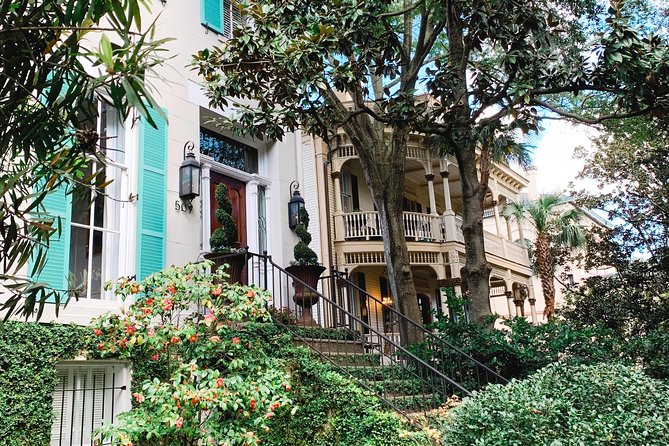
The walk starts with a big promise: you get a full story immersion from 1733 to today. The guide isn’t just pointing at buildings; the point is to connect the city’s physical layout to the people, culture, and pressures that shaped it. You’ll hear themes tied to music, architecture, war times, culture, and film history, all stitched into the Savannah you see in front of you.
Stop 1 is essentially your launchpad. If you’ve never been to Savannah, this is where you learn the “why” behind the look of the place. If you’ve been before, it still helps because Savannah can feel decorative until someone explains what the streets and squares were built to do.
This first section is also where I’d ask yourself what you want to get out of the day:
- If you care about origins and planning, listen for the founder-era context.
- If you care about later eras, focus on how the guide links the old city to later events and modern Savannah.
Chippewa Square: origin stories, Oglethorpe, and the planned city

Next you hit Chippewa Square, a stop that blends big founding ideas with a pop-culture hook. One element here is Forrest Gump and its significance to Savannah’s history and present-day identity. That’s useful because it gives you a bridge between what’s on the screen and what you’re actually standing on.
But the real value is the origin layer. You’ll learn about:
- Savannah’s planned city purpose
- James Oglethorpe (founder of Georgia)
- Mary Musgrove
- Chief Tomochichi and the Yamacraw Native Americans
For me, this is the difference between a “see the square” stop and a “understand the square” stop. When you know who Tomochichi was in the early story, and how Oglethorpe’s plans mattered, Chippewa Square stops being just scenery. It becomes a reference point you can carry into later stops.
Timing-wise, this stop is around 10 minutes. It’s long enough to absorb the story and snap a photo, but short enough that you won’t get stuck in one spot waiting for the rest of the group to catch up.
Madison Square: Civil War turning points and the Green-Meldrim House
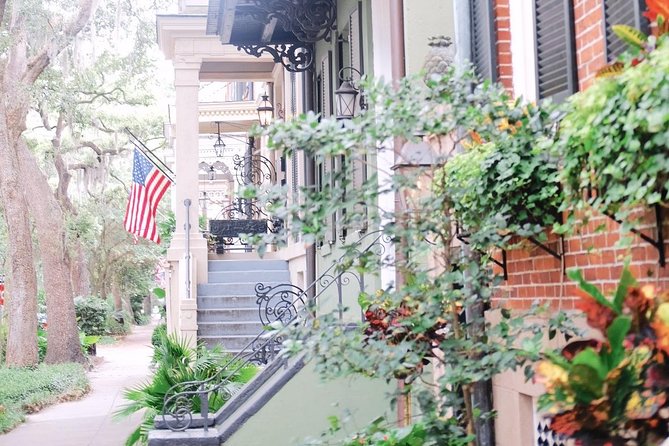
Then it’s Madison Square, where the focus shifts to Savannah’s role in the Civil War. You’ll hear how the city shaped the future of the United States through one of the most important global events in history. That’s heavy subject matter, and the structure matters here: you get the context without wandering all over town looking for sources.
You’ll also see the Green-Meldrim House as part of this segment. Even if you don’t know its name beforehand, the guide uses the stop to connect architecture and setting to what was happening around it.
Because this stop is also about 10 minutes, it’s best if you’re ready to listen in motion. If you prefer long museum-style pacing, you might want to follow up later with independent time, but as a history orientation stop, Madison Square does the job.
Practical tip: wear shoes you don’t mind standing in, since you’ll be absorbing the story while also adjusting your position for sightlines.






Mercer Williams House Museum and Monterey Square details

The tour then moves to Mercer Williams House Museum, with a strong focus on Monterrey Square. This is one of those Savannah stops where beauty and history are tangled together, and the guide uses that balance to keep you paying attention.
From here, you’ll hear about:
- Monterrey Square and its elegance
- Casmir Pulaski’s monument
- The Temple Mickve Israel
- Mercer Williams House Museum itself
A key thing I like about stops like this is how they widen the story. Savannah isn’t just one era or one theme. You get a snapshot of civic identity and religious and cultural presence through landmarks like the temple site and the memorial context connected to Pulaski.
This stop also runs about 10 minutes, which means the guide will focus on the points that help you understand the bigger picture. If you’re the type who wants to read every plaque, you may find yourself wishing you had more time inside—so plan to return on a separate day if that’s your style.
Savannah Historic District and Jones Street: architecture you can walk through
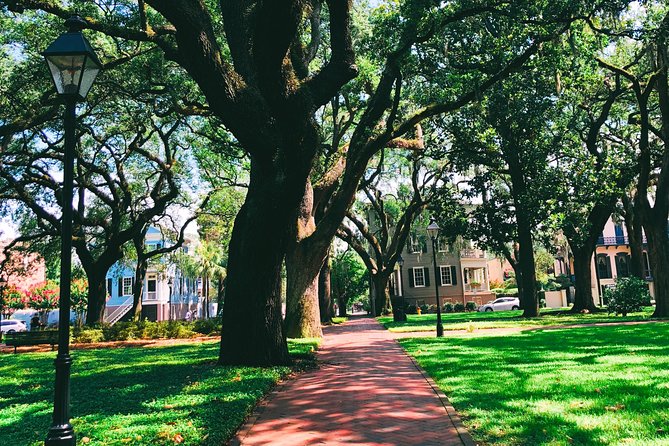
Next is the heart of the “why Savannah looks like Savannah” moment: the Savannah Historic District segment, plus Jones Street. You’ll learn about architectural history and why this part of town earned reputations over time—especially through its street and home design.
One highlight called out here is that Jones Street was once called America’s most beautiful street, and the guide points you toward the live oak brick street as a centerpiece. Even if you’ve seen photos, it’s different to stand where the street layout frames the homes and gardens. The guide helps you read what you’re seeing, so you don’t just take in pretty views; you understand what makes them meaningful.
This portion is also around 10 minutes. That makes it perfect for people who want a quick architectural primer that sets you up for deeper exploring later. If you’re the type who loves walking and photography, this stop helps you decide what to revisit once the tour ends.
Lafayette Square: Girl Scouts, early electricity, and Irish heritage
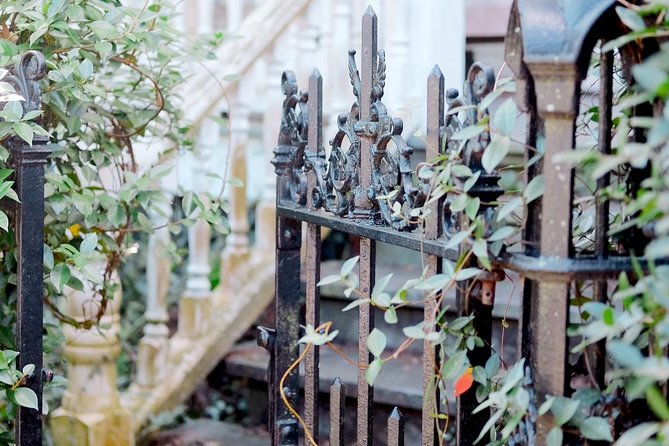
The final stop is Lafayette Square, and it’s a strong closer because it mixes social history with landmarks people recognize. You’ll learn about Juliette Gordon Low and the Girl Scouts, which is a very different angle from the Civil War chapter earlier.
You’ll also hear about:
- Hamilton Turner Inn, noted as the first house with electricity in Savannah
- The Cathedral of St. John the Baptist
- Savannah’s Irish heritage
This stop is around 10 minutes, but it tends to land well because it closes the circle. The tour began with Savannah’s origins and early planning; the ending connects you to later cultural identity and landmark-era milestones.
Since the tour finishes outside the Cathedral, you’ll also have an easy way to keep exploring on foot after the last story lands. And if you’re hungry or ready to take a break, you’re in a sensible place to pivot without feeling like you got dropped in the middle of nowhere.
Price and what you truly get for $39
At $39 per person for about 2 hours, the value here comes from three things that work together.
First, you’re paying for a guided route through multiple major stops: Chippewa Square, Madison Square, Mercer Williams House Museum area, the Historic District/Jones Street, and Lafayette Square. That’s a lot of ground in a short time, especially if you’d otherwise be trying to map it yourself.
Second, you’re not relying on handheld phone audio or reading plaques alone. The guide is local and present, and the headsets help the narration stay clear. That’s a big deal when you’re standing outdoors in real street conditions.
Third, you’re getting story-based context tied to historic letters. That’s what makes the history stick. You get themes and characters, not just a stack of dates.
The main drawback for value isn’t the price—it’s comfort and time expectations. If you get stuck on the idea that everything will be seated and slow, the walking and standing can feel like too much. But if you show up with decent shoes and a willingness to keep moving, $39 feels fair.
Who should book this history walk
This tour is ideal if you:
- Want a first-time orientation to Savannah’s Historic District
- Like guided storytelling that connects people to places
- Prefer a structured route over self-guided guesswork
- Appreciate listening audio that keeps you moving rather than stopping to read everything
It can also be a good fit for mixed groups since the pacing and stop lengths are predictable. The tour uses headsets, it’s in English, and the maximum group size (20) keeps it from turning into an impossible herd.
If you’re planning a visit in hot or rainy weather, check conditions before you go. The experience requires good weather, and that’s not a small detail in Savannah. Walking in poor conditions can ruin the whole point.
Tips to make the walk easier (and your memories better)
Here are a few practical tips that match how this type of tour actually feels on your feet:
- Wear good walking shoes. This is not a sit-down lecture.
- Bring water, especially if you’re doing this during warmer months.
- For listening gear comfort, consider testing your headset fit before you start moving.
- If you care about a specific theme—founding people, Civil War context, architecture—think of one or two questions before the tour starts so you can grab answers when the guide pauses.
- Use the tour time to decide what to revisit later. After Jones Street or Mercer Williams House Museum, you’ll likely want follow-up time, and the tour gives you the landmarks to target.
Should you book the Genteel and Bard Savannah History Walking Tour?
If you want an efficient, story-led introduction to Savannah’s Historic District, I’d book it. The combination of live guiding, clear headset audio, and stops that cover multiple eras (origins, Civil War, culture, major landmarks) is exactly what makes a walking tour worth your money.
Skip it only if you know you can’t handle steady walking and standing for about 2 hours, or if headset comfort is a deal-breaker for you. In that case, you might prefer a more stationary option.
Bottom line: if you’re ready to move through Savannah’s squares and come away with names, themes, and a mental map, this is a strong pick for your first (or second) visit.
FAQ
How long is the Genteel and Bard Savannah History Walking Tour?
The tour lasts about 2 hours (approximately).
How much does it cost?
It costs $39.00 per person.
Where do I meet, and where does the tour end?
You meet at 151 Bull St, Savannah, GA 31401, USA. The tour ends at 222 E Harris St, Savannah, GA 31401, and the walk finishes in Lafayette Square outside The Cathedral of St. John the Baptist.
Is the tour offered in the morning and afternoon?
Yes. You can choose from morning or afternoon departures to fit your schedule.
What’s included for hearing the guide?
Headsets are included to help you hear the guide clearly. The tour also uses professionally recorded stories.
What if my plans change, or weather is bad?
You can cancel for free up to 24 hours before the experience starts for a full refund. If it’s canceled due to poor weather, you’ll be offered a different date or a full refund.