REVIEW · SAVANNAH
Heart of Savannah History Walking Tour – 2hr
Book on Viator →Operated by Explore Savannah · Bookable on Viator
Savannah feels built from stories, not just bricks. This Heart of Savannah History Walking Tour gives you fast orientation through the squares and details that make the city click. I especially like the way the route links the American Revolution and Civil War to specific corners, and how the guide turns famous spots into clear, human stories. One thing to plan for: it’s a compact walk with lots of stops, so come ready for steady pacing and a bit of on-your-feet time.
You’ll start at Wright Square, then move square-to-square through the historic district, with outside viewing at places like the Juliette Gordon Low Birthplace Museum and a mix of churches, homes, and landmark pass-bys. The experience is built for a group cap of 30 travelers, rain or shine, and it runs about 2 hours. My main “watch out” is sound and spacing: Savannah streets are busy, so if you want to catch every word, arrive a little early and position yourself well at each stop.
You also get fun, modern hooks alongside the serious stuff. Yes, there’s a filming connection at Chippewa Square tied to Forrest Gump, and you finish at Forsyth Park where the famous fountain is the perfect photo payoff. If you’re sensitive to ghost-and-gossip-style storytelling, expect the guide to mix in a few side tales, but you’ll still get the historical backbone.
In This Review
- Key Highlights to Know Before You Go
- Wright Square: Where the City’s Big Plan Starts
- Juliette Gordon Low Birthplace: Outside Views That Still Hit Hard
- Independent Presbyterian Church: Fires, Hurricanes, and a Famous Steeple
- Chippewa Square and Forrest Gump: Film Fame With Real History
- Sorrel Weed House: The Fun Passing Stop With Haunted-Wall Details
- Madison Square: Siege of Savannah on a Quiet Corner
- Green-Meldrim House: Gothic Architecture and Sherman’s Headquarters
- The SCAD Building Pass-By: Volunteer Guard Origins
- Gryphon Tea Room and Solomon’s Apothecary: A Break You’ll Want
- Midnight in the Garden: The Mercer Williams House Story
- Armstrong House: The Big WOW From the Street (No Inside Access)
- Forsyth Park: Ending at the Fountain With a Real Story
- What Makes This Tour Worth Your Time
- Practical Tips That Will Make Your Walk Easier
- Should You Book This Savannah History Walking Tour?
- FAQ
- How long is the Heart of Savannah History Walking Tour?
- Where does the tour start and end?
- Is admission included for the stops?
- Do you go inside buildings during the tour?
- Does the tour run in bad weather?
- How big are the groups?
- What should I bring for the walk?
Key Highlights to Know Before You Go

- Square-to-square orientation: Wright Square to Forsyth Park gives you the lay of the land fast.
- Oglethorpe plus film-fame context: You’ll understand what you’re looking at, not just where it is.
- Outside viewing at major sites: Juliette Gordon Low Birthplace and several historic homes are admired from the street.
- Revolutionary and Civil War storytelling in the open: Siege of Savannah and Sherman’s March are tied to real locations.
- Forsyth Park Fountain with a twist: The fountain’s France connection and 1858 installation are part of the story.
- A small-group feel (up to 30): Easier for questions than big bus tours.
Wright Square: Where the City’s Big Plan Starts
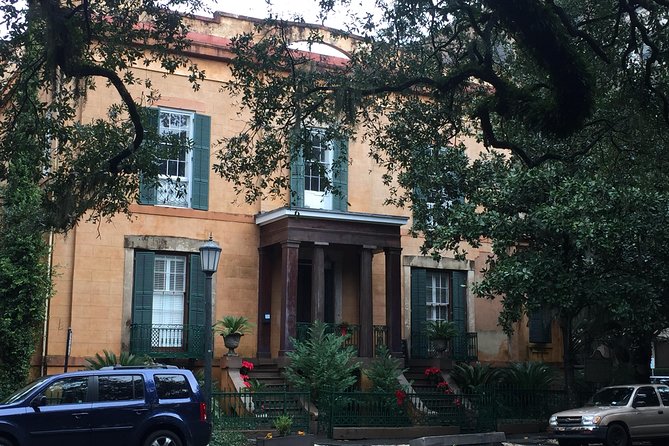
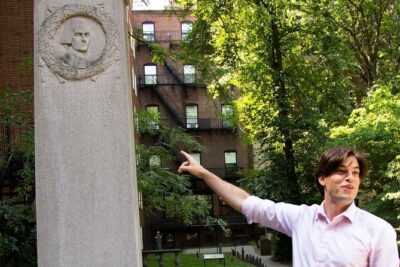
Your tour kicks off in Wright Square in front of the Gordon Monument. This is a smart opening stop because it explains Savannah’s origin: how it was first established and why General James Oglethorpe chose a 40-foot bluff. You also learn how the squares are designed, and why Savannah’s grid of public spaces matters for how the city works today.
One of my favorite “okay, that’s useful” details here is the modern tie-in: you’ll hear that the Port of Savannah is the third largest port in the nation. It helps you connect the grand historic look of the district with the fact that Savannah is still a functioning, working city—not just a postcard.
The Gordon Monument also links directly to Indigenous history. The guide explains who Tomochichi, the chief of the Yamacraw Indians, was and why he is buried under the Gordon Monument.
You can also read our reviews of more tours and experiences in Savannah.



Juliette Gordon Low Birthplace: Outside Views That Still Hit Hard
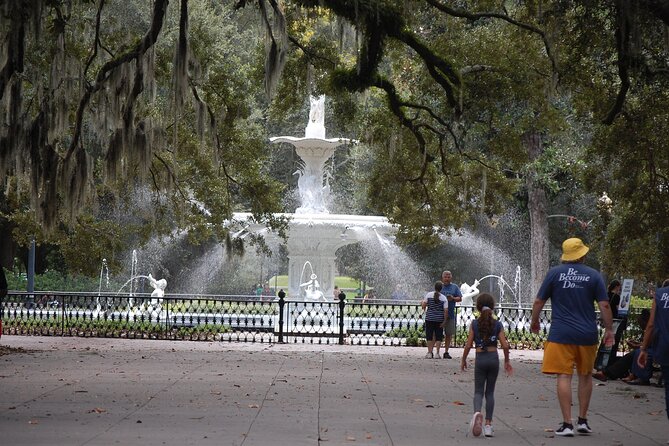
Next you stop at the Juliette Gordon Low Birthplace Museum. You’ll see the birthplace of Juliette Gordon Low, born October 31, 1860, and founder of the Girl Scouts. The key point is that you admire the home from the outside, not inside.
For me, that outside-only approach makes sense on a walking tour. You get the emotional and historical value without losing time to indoor schedules, lines, or accessibility limits.
If you’re planning the rest of your day, this is also a good checkpoint. From here, you’ll have a clearer sense of where nearby landmarks sit, so you can decide if you want to return later for more.
Independent Presbyterian Church: Fires, Hurricanes, and a Famous Steeple
At the Independent Presbyterian Church stop, the story moves through repeated rebuilding. The church was founded in 1755 on Ellis Square, destroyed by fire, then rebuilt on Telfair Square only to be destroyed again by a hurricane. Today, it sits on the corner of Bull St and Oglethorpe Ave, built in 1855.
This is one of those stops that teaches you to “read” Savannah’s past as resilience. You’re not just looking at architecture—you’re seeing why it looks the way it does now.
There’s also a clear trivia-and-understanding moment: you learn which U.S. president was married in the church in 1885, and why the steeple is so famous. If you like when facts connect to what you can physically see, this one delivers.
Chippewa Square and Forrest Gump: Film Fame With Real History
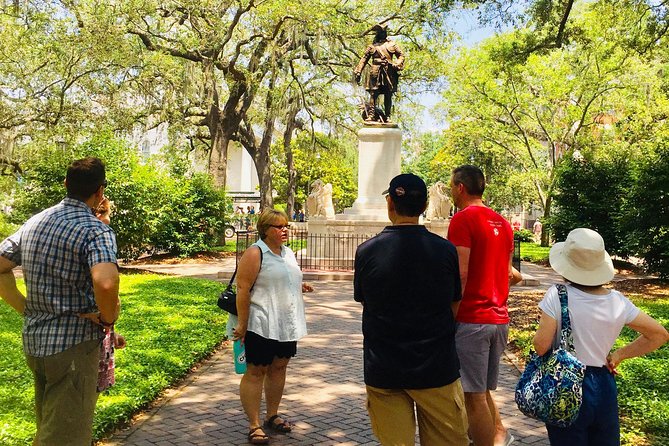
Chippewa Square is where Savannah intersects pop culture in a way that feels natural. You’ll see the spot where Forrest Gump sat with his box of chocolates while waiting for the bus. It’s a quick stop, but it’s valuable because it makes the city recognizable even if you don’t know Savannah well yet.
The guide also corrects a common mix-up. The monument in the center of the square is General James Oglethorpe, not Captain Morgan. You’ll get the context for the man behind the colony and what his monument represents—so you’re not just taking a photo; you’re understanding the point of the statue.
If you’re traveling with someone who only wants the “famous stuff,” this stop keeps them from zoning out during the more serious Revolutionary-era talk.
Sorrel Weed House: The Fun Passing Stop With Haunted-Wall Details
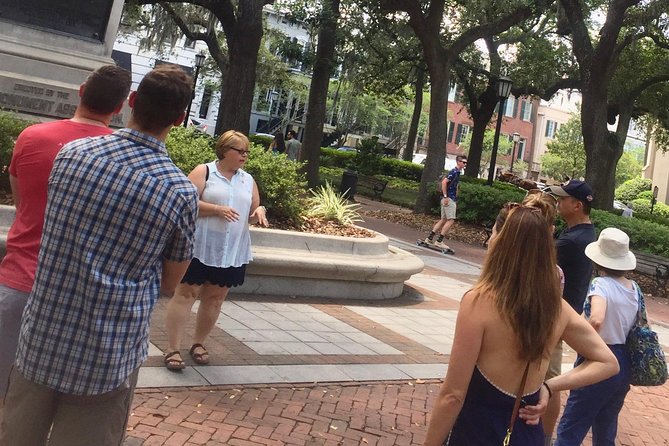
You’ll pass by the Old Sorrel Weed House Museum and Tours. This one has a haunted reputation, and the guide keeps it light and story-driven without turning the whole tour into a spooky show.
Even though you don’t go inside, you get specific visual details: the Savannah gray brick wall around the courtyard and the guide’s explanation of the fingerprints in the brick. You’ll also hear the question the guide wants you to consider—where that brick came from.
This stop is a good reminder that Savannah’s history is often embedded in materials. You’ll start noticing textures, not just buildings.

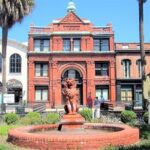




Madison Square: Siege of Savannah on a Quiet Corner
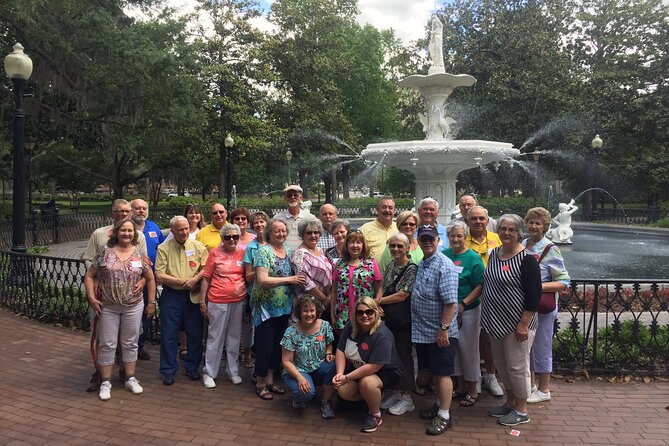
Madison Square is a short but meaningful stop tied to the Siege of Savannah during the American Revolution. The guide explains that where Madison Square is today was once the location for one of the bloodiest battles during that conflict.
Because it’s a stop you can take in quickly, it’s easy to treat as “just another square.” Don’t. The best part is how the guide connects the calm streetscape around you to the intensity that happened here.
If you like your history grounded in place (instead of just names and dates), this square helps you visualize the city during wartime.
Green-Meldrim House: Gothic Architecture and Sherman’s Headquarters
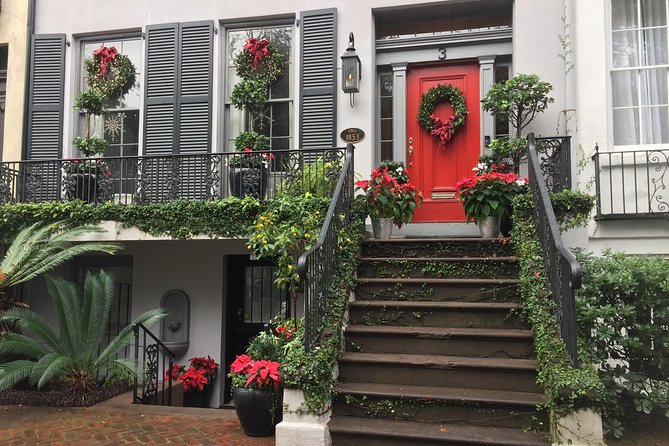
Green-Meldrim House is a standout visual stop. Completed in 1853, it’s described as the finest example for Gothic architecture in the South, and the guide gives you the kind of numbers that make scale feel real.
The house cost $93,000 at the time (the guide translates what that becomes today), and it was the most expensive home in Savannah during the 1800s. You’ll also hear how it became the Headquarters for General Sherman during his March to the Sea, when he occupied Savannah.
This is where the tour earns its word-history tone, not just fact-dumping. You can look up at the building and instantly see why someone would remember it after the war—and why it matters in the city’s story.
The SCAD Building Pass-By: Volunteer Guard Origins
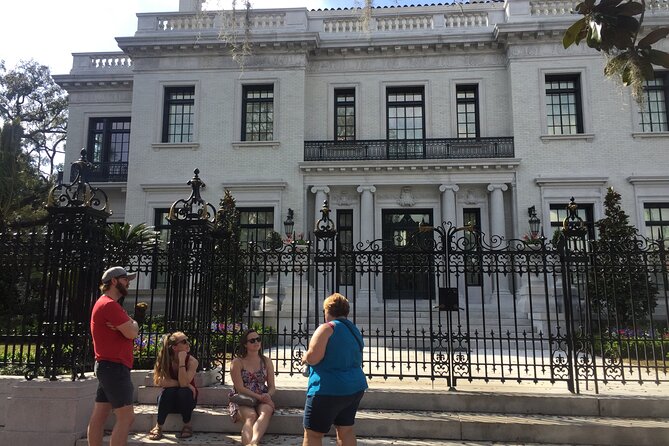
The tour also passes a building originally built and used as the Savannah Volunteer Guard building, which is now owned by SCAD. You don’t get a long stop here, but it’s a useful bridge: it shows how old structures can find new purposes.
Even a quick pass-by helps you build a mental map of what each block used to be—and what it became.
Gryphon Tea Room and Solomon’s Apothecary: A Break You’ll Want
The route stops by the Gryphon Tea Room, located inside what’s called the Shriner’s Building. The guide points out that inside the Gryphon Tea Room is a museum in itself—once used as Solomon’s Apothecary—with original mahogany cabinetry and cubbies used to store medicines.
This is one of the more “experience” stops on the walk, because it invites you to slow down. The tour gives you context for what you’re looking at, and then you can decide if you want to use it as a lunch or relaxation break.
If you’re the kind of traveler who enjoys stepping into old spaces for five minutes of atmosphere, this stop is a win even if you don’t order food.
Midnight in the Garden: The Mercer Williams House Story
Another famous stop on the route is the Mercer Williams house, the one made widely known through Midnight in the Garden of Good and Evil by John Berendt. You’ll get the real-world background of Jim Williams and the shooting of his assistant Danny in 1981, plus how the book was released in 1993 and spent 216 weeks on the New York best seller list.
Then the story turns to impact: the movie release helped put Savannah on the tourism map in a big way. The guide frames this as a reminder that places become famous not only for architecture, but for human drama.
Here’s my practical suggestion: if you want to enjoy this stop even more, read the book or watch the movie before you come. The tour’s storytelling works best when you already know the characters’ names.
Armstrong House: The Big WOW From the Street (No Inside Access)
The Armstrong House, now known as the Armstrong-Kessler house, is one you’ll want to plan around. The guide explains the history and what kind of household lives there today, and emphasizes that it’s a private home not open for tours.
This is the one home where people often pause and react on the spot, because the exterior is that impressive. The value here is simple: you get the payoff without losing time to access limitations.
If your schedule is tight, this is a good stop to mentally bookmark for later. Even without interior access, the exterior conversation is enough to make it feel like a special moment.
Forsyth Park: Ending at the Fountain With a Real Story
The tour ends at Forsyth Park, with a final look at the park that feels like a breather after square-to-square walking. Forsyth Park began in 1848 with only 10 acres, and today it covers 30 acres. It’s Savannah’s central gathering space for young and old alike.
The crowning photo moment is the Forsyth Park Fountain. The guide shares a detail that changes how you look at it: the fountain was a catalog mail order from France and was installed in 1858. That’s the kind of fact that makes the fountain feel less like a random landmark and more like a piece of global history landed in Savannah.
If you want the best photos, plan for a couple of minutes of extra time after the tour ends. Even with a short stop, the fountain makes it easy to get a great shot without hunting for angles.
What Makes This Tour Worth Your Time
This walk has a clear strength: it uses Savannah’s squares as a teaching tool. When the guide explains why Oglethorpe picked the site, or what happened during the Siege of Savannah, it doesn’t float in the air—it lands in front of you.
I also like that the stops mix famous and lesser-known points without turning the tour into a checklist of “must-see” sites. You’ll pass by places like the Sorrel Weed House and still get meaningful context, plus you’ll hear real historical anchor points like Sherman’s headquarters and the church’s rebuilding after disaster.
Finally, the “outside viewing” structure fits the time window. Many important Savannah landmarks are private homes or outside-focused sites, so building the tour around street-level viewing keeps the day moving.
Practical Tips That Will Make Your Walk Easier
Wear comfortable walking shoes. The tour is about 1 mile with benches along the way, but you’ll still want tread you trust. Bring an umbrella and a bottle of water, especially in summer when it can get hot and humid.
The tour operates rain or shine. If severe weather hits, you’ll be offered an option to reschedule; you won’t be left hanging in the middle of a storm.
For language, the experience is offered in English. You’ll get a mobile ticket, and your confirmation comes by email after booking.
Should You Book This Savannah History Walking Tour?
Book it if you want a smart first day in Savannah. You’ll get a clean orientation through major squares, a clear thread connecting war-era events to real places, and enough modern references to keep it fun.
Skip it only if you’re looking for long inside visits at multiple museums or if you dislike mixed storytelling. This route focuses on outside stops, quick context, and steady walking—plus you may hear some ghost and scandal-style side stories depending on the guide’s style.
If you’re deciding between “winging it” and “getting oriented,” this is the option that helps you walk the historic district with better eyes.
FAQ
How long is the Heart of Savannah History Walking Tour?
The tour is about 2 hours.
Where does the tour start and end?
It starts at Wright Square in Savannah and ends at Forsyth Park, specifically at the fountain.
Is admission included for the stops?
Many stops note free admission. The Armstrong-Kessler house is marked as admission ticket not included, and other locations are primarily viewed from the outside.
Do you go inside buildings during the tour?
Some stops are outside viewing only. For example, the Juliette Gordon Low Birthplace Museum is admired from the outside, and the Armstrong-Kessler house is a private home not open for tours.
Does the tour run in bad weather?
It runs rain or shine. If severe weather cancels the tour, you’ll be given the option to reschedule; options include rescheduling rather than being left without a tour.
How big are the groups?
The tour has a maximum of 30 travelers.
What should I bring for the walk?
Comfortable walking shoes are recommended (about a 1-mile walk). You should also consider bringing an umbrella and water, especially in hot and humid conditions. Service animals are allowed.