REVIEW · BOSTON
Boston’s Freedom Trail: A Revolutionary Walking Tour
Book on Viator →Operated by Boston History Company · Bookable on Viator
Boston’s Revolution walks past your feet. This Boston Freedom Trail tour strings together all 16 official stops in about 2.5 hours, starting at The Embrace by Boston Common and finishing at Copp’s Hill with big views. I especially like the way the guide ties the places to the people and decisions that shaped the Revolution, and I also like that it reaches beyond battles into abolition and civil change. One thing to plan for: it’s a lot of walking in a short window, and some sections (like cemetery time) can feel fast if you move slowly.
If you want a “first time in Boston” hit that still feels real, this is a strong pick. The tour is in English, uses a mobile ticket, keeps groups to a maximum of 25, and is built around downtown locations you can actually understand as a connected story. The only real watch-out is sound and pace: if you’re not positioned well, it can be harder to hear, and the schedule is packed.
In This Review
- Key takeaways
- What you’ll see on the Freedom Trail in a single, guided walk
- Starting at The Embrace and the Massachusetts State House’s golden dome
- Abolition to the burying grounds: churches and meeting houses that shaped public life
- Old Corner Bookstore, Old State House, and the Bloody Massacre site
- Faneuil Hall’s Cradle of Liberty and the speech that turns into action
- Paul Revere House and Old North Church: the lantern signal story
- Copp’s Hill, Bunker Hill Monument, and the view of USS Constitution
- Guides, pacing, and hearing the story on a 25-person walk
- Price and value: why $31 can work for first-timers
- Who this Freedom Trail tour fits best
- Quick, practical tips before you set out
- Should you book this Boston History Company Freedom Trail tour?
- FAQ
- How long is the Freedom Trail walking tour?
- Where does the tour start?
- Where does the tour end?
- What does the tour include?
- How much does it cost?
- Is the tour in English?
- Do I need an admission ticket?
- How many people are in a group?
- What fitness level do I need?
- What if the weather is bad?
- Are service animals allowed?
Key takeaways
- All 16 official Freedom Trail sites covered in one organized walk
- Start at The Embrace (Boston Common area), then roll right into state and church power
- Stories go beyond war: you’ll hear about abolition and other social causes
- Paul Revere and Old North get the spotlight, including the lantern signal
- Copp’s Hill delivers the payoff with Bunker Hill focus and a view of USS Constitution
What you’ll see on the Freedom Trail in a single, guided walk
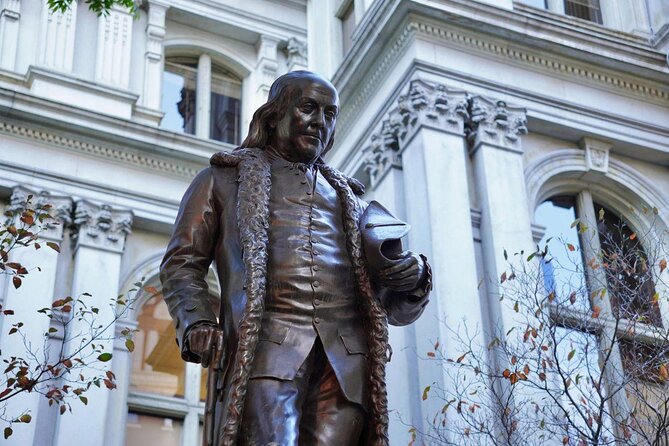
This tour is designed for one big goal: check the Freedom Trail’s official stops without turning your day into a self-made scavenger hunt. You’ll cover the Revolution-era anchors—churches, meeting halls, government buildings, and burying grounds—plus the locations that explain how Boston’s politics turned into action.
In practice, it’s not just “here’s a plaque.” The guide connects events so you understand why each site matters. For example, you go from British rule and public confrontations to the moment crowds gathered to start resistance, and then you land at the midnight signal that helped trigger the next dramatic chapter. That’s what makes the route worth doing as a single guided loop rather than hopping between sites on your own.
You’ll also get a sense of Boston as a working city over centuries. The tour framing includes leadership in abolition and civil rights topics, and it places that alongside education and immigration—so the story isn’t stuck in 1770s-only mode.
You can also read our reviews of more tours and experiences in Boston.



Starting at The Embrace and the Massachusetts State House’s golden dome
You begin at The Embrace at 139 Tremont Street, right by the Boston Common Visitor Information Center. It’s a moving start point: the statue honors Martin Luther King Jr. and Coretta Scott King, which sets the tone that this trail isn’t only about old battles. It’s also about the long arc of rights and resistance.
From there you move into the seat of Massachusetts state government, the Massachusetts State House, recognizable by its golden dome. You’ll hear how the long story of the building connects to Samuel Adams, including the cornerstone laying in 1795. This stop matters because it shows you that “revolution” didn’t end with the shooting—it became governance, law, and public institutions.
Tip for the start: Boston Common is an easy place to get oriented, and starting here means you don’t spend the first part of the tour figuring out where you are. If you like getting your bearings fast, this opening works.
Abolition to the burying grounds: churches and meeting houses that shaped public life
One of the best parts of this walk is how the tour moves through religious and civic spaces that pushed people to argue, organize, and act.
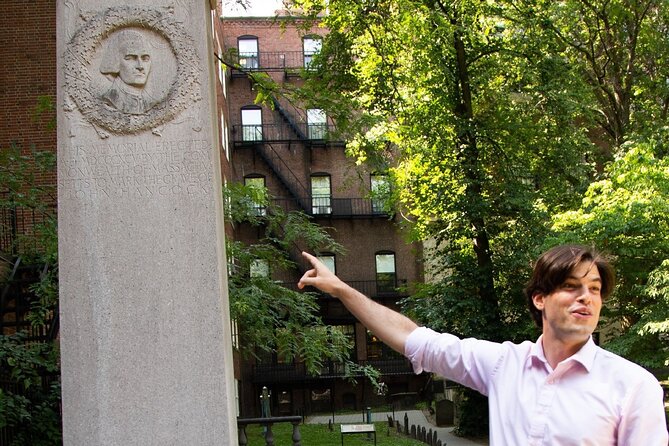
You’ll see a red-brick church built in 1809 that hosted abolitionist congregation life, where you’ll hear about anti-slavery speeches given there. Then you head to a graveyard dating to 1660, a final resting place for key patriots such as John Hancock, Paul Revere, and Samuel Adams. That’s a heavy shift, but it’s also a useful one: it grounds the Revolution in real people rather than names floating in a textbook.
Right after that, you tour a stone church built in 1754, described as the first Anglican Church in Boston. Nearby, you’ll also hear about the burying ground and crypts underneath—so you get a sense of how the city built its religious world on layers of time.
And then it gets dramatic again: the Puritan meeting house built in 1729 is where the famous Boston Tea Party began. This is one of those stops where the guide’s narration helps you picture the moment people decided they had to break the rules.
Old Corner Bookstore, Old State House, and the Bloody Massacre site
As you keep moving, the tour adds variety so it doesn’t turn into one repeating type of sight. A 1718 brick building originally tied to a colonial apothecary later became the 19th-century publishing house Ticknor & Fields. That’s a smart bridge from politics to culture: it nudges you to think about how print and ideas fueled civic change.
Then comes the Old State House, built in 1713 and decorated with British symbols including a lion and unicorn. This building once sat at the center of British government in Massachusetts. You’ll hear how confrontations and fiery speeches played out there—history not as abstract blame, but as public pressure.
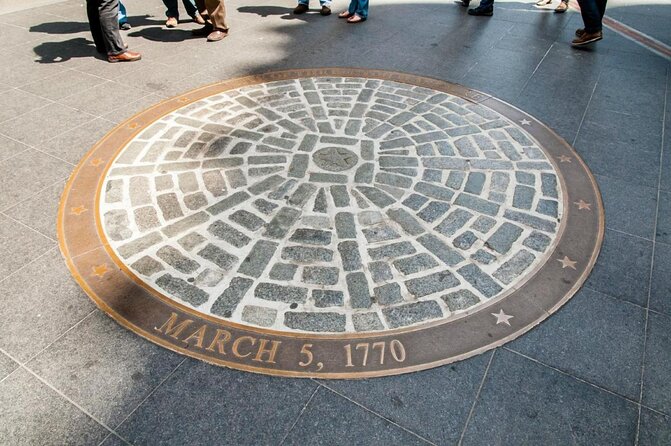
Right near that, the tour points out the official site marked by a circle of stones for the Bloody Massacre of 1770. This is a key “how it happened” moment: you’ll get a moment-by-moment account of the night redcoat musket fire left five colonists dead. Even if you’ve heard the name before, a guided framing here usually makes the event feel less like a date and more like a chain reaction.
Faneuil Hall’s Cradle of Liberty and the speech that turns into action
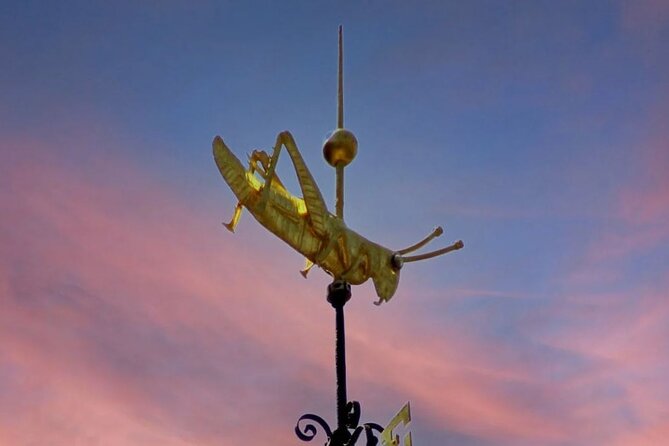
The tour then brings you to Faneuil Hall, built in 1743 originally as a common marketplace, but later more important as a meeting hall. The second-floor spaces are where big speeches shaped public opinion—often remembered as the Cradle of Liberty.
This stop is valuable because it shows how resistance worked socially, not just militarily. People gathered, argued, and built shared energy. The guide’s narration helps you understand that these weren’t quiet debates; they were public events that pulled ordinary citizens into a political movement.
If you like seeing how “the crowd” works—how beliefs turn into pressure you can feel—this part of the walk is one of your best bets.





Paul Revere House and Old North Church: the lantern signal story
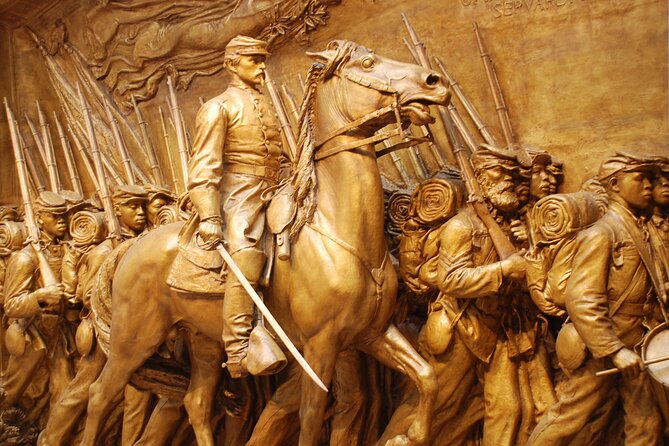
Next you hit the human scale of the Revolution with the Paul Revere House, a wooden home dating to 1680 and described as Boston’s oldest building. It was once home to the Revere family. Expect the guide to connect daily life here to Paul Revere’s later role in major events.
Then you arrive at Old North Church, built in 1723. This stop is famous for the signal story on April 18, 1775: one if by land, two if by sea, told through lantern lights from the steeple. The guide explains why that signal mattered and how it connected to the eve of the Revolution.
This is also one of the easiest stops to enjoy even if you’re not a total history nerd. The story has momentum, and the setting helps your brain build the scene. Plus, it’s a great place to ask questions because you can see the kinds of choices people had to make in time pressure.
Copp’s Hill, Bunker Hill Monument, and the view of USS Constitution
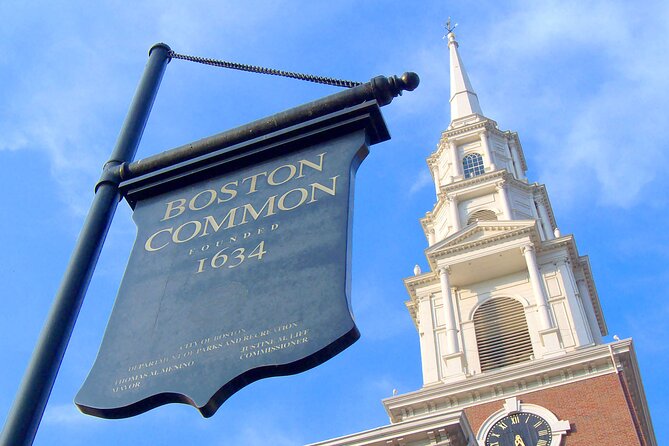
The last stretch focuses on the Bunker Hill story and ends with a satisfying visual payoff. You’ll visit a burying ground from 1660 tied to British cannon emplacements during the Battle of Bunker Hill. Then you move to Copp’s Hill Terrace to view the 221-foot Bunker Hill Monument marking the spot where colonial militia defended hastily made earthworks and repelled two redcoat charges before retreating.
Finally, as the tour ends at Copp’s Hill Terrace (520 Commercial St area; also referenced with nearby 7 Jackson Ave), you get a view toward USS Constitution, nicknamed Old Ironsides. Seeing the masts and rigging from here gives you a clean “wrap” that connects the Revolution era to later American naval power.
In other words: you end with a scene, not a classroom.
Guides, pacing, and hearing the story on a 25-person walk
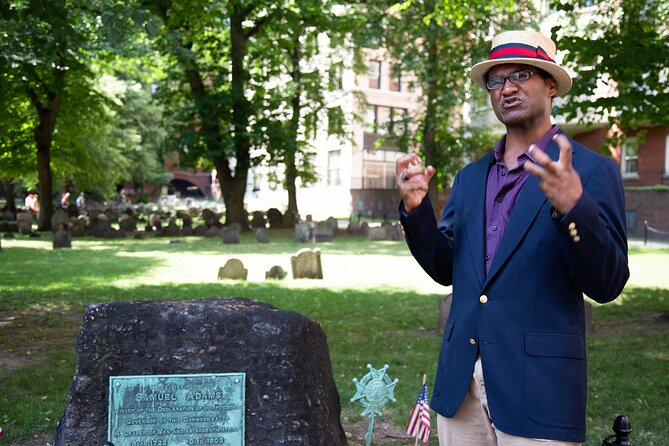
This experience is built around a guided storytelling style, and the most praised aspect of the tour is how guides bring the trail to life. Names that have stood out include Noah, Kenny, Alfred, Sam, Jim, Alissa, Kathy, Julia, Eliot, and Stewart. Across those examples, the consistent theme is clear voice, strong pacing, and the ability to answer questions without shutting down curiosity.
That said, pacing can be a trade-off. This tour covers a lot in 2.5 hours, and one review-style caution from the same kind of crowd experience is that cemetery time may feel faster than expected. If you use a walking stick or prefer slow stops, I’d plan to speak up early with your guide. A good guide will usually work with you, but the route itself is still compact by design.
Sound is another practical point. On a group walk, if you’re off to the side or behind the guide, it can be harder to catch every detail. I recommend you stay where you can face the guide most of the time, even if it means adjusting where you stand at each stop.
Small group size helps: the tour caps at 25 travelers, which is large enough to feel social but small enough for the guide to keep the energy moving.
Price and value: why $31 can work for first-timers
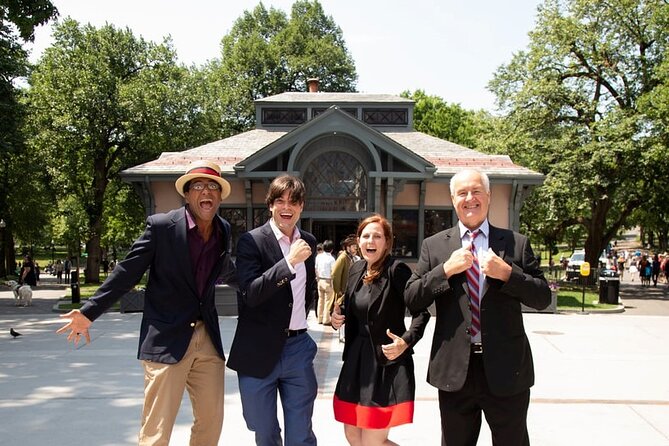
At $31.00 per person for about 2 hours 30 minutes, the value comes from three things: you get interpretation, you get a curated route, and you save planning time.
If you try to DIY all 16 sites, you’ll still spend time figuring out sequence, transit between stops, and what each place meant beyond the obvious. This tour bundles that into one walking day with a guide doing the “connect the dots” work.
It’s also reasonably priced for a guided experience that ends with a view of USS Constitution and includes major hits like the Boston Tea Party start point, Paul Revere House, Old North Church lantern signal, and the Bunker Hill Monument area. For many people, the cost is worth it if you want context more than souvenirs.
Also worth noting: this tour is booked about 12 days in advance on average, so if you’re traveling during peak periods, it’s smart to reserve early rather than waiting.
Who this Freedom Trail tour fits best
This is a great match if you:
- want a smart overview of Boston’s Revolution-era sites in one go
- enjoy story-driven history with chances to ask questions
- are in Boston for a short stay and don’t want to map the Freedom Trail yourself
It’s also a good choice for couples and families, especially if you have teens or older kids who get restless with long museum-style sessions. The format is walking plus stops, so attention stays on the move.
On the flip side, the tour is built for visitors with at least moderate physical fitness, so if you know long walks are hard, you’ll want to think carefully. The good news is it’s in central Boston with near public transportation, and it allows service animals.
Quick, practical tips before you set out
Bring comfortable walking shoes. This is a city-walk day, and you’ll cover multiple miles over the 2.5-hour period.
Plan for weather. The experience is stated as requiring good weather, and if it’s canceled because of poor conditions you’ll be offered a different date or a full refund.
If you care about hearing every detail, don’t treat each stop like a postcard moment. Instead, stand where you can face the guide, and let the story land before you start taking photos.
And if you want to make the most of it, wear layers. Boston weather loves to change its mind in the same afternoon.
Should you book this Boston History Company Freedom Trail tour?
I’d book it if you want the Freedom Trail as a guided story rather than a self-guided checklist. You’ll cover all 16 official sites in one session, get the lantern signal and Bunker Hill payoff, and hear a version of Boston history that connects Revolution to later civil causes.
Skip it (or rethink it) if you prefer slow pacing, lots of quiet time at each cemetery, or you get overwhelmed by long walks with limited flexibility. This tour is intentionally packed, and the value depends on moving along with the group.
If you want a strong first pass through Boston that’s both practical and genuinely fun, this one is an easy yes.
FAQ
How long is the Freedom Trail walking tour?
It runs about 2 hours 30 minutes.
Where does the tour start?
The tour starts at The Embrace at 139 Tremont Street, Boston, MA 02108, near the Boston Common Visitor Information Center.
Where does the tour end?
It ends at Copp’s Hill Terrace in Boston’s North End, with the area listed as 520 Commercial St and also referenced with a nearby address of 7 Jackson Ave.
What does the tour include?
You’ll walk through Boston’s Freedom Trail and cover all 16 official sites with a guide telling the stories behind them.
How much does it cost?
The price is $31.00 per person.
Is the tour in English?
Yes, it’s offered in English.
Do I need an admission ticket?
This tour uses a mobile ticket. The first stop listed, The Embrace, is free.
How many people are in a group?
The tour has a maximum of 25 travelers.
What fitness level do I need?
You should have a moderate physical fitness level.
What if the weather is bad?
The experience requires good weather. If it’s canceled due to poor weather, you’ll be offered a different date or a full refund.
Are service animals allowed?
Yes, service animals are allowed.