REVIEW · BOSTON
Entire Freedom Trail Walking Tour: Includes Bunker Hill and USS Constitution
Book on Viator →Operated by Walk & Talk Boston Walking Tours · Bookable on Viator
Boston’s Revolution comes with street-level directions. This tour follows the Freedom Trail through downtown and into Charlestown, ending at USS Constitution while you connect the causes behind the American Revolution.
I like that you get the whole story in one outing, not a chopped-up highlight loop, and you also get a guide who keeps the pace moving with clear explanations at each stop. The main drawback is simple: you’re walking for about 4 hours, so you’ll want comfortable shoes and a willingness to keep moving.
Second, I like how the route blends government, religion, crowds, and rebellion. You’ll pass famous names, but you’ll also see how arguments over land, taxes, and rights turned into street action.
Finally, note that most stops are narrated outdoor visits. Interiors are generally not included, so if you want to go inside any buildings, plan for extra tickets.
In This Review
- Key Things I’d Plan Around
- A 4-Hour Walk That Actually Gives You the Story
- Starting at Park Street: the Central Hub Advantage
- Downtown Freedom Trail: State Power, Religion, and Protest
- Massachusetts State House: the Federal-architecture calling card
- Park Street Church: the fire-and-brimstone corner of reform
- Granary Burying Ground: Revolution figures at ground level
- King’s Chapel: when church politics turns into conflict
- Old City Hall: Franklin’s presence and education markers
- Old South Meeting House: where the Tea Party story starts to lock in
- Old State House: the court battle and the Boston Massacre moment
- Faneuil Hall Marketplace: the speakers’ stage
- Ebenezer Hancock House: money, print, and revolution planning energy
- Paul Revere House: the old home where plans became possible
- Into Charlestown: Night Signals, Graves on the Hill, and Bunker Hill
- Old North Church & Historic Site: the signal system story
- Copp’s Hill Burying Ground: the terrain lesson
- Bunker Hill Monument: the battle math you can feel
- USS Constitution: the finish line at Old Ironsides
- Value at $79: What You Get and How to Make It Pay Off
- Pacing, Comfort, and Who This Tour Fits Best
- A Few Smart After-Tour Moves
- Should You Book This Freedom Trail Tour?
- FAQ
- How long is the Freedom Trail walking tour?
- How far do you walk?
- What time does the tour start, and where does it meet?
- Where does the tour end?
- What’s included in the $79 price?
- Are museum and building interiors included?
- How big is the group?
- What happens if the weather is bad?
- Can I cancel for free?
Key Things I’d Plan Around
- End to end in one go: the full Freedom Trail route (about 2.8 miles / 4 km) plus Bunker Hill and USS Constitution
- Small group feel: maximum 16 travelers, which usually means more Q&A and fewer people bottlenecking at each site
- Cause-and-effect storytelling: you don’t just get dates; you get why one conflict led to the next
- Major sights, short stops: many stops are around 5–10 minutes, so you keep momentum
- Charlestown finish: you end at the USS Constitution area, right by Old Ironsides
A 4-Hour Walk That Actually Gives You the Story
This is the kind of tour that helps Boston make sense fast. The Freedom Trail can feel like a list of stops until you’re walking it in order and hearing what each location meant at the time. Here, the route runs from downtown all the way toward Charlestown, so you get the full arc of the Revolution instead of bouncing between disconnected monuments.
The timing is also realistic. At roughly 4 hours, you can expect a brisk-but-not-racing pace with repeated brief stops. That matters because long tours can feel like a lecture marathon. This format keeps you moving, then slows down just enough to understand what you’re looking at.
And because the group is capped at 16, you’re not stuck watching a guide talk to someone else across a crowd. You can usually hear, see, and catch the small details at the curb-level sites.
You can also read our reviews of more tours and experiences in Boston.



Starting at Park Street: the Central Hub Advantage
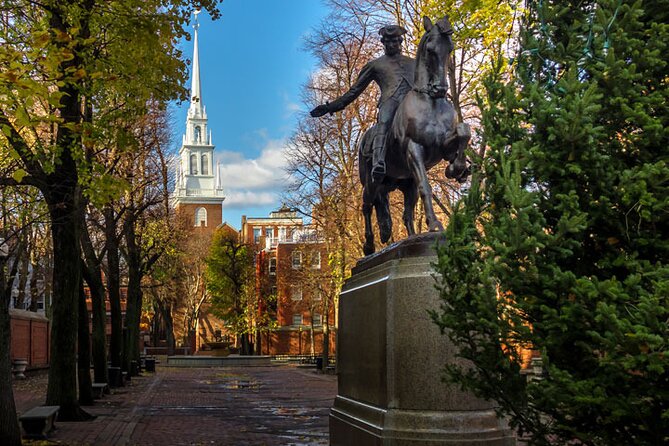
You meet at Beacon St @ Park St in Boston, starting at 10:00 am. That’s a smart choice because it places you in the middle of the action right away, with an easy connection to public transportation.
What I like most about this start is how quickly you’re placed into Massachusetts government and Boston’s political pulse. The first stretch sets the tone: you’re not wandering around randomly. You’re stepping into the places where decisions were made, then watching how those decisions created backlash.
One practical note: you’ll be outdoors for most of the time. Boston weather can shift quickly, so dress in layers and bring a rain layer if there’s any chance of wet weather.
Downtown Freedom Trail: State Power, Religion, and Protest
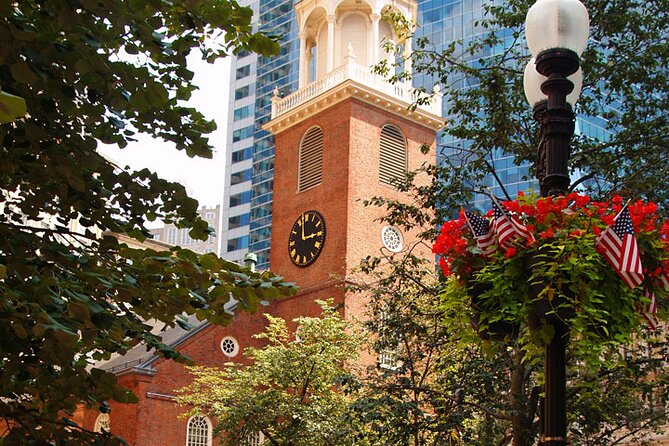
From the Massachusetts State House through the older churches and meeting places, this section shows how public life in Boston mixed politics, religion, and community pressure. These are the stops that help you understand that the Revolution wasn’t one event. It was a buildup.
Massachusetts State House: the Federal-architecture calling card
The tour begins with the Massachusetts State House, designed by Charles Bulfinch. You’ll see the trio of buildings that served as Massachusetts government seats, and you’ll get context for why this spot mattered politically. Expect about 10 minutes here, focused on what the buildings represent and how authority was organized.
Park Street Church: the fire-and-brimstone corner of reform
Next is Park Street Church, which was once the tallest building in the country. This stop also ties to abolition movement history and the idea of Brimstone Corner, known for fiery sermons and a surprise story about what was stored in the cellar. Expect around 5 minutes, but the payoff is how the guide links religious intensity to real-world reform pressure.




Granary Burying Ground: Revolution figures at ground level
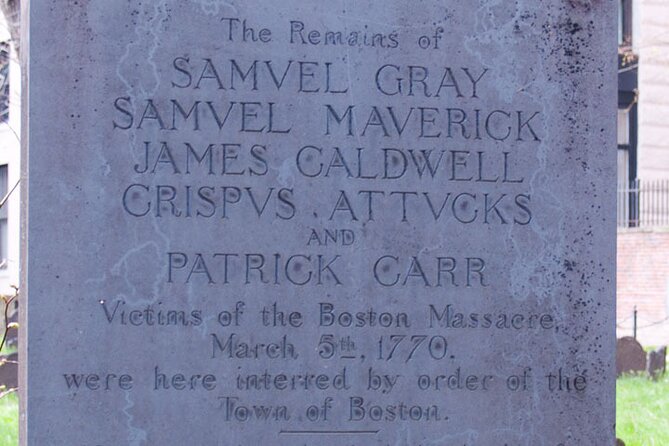
Granary Burying Ground is where the story gains a human feel. This resting place includes major figures like Samuel Adams, Paul Revere, John Hancock, and victims connected to the Boston Massacre. The tour keeps it brief (about 10 minutes), with a quick introduction to key roles and why these burials matter.
If you like history that hits emotionally, this is one of the stops that tends to land best. It’s also a good reset after the more political buildings.
King’s Chapel: when church politics turns into conflict
At King’s Chapel (1749 Anglican Church), you’ll hear about early conflicts between Puritans and the King, including the land issue that led to an unwanted church presence. Expect about 10 minutes. This is one of those stops that explains why people cared so intensely about power—because it wasn’t just laws. It was everyday life, including worship and community identity.
Old City Hall: Franklin’s presence and education markers
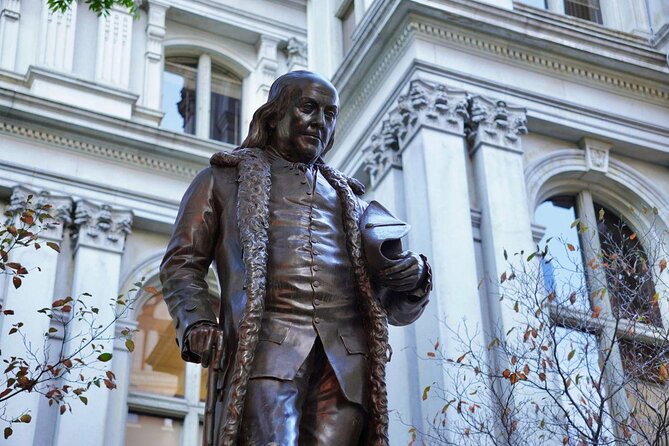
Old City Hall focuses on Benjamin Franklin and includes a marker for an older, still-operating school in the colony. The stop is short—around 10 minutes—and helps show how Boston was building institutions even while tensions rose.
Old South Meeting House: where the Tea Party story starts to lock in
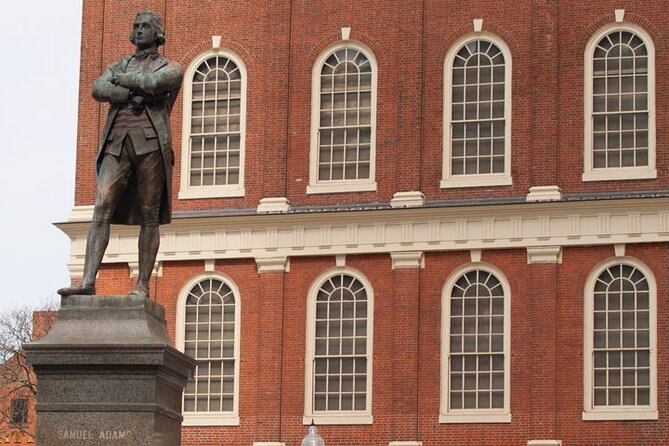
Old South Meeting House is where colonial public life gets loud. Meeting halls mattered because people heard sermons and political speeches there. This is also connected to Samuel Adams launching the Boston Tea Party—an action that practically guaranteed a war to follow.
Plan on about 10 minutes. The guide’s job here is to connect the room to the moment, so it doesn’t become just another famous building name.
Old State House: the court battle and the Boston Massacre moment
Old State House brings the spotlight to British authority and the colonial pushback. You’ll see it tied to a court battle showing disregard for colonial rights in 1761, and also connected to the Boston Massacre in 1770. Expect about 10 minutes and a framing that nudges you to think about what people believed, what they feared, and why the massacre became propaganda fuel.
This stop is often where your Revolution timeline starts feeling more complete—because courtrooms, troops, and public outrage blend together.
Faneuil Hall Marketplace: the speakers’ stage
Faneuil Hall Marketplace is known for public speaking, and here you’ll hear names and voices behind slogans like No taxation without representation. The stop also connects to Frederick Douglass as well, broadening the story beyond the earliest Revolution framing. Expect about 10 minutes, with a focus on how speeches turned into collective action.
Ebenezer Hancock House: money, print, and revolution planning energy
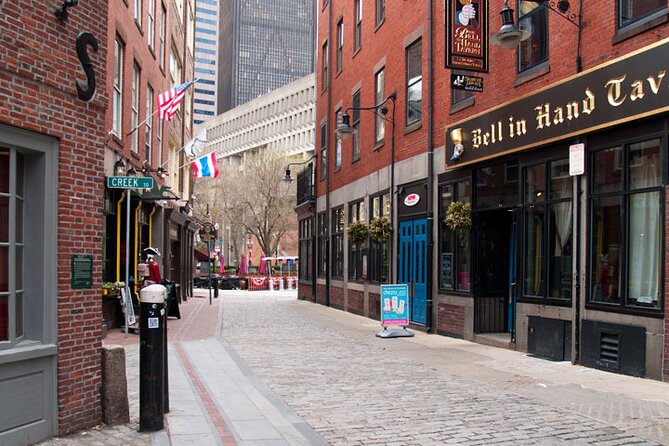
At Ebenezer Hancock House (in the Blackstone Block area), you’ll see more than one kind of revolutionary infrastructure. There are references tied to the newspaper Massachusetts Spy, and also to Headquarters of the Revolution (a bar now, but still part of the story’s physical footprint). You’ll also hear about Ebenezer Hancock’s home and how money sent from the French supported the Revolution.
Expect around 10 minutes. This stop helps you remember that revolution required supply lines, messaging, and financial support—not just bravery.
Paul Revere House: the old home where plans became possible
The Paul Revere House stop is about 5 minutes. You’ll learn that one of the oldest remaining Boston homes is tied to Revere, including the year he purchased it and the family life that filled it. This short stop works best when you treat it as a bridge: from big civic battles back to the people who carried messages and made actions possible.
Into Charlestown: Night Signals, Graves on the Hill, and Bunker Hill
Once you reach Charlestown, the tone shifts from civic buildings to survival, geography, and action. You start moving through spots that help you understand why the Revolution played out the way it did on the ground.
Old North Church & Historic Site: the signal system story
Old North Church is where you connect history to geography. You’ll hear how it was used to notify patriots across the narrow waters in Charlestown about the British march to collect guns and powder in Lexington and Concord. Expect about 10 minutes.
This stop is powerful because it makes communication feel real. It’s not abstract heroism—it’s routes, timing, and signals across distance.
Copp’s Hill Burying Ground: the terrain lesson
Copp’s Hill Burying Ground is a brief visit (around 10 minutes), but it plays a big role. The guide will use geography to help you understand the Battle of Bunker Hill fought on Breed’s Hill. You’ll also visit a grave marker with an interesting story.
If you tend to forget that battles are about hills and angles, this stop fixes that. The hill becomes a visual aid for your mental map.
Bunker Hill Monument: the battle math you can feel
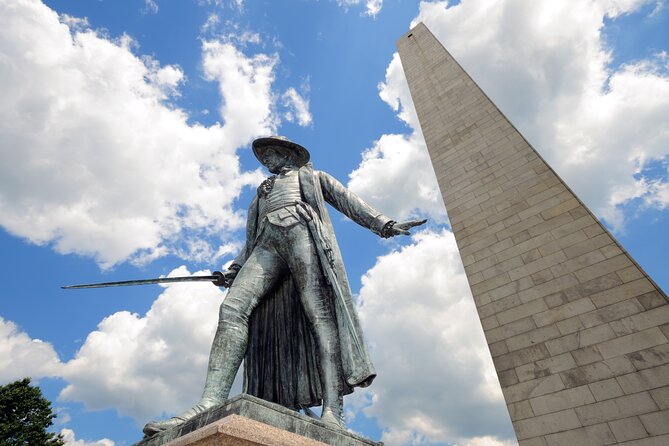
Bunker Hill Monument is about 10 minutes, and the key point you’ll leave with is the battle outcome versus the losses. You’ll hear the fighting took place on Breed’s Hill, and that British losses were triple those of the Patriots—an eye-opening detail that helps explain why the battle mattered even without a win.
USS Constitution: the finish line at Old Ironsides
The tour ends at the USS Constitution Museum area in Charlestown Navy Yard, right by Building 22, and your final stop is USS Constitution itself—oldest commissioned war ship in the world, known as Old Ironsides. Expect around 10 minutes, with the guide explaining service both in U.S. and foreign waters.
This ending works well because it shifts your mind from political arguments to physical proof of naval power. It’s also a clean way to end: one landmark, one direction, and a satisfying finale.
Value at $79: What You Get and How to Make It Pay Off

At $79 per person for a tour that’s around 4 hours and covers about 2.8 miles (4 km) plus major Charlestown stops, the value is in the guide and the order. You’re paying for narration that turns “here’s a church” into “here’s why that church mattered,” and you’re also paying for the route planning that keeps everything connected.
Two included things matter more than they look:
- A narrated tour of the entire Freedom Trail, with Bunker Hill and USS Constitution added to the end.
- A guide gratuity not expected or accepted, so you can focus on the experience rather than figuring out social rules mid-tour.
What’s not included is just as important. Admission to interiors isn’t included, so you’ll mostly view buildings and sites from outside. Some stops are marked as free, but don’t assume you’ll get museum-level access without extra cost.
My practical advice: treat this tour as your history backbone. Afterward, pick one or two places you want to go inside, rather than trying to do everything in one day and getting burned out.
Pacing, Comfort, and Who This Tour Fits Best
This is a moderate fitness walking tour. You should expect lots of walking and a city feel, including stairs and curbs along the way. Even though the stop times are short, the total walking adds up.
This suits:
- History-focused visitors who want a connected timeline
- Families with teens who can handle a structured, story-driven walk
- Couples and groups who like to ask questions and get explanations on the spot
It may not suit:
- Anyone who needs long sitting breaks or has trouble with steady walking for about 4 hours
- People who want mostly indoor time
One helpful thing from how the tour is run: the pace is kept manageable, and the group size stays small. That combination makes it more comfortable for mixed ages, as long as everyone can keep walking.
And bring comfortable shoes. If you don’t, you’ll spend the best parts of the day thinking about your feet.
A Few Smart After-Tour Moves
When you finish near the USS Constitution area, you’re positioned to keep exploring Charlestown and the Navy Yard zone at your own tempo. If you still want a snack or a classic Boston meal, get your bearings and then pick something close.
Also, a guide tip you may want to borrow: James Hook & Co is often recommended for lobster rolls, and it’s the kind of reward that feels earned after a history walk.
Should You Book This Freedom Trail Tour?
Book it if you want one guided outing that ties Boston’s Revolution story together—downtown politics, meeting halls, church conflicts, signal nights, and Bunker Hill, ending with USS Constitution. This is also a strong choice if you don’t want to plan a route yourself.
Skip it or choose carefully if you dislike long walking days, need mostly indoor stops, or expect that you’ll be entering lots of buildings without extra admissions. This tour is built around streets, monuments, and short stops that keep the narrative moving.
FAQ
How long is the Freedom Trail walking tour?
The tour runs for about 4 hours.
How far do you walk?
It covers the full Freedom Trail route of about 2.8 miles (4 km).
What time does the tour start, and where does it meet?
It starts at 10:00 am and meets at Beacon St @ Park St, Boston, MA 02108.
Where does the tour end?
It ends at the USS Constitution Museum Building 22 in Charlestown Navy Yard, concluding at Old Ironsides.
What’s included in the $79 price?
You get a four-hour narrated walking tour of the entire Freedom Trail, and the guide gratuity is not expected or accepted. You also receive a mobile ticket.
Are museum and building interiors included?
Admission to interiors is not included.
How big is the group?
The maximum group size is 16 travelers.
What happens if the weather is bad?
This experience requires good weather. If it’s canceled due to poor weather, you’ll be offered a different date or a full refund.
Can I cancel for free?
Yes, you can cancel for a full refund up to 24 hours in advance of the experience start time.