REVIEW · BOSTON
Boston: Freedom Trail History Small Group Walking Tour
Book on GetYourGuide →Operated by Hub Town Tours · Bookable on GetYourGuide
Boston’s Revolution is right on the pavement. This small-group Freedom Trail tour keeps it personal with a local guide and a tight route through Downtown and the North End. I like the small size (16 guests max), and I like how the 16 official landmarks get connected into one story.
What makes it work is the way the guide turns place into plot. Guides such as Josh, Cal, Cyprus, Nick, and Miles are repeatedly praised for clear, lively explanations that make you understand not just what happened, but why people were so torn between loyalty and rebellion.
One thing to consider: it’s still a walking tour. You’ll cover about 2.0 miles on mostly city sidewalks, and it’s not a fit for kids under 6 or for people with low fitness (even though an accessible route is mentioned).
In This Review
- Key Highlights That Make This Freedom Trail Tour Worth It
- Why the Freedom Trail Feels Different on This Walk
- Price and Time: Getting 16 Landmarks Without Museum Admissions
- Starting at Boston Common: Your First Anchor Point
- Boston Common to the State House: From Community Rules to Political Power
- What to watch for
- Granary Burying Ground and the King’s Chapel Chain of Meaning
- Why this portion is worth slowing down
- The Old City Core: Latin School, Franklin, and Public Institutions
- Old South Meeting House and the Old State House: Where Protest Turns Risky
- How guides like Cal and Cyrus fit in here
- Faneuil Hall and Quincy Market: The Public Square Break
- Paul Revere House and Hanover Street: Turning Historical Icons Into Real People
- Tip for getting more out of these stops
- Old North Church to Copp’s Hill: The North End Finale With Big Views
- What It Feels Like: The Tour Style That Gets High Marks
- Who Should Book This Freedom Trail Tour (and Who Should Skip It)
- Practical Tips So You Don’t Waste Time on the Day
- Should You Book Hub Town Tours for the Freedom Trail?
- FAQ
- How long is the Freedom Trail walking tour?
- How many people are in the group?
- Where does the tour start?
- Where does the tour end?
- Does the tour include the full Freedom Trail?
- Is museum admission included?
- Is it wheelchair accessible?
- What should I wear or bring?
- Are kids allowed?
- Can I record videos during the tour?
- Is cancellation flexible?
Key Highlights That Make This Freedom Trail Tour Worth It
- Small group size (16 max) keeps the pace friendly and questions more likely to get answered
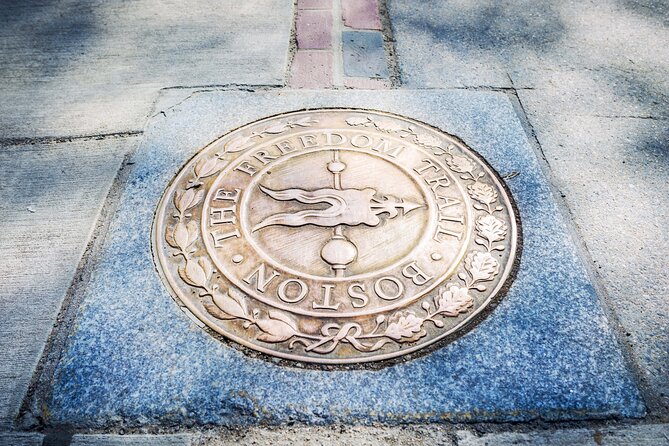
- All 16 official Freedom Trail landmarks are covered in one guided loop
- Revolution stories built around your stops so the names start to mean something
- Granary Burying Ground, Old South, and the Old State House are treated as turning points, not photo stops
- North End finale at Copp’s Hill Terrace with views toward USS Constitution and Bunker Hill
- Guides with strong stage presence (people like Josh, Cal, Nick, and Miles) help the history feel alive
Why the Freedom Trail Feels Different on This Walk
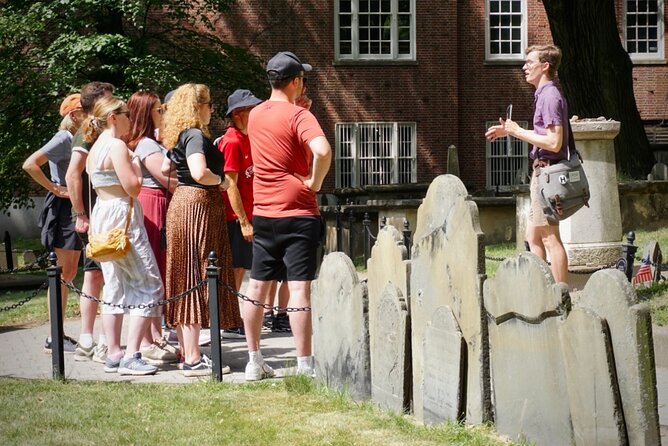
The Freedom Trail can be done on your own, sure. But on foot with a guide, it stops being a list of red-brick lines and becomes a timeline you can actually follow.
This tour is especially good if you want the “why” behind the American Revolution—how ordinary people in Boston wrestled with the choice between crown and country. You’ll move through the center of town where the conflict wasn’t abstract. It was neighbors, meetings, arguments, pamphlets, arrests, and public intimidation.
And since it’s a small-group format, you’re less likely to get swallowed by tour crowds. That matters on a trail that runs through busy streets and tight historic blocks.
You can also read our reviews of more tours and experiences in Boston.



Price and Time: Getting 16 Landmarks Without Museum Admissions
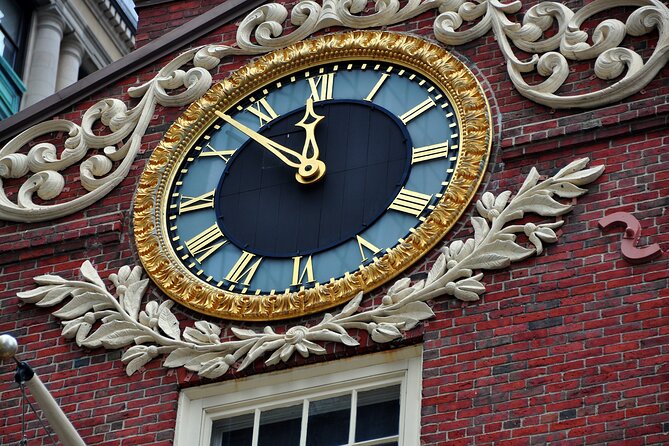
At $39 per person for about 2.5 hours (and no more than 3 hours), you’re paying for structure: a guide, a walking plan, and time spent making the connections between sites.
Here’s the practical math. You’re covering roughly 2.0 miles and seeing the Freedom Trail’s full set of 16 official stops. You’re also getting guided tours at most sites, plus a short break near Quincy Market. That’s a lot of real estate in one session, and it’s hard to match on a DIY plan if you care about context.
One tradeoff: museum admission isn’t included. That’s not a dealbreaker, because the stops are still meaningful from the outside or through guided site access, but it does mean you might not walk into everything you’d like if a particular building has ticketed interiors.
Starting at Boston Common: Your First Anchor Point
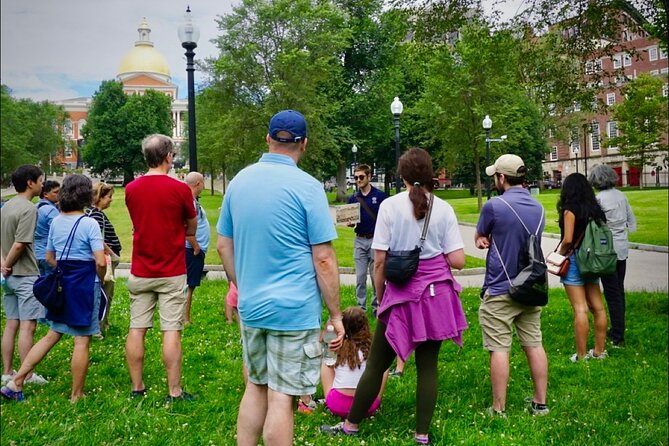
You begin inside Boston Common, at the Boston Foundation Monument on the northern boundary—opposite 50 Beacon Street. The granite monument has a bronze relief showing two men shaking hands around the time the Puritans arrived in 1630.
This is a smart first stop because it frames the whole tour: Boston didn’t start as a rebel fantasy. It started as a serious community with its own rules and loyalties. Once you get that foundation, the later “loyalty vs. rebellion” tension makes more sense.
From here, the group moves into the heart of the city, where government and public life create most of the drama.
Boston Common to the State House: From Community Rules to Political Power
A quick guided stop on Boston Common sets the stage. Then you move through the area tied to political authority—starting with the Massachusetts State House (with a guided introduction).
Next comes Park Street Church in Boston, where you’ll get context on the kinds of public spaces that shaped civic life. Places like this matter on the Freedom Trail because the Revolution wasn’t only military. It was also political theater.
What to watch for
Keep your eyes on how the tour explains power and persuasion. When the guide connects the dots between meetings, government, and public pressure, the trail starts feeling like a single argument unfolding across decades.






Granary Burying Ground and the King’s Chapel Chain of Meaning
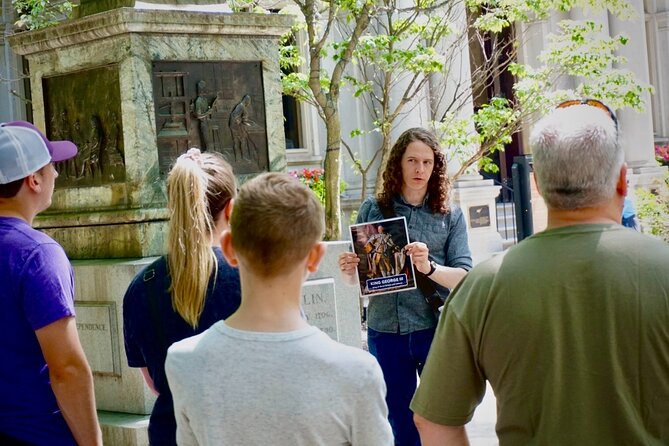
At Granary Burying Ground, you get a longer guided stop (about 25 minutes). This cemetery is one of those stops where the names on stones become a story—because Revolutionary-era Boston was small enough that influence and legacy often overlap.
Then you head to King’s Chapel, another guided stop. In Boston, religious institutions weren’t separate from politics; they were part of the public conversation. That’s exactly the kind of detail that helps you understand why “loyalty” was complicated and personal.
Why this portion is worth slowing down
The Freedom Trail can feel like it’s sprinting from site to site. The Granary Burying Ground stop gives you breathing room, and that helps the later events land harder—especially when you reach the public confrontations.
The Old City Core: Latin School, Franklin, and Public Institutions
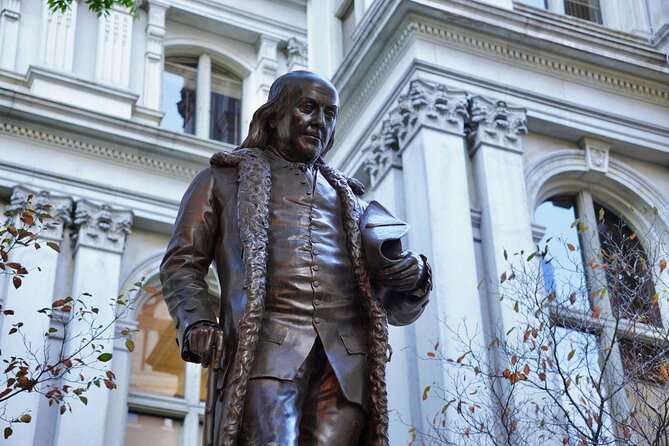
You pass Boston Latin School and the Benjamin Franklin Statue. Even if you’ve heard Franklin’s name a hundred times, this is a good moment to place him in Boston’s lived environment—schools, civic figures, and ideas moving through real streets.
Next comes Old City Hall Boston. Stops like this help you see Boston’s continuity. The buildings change, but the roles—governing, organizing, speaking—keep showing up.
Then you’ll visit the Old Corner Book Store. It’s a reminder that publications and information distribution were a big part of the Revolution’s momentum. If you’re the type who likes the “words that changed everything,” this is where the tour gives you that angle.
Old South Meeting House and the Old State House: Where Protest Turns Risky
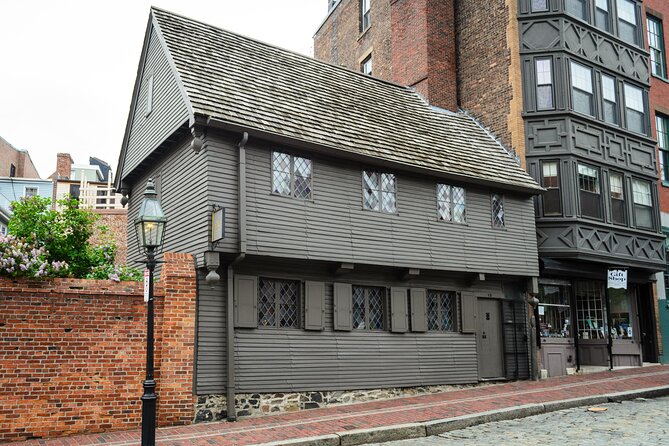
Now the story shifts from institutions to conflict.
At the Old South Meeting House, you’ll get a guided stop focused on the public energy of the era (about 10 minutes). You’re seeing the setting where collective action became unavoidable.
Then it’s the Old State House. This is one of the key landmarks for Revolutionary Boston, and the guided explanation helps you connect the political stakes to specific events tied to the building.
After that comes the Boston Massacre Site (about 15 minutes). This is where the tour’s value really shows. The guide’s job is not only to point at a location, but to explain the tension that made violence more likely than you’d expect.
How guides like Cal and Cyrus fit in here
In the feedback data, guides such as Cal and Cyrus are praised for performance style—turning complicated moments into clear scenes. That matters most at these stops, because “massacre happened here” is not enough. You need the context around blame, fear, and crowd dynamics.
Faneuil Hall and Quincy Market: The Public Square Break
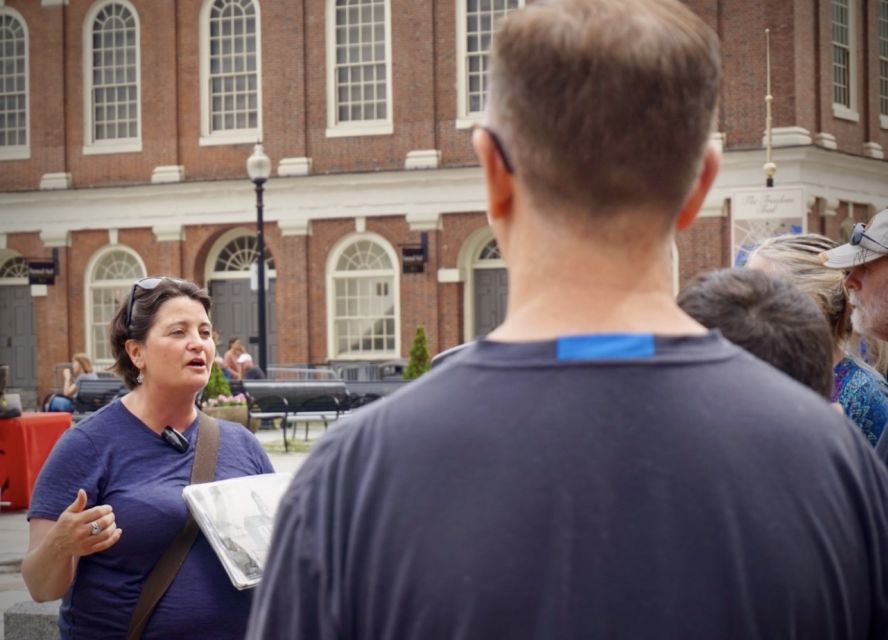
At Faneuil Hall, the guided stop is short (about 5 minutes), but it’s placed perfectly. You’ve already been through the conflict buildup, so arriving here feels like watching the public sphere take center stage again.
Then you have a break time at Quincy Market (about 10 minutes). This is practical. Your legs and your mind both need a pause after several tightly guided stops.
If you want to keep momentum, use the break strategically: grab water or a snack and circle back mentally to what the guide said about public persuasion.
Paul Revere House and Hanover Street: Turning Historical Icons Into Real People
The tour continues to the Paul Revere House with a guided stop (about 15 minutes). Revere is famous, but the value here is in making him feel less like a legend and more like a person operating in a tense city.
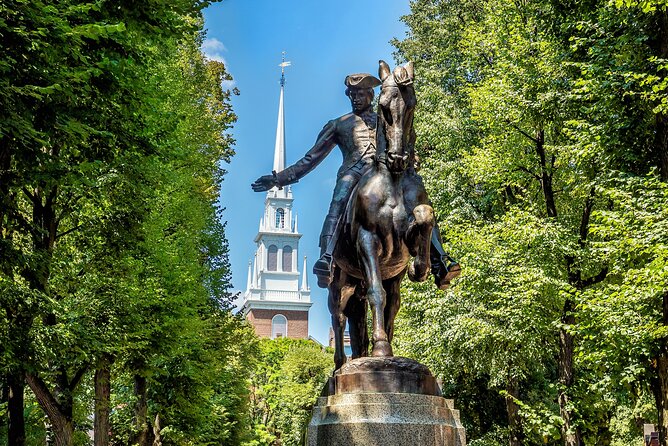
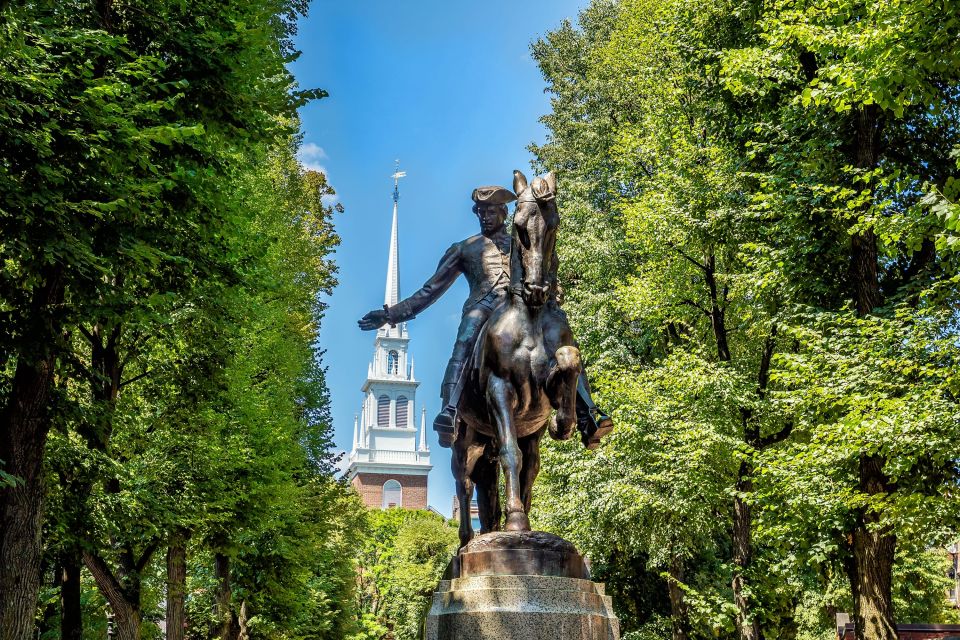
Then you walk through Hanover Street and pause near Paul Revere Statue (about 10 minutes). This section ties together symbolism and location—where the streets shaped movement, and where the statue reminds you how memory gets built after the fact.
Tip for getting more out of these stops
As you listen, try to keep one question in mind: What risks were ordinary residents taking when they sided with one side or the other? The tour is built around that loyalty-versus-rebellion tension, and Revere’s story is one of the clearest ways to feel it.
Old North Church to Copp’s Hill: The North End Finale With Big Views
Next is the Old North Church (guided stop about 10 minutes). This is a “finale energy” stop because it points toward the moment where messages, plans, and timing mattered.
Then you reach Copps Hill Burying Ground (guided stop). This adds another layer to the story: memory isn’t only written in documents. It’s also visible in where people are laid to rest.
The tour then turns scenic with views on the way to major sites across the river: USS Constitution and Bunker Hill Monument. Importantly, it provides views, not a deep visit into Charlestown.
Finally, you end at Copps Hill Terrace (guided stop about 10 minutes). It’s steps from the Old North Church area and surrounded by the kind of North End streets that make you want to linger—especially when you want Italian food after walking.
What It Feels Like: The Tour Style That Gets High Marks
The standout theme from the top feedback is how guides make the story easy to follow without turning it into a lecture.
Names that come up with strong praise include:
- Josh for making the experience vivid
- Nick for answering questions and keeping the tour on track
- Miles for witty, energetic storytelling
- Lin and Cal for engagement across the group
- Mark and Matt for performance-style storytelling that makes the Revolution feel real
You’ll probably notice that your group keeps moving, but you’re not rushing through facts. The guide is doing something that’s hard to DIY: they’re arranging the sites so your brain forms a timeline.
Who Should Book This Freedom Trail Tour (and Who Should Skip It)
This is a great fit if:
- you want an efficient way to see all 16 landmarks in one outing
- you care about the Revolution’s cause-and-effect, not just dates
- you like asking questions and getting direct answers in a small-group setting
Consider skipping or choosing another format if:
- you have low stamina for steady walking (about 2.0 miles)
- you’re traveling with children under 6 (it’s not suitable for them)
- you need a route that’s consistently comfortable for mobility impairments (the activity’s guidance is mixed, so you’ll want to be careful here)
Practical Tips So You Don’t Waste Time on the Day
A few small things make a big difference on a walking tour this focused:
- Wear comfortable shoes. You’re doing repeated short transfers across historic blocks.
- Bring weather-appropriate clothing. Boston weather changes fast, and you’re outdoors for most of the tour.
- Keep your hands free. No luggage or large bags, and video recording isn’t allowed.
- Use the Quincy Market break for essentials, not long detours—this tour keeps a steady pace.
Should You Book Hub Town Tours for the Freedom Trail?
If your goal is to understand Revolutionary Boston without spending your whole day planning routes, yes, book it. For $39, you’re getting a guided walkthrough across the Freedom Trail’s full set of 16 official landmarks, with a small-group feel and a North End finish that’s great for dinner after.
I’d especially recommend it if you like history that has teeth—where you can see how ideas became public conflict, and how people in Boston debated loyalty in real time. Just go in knowing it’s a walking experience, not a museum day, and you’ll be happy with what you get for your time and money.
FAQ
How long is the Freedom Trail walking tour?
It runs about 2.5 hours, with the total duration varying but staying under 3.0 hours.
How many people are in the group?
The tour is a small group with 16 guests max.
Where does the tour start?
It starts inside Boston Common at the Boston Foundation Monument, opposite 50 Beacon Street.
Where does the tour end?
It ends at Copps Hill Terrace in the North End area.
Does the tour include the full Freedom Trail?
Yes. It covers all 16 official Freedom Trail landmarks.
Is museum admission included?
No. Admission inside museums is not included.
Is it wheelchair accessible?
An accessible route is mentioned, and the tour is labeled wheelchair accessible. That said, it also notes it’s not suitable for people with mobility impairments, so you should consider your specific needs carefully.
What should I wear or bring?
Wear comfortable shoes and bring weather-appropriate clothing.
Are kids allowed?
It’s not suitable for children under 6.
Can I record videos during the tour?
Video recording isn’t allowed.
Is cancellation flexible?
Free cancellation is available up to 24 hours in advance for a full refund.