REVIEW · BOSTON
Boston Freedom Trail Walking Tour with Costumed Guide
Book on Viator →Operated by The Salem Night Ghost Tour · Bookable on Viator
Historic Boston feels closer on this guided walk. You cover the Freedom Trail’s densest stretch with a costumed guide who brings the Revolution era to life, with humor you can actually follow. I like that the pacing is built for a one-time first visit, with key photo moments and clear takeaways rather than a long grind. I also love that you end up positioned near Faneuil Hall and the North End, so the tour naturally turns into your next meal plan. One possible drawback: because the talk blends storytelling and comedy, the facts can feel a bit less detailed if you’re hoping for a heavy lecture-style stop-by-stop breakdown.
The route hits the big hitters—Massachusetts State House, Park Street Church, Granary Burying Ground, Old South Meeting House, Old State House, and more—without forcing you to push all the way across town. Expect a guide in period costume taking on a named persona (I’ve seen guides character as Ben, Mother Goose, and other Revolutionary-era figures), which changes the whole tone from standard sightseeing to something more memorable. Still, if you get stuck near the back, you may struggle to hear every detail at busy stops—especially around the busiest memorial and church-area sidewalks.
This is the kind of tour that works best when you’re okay with a guided storyline. It’s not meant to be quiet, museum-style reading time. If you want maximum time at cemeteries or want to go inside buildings, you should know some stops are brief, and some entrances are not included.
In This Review
- Key things to know before you go
- Freedom Trail in costume: what the 1.5-hour format is really for
- Value at $26: why this short guided walk is worth it
- Getting oriented: where you meet and how the tour flows
- Stop-by-stop: the Freedom Trail’s core sites, explained in plain language
- Massachusetts State House: the Revolutionary government vibe
- Park Street Church: a famous first performance
- Granary Burying Ground: where the names feel real
- Boston Latin School: the first public school, with famous alumni
- The oldest commercial building publishing stop: books that shaped culture
- Old South Meeting House: the Tea Party, right at the scene
- Old State House: the Boston Massacre story
- Samuel Adams statue: a famous name with an accuracy twist
- Paul Revere House and Paul Revere Mall: the finishing rhythm
- The guide experience: why the tone matters as much as the facts
- Timing and pacing: what to watch so you don’t miss the best moments
- Weather and comfort: dress for shade, wind, and cold
- Before you book: who this tour suits best
- Should you book this Freedom Trail walking tour?
- FAQ
- FAQ
- How long is the Boston Freedom Trail walking tour?
- What is the price per person?
- Where does the tour start and end?
- Is the tour offered in English?
- Do I need to print a ticket?
- Are there multiple departure times?
- Will I be able to visit buildings inside?
- How many people are on a typical tour?
- Does the tour run in bad weather?
- Is free cancellation available?
Key things to know before you go

- Costumed storytelling: Your guide plays a period character and uses humor to keep you engaged.
- Perfectly short walking window: Around 1 hour 45 minutes, with stops that add up fast but stay manageable.
- A dense Freedom Trail slice: You pack in major sites in the heart of Boston without walking the longest stretches.
- Granary Burying Ground takes time: It’s one of the most story-driven stops and often runs longer than you expect.
- You’ll end near Faneuil Hall and the North End: Easy to roll straight into dinner and more sightseeing.
- Group size capped at 50: Large enough for energy, small enough to keep control, but still smart to stay close for hearing.
Freedom Trail in costume: what the 1.5-hour format is really for
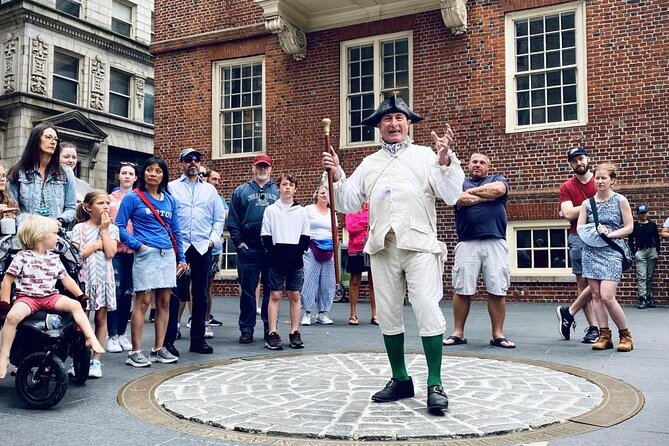
Boston’s Freedom Trail is famous, but doing it solo can feel like reading a list. This tour fixes that fast. Instead of you trying to stitch together why each spot matters, you get a guide who connects the dots as you walk—so the places stop being random and start feeling like a story.
The costume detail isn’t just for photos. It changes how the guide talks and what you notice. I like it because it keeps the walking fun in weather that can turn chilly quickly. When the guide is in-character, you’re more likely to remember the names tied to the locations and the chain of events they reference.
The timing also matters. At about 1 hour 45 minutes, you’re not stuck in a full afternoon plan. That’s a big plus if you’re doing other Boston highlights the same day—because you can slot this in before a museum visit, before dinner, or right after you arrive in town.
You can also read our reviews of more tours and experiences in Boston.



Value at $26: why this short guided walk is worth it
At $26 per person, you’re paying for three things: narration, pacing, and convenience. The sites on the Freedom Trail can absolutely be visited without paying for a guide, but you’ll likely spend more time figuring out what to look at and why it matters.
Here’s where the value shows up:
- You save decision fatigue. You follow a planned sequence and don’t have to guess which stop will be the most meaningful.
- You get context you won’t find on a quick glance. The guide ties events and people to specific landmarks, including stories that are easy to miss when you’re just passing by.
- You get a clean end point for the next activity. Finishing near the Faneuil Hall area and the North End makes the tour feel like a hub rather than a standalone walk.
The best comparison is effort. This is short enough that you keep your energy for the rest of Boston, yet long enough that you actually cover the Revolution-era core.
Getting oriented: where you meet and how the tour flows
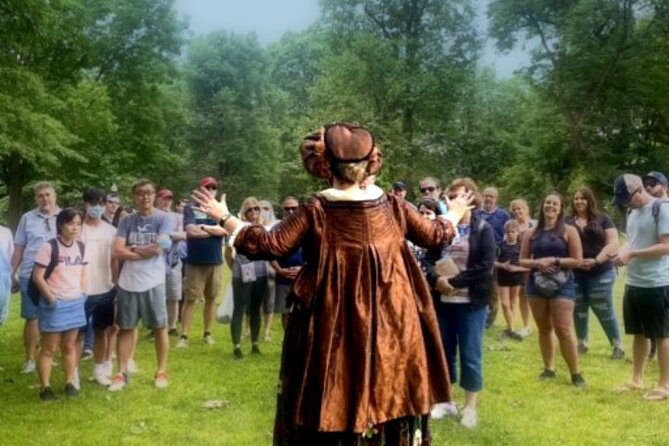
You meet at Paul Revere Mall and finish back in the same general area. That loop design is practical: you’re starting your Freedom Trail day from a central point that’s easy to reach, and you’re not forced to end somewhere inconvenient for your next stop.
The tour is designed to be easy on your feet. It’s a walking experience, so you should wear comfortable shoes, but it isn’t framed as a strenuous hike. Reviews mention it being workable for a wide spread of ages, including kids and seniors, which tells you the pace is generally controlled rather than sprint-style.
You’ll also get multiple departure times (so you can match it with your day). If you’re traveling in a shoulder season or in windy months, I’d pick a time that gives you enough daylight for photo stops and for the outdoor parts afterward.
Stop-by-stop: the Freedom Trail’s core sites, explained in plain language
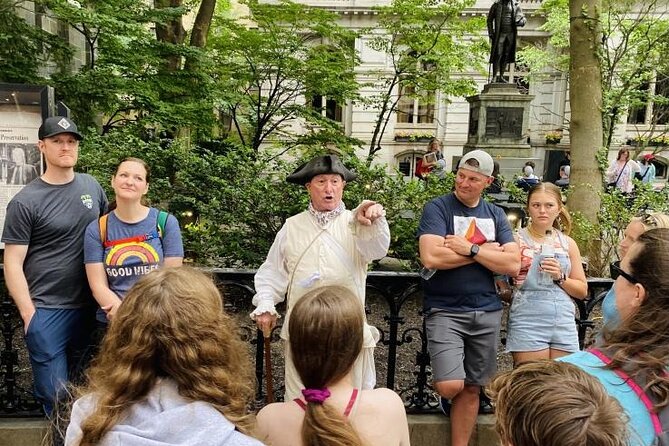
Massachusetts State House: the Revolutionary government vibe
The tour begins with a stop at the Massachusetts State House. This is the gold-domed centerpiece built in 1798, and it sets the tone. Even if you don’t go inside, it’s a powerful landmark to anchor your understanding of how government looked and operated around the time of the Revolution.
At this stop, you’ll hear the kind of context that helps everything else click: why leaders cared about institutions, and how the founding story wasn’t just battles and speeches, but also the growth of local governance. It’s a brief stop (around 10 minutes), so come with your eyes open and don’t expect long museum reading.
Practical note: there’s often street activity nearby. Keep your group together so you’re ready to move when the guide signals.




Park Street Church: a famous first performance
Next you’ll stand near Park Street Church, a classic Freedom Trail stop. Here the guide focuses on the church’s role in early American public life. One detail that stands out is the story that My Country, ’Tis of Thee was performed for the first time on Independence Day in 1831 near the church steps.
That kind of detail is exactly why I think guided tours beat DIY for first-timers. You get cultural breadcrumbs, not just political history.
Granary Burying Ground: where the names feel real
Then comes Granary Burying Ground, often the emotional anchor of the whole walk. This is the cemetery where you’ll hear about Sam Adams, John Hancock, Paul Revere, James Otis, victims of the Boston Massacre, and Declaration signers, plus many other colonial-era names.
This is where time management can matter. Some groups feel like this stop runs long, and it’s understandable. The guide has a lot to connect here, and the setting begs for slower attention. If you’re the type who wants every story explained, you’ll appreciate that. If you’re more focused on covering everything quickly, this is the part you may feel most aware of time.
My advice: go in prepared to pause. Bring a little curiosity, not a stopwatch mindset. This is where the Revolutionary cast stops being distant names and starts looking like real people with real proximity to history.
Boston Latin School: the first public school, with famous alumni
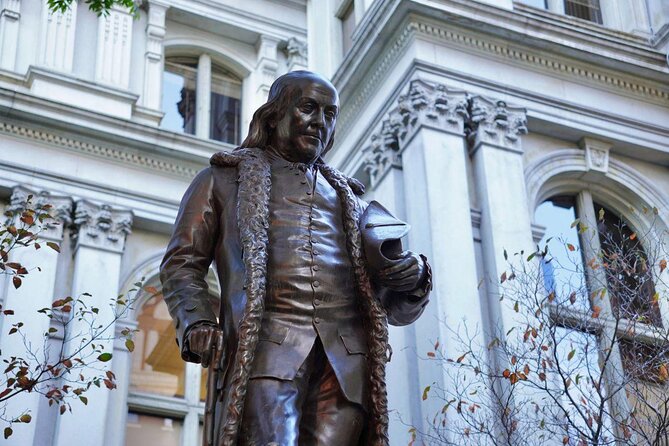
After the cemetery, you’ll see Boston Latin School, described as America’s first public school. The guide’s focus here is the school’s long reach into American intellectual life, including alumni like Benjamin Franklin and Samuel Adams, along with a view of the Benjamin Franklin statue nearby.
This stop works well because it shifts you from events to institutions again. Instead of only asking what happened, you start thinking about how education shaped leadership.
If you’re traveling with kids or teens, this is one of the more “connectable” stops: it helps them see that Revolution-era ideas weren’t just slogans, but systems and training.
The oldest commercial building publishing stop: books that shaped culture
You’ll also pause at a Boston’s oldest commercial building area tied to major American publishing. The stories here aren’t about printing presses for their own sake; it’s about what got published and why that matters culturally.
You’ll hear that Nathaniel Hawthorne’s The Scarlet Letter, Thoreau’s Walden, and Longfellow’s Midnight Ride of Paul Revere were all published there. Even though these works span different periods, the connection shows how Boston became a hub for making ideas travel.
This stop is brief, so don’t treat it like a reading experience. Treat it like a signpost: you’re being told that books and public memory are part of the Freedom Trail too.
Old South Meeting House: the Tea Party, right at the scene
Next is the Old South Meeting House, where you’ll hear about the Boston Tea Party. This is one of those spots where the guide can point and make the moment feel staged, not abstract.
You’ll also hear about the Paul Revere Bell, tied to this broader ecosystem of revolution-era communication. Again, it’s the sort of link that’s easy to miss if you just walk past.
Old State House: the Boston Massacre story
Then you’ll stand at the Old State House. This is where the guide tells the story of the Boston Massacre. This stop helps you understand why the Revolution gained traction: events didn’t just happen on paper; they played out in public spaces with real consequences.
Because the stop is around 15 minutes, aim to absorb the sequence and the cause-and-effect. If you try to memorize every name, you’ll feel behind. Instead, focus on the central chain: tension, escalation, and the way public violence turned into political momentum.
Samuel Adams statue: a famous name with an accuracy twist
Near Faneuil Hall area, you’ll stop by a Samuel Adams statue spot and hear the story of his inaccurate statue. That detail is fun but also useful because it highlights something important about public memory: monuments are part art, part politics, and part storytelling.
If you like noticing these little discrepancies, you’ll enjoy this stop. It also works as a reminder that history isn’t only in textbooks—it’s in what cities choose to represent.
Paul Revere House and Paul Revere Mall: the finishing rhythm
You’ll also see the Paul Revere House from outside, with a story connected to the location. Then you finish near Paul Revere Mall, which is right in the area that makes it easy to keep exploring.
If you want your day to flow, this ending is a gift. You don’t have to scramble for your next ride or spend an hour backtracking. You can turn the tour into dinner and a walk through the North End streets.
The guide experience: why the tone matters as much as the facts
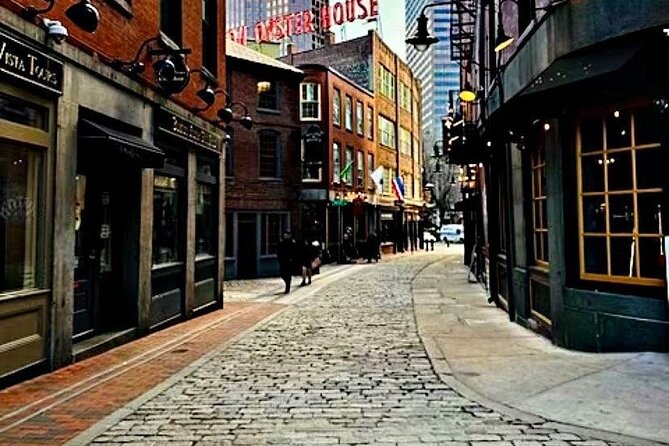
A big part of this tour’s charm is how guides play with character. I’ve seen named examples like Ben, Katherine, Elaina, Neil, and Jeremiah Poope, plus character roles like Mother Goose and other Revolutionary-era personas. The recurring pattern is humor used as a tool to keep attention.
That works really well if you want your brain to stay awake during outdoor walking. It also helps you remember details like specific names tied to stops and the “why it mattered” thread.
One caution: the balance between comedy and strict factual depth can vary by guide and by your group’s energy. If you want a heavily detailed lecture, you might find yourself wanting more context than the guide provides. If you want the Freedom Trail to feel fun and alive, this format usually lands well.
Timing and pacing: what to watch so you don’t miss the best moments

This tour is short, so your personal role is simple: be ready to move. Expect multiple stops around 5–15 minutes each, and then the storywork starts quickly again.
The one place where the tour can feel longer than expected is the Granary Burying Ground section. If you’re traveling with a stroller, managing kid energy, or trying to be on a strict schedule for later reservations, I’d plan buffer time and keep your expectations flexible.
Also, this is a group walk. If you want the most from it, stay closer to the front when you can. Reviews hint that hearing can be harder when the group gets spread out. Even if the guide speaks clearly, noise and street crossings do their own thing.
Weather and comfort: dress for shade, wind, and cold
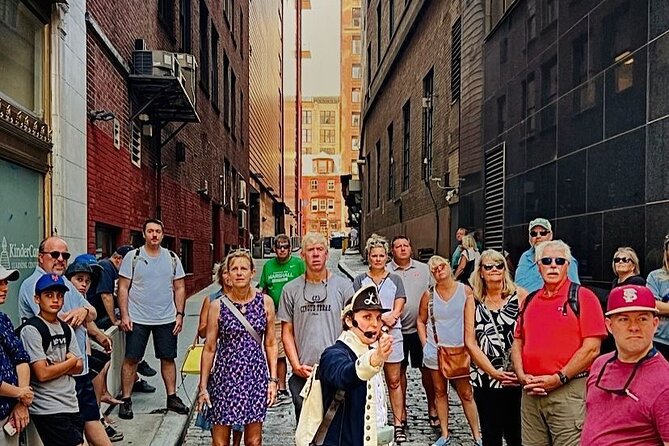
The tour operates in all weather conditions, and it’s a walking-heavy plan, so dress for outdoors—not just for the time of day you start. Some days can be cold in shaded areas, and wind can make short pauses feel longer.
Bring layers and a hat you don’t mind adjusting. Comfortable walking shoes matter more than you think because you’ll be standing and waiting at each stop. If you’re sensitive to chill, consider gloves even if the forecast looks mild.
Before you book: who this tour suits best
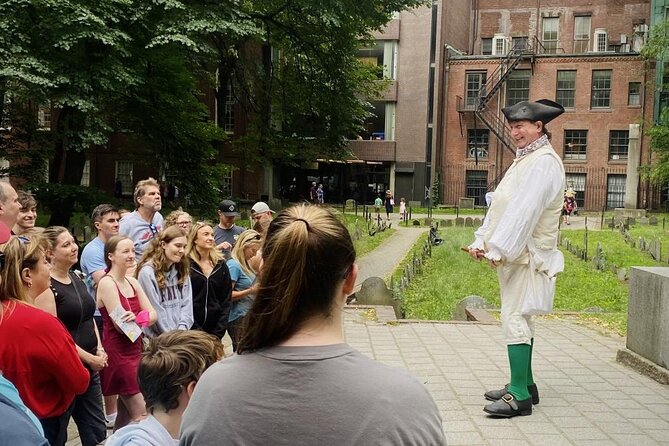
This Freedom Trail walk fits best if you want:
- a guided storyline through the Revolution-era core sites
- a shorter Freedom Trail day that doesn’t burn your afternoon
- a fun, theatrical guide with humor (including costumed characters)
- a simple plan that ends near Faneuil Hall and the North End
It’s less ideal if you:
- want to spend lots of time inside buildings (this tour focuses on outdoor stop views and brief stops)
- prefer slow, quiet reading time on your own
- want a deeply academic, lecture-heavy approach at every single location
If your goal is to get your bearings fast and leave with names and connections, you’re in the right place.
Should you book this Freedom Trail walking tour?
Yes—if you want a short, high-impact Freedom Trail experience with a guide who turns each stop into a scene. The $26 price makes sense because you’re buying narration, pacing, and context, not just walking from sign to sign. I’d book it sooner rather than later if your trip dates are set, since it’s commonly booked about two weeks out.
Skip it (or book with your expectations adjusted) if you’re the type who needs inside visits and long stops at every site. And if you’re traveling with young kids, I’d choose departure times when they’re most alert and plan to stay close enough to hear the guide clearly.
FAQ
FAQ
How long is the Boston Freedom Trail walking tour?
It runs about 1 hour 45 minutes (approx.).
What is the price per person?
The tour costs $26.00 per person.
Where does the tour start and end?
Both the start and end are listed as Paul Revere Mall, Boston, MA 02113, USA.
Is the tour offered in English?
Yes, it is offered in English.
Do I need to print a ticket?
No. You get a mobile ticket.
Are there multiple departure times?
Yes. You can choose between a range of departure times during checkout.
Will I be able to visit buildings inside?
The stops include views and stories at key landmarks. Some items are noted as not included, so you should expect mostly outdoor, brief stop experiences rather than extended interior visits.
How many people are on a typical tour?
The maximum group size is 50 travelers.
Does the tour run in bad weather?
It operates in all weather conditions, but the operator notes that it requires good weather and may offer another date or a full refund if canceled due to poor weather.
Is free cancellation available?
Yes. You can cancel up to 24 hours in advance for a full refund.
If you tell me your travel month and whether you’re going with kids or seniors, I can suggest the best departure-time strategy and what to prioritize on this route.