REVIEW · CHICAGO
Chicago: 1.5-Hour Lake and River Architecture Cruise
Book on GetYourGuide →Operated by Wendella Tours & Cruises · Bookable on GetYourGuide
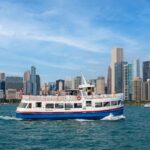
Chicago looks better from a boat. This 90-minute Chicago River and Lake Michigan cruise turns the skyline into a moving lesson, with a signature Chicago Lock transit that makes the city’s waterways feel like one connected system. You start downtown, head up the river, then swing out toward Lake Michigan for big-sky skyline views.
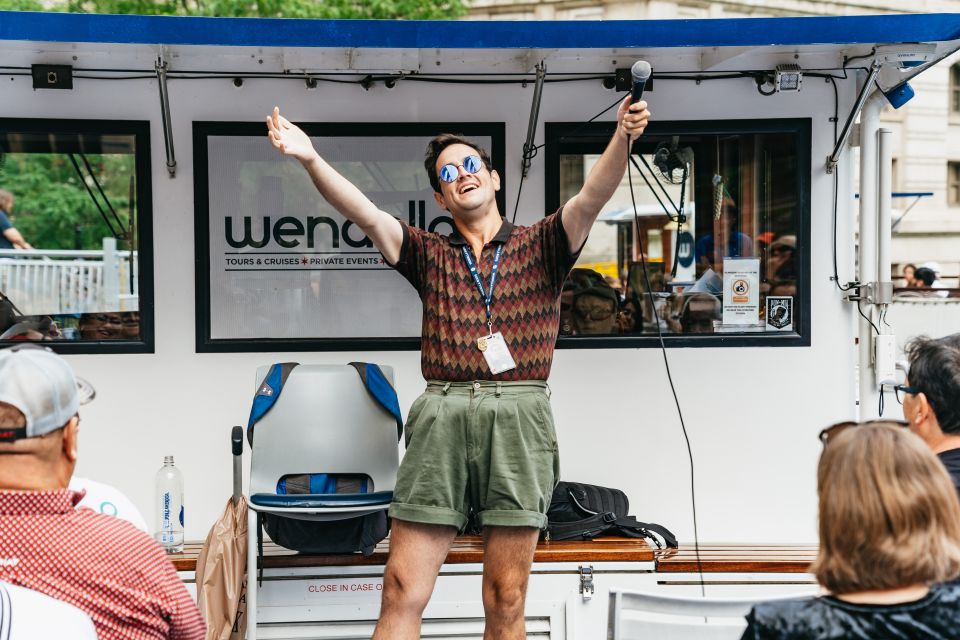
I love how the guide narration makes buildings feel personal and understandable—guides like Lucas, Kenny, Sarah, and Scotty D bring facts with humor so you’re not just staring at glass. I also really like the two seating styles: outdoor deck-top views when you want fresh air, or climate-controlled indoor seating when you want to stay comfortable.
One watch-out: boarding can involve waiting outside with limited shade on warm days, and in high summer the lock can add extra time. If you’re sensitive to heat or standing around, plan accordingly.
In This Review
- Key things I’d prioritize on this Chicago River and Lake Michigan cruise
- Why the river-to-lake route feels like the real Chicago skyline
- Meeting downtown: how to find Brainlab and the dock fast
- Boat comfort: deck-top views or climate-controlled interiors
- The Chicago Lock moment: when the route stops being scenery
- Building highlights along the river: from Marina City to the Magnificent Mile icons
- Marina City Goldberg
- Merchandise Mart
- Tribune Tower
- Aon Center and NBC Tower
- Aqua at Lakeshore East
- 360 Chicago
- Lake Michigan skyline payoff: Navy Pier to the big two (Willis and Hancock)
- Photo strategy: where the best skyline angles tend to happen
- Price and value: is $44 a fair deal?
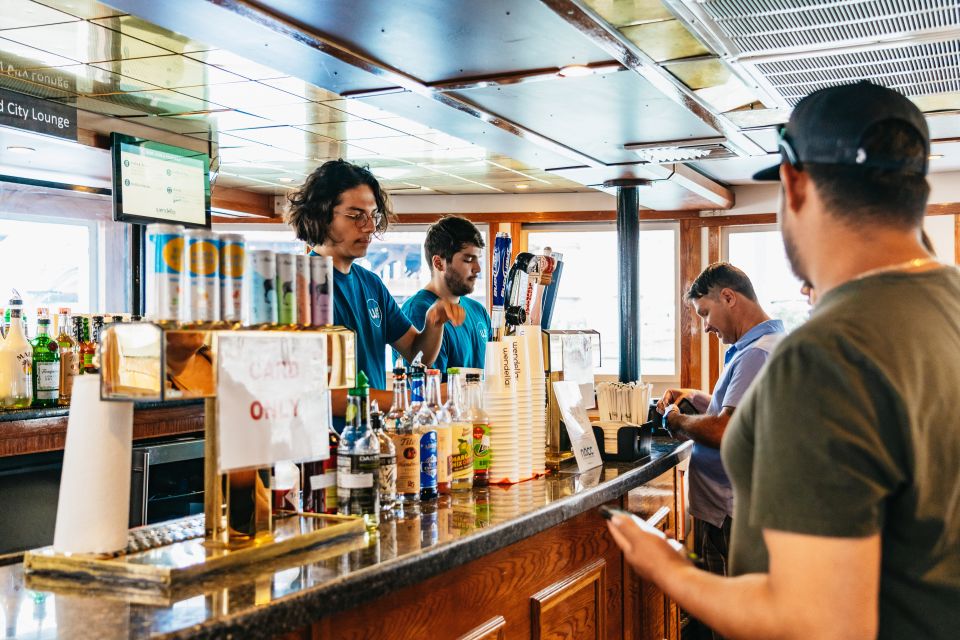
- Drinks and snacks: cash bar classics and what you can bring
- Who should book this cruise (and who might skip it)
- Should you book the Chicago 1.5-hour Lake and River Architecture Cruise?
- FAQ
- How long is the Chicago Lake and River Architecture Cruise?
- Where does the cruise start from?
- How much does it cost?
- Does the tour include a guide?
- Can I choose between indoor and outdoor seating?
- Does the cruise go through the Chicago Lock?
- Are drinks included?
- Can I bring my own food or non-alcoholic drinks?
- Are pets allowed?
- Is there free cancellation?
- What’s not allowed onboard?
Key things I’d prioritize on this Chicago River and Lake Michigan cruise
- Chicago Lock transit: the switch between Lake Michigan and the Chicago River is the main “wow” moment.
- Pick your comfort level: deck-top for photos, or indoor climate control if weather is acting up.
- A real skyline route: you’ll see downtown icons from the river and the lake, not just one side.
- Guides with showmanship: humor shows up in the best way, with guides such as Lucas, Kenny, and Sarah.
- Onboard cash bar treats: local beer and spirits plus Garrett’s Popcorn for the classic Chicago vibe.
- Good timing for photos: multiple vantage points along the route help you shoot the skyline from different angles.
Why the river-to-lake route feels like the real Chicago skyline
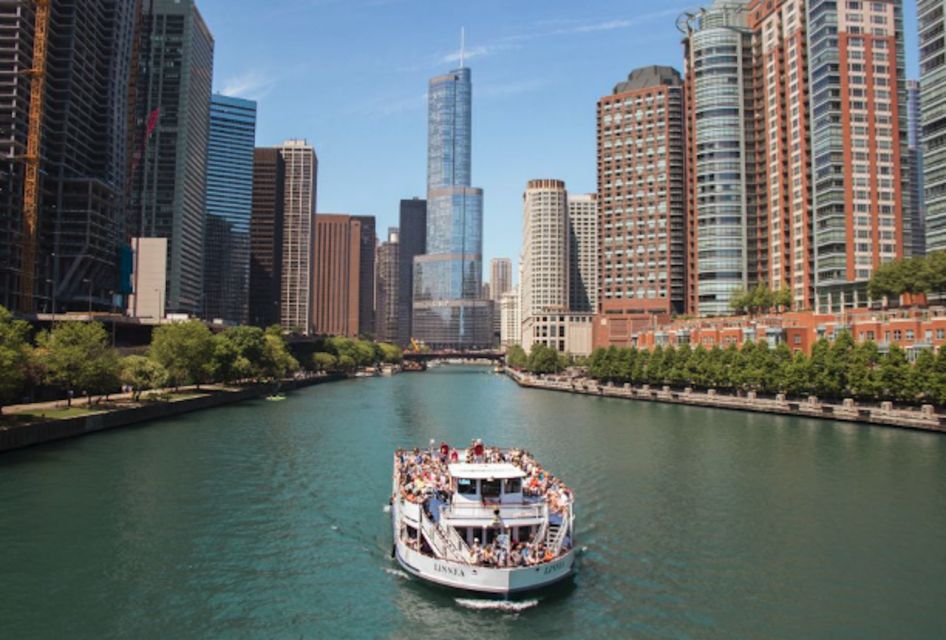
The reason I like this cruise is simple: Chicago’s story lives in both directions—up the river and out to Lake Michigan. From the boat, you get a layered view that’s hard to recreate from land. Along the river you see the city’s architectural “workhorses” and showpieces close up; out on the lake you get that wider, postcard skyline feel.
You’ll also get the kind of route that helps your brain connect the map to what you’re seeing. The cruise begins around the Michigan Avenue (DuSable) Bridge area, then runs up the main branch of the Chicago River toward Wolf Point. After that, it heads back toward the Riverwalk before turning you out toward Lake Michigan. That back-and-forth matters because many architecture cruises focus only on one world—river buildings alone or lake views alone.
It’s also a family tradition with roots going back to the 1930s, which shows in the pacing. This tour is designed to be friendly and easy to follow. It doesn’t feel like you’re racing for the next photo—your guide builds a rhythm: what you’re seeing now, why it’s famous, and how it fits into Chicago’s bigger architectural timeline.
You can also read our reviews of more tours and experiences in Chicago.
Meeting downtown: how to find Brainlab and the dock fast
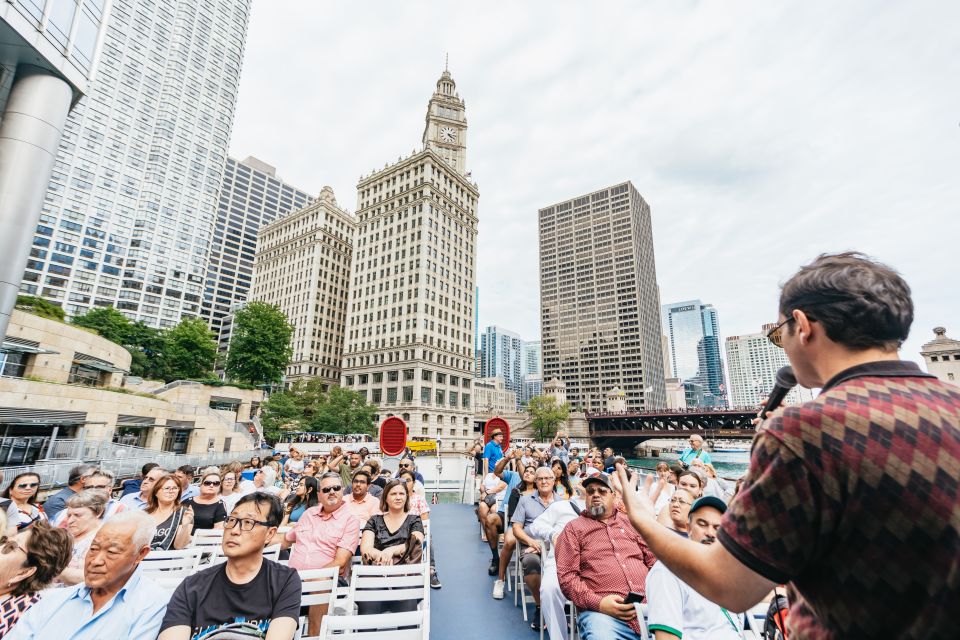
You’ll check in near downtown Michigan Avenue. The closest general dock area is listed around 400 N Michigan Avenue, near the Wrigley Building. From there, a dock employee can point you to your boarding spot.
Your actual meeting point is noted as Brainlab Training Center – Chicago, so if you’re arriving by transit, ride-share, or walking, I’d keep both in mind. The easiest strategy is to use the 400 N Michigan Avenue reference first—then follow staff directions once you’re at the dock area. In a big tourist zone like this, that small step saves time and reduces the stress of wandering with a timetable in your head.
Boat comfort: deck-top views or climate-controlled interiors
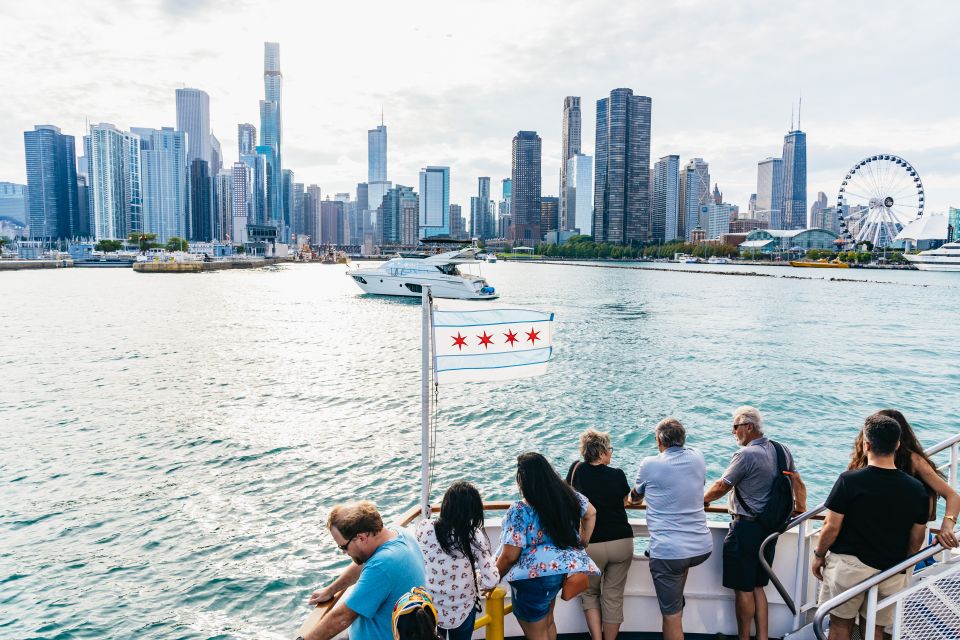
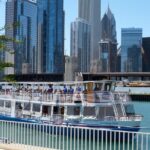
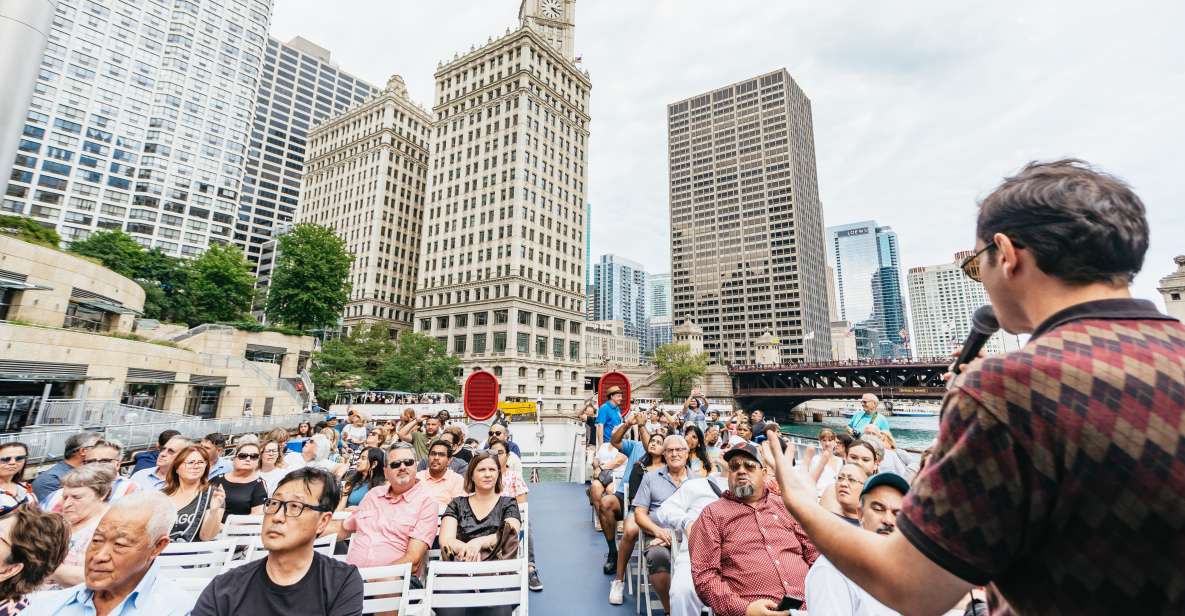
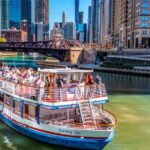
This is one of the best setup choices for a city cruise because Chicago weather changes fast. You can choose open-air deck-top seating if you want crisp views, or indoor climate-controlled seating if you’d rather ride out wind, rain, or summer heat.
On the deck, you’ll get that classic “lean into the skyline” feeling. It’s also where you’ll likely take your best photos because you’re looking outward with fewer internal barriers. On the indoor side, the experience is calmer—less wind in your face, and easier comfort if you’re traveling with kids or just don’t want to be cold or sticky for 90 minutes.
One practical detail I appreciate: the vessels have restrooms, and they include diaper changing tables. That makes the cruise more doable for families than many pure sightseeing rides.
The Chicago Lock moment: when the route stops being scenery
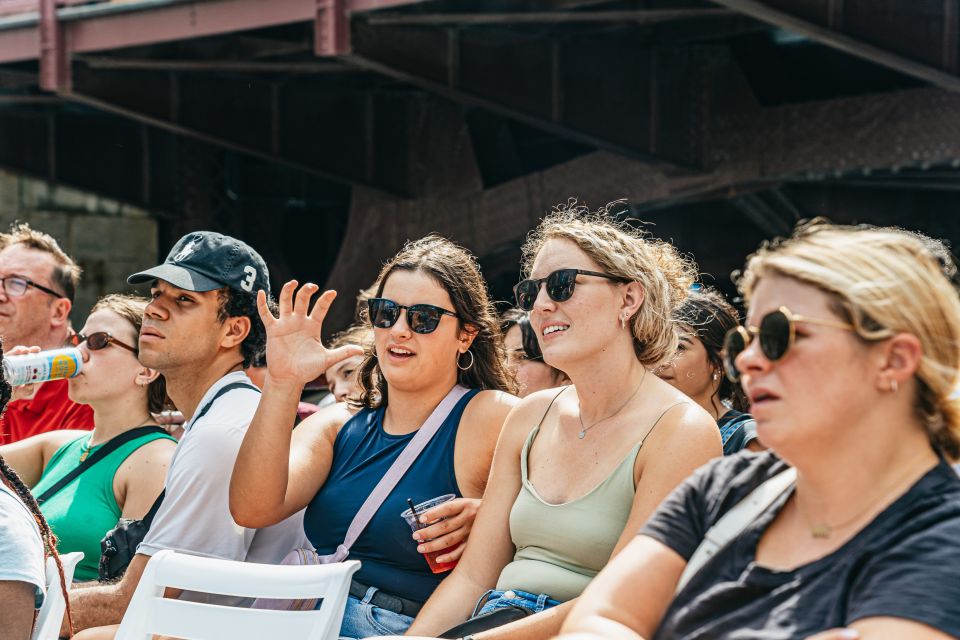
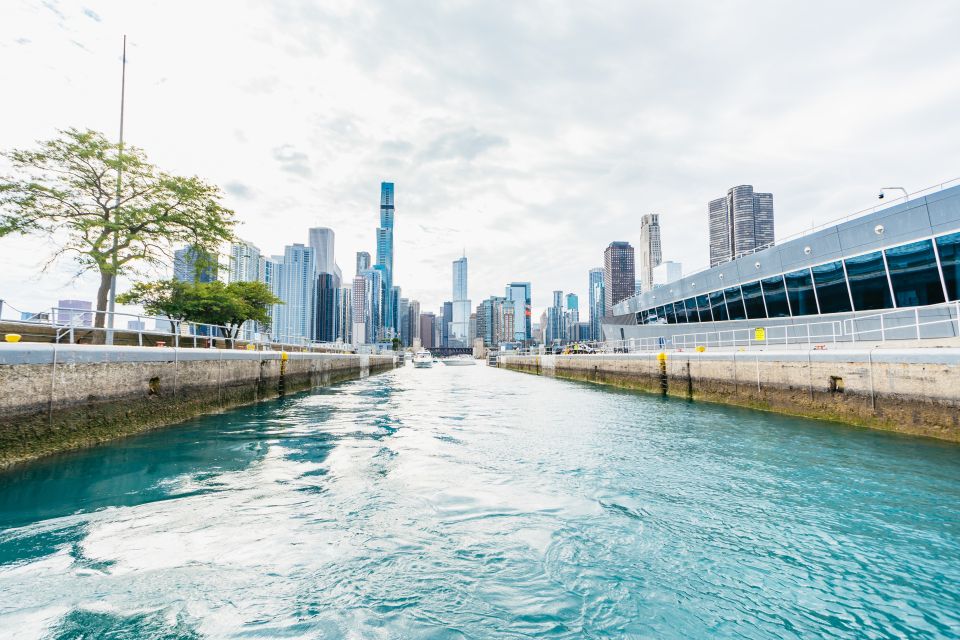
If you only remember one part, make it the Chicago Lock. The whole cruise connects Lake Michigan with the Chicago River, and passing through the lock is the physical switch that turns the city into one living water system.
Watching a lock in action changes how you think about Chicago. You realize this is a city engineered around water movement, not just a city with water nearby. Even if you’re not a “process person,” there’s still a natural curiosity factor: you’re inside the mechanism, and your guide explains what you’re seeing in plain language.
In high summer, the lock can get busy, and the tour can run slightly longer. That’s worth respecting if you’re stacking other plans the same day. If your schedule is tight, give yourself a buffer.
Building highlights along the river: from Marina City to the Magnificent Mile icons
As the boat moves through the downtown river corridor, you get a concentrated hit of Chicago’s most recognizable architecture. The river portion is where you get the “up close” feeling—tall façades, textured details, and buildings that look like they were designed to be viewed from water.
Here are the stops you’ll pass and why they’re interesting:

Marina City Goldberg
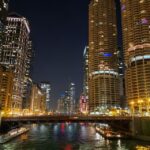
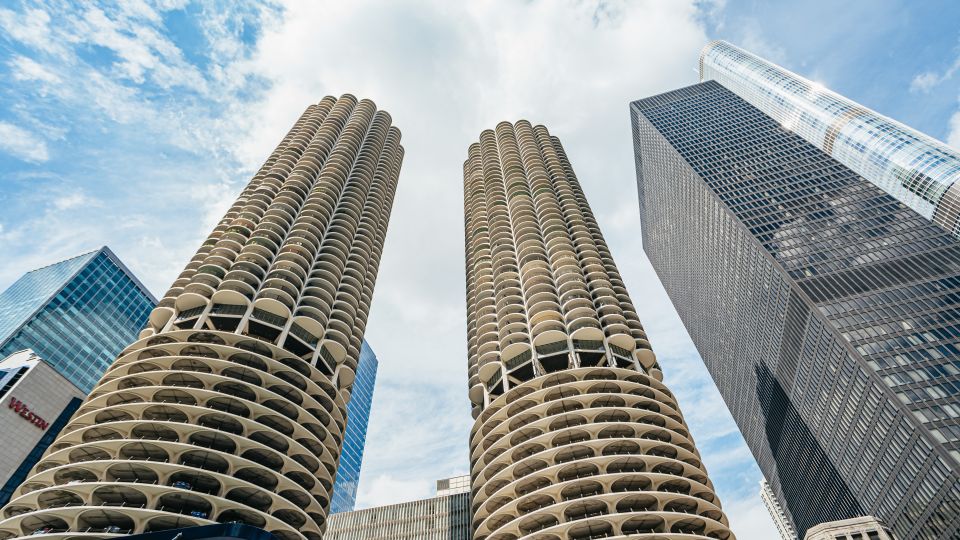
Marina City is one of the first big “wow” skyline shapes you’ll notice because it breaks the usual downtown slab-and-skyscraper look. From the river angle, it helps set the tone: Chicago isn’t one style. It’s a bunch of eras sharing the same sky.
Merchandise Mart
The Merchandise Mart is a major landmark and a good example of how Chicago commercial architecture can be as expressive as it is functional. From the water, it reads like a whole city block of history—especially when your guide ties it to why it mattered.
Tribune Tower
You’ll see the Tribune Tower as part of the downtown architecture sweep. This is the kind of building where you start noticing design choices you’d miss from a sidewalk. The guide’s job here is key: they help you translate what you’re seeing into why it became part of Chicago’s identity.
Aon Center and NBC Tower
As you move farther along the river and downtown core, the tour shifts into the mid-century-to-late-20th-century skyline. The Aon Center and NBC Tower are strong examples of how Chicago grew into height and modern corporate presence, and you’ll get a clearer sense of that from the river perspective—where reflections and angles can change the way these towers look from moment to moment.
Aqua at Lakeshore East
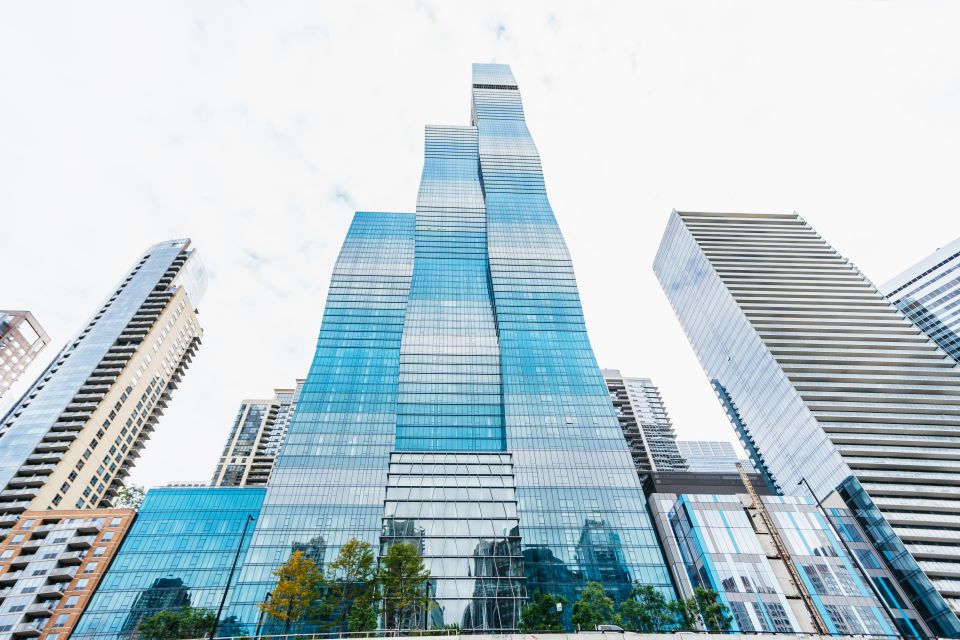
Aqua is one of those buildings people recognize instantly because it doesn’t behave like a normal skyscraper. Seeing it from the water adds a new dimension, since the curves and stacked lines visually “travel” across the skyline as the boat turns.
360 Chicago
360 Chicago is another marker that you’re getting deep into the downtown skyline, and it helps connect the navigation of the city with the view in front of you. For photo lovers, it’s also one of the easier reference points for framing the skyline because it sits in a clear visual corridor.
Lake Michigan skyline payoff: Navy Pier to the big two (Willis and Hancock)
Once you head out toward Lake Michigan, the cruise changes character. The river is vertical and tight; the lake is wide and open. That shift is exactly why combining the two routes is worth it.
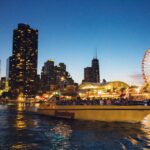
You’ll pass major waterfront spots including Navy Pier, and the larger skyline starts dominating your view. This is where you’ll get the classic Chicago feeling—the kind you usually have to work for at sunrise or from a far overlook.
From the lake side, you can also see the twin super-skyscrapers: Willis Tower (formerly Sears) and the John Hancock Building. Even if you’ve seen them in photos before, seeing them with water in the foreground hits differently. It’s scale, spacing, and angle all at once.
If you like landmarks, you’ll also catch sights around Grant Park and its Buckingham Fountain, plus the big museum-area names like Adler Planetarium. The lake section is where your guide’s framing matters most—because it’s easy to get lost in the pretty skyline without knowing what you’re actually looking at.
Photo strategy: where the best skyline angles tend to happen
This cruise is built for vantage points, and you’ll have multiple chances to shoot the skyline as the boat moves between river and lake. The biggest tip I can offer is to think in sequences:
- Shoot the skyline while the boat is still in the river corridor (buildings appear sharper and closer).
- Then switch to the lake portion for wider compositions (water + skyline is your best framing).
The timing can also help. One of the reasons people love certain departures is that it lines up well for photos and general viewing comfort. Even if you can’t control the light, you can control your behavior: pick deck-top for photos if weather allows, or choose indoor if it keeps you comfortable enough to stay engaged.
And yes—sometimes it rains a little, and you’ll still get a great experience if you’re in the right mood and dressed for it. The cruise continues; your job is just to choose whether you want wet-air photos or dry-comfy commentary.
Price and value: is $44 a fair deal?
At $44 per person, this cruise isn’t the cheapest way to see Chicago from the water. But I think the value is strong for three reasons.
First, you’re paying for an expert guide experience, not just a boat ride. The tour is designed around storytelling—how Chicago’s architecture evolved, plus what makes each landmark important. Guides like Lucas, Kenny, Jack, and Elsie have shown that the narration can be both funny and practical, which turns 90 minutes into something you’ll remember.
Second, you’re getting the rare “both worlds” route: river architecture plus Lake Michigan skyline. Many cruises do one better than the other. This one gives you the river’s close-up architecture AND the lake’s wide skyline payoff.
Third, the cruise includes key comfort features on the vessel—climate-controlled seating option, restrooms (with diaper changing tables), and a cash bar with classic Chicago items. Even though drinks aren’t included, the onboard options mean you can treat this as an actual outing instead of a bare-bones transit.
If you’re only in Chicago briefly and want one high-value, low-effort activity that shows the skyline from angles you can’t get easily from streets, this price makes sense.
Drinks and snacks: cash bar classics and what you can bring
This cruise is set up so you can buy beverages onboard. The cash bar includes local beer and spirits, and it also features Garrett’s Popcorn, which is a very Chicago add-on.
At the same time, the activity notes you can bring your own non-alcoholic beverages and food. That’s a helpful option if you want to keep costs down or if you’re picky about snacks. Just keep it simple and pack something easy for a boat setting.
One thing I’d plan for: since the bar exists, you may notice that some people spend time standing in that area. On busy days, that can affect how smoothly the waiting phase feels, especially if you’re trying to time snacks exactly with boarding. If you want bar time, do it early rather than at the last minute.
Who should book this cruise (and who might skip it)
This is a great match for:
- First-time Chicago visitors who want the skyline in 90 minutes without hopping around.
- People who like architecture but don’t want to study floorplans and dates; you want the human story tied to the buildings.
- Families, since restrooms include diaper changing tables and the pacing is built for a mixed group.
- Photo-focused travelers who appreciate both river “close” views and lake “wide” views.
I’d think twice if:
- You have a very strict schedule with no buffer. High summer lock traffic can stretch timing a bit.
- You hate standing outside before boarding. If you’re heat-sensitive, plan for sun protection and arrive ready.
Should you book the Chicago 1.5-hour Lake and River Architecture Cruise?
If you want one activity that delivers both architectural storytelling and the iconic Chicago skyline from Lake Michigan, book it. The $44 price feels fair for what you actually get: an expert guide, two environments (river and lake), and the lock transit that makes the whole route feel engineered and alive.
My best advice: choose your seating based on your tolerance for weather. Pick deck-top if you want the best picture angles and don’t mind wind or sun. Pick the indoor climate-controlled option if comfort keeps you engaged with the guide the whole time.
If Chicago is on your list, this cruise is one of the easiest ways to understand why the city’s architecture became a global reputation in the first place.
FAQ
How long is the Chicago Lake and River Architecture Cruise?
The cruise lasts about 90 minutes, and it can run slightly longer in high summer when the Chicago Lock is busy.
Where does the cruise start from?
The meeting point is listed as Brainlab Training Center – Chicago. A nearby reference point for most docks is 400 N Michigan Avenue, near the Wrigley Building.
How much does it cost?
The price is $44 per person.
Does the tour include a guide?
Yes. You get a local expert guide who provides the live narration in English.
Can I choose between indoor and outdoor seating?
Yes. You can choose outdoor deck-top or indoor climate-controlled seating on the vessel.
Does the cruise go through the Chicago Lock?
Yes. The route includes traveling through the Chicago Lock, linking Lake Michigan with the Chicago River.
Are drinks included?
No. Beverages and snacks are available for purchase onboard at the cash bar.
Can I bring my own food or non-alcoholic drinks?
Yes. You can bring your own non-alcoholic beverages and food.
Are pets allowed?
Pets are not allowed. Assistance dogs are allowed.
Is there free cancellation?
Yes. You can cancel up to 24 hours in advance for a full refund.
What’s not allowed onboard?
Weapons or sharp objects are not allowed, and the activity notes alcohol and drugs are not allowed. Assistance dogs are allowed even though pets are not.