REVIEW · BOSTON
The Full Revolutionary Story Epic Small Group Boston Walking Tour
Book on Viator →Operated by The Revolutionary Story Tour · Bookable on Viator
Revolutionary Boston plays like a story. This small-group walk keeps the Revolution moving in order, starting at City Hall Plaza and weaving onto the Freedom Trail before cutting into side streets.
I love the way the guide turns history into something you can picture, including visual aids and hands-on moments like Lego-style explanations for major battles. I also like the built-in rhythm: you get serious storytelling, then real breaks built around Faneuil Hall and Quincy Market so you can reset your brain and feet.
The one trade-off is that it’s a long, outdoors-heavy walk, so you’ll want layers and good shoes if Boston weather shows up with attitude.
In This Review
- Key highlights to know before you go
- Price and time: what $55 buys you in Boston
- Meeting at City Hall Plaza and setting yourself up for success
- City Hall Plaza to King’s Chapel: early Boston characters before the Revolution
- Granary to Old State House: pressure builds, debates get louder
- Faneuil Hall, Quincy Market, and the breaks that keep you moving
- Old North, Bunker Hill, and the harbor views that close the loop
- Why guides like Tyler, Mike, Chris, and Tom make this tour feel different
- What you will and will not do (so expectations stay realistic)
- Value check: small-group storytelling vs a $55 ticket
- Should you book the Revolutionary Story Epic Boston walking tour?
- FAQ
- How long is the Boston Revolutionary Story Epic small group walking tour?
- How much does the tour cost?
- Where do I meet the guide, and where does the tour end?
- Is the tour only on the Freedom Trail?
- Are museum entries included?
- Is the tour offered in English?
- How physically demanding is it?
- What if the weather is bad, or I need to cancel?
Key highlights to know before you go
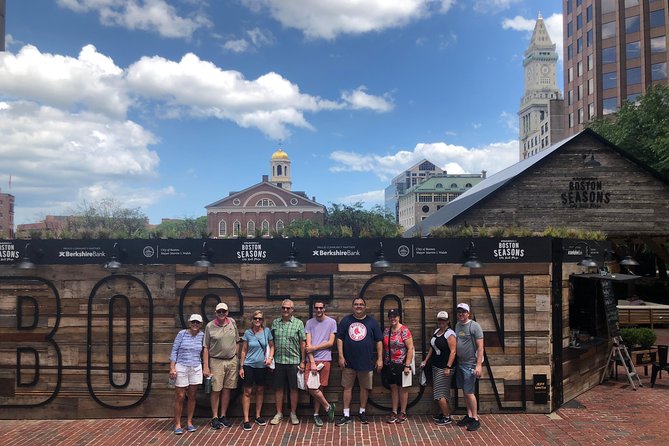
- Freedom Trail in sequence: you don’t just march gate to gate; you follow the Revolution’s timeline.
- Small group cap: up to 15 people, so questions and attention don’t disappear.
- Off-trail detours: the tour leaves the main path to show smaller sites tied to the same story.
- Storytelling with props: guides use visual tools and interactive moments to help details stick.
- Modern Boston included: you see today’s downtown, squares, and gardens alongside colonial landmarks.
- Finish in the North End by the harbor: you wrap up with classic neighborhoods and great waterfront views.
Price and time: what $55 buys you in Boston
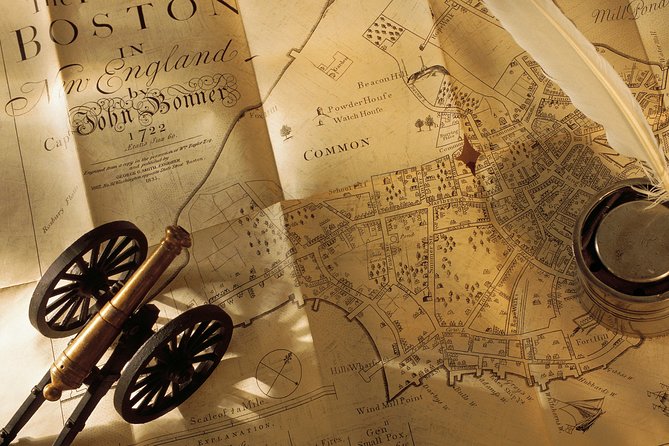
At $55 per person for about 3 to 3.5 hours, this is priced like a serious walking tour, not a quick highlights loop. You’re paying for a guide who stays with a full narrative arc rather than pointing out buildings and letting you connect the dots.
You also get real value from the structure: the route hits major revolutionary landmarks while still leaving room for context. That matters in Boston, because the same streets can feel like a museum one minute and a busy city the next—this tour helps you understand why.
If you dislike walking tours that feel rushed or crowded, the small group size is a big plus. With a cap of 15 travelers, it’s easier for the guide to keep your group engaged and for you to ask questions.
You can also read our reviews of more tours and experiences in Boston.



Meeting at City Hall Plaza and setting yourself up for success
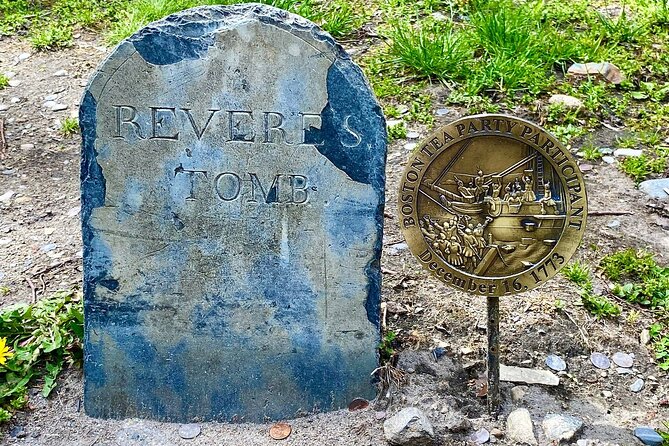
You start at City Hall Plaza (City Hall Square, Boston), a central pedestrian area with views toward Faneuil Hall. The meeting spot is practical: your guide is in front of the seasonal beer garden, near a large Boston sign and close to the Five Iron Golf location.
Getting started here is smart because it keeps the tour in the heart of downtown. You don’t waste time with long transfers, and you’re positioned to walk both toward the Freedom Trail core and toward the modern city blocks that connect everything.
Plan to arrive a little early. The tour is timed around walking pace and storytelling moments, so being late can throw off your spot in the group.
City Hall Plaza to King’s Chapel: early Boston characters before the Revolution
Stop 1: City Hall Plaza
You begin with an easy photo moment beside the large Boston sign, with Faneuil Hall in view. It’s a good start because you’re seeing the city’s present while the guide begins connecting it to the Revolution-era story.
Stop 2: Boston City Hall
This is more than a landmark. The guide uses the architecture and the setting to talk about how civic life and political tension evolved—useful context before the tour gets into the heavy stuff.
Stop 3: King’s Chapel Burying Ground
This is where the tour leans into who lived here first and what that reveals about early Massachusetts Bay. It helps you see Boston as a growing community, not just a stage for famous names.
Stop 4: Freedom Trail (in sequence)
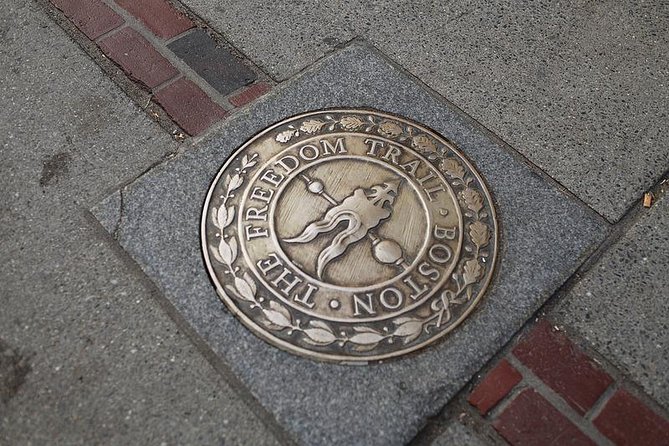
On most tours, you follow the bricks in order like it’s a straight line. Here, you’re using the Freedom Trail as a backbone, then weaving around to keep the timeline straight. That chronological approach is a big reason this works if you like the Revolution as a cause-and-effect story.
Between Freedom Trail stops, you’ll also hit two important religious/political stops tied to public speech and controversy:
Stop: First Anglican Church in Boston
This gives you a sharper view of Boston’s religious landscape and the pressure points in daily life.
Stop: Brimstone corner
Known for fiery sermons and famous anti-slavery activism, this stop grounds the Revolution story in the broader fight over rights. It’s a reminder that political change didn’t start the moment tea hit the harbor.
Stop 5: Granary Burying Ground
This is one of the best kinds of stops for history nerds: you’re at the tombs, looking at the legacy, and hearing how key revolutionary leaders shaped the movement. You’ll learn about Paul Revere, John Hancock, and Sam Adams, and you’ll also get your bearings on the Sons of Liberty question that always comes up.
Granary to Old State House: pressure builds, debates get louder
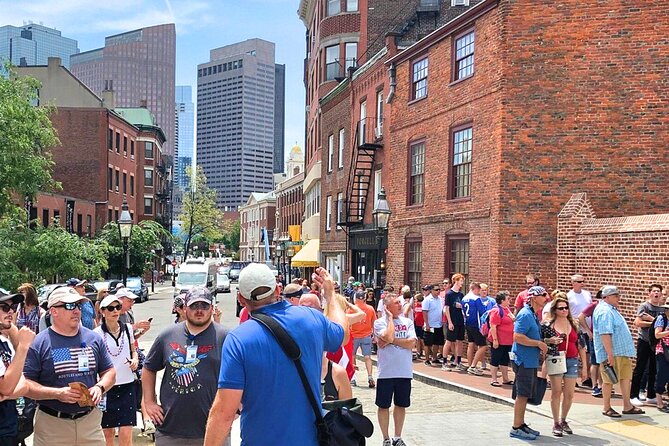
Stop 6: Old City Hall
The guide uses the beauty of the building as a backdrop for a real discussion about democracy and its obstacles. Even if you’ve read about the period, this framing helps you understand why politics felt so urgent.
Stop 7: Statue of Benjamin Franklin
Franklin isn’t just a famous face here. The stop highlights his role in education and his influence as a public thinker, which adds depth beyond the usual Revolution highlights.
Stop 8: Old State House
This is one of the tour’s core political stops. It’s described as the oldest public building in the country and a nerve center for Massachusetts politics, where debates between British authority and American rights played out.
Stop 9: Boston Massacre site
You get a breakdown of who was involved—soldiers, citizens, loyalists, and patriot leaders—and how the event escalated existing tensions. The value here is in understanding the crowd dynamics and why this became such a powerful moment in the Revolution story.
Stop: Former publishing house of American literary icons
This stop connects the Revolution era to ideas moving through the public sphere. Even without an entry fee, it’s a helpful “wait, people were writing and arguing too” correction to a story that can otherwise focus only on battles.
Stop 10: Old South Meeting House
This is where the story turns toward the Boston Tea Party, described as starting here. If you like clean turning points in a narrative, this stop is built for you.
Stop 11: Post Office Square
You’ll see how the Revolution route still runs through modern downtown. The guide’s point is simple: history isn’t just preserved; it sits under the city you’re walking today.
Stop 12: Financial District
This stop adds a layer about education, healthcare, and finance. It’s not just a scenery break—it’s a way to show how Boston re-built after the colonial era and why the city’s institutions mattered.
Faneuil Hall, Quincy Market, and the breaks that keep you moving

Stop 13: Faneuil Hall Marketplace
Often called the cradle of liberty, this is treated as more than a symbol. You get the sense of how protests grew into a full revolution, and why this location mattered for public action.
Stop 14: Quincy Market
The tour explicitly warns about tourist traps, and that’s useful advice. Use this as a reset stop: grab a snack, check out the food situation, and give your feet a break while the guide keeps you on the story.
Stop 15: Rose Fitzgerald Kennedy Greenway
This is one of the easiest “breather” stops on the tour. The guide points out the public garden space running through Boston, so you feel the shift from colonial tension to modern civic design.
Stop 16: Paul Revere House
Now you’re back into the personality of the Revolution. The tour frames Revere as more than legend, and it helps you understand why his physical presence in Boston matters.
Stop 17: North Square Park
You’ll learn that this is the oldest residential square in America. It’s a good reminder that Revolution history happened in neighborhood scale, not just battlefield scale.
Stop 18: Paul Revere Statue
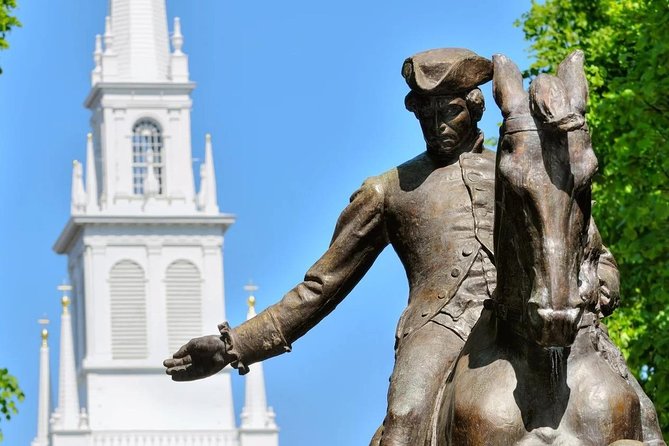
This is mostly a photo moment, but it’s also a useful cue point—your guide uses it to anchor you before moving toward the night-ride story and the next wave of battles.




Old North, Bunker Hill, and the harbor views that close the loop
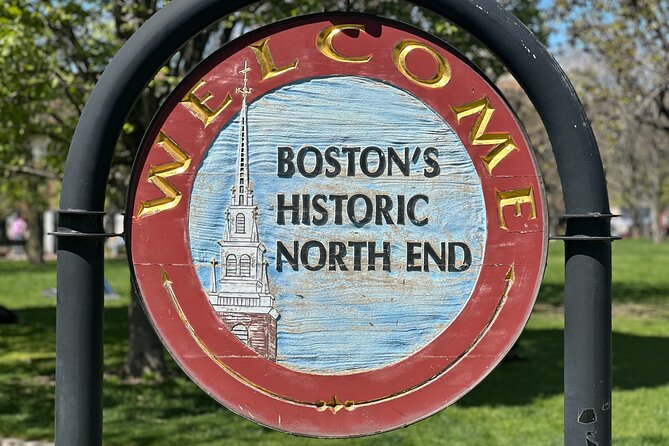
Stop 19: Old North Church & Historic Site
This is the stop that brings the famous warning ride into focus. You’ll walk through the story of Revere’s midnight ride and the steeple signal described as one if by land, two if by sea, then connect it to what became known as the shot heard round the world and the chaos at Lexington and Concord.
Stop: Second-oldest burial ground in Boston (outside only)
You won’t go in here, but you will get outward views. The terrace across the street is used for viewpoints toward Charlestown and Boston Harbor, which is a smart way to keep energy up when you’ve already visited multiple burying grounds earlier.
Stop 20: Bunker Hill Monument
The guide does a full recreation of the Battle of Bunker Hill. This is one of the stops that repeatedly gets praise, especially when paired with visual props. If you learn best when you can see the battlefield idea, this is where it pays off.
Stop: USS Constitution from across Boston Harbor
You’ll see it from the other side, with an overview of its history. The key detail is honest: it’s described as not part of the American Revolution, but you still get the context of the vessel and why it’s so important to Boston’s maritime identity.
Stop 21: North End
You finish stepping into one of America’s oldest residential neighborhoods, and the guide talks food and culture alongside history. This makes a good transition from political drama to everyday life.
Stop 22: Boston Harbor
You walk along the Harbor Walk for city views and ocean breeze. The guide even frames the late-tour feeling as getting the British out of Boston, which works better as a story beat than as an actual battle plan.
Stop 23: Boston Harborwalk
You keep moving through waterfront piers and wharfs. It’s a satisfying change of pace because you’re not stuck in tight streets anymore.
Stop 24: Lewis Wharf (finish)
You end here in the North End area near public restrooms, with parking close by. It’s also very convenient for transit, with a stop described as less than five minutes away and an easy walk back toward the original meeting area.
Why guides like Tyler, Mike, Chris, and Tom make this tour feel different
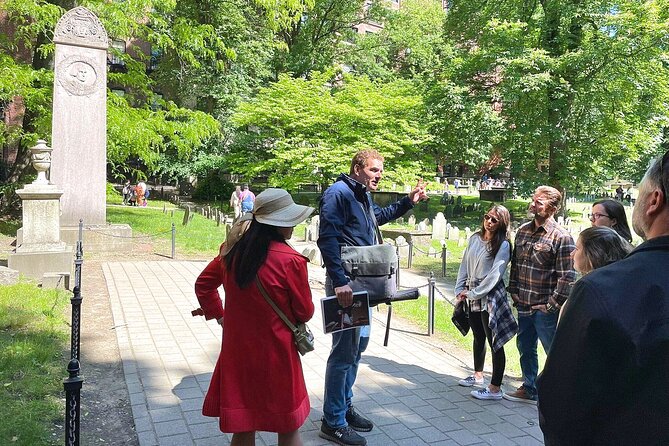
This tour gets its reputation from the guide style: real storytelling, not just a list of stops. In multiple experiences shared here, guides are described as using visual tools and interactive moments that help you track the sequence of events.
Tyler is specifically praised for using Lego soldier style explanations for Bunker Hill, plus for staying animated in cold weather without losing the thread. Another guide, Mike, is praised for advanced history training and for using visual aids such as maps and Legos to show where events happened. Chris is described as a trained and certified historian, with humor and authority that makes lesser-known details feel clear. And Tom is noted for a love of Boston history that shows in the way he talks through the sequence.
What I like about this approach is that it helps you separate myth from legend. That’s also why the time doesn’t feel like “just walking.” You’re constantly hearing why a site matters, what happened next, and how one decision pushed the next one forward.
What you will and will not do (so expectations stay realistic)
You should expect a walking tour, not a museum circuit. It’s not costume reenactment and it isn’t trying to pretend you’re living 1775. Instead, the goal is to help you understand the modern city through what came before.
Museum entry is limited based on what’s described. There’s mention of built-in breaks where you can enter Faneuil Hall and Quincy Market, but the tour notes that museum entry elsewhere is not included.
Also, you should know this is an outdoor-heavy route with a moderate fitness requirement. The pacing works well for many people, but it’s still a lot of streets and sidewalks over several hours.
Value check: small-group storytelling vs a $55 ticket
For $55, you’re buying three things: an organized timeline, an expert guide, and time saved from figuring out how to connect sites yourself. Boston has dozens of Revolution-related stops, and most self-guided routes can end up as disconnected facts. Here, the guide keeps it as one story moving forward.
The included Freedom Trail approach adds value because you’re not just following geography. You’re learning why certain places land where they do in the chain of events, then you’re also seeing other sites that most Freedom Trail walks either skip or barely mention.
The best value sign is the repeated praise for how quickly the hours pass. That typically happens when a guide keeps the story tight and uses visuals when the details get complicated.
Should you book the Revolutionary Story Epic Boston walking tour?
If you want a Freedom Trail-focused experience but you also care about the Revolution as a sequence of decisions, this is a strong fit. I’d book it for history lovers, couples, and families with older kids who can handle a real-world amount of walking and a story that is not watered down.
If you’re mobility-limited, or you hate long outdoor walks, you might find the route demanding. It’s also not a kids event, even though it’s appropriate for all ages with an adult.
My practical advice: bring sturdy walking shoes, dress in layers, and expect to leave with a clearer timeline than you’ll get from just ticking off landmarks.
FAQ
How long is the Boston Revolutionary Story Epic small group walking tour?
The tour runs about 3 hours to 3 hours 30 minutes.
How much does the tour cost?
It costs $55.00 per person.
Where do I meet the guide, and where does the tour end?
You meet at City Hall Plaza (City Hall Square area in downtown Boston). The tour ends at Lewis Wharf in Boston’s North End area.
Is the tour only on the Freedom Trail?
No. You do walk the Freedom Trail in chronological order, but the route also veers off to see other historical sites and to experience modern Boston.
Are museum entries included?
Museum entry is not included, with the noted exceptions of breaks built around Faneuil Hall and Quincy Market.
Is the tour offered in English?
Yes, it’s offered in English.
How physically demanding is it?
The tour is a walking tour and calls for moderate physical fitness. You should be comfortable walking for several hours.
What if the weather is bad, or I need to cancel?
The tour requires good weather. If it’s canceled due to poor weather, you’ll be offered a different date or a full refund. For cancellation, it’s free if you cancel up to 24 hours in advance for a full refund.