REVIEW · BOSTON
Boston Duck Boat Sightseeing City Tour with Cruise Along Charles River
Book on Viator →Operated by Boston Duck Tours · Bookable on Viator
Duck boats make Boston feel like a game. You get a guided lap around the city on land, then a real Charles River splashdown for a different angle on the skyline. I like that you’re not stuck walking for hours, and you still cover the places most first-timers want to see.
Two things I’d lock in as favorites: the nonstop narrated sightseeing (you sit back while the duck handles the streets and turns), and the land-to-water switch that turns ordinary photos into “how did they get there” photos. The one drawback to think through is the GPS app setup: you’ll need your own phone with cellular data and your own headphones, and that can limit your experience if you forgot something.
In This Review
- Key Points Before You Go
- Duck Boat Basics: Why Boston’s Amphibious Ride Works
- The ConDUCKtor and the pace
- Choosing Your Start Point: Museum of Science, Aquarium, or Prudential
- The 80-Minute Land Tour: Boston Common, Beacon Hill, and TD Garden Views
- Boston Common and the Public Garden
- Beacon Hill, Government Center, and the State House area
- Quincy Market and the downtown shopping-and-food loop
- TD Garden and the sports skyline
- Tea Party, Old State House, and Freedom Trail-Era Stops
- Old churches and streets that mark the Freedom Trail
- Back Bay, Newbury Street, Copley Square, and the Big Dig
- Copley Square, the Public Library, and the built-for-visitors district
- Newbury Street and Boylston Street
- The Big Dig context
- Copley Place, Prudential Center area, and a second layer of modern Boston
- Charles River Splashdown and the Esplanade Photo Stop
- What you’ll get from the Charles River segment
- How the GPS App Shapes Your Experience (Bring Headphones)
- Worth the $59.75: What You’re Buying in Real Time
- Who Should Book This Duck Boat Tour (and Who Might Want a Different Plan)
- Should You Book It? My Practical Verdict
- FAQ
- How long is the Boston Duck Boat Sightseeing City Tour with Cruise Along Charles River?
- Where do the duck boats depart from?
- What is included in the ticket price?
- What isn’t included?
- Do I need headphones for the audio app?
- Do I need cellular service for the audio?
- Is the tour wheelchair accessible?
- Does the tour run in rain, and can I cancel?
Key Points Before You Go
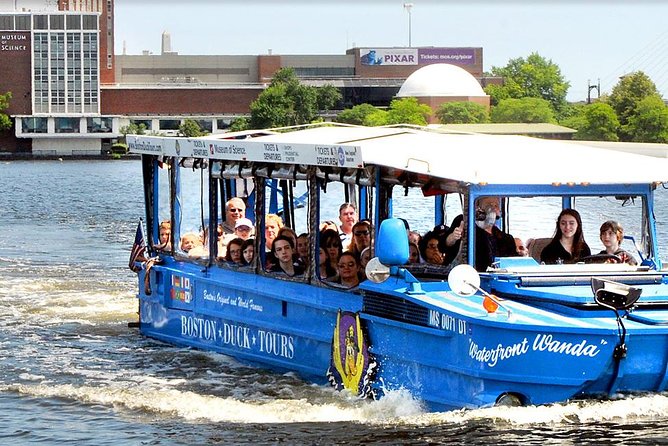
- Duck + water in one trip: land sightseeing first, then a short splashdown along the Charles River
- Three central departure areas: Museum of Science, New England Aquarium, or Prudential Center
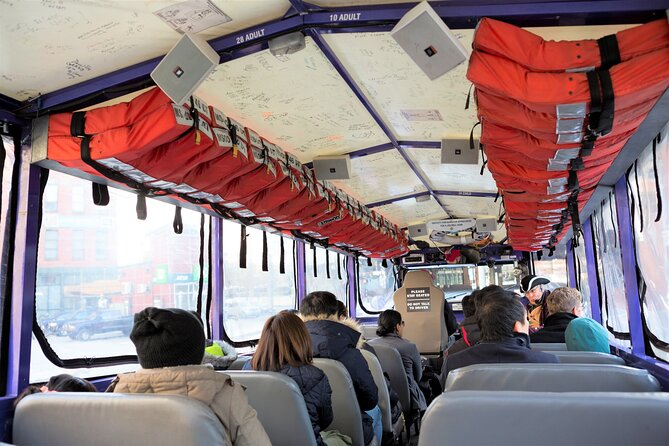
- Narration runs on your phone: a GPS activated app covers multiple languages, but you provide headphones
- A fast, focused loop: about 1 hour 20 minutes keeps it doable between other Boston plans
- Good odds of fun: the tour is built around jokes, quick facts, and an easy ride that works well for families
Duck Boat Basics: Why Boston’s Amphibious Ride Works
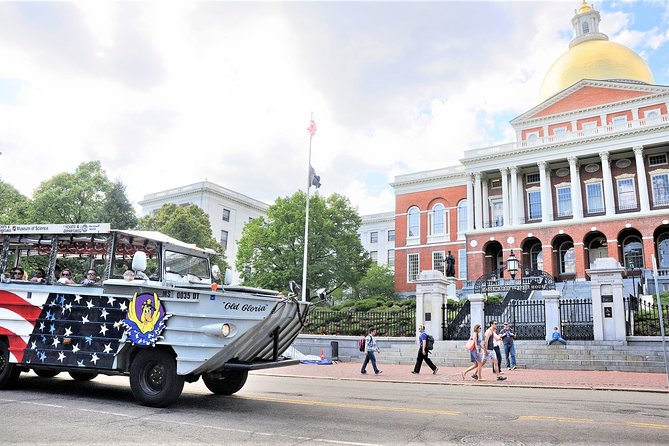
This tour is simple in the best way. You board a renovated World War II amphibious duck boat, ride it through central Boston, then literally splash down into the Charles River for a brief boat segment. It’s not trying to replace museums or walking tours. It’s trying to give you a quick sense of how Boston is shaped, where things are, and what the big landmarks mean.
What makes it feel worth your time is the pacing. You’ll cover a lot of ground without the “stops-and-starts” hassle that can happen on walking tours. And because the duck is built for both street driving and water, you get a real skyline view instead of just seeing waterfront areas from the sidewalk.
You can also read our reviews of more tours and experiences in Boston.



The ConDUCKtor and the pace
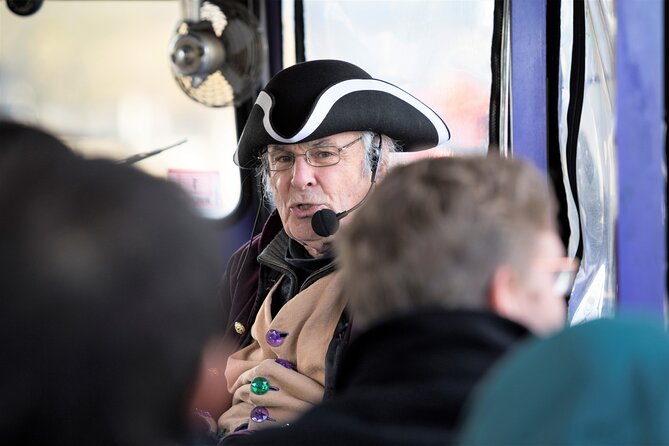
The narration matters here. The best versions of this tour keep things moving and keep the room laughing while facts land fast. People especially praise the guides for being fun and holding attention, including ConDUCKtors like a narrator named Mike and a guide called the Viking. Even if your guide’s style is different, the format is built for quick, engaging storytelling.
Choosing Your Start Point: Museum of Science, Aquarium, or Prudential
You don’t start from one lonely pier far from everything. You pick one of three central locations during checkout:
- Museum of Science
- New England Aquarium
- Prudential Center
That choice is more useful than it sounds. If you’re already planning to spend time near the waterfront, starting at the Aquarium keeps your day tidy. If you want easy access to the Back Bay and shopping corridors, Prudential Center is a smart anchor point. And if you’re near Cambridge-side plans (or just like starting near the Charles), Museum of Science is a convenient way to hit both water and city sights.
The meeting point is exactly where you should show up. There’s no hotel pickup. So you’ll want to plan for getting there on your own using nearby public transportation.
The 80-Minute Land Tour: Boston Common, Beacon Hill, and TD Garden Views
On land, the duck tour is your quick-orientation tool. You’ll cruise past a “greatest hits” mix: Boston Common, Beacon Hill, the State House area, and the cultural and sports landmarks that define modern Boston.
Here’s how it tends to land when you’re on board:
Boston Common and the Public Garden
You go by Boston Common and the nearby Boston Public Garden, two classic downtown stops that help you understand why so many Boston stories start in this exact area. Boston Common is the oldest public park in the United States. The Public Garden is an older, more landscaped neighbor that feels more like a pause button in the middle of the city.
Even if you’re not hopping out for a stroll, seeing them from the duck gives you a sense of how close these green spaces sit to major streets, government buildings, and tourist hubs.






Beacon Hill, Government Center, and the State House area
You’ll roll through the areas around Beacon Hill and the Massachusetts State House, dominated by its famous gold dome. You’ll also see other downtown corridors and civic areas that help connect the dots between Boston’s colonial roots and its modern identity.
One thing I like about viewing these districts from the duck is that you notice spacing. Boston’s neighborhoods can feel compact on a map. From the road, you feel the “push-pull” between old stone buildings, wider avenues, and institutional spaces.
Quincy Market and the downtown shopping-and-food loop
You’ll pass by Quincy Market, one of the easiest places for visitors to orient from. It’s a loud, high-energy area, and from the duck you get the sense of how it sits inside the larger downtown grid. It’s also a helpful reference point for planning your own walking later.
TD Garden and the sports skyline
You’ll pass TD Garden, home for the Bruins and Celtics. Even if sports aren’t your thing, this stop tells you where Boston’s modern crowds gather. It’s a quick way to understand why certain neighborhoods feel built for events and transit flow.
Tea Party, Old State House, and Freedom Trail-Era Stops

Boston’s history shows up on this tour fast, like a highlight reel. You’ll see the Old State House, which is tied to Revolutionary-era storytelling and now functions as the Revolutionary Museum.
You’ll also pass the Boston Tea Party Ships & Museum area. Admission isn’t included, so think of this as a look at the location and theme, not an automatic ticket into the museum experience. If you want the hands-on “tea throwing” style component, you’d need to plan that as a separate add-on.
Old churches and streets that mark the Freedom Trail
You’ll go by Old South Church and Arlington Street Church as well. These pass-by moments work best for two kinds of travelers:
- You want recognition, not lectures
- You want to know where you’ll likely stop later if history is your priority
Seeing the churches from the duck helps, because you get a sense of how these landmarks sit inside an active city. They’re not isolated “history islands.” They’re in the middle of Boston’s ongoing daily life.
Back Bay, Newbury Street, Copley Square, and the Big Dig
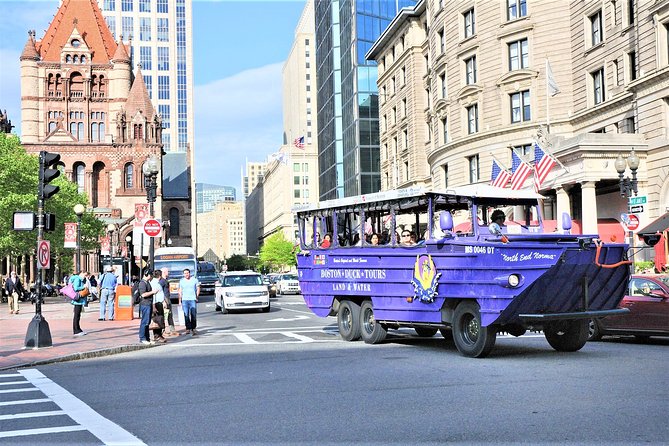
After the civic and historic core, the tour swings toward the Back Bay side of Boston, where the streets get a more upscale feel and the city’s skyline gets broader.
Copley Square, the Public Library, and the built-for-visitors district
You’ll pass Copley Square and the Boston Public Library. The library opened in 1852 as the first free, publicly-supported municipal library in America. That’s the kind of detail your brain files away quickly, and it helps you connect what you see with why it’s there.
Newbury Street and Boylston Street
You’ll go by Newbury Street and Boylston Street, two major names if you like shopping, galleries, and people-watching. Even if you don’t buy anything, passing these streets helps you understand where “nice Boston” happens day-to-day.
The Big Dig context
The tour also includes the kind of urban engineering storytelling that helps make sense of how Boston’s central artery/tunnel project shaped what you see now. From a duck boat, you can’t study it like a textbook, but you can connect the idea that the city’s layout changed for practical reasons, not just aesthetics.
Copley Place, Prudential Center area, and a second layer of modern Boston
You’ll pass by Copley Place and see the Prudential Center area as part of the downtown-to-Back Bay sweep. These stops are less about history and more about what Boston looks like when it’s in motion: transit corridors, office towers, and shopping spaces feeding street life.
Charles River Splashdown and the Esplanade Photo Stop
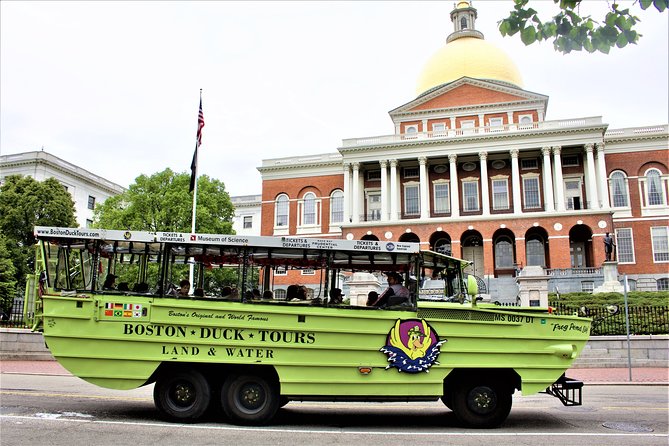
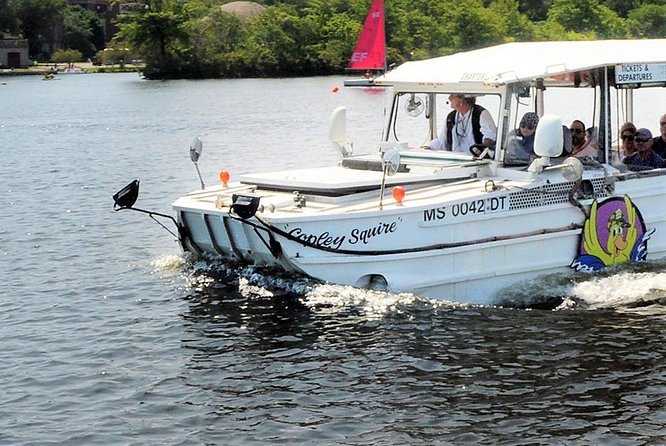
The best part of this tour, for me, is the moment the duck switches modes. You go from streets to water with a splashdown into the Charles River, then you cruise for about 20 minutes.
That 20-minute window is short on purpose. It’s meant as a payoff, not a full harbor cruise. So if you’re hoping for a long, slow “sit back and enjoy the water for an hour” experience, adjust your expectations now.
What you’ll get from the Charles River segment
Even with limited time, the river gives you views you can’t get from dry land. You’ll see both Boston and Cambridge skylines from the water. You’ll also pass Charles River Esplanade and its iconic Hatch Shell, known for Boston Pops-style summer concerts.
If photography is your thing, this is where you’ll want to be ready. The water part is brief, and it’s the one section where you’re clearly doing something different than every other city tour.
Also note the weather reality. The tour runs in rain or shine, but severe weather can impact the water portion or even cancel the whole tour. If the conditions are poor, you’ll be offered a different date or a refund.
How the GPS App Shapes Your Experience (Bring Headphones)
This is the one tech detail that can make or break the vibe.
Narration is delivered through a GPS activated app you download to your own phone. It includes imagery and narration in multiple languages. The languages listed include Spanish, German, Mandarin, French, Japanese, Italian, Brazilian Portuguese, Korean, and Cantonese.
Two practical points:
- You need your own headphones (they’re not provided as part of the experience)
- Your phone needs its own cellular connection for the audio to work
If you go in expecting “audio included on a headset,” you’ll be disappointed. If you go in prepared with charged phone, cellular service, and headphones, the app is a strong match for a quick 80-minute sightseeing loop plus the river splashdown.
Worth the $59.75: What You’re Buying in Real Time
At $59.75 per person, you’re paying for two things: a narrated city orientation and a land-and-water vehicle experience. You’re also buying time efficiency. This isn’t a “pick one attraction and wander” kind of ticket. It’s a one-shot overview that still leaves you free to choose what to do after.
Here’s why the value can work well:
- You cover major landmarks without the fatigue of long walks
- The ride format makes it easier to see far-away sights from the same vehicle
- The Charles River splashdown adds a real visual twist that a bus tour won’t give you
Where the value can slip:
- If you want deep museum time, you’ll need separate tickets. For example, the Boston Tea Party Ships & Museum stop doesn’t include admission.
- Because the water portion is about 20 minutes, you’re getting a taste, not an all-afternoon cruise
- If you prefer only Boston-focused history, you might notice the narration includes more than strict local detail. That’s not guaranteed, but it can happen depending on the guide’s storytelling angle
Who Should Book This Duck Boat Tour (and Who Might Want a Different Plan)
This tour is a great fit if you:
- Want an efficient way to get your bearings in Boston
- Like a mix of history and humor
- Have limited time and still want waterfront views
- Travel with kids or a multi-generation group that appreciates a sit-and-look style experience
It may be less ideal if you’re:
- Hoping for a long boat ride and lots of water time
- Planning to rely on the tour for museum admissions
- Someone who hates tech dependence (phone audio, GPS, headphones, cellular)
One more thing: the group size is capped at 30 travelers, which keeps boarding and movement relatively manageable. It’s not a massive crowd bus experience.
Should You Book It? My Practical Verdict
If you’re visiting Boston for the first time or you want a quick “see it all” day, I think this duck boat tour is an easy yes. You get a fun vehicle, a strong narrated overview, and a real Charles River moment that changes your skyline photos.
Book it especially if you like your sightseeing with a little laughter and you’re okay with fast, high-level stops instead of deep dives into any one site. Bring your headphones, download the app, and plan to arrive at your chosen start point on time, and you’ll get a lot out of the roughly 1 hour 20 minutes.
If your priority is long water time or hands-on museum experiences, then pair this with a separate block of time for the sites you care about most. Think of the duck tour as the map in motion, not the full destination.
FAQ
How long is the Boston Duck Boat Sightseeing City Tour with Cruise Along Charles River?
The tour is approximately 1 hour 20 minutes.
Where do the duck boats depart from?
You can depart from one of three locations: Museum of Science, New England Aquarium, or Prudential Center.
What is included in the ticket price?
The ticket includes an 80-minute duck boat tour of Boston, a 20-minute boat ride along the Charles River, narrated sightseeing, and access to a multi-lingual GPS activated app. A mobile ticket is also included.
What isn’t included?
Headphones are not provided, and the Boston Tea Party Ships & Museum admission is not included.
Do I need headphones for the audio app?
Yes. The tour uses a GPS activated app on your phone, and you must bring your own headphones.
Do I need cellular service for the audio?
Yes. Your mobile device must have its own cellular connection for the audio guided app to work.
Is the tour wheelchair accessible?
Wheelchair accessible ducks are available from all three departure locations, but you must call after booking so the team can pull extra seats to fit the wheelchair.
Does the tour run in rain, and can I cancel?
The tour runs in rain or shine, but severe weather can cause cancellation of the water portion or the entire tour. You can cancel for a full refund up to 24 hours in advance.