REVIEW · BOSTON
Boston: Freedom Trail History Small Group Walking Tour
Book on Viator →Operated by Hub Town Tours · Bookable on Viator
Boston’s Revolution reads like a street map. This small-group Freedom Trail walk uses a historian’s storytelling to connect the years 1760 to 1775 to the exact places you pass, from Boston Common to the North End. You can ask questions along the way, which is a big part of why the walk feels more like a lesson than a photo stop.
I really like that the group is capped at 16 guests, so you actually get answers instead of a hurried script. I also like that you see all 16 official landmarks on the Freedom Trail in one go, then finish up on Copp’s Hill Terrace with a wide view across the Charles River.
One thing to plan for: this is a mostly outdoor walking tour for about 2.5 hours, so cold wind and standing time can be a factor. It’s wheelchair and stroller accessible, but it’s not recommended if you have trouble standing for extended periods.
In This Review
- Key things that make this Freedom Trail tour worth your time
- Freedom Trail in 2.5 hours: what the route really covers
- Meet at Boston Common: the start point and why it matters
- Boston Common to Granary Burying Ground: where everyday life meets Revolution-era memory
- Franklin, Boston Latin, and the Boston Massacre site: the stories get sharp
- Faneuil Hall and the North End: where town meetings turned into action
- Copp’s Hill Terrace finish: views that make the timeline click
- Price and value of a $35.10 small-group Revolution walk
- How hard is it, and what should you wear in winter?
- Why the historian guide makes the difference (and which styles you’ll like)
- Should you book this Freedom Trail history tour?
- FAQ
- Where does the tour start and where does it end?
- How long is the walking tour?
- How many landmarks are included on the Freedom Trail?
- Is the tour accessible for wheelchairs and strollers?
- Is museum admission included?
- What language is the tour offered in?
- What happens if weather is bad?
Key things that make this Freedom Trail tour worth your time
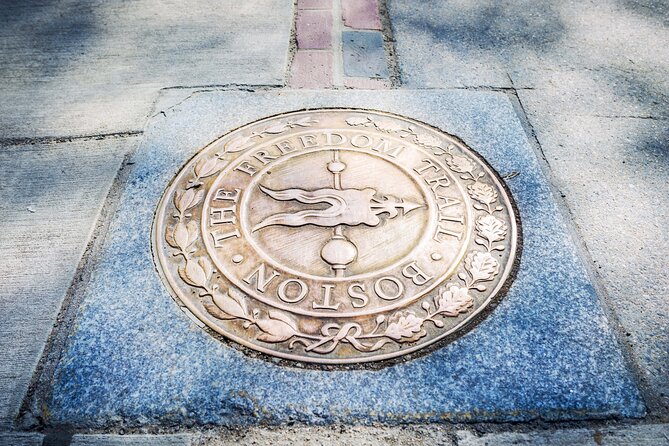
- 16 official Freedom Trail landmarks covered end-to-end in one outing
- Historian focus on 1760–1775, the make-or-break Revolution years
- Small-group size (max 16) for real Q&A and a smoother pace
- Smart pacing through downtown and the North End, with a scenic finish
- Cold-weather help built into the format, including indoor warm-up space when possible
- Ends at Copp’s Hill Terrace for big-picture views across Boston Harbor
Freedom Trail in 2.5 hours: what the route really covers
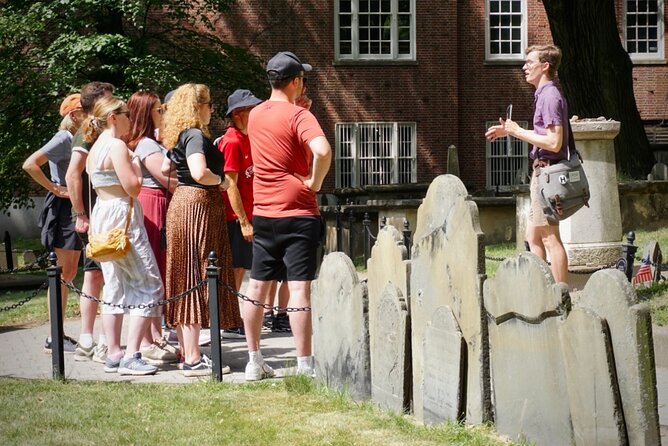
If you’re short on time but you want more than the usual “look at this plaque” approach, this tour is built for you. It runs about 2 hours 30 minutes and threads through downtown Boston and the North End, stopping at all 16 official Freedom Trail landmarks along the way. You start at Boston Common, then move through the tight, walkable streets where Revolutionary Boston actually happened.
The biggest value is how the guide ties locations to a narrow window of time: 1760 to 1775. That focus keeps the stories connected instead of turning into a general history lecture. You’ll hear why events weren’t random, how anger and politics built step by step, and how ordinary people got pulled into bigger decisions.
Another practical win: the tour ends at Copp’s Hill Terrace, which looks across the Charles River. From there you can see two huge “context anchors” tied to the Freedom Trail—the U.S.S. Constitution area and the Bunker Hill Monument—so your last moments don’t feel like an abrupt finish. They feel like a snapshot of where this whole story lands.
You can also read our reviews of more tours and experiences in Boston.



Meet at Boston Common: the start point and why it matters
The meeting point is the Boston Foundation Monument on the north side of Boston Common, near the boundary opposite 50 Beacon Street. It’s not just a convenient landmark—it’s a smart way to begin. The granite memorial includes a bronze relief showing two men shaking hands, tied to the Puritans’ arrival in 1630. That sets a tone: this isn’t only about guns and speeches. It’s also about belief systems, community building, and early decisions that echoed later.
After check-in, the group sets off together with your historian guide. The tour begins with Boston Common, which matters because it’s the oldest public land in the Americas. It functioned as a communal space—Boston’s grazing pasture and gathering ground—so it’s a natural “starting room” for Revolution-era stories. If you’re arriving in Boston for the first time, this start helps you get your bearings fast without feeling lost.
Also note the format: since it’s a small group, your guide can keep control of timing without rushing you through the key stops. That makes a difference when you’re asking questions, which the tour encourages.
Boston Common to Granary Burying Ground: where everyday life meets Revolution-era memory
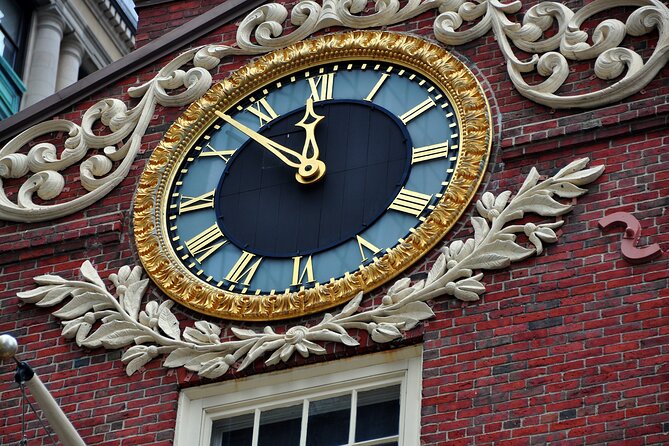
One of the strongest sequences on this walk comes as you move from Boston Common toward Granary Burying Ground. Granary is Boston’s third-oldest burying ground, and the tour treats it like more than an old cemetery. It’s the place where Revolutionary Boston’s stories got physically preserved—names, dates, and the fact that leaders lived and died in the same streets you’re walking now.
Expect your guide to layer in context around churches and meetinghouses nearby, because religion and civic life were tangled in colonial Boston. The stop notes include First Church of England in Puritan Boston and references to congregational meeting house life, which helps explain how ideas spread. That’s useful because the Revolution wasn’t just military. It was also about arguments—who had authority, who represented the people, and what laws meant.
This is also where pacing starts to feel different than a self-guided walk. Cemetery terrain and stone markers can be easy to skim if you’re on your own. With a historian guide, you get a narrative thread. You’re not just seeing names—you’re learning what those names meant in the political moment.
Practical tip: if you’re sensitive to uneven ground, take it slow here. It’s accessible overall, but cemeteries and old paving can have small variations underfoot.
Franklin, Boston Latin, and the Boston Massacre site: the stories get sharp
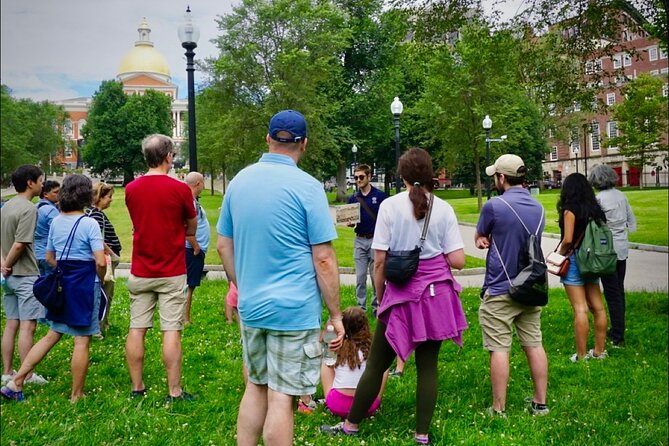
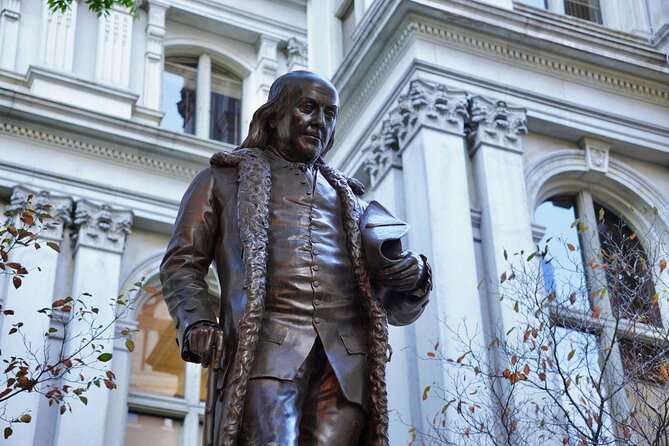
After Granary Burying Ground, the tour shifts into a more public, political mode. You’ll reach the Statue of Benjamin Franklin, and from there the guide connects the dots to education and civic power. One stop highlight is the Boston Latin School site, tied to Franklin’s era and described as the oldest public school in the Americas (founded in 1635). That’s a great detail because it reminds you the Revolution ran on more than protests—it also ran on literacy, networks, and leadership.
As you continue, you’ll encounter landmarks associated with publishing and congregational life, and then the tour sets up one of its emotional anchors: the Boston Massacre site. The description is blunt: British soldiers killed five Bostonians in 1770. Your guide’s job here is to explain why a street event became a public symbol. Massacres on paper led to arguments in meetings and editorials, and they helped harden positions on both sides.
This is also a strong place to ask questions. If you’ve wondered why the American Revolution escalated when it did, this stop gives you a direct, local example. It’s much easier to understand the timeline when you can picture where the shock happened.
Faneuil Hall and the North End: where town meetings turned into action
From the Boston Massacre area, the walk moves to Faneuil Hall Marketplace, often called the Cradle of Liberty. Here you’re looking at one of the most important places for colonial public life. Your guide will connect it to town meetings and civic organization, showing how residents used public forums to argue, organize, and pressure leadership.
This stop also comes with a bonus for food-and-history lovers: the route notes that an Oldest restaurant in the United States connection (in a historic building) sits here. You won’t go inside on this specific tour, but the idea is that Boston’s identity is still visible in daily routines. That’s one of the reasons a walking tour works: you see the “then” and the “now” in the same shot.
Next up is the North Square Park, a historic public square in the heart of the North End. The park adds a local texture—this isn’t only about famous speeches. It’s also about where people gathered to live their lives, and how those neighborhoods shaped political behavior.
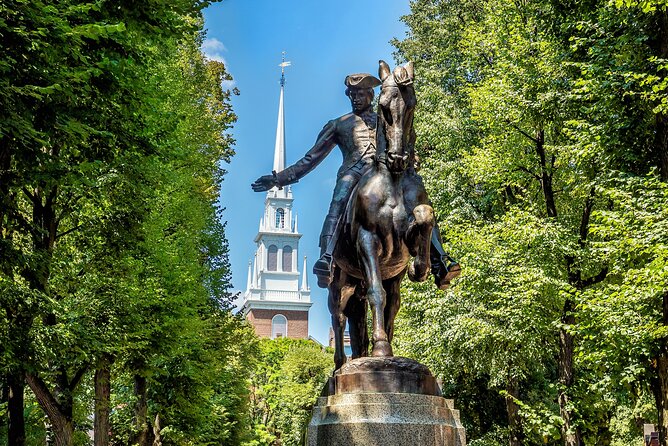
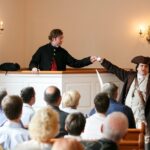
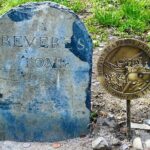
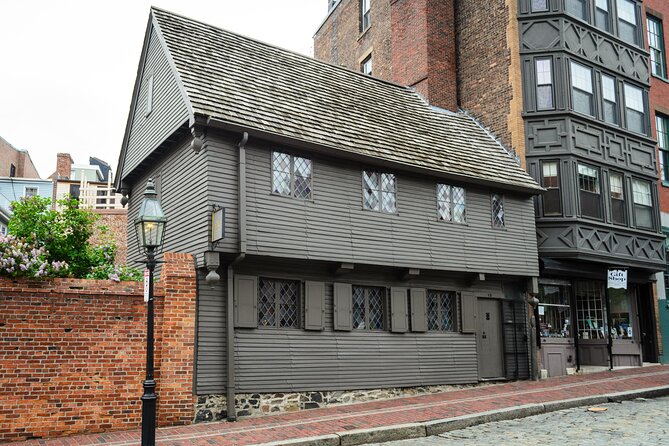
Then comes Paul Revere’s territory. You’ll see the Paul Revere House area, and the walking route reaches the Paul Revere Statue in a pedestrian-only space. The guide ties those landmarks to the famous Midnight Ride in 1775 and explains the role of signal lanterns associated with the church used in that operation.
If you like stories with cause-and-effect, this section is a highlight. It moves from general political conflict into a specific action moment—something tangible you can picture.




Copp’s Hill Terrace finish: views that make the timeline click
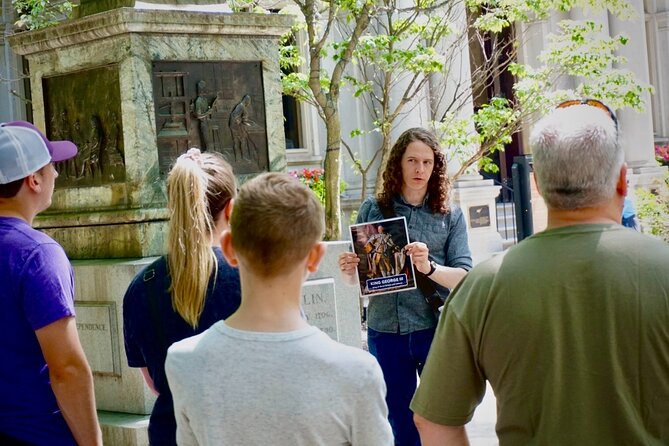
The tour ends at Copp’s Hill Terrace at 520 Commercial St. This finish is more than scenic. It’s the point where the walking story becomes a wider picture. From the terrace, you look across the Charles River toward key Freedom Trail landmarks, specifically the U.S.S. Constitution area and the Bunker Hill Monument battle connection.
That matters because Boston’s Revolution history can feel crowded and overlapping if you try to absorb it alone. Ending at a vantage point helps your brain organize what you just learned. You leave with a sense of geography: where things happened, where consequences landed, and how the city’s shoreline and river edges mattered.
You’ll get about 20 minutes at the end area, which is enough to slow down, take in the views, and ask any final questions without the pressure of immediately moving onward. If you’re trying to plan the rest of your day, this is also a convenient place to reset because it’s close to Hanover Street.
Price and value of a $35.10 small-group Revolution walk
At $35.10 per person, this tour is priced like a solid “first day in Boston” activity, not like a museum-heavy day. And it earns its price in a practical way: it includes the Freedom Trail itself (all 16 landmarks) plus expert interpretation, within a small group that helps your questions land.
What’s not included is important for value. The tour doesn’t include admission inside museums or buildings. That’s a trade-off. You’re getting breadth and context—seeing the full set of official sites in one outing—rather than spending time waiting in lines or paying for multiple interiors.
If you want inside access later, the good news is that some nearby sites may be discounted with your ticket. One helpful detail from the tour’s guidance notes: Old South Meeting House and Old North Church can have discounted admission with your Hub Town Tour ticket if you book ahead or show it on site. The notes also say King’s Chapel should have this discount soon. That can make your “walk first, museums later” plan feel like an efficient two-step.
To make the value decision, ask yourself this: do you want coverage and story or interiors and artifacts? If you’re leaning toward the first, this tour fits well.
How hard is it, and what should you wear in winter?
This tour is designed for a moderate physical fitness level. It’s listed as wheelchair and stroller accessible, and service animals are allowed. That’s a real plus if you’re traveling with mobility needs. The tour also says it’s near public transportation, so you’re not stuck with a long transfer.
Still, it’s a walking tour for roughly 2.5 hours, and it isn’t recommended if you have difficulty standing for extended periods. Even when routes are accessible, old Boston streets and sidewalks can be tiring.
If you’re going in cold weather, pay attention to how the experience adapts. Multiple recent guide comments point out that on freezing, windy days, guides work to keep groups warm and sometimes use indoor spaces for warm-ups partway through. That doesn’t mean you’ll be indoors the whole time, but it suggests the guides are used to adjusting.
My practical advice: dress in layers, bring gloves, and wear shoes you trust on sidewalks. The Freedom Trail is flat in concept, but real streets have texture—grit, snow tracks, and small uneven spots.
Why the historian guide makes the difference (and which styles you’ll like)
A walking tour can be “facts on the move” or it can feel like a real conversation. This one leans toward the second. The guide is described as a historian, focused on Revolutionary-era years from 1760 to 1775, and the format encourages questions.
In recent experiences, guides like Cyrus and Jon have been praised for making the Cold Boston day feel easier and for telling the story in a chronological way. Mark has been called friendly and detailed, while Alejandro stood out for being considerate about telling stories indoors when possible. Maura and Maz earned strong comments for storytelling that paints a picture rather than reciting notes.
What you should look for in a guide style is how they handle turning points: Massacre to protest, protest to organization, and organization to action. When a guide does that well, you leave thinking about relationships between events, not just dates.
And because the group is limited to 16 travelers, the guide can actually answer follow-up questions. That’s especially valuable if you’re traveling with someone who’s curious or if you want clarity on one confusing part of the Revolution timeline.
Should you book this Freedom Trail history tour?
You should book it if you want a smart way to experience Boston’s Revolutionary story without spending your whole day in one museum. It’s ideal for first-time Boston visitors, history lovers, and anyone who prefers a guided route that covers the full official Freedom Trail in one outing. It’s also a good fit if you like asking questions and getting real answers, since the small-group size supports that.
You might choose something else if your main goal is to see the most buildings from the inside, because this tour focuses on walking and interpreting the landmarks rather than museum entry. And if you know you can’t handle extended standing, plan carefully, even with stroller and wheelchair access.
If your trip includes only a day or two in Boston, this tour is a strong anchor. It helps you orient, it gives you a timeline with meaning, and it ends with views that make the story feel whole.
FAQ
Where does the tour start and where does it end?
The tour starts at the Boston Foundation Monument in Boston Common (49 Beacon St area) and ends at Copp’s Hill Terrace (520 Commercial St) overlooking the Charles River and nearby Freedom Trail landmarks.
How long is the walking tour?
It’s about 2 hours 30 minutes.
How many landmarks are included on the Freedom Trail?
The tour includes all 16 official Freedom Trail landmarks.
Is the tour accessible for wheelchairs and strollers?
Yes. The tour is listed as wheelchair and stroller accessible.
Is museum admission included?
No. Admission inside museums or buildings is not included as part of this tour.
What language is the tour offered in?
The tour is offered in English.
What happens if weather is bad?
This experience requires good weather. If it’s canceled due to poor weather, you’ll be offered a different date or a full refund.