REVIEW · MONUMENT VALLEY
3 Hour Monument Valley Tour
Book on Viator →Operated by Monument Valley Safari, LLC · Bookable on Viator
Red rock feels different when someone explains it. This 3-hour Monument Valley tour takes you off the main road into backcountry and restricted areas, led by a Navajo guide, with big photo viewpoints and a live Navajo musical performance along the way.
I especially like the mix of famous formations and less-familiar stops, and I like how the guide connects place names to Navajo perspectives—not just facts. One thing to plan for: the Monument Valley Navajo Tribal Park entrance fee is extra (and the ride can be dusty and bumpy on dirt roads).
With this price, you’re paying for access plus people. At $60 per person, plus an $8 park admission, you’re basically buying guided driving time into areas you typically can’t reach on your own, plus bottled water, small-group attention, and hands-on help at the best photo spots. The only real drawback is that you’ll need decent conditions; the experience requires good weather to run.
In This Review
- Key highlights to know before you go
- Why this 3-hour Lower Monument Valley route makes sense
- Meeting point at the View Hotel: start simple, start early
- The open-air ride: great views, bumpy roads, dust reality
- Mitten Buttes and John Ford’s Point: the valley’s headline moments
- Three Sisters Spires, Rain God Mesa, and Big Chief Monument
- Hogan stops and Big Hogan Amphitheater: where culture shows up in real moments
- Arches and cave/ruins stops: the valley gets weird (in a good way)
- Totem Pole and YeiBiChei Spires, plus Artists Point
- Your guide matters: what makes Bobby, Tony, and Don stand out
- Photography and phone tips: how to get better shots fast
- How much should you pay? The value math
- Weather and timing: when this tour runs best
- Who this tour is best for (and who should skip it)
- Should you book the 3 Hour Monument Valley Tour?
- FAQ
- How long is the Monument Valley 3 Hour Tour?
- How much does it cost?
- Is the Monument Valley Navajo Tribal Park entrance fee included?
- What’s included in the tour price?
- Where do I meet for pickup?
- Is this tour offered in English and does weather affect it?
Key highlights to know before you go
- Backcountry and restricted-area access with an authorized Navajo guide
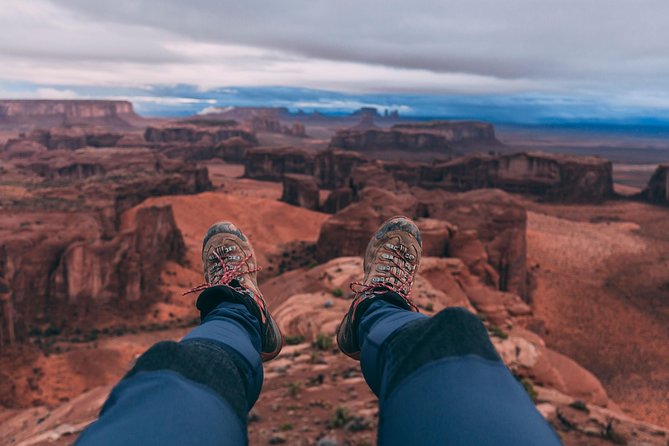
- Open-air vehicle views, with that classic red-dirt road feel
- Live Navajo musical performance at a stop during the tour
- Iconic formations plus additional named sites beyond the usual quick photo pull-offs
- Small group size (max 24), so questions don’t get stuck in the back
- On-the-spot photo help, including tips for phone cameras
Why this 3-hour Lower Monument Valley route makes sense
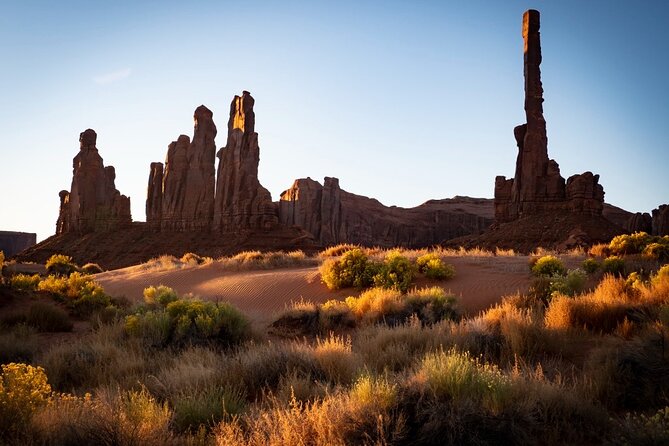
Monument Valley can eat your whole day if you try to do it “your way” with trial-and-error driving. This tour gives you a tight timeframe—about 3 hours—so you can see a lot without burning daylight or guessing which turn is worth the effort.
What I like about the structure is that it’s built for the valley itself: you cover named viewpoints like the Mitten Buttes and John Ford’s Point, then you move into other areas that feel more private and sacred. That combination is what makes it feel like more than a checklist.
Also, the small-group format (up to 24 people) matters. In a place like this, the best moments are usually the short ones—when the light hits, a guide points out a detail, or you get a clean photo angle before the wind shifts.
You can also read our reviews of more tours and experiences in Monument Valley.

Meeting point at the View Hotel: start simple, start early
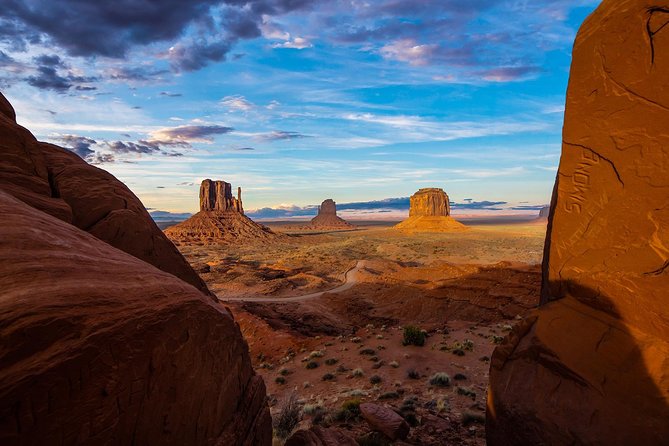
Your tour starts at The View Hotel on Indian Rte 42, Oljato-Monument Valley, UT. The activity ends back at that same meeting point, so you don’t need to plan a separate ride back.
A small practical tip: arrive with time to spare so you’re not hunting for the right pickup location once everyone’s loaded. One review mentioned pickup directions can feel a bit confusing, even when GPS is correct—so treat it like a “leave margin, not stress” situation.
Once you’re in the vehicle, the tour quickly settles into its rhythm: stop, look, listen, take photos, move on. That’s the whole point of a guided loop—so you spend less energy figuring out where to go and more on actually seeing.
The open-air ride: great views, bumpy roads, dust reality
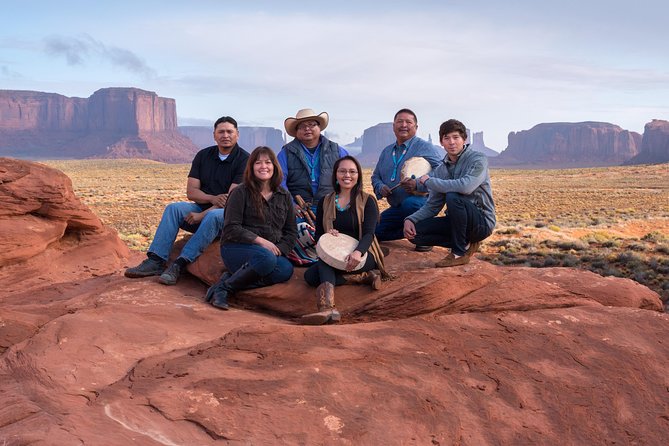
This is an open-air vehicle tour, so you’ll feel the sun and wind right away. It also means you’ll get better sightlines for those wide Monument Valley views than you would from a closed cabin.
Now for the honest part: the ride can be bumpy and dusty, depending on the time of year and what the dirt roads look like that day. Bring something to cover up—especially if you’re sensitive to grit. A dust mask or a scarf-style face cover makes a big difference.
The tradeoff is worth it. When you’re looking at the Mittens and other formations from a moving viewpoint, it doesn’t feel like you’re stuck at a roadside overlook. You feel like you’re traveling through the place.
Mitten Buttes and John Ford’s Point: the valley’s headline moments
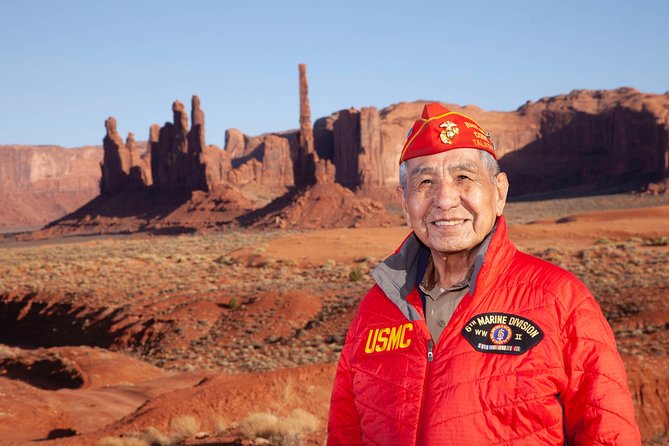
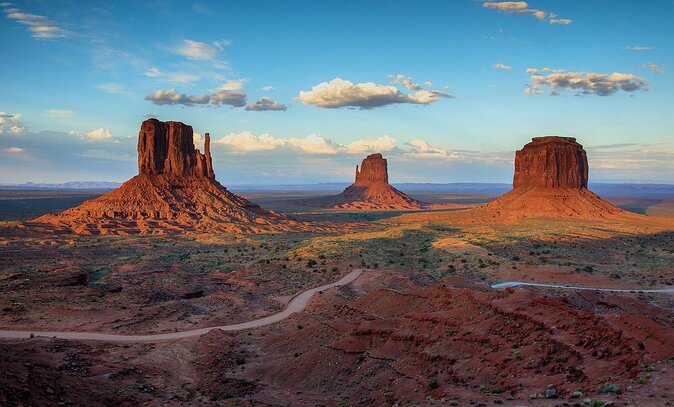
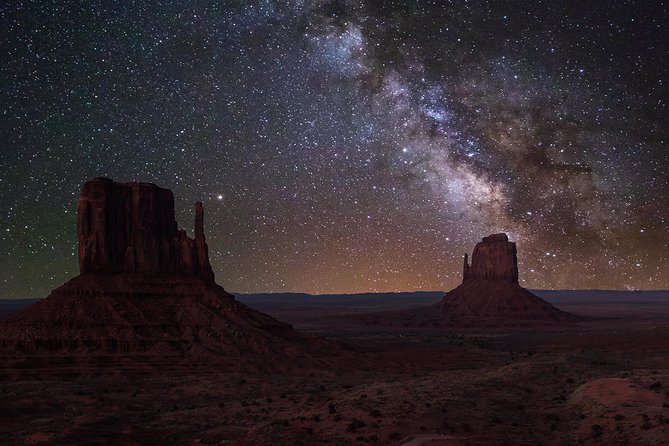
You’ll spend time at major viewpoints inside the Monument Valley Navajo Tribal Park, including both the East and West Mitten Buttes. This is where the valley’s signature shape really hits—because you’re not just seeing it from one angle. You’ll likely get multiple looks as the vehicle positions you.
Then comes John Fords Point. Even if you already recognize it from photos, you’ll appreciate it more in person when a guide shows you how the valley’s features align and why certain angles made it famous in film history.
What makes these stops work with a Navajo guide is the naming and meaning. The guide doesn’t just point at a silhouette. They explain how people read the land—so the rock shapes become something you can understand, not just admire.
Three Sisters Spires, Rain God Mesa, and Big Chief Monument
After the big-name moments, the tour expands into more specific named places, including Three Sisters Spires, Rain God Mesa, and Big Chief Monument. These aren’t random stops. They’re a sequence of viewpoints that helps you understand the scale and shape language of the valley.
Three Sisters tends to be a favorite because it’s visually dramatic and easy to frame—perfect for both wide shots and close-up phone photos. Rain God Mesa gives you a sense of how far things stretch across the valley, and Big Chief Monument adds another layer of character as you watch the light change on the rock faces.
One benefit of doing this with a guide: you’ll get context fast. When you know what a feature is and what to look for, your photos improve immediately—even if you’re only using your phone.
Hogan stops and Big Hogan Amphitheater: where culture shows up in real moments
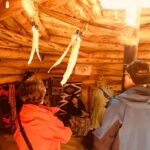
The tour includes stops like Susie Yazzie’s Hogan and the Big Hogan Amphitheater. These parts of the route matter because they shift the experience from “scenery viewing” into “human connection with the land.”
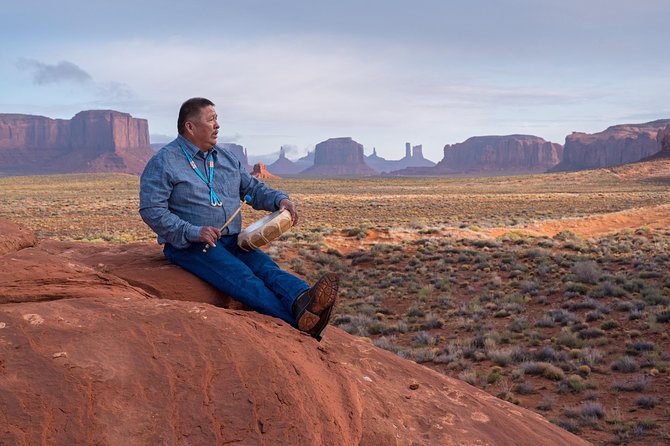
At Big Hogan Amphitheater, the live Navajo entertainment fits naturally with the setting. The experience includes a live Navajo musical performance—often a ceremonial song or flute—so you’re not just listening in a generic way. You’re hearing music in a place that gives those sounds space and meaning.
This is also where you may feel the tour’s emotional tone. Multiple guides have been noted for flute playing during these scenic moments, and some tours have featured drum and song highlights as well. The performance is one of the most praised pieces of the entire experience because it turns the landscape into a living cultural moment.
Arches and cave/ruins stops: the valley gets weird (in a good way)
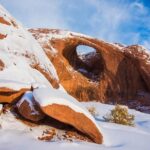
A big reason to book a guided loop is that you get to see more than the iconic shapes on the main viewpoints list. The tour includes Sun(s) Eye Arch and Ear of the Wind Arch, plus Echo Cave Ruins.
Arches are fun because they create a built-in photo frame. When you stop at Suns Eye Arch and Ear of the Wind Arch, you’re not just photographing a rock—you’re composing a picture using the opening as the “border.”
Echo Cave Ruins is where the experience can get more archaeological and story-focused. One review noted seeing petroglyphs around this kind of stop, and that’s exactly the sort of detail you miss when you just drive up, snap one photo, and move on.
These stops are also a reminder that Monument Valley isn’t only a movie backdrop. It’s a place with layers: rock art, ruins, and ongoing significance.
Totem Pole and YeiBiChei Spires, plus Artists Point
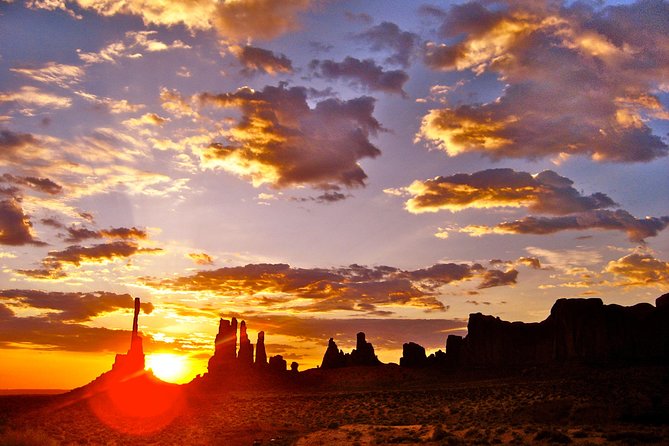
You’ll also visit Totem Pole & YeiBiChei Spires and Artists Point. Totem Pole is one of those formations that makes people lean forward without realizing it—you can’t help looking for the figure-like shapes and the way the spires rise.
YeiBiChei Spires add another layer because the guide’s naming helps you notice patterns and relationships between formations. When you understand what you’re looking at, the valley becomes easier to read like a map.
Then Artists Point gives you another chance to slow down and photograph in a way that feels intentional. If you want your shots to look less like “I was here” and more like “I understood the view,” this is the moment you’ll use for it.
Your guide matters: what makes Bobby, Tony, and Don stand out
Most of the value in this kind of tour comes down to the person driving and explaining. In the feedback you’ve got a clear pattern: guides like Bobby, Tony, Toney, Don, and Tyrone are praised for knowing the land deeply and sharing it in a friendly way.
You’ll also hear a repeating theme about what the good guides do:
- They take time to explain significance, not just point.
- They answer questions as you go.
- They help with photos, including phone-camera framing tips.
- They add music at the right moment, so the scenery and culture land together.
Even the specific “style” shows up in reviews. Some guides have added flute music during the stops at big amphitheater-style areas. Others have mixed in extra performance energy. Either way, the tour’s structure supports real interaction, not a rushed monologue.
Photography and phone tips: how to get better shots fast
You don’t need professional gear to get strong results here, but you do need angles and timing. This tour is built around viewpoints where composition is easier, and the guide often points out the best places to stand.
A helpful practical angle: bring your phone fully charged and clean. Dust can cover your lens fast in open-air vehicles. If you’re using a phone camera, pay attention when the guide suggests where to place you in relation to the rock shape—small changes in position make a huge difference at Monument Valley’s scale.
Another practical pro move: use your camera in both wide and “detail” mode. You’ll get shots of the whole mittens look, plus close framing on arches and spires. That gives you a gallery that tells the story from different distances.
How much should you pay? The value math
The tour price is $60 per person, and the Monument Valley Navajo Tribal Park entrance fee is $8 per person not included. So your total often lands around $68 per person if you’re buying the park admission yourself.
Is that worth it? In my view, yes—because you’re not just buying driving. You’re buying:
- Backcountry and restricted-area access you can’t easily duplicate
- A Navajo guide who explains names and meaning as you go
- A small-group setting that keeps the experience personal
- A live Navajo musical performance included in the program
- Bottled water for the ride
If you’re the kind of traveler who enjoys context—why things are named what they’re named, not just what they look like—this is one of the better-value ways to spend a few hours in Monument Valley.
Weather and timing: when this tour runs best
This experience requires good weather. That’s not a minor detail in Monument Valley, where conditions affect both comfort and visibility.
If the sky is clear and the light is right, the red rock colors and shadows do a lot of the work for you. If it’s windy or washed out, you’ll still be in a special place—but you might get less of the crisp viewpoint effect.
Plan for the road conditions too. Even in good weather, open-air riding on dirt roads can be part of the adventure. Pack for it, not for a paved highway.
Who this tour is best for (and who should skip it)
This is a great fit if you:
- Want access beyond the main scenic stops
- Like learning while you look (especially with a Navajo guide)
- Want a live musical moment tied to the scenery
- Prefer a guided loop rather than spending your time driving and second-guessing turns
It might be less ideal if you:
- Hate dust and don’t want an open-air ride
- Want total independence and no scheduled stops
- Are extremely budget-sensitive and can’t spare the extra park admission
Also, the tour notes that most travelers can participate, but if you have specific mobility concerns, it’s smart to ask ahead.
Should you book the 3 Hour Monument Valley Tour?
Book it if you want the valley’s “big moments” plus the less obvious stops, and you care about context—not just photos. The combination of open-air views, authorized guide access to backcountry and restricted areas, and a live Navajo performance is exactly the sort of value that’s hard to replicate on your own.
Skip it only if dust and bumpy roads would ruin the day for you, or if you strongly prefer self-driving with no cultural program.
If you’re doing Monument Valley for the first time, this is one of the cleanest ways to get a lot of meaningful scenery in a short window—without turning your trip into a logistics project.
FAQ
How long is the Monument Valley 3 Hour Tour?
The tour lasts about 3 hours.
How much does it cost?
It costs $60.00 per person.
Is the Monument Valley Navajo Tribal Park entrance fee included?
No. The park entrance fee is $8.00 per person and is not included.
What’s included in the tour price?
It includes a local Navajo guide, bottled water, and live entertainment, plus pickup and drop-off at a centrally located meeting point.
Where do I meet for pickup?
You meet at The View Hotel on Indian Rte 42, Oljato-Monument Valley, UT 84536, and the tour ends back at the meeting point.
Is this tour offered in English and does weather affect it?
Yes, it’s offered in English. The experience requires good weather, and if it’s canceled due to poor weather you’ll be offered a different date or a full refund.