REVIEW · SEATTLE
Seattle’s Original Guided Harbor Cruise
Book on Viator →Operated by Argosy Cruises · Bookable on Viator
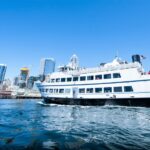
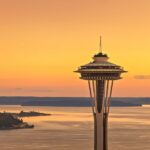
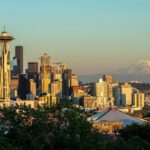
Seattle from the water hits different. This one-hour cruise mixes live narration with killer views of the Space Needle, Great Wheel, and the working port along Elliott Bay. You also get big-sky mountain scenery over Seattle Harbor, including Mt. Rainier when weather cooperates.
I love how the boat gives you both easy photo spots and real comfort. The enclosed lower deck keeps you sheltered, while the open upper sun deck is made for fresh air and skyline shots, rain or shine depending on wind.
One consideration: it’s a weather game. Mt. Rainier and the clearest mountain views are weather permitting, and you’ll want to be on time since the boarding gate closes just 5 minutes before departure.
In This Review
- Key points before you go
- Seattle Harbor Cruise: the Fast Way to See Both the City and the Port
- Pier 55 Check-In: Small Details That Prevent Big Headaches
- Indoor Lower Deck vs Open Upper Deck: Where to Stand for the Best Views
- Live Narration That Turns “Nice Views” Into Real Context
- The Downtown “Wow” Stretch: Space Needle, Great Wheel, and the Central Waterfront
- Myrtle Edwards Park: One of the Best Water-City View Breaks
- Pier 57 to Terminal 91: Cruise Ships, Pier Life, and Alaska-Route History
- Seattle Aquarium at Pier 59: A Landmark You’ll See, Not Enter
- Puget Sound Views: The Olympic Mountains Across the Water
- Alki Beach From the Boat: West Seattle’s Famous Beach Vibe
- Mt. Rainier When the Sky Plays Fair
- T-Mobile Park and Lumen Field: Two Stadiums, One Waterline View
- Harbor Island and Container Ships: The Real-World Seattle Close-Up
- Smith Tower: A Sky View Detail You Might Miss Walking
- Who Should Book This Cruise, and What to Bring
- Should You Book This Seattle Harbor Cruise?
- FAQ
- How long is Seattle’s Original Guided Harbor Cruise?
- How much does the cruise cost?
- Where do I meet for the cruise?
- Is there live narration, or is it audio only?
- Are snacks and drinks included?
- Is the tour all outdoors?
- Are there restrooms onboard?
- Do children need a ticket?
- What weather requirement should I know about?
- Can I cancel for free?
Key points before you go
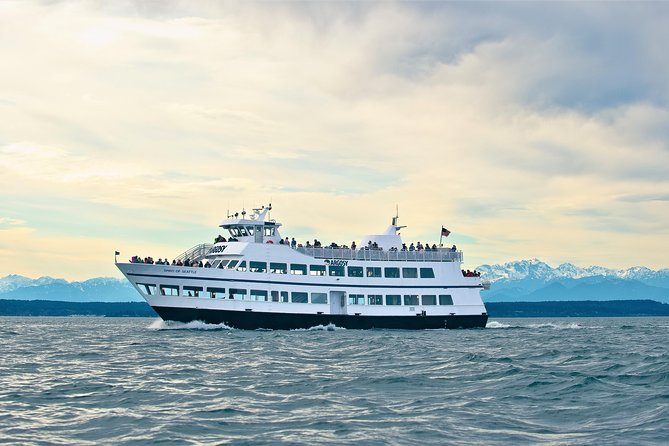
- Live narration that explains what you’re seeing on piers, neighborhoods, and the port’s daily work
- Open-air + indoor seating so you can chase photos without losing comfort
- Working port views close up, including container ships and the industrial cranes at Harbor Island
- Seattle skyline from the water, with repeated chances to spot the Space Needle and downtown buildings
- Mountain scenery across Puget Sound, with Mt. Rainier possible on clear days
- Worth the time: about an hour, letting you fit this into almost any Seattle itinerary
Seattle Harbor Cruise: the Fast Way to See Both the City and the Port
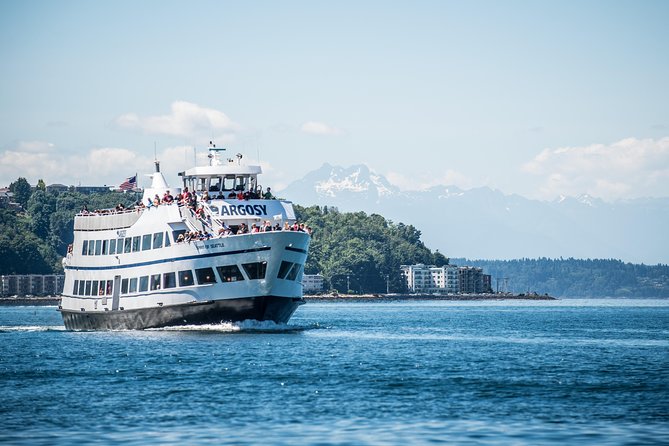
This is the Seattle sightseeing cruise that people recommend when they want a simple answer: What should we do first? You’re out on Elliott Bay and Seattle Harbor for about an hour, which means you get a full overview without turning your day into a commute marathon.
The real value is the mix. On one side, you’re cruising past the skyline and major landmarks like the Space Needle and Great Wheel. On the other, you’re getting a firsthand look at how Seattle works—shipping terminals, cruise terminals, and container operations are right there in your view. That combination is why this cruise still works for first-timers and repeat visitors.
At $45.70 per person, it’s not a bargain snack-ticket. But you are paying for something most Seattle activities don’t bundle: guided narration + big views + city and port together, all in one tight hour. And if you’re the kind of traveler who hates picking between downtown and waterfront, this solves that problem quickly.
You can also read our reviews of more tours and experiences in Seattle.


Pier 55 Check-In: Small Details That Prevent Big Headaches
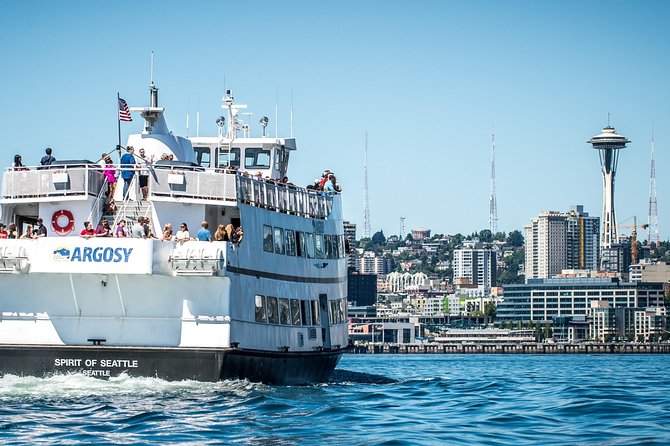
Your meeting point is Pier 55, 1101 Alaskan Way, Seattle, WA 98101, and the cruise ends back near where you board. Plan to arrive early. Check in is 30 minutes before the tour, and the boarding gate closes 5 minutes before departure.
That timing matters because this is a popular “quick win” activity. The tour can cap at about 350 travelers, and the ship service runs on a schedule where late arrivals can miss the boat. If you’re traveling with kids, this is even more important.
Good news: the pier area is connected to public transportation, so you don’t need a car for this one. You can also use a mobile ticket, which keeps things simple at the dock.
Indoor Lower Deck vs Open Upper Deck: Where to Stand for the Best Views
This cruise typically runs with an enclosed lower deck and an open upper sun deck. Both areas are designed for the same sightseeing route—so you’re not stuck in one spot the whole time.
When it’s chilly, I’d prioritize the lower deck first for comfort, then move up when you want skyline photos. When it’s nice out, the upper deck becomes your main stage. Either way, expect restrooms on board, which is a big help on a one-hour outing when you’re trying to keep the day easy.
Food and beverages are available for purchase onboard, not included. That means you can grab a drink if you want, but don’t assume a snack is part of the price. On cooler Seattle days, having a jacket and an extra layer is the smarter move than counting on sun.
Live Narration That Turns “Nice Views” Into Real Context
The cruise is narrated in English, and the guide’s job is to connect the dots: past vs present waterfront, what each pier is doing now, and why the port matters.
Some guides stand out for being funny and engaging, and if you’re on a departure with hosts like Nate, Angie, or Casey, the narration is especially praised for holding attention. The payoff is that you stop seeing the waterfront as a generic blur of buildings and cranes and start seeing it as a system.
You’ll also pick up the kind of facts that make photos feel smarter. One example from onboard stories: you may hear quirky details tying local retail brands and shipping routes into the harbor’s bigger role—how cargo moves from the mainland to places like Alaska and Hawaii through sea routes. That kind of context makes the industrial scenes more interesting, not just visually impressive.
The Downtown “Wow” Stretch: Space Needle, Great Wheel, and the Central Waterfront
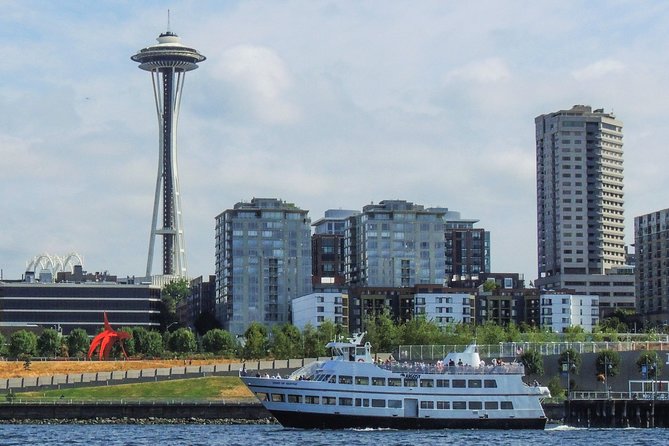
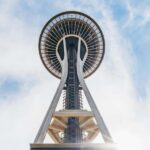
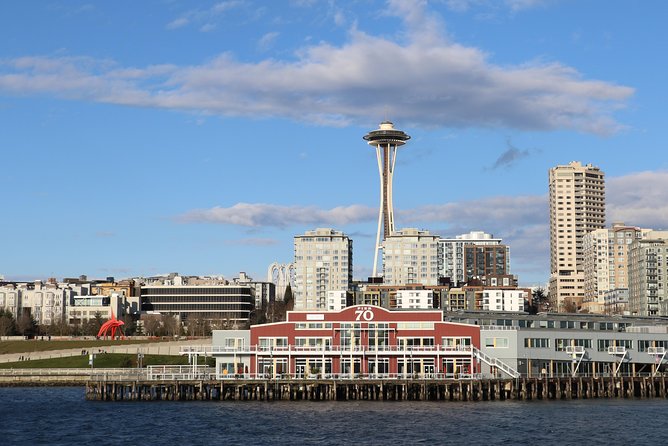
The cruise starts on Seattle’s historic central waterfront, where you’ll glide past major landmarks and piers. You’ll see the Space Needle, the Great Wheel, and viewpoints like Overlook Park.
As you move along, the Space Needle shows up again and again. The operator specifically notes photo opportunities with an unobstructed view of the Space Needle, plus chances to capture it as part of the wider skyline. Translation: you’re not just looking at it once while everyone scrolls. You can actually work the shot.
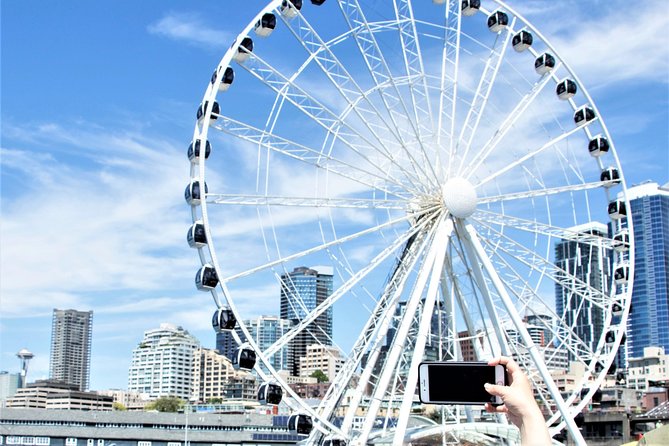
The Great Wheel is another highlight. You’ll pass by Pier 57, where the Great Wheel (opened in 2012) sits. From the boat, it’s a landmark you can frame against both the water and the city. There’s no ride time here, just the sightseeing view—still, it’s a strong “Seattle check” moment.


Myrtle Edwards Park: One of the Best Water-City View Breaks
At some point you cruise by Myrtle Edwards Park, a small but scenic green space along Elliott Bay. What makes it worth noting is its location: it connects downtown Seattle to Magnolia and sits along a 1.25-mile biking and pedestrian path by the water.
From the boat, this is the kind of spot that gives you a mental reset. Instead of nonstop downtown buildings and industrial structures, you get open shoreline, greenery cues, and calmer angles that make the city feel more livable.
Drawback? Because you’re viewing from the water and not walking, you won’t get the full path experience. Still, if your goal is to understand Seattle’s layout quickly, this park is a helpful landmark.
Pier 57 to Terminal 91: Cruise Ships, Pier Life, and Alaska-Route History
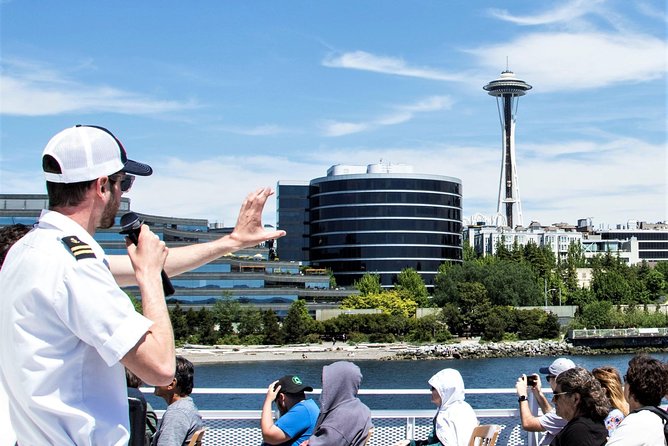
As you pass Pier 57, the experience naturally shifts toward a more port-focused view. You’ll also see Seattle’s aquarium area at Pier 59 from the water later, but first the cruise’s narration brings you into the working side of the harbor.
Terminal 91 is one of Seattle’s big cruise terminals. When cruise ships are in port, you can spot these large passenger vessels. The narration also ties Seattle’s long ties to Alaska’s Inside Passage into the story, which helps explain why cruise tourism and shipping are so intertwined here.
This portion is a good match if you like seeing how a city’s identity isn’t just skyline—it’s also logistics, travel routes, and the daily motion of ships.
Seattle Aquarium at Pier 59: A Landmark You’ll See, Not Enter
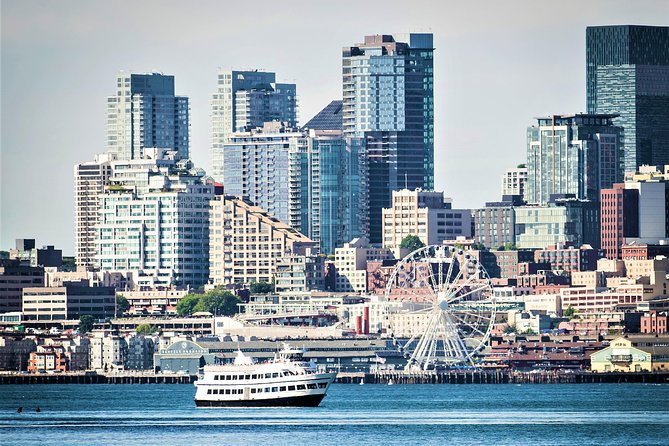
On Pier 59 sits the Seattle Aquarium. The cruise passes by the area, so it’s more of a “spot it from the water” moment than an included visit.
The aquarium opened in 1977 and is accredited. There’s also been new expansion work announced for 2024 with an Ocean Pavilion expansion. From the boat, you’ll likely get an easy visual reference for where it sits along the waterfront.
If your ideal day includes indoor exhibits and close-up marine tanks, this cruise won’t replace visiting the aquarium itself. But it can set you up for it, especially if you like the idea of pairing a quick harbor loop with a second waterfront stop later.
Puget Sound Views: The Olympic Mountains Across the Water
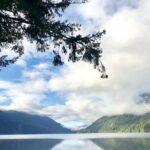
One of the best parts of the cruise is that it stops feeling purely urban. You cruise past a large inland estuary area between the Olympic Peninsula and Seattle metro. The route highlights the scale of Puget Sound, about 95 miles long, with views that can stretch toward the Olympic Mountains.
Across the water, you get rugged mountain terrain, and on a clear day you can see snow-capped peaks. You may even catch a glimpse of wildlife, depending on conditions.
Practical tip: this is where visibility matters most. If it’s foggy or overcast, you’ll still see Seattle, but the mountains may turn into silhouettes. If it’s clear, this segment becomes the “pause and stare” part of the cruise.
Alki Beach From the Boat: West Seattle’s Famous Beach Vibe
Cruising toward West Seattle, you’ll see Alki Beach, one of the area’s most popular stretches of sand. It’s known in part because it appears in the movie Sleepless in Seattle, and it’s also a well-known beach volleyball spot.
From the boat, you’ll get an overview angle—Alki Beach runs about 2.5 miles long, and the shoreline view gives you that “beach town” feeling even while you’re staying on the water.
Consideration: if you want to walk and feel the sand, you’ll need a different stop on your own. This is sightseeing, not a beach time slot.
Mt. Rainier When the Sky Plays Fair
Weather permitting, the cruise aims to show Mt. Rainier—listed at 14,410 feet, sitting about 60 miles southeast of Seattle. You’ll also hear it referred to as Mount Tahoma, and the narration frames it as the highest point in the Cascade Range.
This is one of those “Seattle rewards you for patience” elements. If you don’t see it clearly, you’re not getting scammed out of a view—you’re still getting the skyline and harbor experience. But if Rainier is visible, it turns the whole cruise into something more memorable than a standard city loop.
If you’re planning multiple activities, I’d pick this cruise on a day you think has decent visibility. And if you’re flexible, having a backup idea for another day makes the whole trip feel smoother.
T-Mobile Park and Lumen Field: Two Stadiums, One Waterline View
The route includes Seattle’s sports belt. You’ll cruise by the fields where the Mariners play at T-Mobile Park (formerly Safeco Field). On rainy days, the retractable roof may close—helpful context if you’re in town during a game.
Next to it is Lumen Field, home to the Seahawks (NFL) and the Seattle Sounders (MLS). The cruise notes that the two stadiums sit close enough to appear together in the skyline, and when seasons overlap, people can sometimes catch both baseball and soccer in one day.
Also worth noting: Lumen Field is famous for being extremely loud. That kind of energy is part of Seattle sports culture, even if you’re only viewing from the water.
This section is best for sports fans who like landmarks with a story. If you’re not into stadiums, you may treat this as a scenic skyline moment and keep an eye on the water views instead.
Harbor Island and Container Ships: The Real-World Seattle Close-Up
This is where the cruise earns its keep. You get up close views of container ships as they’re loaded and unloaded into the Port of Seattle area, also known as Harbor Island.
Harbor Island is described as the largest man-made island in the United States, built in 1909, and used for commercial and industrial activity. Watching that machinery and ship movement from the water makes the port feel real, not theoretical.
For photos, this can be the most dramatic visual segment, especially if cranes and steel structures catch the light. It’s also a good “contrast” moment after the softer mountain and beach views. Seattle isn’t just pretty—it’s busy, and you’re seeing that firsthand.
Smith Tower: A Sky View Detail You Might Miss Walking
As you return through the skyline, you’ll see Smith Tower, Seattle’s original skyscraper. It’s listed as 35 floors high, with an open-air observatory at the top.
From a harbor cruise, Smith Tower stands out because you’re seeing it with water in the foreground. That’s the kind of framing that’s harder to get from street level, especially if your route doesn’t already pass near downtown viewpoints.
It’s a shorter moment, but it helps complete the “Seattle on the water” picture: landmark height, skyline geometry, and waterfront context all in one glance.
Who Should Book This Cruise, and What to Bring
This cruise fits best if you want a quick, narrated overview that blends skyline and real port activity. It’s a great first-day activity if you’re sorting out what neighborhoods sit where and which landmarks you care about most.
It also works for families and couples because it’s about an hour. Most travelers can participate, and service animals are allowed. Kids 3 and under ride free, but they do require a boarding pass, so don’t skip that step if you’re traveling with little ones.
What to bring is simple: a warm layer, because Seattle waterfront wind is a thing, even in milder months. And if photography matters, bring a phone strap or a camera grip—deck railings and breezes can make handheld shots a little awkward.
Should You Book This Seattle Harbor Cruise?
Yes, if you want the fastest way to see Seattle as both a city and a working harbor. The one-hour length makes it easy to slot into any day, and the live narration means you’re not just staring—you’re learning why each sight matters. Add the chance at Cascade and Olympic mountain views, and Mt. Rainier on clear weather, and it’s a strong value play.
Skip or adjust your expectations if you’re hoping for a long walking tour, museum time, or guaranteed mountain visibility. This is a ride with views, not an outdoor hike. But even with clouds, the skyline and port scenes still do the job.
If you’re deciding today, book when you can—this is typically booked about 11 days in advance on average—and aim for a day with decent visibility if Mt. Rainier is a priority.
FAQ
How long is Seattle’s Original Guided Harbor Cruise?
It runs for about 1 hour.
How much does the cruise cost?
The price is listed as $45.70 per person.
Where do I meet for the cruise?
You start at Pier 55, 1101 Alaskan Way, Seattle, WA 98101.
Is there live narration, or is it audio only?
This tour includes live narration.
Are snacks and drinks included?
No. Snacks and beverages are available for purchase onboard.
Is the tour all outdoors?
No. The boat has both indoor and outdoor seating, with a typical setup of an enclosed lower deck and an open upper sun deck.
Are there restrooms onboard?
Yes, restrooms are available onboard.
Do children need a ticket?
Children 3 and under ride free, but they do require a boarding pass.
What weather requirement should I know about?
This experience requires good weather. If it’s canceled due to poor weather, you’ll be offered a different date or a full refund.
Can I cancel for free?
Yes. Free cancellation is available up to 24 hours in advance for a full refund. If you cancel less than 24 hours before the start time, it is not refundable.