REVIEW · GRAND CANYON NATIONAL PARK
45-minute Helicopter Flight Over the Grand Canyon from Tusayan, Arizona
Book on Viator →Operated by Maverick Helicopters AZ · Bookable on Viator
Fly the Grand Canyon in 45 minutes.
This is one of those rare tours that turns big-distance wonder into something you can actually see, with panoramic windows from the South Rim area in Tusayan up toward the North Rim. I especially like the way the route mixes “zoomed-out scale” (river and desert views) with “you’re right over it” moments, and the fact that you pass over Kaibab National Forest and the Colorado River instead of just hovering above viewpoints.
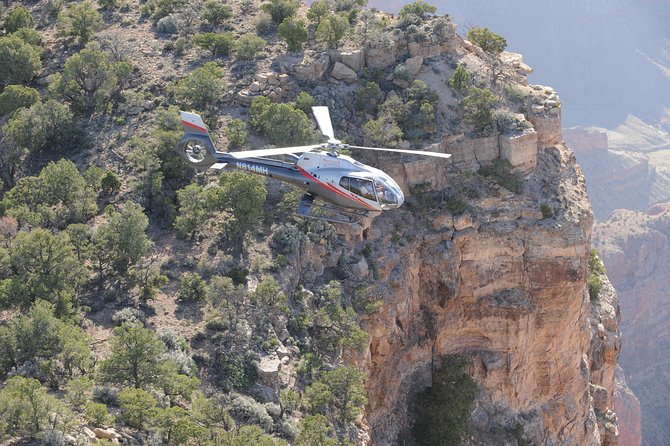
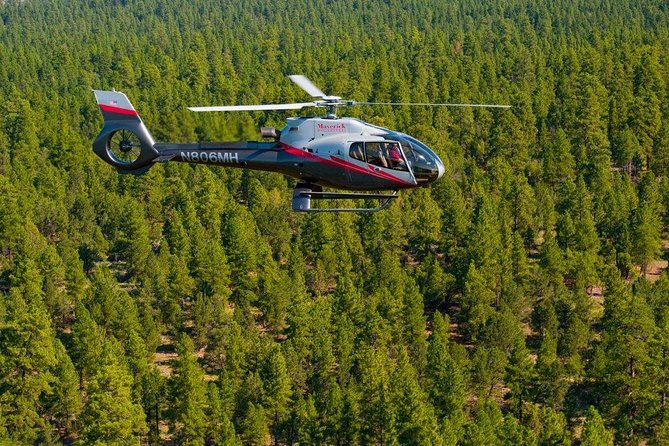
What I really like is the aircraft setup and the onboard experience. The ECO-Star helicopter has wraparound panoramic windows and you fly in the EC130 class, with headsets for commentary; several pilots (Forrest, Drew, Dylan, Gabriel, Dunkin, and Jeff are just a few named in recent feedback) are described as smooth, professional, and willing to explain what you’re looking at.
One consideration: your experience depends a lot on flight conditions and logistics. You’ll need original photo ID at check-in, you won’t get guaranteed seating as seats are assigned by weight and balance, and if the winds are up or weather turns, your schedule can change.
In This Review
- Key things I’d circle before you book
- Entering the Grand Canyon by air from Tusayan
- ECO-Star comfort and the EC130-style helicopter experience
- South Rim departure: Kaibab National Forest first
- The canyon opens up: rim-to-rim visuals you can actually map
- Painted Desert and Desert View Watchtower from the air
- Marble Canyon: seeing the canyon’s beginning marker
- Point Imperial and the North Rim high ground
- The Dragon Corridor: widest and deepest section
- Back over the Colorado and South Rim landing approach
- Timing: how to pick a departure time that fits your photos and comfort
- Price and value: why $394.88 can feel worth it
- Who should book—and who should think twice
- Should you book this Grand Canyon helicopter flight?
- FAQ
- FAQ
- Do you need a photo ID to fly?
- Is there a minimum age to take the 45-minute helicopter flight?
- What are the seating rules on the helicopter?
- What’s the weight limit, and what if someone is over it?
- Does the tour include hotel pickup?
- What helicopter is used for this flight?
- What happens if weather is bad?
Key things I’d circle before you book
- Both rims in one short flight: South Rim to North Rim and back, so you don’t spend your whole day commuting between lookout spots.
- Dragon Corridor time: You fly through the widest/deepest section rather than only skimming the edges.
- Real landmarks from the air: Painted Desert, Desert View Watchtower (70-foot), Marble Canyon, and Point Imperial (8,803 feet) show up clearly on the route.
- Small-cabin feel: The max group size is 7 travelers, which helps it feel less like a cattle call.
- Practical onboard tech: Panoramic windows plus headsets; some pilots even add music through the headset.
Entering the Grand Canyon by air from Tusayan
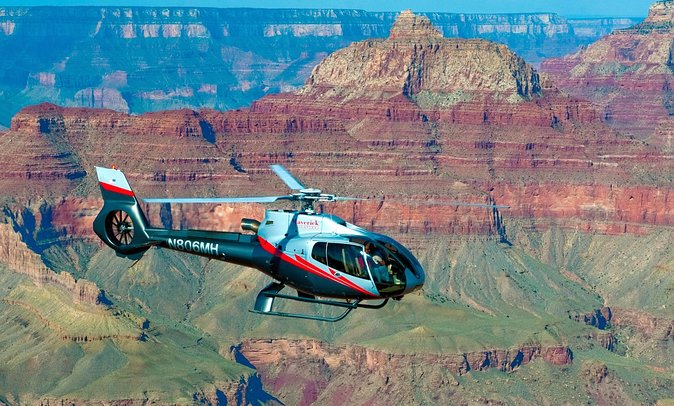
You start in Tusayan, at Maverick Helicopters in Grand Canyon Village (107 Corsair Dr). Then you’re airborne fast enough that it feels like the helicopter ride is its own shortcut through the Grand Canyon’s size and complexity.
The flight itself is about 45 minutes, and that time is used on purpose. Instead of just pointing down from a high altitude, the route aims to give you a “chain” of distinct views: forest, rim drop, desert, river, key landmarks, and then back across the canyon to land.
A big value of flying is speed. By the time a bus or car has you bouncing between several overlooks, you could already be seeing multiple parts of the canyon from the sky—especially the North Rim area, which is harder to access quickly on the ground.
You can also read our reviews of more tours and experiences in Grand Canyon National Park.

ECO-Star comfort and the EC130-style helicopter experience
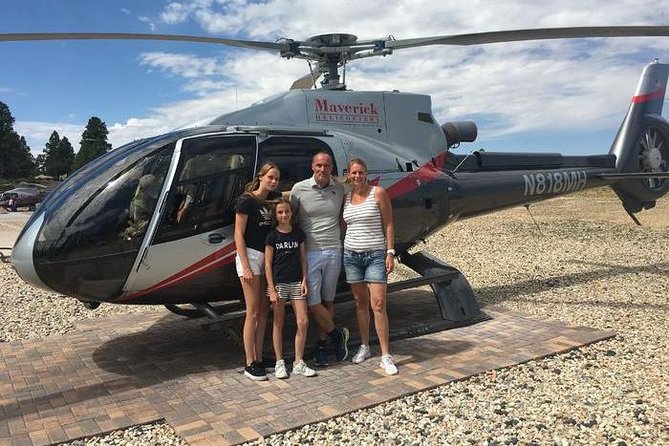
This tour uses Airbus EC130 helicopters (the experience is also marketed as ECO-Star). What matters for you is how that translates into day-of comfort.
You’ll be flying with panoramic windows—wraparound views are the whole point here—so you’re not stuck with one forward-facing view. Several recent flights mention comfortable setups like headsets and an easy, smooth ride. People also highlight the aircraft being in great condition, which matters because you’re paying for the experience, not just the view.
Two practical things to know up front:
- Boarding help is limited. Pilots can’t assist with boarding and disembarking due to insurance rules. If you need physical help getting into vehicles or stairs, plan ahead.
- Weight and balance control the seating. Seats aren’t assigned to keep friends side-by-side. If you’re over 275 lbs (124 kg), you may need an additional seat (paid directly to the operator on the day of the tour).
Also, the cabin is set up for safety and comfort, and most people walk away feeling at ease. The common theme in recent feedback is that the flights feel smooth and well-managed, with pilots sharing context through the headset.
South Rim departure: Kaibab National Forest first
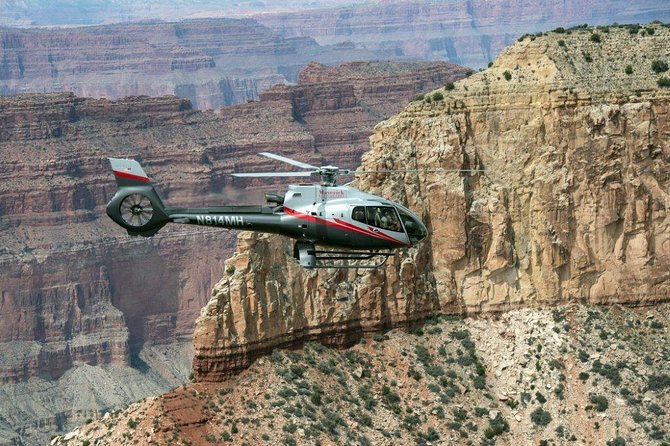
After check-in, you lift off from the South Rim of the Grand Canyon area. The early part of the flight is almost like a warm-up act: you see the canyon country easing from trees into rock.
You fly over Kaibab National Forest, which is huge—about 1.6 million acres—and sits between both rims. This area is famous for ponderosa pines, and the flight route calls out the fact that it’s home to the world’s largest ponderosa pine stand. From the air, that’s a different kind of wow: the forest has scale, texture, and patterns you simply don’t notice from a roadside pull-off.
Then the view changes. The South Rim drops away, and suddenly the canyon opens like a giant viewfinder. That transition is one of the most satisfying parts of the flight because it turns the canyon from a distant idea into the thing you’re actually flying over.
The canyon opens up: rim-to-rim visuals you can actually map
Once you’re at the edge of the canyon, the North Rim and the east end come into view. This is where the air advantage becomes obvious.
On the ground, you get fragments: one overlook, one angle, one section. From the helicopter, you start to connect the dots. The route is built to help you build a mental map quickly—so when you later look at photos or read about the area, it clicks.
If you love photography, this segment is a big deal. You’re not just photographing rock; you’re photographing relationships: rim versus river, desert versus forest, and the way the canyon walls change as you move along the route.
Painted Desert and Desert View Watchtower from the air
As you continue, the flight follows the Colorado River upstream at a distance. That distance matters because it helps you see the canyon as a system rather than a single dramatic drop.
On the route, you get views of:
- the Painted Desert area (the route describes it as spanning 146 square miles), and
- Desert View Watchtower, a National Historic Landmark that’s 70 feet (21 meters) tall.
From above, the Watchtower isn’t just a tall structure. It becomes a point on the map, a way to anchor your understanding of where you are along the canyon’s long story. From the air, it’s also easier to see how the watchtower relates to the canyon’s edges and the surrounding terrain.
One thing to keep in mind: lighting and glare can change depending on time of day and cloud cover. The window setup helps, but you’ll still want to watch reflections and wear sunglasses so you can see what you’re filming and not just the glass.
Marble Canyon: seeing the canyon’s beginning marker
Next up is Marble Canyon, described as the section of the Colorado River that marks the beginning of the Grand Canyon. That phrasing might sound like trivia, but from a sky-view it becomes meaningful.
If you’ve ever felt like the canyon is just one continuous wow, Marble Canyon gives you a different kind of perspective. You’re seeing a beginning point, not only the biggest scorched-rock theatrics. It helps you understand the canyon as a landscape shaped by time, water, and erosion—rather than only a dramatic hole in the ground.
This is the kind of moment that makes a short helicopter ride feel longer in value. You’re not just collecting views; you’re learning how the canyon is organized.
Point Imperial and the North Rim high ground
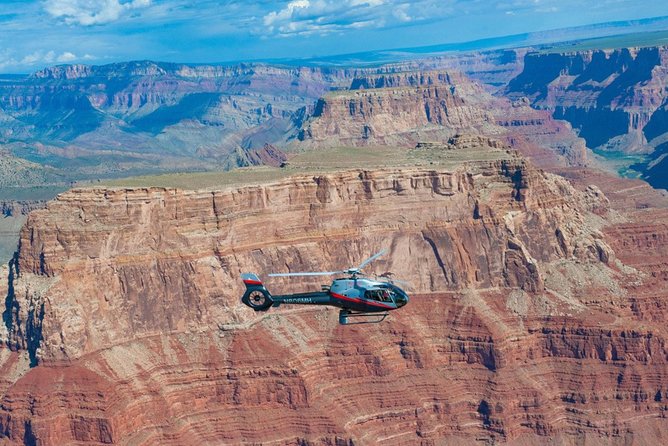
Then the route shifts toward the North Rim highlight: Point Imperial, described as the highest point on the North Rim at 8,803 feet (2,683 meters).
From the air, high points like this don’t feel like a single overlook. They feel like a stage: you can see how the terrain rises, how the canyon drops away, and how the Painted Desert looks from above. It’s the kind of perspective that helps explain why this area is so important on maps and in classic canyon imagery.
If you’re the sort of person who likes to recognize landmarks later, this is a prime segment. You’ll likely come back with at least a few locations you can point to—because the route is named, not just implied.
The Dragon Corridor: widest and deepest section
Here’s the big-ticket segment: flying through the Dragon Corridor, described as the canyon’s widest and deepest section.
This is the part that often justifies the price in one go. It’s not only that the canyon looks dramatic. It’s that the canyon looks thick—wider and deeper in a way that changes how your brain processes the space. After this, you may find it hard to describe the canyon without leaning on superlatives, even if you try not to.
You also get that rim-to-rim feeling again: you’re above enough to understand scale, and close enough to feel the canyon’s shape. It’s an unusual mix, and it’s exactly why helicopter tours work when done with a route like this one.
Back over the Colorado and South Rim landing approach
At the end of the flight, the helicopter crosses back over the Colorado River, then flies over the South Rim and returns toward the Kaibab National Forest to land.
This “return” portion matters more than you might think. It’s your chance to catch any view you missed while you were focused on one key landmark. It’s also when the canyon can look fresh again, because you’re approaching from a slightly different angle and your brain is now primed to read the canyon’s layers.
Then you’re back at the meeting point. No hotel drop-offs are included, so plan on handling your own transport to the Maverick Helicopters terminal in Grand Canyon Village.
Timing: how to pick a departure time that fits your photos and comfort
The flight options include a range of departure times. In general, here’s how I’d choose, using what the operator suggests and what makes sense from experience:
- Sunset flights are the most popular. Expect warm light and softer shadows, which can make canyon texture look extra dramatic.
- Midday flights can offer more detailed views of canyon walls because the light is stronger.
- Early mornings in summer can be cooler, and the operator notes that canyon temperatures can be gentler then.
Weather matters a lot. Helicopter flights require good conditions, so even the best plan can shift. If you’re flexible, you can often pick a backup time that gives you a better chance of flying as scheduled.
Price and value: why $394.88 can feel worth it
At $394.88 per person for about 45 minutes, this is not a bargain. But value isn’t only about cost per minute. It’s about what you’re buying: access to a view that’s extremely hard to replicate by car, and a route that intentionally covers multiple named features.
A few value factors that help justify the spend:
- The price includes all local taxes and fees, so you’re not chasing surprise add-ons.
- The flight covers both rims and multiple landmarks in one go, which is a huge time-saver.
- The group size max is 7 travelers, so the cabin experience feels more personal than big-vehicle sightseeing.
- You’re flying over major named features: Painted Desert, Desert View Watchtower, Marble Canyon, Point Imperial, and the Dragon Corridor.
The main “value pinch” for some people is logistics: no hotel pickup and no guarantee of seating together. If you’re traveling as a family or you’re sensitive to noise and sound clarity, you’ll want to arrive early so check-in runs smoothly and you can settle in with the headset before takeoff.
Who should book—and who should think twice
This tour fits best if you want a high-impact experience with minimal time. I’d put it in the bucket of:
- First-timers to the Grand Canyon who want both rims without turning your trip into a driving marathon.
- People celebrating something, since it’s a short, memorable story you can tell later.
- Photo-minded travelers who want views you simply can’t get from standard overlooks.
It may be less ideal if:
- You’re expecting a flexible roadside-style experience. This is aviation, and weather can change plans.
- You need mobility assistance boarding. The pilot can’t help with entry or exit, and seating is controlled by weight and balance.
- Your travel party depends on sitting in a specific row or next to specific people. Seating is assigned after check-in.
A small note: the operator says service animals aren’t permitted on helicopter flights, and bottled water is the only allowed drink on board. If that affects your planning, factor it in early.
Should you book this Grand Canyon helicopter flight?
If you can swing the price, I think you should book it—especially if you want an aerial view that connects South Rim, North Rim, the river, and the canyon’s “big moments” in a single half-hour-and-change span.
My personal decision rule is simple: if the Grand Canyon is a once-in-a-lifetime stop for you, you’re paying to compress understanding into one unforgettable flight. The route is set up for that. And the strong pattern in recent experience is that pilots run a smooth, professional operation, which helps you relax and enjoy the view instead of second-guessing the ride.
FAQ
FAQ
Do you need a photo ID to fly?
Yes. Passengers age 18 and older must show original government-issued photo ID at check-in. Photocopies and digital IDs aren’t accepted, and you won’t be checked in without the required ID.
Is there a minimum age to take the 45-minute helicopter flight?
There’s no stated minimum age. Children under 2 are considered lap children if you have valid paperwork, and they fly at no cost.
What are the seating rules on the helicopter?
Seating is assigned based on legal weight and balance limits after check-in. The operator can’t guarantee seating next to or in the same row as the rest of your party.
What’s the weight limit, and what if someone is over it?
Total weight per passenger is capped at 275 lbs (124 kg). If you’re over 275 lbs, you may be required to purchase an additional seat, paid directly to the operator on the day of the tour.
Does the tour include hotel pickup?
No. Hotel pickup and drop-off are not included, so you’ll need to get to the meeting point by your own means.
What helicopter is used for this flight?
Flights use EC130 helicopters by Airbus Helicopters.
What happens if weather is bad?
This flight requires good weather. If it’s canceled due to weather, you’ll be offered a different date or a full refund. Pilots decide whether it’s safe based on conditions and the guest experience.