
REVIEW · AUSTIN
Austin and Hill Country Sightseeing Tour
Book on Viator →Operated by AO Tours Austin · Bookable on Viator
Austin can feel like a puzzle. This tour gives you the box top: 90 minutes, lots of mileage, and a local guide pointing out what to care about. You’ll rack up 50+ drive-by stops across downtown, music landmarks, bridges, parks, and a taste of the surrounding Hill Country, all from the comfort of a Mercedes-Benz sprinter van with A/C.
I love the small group size (max 14) because it makes the guide’s stories feel more personal, even though the route is fast. I also like that you get an Austin nutshell—Texas Capitol to Bat Bridge to Lady Bird Lake—so you leave with a smart list for what to return to. One drawback: much of it is a see-it-from-the-van style, so photo angles can be tough and the pace can feel rushed at times.
In This Review
- Key highlights at a glance
- How the Austin and Hill Country sprinter-van tour really feels
- Value for $33: what you’re actually paying for
- Your start point on E 5th Street: the downtown launchpad
- 2nd Street District, Willie Nelson Boulevard, and City Hall: the downtown clues you’ll reuse
- Texas Capitol, UT Main Campus, LBJ Library, and the big political Austin route
- Austin City Limits filming, Moody Theater, and 6th Street vibes
- Lady Bird Lake: Long Center, dog park moments, and performing arts landmarks
- Zilker and Barton Springs area: cool-off Austin basics on a tight schedule
- Bat Bridge, Wild Basin, and Hill Country habitat hints
- Bridges and viewpoints: Percy V. Pennybacker Jr. Bridge, Lake Austin, and Mount Bonnell
- Museums, theaters, sculptures, and the offbeat Austin stops you’ll remember
- Practical photo and timing reality: windows, traffic, and the “keep moving” rhythm
- Food, downtime, and what to do after the tour
- Should you book this Austin and Hill Country tour?
- FAQ
- How long is the tour?
- How much does it cost?
- What vehicle do you ride in?
- Is the ticket mobile?
- Does the tour include food?
- Are there stops or is everything drive-by?
- Do I need a child safety seat?
- What’s the maximum group size?
- Is it easy to cancel if plans change?
Key highlights at a glance
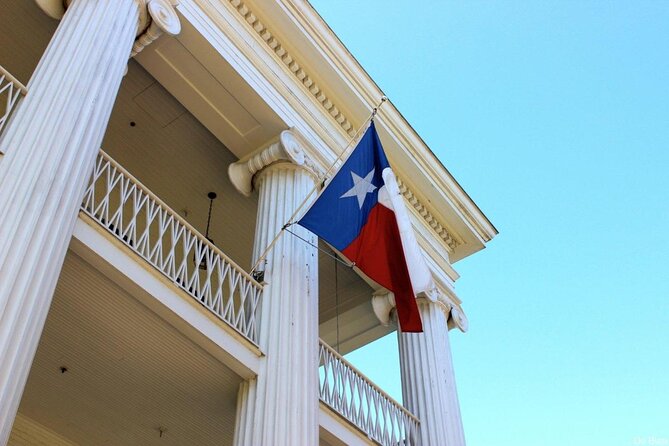
- Air-conditioned Mercedes sprinter comfort for a fast 30-mile loop
- Austin in a nutshell: 50+ points of interest without you needing a plan
- Hill Country icons on the route, from Bat Bridge to Mount Bonnell
- Music and TV touchpoints, including filming connections like Austin City Limits
- Nature breaks around Lady Bird Lake and parks, with peacocks and dogs included
- Local guide mix of live commentary + scripted narration, which can change how engaging it feels
How the Austin and Hill Country sprinter-van tour really feels
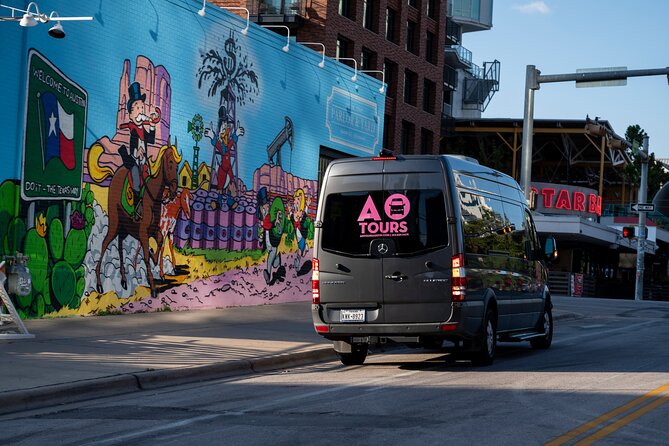
This is a 1 hour 30 minutes Austin sampler priced at $33 per person. The big value isn’t one single stop—it’s the way the route strings together neighborhoods and landmarks so you can understand where things sit in relation to each other. If you’re trying to build your own day plan, this kind of “orientation loop” pays off fast.
You’ll be riding in an air-conditioned Mercedes-Benz sprinter van, which matters in Austin’s heat. The tour uses a combination of live commentary and scripted narration, and it’s designed to move steadily while still giving context. The group is capped at 14 travelers, so it’s not a giant bus chaos-fest.
The “whistle-stop” style is exactly what it sounds like: you get to see a lot, then you go back later for the deeper stuff. In practice, that means you shouldn’t book this expecting long stops at every landmark. It works best when you think of it as your first-day map.
You can also read our reviews of more tours and experiences in Austin.



Value for $33: what you’re actually paying for
At $33, you’re buying three things: time, organization, and interpretation. Driving yourself through Austin can work, but it can also mean you spend your energy on traffic and parking instead of learning what you’re looking at. Here, the route is set up to hit the headline sights plus a bunch of “how locals think about Austin” context.
You also get small extras that help it feel like a real experience, not just a bus ride. The tour includes a PinkTag Partner souvenir luggage tag, plus a mobile ticket for easy entry.
If you’re the type who wants to get oriented quickly—Capitol, UT, Lady Bird Lake, the big bridges, the parks—this price can feel like a bargain. If you’d rather linger at places and take time for photos, you may wish you booked the longer option (the 2.5-hour version is mentioned as a take-with-stops alternative).
Your start point on E 5th Street: the downtown launchpad
The tour meets at 103 E 5th St., Austin and you start there for the official beginning of the experience. The itinerary lists an initial meeting stop at the tour provider location, and the listed time there is about 20 minutes.
This matters because downtown is where a lot of Austin landmarks cluster. Starting on 5th puts you close to the energy of central Austin—walkable areas, museums, and major roads that feed into the rest of the city. It also makes it easier to build the rest of your day afterward, since you’re not being dropped at some far-off edge of town.
Also: the tour ends back at the meeting point, so you’re not guessing your way back.
2nd Street District, Willie Nelson Boulevard, and City Hall: the downtown clues you’ll reuse
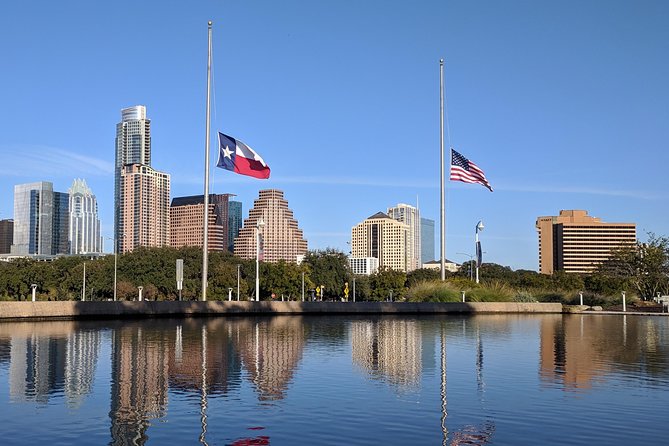
Once you’re rolling, one of the first helpful lessons is how Austin’s downtown pieces connect. You’ll pass through the 2nd Street District, which is described as a mix of local retail, restaurants, living, and entertainment. It’s the kind of area you can enjoy even if you only have a few hours, because it’s walkable and close to other sights.
From there, you’ll spot the Willie Nelson statue on Willie Nelson Blvd (formerly 2nd St.). This is more than a photo moment—it’s a reminder of how deeply music is stitched into the city’s identity.
Then you pass Austin City Hall, constructed in 2004. A quick architecture stop might not sound exciting, but it’s part of learning the “Austin of now” story alongside the “Austin of legends.” Seeing City Hall early helps you place the Capitol and the civic center later in the route.
Texas Capitol, UT Main Campus, LBJ Library, and the big political Austin route

A major thread of this tour is civic Austin—government, universities, and the institutions that shape policy and culture. You’ll pass by Historic Congress Ave, the Texas Capitol, and UT Main Campus, plus multiple civic and educational stops around downtown.
As the van moves through the city center, you’ll also see Austin Public Library and the LBJ Library. The route description includes the governor’s mansion and UT Stadium, plus a number of museum and performing arts areas near the university corridor.
One practical benefit: you get a sense of how much UT and downtown overlap in day-to-day life. If you’re planning a future visit—campus walk, library stop, or a museum afternoon—this tour helps you avoid the classic mistake of treating everything downtown like it’s all the same distance.



Austin City Limits filming, Moody Theater, and 6th Street vibes

Austin is famous for music, and this tour leans into that in a smart, practical way. You’ll get filming-related context with Austin City Limits, and the route also points you toward the Moody Theater (where Austin City Limits is filmed) and 6th Street.
This is where the local guide storytelling can make a real difference. Even with fast drive-bys, these are the landmarks that help you understand Austin’s music circuit beyond names and slogans. It also sets you up to choose what kind of night you want—quiet, live music, or classic party energy.
Just keep your expectations aligned with the format. This isn’t a walking tour where you stop at every venue. You’ll learn what’s what, then you decide later how long you want to stay.
Lady Bird Lake: Long Center, dog park moments, and performing arts landmarks
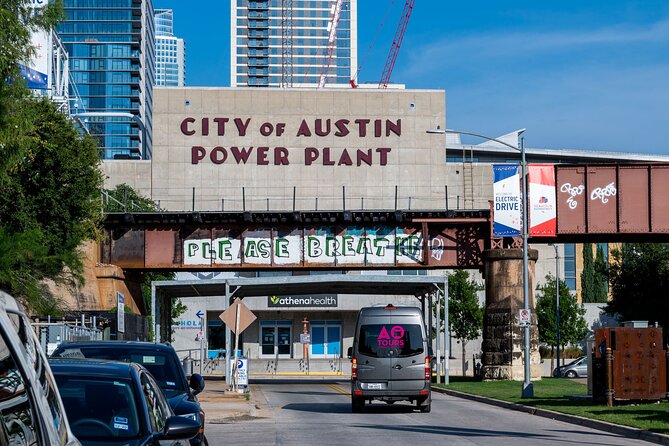
If downtown is Austin’s brain, Lady Bird Lake feels like its shared living room. The itinerary includes the Joe R. and Teresa Lozano Long Center for the Performing Arts along Lady Bird Lake, plus the Palmer Events Center with a view of downtown.
You’ll also pass an off-leash dog park along Lady Bird Lake. That sounds like a small detail, but it’s exactly the kind of everyday Austin texture that helps the city feel real instead of just postcard landmarks.
The route also includes an Austin Public Library pass, plus multiple museum and performing arts areas later on. The effect is that you start to see Austin as a city where arts aren’t separate from daily life—they sit inside it.
Zilker and Barton Springs area: cool-off Austin basics on a tight schedule
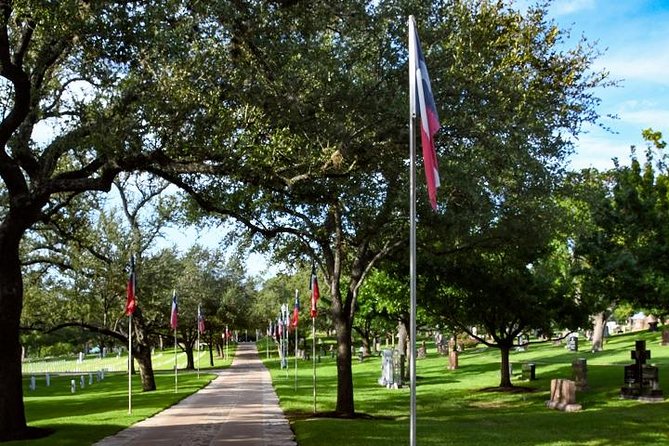
Austin’s parks show up in the tour for a reason: they’re where people recharge. You’ll pass Barton Springs Pool as an Austin icon, and you’ll also see Zilker Metropolitan Park, described as Austin’s most-loved park and a 351-acre space for recreation and special events.
Later, the route also references a spring-fed creek that feeds into Lady Bird Lake, adding another layer of the city’s water story. These nature details are short, but they’re useful because they help you understand why Austin’s outdoor life is such a big deal.
If you’re visiting in warmer months, this section can nudge you toward making time for a swim or a park evening. You won’t be doing the full experience from the van—but you’ll know where to aim your next visit.
Bat Bridge, Wild Basin, and Hill Country habitat hints
Hill Country Austin isn’t just “out there.” It starts right on the city edge, and this tour points you toward that. You’ll pass the Bat Bridge (Congress Avenue Bridge) where bats live, and the seasonal note is March to September for the bat watching crowd.
You’ll also see Wild Basin Wilderness Preserve, listed as 227 acres of native Hill Country habitat west of Austin, with 2.5 miles of hiking trails mentioned. Again, you don’t get a hike here, but you get the location and the idea. That’s helpful if you’re planning a half-day outdoors plan later.
This is the part of the tour where the local guide’s context can turn a quick pass into something memorable. The bat bridge especially: even a drive-by can make you want to build the timing for a real evening visit.
Bridges and viewpoints: Percy V. Pennybacker Jr. Bridge, Lake Austin, and Mount Bonnell
For scenic driving, the route leans hard into bridges and viewpoints. You’ll pass the Percy V. Pennybacker Jr. Bridge across Lake Austin, described as a scenic urban drive and part of Loop 360. This is one of those Austin features people talk about because it shows how the city and hills interact visually.
Then you’ll see Lake Austin and Bull Creek. After that comes Mount Bonnell (also called Covert Park)—a long-used lookout with a view over Austin, Lake Austin, and the surrounding hills.
This section is one of the most rewarding on a short schedule because it gives you perspective fast. If you’ve only seen Austin from roads close to downtown, Mount Bonnell-style views help you understand the shape of the whole region.
Museums, theaters, sculptures, and the offbeat Austin stops you’ll remember
This is not just a list of famous buildings. The tour also threads in arts and culture that help Austin feel quirky in the best way.
You’ll pass Zach Scott Theatre, described as the oldest continuously active theater company in Texas. You’ll also catch a stop tied to popular food culture: Green Mesquite BBQ is referenced as having been featured on Guy Fieri’s Food Network show.
You’ll see UMLAUF Sculpture Garden & Museum, described as home to the largest collection of Charles Umlauf’s work. There’s also mention of a calm moment by a spring-fed creek leading into Lady Bird Lake, which adds a softer pace inside the drive-by intensity.
Then there’s Mayfield Park and Preserve, noted for peacocks and described as a peaceful historic estate park given to Austin in 1971. It’s small, unusual, and very Austin.
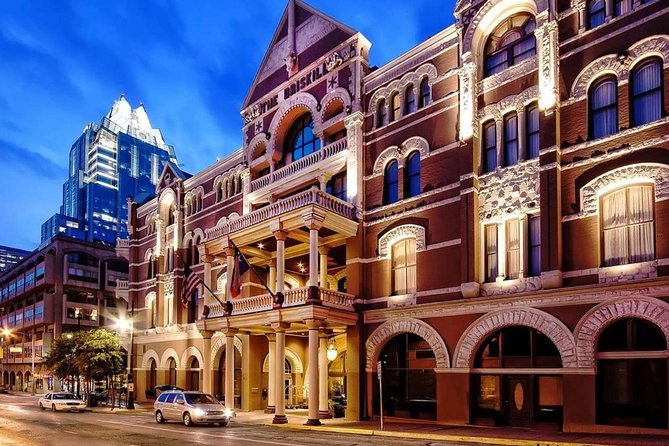
On the historical side, you’ll pass Historic Freedmen’s Community, described as the oldest high school west of the Mississippi. The tour also includes French Legation, and several stops around historic towers and a historic hotel on Brazos St.
The mix matters because it prevents the tour from turning into only sightseeing. You start to see Austin’s layers: entertainment, education, civic power, and everyday locals’ stories all moving in the same orbit.
Practical photo and timing reality: windows, traffic, and the “keep moving” rhythm
A couple things to plan for based on the experience format.
First, many points are seen from the van. One review detail highlights the challenge: windows and traffic flow can make it hard to photograph landmarks on the far side of the vehicle. Translation: sit on the side of the van that gives you the best sightlines when the guide points things out.
Second, the pacing can vary. Some people enjoyed that the stops felt well timed and not rushed. Others felt the pace was intense, and the commentary felt like it had a heavy prerecorded component compared to the driver’s live style. That doesn’t make it bad—it just means you should show up knowing it’s a fast orientation tour.
If you care most about a few must-see spots (Capitol, UT, Bat Bridge), keep your expectations realistic. This tour is a taster, not a long stay at every highlight.
Food, downtime, and what to do after the tour
Food and Austin culture show up in the route, but you’re not served anything on the tour. You can bring your own food and beverage, and that can be a smart move if you’re stacking this with museum time afterward.
You’ll also hear food-related anecdotes tied to places you pass, including Chuy’s and Green Mesquite BBQ. The point here is planning: the guide’s suggestions help you decide what kind of meal you want next—casual comfort, local BBQ, or something that fits the mood you’re in after seeing so many sights.
My advice is to treat the tour like a brainstorming session. Jot down 2 to 4 places you want to revisit in the evening or the next day—parks for sunset, a campus walk, a museum stop, or one of the music areas.
If you’re only in town for a short time, that strategy keeps you from spending the rest of your trip doing random driving that doesn’t line up with your interests.
Should you book this Austin and Hill Country tour?
Book it if you want fast orientation, a cool A/C ride, and a guide who helps you connect the dots between downtown, music, parks, bridges, and Hill Country scenery. It’s especially useful as a first-day tour, when you’re not sure where to go next and you need a mental map before committing to specific plans.
Skip it (or consider the longer option) if you hate drive-by sightseeing and need frequent stops for photos. Also, if you’re very sensitive to timing, know that traffic and the tour’s quick format can make the experience feel rushed.
If you’re trying to understand Austin quickly—politics, music, water, and hill views—this is a solid way to start. You’ll leave knowing what you want to circle back to.
FAQ
How long is the tour?
The tour runs about 1 hour 30 minutes.
How much does it cost?
It costs $33.00 per person.
What vehicle do you ride in?
You ride in an air-conditioned Mercedes-Benz sprinter van.
Is the ticket mobile?
Yes, it’s a mobile ticket.
Does the tour include food?
No. Food and beverage are not included, though you can bring your own.
Are there stops or is everything drive-by?
You’ll pass many landmarks and also have a structured route with stops listed, but it’s a whistle-stop style tour designed to cover a lot in limited time.
Do I need a child safety seat?
Texas law requires a state-required child safety seat for infants and young children unless they meet the stated height requirement.
What’s the maximum group size?
The tour has a maximum of 14 travelers.
Is it easy to cancel if plans change?
Yes. Free cancellation is available up to 24 hours in advance for a full refund.