REVIEW · COCOA BEACH
Bioluminescence Kayak Tour
Book on Viator →Operated by A Day Away Kayak Tours · Bookable on Viator
Glow in the dark beats any screen. Paddle at night near Merritt Island National Wildlife Refuge and see the water light up with bioluminescence—from dinoflagellates in warmer months to glowing comb jellies in winter. I love two things most: first, the guide-led science talk that makes what you’re seeing feel real (not just pretty), and second, the chance to spot marine life like fish that jump and even the possibility of dolphins or manatees while you’re out there. The only real drawback is that the glow can be hit-or-miss depending on the season and conditions, so you should go with flexible expectations.
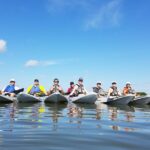
This tour runs about 2 hours, starts at 951 Kiwanis Island Park Rd, and keeps things small enough to feel personal (maximum 42 people). You’ll get a kayak, paddle, and PFD, plus a safety light. You should also be ready to get wet, and in winter it can feel chilly on the water even when the shore feels fine.
If you want a simple plan: dress for damp, bring water shoes, and listen to your guide’s tips. If you’re lucky with timing, you’ll end up with that rare mix of quiet nature and real glowing science floating under your paddle.
In This Review
- Key Things I’d Bet Your Night on
- Where You Paddle: Merritt Island’s Lagoon Just North of Cocoa Beach
- Two Kinds of Bioluminescence: Dinoflagellates vs Comb Jellies
- Summer: cloudy blue-green dinoflagellate glow
- Winter: individual glowing comb jellies
- A key reality check
- The 2-Hour Flow: What Happens Once You’re on the Water
- Wildlife Chances: Fish, Dolphins, Manatees, and the Fun of Not Knowing
- Your Guide Makes the Difference: From Aidan to Zoey to Caleb
- What to Bring: Wet Clothes, Water Shoes, and a Camera Reality Check
- Light Pollution and Off-Season Glow: How to Set Expectations
- Who Should Book This Kayak at Night (and Who Should Think Twice)
- Should You Book This Bioluminescence Kayak Tour?
- FAQ
- How long is the bioluminescence kayak tour?
- Where does the tour start?
- What bioluminescent organisms do you see?
- When is dinoflagellance most likely to be seen?
- When are comb jellies most likely to be seen?
- Are the comb jellies safe to handle?
- What’s included with the tour?
- What should I bring?
- Will my camera work well for the bioluminescence?
- Can I bring a flashlight?
- What’s the cancellation cutoff for a refund?
Key Things I’d Bet Your Night on
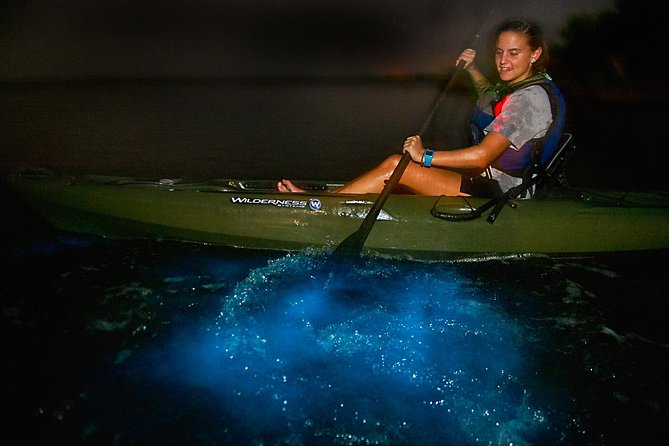
- Season decides the glow: dinoflagellates shine in summer (May to early November), comb jellies glow in colder months (late November to April).
- You’re not just watching, you’re learning: guides explain how the glow works, and they’re the kind who answer every question.
- Marine-life odds are part of the fun: you might see fish flashing in the dark, plus dolphins or manatees depending on what’s out there.
- Most people find it low-stress: the paddle is often described as relaxing, but conditions can change, so don’t ignore wind and choppy water.
- Bring comfort, not gadgets: cameras won’t capture bioluminescence well, but they’re great for getting people shots.
- Get ready for water time: plan for soaking, and keep an extra set of clothes for the ride back.
Where You Paddle: Merritt Island’s Lagoon Just North of Cocoa Beach
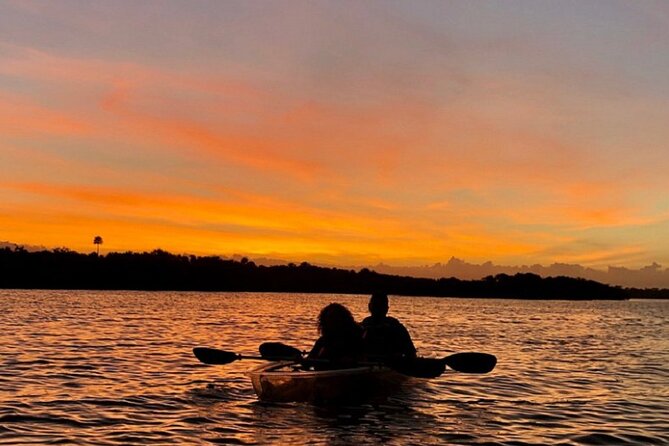
You start at 951 Kiwanis Island Park Rd in Merritt Island, just north of Cocoa Beach. From there, you’re kayaking in protected lagoon-style waters tied to the Indian River Lagoon / Mosquito Lagoon system, where calm water and shoreline scenery (think mangroves and palm trees) help you enjoy the night sky instead of fighting waves.
This is also the kind of place where wildlife can feel close. Even if you never see a dolphin, the water still has a living “background”—small movement, flashes near the surface, and guide-led spot checks that turn the whole trip into a moving nature exhibit.
You can also read our reviews of more tours and experiences in Cocoa Beach.
Two Kinds of Bioluminescence: Dinoflagellates vs Comb Jellies
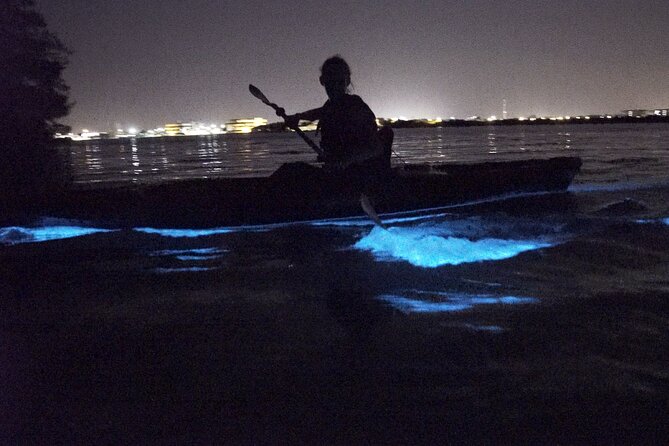
This tour changes with the calendar, and that matters a lot.
Summer: cloudy blue-green dinoflagellate glow
From May to early November, the water can light up with dinoflagellates. These are single-celled organisms that create a cloudy blue-green glow. The glow often looks like the water responds to your paddle—small bursts and trails that make every stroke feel dramatic.
Winter: individual glowing comb jellies
From late November to April, the tour focuses on comb jellies. These are clear, glob-like animals that glow as they move. They’re also called out as not sting, which is a huge comfort factor if you’re nervous about touching wildlife. The protected nature of the Indian River Lagoon helps these glowing animals show up where they’re easier to encounter during a kayak.
A key reality check
Even at peak time, bioluminescence is a natural phenomenon. If it’s not showing strongly that night, you’ll still get a great nighttime paddle with wildlife viewing and science talk—but the glow can be less intense than you imagined from photos.
The 2-Hour Flow: What Happens Once You’re on the Water
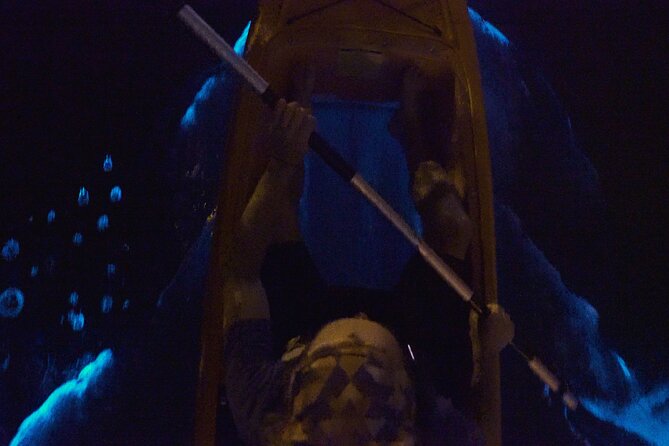
The overall experience is built around time on the lagoon. Plan for roughly two hours total, starting and ending back at the meeting point.
Here’s what that usually feels like from the moment you put in:
- Gear and safety first: you’re given a PFD (flotation device) and a safety light. The guides are careful about keeping everyone together, and they adjust how they move if the water gets choppy.
- Paddle quietly and slow down your movements: this is not a speed-kayak. The pace is meant for looking—at the water, at the edges, and at anything that flashes.
- Guide-led spotting: you’ll be on the lookout for glowing organisms and other wildlife. Fish jumping out of the water is one of the most commonly described surprises because it breaks up the dark with quick motion.
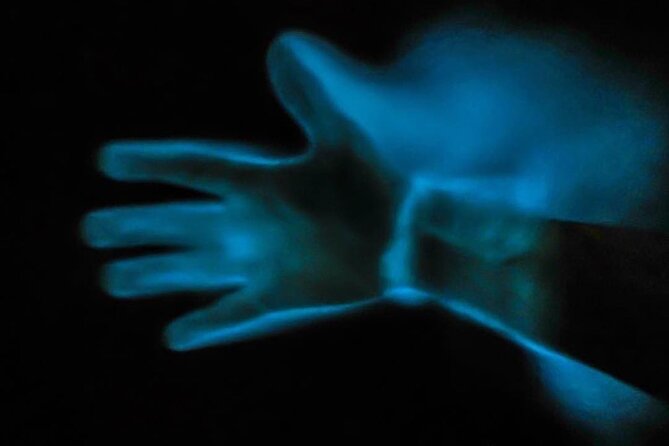
- Opportunities to interact (in a safe way): in colder months, comb jellies are described as being right there while you paddle, and some guides help you hold them so you can understand the glow up close.
One more note: some nights feel glass-calm, and other nights can get a bit rough. Several paddlers say the trip is relaxing for beginners, but a few also mention it can be farther and sometimes choppier than they expected. If you’re very new or you get motion-sick, go in knowing you may need to work a bit to stay steady.
Wildlife Chances: Fish, Dolphins, Manatees, and the Fun of Not Knowing
The wildlife part is real, but it’s still nature. You’re not guaranteed dolphins or manatees, yet that possibility makes the trip feel alive.
What you might spot:
- Dolphins: described as possible during the paddle, especially when wildlife is active near the surface.
- Manatees: also mentioned as something you might see in the area before or during the tour.
- Jumping fish: often called out because they create quick flashes in the dark.
- Glowing organisms: comb jellies or dinoflagellates depending on season.
A practical way to think about it: the glow is the headline, but wildlife is the bonus that makes the night feel like a full event. Even when the glow is softer, animals moving near the kayak can keep the experience exciting.
Your Guide Makes the Difference: From Aidan to Zoey to Caleb
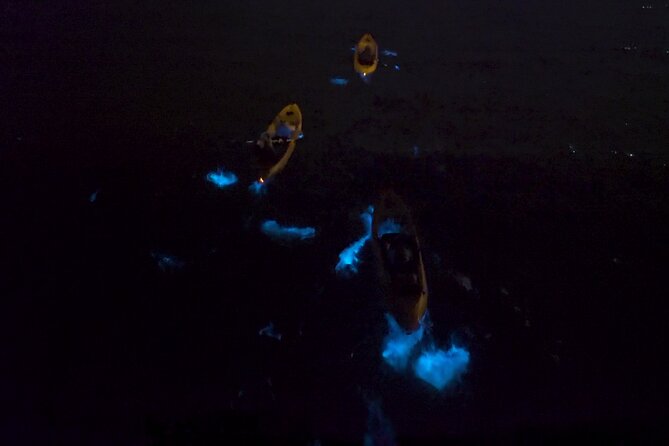
On this kind of tour, a good guide turns “I see something glowing” into “I know what I’m looking at.” That shows up again and again with specific guide names.
I especially liked the variety of guide styles:
- Aidan is described as breaking down the science in a way that makes nervous first-timers feel capable. If you want the biology connection, he’s the name to look for.
- Sean is remembered for science talk so detailed it pulls in even teenagers, with a playful, high-energy feel.
- Matt is credited with strong knowledge and an upbeat vibe even when it’s cold out on the water.
- Caleb and Caleb-adjacent guides are praised for pointing out wildlife and keeping the group engaged.
- Jorge and Jessie get high marks for being fun and knowledgeable, not just lecturing from shore.
- Zoey comes up as careful with safety and group management, which matters when the water changes.
Some guides also bring humor—dad jokes are mentioned—without losing the practical focus. The best sign you found the right guide is simple: you feel taken care of, and you know what to do with your paddle and your attention.
What to Bring: Wet Clothes, Water Shoes, and a Camera Reality Check
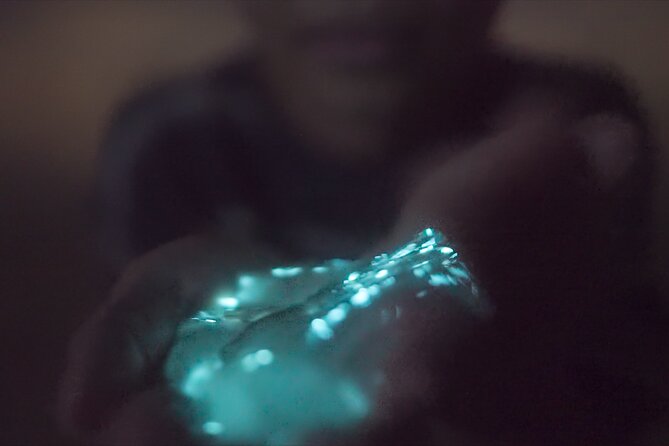
This tour is small, dark, and wet. Your job is to dress for that so you can enjoy the glow.
Bring:
- Clothes you don’t mind getting a little wet
- Water shoes (sandals or Crocs are specifically suggested because they can handle being worn in the water)
- A towel (one tip notes it can be left in your car)
- An extra change of clothes in case you get soaked (it happens)
- Bottled water and snacks
- A dry bag if you have one (optional)
Camera expectations:
- A camera is described as fairly useless for capturing the bioluminescence itself.
- Cameras still work well for people photos—meaning you’ll likely leave with clear shots of your group and you can keep the glow as a memory from your eyes.
Flashlight:
- You may bring one, but the tour provides a safety light, so don’t rely on your own light for navigation.
Temperature heads-up:
- In February, people mention it can be cold out on the water at night. Even if it’s warm near the parking lot, plan for a cooler ride once you’re out in the dark.
Light Pollution and Off-Season Glow: How to Set Expectations
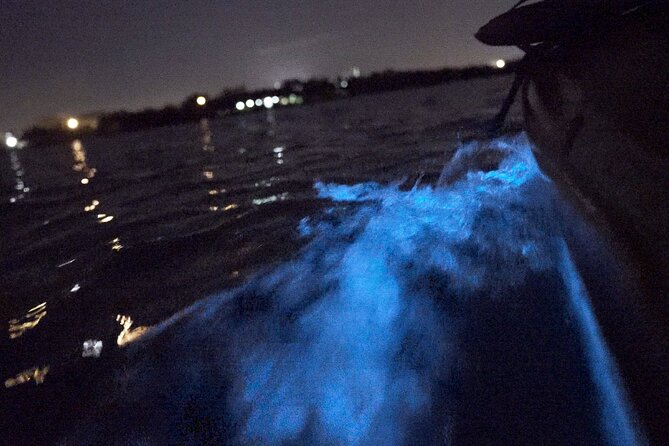
Bioluminescence is affected by timing and conditions. A few important lessons come through clearly from real nights on the lagoon.
In winter—especially around mid-late December—the glow can be less dramatic. One factor is the strength of the organisms that night. Another is light pollution, which can mute the visibility of bioluminescence even when you do everything right.
What I suggest:
- If you’re chasing the strongest glow experience, aim for summer dinoflagellates (May through early November).
- If you’re traveling in winter, treat it as a comb-jelly hunt, not a guaranteed “galaxies in your hand” moment.
- Go out ready to enjoy the night kayaking itself: calm water, stars, wildlife movement, and the guide’s explanations.
Also, bioluminescence is something you feel more than you photograph. If you want a perfect glowing postcard, your phone might let you down. If you want a night you’ll remember, you’re in the right place.
Who Should Book This Kayak at Night (and Who Should Think Twice)
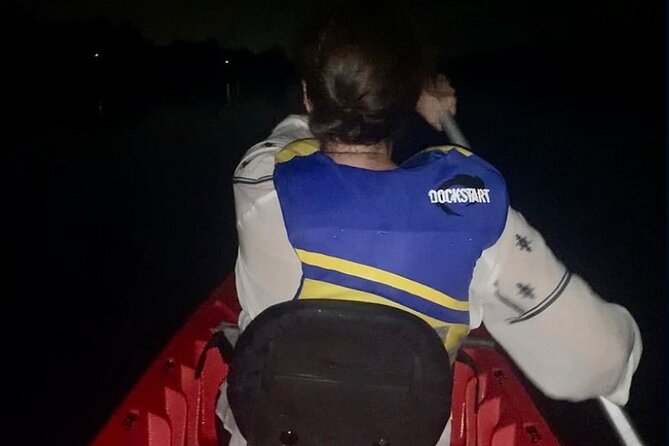
This is a great fit if you:
- Want night kayaking without heavy difficulty
- Like nature and science explanations
- Enjoy gentle adventure and aren’t expecting a workout
- Travel as a family, couple, or solo and want a shared experience
It’s also repeatedly described as working even for kids—one family notes a 5-year-old did well. That makes sense: the pace is slow, the group is guided, and the tour is designed for watching rather than racing.
Think twice if you:
- Are very sensitive to cold nights and hate getting wet
- Expect guaranteed bright glow every minute (nature doesn’t promise that)
- Can’t handle the idea that water may be choppier than a “calm lagoon” assumption
If you’re a first-time kayaker, that can be totally fine. Many first-timers say the guides help you get comfortable quickly. Just pick an outing when weather looks reasonable and wear the right shoes.
Should You Book This Bioluminescence Kayak Tour?
Book it if you want a rare Florida night where biology and scenery meet. I think this tour is best for people who enjoy learning while doing—because the glow is cool, but the guide’s explanations are what make the experience stick with you.
Skip or adjust expectations if you’re traveling in a period when the glow is known to be less reliable, or if you’re hunting for a highly predictable visual effect. Even then, you’ll still get a guided nighttime paddle with wildlife potential and real hands-on moments around glowing comb jellies in season.
If your goal is simple: see the water light up, learn why it happens, and enjoy a calm night on the lagoon—you’ll likely feel you got your money’s worth.
FAQ
How long is the bioluminescence kayak tour?
The tour runs about 2 hours.
Where does the tour start?
The meeting point is 951 Kiwanis Island Park Rd, Merritt Island, FL 32953, USA. The tour ends back at the meeting point.
What bioluminescent organisms do you see?
In summer you’re looking for dinoflagellates (a cloudy blue-green glow). In winter you’re looking for comb jellies (individual glowing jellies).
When is dinoflagellance most likely to be seen?
Dinoflagellance season is listed as May to early November.
When are comb jellies most likely to be seen?
Comb jellies are listed as late November to April.
Are the comb jellies safe to handle?
They’re described as not sting, and the tour experience includes opportunities to catch or hold them in season.
What’s included with the tour?
You get a 2-hour kayak tour, a professional guide, a kayak and paddle, and a PFD (flotation device).
What should I bring?
Bring clothes you don’t mind getting a little wet, water shoes, a towel, and an extra change of clothes. Water and snacks are also recommended. A dry bag and camera are optional.
Will my camera work well for the bioluminescence?
A camera is described as fairly useless for capturing the bioluminescence, though it can still be good for photos of people.
Can I bring a flashlight?
You can bring a flashlight, but the tour also provides a safety light.
What’s the cancellation cutoff for a refund?
You can cancel up to 24 hours in advance for a full refund. If you cancel within 24 hours of the experience start time, you won’t receive a refund.