
REVIEW · NEW ENGLAND AQUARIUM
Boston: New England Aquarium Skip-the-Line Entry Ticket
Book on GetYourGuide →Operated by New England Aquarium · Bookable on GetYourGuide
Skip-the-line makes aquarium day feel easy. This ticket gets you through the busiest moments fast, then you start at the penguin colony before heading into the Giant Ocean Tank and coral reef views. I love that it starts you with something instantly engaging for both kids and adults, and I also love how much of the animal viewing is built around big, clear sight lines.
One thing to keep in mind: once you’re inside, it can still get crowded in the most popular areas. So if you hate pushy crowds, plan your route and arrive with a simple game plan.
In This Review
- Key points worth knowing before you go
- Skip-the-line entry at the New England Aquarium: what happens at the door
- Start at the penguin colony on Level 1 (it sets the mood fast)
- Giant Ocean Tank: 4 stories of Caribbean reef viewing
- Yawkey Coral Reef Center and the spiral walkway with sharks, eels, and more
- Atlantic Harbor Seals outside on the Front Plaza: a great pre-entry stop
- Marine Mammal Center: open-air California sea lions
- Pacific Community Reef and the rainbow-colored fish show
- Amazon Rainforest: piranhas and anacondas
- A practical route for your day: how to avoid wasted time
- Price and value: is $39 per person a good deal?
- Who this ticket is best for (and who should plan differently)
- Should you book this New England Aquarium skip-the-line ticket?
- FAQ
- How much is the Boston New England Aquarium skip-the-line entry ticket?
- How long is the ticket valid?
- What does the skip-the-line ticket include?
- What is not included with admission?
- Where do I go to use the ticket?
- What animals and exhibits can I see with the ticket?
- Can I see the harbor seals before entering the aquarium?
- Are children 2 and under free?
- Is the aquarium wheelchair accessible?
- What are the key features of the Giant Ocean Tank?
Key points worth knowing before you go

- Skip-the-line entry helps you avoid the longest waits at the entrance.
- Penguins first: Level 1 colony surrounds the Giant Ocean Tank.
- Giant Ocean Tank specs: 4 stories, 26 feet deep, 40 feet wide, 200,000 gallons, heated to 72 to 75 F.
- Harbor seals outside: a 42,000-gallon exhibit on the Front Plaza can be visited before you enter.
- Many themed stops: Pacific reef, open-air sea lions, and an Amazon Rainforest area with piranhas and anacondas.
Skip-the-line entry at the New England Aquarium: what happens at the door
This is a straightforward, practical ticket: you go directly to the aquarium entrance and have your barcoded ticket scanned. That’s it. No meeting room. No maze. You’re meant to get your feet moving while others are stuck figuring out where to stand.
The big win here is time. You’re paying $39 per person to reduce the most annoying part of an aquarium visit: waiting. If you know you’ll have limited hours in Boston, those saved minutes matter.
Also watch the fine print on timing. This ticket is valid for one day, but starting times depend on availability, so pick a time that fits your day. And if you’re traveling with little kids, note that children 2 and under are free but still need a timed entry ticket.
Start at the penguin colony on Level 1 (it sets the mood fast)

Your visit naturally begins with the penguin colony, on Level 1, around the Giant Ocean Tank. Penguins are not shy about being the center of attention, and starting here gives you an early “wow” before you’ve even worked up your legs.
You’ll see more than 80 penguins, including African penguins. The aquarium breeds African penguins as part of a Species Survival Plan, so this stop is not just entertainment. It’s also a reminder that aquariums can contribute to real conservation work.
If you’re visiting with kids, this opening section helps a lot. You can keep attention focused early, then the rest of the day feels more like exploring than waiting.
Giant Ocean Tank: 4 stories of Caribbean reef viewing

This is the main event. The 4-story Giant Ocean Tank is designed for maximum sight lines, including 360-degree views as you move through the experience. At the deepest point it reaches 26 feet, it’s 40 feet wide, and it holds 200,000 gallons of salt water.
The tank is also engineered for comfort for the animals. The water is heated to about 72 to 75 F, which is a big clue that what you’re seeing is not a temporary display. It’s a controlled habitat meant to support tropical marine life.
What you’ll look for while you’re there:
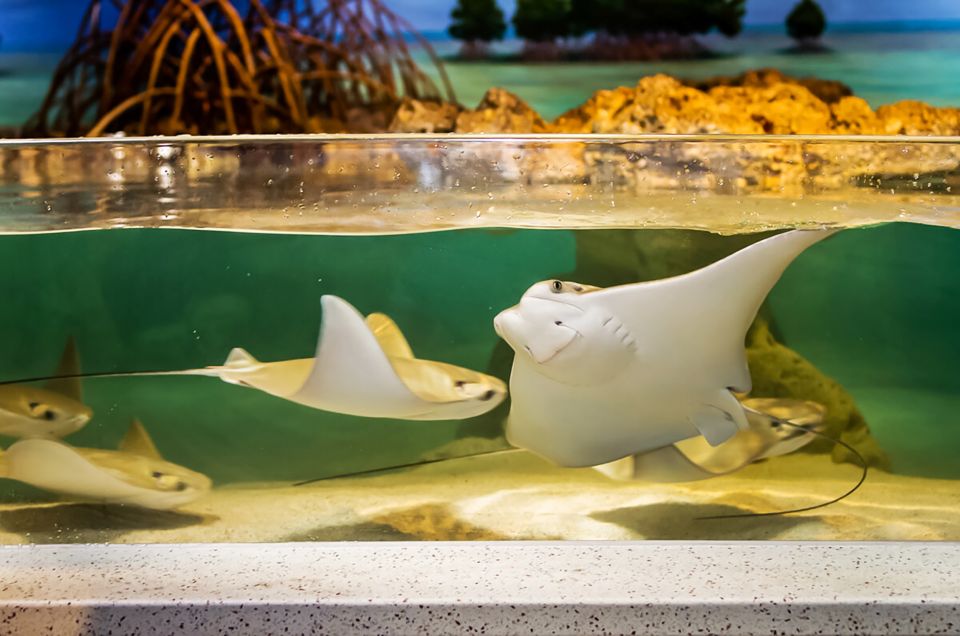
- Sea turtles, stingrays, moray eels, and other Caribbean reef animals
- Predator views from above via glass railing
- A sense of scale, because the tank height makes smaller animals feel more dramatic than you’d expect
Yawkey Coral Reef Center and the spiral walkway with sharks, eels, and more

After the tank, you get a “zoom in” on coral reef life through the Yawkey Coral Reef Center. It’s positioned at the top of the Giant Ocean Tank, with a glass railing that improves views into the water column. There’s also a blue reflective ceiling dome and a lighting system that supports a theatrical, easy-to-see display.
Then comes the spiral walkway around the reef. This is one of my favorite types of aquarium design because it keeps you walking while the animals keep sliding through view. As you move, you’ll spot sea turtles, sharks, moray eels, and tropical fish in the habitat.
Two practical reasons this layout works:
- You’re not stuck staring at one spot for an hour.
- You get multiple “angles” without needing perfect timing.
If you’ve ever visited an aquarium where you see the same tank from the same bench, this is the opposite.
Atlantic Harbor Seals outside on the Front Plaza: a great pre-entry stop
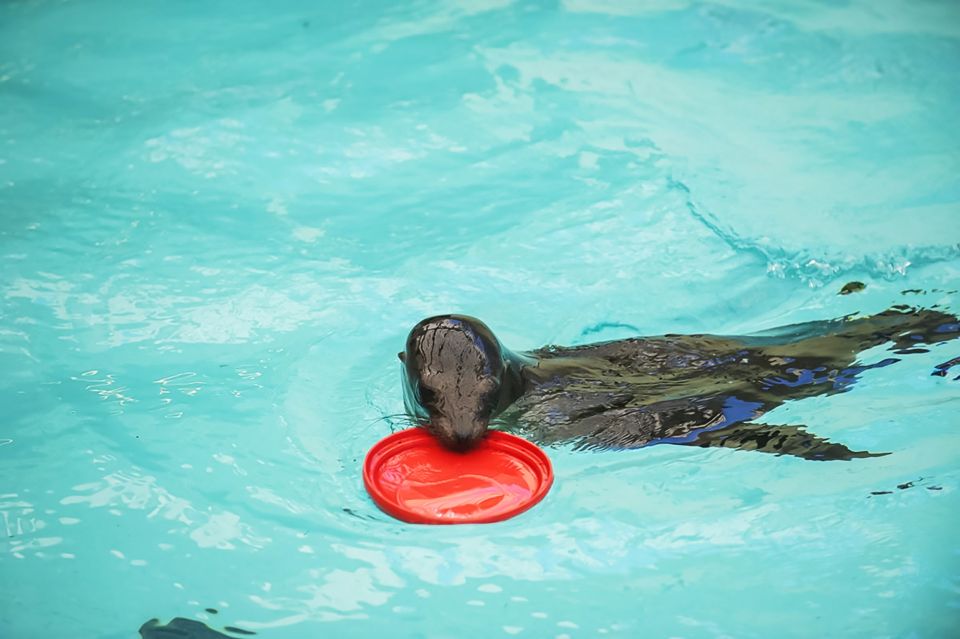
Here’s a small but smart detail: the harbor seals exhibit is the only one you can visit before you buy your aquarium ticket. It’s outside on the Front Plaza, to the left of the aquarium’s front doors, and it’s open to New England weather.
The exhibit holds 42,000 gallons. It’s a good opportunity to get moving and acclimate before you head inside, especially if you’re arriving early or trying to reduce stress with kids.
There’s also a training component. During a free harbor seal training session, you can learn more and watch behavior up close. Plan to arrive a bit early so you can get a good viewing spot when the session starts.
Marine Mammal Center: open-air California sea lions
Inside, the Marine Mammal Center is built as an open-air exhibit space. That matters because it changes the feel. Instead of feeling sealed inside a tunnel, you get more natural airflow and a more open view of the sea lions as they move.
California sea lions dart through the water here, and the exhibit is set up to teach you about the challenges marine mammals face in the wild. It’s not just a show. It’s also a reminder that the ocean is busy with problems humans don’t always see.
If your group likes animals that interact with their environment more actively, this is a solid stop after the reef areas.
Pacific Community Reef and the rainbow-colored fish show

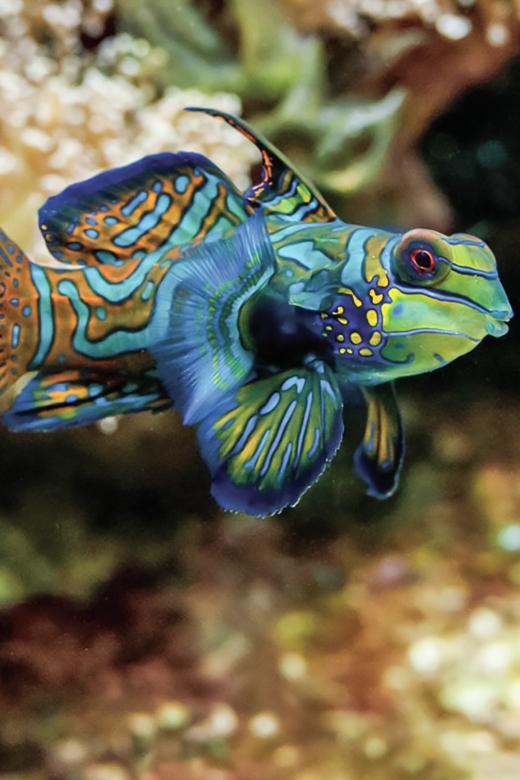
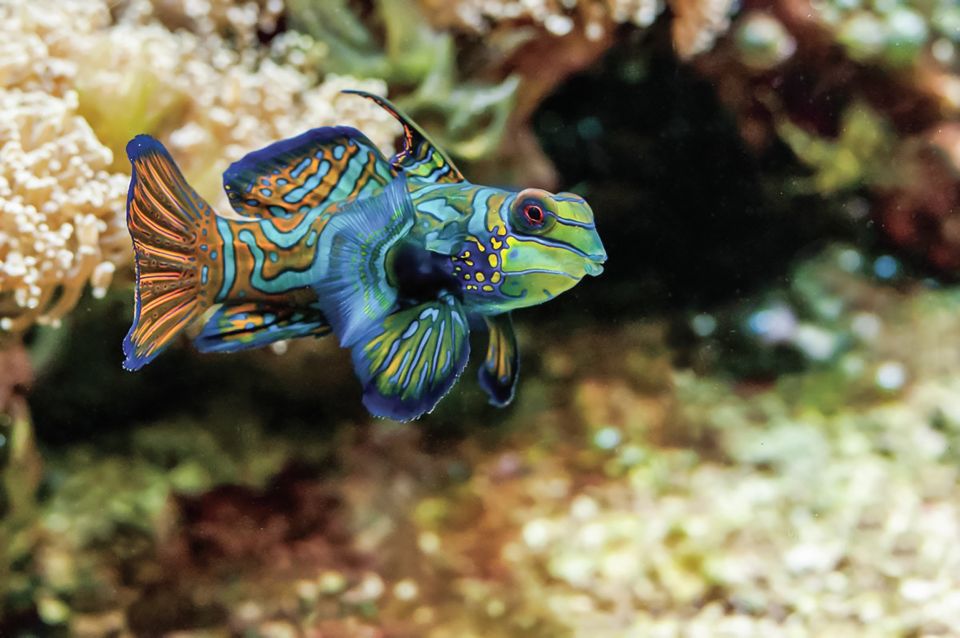
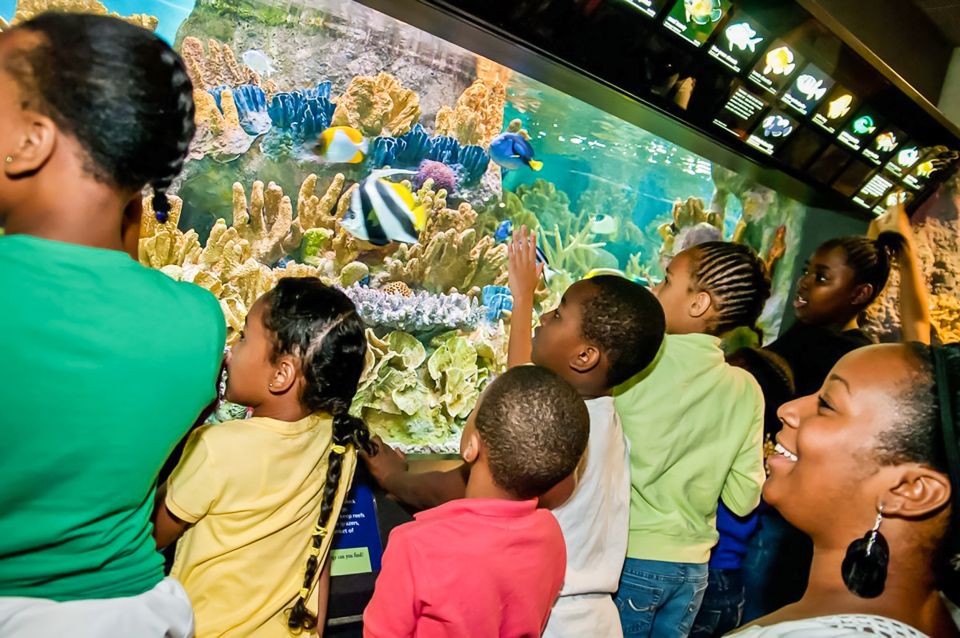
The Pacific Community Reef is a 5,100-gallon exhibit that houses nearly 70 kinds of tropical reef fish. This section is a nice change of pace after the big scale of the Giant Ocean Tank, because it feels more “busy with detail.”
What I like about this stop is how the aquarium uses variety rather than sheer size. With so many species together, you can spend a few minutes just scanning for different colors, shapes, and feeding behaviors.
And yes, there are other highlights in the aquarium ecosystem that many people seek out, like jellyfish in the Giant Ocean Tank. If your timing lines up with when you can clearly see them, it’s one of those slow-motion moments that makes the day feel calmer.
Amazon Rainforest: piranhas and anacondas
The Amazon Rainforest area adds a different kind of excitement. Here, you can see piranhas and anacondas as part of the aquarium’s themed world.
Even though it’s not the same “ocean tunnel” style as the reef exhibits, it’s valuable because it broadens what you mean by marine life. The aquarium’s message is wider than just saltwater reefs, and this stop helps break up the day so you’re not only thinking about coral and open water.
If you love watching predator-prey behavior, piranhas are the kind of animal that turns attention on fast.
A practical route for your day: how to avoid wasted time
Since your ticket is valid for one day and the aquarium has a lot to see, your success depends more on your route than your stamina. Here’s a simple order that matches how the experience is designed:
- Start with the penguin colony on Level 1 so your day opens with an easy win.
- Move into the Giant Ocean Tank and spend real time letting your eyes adjust to the depth and movement.
- Work through the coral reef viewing areas, including the spiral walkway and the Yawkey Coral Reef Center.
- Add the harbor seals exhibit outside if you can, then follow with the open-air sea lions area.
- Finish with the Pacific reef and the Amazon Rainforest section based on your group’s energy level.
One more tip that saves families: if a seal training session is on your plan, arrive about 10 minutes early to get a comfortable spot. And if you’re traveling with strollers or mobility needs, give yourself extra time between levels since you’ll likely use ramps and elevators to make transitions easier.
Price and value: is $39 per person a good deal?
At $39 per person, you’re not just buying a ticket. You’re buying control over your schedule. Skip-the-line entry is where the value shows up most, especially on hot days, cold days, or any day when the entrance is packed.
You also get a full day of major exhibits featuring a huge total count of sea animals, around 800 different marine animals, including seals, stingrays, sharks, and penguins. That range matters because aquariums can feel repetitive if you stick to only one theme.
On top of that, there are free learning moments built into the experience, like the harbor seal training session. When an aquarium mixes big viewing areas with short, helpful education, it tends to feel worth the price even if you don’t rush.
One caution: food and drinks are not included, so budget for snacks or plan a break outside the aquarium. If you forget, you’ll end up paying more than you expected or cutting your visit short.
Who this ticket is best for (and who should plan differently)
This skip-the-line ticket is a strong fit for:
- Families who need less friction at the entrance
- Reef lovers who want big viewing areas with clear angles
- Anyone who likes a mix of animals, from penguins to seals to coral reef species
- Visitors who want a one-day aquarium plan without overthinking it
It may be less ideal if your group hates crowds and needs complete quiet. Even with skip-the-line entry, the most popular zones get busy. In that case, a calmer strategy is to treat the day like a slow loop: spend longer in areas where you can pause, and don’t try to race through everything at once.
Should you book this New England Aquarium skip-the-line ticket?
If you want an efficient, high-impact aquarium day in downtown Boston, I’d book it. The price is reasonable for the amount of viewing you get, and the skip-the-line part is the kind of perk you feel immediately, not at some vague future point.
I’d especially lean toward booking if:
- You’ll travel with kids or anyone who hates waiting
- You’re trying to maximize a limited day in Boston
- You care about the big, signature viewing moments like the penguin colony and the Giant Ocean Tank
If you’re going at a super off-hour time and you’re perfectly fine with waiting, you might not need skip-the-line. But for most people, reducing the entrance hassle is worth it on its own.
FAQ
How much is the Boston New England Aquarium skip-the-line entry ticket?
The price is $39 per person.
How long is the ticket valid?
The ticket is valid for 1 day. Starting times depend on availability, so you’ll want to check what times are offered.
What does the skip-the-line ticket include?
It includes skip-the-line entry to the New England Aquarium.
What is not included with admission?
Food and drinks, plus transportation, are not included.
Where do I go to use the ticket?
Go directly to the aquarium entrance and have your barcoded ticket scanned.
What animals and exhibits can I see with the ticket?
You can see highlights like African penguins, jellyfish in the Giant Ocean Tank, California sea lions, and piranhas and anacondas in the Amazon Rainforest, along with many other marine animals.
Can I see the harbor seals before entering the aquarium?
Yes. The Atlantic Harbor Seals exhibit is outside on the Front Plaza, to the left of the aquarium’s front doors, and it is open to New England weather.
Are children 2 and under free?
Children 2 and under are free, but they still require a timed entry ticket.
Is the aquarium wheelchair accessible?
Yes, wheelchair accessibility is listed for the activity.
What are the key features of the Giant Ocean Tank?
It is a 4-story tank with Caribbean reef animals, it goes down 26 feet at its deepest point, is 40 feet wide, holds 200,000 gallons of salt water, and the water is heated to 72 to 75 F.