REVIEW · NASHVILLE
Downtown Nashville Guided Sightseeing Walking Tour
Book on Viator →Operated by Really Entertaining Tours · Bookable on Viator
Every block tells a Nashville story. This 2-hour downtown walking tour turns honky-tonk history into a guided route, with stops that range from Ryman Auditorium to pre-Prohibition vibes and Andrew Jackson’s duel territory. It’s led by a local, story-first guide and runs on a simple mobile ticket.
What I love is how fast it gets you oriented without feeling like a lecture. You’ll get a clear sense of where the big names sit, plus fully narrated storytelling that connects music, places, and people. I also like the group format, capped at 20 people, so the tour still feels personal rather than chaotic.
One consideration: the walk is outdoor and can move at a lively pace. A few visitors have mentioned the guide can run late or talk very fast, and at least one complaint flagged political commentary—so if you want strictly neutral history, plan to keep expectations realistic.
In This Review
- Key highlights you’ll feel right away
- Walking downtown Nashville with a real story map
- 5th and Broadway: the Honky-tonk Universe opener
- Ryman Auditorium: the Mother Church of country music
- Tootsie’s Orchid Lounge: honky-tonk as legend and lifestyle
- Ernest Tubb Record Shop: the stepping stone to the Opry
- A quirky candy break: peanuts, caramel, chocolate
- George Jones and the artist legend effect
- Fort Nashborough: the older foundation beneath the music
- Market Street to the Riverfront: river trade and big views
- Nashville Public Square: Andrew Jackson duels and civic drama
- Printers Alley and the Men’s Quarter: the seedy-fun origin story
- Skull’s Rainbow Room: legends with a side of underworld lore
- Cherry Street tribute: Chet Atkins’ statue
- Tennessee State Capitol: civic architecture moment
- Downtown Presbyterian Church: Egyptian Revival architecture
- What you get for $25: value that’s really about time
- Pacing, sound, and group size: the practical stuff that affects your day
- Who should book this Nashville walking tour
- Should you book the Downtown Nashville Guided Sightseeing Walking Tour?
- FAQ
- Where does the Downtown Nashville guided walking tour start?
- How long is the walking tour?
- What time does the tour begin?
- Is the ticket mobile?
- Is the tour narrated by a guide?
- How big are the groups?
- What if the weather is bad?
- Is there free cancellation?
- Is it family friendly and can I bring a service animal?
Key highlights you’ll feel right away
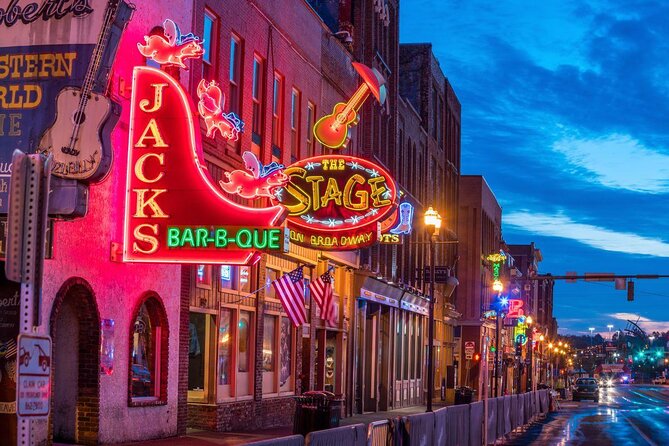
- Honky-tonk Universe starts at 5th and Broadway with the sort of landmark density you only get downtown.
- A narrated route that ties together music venues and older city history in one loop.
- Ryman Auditorium + Tootsie’s Orchid Lounge as two of the biggest storytelling anchors.
- Printers Alley and Skull’s Rainbow Room for the city’s grittier, rock-and-blues origin stories.
- Stops that go beyond music, including Andrew Jackson duel sites and civil-rights sit-in context.
- Small max group size (20), plus a guide with a portable speaker/mic in at least some tours.
Walking downtown Nashville with a real story map
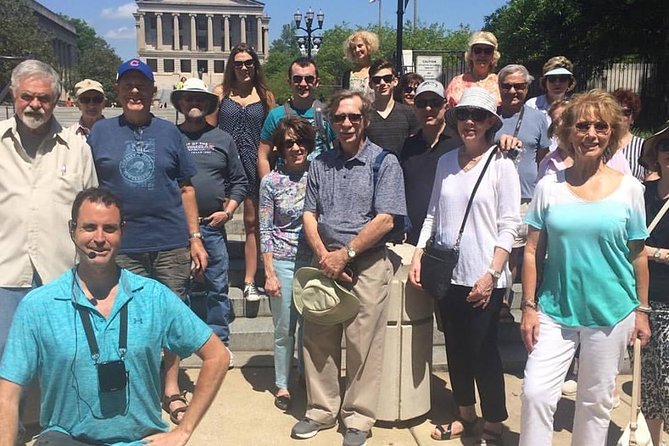
Downtown Nashville can feel like a fun blur on Day 1. Bright neon, loud bars, souvenir shops, and a street grid that seems simple until you start walking. This tour helps you sort it all out by walking a route that connects major music stops with the older layers underneath.
The best part is that you’re not just ticking off famous names. The route is built like a storyline: early settlement-era Nashville, the rise of honky-tonk and recording culture, and the harder chapters in between. If you’re the type who likes to know why a building matters, you’ll get that here.
It also helps that the tour format is practical. You meet at 501 Broadway and you start at 10:00 am, so you’re not fighting a later-day crowd rush. The tour is about two hours, which is long enough to feel like you did something meaningful, but short enough that you can still enjoy the rest of your day on your own.
You can also read our reviews of more tours and experiences in Nashville.



5th and Broadway: the Honky-tonk Universe opener
You begin at the ground zero area for downtown’s honky-tonk reputation. The tour starts with a quick sense of place—how this district got its reputation and why Nashville’s music culture clusters where it does.
This opening matters because it sets expectations for everything you’ll see next. When you later hit Ryman Auditorium and Tootsie’s Orchid Lounge, you’ll understand they’re not random stops. They’re part of the same story of performers, fans, and the venues that grew around them.
Tip for your first minutes: listen closely, then check your phone’s maps when you have a breather. By the time the group moves deeper into downtown, you’ll start mentally labeling streets and corners. That’s the real payoff of an orientation tour.
Ryman Auditorium: the Mother Church of country music
Ryman Auditorium is where this tour earns its street cred. You’re introduced to why Nashville gets called Music City in the first place, and the guide frames the Ryman as a key institution—often described as the Mother Church of country music.
What I like about this stop on a walking tour is the way you get context without needing a museum ticket. Even if you don’t go inside, the surrounding area tells you enough to understand why people make pilgrimages here.
Also, the Ryman is a natural anchor point for the rest of your day. After you hear what makes it central, you’ll be better able to choose where to spend your next hour—whether you want more history nearby or you’d rather chase the current-day vibe.
Tootsie’s Orchid Lounge: honky-tonk as legend and lifestyle
Next up is Tootsie’s Orchid Lounge, presented as one of the world’s most famous honky-tonks. The charm here isn’t just the name. It’s the guide’s framing of the place as a character in Nashville’s story.
This is where the tour shifts from big-picture history into the feel of the culture. You learn how these rooms function: a mix of performer mythology, regulars, and the kind of atmosphere where a night out becomes part of local lore.
If you’re expecting a quiet, refined history stop, recalibrate. This part of downtown is loud by design. You’ll be surrounded by the energy that makes honky-tonk culture what it is.
Ernest Tubb Record Shop: the stepping stone to the Opry
The tour then points you toward Ernest Tubb Record Shop, described as a key stepping stone on the path to the Opry. There’s also a film tie-in mentioned on the stop, connecting the shop and its story to pop-culture moments tied to country music history.
Why this stop works on foot: it gives you a texture you don’t get from skyline photos. You see the kind of place where careers, fandom, and music commerce overlap. And you also get a sense of how Nashville’s entertainment world didn’t only grow from stages—it grew from shops, radio connections, and the music scene’s daily ecosystem.




A quirky candy break: peanuts, caramel, chocolate
Midway through the route, there’s a fun pause built around a very specific kind of trivia: the first combination candy bar sold in the United States, with peanuts, caramel, and chocolate. It’s the kind of stop that takes the edge off the walking rhythm and reminds you that Nashville’s story isn’t only big-ticket fame.
You’ll probably notice this tour balances heavy history with lighter moments. That pacing choice keeps your attention. It also makes the walk feel more like a guided walk with a storyteller than a checklist.
George Jones and the artist legend effect
The next music legend stop is The George Jones. The tour presents him as a major figure in Nashville’s artist mythology, with the guide covering the nickname culture and why Jones remains such a reference point.
This part matters because you start seeing a pattern: the tour isn’t only about the buildings. It’s about the people who made the scene. When you understand that, Nashville landmarks stop being static tourist spots. They become nodes in a performer network.
If you’re a fan of country music, this is where you start connecting dots between eras—how modern-day Nashville connects to the legends who shaped it.
Fort Nashborough: the older foundation beneath the music
Now you step into the pre-music layer with Fort Nashborough. The guide frames it as an early Anglo settlement west of the Appalachians, and it also includes a broader timeline that notes Cherokee presence long before European settlement.
This stop is valuable because it changes your perspective. Nashville’s modern identity is music first, but the city’s story starts much earlier than the stage lights. A guided walk is a smart way to handle this kind of history because you’re literally moving through the streets that helped shape how the city grew.
You’ll also get an extra benefit here: it makes later stops feel more grounded. When the guide points to river views and the original site context, you understand why geography mattered in the first place.
Market Street to the Riverfront: river trade and big views
From downtown streets toward the river area, the tour includes Riverfront Park, tied to the story of the city’s river trade era. You also get views connecting to the Cumberland River and landmarks nearby.
This is a good stretch to reset your legs. You’re not just walking in a straight line between venues—you’re getting a city-view moment where the guide shows you why Nashville’s location helped the city become what it is.
If you’re taking photos, this is one of your better opportunities to capture wide views without needing to climb anywhere.
Nashville Public Square: Andrew Jackson duels and civic drama
At Nashville Public Square, the tour turns toward Andrew Jackson’s duels. The guide uses this stop to tell the story of Jackson’s many duels and how Nashvillians lived with that kind of danger and reputation in an earlier era.
I like this stop because it adds friction to the usual Nashville narrative. It’s not only about parties and performers. It’s also about the kind of civic life where conflict and power were personal and public.
Even if you’re not a history buff, this kind of stop gives you context for why downtown buildings and sites feel layered. Nashville wasn’t built only for music—it was built for people, politics, and power struggles too.
Printers Alley and the Men’s Quarter: the seedy-fun origin story
Next comes Printers Alley, described as a world-famous alley where music legends from different eras cross paths in the storytelling. The tour also references the Men’s Quarter area as part of the same darker, more playful side of downtown.
You’ll hear it tied to artists like Johnny Cash at Skull’s Rainbow Room, along with references to Little Richard and Jimi Hendrix practicing the blues before they were famous. That’s a specific and fun angle: the tour points out that the seeds of fame often grow in humble, even messy rooms.
What to watch for here is the emotional tone of the guide. The storytelling shifts from formal history to nightlife mythology. You’ll get a sense of why Nashville’s music culture grew with both talent and grit.
Skull’s Rainbow Room: legends with a side of underworld lore
At Skull’s Rainbow Room, the tour name-checks a long list of music and pop-culture figures: Andy Griffith, Buck Owens, Johnny Cash, Bob Dylan, Paul McCartney, Tim McGraw. The point isn’t to memorize names. It’s to show how often famous people orbit the same local stages and rooms before they become fully mythologized.
This stop also works for first-time visitors because it makes Nashville’s “underbelly” feel like part of the same story as the headline venues. The guide’s angle helps you see downtown as one connected ecosystem, not separate attractions.
Cherry Street tribute: Chet Atkins’ statue
The route includes a stop on Cherry Street to pay respects to Chet Atkins’ statue. This is the kind of moment that lands differently after the earlier stops. You’ve already learned about the artists and venues, so the statue feels like a payoff: a public marker for the kind of influence that shaped country guitar and Nashville’s sound.
It’s also a natural pause point. You can take photos, stand still for a moment, and refocus.
Tennessee State Capitol: civic architecture moment
The tour then includes a stop at the Tennessee State Capitol building. This is a more formal change of pace. After honky-tonk and alley stories, a major civic building helps you balance the day.
You’ll also appreciate this if you plan to spend more time in downtown later. A good orientation tour tells you not only where the fun is, but where the city’s official center sits.
Downtown Presbyterian Church: Egyptian Revival architecture
Finally, you’ll see the Downtown Presbyterian Church, highlighted as a rare example of Egyptian Revival architecture in the United States, and notably a church building with that style.
This stop is a smart closer because it gives you a final visual impression beyond music signage and neon. Architecture sticks in your memory. It’s also a reminder that downtown Nashville has always had a mix of identities—religious, civic, commercial, and entertainment.
Then the tour winds up back toward central Nashville, returning to the meeting area.
What you get for $25: value that’s really about time
At $25 per person for about two hours, this tour is priced for people who want value in the form of orientation and story. You’re not paying for entry tickets. You’re paying for time with a local guide who turns streets into meaning.
Here’s where the math starts to make sense: if you’re visiting for a short stay, spending one morning walking with a storyteller can save you hours of guessing later. You’ll know what to prioritize—whether it’s Ryman-area history, Tootsie’s vibe, Printers Alley energy, or the riverfront context—because you already heard how everything connects.
It also helps that the tour is typically booked about 23 days in advance, which is often a sign the route sells because it’s useful, not just famous.
Pacing, sound, and group size: the practical stuff that affects your day
This is a walking tour, so you’ll want to plan for some motion and a bit of hill energy. One review noted the guide made breaks when walking uphill, which is exactly what you hope for on a downtown loop.
Sound quality is also a big deal. At least one guest specifically praised that the guide uses a portable speaker/mic, so you can hear without needing earbuds. If you’ve ever been stuck trying to listen over street noise, that detail is worth its weight.
Group size caps at 20 travelers. That’s large enough to feel like a real tour, small enough that you’re usually not swallowed.
On the downside, a late start has happened on at least one occasion, and a few visitors flagged that the guide can talk quickly or mix in personal commentary. That doesn’t mean it will happen every time, but it’s a good reminder to arrive on time, be ready to listen, and set your expectation that this is storytelling, not a silent walking museum.
Who should book this Nashville walking tour
I’d book this if you’re:
- In Nashville for the first time and want fast orientation.
- A music fan who likes hearing how legends intersect with real streets.
- Someone who enjoys human stories, not only dates and facts.
- Traveling with kids or family members who can handle a two-hour city walk.
I might skip it if you want:
- A slow, quiet, strictly neutral history lesson.
- A tour with lots of indoor time or museum-level deep study.
- A very flexible pacing where you stop often for lingering photo breaks.
Should you book the Downtown Nashville Guided Sightseeing Walking Tour?
Yes, if your goal is to understand downtown in one shot. This is the kind of tour that makes the rest of your trip easier, because you leave knowing where the key places sit and why they matter.
Book it especially if you’re heading out later for honky-tonk nights. You’ll already know the story behind what you’re walking toward—Ryman as a core institution, Tootsie’s as a legend room, Printers Alley and Skull’s Rainbow Room as the gritty roots, and Fort Nashborough and Public Square as the older backbone under all that music fame.
If you’re sensitive to fast talking, plan to lean into listening early and ask questions when you get the chance. And if you’re visiting in cooler months, wear layers—downtown shade can make the walk feel colder than the sun would suggest.
FAQ
Where does the Downtown Nashville guided walking tour start?
It starts at 501 Broadway, Nashville, TN 37203.
How long is the walking tour?
The tour runs for about 2 hours.
What time does the tour begin?
The start time listed is 10:00 am.
Is the ticket mobile?
Yes, the tour uses a mobile ticket.
Is the tour narrated by a guide?
Yes. It is a fully narrated experience led by a local guide.
How big are the groups?
The tour has a maximum of 20 travelers, and it must have at least 6 people to run.
What if the weather is bad?
The experience requires good weather. If it’s canceled due to poor weather, you’ll be offered a different date or a full refund.
Is there free cancellation?
Yes. You can cancel up to 24 hours in advance for a full refund.
Is it family friendly and can I bring a service animal?
Yes, it’s listed as family friendly, and service animals are allowed.