REVIEW · SAN FRANCISCO
California Academy of Sciences General Admission Ticket
Book on Viator →Operated by California Academy of Sciences · Bookable on Viator
San Francisco has a science day that works for everyone. With one ticket, you get fast entry and access to the Academy, plus major add-ons like the aquarium, planetarium, and rainforest under one living roof. I love how the instant-access mobile ticket keeps you moving, and I also like that the experience is built for families and curious adults alike.
My favorite part is the mix of animals and hands-on learning packed into a tight area. You can meet an African penguin colony, tour the Steinhart Aquarium with deep-sea surprises, and step into a four-story rainforest with free-flying birds and butterflies. The second thing I really like: the public programs (like animal feedings and pop-up demonstrations) add live moments without extra tickets.
One thing to plan around: this place is a lot of walking, and the rainforest can feel hot and humid. If you’re going on a crowded day, you may need a smarter pace so you still enjoy the exhibits instead of just rushing through them.
In This Review
- Key highlights worth timing right
- Price and what you actually get for $49
- Arriving in Golden Gate Park and getting in quickly
- How to pace a 3–5 hour day without feeling rushed
- Stop 1: The Academy galleries, penguins, and hands-on learning
- Stop 2: Steinhart Aquarium and the Twilight Zone effect
- Stop 3: Morrison Planetarium and reserving your show
- Stop 4: Osher Rainforest—cool wildlife, hot humidity
- Golden Gate Park around the Academy: plan a breather
- Crowd control, comfort, and on-site food that keeps you moving
- Who this is best for (and when it might disappoint)
- Final call: should you book this $49 admission ticket?
- FAQ
- What does the California Academy of Sciences general admission ticket include?
- How long should I plan for?
- Do I need to redeem a voucher at a kiosk before entering?
- How do I reserve a planetarium showtime?
- Are planetarium shows suitable for young children?
- Where do I start, and where does the visit end?
- Is there free cancellation?
Key highlights worth timing right
- Fast entry with instant-access mobile ticket means no extra kiosk line to redeem.
- Steinhart Aquarium’s live animals include a deep-coral reef feel and a pitch-black Twilight Zone.
- A 75-foot Morrison Planetarium dome with multiple show options you reserve after you arrive.
- Osher Rainforest is a real multi-level dome with over 1,600 plants and animals.
- Golden Gate Park location lets you pair indoor science with outdoor breaks.
- Built for families of all ages with kids’ play space like Wander Woods and daily programs.
Price and what you actually get for $49
At $49 per person, the California Academy of Sciences General Admission ticket is easiest to judge by one question: do you want multiple big attractions in one day without piecing together separate tickets? If yes, it’s strong value.
Your admission is the key that unlocks the core “four-in-one” concept: natural history museum, aquarium, planetarium, and rainforest all under one living roof. You also get access to daily public programs and hands-on exhibits, so the day isn’t only about static displays. That matters, because the best time at the Academy is often when you catch a feeding, talk, or short demonstration happening in the moment.
If you only want one small section (say, just the aquarium), then $49 can feel like overkill. And if you add parking and on-site food, the total can jump quickly—parking is called out by visitors as a separate cost, and meals cost extra too.
You can also read our reviews of more tours and experiences in San Francisco.



Arriving in Golden Gate Park and getting in quickly
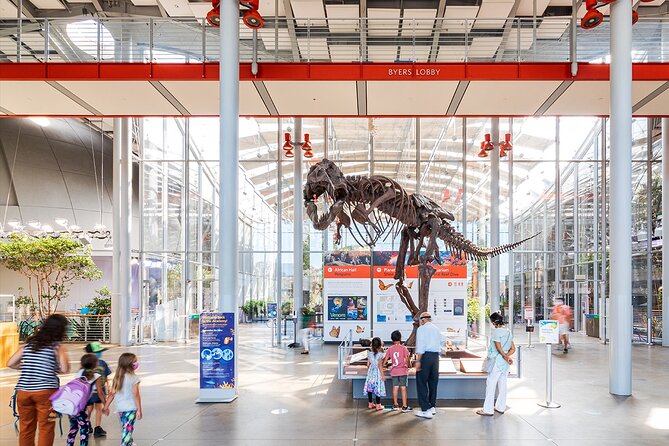
The Academy is in Golden Gate Park, and your meeting point is at 55 Music Concourse Dr, San Francisco, CA 94118. This ticket is built for speed: it’s an instant-access admission, so you don’t have to redeem a voucher at a separate kiosk first.
That small detail helps more than it sounds. When you’re headed into a high-demand museum (and this one definitely draws crowds), the difference between “line to start” and “walk in and go” changes how much you actually enjoy your time. You also have a limited window of time most people can spend well—this visit is typically 3 to 5 hours—so starting efficiently is part of getting value.
How to pace a 3–5 hour day without feeling rushed
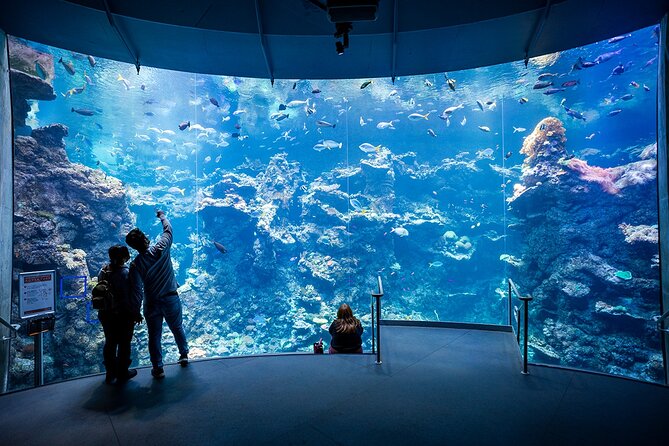
This is not a museum you “power through.” It’s a pick-your-own-adventure place, with major stops that each take real attention.
Here’s a practical pacing plan that fits the typical 3–5 hour window:
- Start with the main Academy galleries for the hands-on exhibits and the big live-animal moments.
- Then move to the Steinhart Aquarium while you’re still fresh for animal-heavy rooms.
- Book your planetarium show next so you don’t lose your preferred time slot.
- Finish with the Osher Rainforest while you’re ready for humidity, close-up wildlife, and slower exploring.
- If you still have energy, end with a quick Golden Gate Park stroll, since the buildings sit inside the park.
This approach keeps you from accidentally scheduling the planetarium at a time that breaks up the best parts of your day.
Also, note the booking limit: the activity lists a maximum of 9 travelers. That usually means the crowd feels more manageable than large bus-group scenarios, but it won’t erase general museum crowds.
Stop 1: The Academy galleries, penguins, and hands-on learning
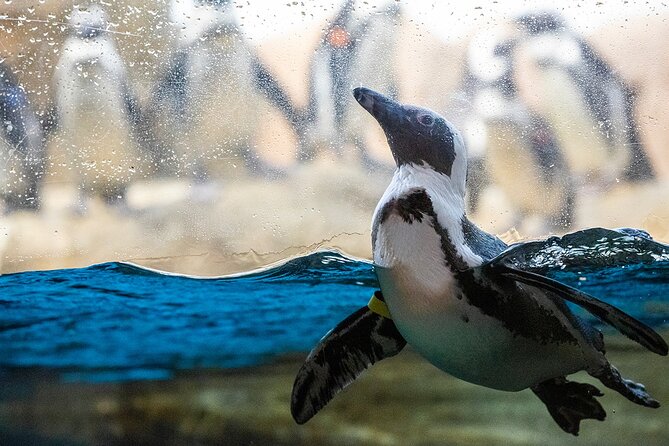
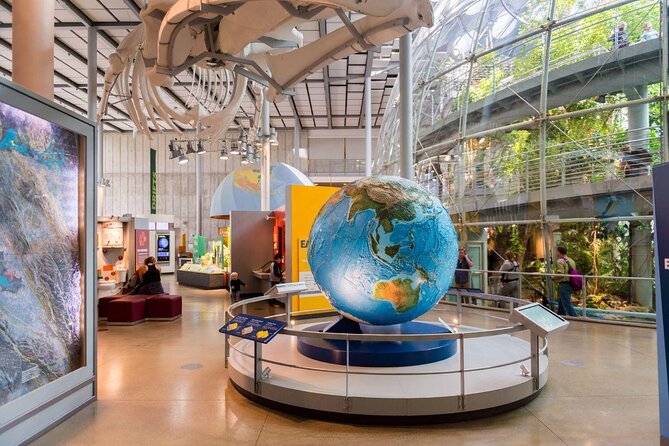
The heart of the day is the Academy’s main level, where you can stroll under huge skeletons and big-scale natural history displays. It’s also where you’ll find a strong “learning by doing” feel—hands-on exhibits and interactive elements designed to keep kids engaged without dumbing it down for adults.
Live animal time is a standout here. You can meet a colony of African penguins, and you’ll get a biologist feeding them and answering questions. That’s exactly the kind of moment that makes a museum day feel like more than just reading labels.
You’ll also see major collection-based geology content, with hundreds of specimens featured. And the Academy keeps updating what you can experience. Recent additions called out include:
- Wander Woods, an outdoor nature play and exploration space designed to spark curiosity.
- Hidden Wonders, which highlights never-before-seen specimens from research collections.
- California: State of Nature, which connects California’s species, places, and people across multiple ecosystems using models, interactives, and multimedia.
One consideration: if you’re a dinosaur-focused visitor, you might find yourself wanting more dinosaur fossil content than you get in a general admission sweep. The main galleries are broad by design, not one-theme.
Stop 2: Steinhart Aquarium and the Twilight Zone effect
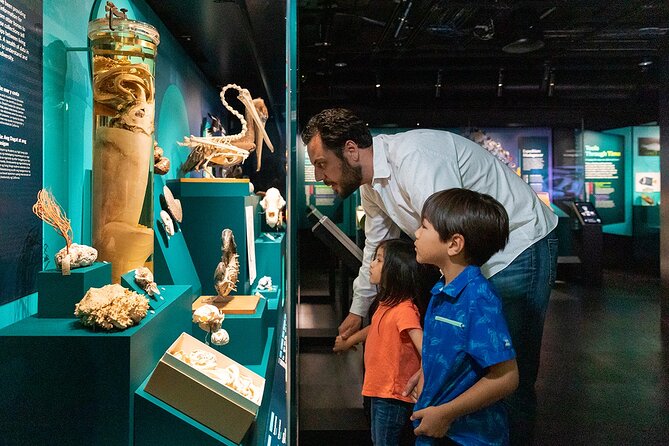
The Steinhart Aquarium is a major reason this place works so well for families. You’re not just walking past tanks—you’re moving through themed environments that make sea life feel close and alive.
The headline number is huge: the aquarium features nearly 60,000 live animals across more than 1,000 species. It’s also described as biologically diverse and interactive, so expect more than a row of windows.
A few specific highlights you can look for:
- A world’s-deepest-living indoor coral reef experience.
- A Venom exhibit with over a dozen venom-related species.
- A “Twilight Zone” section that teaches you about marine life in pitch-black conditions.
The Twilight Zone part is especially useful for setting expectations: the aquarium includes areas with dark, low-light conditions. If you’re bringing kids, that’s not a reason to skip it—it’s just a reason to plan your pace and help them stay calm and curious.
As for time, plan about an hour here if you want to actually see things instead of only spotting highlights. The aquarium is also an easy “win” for adults who may not prioritize play zones, because it’s built around awe and scale.






Stop 3: Morrison Planetarium and reserving your show
The Morrison Planetarium is housed in a 75-foot dome screen, and the shows use cutting-edge visualizations meant to pull you into space and back down to Earth science. You’ll find multiple show options and times available each day.
Here’s the practical part: planetarium show passes are included with admission, but you still reserve the showtime after you arrive. The process works like this:
- You scan a QR code in the lobby to reserve a showtime.
- Planetarium passes are available on a first-come, first-served basis.
- There’s also a planetarium pass pick-up desk across from the planetarium entrance.
A big timing tip: reserve as soon as you can after you get in, because show slots can be limited. If you wait too long, you may end up with a showtime that doesn’t match your energy level later in the day.
Age notes matter too. Some shows may not be appropriate for children under 7, and children under 4 are not permitted.
If you like “one big indoor moment” that gives your eyes and brain a break from walking, this is the one.
Stop 4: Osher Rainforest—cool wildlife, hot humidity
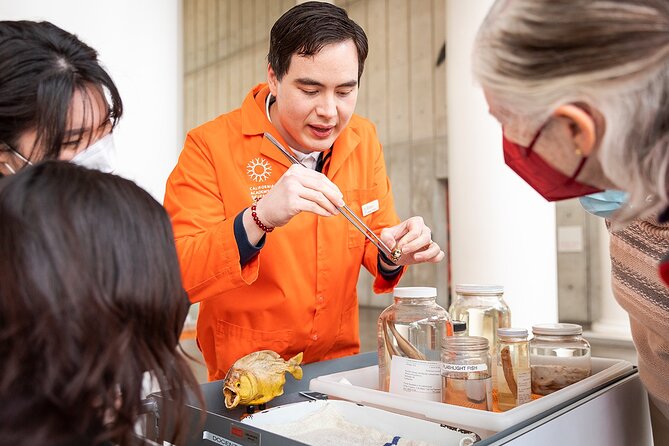
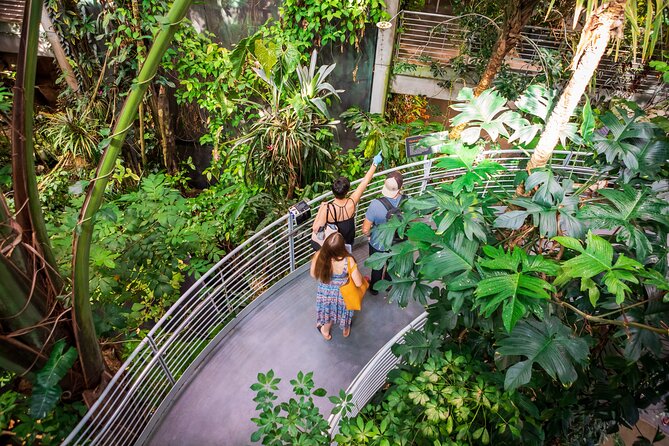
The Osher Rainforest is the most sensory stop. It’s a glass dome with a four-story rainforest setup and more than 1,600 plants and animals.
You can expect close-to-you animal moments like:
- free-flying birds and butterflies
- reptiles
- golden-silk orb weaver spiders
- enormous Amazonian fish
The practical reality: this area can feel hot and humid, which visitors specifically call out. That doesn’t mean you should avoid it. It means you should dress and plan like you’re going somewhere tropical—light layers, and shoes that can handle a bit of dampness.
This is also a good stop for families because it creates a slow, steady rhythm. Kids can watch movement and camouflage rather than racing between static exhibits. Adults tend to enjoy it too, because it’s visual science made physical.
A drawback consideration: if you’re sensitive to heat, you may need more breaks here than other sections. Don’t treat it like a quick hallway stop.
Golden Gate Park around the Academy: plan a breather
Since the Academy sits inside Golden Gate Park, you can make your day feel bigger without paying for anything extra. If you finish your indoor highlights with time to spare, stepping outside for fresh air helps you reset before you head back to your next plan in San Francisco.
This works best if you don’t schedule too tight a timeline. In a place with dark rooms, humid domes, and lots of stairs, a short outdoor break can keep you from turning the day into a slog.
Crowd control, comfort, and on-site food that keeps you moving
This kind of museum day can get full—especially on weekends or busy periods—so I’d plan your comfort like you would for a city walking day.
Two big practical tips from how the experience is set up:
- Wear comfortable shoes. Expect lots of walking and changing levels.
- Use the indoor stops strategically. Darker and humid areas can take it out of you faster than you think.
Food is available on-site as grab-and-go, and there’s an Academy Café and Terrace Restaurant. That’s helpful for families who need predictable timing. But it’s still food you’re buying, so plan for it in your budget.
One caution from visitor feedback: hygiene and cleanliness can be uneven in some public areas. That doesn’t mean you should panic and skip everything. It just means it’s smart to use common sense—wipe hands after heavy touch areas, and if you’re concerned, stick to your comfort level when using shared surfaces.
Who this is best for (and when it might disappoint)
This general admission ticket is built for broad appeal:
- Families with kids from toddlers to teens, because the mix of penguins, aquarium zones, and rainforest wildlife gives something for different attention spans.
- Couples or adults who want three big science experiences in one place without running across town.
- Science-curious travelers who like practical exhibits and live animal programs.
It may not be perfect if:
- You want a guided, formal tour structure (this admission is about access, not a narrated walkthrough).
- You have a very narrow “must-see” theme and want only one section (the breadth is the point).
- You hate heat. The rainforest is specifically described as hot and humid.
Final call: should you book this $49 admission ticket?
I’d book it if you want a full Golden Gate Park science day with minimal friction. The instant-access ticket, the four-in-one layout, and the chance to catch animal feedings and public programs make it feel like more than a simple ticket to a museum.
I’d think twice only if you’re short on time and only want one attraction, or if you’re not comfortable with heat and a fair amount of walking. Otherwise, this is one of the most efficient ways to pack serious science into a few hours in San Francisco.
FAQ
What does the California Academy of Sciences general admission ticket include?
The ticket provides instant-access admission to the California Academy of Sciences. It also allows you to access major areas on-site, including the aquarium, planetarium show passes, and the rainforest.
How long should I plan for?
Plan on about 3 to 5 hours for a solid visit.
Do I need to redeem a voucher at a kiosk before entering?
No. The ticket is described as instant-access, so you can enter without waiting at a separate kiosk to redeem a voucher.
How do I reserve a planetarium showtime?
When you arrive, scan the QR code posted in the lobby to reserve a showtime. Planetarium passes are free and available on a first-come, first-served basis. Pass pick-up is also available at a desk across from the planetarium entrance.
Are planetarium shows suitable for young children?
Some planetarium shows may not be appropriate for children under 7, and children under 4 are not permitted.
Where do I start, and where does the visit end?
The meeting point is 55 Music Concourse Dr, San Francisco, CA 94118. The activity ends back at the meeting point.
Is there free cancellation?
Yes. You can cancel for a full refund up to 24 hours in advance. If you cancel within 24 hours of the experience start time, the amount paid is not refunded.
If you tell me when you’re going (weekday vs weekend, and season), I can suggest a smart order of stops so you’re least likely to be stuck waiting for planetarium times or crowded rooms.