REVIEW · SAN FRANCISCO
San Francisco LGBTQ Walking Tour with Local Guide
Book on Viator →Operated by Cruisin' The Castro Walking Tours · Bookable on Viator
The Castro tells stories on every corner. This 2-hour San Francisco LGBTQ walking tour follows a local guide through landmarks tied to Harvey Milk and later LGBTQ activism, with stops that turn neighborhood street signs into a real timeline.
I love how it centers you on places you can stand in front of, not just facts read off a screen.
One standout for me is the small-group feel: the tour caps at 2 travelers, which makes questions and personal pacing easier. Guides like Kathy, a long-time neighborhood resident in the role, are known for mixing humor with real care, and that can make serious topics feel more human (and easier to process). The main consideration: the route includes politics and health-history, so if you want only light sightseeing, this may feel emotionally heavy.
In This Review
- Key things to know before you go
- Tour basics: 2 hours, $40, and why the Castro walk is built to work
- Meeting at 400 Castro St: how you’ll get oriented fast
- From the Castro Theatre to the Milk era: turning architecture and names into meaning
- Pink Triangle, Rainbow Honor Walk, and the AIDS Quilt Names sites: where the walk gets real
- Human Rights Campaign Action Center and Store: connecting past activism to today
- Walking pace and what to wear for a comfortable 2 hours
- Price and value check: what $40 buys you on this Castro route
- Should you book the San Francisco LGBTQ walking tour in the Castro?
- FAQ
- Where does the tour start and end?
- How long is the San Francisco LGBTQ walking tour?
- Is the tour wheelchair accessible?
- What language is the tour offered in?
- What is included in the ticket price?
- Is there a refund if I cancel or if the weather is bad?
Key things to know before you go
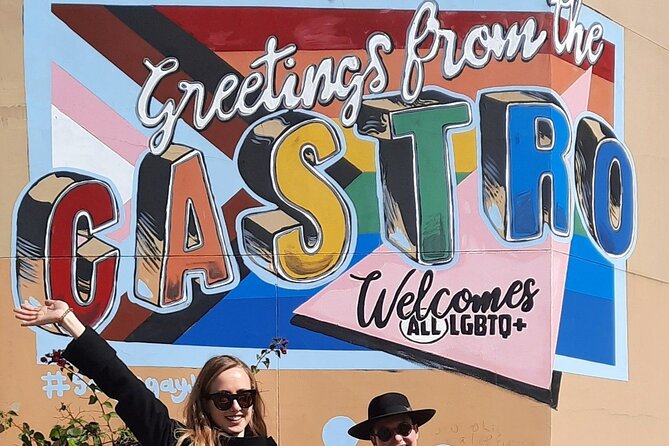
- A local guide who knows the Castro up close: Expect lots of on-the-ground context and community perspective from a long-time resident.
- Harvey Milk stops that make history tangible: You’ll see key Milk-related sites around Harvey Milk Plaza and nearby locations connected to his work.
- Pink Triangle Memorial Park and Rainbow Honor Walk Project: These public memorials are built for walking up, reading closely, and feeling the weight of what came after.
- AIDS Quilt Names Projects original site: This is the kind of stop that turns the AIDS epidemic into names and people, not just an era.
- Human Rights Campaign Action Center and Store: You’ll connect the activism past to today’s ongoing equality struggles.
- Wheelchair-accessible public walkways: The tour route uses public sidewalks and walkways designed to be accessible.
Tour basics: 2 hours, $40, and why the Castro walk is built to work
This is a straightforward 2-hour LGBTQ walking tour in the Castro, priced at $40 per person and offered in English. The meeting point is at 400 Castro St, San Francisco, CA 94114, and the tour ends right back there. That loop matters because it keeps you from getting stranded miles away from where you started.
What you’re really paying for isn’t just a list of stops. It’s the structure: a guided path that connects the neighborhood’s most important LGBTQ milestones—from early visible landmarks to memorial spaces tied to later activism. With a maximum of 2 travelers, the guide can slow down when someone wants to read, ask, or simply take a moment.
Also, the tour uses a mobile ticket, which keeps things simple on your phone. And it runs rain or shine in the general sense, but if the weather is truly poor, the experience provider may offer an alternative date or a full refund.
You can also read our reviews of more tours and experiences in San Francisco.


Meeting at 400 Castro St: how you’ll get oriented fast
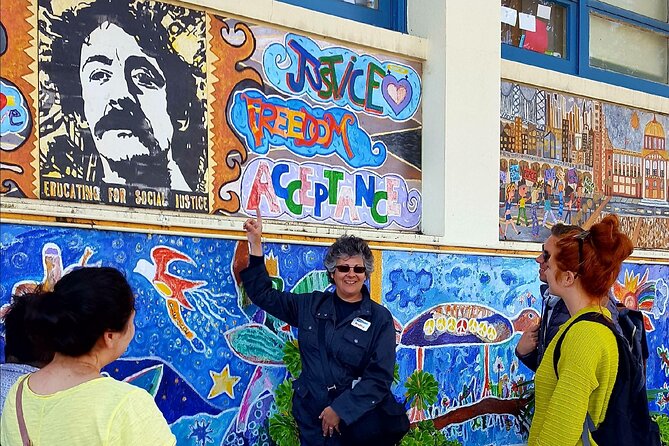
You meet at 400 Castro St, in the heart of the neighborhood that made the name Castro mean something. From the first minutes, the guide’s goal is to help you decode what you’re seeing: why this area became a magnet for LGBTQ community life, and how activism changed both the local culture and the national conversation.
If you like tours that start with orientation rather than rushing to a single photo spot, this format works. You’ll be set up to understand each landmark as part of a bigger story instead of a random collection of plaques and murals.
One practical advantage: the tour is near public transportation, so it’s easy to plug into a day that also includes other San Francisco neighborhoods. And if you’re traveling with a service animal, they’re allowed.
From the Castro Theatre to the Milk era: turning architecture and names into meaning
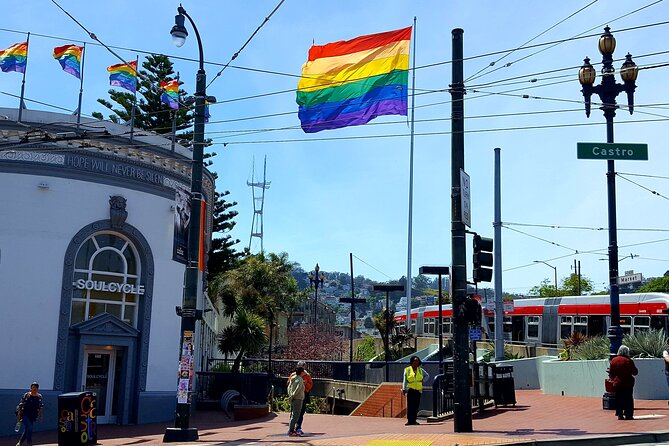
The tour begins in the Castro area with a focus on how the district became what it is today. You’ll visit the Castro Theatre, known for its Spanish Colonial Baroque architecture, and you’ll learn how the neighborhood got its name. That early stop is useful because it anchors you in the physical place before the guide moves into political history.
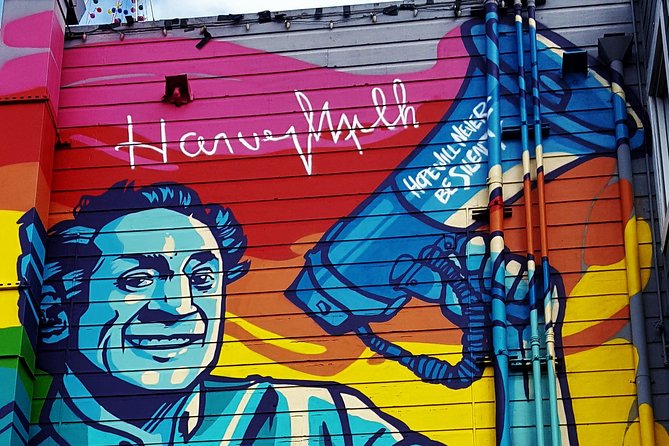
Then you shift into the Harvey Milk section. The guide walks you through several Milk-related landmarks, including his home, his photo shop, and campaign headquarters for his political work. This is one of those rare walking tours where you’re not just hearing that Milk was influential. You’re seeing the sites connected to his day-to-day presence in the neighborhood.
The tour also includes time at Harvey Milk Plaza. Here you learn how Milk arrived in San Francisco, became the first openly gay male politician to serve in public office in the United States, and grew into a civil rights activist. You’ll also hear about how the rainbow flag was created—an item that turns a symbol you’ve likely seen everywhere into something with origin, effort, and meaning.
One thing I like about this section is pacing. The stop at Harvey Milk Plaza is about 20 minutes, so it gives you room to read and absorb without the tour turning into a sprint.
Pink Triangle, Rainbow Honor Walk, and the AIDS Quilt Names sites: where the walk gets real
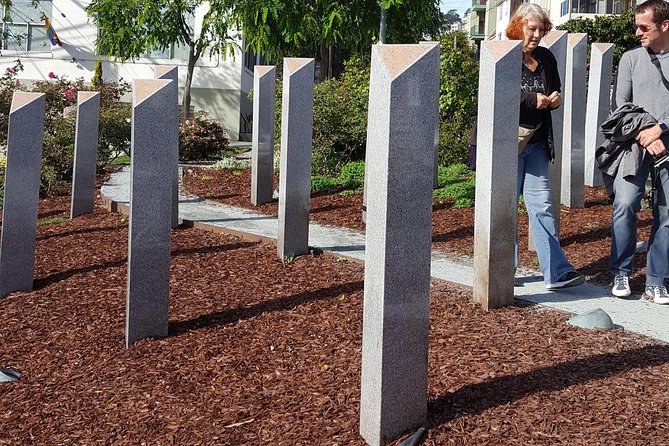
This is the emotional center of the route, and it’s handled as more than a photo stop. You’ll see the Pink Triangle Memorial Park, the Rainbow Honor Walk Project, and the AIDS Quilt Names Project original site. Each one approaches remembrance in a different way, but all three push you to recognize how LGBTQ rights and safety evolved through struggle.
The Pink Triangle Memorial Park carries the history of persecution in a way that’s meant to be faced in person. The point isn’t shock for shock’s sake; it’s context—how symbols of oppression became part of public memory and identity.
Next comes the Rainbow Honor Walk Project, where names and honors along the route reinforce how activism didn’t happen in a vacuum. The guide connects it to the wider idea of community recognition: who gets remembered, why that matters, and how that visibility changes what future generations feel they can become.
Then you reach the AIDS Quilt Names Project original site. This is where the tour’s strongest value shows up for me: you’re not only learning that the AIDS crisis was devastating. You’re learning it through a memorial framework that keeps names and lives present instead of fading into general history.
A good way to think about these stops: they’re not just tributes. They’re educational tools built into the neighborhood. If you’re the type who likes to read carefully while walking, you’ll likely appreciate the time these memorial points invite.
Human Rights Campaign Action Center and Store: connecting past activism to today
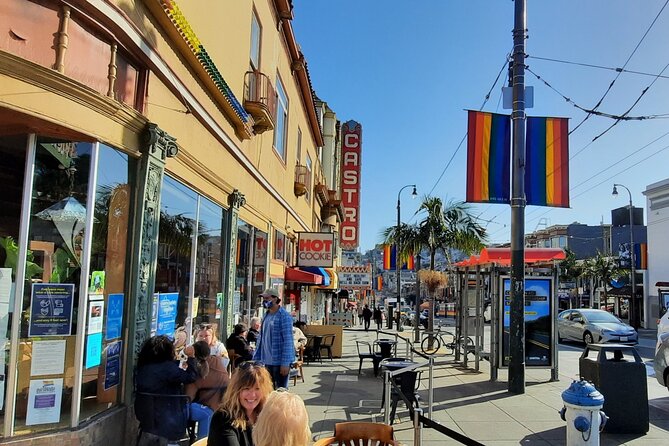
After the memorial stops, the tour turns toward the ongoing fight for equality. You’ll visit the Human Rights Campaign Action Center and Store, and you’ll stop at the location that’s tied to Harvey Milk’s original camera shop, campaign headquarters, and resident. Today, it functions as the HRC Action Center and Store, so the site has layers.
This section is about 10 minutes. That may sound short, but it works because it’s focused: you’ll learn how LGBTQ people historically did not have equal rights in areas like employment, housing, and public accommodations. The guide ties that past to what still needs attention, which is a good reality check if you’ve been thinking about LGBTQ history as something finished.
I also like that this stop isn’t only about policy in theory. Because it’s a real location that shifted from Milk-era activism into a modern human rights hub, it helps you see continuity. The work didn’t just end when laws changed or when certain events became milestones.


Walking pace and what to wear for a comfortable 2 hours
This is a walking tour, but it’s not described as ultra-mileage. The route focuses on multiple historical sites with short to medium stops—like the 20-minute Harvey Milk Plaza segment and the 10-minute Human Rights Campaign stop—so you’ll likely spend more time processing than covering huge distances.
Public walkways on the route are described as wheelchair accessible, which is a major plus if you use a wheelchair or mobility aid. If you’re bringing someone with limited mobility, you should still plan for sidewalk time, but the tour’s design is aligned with accessible public streets.
For clothing, your best bet is practical city walking attire: comfy shoes and layers. The tour can run in rain (with weather-dependent outcomes if conditions are poor), so bring a light rain layer if the forecast looks questionable.
Price and value check: what $40 buys you on this Castro route
At $40 per person for about 2 hours, this isn’t the cheapest thing you can do in San Francisco. But it’s priced like a specialty guide-led experience where the guide’s local connections matter.
Here’s why the value makes sense for the kind of traveler this tour fits:
- The route includes major LGBTQ memorial and landmark stops, not just one or two highlighted attractions.
- There are admission tickets included for key segments at the start and at Harvey Milk Plaza. That reduces the chance you’ll end up hunting for pay-to-enter items mid-walk.
- The group size cap at 2 travelers means you’re more likely to get attentive guidance rather than being one face in a big crowd.
- The guide is a long-time local historian/community activist type, which often translates into better storytelling than a scripted route.
If your travel style is about learning from a person who lives where you’re walking, this price feels fair. If your idea of value is only low-cost sights and minimal talking, you might prefer a self-guided Castro route using on-site signage.
Should you book the San Francisco LGBTQ walking tour in the Castro?
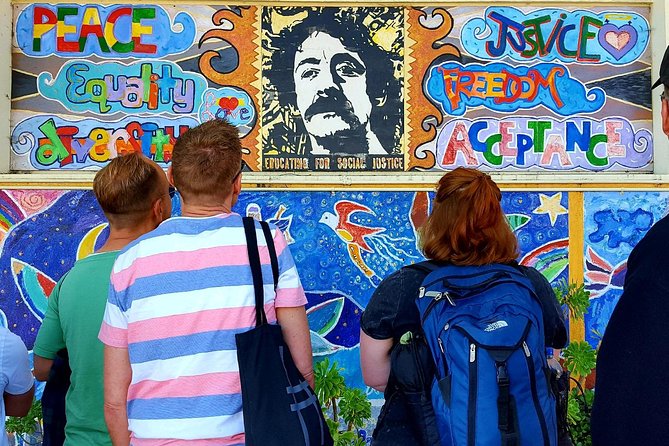
I think this tour is a strong match if you want LGBTQ San Francisco history that’s grounded in real places: Harvey Milk sites, the Pink Triangle Memorial Park, the Rainbow Honor Walk, and the AIDS Quilt Names memorial framework. It’s also ideal if you appreciate a guide who can explain not only what happened, but why the Castro became a center for activism and visibility.
Book it if you can handle serious subject matter with respect and you want the emotional context that these memorial sites are designed to carry. Consider skipping it if you’re only looking for light, entertainment-first sightseeing and you’d prefer to avoid topics tied to persecution and the AIDS epidemic.
If you do book, show up with comfortable shoes, a little time to read, and an open mind. The Castro is the kind of neighborhood where a walking tour can change how you see a whole city.
FAQ
Where does the tour start and end?
The tour starts and ends at 400 Castro St, San Francisco, CA 94114, USA.
How long is the San Francisco LGBTQ walking tour?
The tour lasts about 2 hours.
Is the tour wheelchair accessible?
Yes. The tour notes that public walkways are wheelchair accessible.
What language is the tour offered in?
The tour is offered in English.
What is included in the ticket price?
The ticket includes a local guide. Admission tickets are included for the first main stop and for Harvey Milk Plaza, and the Human Rights Campaign Action Center and Store stop is listed as free.
Is there a refund if I cancel or if the weather is bad?
The experience is non-refundable and cannot be changed for any reason. If the tour is canceled due to poor weather, you’ll be offered a different date or a full refund. If the tour is canceled because the minimum traveler numbers aren’t met, you’ll be offered an alternative or a full refund.