
REVIEW · GETTYSBURG
Gettysburg Battlefield Self-Guided Driving Audio Tour
Book on Viator →Operated by Action Day Trips · Bookable on Viator
Gettysburg gets easier once the car talks. This self-guided driving audio tour turns a long battlefield drive into a step-by-step experience, with stories triggered by where you are. I especially like that you get offline maps, so the audio keeps working even when cell service fades in the hills.
I also like the pricing model: it’s $16.99 per group (up to 4), so you’re paying per car, not per person. One thing to keep in mind: the audio is GPS-based, so if you start late, skip around, or drive outside the suggested route and speed, you may have to restart to get back in sync.
Expect roughly a 19+ mile route, 60+ audio stories, and about 1–2 hours of pure audio time. If you stop for monuments, photos, and quick reading breaks, it often stretches into the 2–4 hour range.
In This Review
- Key moments that make this tour worth it
- Entering the battlefield: how the audio tour really works
- Heritage Center start: the best way to set the stage
- Day 1 drive: from McPherson’s Ridge to the first memorials
- Day 1 tip
- Day 2 terrain: observation towers, rocky cover, and evacuated farms
- Day 2 tip
- Day 3 finish: Pickett’s Charge, the high-water mark, and the cemetery
- Price and value: what $16.99 per car buys you
- Practical tips so the audio stays in sync
- Who this tour fits best
- Should you book this Gettysburg driving audio tour?
- FAQ
- How long does the Gettysburg Battlefield self-guided driving audio tour take?
- What does it cost?
- Do I need cell service to use the tour?
- Where do I start the tour?
- Where does the tour end?
- Do I need tickets for the stops?
- How do I play the audio in my car?
- Does the audio play automatically based on location?
- Can I pause, restart, or skip parts of the tour?
Key moments that make this tour worth it
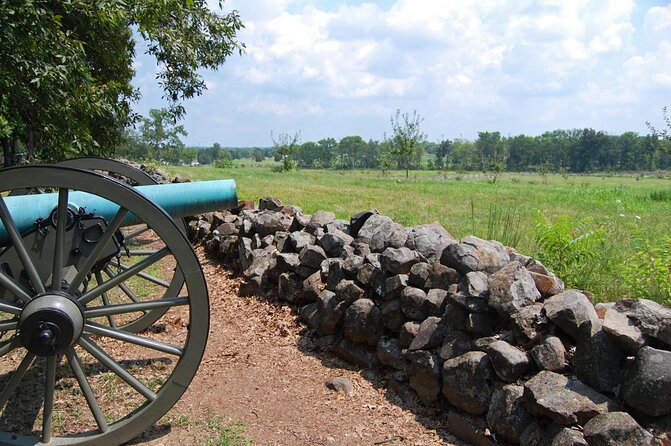
- Offline-first audio maps so you’re not stuck hunting for signal in the park roads
- Hands-free GPS chapter playback that begins when you’re at the next story point
- Battlefield Sallie: learn why the 11th Pennsylvania drummer mascot matters, not just what happened
- Real scenic viewpoints like Oak Ridge Observation Tower for wide panoramic fields
- A stop-by-stop structure that matches how Gettysburg feels: ridge lines, farms, memorials, and hills
- Optional detour at Eisenhower’s site if you want one more angle over the battlefield
Entering the battlefield: how the audio tour really works
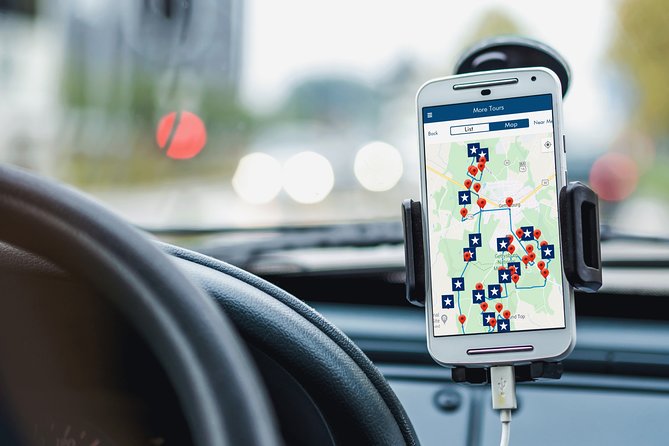
This is a self-guided tour, so no guide meets you. Your job is simple: park at the start, open the app, start the right tour version, and let the audio roll while you follow the route and speed limits.
The audio is designed for location-based playback. That means the stories should start automatically when you arrive at each story point. You can pause and restart as you need, and you can also skip segments if you want to keep moving.
Plan your phone setup ahead of time. The instructions call for connecting your phone to your car stereo with Bluetooth, USB, or AUX, so you can hear clearly while driving. If you plan to walk around (and at Gettysburg you will want to), the tour notes that headphones are a good idea for walking parts.
One practical note: you’ll download the tour using a separate app, and it must be done on strong Wi‑Fi/cellular. After that, it should work offline. This is the big “keep the trip smooth” piece—download before you leave town if your signal is shaky where you’re staying.
You can also read our reviews of more tours and experiences in Gettysburg.
- 2-Hour Gettysburg Battlefield Guided History Bus Tour with a National Park Guide
★ 4.5 · 2,201 reviews


Heritage Center start: the best way to set the stage
Your tour begins at the Gettysburg Battlefield Driving Tour at Heritage Center’s parking lot (lot 297) on Steinwehr Ave. The stop at the start is the Gettysburg Heritage Center, which is an important primer before you start driving the famous roads.
This Heritage Center visit is listed as about 10 minutes, and the admission ticket is not included. In other words, don’t treat it like a quick photo stop unless you already know you want to skip the museum side.
Why start here? Because Gettysburg can feel like a blur of names, ridges, and monuments if you’re trying to figure it out while you drive. The audio system expects you to be in the right mindset—watching the terrain, linking what you see to what the narration explains, and then moving on.
Day 1 drive: from McPherson’s Ridge to the first memorials
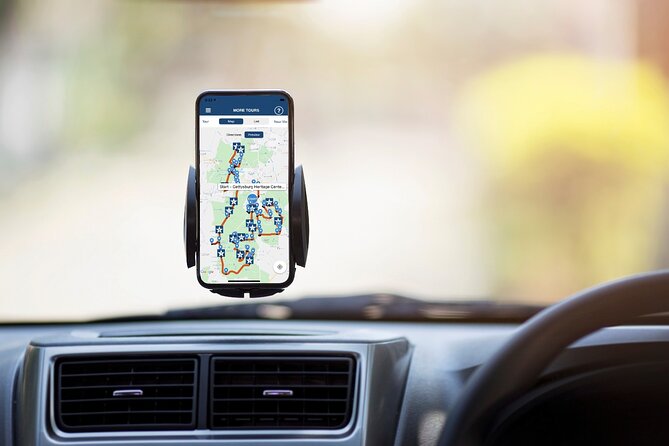
The tour follows the official Auto Tour route, and the first stretch focuses on the opening moves of the battle.
McPherson’s Ridge is your first big “see the action in your head” moment. The narration places you at a point where you can imagine regiments forming and clashing as the dawn of the first day breaks. It’s short (about 5 minutes), but it’s the type of stop that makes the rest of the drive click.
Next is the Railroad Cut (about 5 minutes). This is where the tour shifts from broad battlefield geography to how commanders tried to outthink each other. You’ll also hear that it was an unlikely site for a major skirmish on Day 1.
Then comes the Eternal Light Peace Memorial. The tour gives it about 10 minutes, and it’s free to visit. I like this stop because it’s a reminder that Gettysburg is not only about the battle lines—it’s also about the long process of reconciliation. The memorial’s design uses Maine granite and Alabama limestone to symbolize north and south reunification.
From there, you hit one of the most practical stops for first-time visitors: the Oak Ridge Observation Tower. It’s about 5 minutes and free. The top is where you get panoramic context—the kind of wide view that helps you understand why infantry positions mattered on those ridges.
Finally, you pass the 11th Pennsylvania Volunteer Infantry Regiment Monument (about 5 minutes). Here’s one standout detail you don’t want to miss: on the base is a dog sculpted as Battlefield Sallie, the unit’s mascot/dedicated companion. The audio uses that to talk about drummers and military music—how sound and rhythm affected movement and morale.
As Day 1 closes, the audio moves into the kind of stories Gettysburg is famous for: commanders weighing what they’ve lost, what they might still do, and how they change plans as night falls. After that, you drive past more commemorations, including the North Carolina Memorial and Virginia Monument (about 5 minutes).
Day 1 tip
If you’re trying to “learn as you go,” don’t just drive past the memorial-heavy stops. Park briefly and read the names. Those short pauses help the audio’s stories land with more meaning, especially when you’re linking units to hills and fields.
Day 2 terrain: observation towers, rocky cover, and evacuated farms
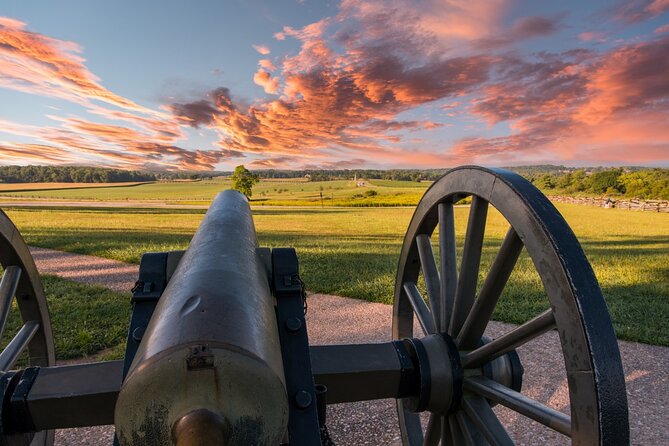
Day 2 is where Gettysburg starts to feel like a puzzle you can walk through—if you keep following the logic of hills, roads, and defensive lines.
The tour begins the second day by moving to an Auto Tour stop segment that sets up Day 2 organization and strategy (about 10 minutes). It even tees up the big third-day story (Pickett’s Charge) so you don’t expect it too soon.
Then you get a view-focused moment at the Longstreet Observation Tower (about 5 minutes). Observation towers matter here because Day 2 has several interconnected sites. From above, you can connect the ridges and approaches without guessing.
There’s also an optional detour to the Eisenhower National Historic Site (about 5 minutes, free). Eisenhower often stayed there, and the payoff is a fresh angle looking back over the battlefield. If you like broad strategic viewpoints, this is a good time to make that side trip.
Back on the route, you head to Warfield Ridge (about 5 minutes). The audio describes the setup: Confederate troops assembling to attack a strategic Union outpost, and Union marksmen positioned to defend. This isn’t just names on plaques—it’s a “who had the better shot” kind of story.
Next is Little Round Top (about 5 minutes). It’s critical terrain, and the audio emphasizes that Union soldiers held on tightly, with the area described as crossing into the Valley of Death—a stark reminder of how fast a skirmish could turn into a slaughter.
From there, you come to the story area associated with Devil’s Den, described as rocky volcanic cover where Confederate sharpshooters could pick off soldiers. Even if you only park briefly and look around, this stop helps you understand why shelter mattered as much as speed and bravery.
Then you pass through the Wheat Fields (about 5 minutes) with one of the tour’s more human-sounding side stories: the narration includes the tale of Union soldier JJ Purman. It’s the kind of detail that keeps the battlefield from feeling like a list.
The drive continues to the Peach Orchard (about 10 minutes), then the Abraham Trostle Farm (about 10 minutes). At Trostle farm, the story is about how the family fled so fast that dinner was still on the table. That detail hits because it pulls you out of battle-time abstraction and back into ordinary civilian life disrupted in minutes.
The narration follows with Plum Run (about 10 minutes) and then moves into medical and aftermath territory at the George Weikert Farm (about 10 minutes). The farm became a battlefield hospital, and the audio connects that to what military doctors faced and the effects of war on the wounded.
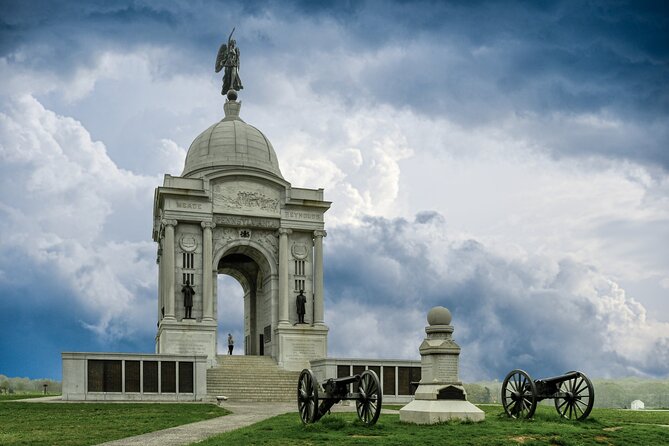
Day 2 also includes the State of Pennsylvania Monument (about 10 minutes). This stop frames participation in practical, local terms—nearly 35,000 Pennsylvanians fought, and the audio emphasizes that these men weren’t only fighting an abstract cause; they were fighting for their state.
Finally, the tour pushes deeper into the woods with Spangler’s Spring, followed by Culp’s Hill Tower (about 10 minutes together in this section). Then you reach East Cemetery Hill (about 10 minutes) at nightfall. This is where the narration explains a nighttime raid attempt and why Union forces nearly lost before ultimately prevailing.

Day 2 tip
Day 2 is the point where GPS can get picky if you’re doing lots of stops. If the audio starts lagging or repeating, don’t panic—just get back to the marked route and let the next location point trigger the story again.
Day 3 finish: Pickett’s Charge, the high-water mark, and the cemetery
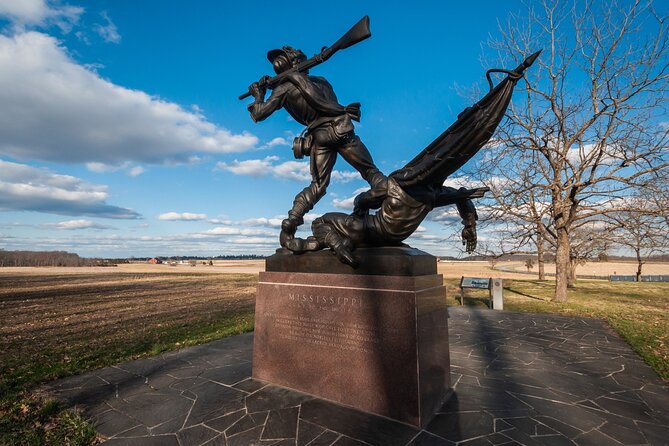
The last stretch is cleaner and more emotional. The tour moves you toward the final-day turning point and then ends at one of the most respectful places in the park.
A key stop here is the narration at the Gettysburg National Military Park (about 10 minutes). It frames Gettysburg as a major turning point in the Civil War and ties it to the impact of Lincoln’s later speech. The audio also reinforces the famous label for Gettysburg’s significance as a turning point and source of inspiration for the Gettysburg Address.
Then you reach the heart of the third day: Pickett’s Charge. This segment (about 5 minutes) puts you in position to look down on the final battlefield area and hear about the high water mark—the farthest point the Confederacy advanced up the hill toward Union defenses.
The tour concludes at the National Cemetery (about 5 minutes). The audio focuses on honoring the graves of Union soldiers and notes the link to Lincoln’s Gettysburg Address. It also covers why the address ended up shorter than many expected: Lincoln wanted attention on the soldiers who sacrificed their lives.
Price and value: what $16.99 per car buys you

At $16.99 per group (up to 4), this is priced like a “smart add-on” rather than a full guided tour replacement. The real value is that you pay once, then keep control of your time. If you’re traveling with family or friends, this is the kind of deal where the per-car structure makes a big difference.
This tour also isn’t a one-minute narration. You’re getting 60+ stories across a 19+ mile route. And because it’s lifetime access with no expiry, you can reuse it on a future visit when you want to focus on the second half you skipped the first time.
The tradeoff is that you’re not getting real-time human coaching. If you want someone to interpret the battlefield with extra questions and answers, you may still prefer a live guide. But if you like pacing yourself and hearing the stories while you look at the ground, the audio format makes sense.
Practical tips so the audio stays in sync
A lot of the frustration people feel with GPS-triggered audio comes from tiny workflow issues. You can avoid many of them.
- Start at the exact starting point shown in the instructions, then confirm you chose the right tour version in the app.
- Follow the suggested route and speed limit. The sync depends on your location accuracy.
- If audio pauses or restarts, it often helps to stop briefly, make sure you’re oriented with the route, then restart from where you should be.
- Give yourself time to learn the controls the first few minutes. Some people find it clunky at the start, then smooth once they figure out the app rhythm.
- When you park at viewpoints or monuments, treat the stop as part of the experience, not an obligation. A quick read of names and direction signs makes the next audio chapter land better.
Also, don’t underestimate how much you’ll want to step out. Gettysburg is full of monuments and small markers, and many of the narration moments work best when you can see what you’re hearing about.
Who this tour fits best

This works especially well for you if:
- you want to see major sites in a comfortable self-led drive
- you’re traveling as a small group up to four
- you like history told through story details tied to real terrain
- you want flexibility to stop for photos, read monuments, and return to the car when ready
It may be less ideal if:
- you strongly dislike apps or phones while driving (even with car audio)
- you need a fully guided experience with constant human interpretation
- you expect audio to follow you perfectly if you wander off-route for long stretches
Should you book this Gettysburg driving audio tour?
If you’re visiting Gettysburg for the first time and you want a structured way to cover the key battle sites without rushing, I think this is a smart purchase. The biggest wins are offline reliability, hands-free GPS playback, and the fact that it’s priced per car, which is rare for this kind of content.
Book it if you like learning while you drive, stopping when something catches your eye, and then moving on. Pass if you know you’ll want a live guide’s deeper explanations on demand. For most independent travelers, though, this strikes a useful balance: clear route coverage, story-driven context, and the freedom to set your own pace.
FAQ
How long does the Gettysburg Battlefield self-guided driving audio tour take?
The tour is listed as about 2 to 4 hours in total, with about 1 to 2 hours of audio content time. The full drive route is over 19 miles.
What does it cost?
It costs $16.99 per group, for up to 4 people. The pricing is per group, not per person.
Do I need cell service to use the tour?
No. The tour includes offline maps, and it should work perfectly without cellular or Wi‑Fi after you download it.
Where do I start the tour?
You start at the Heritage Center’s parking lot (lot 297) at 297 Steinwehr Ave, Gettysburg, PA 17325.
Where does the tour end?
The tour ends at 125 Taneytown Rd, Gettysburg, PA 17325.
Do I need tickets for the stops?
Admission is not included for the Gettysburg Heritage Center (listed as not included there). Other stops listed in the route are marked as free.
How do I play the audio in my car?
You download the separate app and then connect your phone to your car stereo using Bluetooth, USB, or AUX. Headphones are mentioned as a good option for walking parts.
Does the audio play automatically based on location?
Yes. The audio stories are designed to play on their own based on your location, so you can explore hands-free while driving.
Can I pause, restart, or skip parts of the tour?
Yes. You can start anytime, pause anywhere, enjoy breaks, and you can also skip anything you do not care about.
You Might Also Enjoy




More Tour Reviews in Gettysburg
- 2-Hour Gettysburg Battlefield Guided History Bus Tour with a National Park Guide
★ 4.5 · 2,201 reviews
Not for you? Here's more nearby things to do in Gettysburg we have reviewed
- 2-Hour Gettysburg Battlefield Guided History Bus Tour with a National Park Guide
★ 4.5 · 2,201 reviews