REVIEW · OAHU
Hawaii Off The Beaten Path Food Tour
Book on Viator →Operated by Hawaii Free Tours · Bookable on Viator
Chinatown turns breakfast into a mini history lesson. This small-group Oahu walk strings together a working Japanese Shinto temple, Honolulu staples like manapua, and a big Chinatown market run that shows how Hawaii’s food culture was shaped by many places.
I like that it’s food-forward and still teaches the why behind the flavors, with guides such as Victor and TJ guiding you from stop to stop and explaining what you’re eating and why it belongs here.
One thing to plan for: you’ll be on your feet for much of the tour, and some bites happen while standing.
In This Review
- Key Highlights Worth Marking
- Why This Tour Works: Chinatown Markets + Real Local Context
- Price and What $150 Buys You in the Real World
- Pickup, Meeting Point, and Timing: Getting There Without Stress
- The Walking Pace: Standing, Seating, and What to Wear
- Stop-by-Stop: From Nuuanu Stream to Manapua and Fried Banana Lumpia
- Stop 1: Izumo Taishakyo Mission of Hawaii
- Stop 2: Downtown Honolulu Manapua
- Stop 3: Chinatown Turon (Banana Lumpia)
- Stop 4: Chinatown Chicken Adobo
- Stop 5: Downtown Prawns (Ama Ebi / Boton Shrimp)
- Stop 6: Fresh Local Fruits
- The Seafood Market Stop: Chutoro Sashimi and Tako Poke
- Chuturo Sashimi (Fatty Tuna Belly, Japanese style)
- Tako Poke with Korean heat and flying fish eggs
- Japanese Octopus (Madako) in Korean dressing
- Roast Meats, Vietnamese Pandan Cake, and Hawaiian Poke for the Final Stretch
- Stop 8: Roast Meats (Duck and/or Roast Pork)
- Stop 9: Vietnamese Pandan Cake
- Stop 10: Hawaiian Style Poke (Ahi Limu Poke)
- Drinks, Menu Flow, and Why the Order Matters
- How Much Food You’ll Actually Eat (and Extras for Later)
- Who Should Book This Food Tour (and Who Might Reconsider)
- Should You Book Hawaii Off The Beaten Path Food Tour?
Key Highlights Worth Marking
- Small group, big taste count: capped at 16 people, so the walk stays personal.
- Waikiki and Honolulu hotel pickup: private pickup and drop-off for many stays.
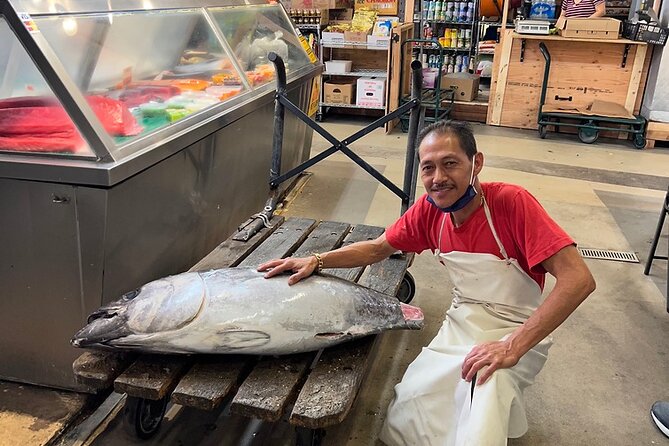
- Market-to-mouth seafood: chutoro sashimi, tako poke, and multiple poke styles.
- Fruit and sweets you won’t plan on your own: rotating locally grown fruit tastings plus Vietnamese pandan cake.
- Food served in normal portions: not dainty nibbles, with extra food often packed up for later.
- Standing is part of the format: seating is arranged when possible, but expect your feet to do work.
Why This Tour Works: Chinatown Markets + Real Local Context
This is the kind of tour where you don’t just eat. You also get oriented to how Honolulu’s neighborhood food systems work. You’re moving through places that are still in daily use, which makes the experience feel practical, not like you’re watching a staged show.
The best part is the mix of cultures you actually taste: Japanese-style seafood preparations, Filipino fried fruit desserts and adobo, Chinese-style roast meats, Vietnamese pandan cake, and classic Hawaiian poke. It’s the food map of modern Hawaii, not a single-country theme.
You can also read our reviews of more tours and experiences in Oahu.


Price and What $150 Buys You in the Real World
At $150 per person for about 3 hours, the fair question is: is this worth it compared with doing it on your own?
Here’s the value math that matters on a food tour:
- You’re paying for access to several counters and stalls you might not find without local help.
- You get multiple different tastings, not one or two big plates.
- You also get transportation (private pickup and drop-off within the Honolulu/Waikiki area) plus drinks.
This tour also avoids the classic bait-and-switch of tiny “toothpick” portions. Based on how the experience is described, you should come in hungry, pace yourself, and be ready for leftovers. That’s a big deal on Oahu, where a “quick snack” can turn into a pricey meal if you’re guessing.
Pickup, Meeting Point, and Timing: Getting There Without Stress
The tour starts at 9:30 am and runs for around 3 hours. Pickup is offered in the Honolulu and Waikiki areas, with hotel lobby pickup between 9:00 and 9:30 am depending on traffic.
If you’re staying farther out (like the east side such as Kailua/Kaneohe, or west side areas like Aulani/Ko Olina/Four Seasons), you’ll need to meet at the first stop instead. If your hotel isn’t showing up for pickup, contact the operator so you’re not left figuring it out at the last second.
You’ll also get a text message the day before with a 15-minute pickup window. And you’ll start from 201 N Kukui St, Honolulu, HI 96817.
The Walking Pace: Standing, Seating, and What to Wear
This is a walking tour, and the format expects you to stand for much of it. Some stops may require eating while standing, though seating is arranged whenever possible.
From a practical standpoint, that means:
- Wear shoes you can walk in for a couple of hours.
- Avoid anything with a tight schedule after the tour. You’ll likely be full.
- Bring your water sense. Drinks are included, but fruit plus seafood plus pork adds up fast.
Also, the walk is kept manageable. One reason people love this tour is that it doesn’t feel like a grueling hike through Honolulu streets. Still, plan for your feet.
Stop-by-Stop: From Nuuanu Stream to Manapua and Fried Banana Lumpia
You start at a calm, historic first stop and then build your way into the food intensity of Chinatown.





Stop 1: Izumo Taishakyo Mission of Hawaii
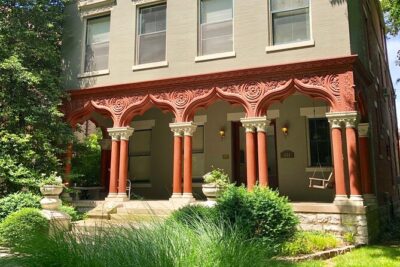
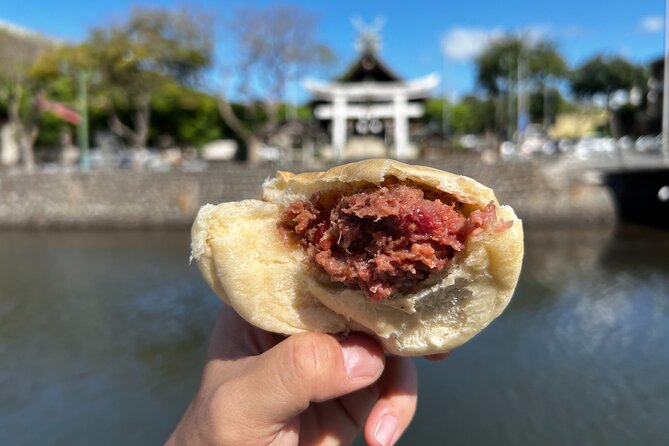
You’ll visit a 125-year-old active Japanese Shinto temple right next to the Nuuanu stream. It’s a short stop (about 15 minutes) and admission is free.
Why this matters for a food tour: it sets the cultural context early. Hawaii’s food story didn’t pop out of nowhere. Japanese and other immigrant communities are part of the foundation.
Stop 2: Downtown Honolulu Manapua
Next is local manapua, those sweet-bread pastries with savory filling. This stop is also around 15 minutes and admission is free.
I like this as a warm-up. It’s comfort food, but it’s also distinctly local: you get the vibe of what everyday Hawaii snacking looks like before moving into Chinatown’s heavier hitters.
Stop 3: Chinatown Turon (Banana Lumpia)
In Chinatown, you’ll try turon, the Filipino-style banana lumpia. Expect fried banana dessert goodness in a 15-minute stop.
This is a smart palate shift. After the savory manapua, you get something different: sweet, crisp, and easy to keep eating without slowing the whole tour.
Stop 4: Chinatown Chicken Adobo
Then comes chicken adobo, Filipino braised chicken simmered in sauce. Another 15 minutes.
Adobo is a classic, but the tour’s advantage is that you’re not just sampling a dish. You’re tasting a food concept that shows how immigrant cooking adapts to island life.
Stop 5: Downtown Prawns (Ama Ebi / Boton Shrimp)
You’ll also try Kauai wild caught deep water prawns, known as ama ebi or boton shrimp. This stop is about 15 minutes.
Deep-water prawns are not something you casually order everywhere. This is one of those “this would cost extra if you found it alone” tastings.
Stop 6: Fresh Local Fruits
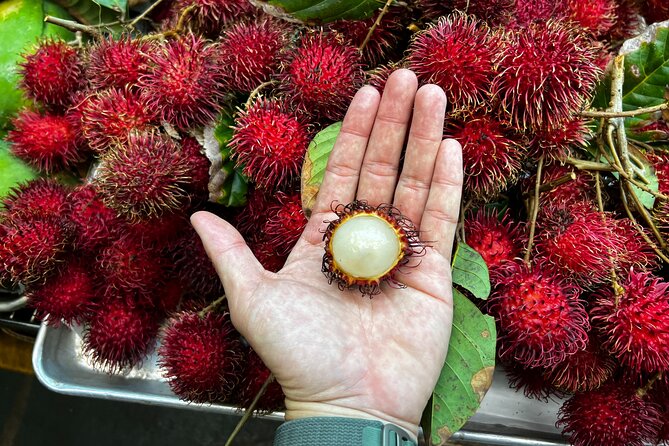
After that, you’ll taste exotic locally grown fruits. The exact fruits depend on season and what looks good that day, and this stop runs about 20 minutes.
This is a highlight if you like trying things you can’t name. The tour is built around giving you multiple fruit tastes (listed as 5+ tastings on the fruit stop, and the menu mentions 6+ total fruit tastings), which is exactly how you learn what you actually like.
The Seafood Market Stop: Chutoro Sashimi and Tako Poke
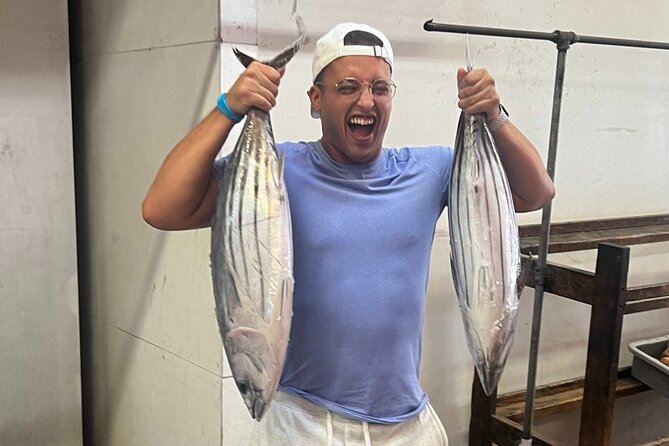
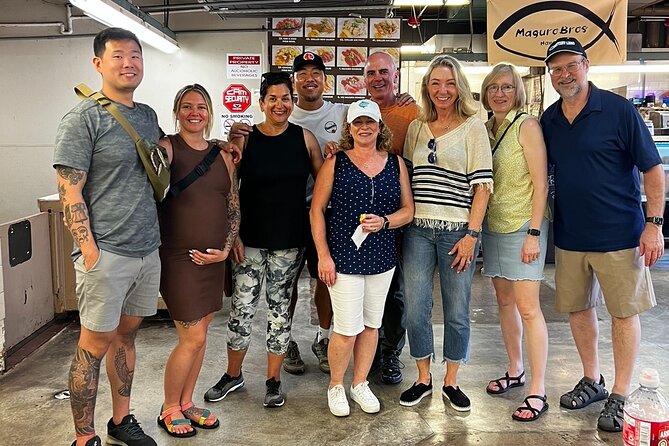
Stop 7 takes you to an Oahu fish market, where you try Japanese-style seafood based on availability. This part runs about 20 minutes and is free.
This is where the tour gets serious in a good way.
Chuturo Sashimi (Fatty Tuna Belly, Japanese style)
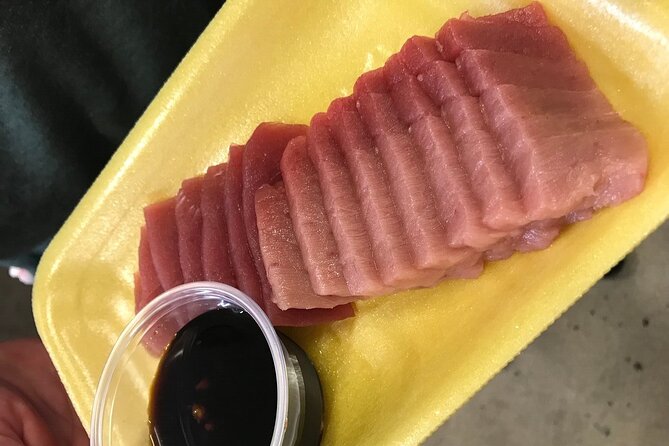
You’ll try chutoro sashimi, meaning fatty tuna belly, served Japanese style.
If you’re on the fence about raw fish, this is the stop where your decision gets tested. But it’s also one of the most rewarding ones if you like seafood.
Tako Poke with Korean heat and flying fish eggs
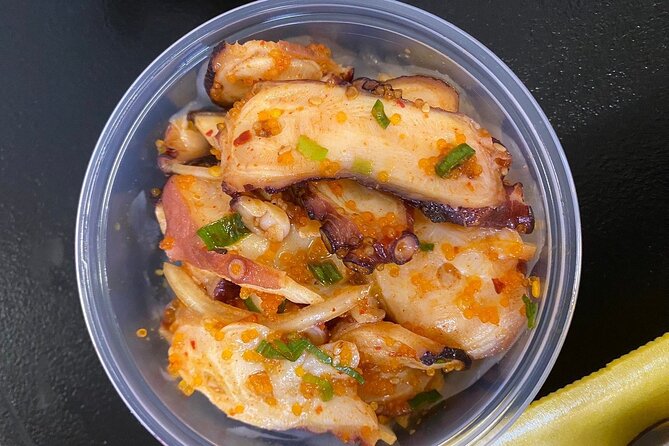
You’ll also try tako poke, cooked Japanese tako (madako) seasoned with a Korean spicy sauce, plus flying fish eggs.
This isn’t your standard poke order. It’s poke with a different texture story: cooked octopus chew plus spicy sauce plus crunchy eggs.
Japanese Octopus (Madako) in Korean dressing
The sample menu also includes Japanese octopus (cooked madako) served with a Korean dressing. It fits naturally in this market stop, so you’re not bouncing around the city just to chase flavors.
This section is one of the reasons people rate the tour so highly: you don’t just hear about seafood. You eat it at the source.
Roast Meats, Vietnamese Pandan Cake, and Hawaiian Poke for the Final Stretch
After seafood, the tour moves back into Chinatown’s comfort-food zone, then ends with Hawaiian poke options.
Stop 8: Roast Meats (Duck and/or Roast Pork)
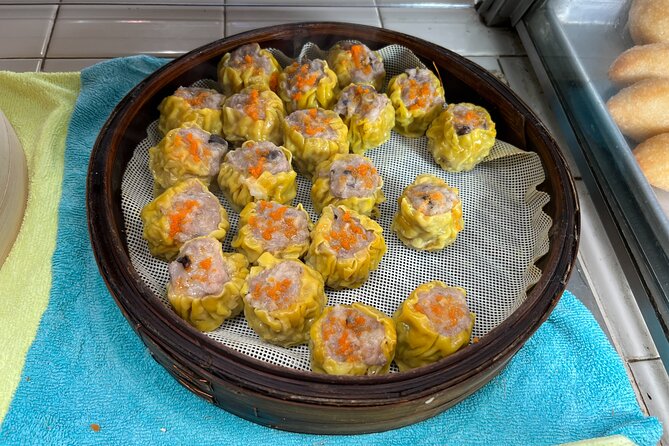
You’ll try roast meats, such as duck and/or roast pork depending on availability (about 15 minutes).
The menu includes:
- Roast duck (Chinese style)
- Roast pork belly with crispy skin
- Sweet honey BBQ pork belly (charsiu)
This is where the flavors get deeper and more savory. It’s also a good time to slow down mentally and really notice how these roast styles differ.
Stop 9: Vietnamese Pandan Cake
Next: Vietnamese pandan cake (about 15 minutes). This is a sweet finish before the final Hawaiian-style savory bite.
Pandan cake is fragrant and smooth. It balances out the salty proteins so you can enjoy poke at the end without feeling like you’re eating the same flavor again and again.
Stop 10: Hawaiian Style Poke (Ahi Limu Poke)
Finally, you’ll try Hawaiian-style poke, including ahi limu poke: raw big eye tuna cubed and seasoned in a local style (about 15 minutes).
The tour also lists spicy ahi/tuna poke earlier in the menu, and that makes the ending extra interesting. You get a “same ingredient, different seasoning” lesson in how poke can change while still staying recognizably Hawaiian.
Drinks, Menu Flow, and Why the Order Matters
Drinks are included: local juice (like lilikoi, lychee, guava, pineapple) or bottled water.
What I like about tours like this is the implied pacing. The sequence moves from lighter baked snacks to fried dessert, then into braised and seafood-rich tastings, then back to roast meats, then sweet, then poke. It’s not random.
Even if you don’t think about it while you’re eating, your taste buds do. This order helps you stay engaged instead of bored or overwhelmed.
How Much Food You’ll Actually Eat (and Extras for Later)
This tour is built around you leaving full. The portions are described as generous, and you may even end up with extra food to take home.
That matters because Hawaii meals can be expensive once you’re hungry and deciding in the moment. Here, you’re fed in a structured way, and you can save a snack for later if you have room.
Also, come in ready to ask questions. A lot of the experience value is in the conversation with the guides and the vendors you pass. The guides (including Victor and TJ) are described as personable and willing to answer questions, which makes the food feel even more connected to real life.
Who Should Book This Food Tour (and Who Might Reconsider)
This is a great match if you:
- Want a food-and-culture morning in Oahu, focused on local neighborhoods.
- Like Asian-inspired flavors across countries, not just one cuisine.
- Eat seafood and you’re open to raw fish options like tuna belly sashimi and poke.
- Prefer small groups and a guided walk over doing everything independently.
You might reconsider if you:
- Have serious food allergies. The tour says to contact before booking for serious allergies.
- Know you dislike raw fish. The tour includes multiple raw or seafood-forward tastings, and that’s part of the experience design.
- Hate standing. You’ll be on your feet for much of the tour.
This is also a strong choice for a first morning in Oahu, because it helps you see where to go next. The tour includes guidance beyond the tastings, with follow-up recommendations offered by guides.
Should You Book Hawaii Off The Beaten Path Food Tour?
Yes, if you want a morning that feels like real Honolulu food life: Chinatown markets, working vendors, and a string of tastings that explain the island’s multicultural food background.
Book it if you love seafood, pork, and fruit, and if you’re comfortable eating while standing. The value improves a lot when you treat it like a full meal experience, not a casual snack stop.
Skip it if raw fish is a hard no or if standing is a deal breaker. If either of those applies, you’ll probably enjoy the idea more than the reality.
If you’re flexible, hungry, and curious, this is one of the smarter ways to spend a few hours on Oahu without chasing tourist traps.