REVIEW · PALM SPRINGS
Joshua Tree National Park Self-Guided Driving Audio Tour
Book on Viator →Operated by Adventures with Action · Bookable on Viator
Joshua Tree is weird in the best way. This self-guided driving audio tour threads 66 miles of park highlights into a route you can follow at your own pace, with 60+ location-triggered audio stories playing as you reach each stop.
I like that it’s built for real-world desert timing: you can pause for photos, grab a snack, or stretch your legs when the story and the view line up. One small drawback to plan around is that the tour experience depends on you downloading the app content on strong Wi‑Fi or cellular before you enter, since reception can be poor inside the park.
In This Review
- Key Things You’ll Actually Use
- Price and Duration: What You’re Paying For
- Before You Go: The Download Rule That Makes or Breaks It
- Starting at the Joshua Tree Visitor Center: Set Your Bearings Fast
- Samuelsons Rock and the Desert’s “Mirage” Moment at Willow Hole
- Samuelsons Rock: the old-marked rock with a real mystery vibe
- Willow Hole: the oasis that makes you doubt your eyes
- Hemingway Buttress, Climber Names, and Cap Rock’s Quick Flora Walk
- Hemingway Buttress: boulders, scrambling, and rock-climber energy
- Intersection Rock: the hub with named climbing routes
- Cap Rock: the short trail with plant info
- Hidden Valley Nature Trail Bonus: Easy Mile, Big Story Payoff
- Lost Horse Valley, Gold-Mine Stories, and Queen Valley’s Darker Side
- Lost Horse Valley: a Wild West drive-through story
- Lost Horse Mine Loop Trail: 4 miles, serious sun, strong views
- Queen Valley: abandoned mine with a heavy story
- Skull Rock and Sky’s The Limit: The Easy Trail and the Dark-Sky Temptation
- Skull Rock: roadside access plus a popular 2-mile hike
- Sky’s The Limit Observatory and Nature Center: stars if you stay late
- Getting Out Without Stress: Pace Yourself and Use the Flex Stops
- Is This Tour Worth It? Who Should Book
- Should You Book the Joshua Tree Driving Audio Tour?
- FAQ
- How does the audio tour work if there’s no cell service?
- Where do I start the Joshua Tree self-guided driving audio tour?
- Do I need an entrance ticket to Joshua Tree National Park?
- How long does the driving route take?
- How many people can use one tour purchase?
- Can I use the tour more than once on future trips?
- What if the audio doesn’t start right away?
Key Things You’ll Actually Use
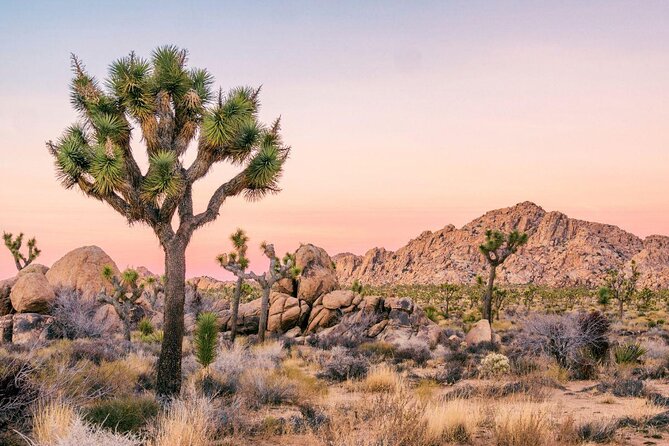
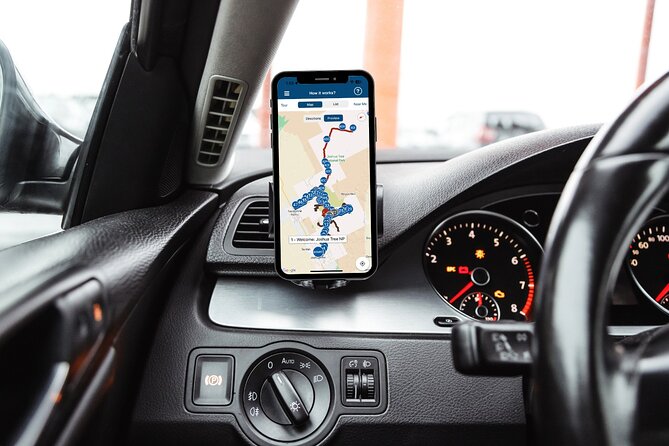
- Hands-free GPS audio: stories play based on where you are, so you can keep your eyes on the road.
- Offline maps and content: no cell signal needed once you’ve downloaded the tour.
- Value per car: $16.99 per group (up to 4), so families and friends can listen together.
- A bonus hike: the Hidden Valley Nature Trail is folded into the experience for easy legs and big payoff.
- Multiple trip friendly: lifetime access with no expiry means you can come back and re-run sections you skipped.
Price and Duration: What You’re Paying For
At $16.99 per group up to 4 people, this is priced like a smart add-on rather than a full guided day. A guided tour usually sells you a fixed pace and a guide’s knowledge (which can be great). Here, you’re buying something different: a ready-made route plus the audio context that makes Joshua Tree feel less random.
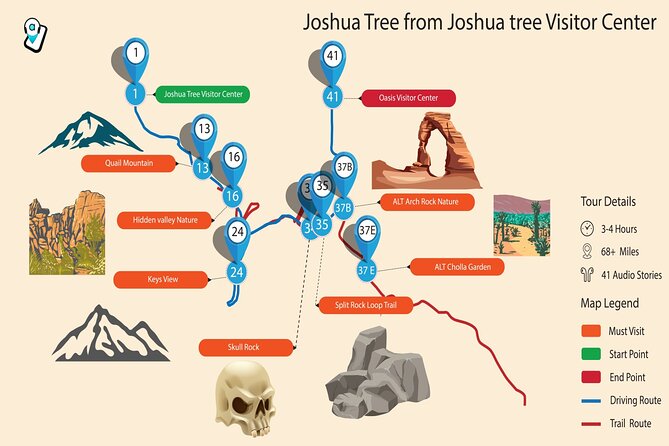
The ride itself is designed to take about 3 to 4 hours and covers over 66 miles. That time isn’t just “drive time.” It’s based on repeated stop-and-start moments for viewpoints and trailheads, plus short breaks to listen and look. If you plan to do the longer walks (like Willow Hole), you’ll likely stretch the day. If you mainly do quick out-and-back photo stops, you can finish quicker and still feel like you got the highlights.
One more value point: the tour says new, lifetime access, no expiry. So if you return to Joshua Tree later, you’re not paying again—you can run it a second time and focus on the parts you missed (or the ones that hooked you).
You can also read our reviews of more tours and experiences in Palm Springs.

Before You Go: The Download Rule That Makes or Breaks It
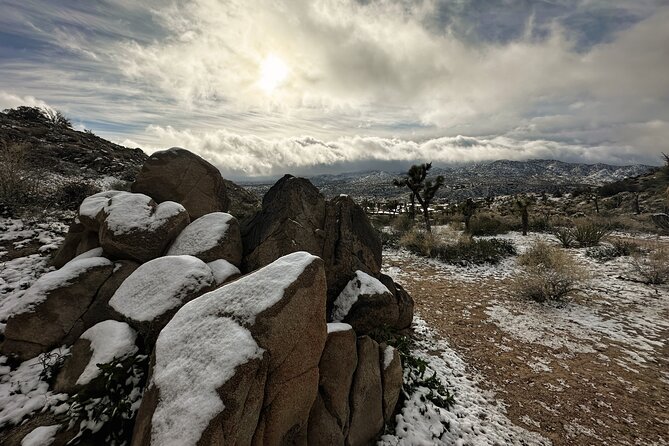
This tour runs through the Action’s Tour Guide App. The big practical tip: download the tour while you’re on strong Wi‑Fi or cellular before you enter the park. Joshua Tree can be hit-or-miss for signal, and the tour content is meant to be offline after download.
Here’s how I’d do it to avoid stress:
- Download on your phone before leaving your lodging.
- Then test that the app opens and the tour content is available before you drive in.
- Bring the device you’ll actually use in the car.
If you want your audio to sound good, connect your phone to the car stereo using Bluetooth, USB, or AUX. If you’re using a phone, the tour’s setup notes recommend iPhone (iOS 15+) or Android (version 9+), or an iPad/tablet with GPS and cellular connectivity.
Also, don’t treat the “getting started” step like a formality. The tour is self-guided, and audio begins as you go to the first story point and follow the cues.
Starting at the Joshua Tree Visitor Center: Set Your Bearings Fast
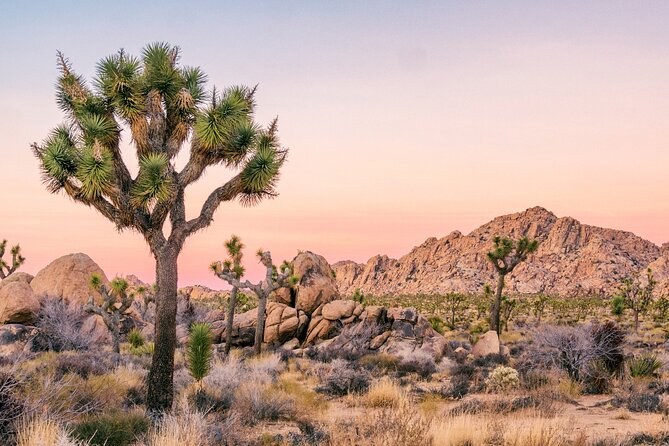
Your driving tour begins at the Joshua Tree Visitor Center. That choice matters. It’s a smoother first move than trying to guess where to go once you’re already inside the park.
From there, you’ll drive through the part of Joshua Tree where the park starts to feel like it has its own rules: rock formations, odd desert shapes, and that surreal mix of wind-carved stillness and sudden drama at viewpoints.
This is also where you’ll get into the rhythm of the tour:
- You follow the route and speed limits.
- You stop when the audio cues tell you to.
- You let the stories play while you look for the feature they’re describing.
If you’re the kind of person who hates complicated tech, this helps. You’re not constantly tapping menus. The tour is meant to play hands-free based on your location.
Samuelsons Rock and the Desert’s “Mirage” Moment at Willow Hole
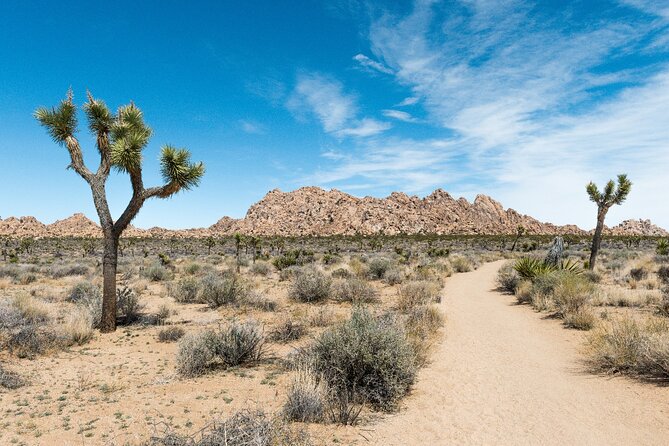
Samuelsons Rock: the old-marked rock with a real mystery vibe
One of the first stops is Samuelsons Rock, reached via a 3.3-mile moderate trail. The attraction here is the human story carved into stone: about 100 years ago, John Samuelson etched writings and declarations onto the rock.
What I like about this stop is that it’s not just “pretty rocks.” It gives you a reason to pause and read the idea behind the place. Even if you don’t do the full hike, the stop works as a reminder that people have been drawn to Joshua Tree for a long time.
Willow Hole: the oasis that makes you doubt your eyes
Next comes Willow Hole, a 7-mile trail to an oasis surrounded by willow trees. The park plays a clever trick on newcomers. At first, many people think it’s a mirage.
If you’re deciding how hard to go on foot, Willow Hole is the one where I’d weigh effort vs. reward carefully. It’s not a quick walk, so plan for water and time. But if you want the “Joshua Tree isn’t what you expect” moment, this is it.
Hemingway Buttress, Climber Names, and Cap Rock’s Quick Flora Walk
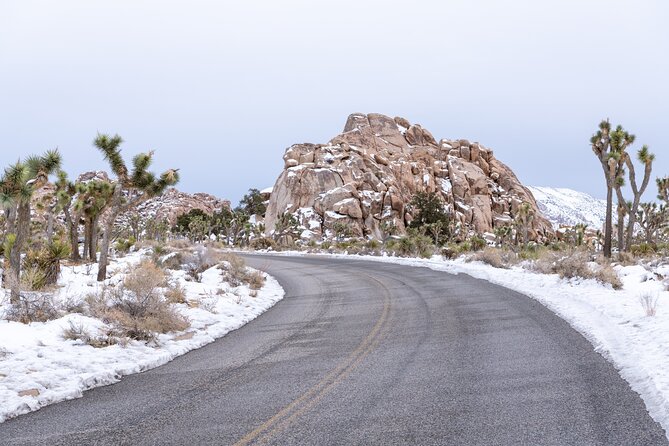
Hemingway Buttress: boulders, scrambling, and rock-climber energy
Hemingway Buttress is described as one of the park’s most popular climbing spots. The view is dramatic, and there’s a pile of boulders that’s fun to scramble on.
Even if you’re not climbing, this stop gives you a sense of the park’s vertical personality. Joshua Tree isn’t just a flat desert drive; it has rock features that practically beg you to go closer.
One caution: the “fun to scramble” part can tempt people into risky footing. If you’re traveling with kids or you don’t have stable shoes, keep it to looking and easy steps.
Intersection Rock: the hub with named climbing routes
Intersection Rock is presented as a kind of hub because it’s visible from far away and creates a strong silhouette against the sky. It’s also popular with climbers, and the tour points out routes with memorable names like Knuckle Cracker, Ignorant Photons from Pluto, and Sympathy to the Devil.
This is a good stop if you enjoy little details. Those climbing-route names help you picture a whole subculture of people who experience Joshua Tree differently than most sightseers.
Cap Rock: the short trail with plant info
Then you hit Cap Rock, where a smaller boulder sits almost impossibly on top of a larger formation. There’s also a quarter-mile trail with information about local flora.
This is a nice “stretch your legs” break. It’s short enough to fit without draining your day, and it adds context about what you’re actually looking at.
Hidden Valley Nature Trail Bonus: Easy Mile, Big Story Payoff
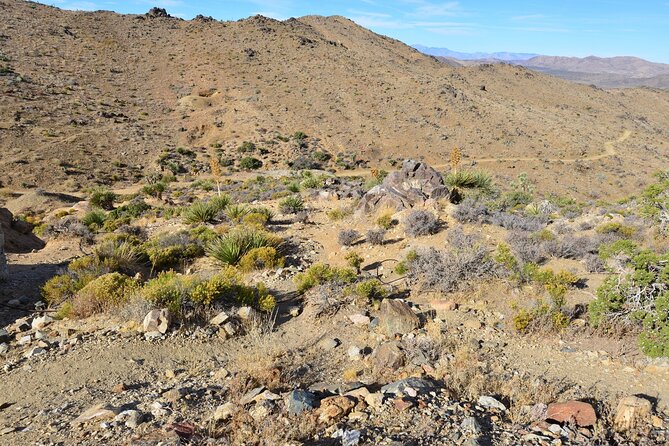
The tour includes a bonus experience tied to the Hidden Valley Nature Trail. The walk is described as easy and about a mile long, which makes it a very doable hike even if your group has mixed energy levels.
Why this matters: in Joshua Tree, you’ll often choose between short drives and bigger hikes. Hidden Valley is a middle path. You get a real trail experience without needing half a day of commitment.
Also, because this is a self-guided audio format, you can stop for longer if the views are landing for you, or move on quickly if you’re chasing sunset timing.
Lost Horse Valley, Gold-Mine Stories, and Queen Valley’s Darker Side

Lost Horse Valley: a Wild West drive-through story
As you drive through Lost Horse Valley, you’ll hear about the McHaney Gang and the history behind the valley’s name. It’s described as connected to misdeeds in the Wild West era, with stories attached to what happened when someone tried to recover stolen horses.
This part is worth listening to with the windows cracked. It’s one of those stretches where silence between audio cues can feel like you’re moving through time.
Lost Horse Mine Loop Trail: 4 miles, serious sun, strong views
The tour also includes the Lost Horse Mine Loop Trail, a 4-mile walk to the remains of one of the region’s most successful gold mines. The trail also includes desert flora and vistas.
The practical downside is stated plainly: in summer, expect lack of shade. So if you’re visiting in hot months, you’ll want early timing and water, and you may choose a slower pace or shorter stop duration.
Queen Valley: abandoned mine with a heavy story
Another mine waits in Queen Valley, where the gold found there is tied to at least one murder and a lot more. If you want Joshua Tree to feel more like history than just scenery, this is a stop that leans into the darker side of human interest in desert riches.
Skull Rock and Sky’s The Limit: The Easy Trail and the Dark-Sky Temptation
Skull Rock: roadside access plus a popular 2-mile hike
Skull Rock is described as a granite formation that looks uncannily like a human skull. It’s easy to access from the roadside, and it’s also the trailhead for an easy 2-mile popular hike.
If you only do one “proper hike” from the driving route, this is the one that’s most likely to fit many fitness levels. It’s also visually striking even if you decide against walking.
Sky’s The Limit Observatory and Nature Center: stars if you stay late
Finally, you reach Sky’s The Limit Observatory and Nature Center. It’s set up for learning about flora and fauna, and it also ties into astronomy because Joshua Tree is a dark sky area.
The tour specifically encourages you to try to stick around after dark if possible. I can’t help you predict the weather, but I can tell you the logic is solid: if the sky cooperates, this is the stop that can turn your drive into a sky-watching memory, not just a rock-and-trail day.
Getting Out Without Stress: Pace Yourself and Use the Flex Stops
A big part of making this kind of self-guided tour work is pacing. The tour is designed for go at your own pace, with audio that plays based on location and you able to pause anywhere. That’s perfect for desert travel because you’ll often need to slow down for heat, glare, or kids who suddenly need to “look closely at one rock.”
The tour also encourages you to skip what you don’t care about and focus on what you do. That means you can build your day around your group:
- If you want mostly scenic pull-offs and quick walks, aim for the short trails and roadside stops.
- If you want hiking, plan earlier and give yourself more time for the longer walks like Willow Hole and Lost Horse Mine Loop.
One more practical note: park entrances and road access can change. A review mentioned confusion during a closure and having to double back. I’d handle this by checking the official Joshua Tree National Park website for closures before you start. Then follow the tour route and speed limits as written for the best audio trigger timing.
Is This Tour Worth It? Who Should Book
I think this is a strong fit if you:
- Want a low-effort way to learn what you’re seeing while driving.
- Are traveling as a group up to 4 and want one purchase per car.
- Like flexible timing more than a fixed itinerary.
- Appreciate hands-free tech, especially when cell service is unreliable.
This might be less ideal if you:
- Hate downloading apps ahead of time or you arrive with weak Wi‑Fi and no backup plan.
- Want a deeply guided, question-answered explanation in real time (audio tours don’t do that the same way).
- Expect everything to handle sudden park closure changes automatically. You’ll still want to check official updates.
Should You Book the Joshua Tree Driving Audio Tour?
Book it if you want the park’s highlights with context, without the pressure of a live guide. For $16.99 per group, you’re getting an efficient way to connect stories to real places, plus offline support so you’re not stuck staring at a blank screen in the desert.
Skip it only if you know your trip style depends on constant internet or you’re not willing to download the tour before you enter. In Joshua Tree, that download step isn’t busywork. It’s the difference between a smooth, guided-feeling drive and a frustrating afternoon.
FAQ
How does the audio tour work if there’s no cell service?
The tour includes offline maps, and it’s designed to work without cellular or Wi‑Fi after you download the app and tour content before you arrive.
Where do I start the Joshua Tree self-guided driving audio tour?
The tour begins at the Joshua Tree Visitor Center, and it ends back at the meeting point.
Do I need an entrance ticket to Joshua Tree National Park?
Yes. An entrance pass is required to visit Joshua Tree National Park, and it’s not included with this audio tour.
How long does the driving route take?
The route is about 3 to 4 hours and is described as over 66 miles long.
How many people can use one tour purchase?
It’s priced per group (up to 4 people), and the tour is described as private for your group.
Can I use the tour more than once on future trips?
Yes. It includes new, lifetime access with no expiry, so you can use it any time and on multiple trips.
What if the audio doesn’t start right away?
Audio is supposed to begin when you enter the first story point and follow the tour route cues. If you have audio issues, the instructions say to contact support for help.