
REVIEW · LAS VEGAS
Las Vegas: Valley of Fire Guided Hike with Drinks and Snacks
Book on GetYourGuide →Operated by Love Hikes · Bookable on GetYourGuide
Valley of Fire hits you with red-rock drama fast. This guided hike from Las Vegas is a smart way to see Nevada’s oldest state park without playing trail detective, and I like how the day mixes petroglyphs with real scrambling options. It’s also a great “get out of the city” reset that still fits neatly into 4–6 hours.
What I really like: you get a guide who helps you read the park as you walk, and you also get provided snacks and drinks for the hike. One thing to consider: some routes get physically tricky, and the tour isn’t suitable for kids under 8 or for pregnant women.
In This Review
- Quick hits before you go
- Valley of Fire is the easy win when you only have a few hours
- Pickup and transfer: turning city time into desert time
- Entering the park: petroglyph walls and Nevada’s oldest state park
- The hike levels: easy, moderate, difficult (and how to choose)
- Easy route: for families and “first desert hike” days
- Moderate route: the sweet spot for most active visitors
- Difficult route: longer, tougher terrain, bigger payoffs
- Scrambling and desert footing: what you’re actually signing up for
- Lake Mead views and why that stop makes sense
- Wildlife moments: when the park “shows up” on your walk
- Snacks, drinks, and the part many people forget: hydration
- What to pack (so you don’t waste energy)
- The guide matters more than you think (and you’ll notice it fast)
- Time on the ground: how to plan your day around 4–6 hours
- Price and value: why $129 can feel fair (if you compare the real costs)
- Who should book this Valley of Fire hike?
- Should you book the Love Hikes Valley of Fire guided hike?
- FAQ
- How long is the Valley of Fire guided hike?
- What hike difficulty options are available?
- Is pickup included from Las Vegas?
- What’s included in the price?
- Who isn’t this tour suitable for?
- Can I cancel and get a full refund?
- Are drones allowed?
Quick hits before you go
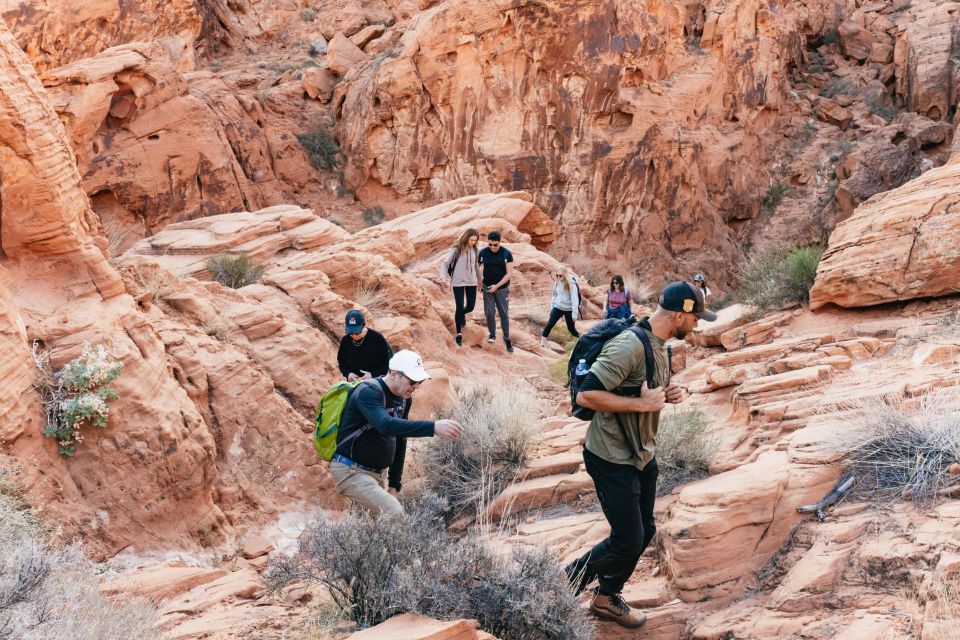
- Small group (max 12): easier pacing, more attention, and fewer bottlenecks on tight spots
- Pick your effort level: easy for families, moderate for steady fitness, difficult for seasoned hikers
- Lake Mead viewpoints: you pass by one of the big visual anchors of Southern Nevada
- Petroglyphs and ancient rock art: you don’t just see them, you learn how to spot what matters
- Guides handle trail changes: there are real-world detours when conditions shift (like standing water)
- No drones allowed: you’ll be hiking for the experience, not filming a production
Valley of Fire is the easy win when you only have a few hours
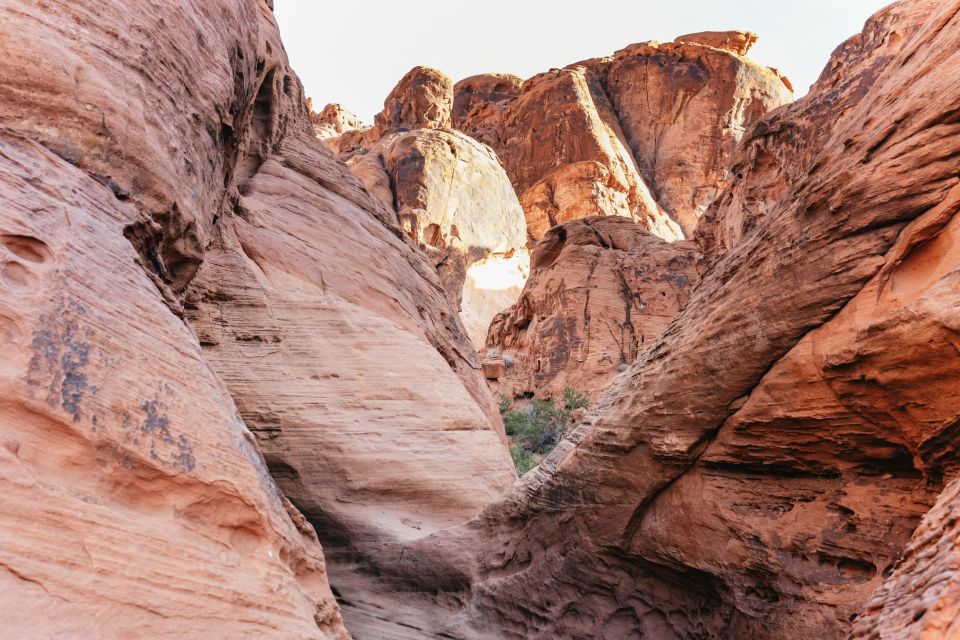
Valley of Fire State Park is one of those places that feels like a movie set, but it’s very real: bright red rock, pale sand, and the kind of desert stillness that makes Las Vegas feel far away. The big advantage here is that you start in town and transfer straight to the park, then spend your time walking and looking—not figuring out logistics.
This is also an efficient choice if you want nature without a full day commitment. You’re looking at 4–6 hours total, and the park is close enough that you’re back in your Vegas rhythm the same day.
You can also read our reviews of more tours and experiences in Las Vegas.


Pickup and transfer: turning city time into desert time
The day typically starts with pickup from the Las Vegas Strip or Downtown areas (depending on your hotel, you might be asked to meet at a different hotel). That matters more than it sounds. When a hike starts with an easy ride, you show up calmer and with energy for the walking.
Once you’re on the way, you’ll enjoy the scenic drive and then get to see Lake Mead from the park area. Even if Lake Mead isn’t the “main event,” it’s a useful context clue for the day: this desert isn’t just rock and heat, it’s tied to water, history, and the way Southern Nevada has grown.
Entering the park: petroglyph walls and Nevada’s oldest state park
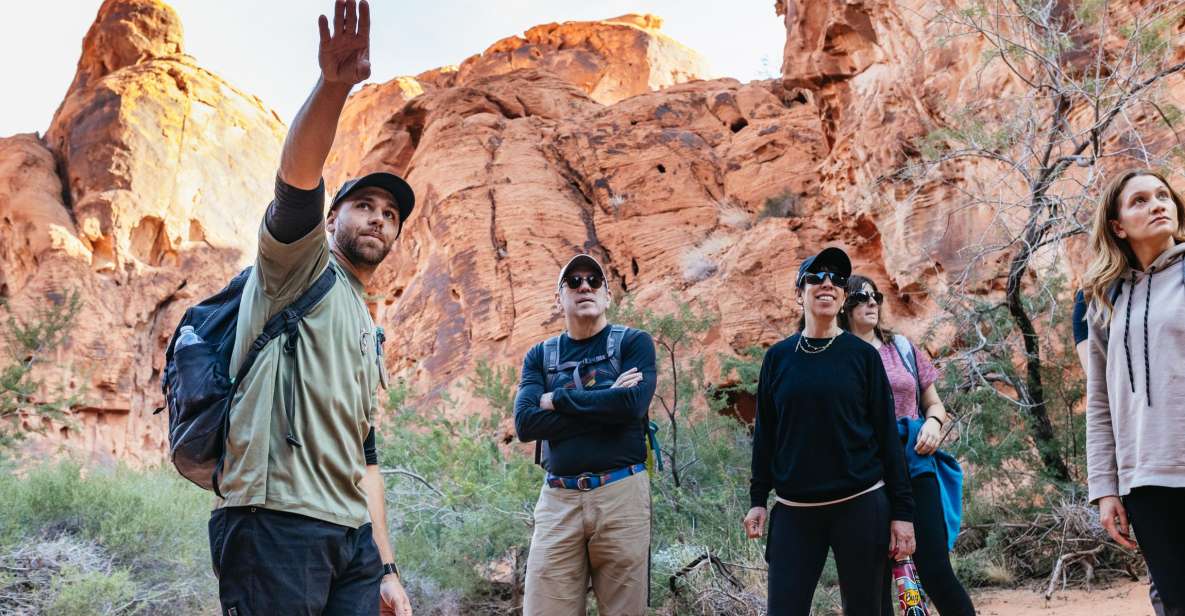
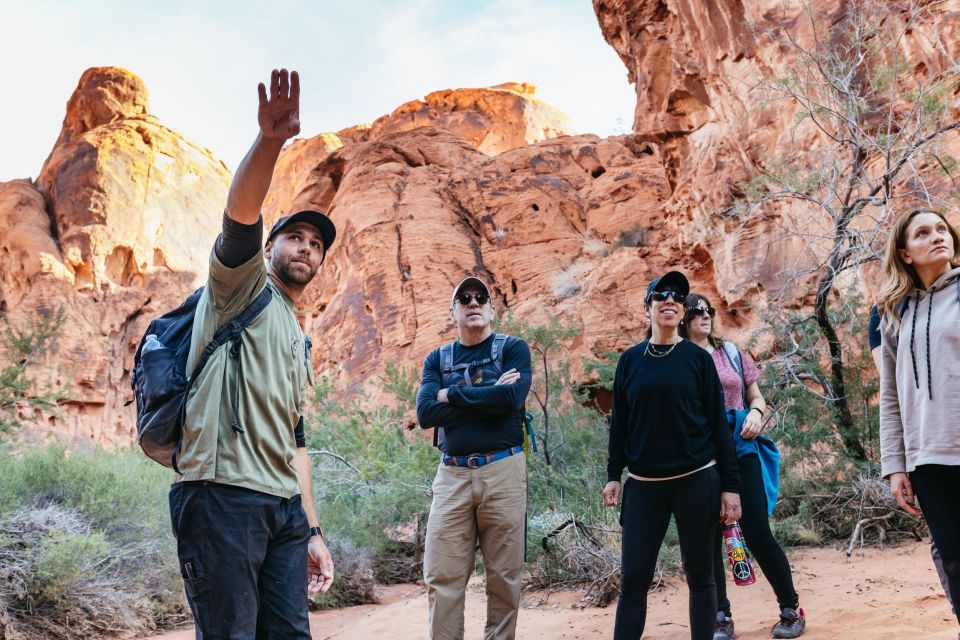
Your guide leads you through the park’s desert country and toward areas with ancient petroglyphs. Valley of Fire is known for old rock art, and the difference between seeing it on your own vs with a guide is simple: you learn where to look and what details matter.
You’ll also pass features tied to the idea of Nevada’s oldest state park in a practical way—you’re not only hiking through scenery, you’re moving through a cultural layer that’s meant to be read slowly. The best part is that the guide’s explanations land while you’re still staring at the rock, not after you’re back at your hotel.
The hike levels: easy, moderate, difficult (and how to choose)
One of the smartest things about this tour is that the difficulty isn’t vague. You pick an option, then the guide structures the day around it.
Easy route: for families and “first desert hike” days
The easy hike is meant for families and people of all fitness levels. It’s a good fit if you want petroglyphs plus natural arches, with minimal scrambling and more time to take photos and enjoy the feel of the park.
If you’re older, new to hiking, or you just want to enjoy the setting without stressing your feet, this is often the best match. Several guides also seem to adjust pace and route to keep everyone comfortable.




Moderate route: the sweet spot for most active visitors
The moderate option is where the fun scrambles show up without turning into a test. You’ll hike at a pleasant pace, but you should expect a good level of fitness—think uneven ground, some climbing and scrambling, and sections where you’ll need sure footing.
This is also the level where people tend to talk about off-trail moments and cool viewpoints. One strong theme from real guide experiences: you may get directed to spots that aren’t obvious unless someone is watching the terrain with hiking eyes.
Difficult route: longer, tougher terrain, bigger payoffs
The difficult option is recommended for avid hikers. Expect more intense scrambles and challenging terrain, with time spent on the most rewarding peaks and plateaus. The key here is that you’ll spend more effort chasing the best angles—so if you choose difficult, you’re choosing discomfort for a reason.
A good rule: if you’re comfortable with steep, rocky, and uneven paths on your regular hikes, you’ll likely enjoy this. If you’re unsure, moderate is the safer bet.
Scrambling and desert footing: what you’re actually signing up for
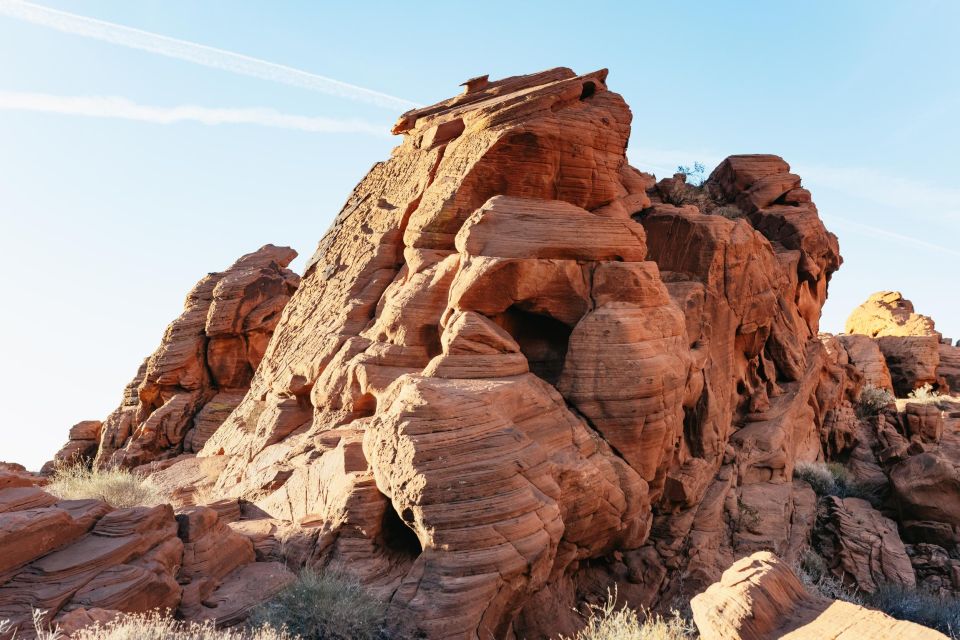
Valley of Fire can look simple from a distance. Up close, it’s all about footing. Red rock can be grippy in some spots and slippery in others, and there are uneven ledges where you’ll feel your calf muscles working.
Guides on this tour frequently help people through tighter transitions. In the experiences shared, guides have offered hands when needed and kept the group moving at a workable pace. That support can be a big deal on moderate or difficult routes where the terrain expects more from you.
Also, don’t assume every day is identical. One of the practical realities of desert hikes is that weather and surface conditions change. There are accounts of detours when standing water showed up, and the day still stayed fun instead of turning into a grind.
Lake Mead views and why that stop makes sense
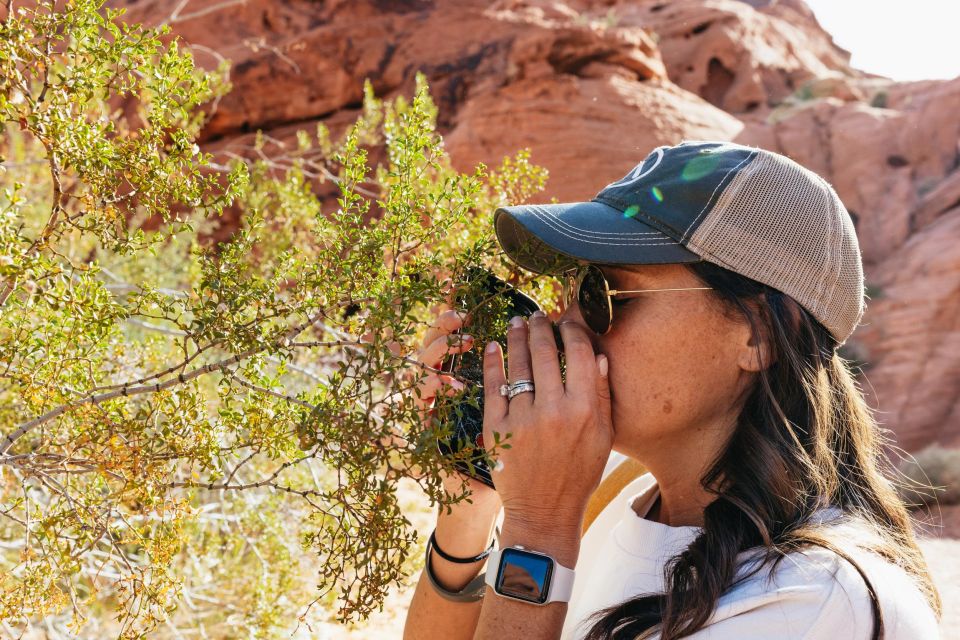
You’ll see views of Lake Mead, the largest manmade lake in the United States. This isn’t just a random photo stop. It gives your brain a scale reference for the region.
Without that, Valley of Fire can feel like a closed world. With Lake Mead in the mix, you get the sense of how water, rock formations, and human history overlap in this corner of Nevada.
Wildlife moments: when the park “shows up” on your walk
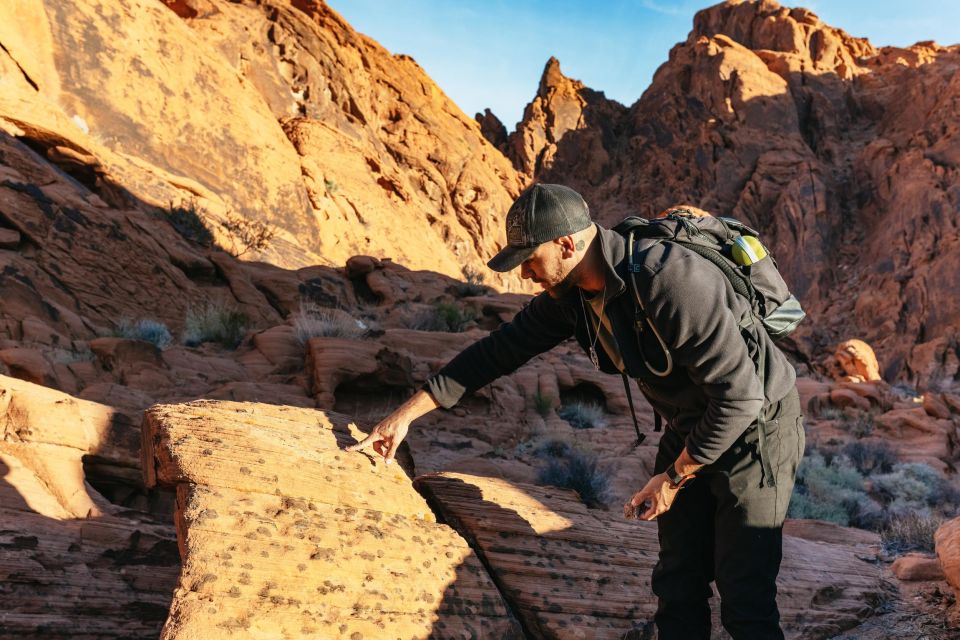
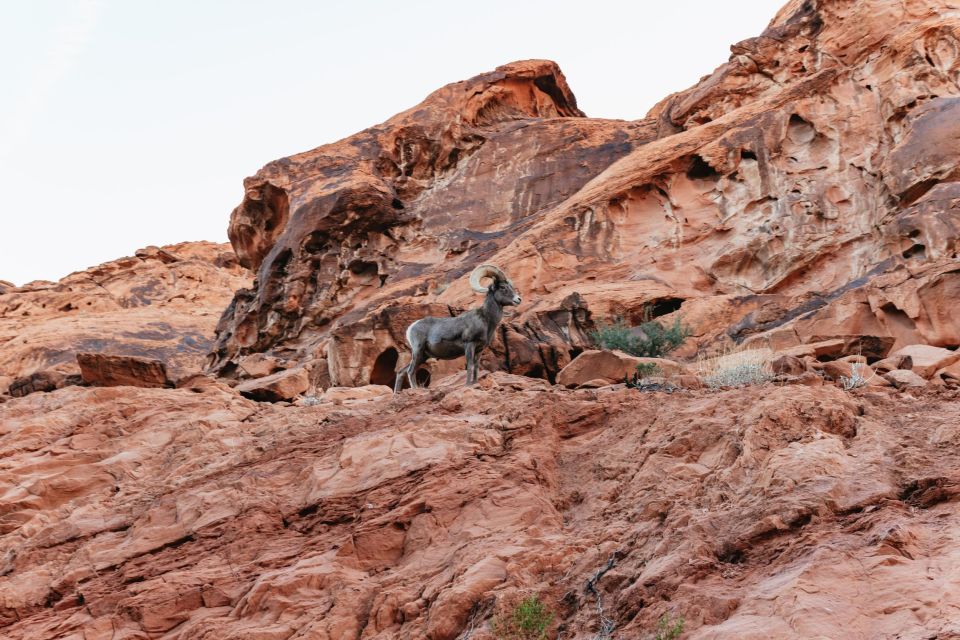
Valley of Fire isn’t a guaranteed wildlife safari, but it does deliver chances. From the guides’ spotting work and the kinds of wildlife mentioned, keep your eyes open for reptiles like horned lizards and other small creatures, plus the occasional bighorn sheep sighting.
One reason I’m a fan of having a guide for this part is that wildlife cues are easy to miss. When the guide knows where to look and what track marks or behavior patterns signal, the chances go up—and the spotting feels like part of the hike rather than a random bonus.
Snacks, drinks, and the part many people forget: hydration
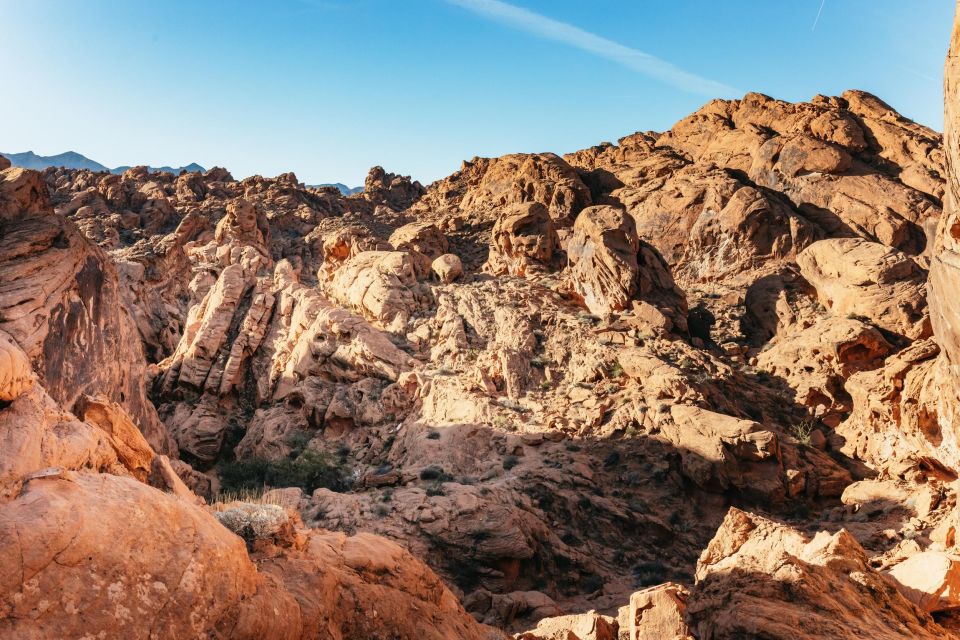
Included snacks and drinks are not “nice extras” here. In desert heat, it’s the difference between a good hike and a short-tempered one.
Bring a daypack if you have it, plus sunscreen and sunglasses. The tour includes snacks and drinks, but your personal comfort still depends on basic prep. If you’re bringing extra water, that’s not mentioned as required, but having your own comfort buffer is never a bad idea.
One theme from guide-led experiences: they tend to keep the group hydrated and often carry additional supplies to help when the hike runs longer or conditions are hotter. That kind of practical care makes the scramble parts feel less stressful.
What to pack (so you don’t waste energy)
You’ll get asked to bring several essentials. Here’s the practical version:
- Hiking shoes: don’t do this in sandals
- Sunscreen and sunglasses: shade is limited
- A camera: the rock textures and petroglyphs are photo-friendly
- A daypack: for your layers and personal items
Also note: drones aren’t allowed. That’s actually good news for the vibe. You’re out here to walk and look, not to fly a gadget.
The guide matters more than you think (and you’ll notice it fast)
This tour runs with English-speaking live guides, and the small group size (up to 12) seems designed for real interaction. That’s where you feel the difference.
Some guide names that show up repeatedly in real experiences include Sarah, Michael, Halle, Nick, Tony, Dustin, Matthew, and Chris. What they have in common isn’t a fancy script—it’s adapting to the group. In some cases, guides changed the route to match fitness needs, and in others they guided people through sketchy transitions with patience.
You also get more than “where to go.” People specifically mentioned petroglyph stories and the meaning behind rock art details. If you care about the cultural side of the park, a strong guide turns petroglyphs from random markings into a real stop on your route.
Time on the ground: how to plan your day around 4–6 hours
The duration is 4–6 hours, and starting times depend on availability. So you should plan your schedule with a little buffer before and after, especially if you’re doing this as part of a longer Vegas itinerary.
If you want calmer desert hiking conditions, early starts can help, and several guide experiences mention finishing by late morning on some runs. Even if your day ends up a bit later, the timing is still a good match for a half-day activity when you’d rather not commit to a full-day tour.
Price and value: why $129 can feel fair (if you compare the real costs)
At $129 per person, this tour is in the “not cheap, but not crazy” category for Vegas. The value comes from what you don’t have to pay or manage yourself:
- Transportation from the Las Vegas Strip or Downtown (round trip)
- A live guide for navigation and interpretation
- Snacks and drinks during the hike
- A small group limit that keeps the hike manageable
If you were to drive yourself, you’d still pay for vehicle costs, parking, and then you’d lose the guide’s ability to explain petroglyphs, choose smart lines for scrambles, and adjust when conditions shift. For many people, that “someone else handles the hard parts” factor is the real reason this price makes sense.
Who should book this Valley of Fire hike?
This is a great fit if you:
- Want a desert hike that includes petroglyphs and a guide’s storytelling
- Prefer small group touring over big buses
- Plan to hike but don’t want to risk getting lost or missing key spots
It’s not a good fit if you:
- Need a tour for children under 8 (not suitable)
- Are pregnant (not suitable)
- Expect a flat, easy walk with no scrambling on moderate or difficult routes
Should you book the Love Hikes Valley of Fire guided hike?
I think you should book this if you want an efficient, guide-led way to see Valley of Fire’s highlights—especially the petroglyphs—and still keep the day under a half-day. The combination of transportation, included snacks and drinks, and a small group size is what makes it feel practical, not just scenic.
Don’t book it if your goal is a totally effortless nature stroll. Choose easy if you want minimal scrambling, and choose moderate or difficult only if you’re comfortable with rocky ground and using your balance.
If you’re on the fence, pick the hike level that matches your real hiking comfort—not your ambition. You’ll enjoy Valley of Fire more when you’re focused on the views, not on your footing.
FAQ
How long is the Valley of Fire guided hike?
The tour lasts about 4 to 6 hours, depending on the starting time and the option you choose.
What hike difficulty options are available?
You can choose an easy, moderate, or difficult hike. Easy is best for families and all fitness levels, moderate requires a good level of fitness, and difficult is recommended for avid hikers.
Is pickup included from Las Vegas?
Yes. Pickup is included from most properties on the Las Vegas Strip and Downtown, but you may be asked to meet at a different hotel than your own.
What’s included in the price?
The included items are the hiking trip, tour guide, transportation, snacks, and drinks.
Who isn’t this tour suitable for?
It isn’t suitable for children under 8 years old or for pregnant women.
Can I cancel and get a full refund?
Yes. You can cancel up to 24 hours in advance for a full refund.
Are drones allowed?
No. Drones are not allowed on this activity.