REVIEW · OLJATO MONUMENT VALLEY
Monument Valley: Backcountry Jeep Tour with Navajo Guide
Book on GetYourGuide →Operated by Monument Valley Tribal Tours · Bookable on GetYourGuide
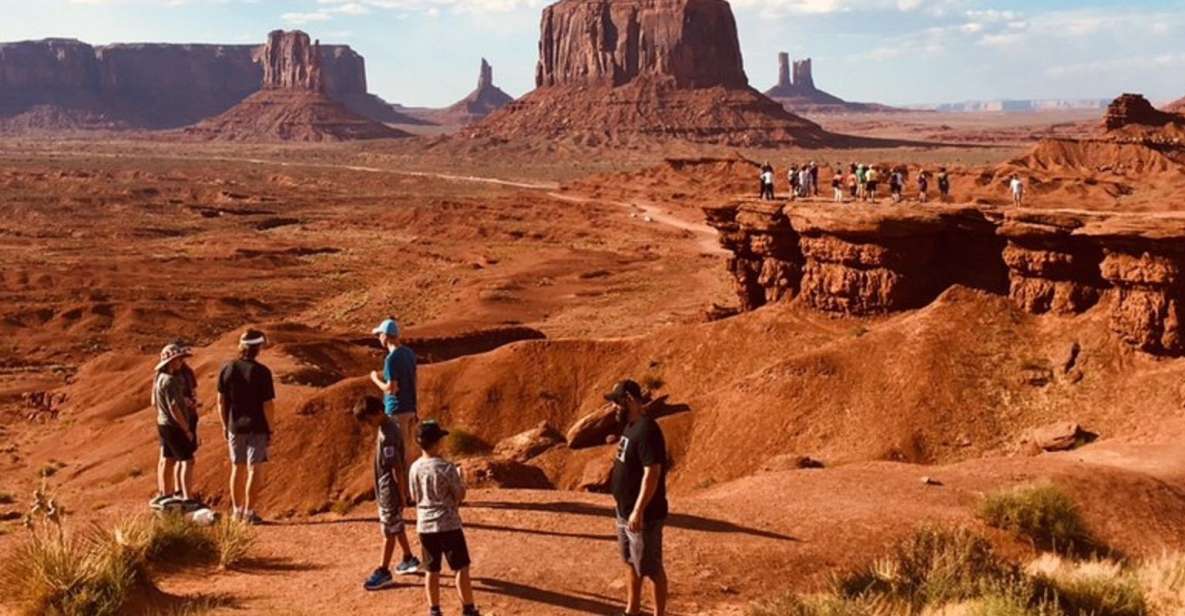
Monument Valley changes fast when you leave the main road. This small-group backcountry Jeep tour takes you through the Monument Valley backcountry and into spots most visitors simply can’t reach, with big photo moments like the Totem Pole and the West and East Mitten Buttes.
I really like two things here. First, you get restricted backcountry access and you actually stop at highlights such as Moccasin Arch and John Ford Point. Second, you’re not just hearing facts; you’re getting live Navajo music with stories shared by your guide at the places themselves, with guides like Travis and Sandrea mentioned often for their flute, drumming, and storytelling.
One consideration: the ride involves rough terrain. It is not suitable for infants under 1 year old or for women more than 5 months pregnant.
In This Review
- Quick hits
- What makes this Monument Valley tour feel different
- The Jeep ride: open-air safari in warm weather, enclosed when it gets extreme
- Navajo guide power: stories, driving skill, and real-life context
- Iconic stops you should expect, and what to watch for at each
- West and East Mitten Buttes
- Totem Pole
- Big Hogan
- 3 Sisters and other landmark formations
- Moccasin Arch and other backcountry arches
- Sun’s Eye, North Window, and Sleeping Dragon
- How the music and ceremonial performance works into the tour
- 150 minutes: how the timing feels on the ground
- Price and value: $80 with access that’s hard to beat
- Logistics that actually matter: meeting spot and Utah time
- What to bring so the tour feels comfortable
- Who this tour suits best (and who should skip it)
- Should you book this Monument Valley backcountry Jeep tour?
- FAQ
- How long is the Monument Valley backcountry Jeep tour?
- Where is the meeting point?
- Is the vehicle open-air?
- What’s included in the $80 price?
- What extra fee might I need to pay?
- What should I bring for the tour?
- What is the cancellation policy?
Quick hits
- Restricted backcountry access you cannot do from the standard drive
- West and East Mitten Buttes photo stops plus viewpoints for panoramas
- Totem Pole and Big Hogan type landmarks built for great photos and context
- Live traditional music (flute/drum and ceremonial performance by your guide)
- Small groups: up to 12 in open-air, up to 7 in enclosed vehicles
- Culture-led guiding focused on Navajo Nation history, traditions, and meaning of the sites
What makes this Monument Valley tour feel different
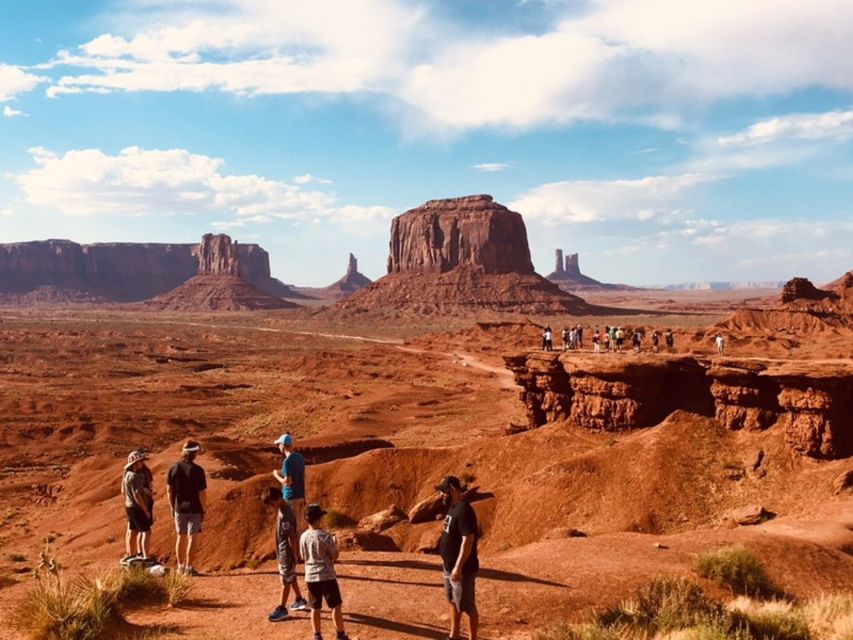
Monument Valley is easy to drive past. What this tour adds is permission. You go beyond the familiar viewpoints and into restricted areas that you can’t access on your own, which is where the valley starts to feel personal instead of postcard-perfect.
The value isn’t only the driving. It’s the way the guide connects each rock feature to Navajo Nation history, place meaning, and traditions. When you understand why something like Sun’s Eye or North Window matters to the Dineh, you look at the same red stone in a completely different way.
And yes, the scenery is spectacular. But the best part is that the stops are chosen to be seen from multiple angles, with time to frame photos without feeling rushed.
You can also read our reviews of more tours and experiences in Oljato Monument Valley.
The Jeep ride: open-air safari in warm weather, enclosed when it gets extreme
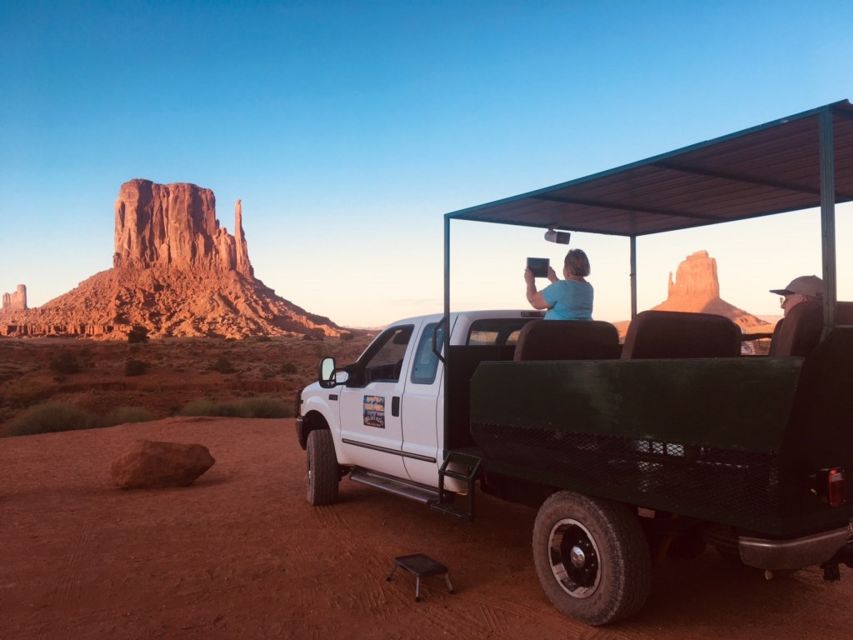
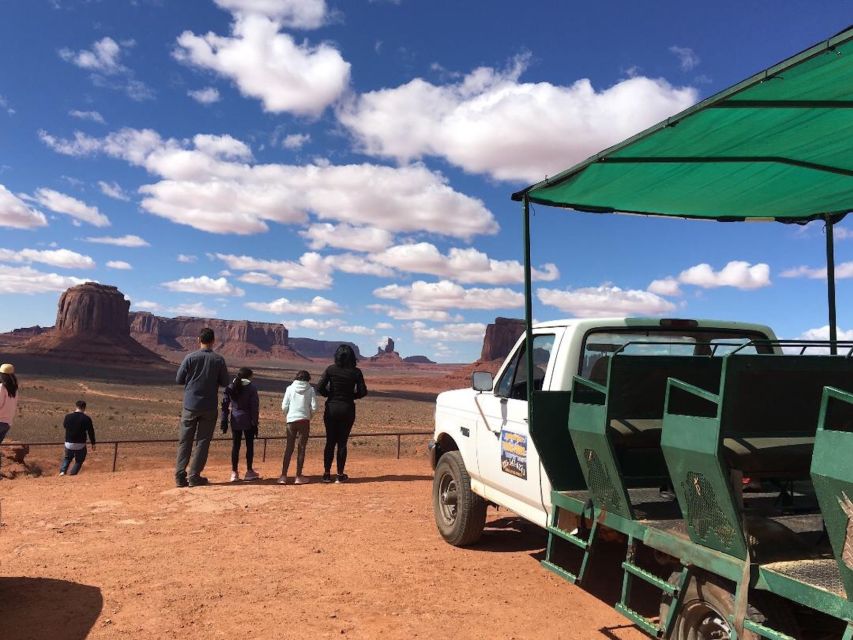
You’ll ride in an open-air safari-style vehicle most of the time, and that’s a big part of the fun. In warm weather it allows up to 12 passengers, so you’ll feel the wind, hear the tires on dirt, and take in the huge sky.
When conditions turn cold or very hot, the tour switches to an enclosed SUV with a maximum of 7 people. That smaller group size is a nice trade: more space per person and less worry about getting chilled or overheated.
Practical tip: even in the right season, bring the basics. The tour recommends comfortable shoes, sunglasses, a hat, sunscreen, and a headscarf. That headscarf one is more useful than it sounds. Dust can show up fast, and a light scarf helps with comfort during bumpy stretches.
Navajo guide power: stories, driving skill, and real-life context
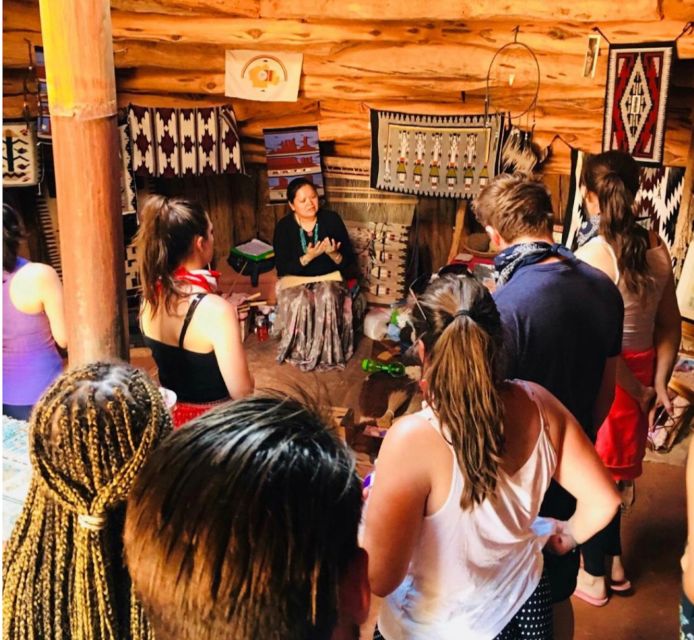
This tour runs with a local Navajo guide, and that matters. Your guide isn’t just pointing at famous landmarks; they’re interpreting the land in plain language—plus adding personal family and cultural context when they share it.
Guides such as Travis, Sandrea, Larry, Dark Sky, Donna, Comasheena, Marjorie, and Trevis show up repeatedly in guest accounts for a reason: they combine driving confidence with story power. Many also play music during the tour, so you’re getting a cultural experience that fits the setting rather than feeling like a separate add-on.
I also like the fact that your guide’s job is to help you notice details you’ll miss from the roadside. Petroglyphs and natural features can look like random markings until someone explains what they represent and why they’re placed where they are. Your guide can also suggest photo angles once you’re standing in the right spot.
Iconic stops you should expect, and what to watch for at each
You’ll cover a wide set of famous Monument Valley landmarks, plus backcountry stops that are off limits to the general public. I’ll break down the highlights so you know what you’re looking for when you arrive.
West and East Mitten Buttes
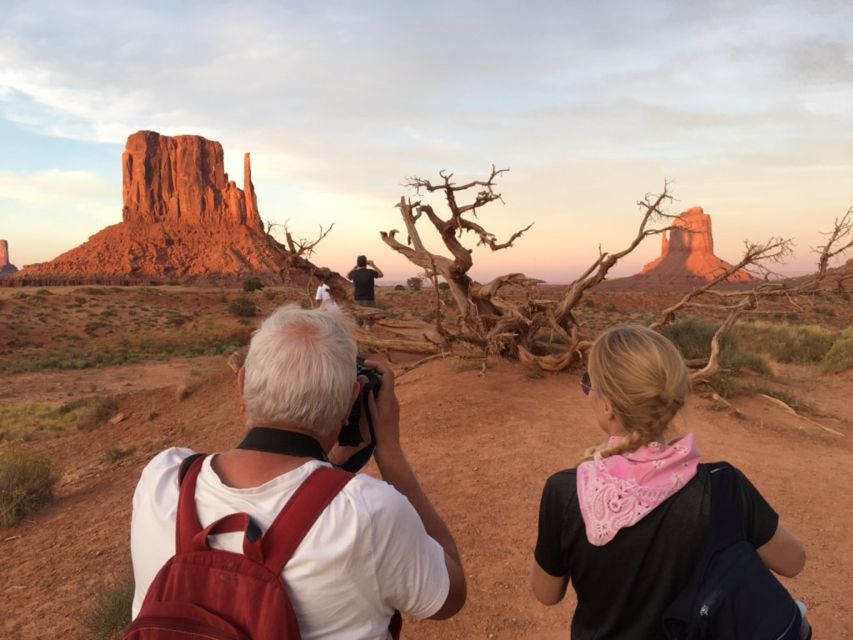
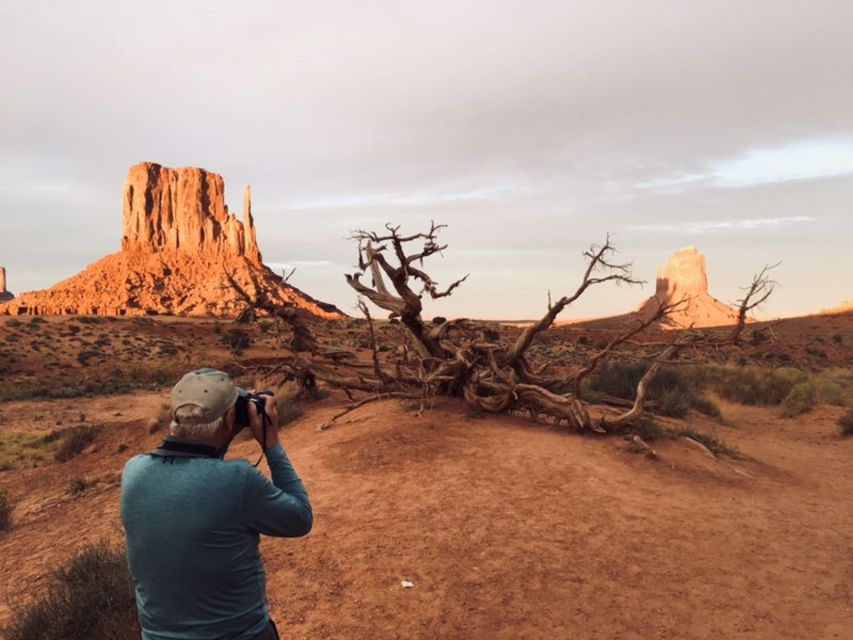
These are the headline buttes. They’re also a gift to photographers because the shape and shading change as the light shifts. Expect to stop specifically for viewpoints that make the buttes look like they belong in a Western movie—because they do.
Worth doing: take a minute before photos. Stand still and look at how the rock edges catch light. That slow look makes the photos make sense later.
Totem Pole
The Totem Pole is famous for a reason: it’s dramatic and instantly recognizable. Your guide’s context helps you see it as more than a silhouette, especially when they connect it to the valley’s cultural and historical meaning.
Quick tip: try a vertical framing for this one, even if you usually shoot wide. The structure reads well from a few angles.
Big Hogan
Big Hogan isn’t just a name to memorize. It’s a cultural stop that helps you understand how Navajo life and traditions tie into the land around you. If your guide has shared stories about a hogan or related way of living, this stop is often where the tour clicks into place emotionally.
3 Sisters and other landmark formations
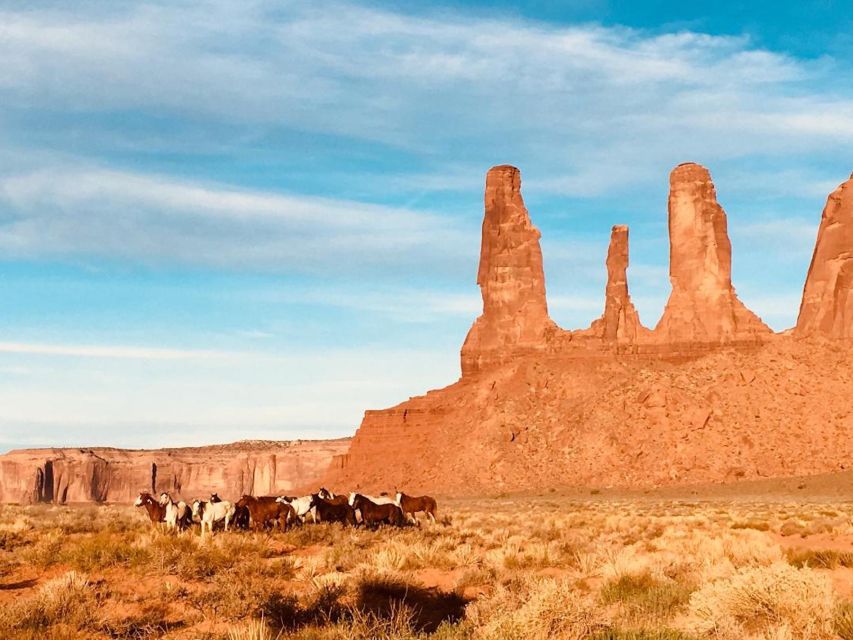
You’ll also encounter formations such as the 3 sisters and views connected to John Ford Point. If you’re a movie fan, John Ford Point is a big one because so many films borrowed Monument Valley for that classic look.
What to watch for: the valley’s signature layering. Many of these features show different textures and tones depending on where you stand.
Moccasin Arch and other backcountry arches
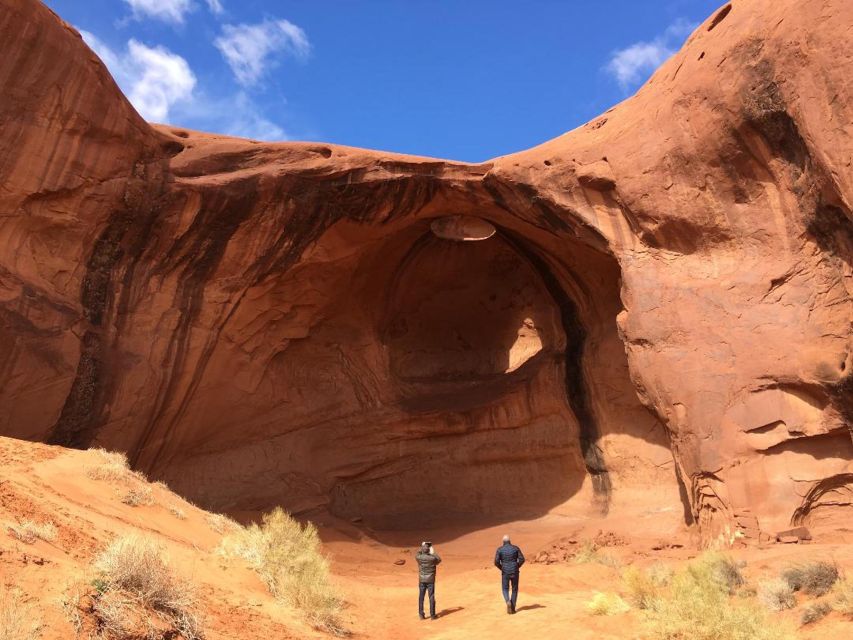
Backcountry access is the real reason to book this tour. Stops like Moccasin Arch are the type of place you won’t stumble into by accident. They reward you with those moments where the camera doesn’t quite capture how tall and carved the rock feels in person.
Sun’s Eye, North Window, and Sleeping Dragon
These names are part joke, part accurate. Sun’s Eye draws your attention to a natural opening and the way light moves through it. North Window does something similar with a framing effect from the right angle.
Sleeping Dragon is the kind of feature that looks different as you change your position. Your guide’s job is to put you where the shape reads best.
How the music and ceremonial performance works into the tour
Traditional music performance is included, led by your Navajo guide. That means the musical portion isn’t tacked on at the parking lot. It’s timed with scenic stops so you’re hearing the sound in the same spaces the stories connect to.
Many guides build in moments with flute and drumming, and some tours include performances in naturally echoing places. If you get a spot with strong acoustics, the music can feel especially clear and present.
Emotion level varies by person. Some folks find it moving because it feels respectful and place-based. Others just enjoy the craft and the chance to hear a real traditional performance in a setting that makes sense. Either way, it’s one of the most talked-about parts of the experience.
150 minutes: how the timing feels on the ground
The tour is 150 minutes. That’s long enough to do real backcountry driving and still make it to the major landmarks without turning the whole day into a long slog.
What you’ll likely feel most during that time:
- You’ll spend enough moments at each key stop to take photos and ask questions.
- You’ll get driving time that feels purposeful rather than random sightseeing.
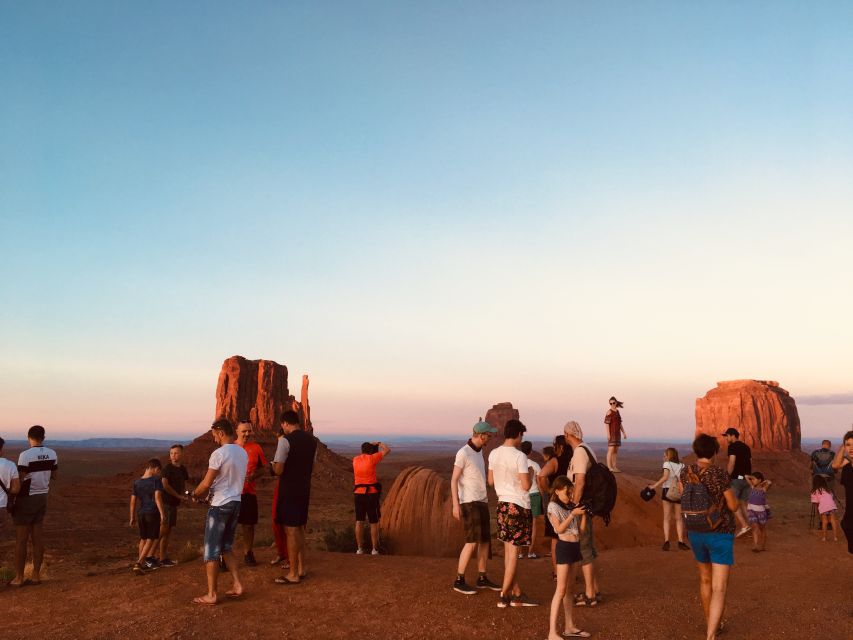
- The small group size helps you avoid the bottleneck effect you get on bigger tours.
If you’re trying to plan the rest of your day, do yourself a favor and don’t schedule something tight immediately afterward. The valley can run you over with viewpoints and photo pauses faster than you expect.
Price and value: $80 with access that’s hard to beat
At $80 per person, the tour is priced like a premium experience, but it’s not only paying for the vehicle. Your ticket includes:
- a local Navajo guide
- access to restricted backcountry areas
- a traditional musical performance by your guide
- bottled water
- 6% tax and 3% operational fees included
The one extra cost you should budget is the Monument Valley Tribal Park entry pass, listed as $8 per person. Food is not included.
Here’s the value math I think about:
- If you only drive the main viewpoints, you miss the restricted areas.
- If you want culture plus music plus guided interpretation, you’re paying for more than transportation.
- The small group limit (up to 12 in open-air or up to 7 enclosed) helps keep the experience personal, which matters when the guide is telling stories at each stop.
If you’re deciding between skipping the backcountry and doing the tour, I’d treat the restricted access and guide-led context as the core reason to book.
Logistics that actually matter: meeting spot and Utah time
Meet your driver outside The View Hotel at the Navajo loading area. If you’re staying nearby, it’s an easy connection. If you’re coming from farther away, give yourself a little buffer. Parking and finding the right loading spot can take longer than it should.
Also: the tour operates on Utah time (Mountain Daylight Time), which is 1 hour ahead of Arizona from March to November. If you’re traveling from Arizona during that period, leave 1 hour earlier than you think you need.
What to bring so the tour feels comfortable
Use the tour’s packing list as your baseline:
- Comfortable shoes (you’ll be stepping on uneven ground)
- Sunglasses
- Hat
- Sunscreen
- Headscarf (dust and sun both help justify it)
One more practical thought: bring layers if you’re going in shoulder weather. Even with the vehicle option changing in cold/hot conditions, temperatures can swing quickly in the desert.
Who this tour suits best (and who should skip it)
This is a strong fit if you:
- want restricted backcountry access instead of only the main drive
- care about Navajo Nation history and place meaning, not just photos
- enjoy live music and want it tied to the environment
- want a small-group experience where you can ask questions and get better photo angles
Skip it if you need very smooth, easy terrain. Because of rough ground, the tour is not suitable for infants under 1 year old and not for women more than 5 months pregnant.
If you have mobility needs, you’ll want to ask what support is available for your situation. Some guests describe extra help from their guide to reach photo spots, but your safest move is to confirm what will work for you before you go.
Should you book this Monument Valley backcountry Jeep tour?
If you want Monument Valley in full context—restricted access, iconic landmarks, Navajo guide storytelling, and an included traditional music performance—this is one of the most sensible ways to spend your time. The $80 price is easier to justify when you factor in that you’re not just buying a drive; you’re buying access and interpretation.
Book it if your priorities are:
- getting off the standard route
- hearing real cultural context from a Navajo guide
- enjoying live music as part of the journey
Consider a different plan if rough terrain is a dealbreaker for you or if you’re mainly chasing a quick, low-effort photo tour. In that case, you might find the standard viewpoints better match your needs.
FAQ
How long is the Monument Valley backcountry Jeep tour?
It lasts 150 minutes.
Where is the meeting point?
Meet outside The View Hotel at the Navajo loading area.
Is the vehicle open-air?
In warm weather it’s an open-air safari-style vehicle (up to 12 passengers). In cold or hot weather it uses an enclosed SUV (up to 7 people).
What’s included in the $80 price?
A local Navajo guide, access to the restricted backcountry, a traditional musical performance, bottled water, plus 6% tax and 3% operational fees included.
What extra fee might I need to pay?
The Monument Valley Tribal Park entry pass costs $8 per person and is not included.
What should I bring for the tour?
Bring comfortable shoes, sunglasses, a hat, sunscreen, and a headscarf.
What is the cancellation policy?
Free cancellation is available up to 24 hours in advance for a full refund.