REVIEW · SALT LAKE CITY
Salt Lake City Guided Bus Tour
Book on Viator →Operated by City Sights, Inc. · Bookable on Viator
Skip the driving and take the stories. This 2.5-hour guided bus loop strings together Salt Lake City’s most important stops with live onboard commentary and short step-offs for photos and questions.
I especially love the Temple Square focus, including the Tabernacle organ recitals, because it turns a famous building into something you can feel in your chest. I also like how the guide team brings the places to life in plain English, with real names like Ann, Todd, Mark, and Kristin calling out details you usually miss.
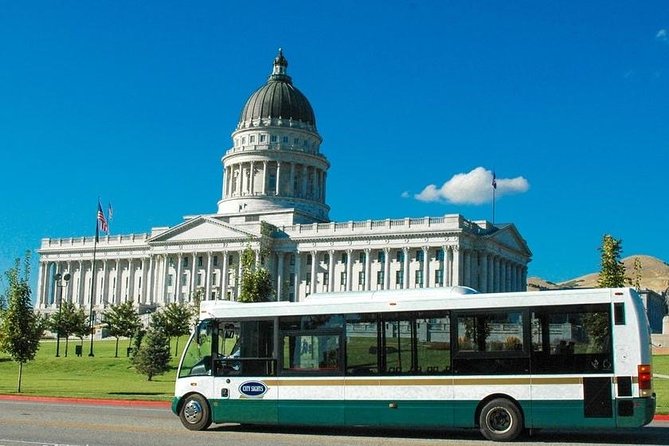
One practical thing to watch: in winter, the tour may run in a smaller minibus, and your view of buildings can depend on where you sit. If you’re picky about angles, plan to arrive a few minutes early and ask where the best seats are.
In This Review
- Key Highlights You’ll Actually Notice
- A Half-Day Loop That Builds a Clear Mental Map
- Getting On: Radisson Start, Small Group Size, and Seat Strategy
- Temple Square and the Tabernacle Acoustics Connection
- Stop 1: Salt Lake Utah Temple exterior photos and symbolism
- Stop 2: Temple Square gardens and landmark tour in minutes
- Stop 3 and 4: Organ recitals and the Tabernacle interior
- What you should know before you go inside
- Capitol Hill Views and the LDS Conference Center Machine Room
- Stop 5: Utah State Capitol panoramas and marble rotunda time
- Stop 6: LDS Conference Center’s scale and sound design
- Pioneer, Military, and Civic Landmarks on One Tight Route
- Stop 7: Mormon Battalion Monument and the 2,000-mile march
- Stop 8: City and County Building Romanesque grandeur
- Stop 9: Cathedral of the Madeleine stained-glass big cathedral energy
- Stop 10: This Is the Place Heritage Park
- Stop 11: Mormon Pioneer National Historic Trail markers
- Stop 12: City Creek Center and the way downtown grew up
- From Mansions to Majestic Churches: The Avenues and Beyond
- Stop 13: Governor’s Mansion and Federal Heights views
- Stop 14: Salt Lake City Public Library by Moshe Safdie
- Stop 15: Beehive House and Brigham Young’s leadership center
- Stop 16: Council Hall and the brick-by-brick move
- Stops 31–32, plus more Temple Square edges: visitors center and Assembly Hall
- Stops 33–36: Eagle Gate, Brigham Young Monument, Meridian Marker, and the Deuel Log Home
- Olympic-Era Salt Lake: Cauldrons, Arenas, and the Gateway
- Stop 17: Olympic Cauldron Park
- Stop 18: Delta Center and Utah Jazz pride
- Stops 19–20: Joseph Smith Memorial Building and The Gateway
- Library, Concert Halls, Stadium Ceremonies, and University Arts
- Stops 21–22: FamilySearch Library and FamilySearch Center
- Stops 23–24: Fort Douglas Military Museum and Post Theatre
- Stop 25: Abravanel Hall and Utah Symphony culture
- Stop 26: Church Office Building
- Stop 27: McCune Mansion and the Gilded Age scale-up
- Stop 28: Rice-Eccles Stadium and Olympic ceremonies
- Stop 29: Kingsbury Hall
- Stop 30: Washington Square and the city’s civic heart
- Stop 35: Salt Lake Masonic Temple
- Stop 37: Trolley Square and the streetcar past turned present
- Price and Value: Why $69 Can Make Sense
- Quick Tips to Enjoy It Without Rushing
- Should You Book This Salt Lake City Guided Bus Tour?
- FAQ
- How long is the Salt Lake City Guided Bus Tour?
- How much does the tour cost?
- Where does the tour start?
- What time options are available?
- What language is the tour offered in?
- Is the Salt Lake Temple interior included?
- Can I cancel for a refund?
- What is the maximum group size?
Key Highlights You’ll Actually Notice
- Live onboard narration plus step-offs, so you’re not just staring out a window
- Temple Square and the Tabernacle bundle, including organ recitals
- Temple exterior stories (the interior is reserved for Church members)
- Utah State Capitol viewpoints and photo time on Capitol Hill
- Olympic legacy stops like the Olympic Cauldron and the stadium area
- Many iconic stops with “one-look” views, which saves real time
A Half-Day Loop That Builds a Clear Mental Map
Salt Lake City can feel simple at first glance: wide streets, big mountains, a downtown that looks calm. This tour helps you connect the dots fast, because it’s built as a single route through the city’s landmarks—old and new, religious and civic, pioneer and Olympics.
The best part for your planning is time. With about 2 hours 30 minutes, you’re set up to decide what deserves a second trip once you’re on your own. You get the orientation without spending your whole day in transit or guessing which streets matter.
If your schedule is tight, this tour is designed for that reality. You’ll cover major destinations like Temple Square, the Utah State Capitol, and Olympic-era sites, then roll through a string of architectural stops that explain why Salt Lake City looks the way it does.
You can also read our reviews of more tours and experiences in Salt Lake City.

Getting On: Radisson Start, Small Group Size, and Seat Strategy
Your tour starts at the Radisson Hotel Salt Lake City Downtown on W S Temple St. The group size caps at 29, which matters more than it sounds. A smaller group generally feels less chaotic at stops, especially when you need to get photos quickly and move on.
One detail to consider is vehicle size. On some departures—especially in colder months—the tour may use a smaller minibus. That can affect how much you can see from your seat, especially for buildings you only view from the curb. A reviewer even noted that the middle seat or seats facing away can limit building sightlines.
If you want the easiest sighting experience:
- Arrive a few minutes early.
- Tell your guide you care about getting clean building views.
- Bring a camera ready to go, because many stops are short.
Temple Square and the Tabernacle Acoustics Connection
This is the core of the whole experience, and it’s where the tour earns its keep. You start with the Salt Lake Utah Temple exterior, then move into Temple Square’s landscaped heart, and finally into the Tabernacle, including the organ recital.
Stop 1: Salt Lake Utah Temple exterior photos and symbolism
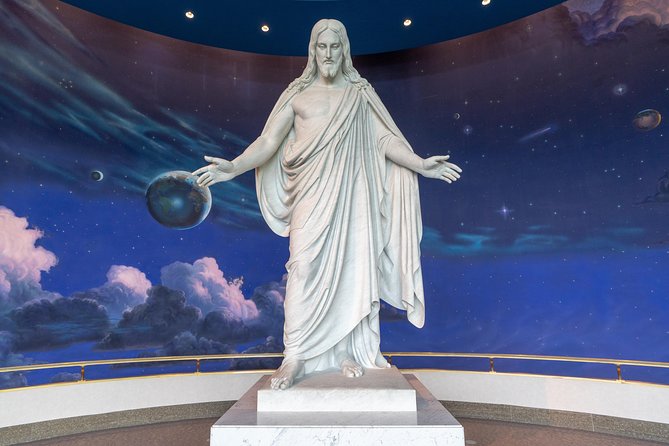
You’ll admire the iconic Salt Lake Temple from outside. The interior is reserved exclusively for Church members, so the tour focuses on what you can experience as a visitor: the exterior, the spires, the hand-cut stone story, and the symbolism that makes the building instantly recognizable.
The Temple took 40 years to complete (1853–1893), and the guide ties the time and labor to the look of the place. If you’re the type who likes buildings more than lectures, this stop is still worth it because you get clear talking points while you’re standing there with your camera.
Photo tip: the Temple grounds are landscaped, and the guide sets you up for the most photogenic angles from where you’re allowed to be.
Stop 2: Temple Square gardens and landmark tour in minutes
Temple Square is laid out as 10 acres of downtown grounds, and you get a chance to walk it. This is where the Tabernacle, gardens, and pioneer-era monuments crowd together in a way that would be annoying to manage on your own in a short day.
The guide highlights major pieces of the complex, including the Temple’s spires, the historic Tabernacle, and statues tied to pioneer stories. You’ll also get time specifically to explore the gardens without feeling like you’re just passing through.
Stop 3 and 4: Organ recitals and the Tabernacle interior
This is often the emotional highlight. The tour includes time for organ recitals in the Tabernacle and also separate time to experience the Salt Lake Tabernacle.
Here’s what makes this different from a generic landmark photo stop:
- The Tabernacle was completed in 1867, with a roof designed for exceptional sound.
- Inside you’ll learn about an organ with over 11,000 pipes.
- You get the human story of early craftsmanship and how acoustics mattered long before modern tech.
If you end up chasing one “wow” moment in Salt Lake City, this is it. In short order, you go from architecture and symbolism to a real performance tradition.
What you should know before you go inside
The tour treats the Temple interior differently from the Tabernacle. Temple interior access depends on Church membership, but the Tabernacle and its organ tradition are part of what your ticket experience is built around. That means you’re not stuck wondering what you can do.
Capitol Hill Views and the LDS Conference Center Machine Room
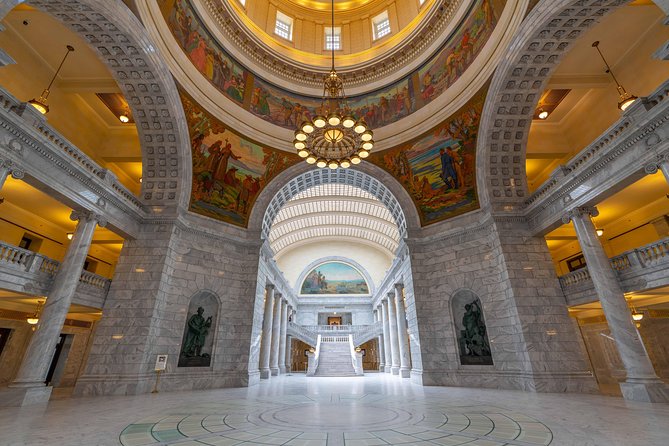
After Temple Square, the route shifts to government and modern religious architecture. This is where the city’s two identities—democratic civic pride and faith-centered design—sit side by side.
Stop 5: Utah State Capitol panoramas and marble rotunda time
The Utah State Capitol is a centerpiece. Completed in 1916, it’s a Neoclassical building with a copper dome that rises 285 feet. On your visit, the guide points out symbolism in the design and helps you see the rotunda with a sense of what it was built to represent.
You’ll also step outside for panoramic views of Salt Lake Valley framed by the Wasatch Mountains. This is one of the easiest places on the tour to get a wide-angle photo that makes sense, even if your phone camera is doing its best.
Stop 6: LDS Conference Center’s scale and sound design
Next is the LDS Conference Center, completed in 2000. This building is all about scale: it seats 21,000 people and is known for advanced acoustics.
The guide calls out features like the rooftop garden with waterfalls and native plantings. You’ll also hear about the massive organ mentioned for performances (including a 7,667-pipe organ during summer Tabernacle Choir performances). Even if you’re not there for a show, you get the idea: this is the modern counterpart to the older Tabernacle sound tradition.
Pioneer, Military, and Civic Landmarks on One Tight Route
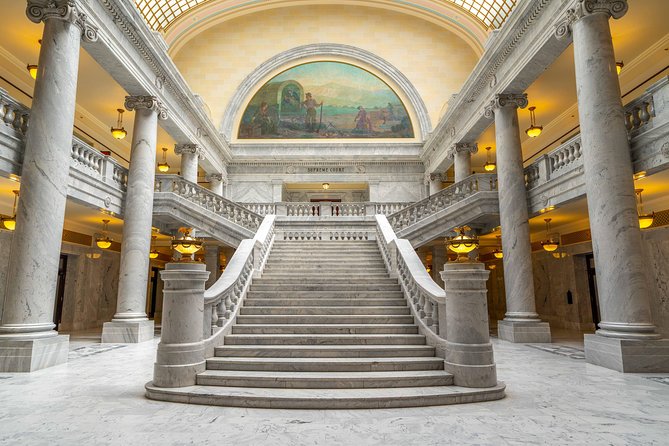
Once you leave the Temple-and-Capitol cluster, you get a series of landmark stops that explain how Salt Lake City became a city and not just a stop along a route.
Stop 7: Mormon Battalion Monument and the 2,000-mile march
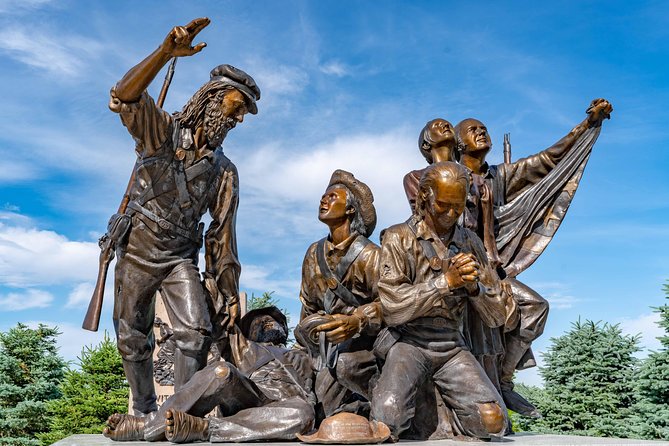
The Mormon Battalion Monument covers a story that many people don’t expect in Utah. The monument honors 500 Latter-day Saint volunteers who enlisted during the Mexican-American War and completed a 2,000-mile infantry march from Iowa to San Diego in 1846–1847.
What makes this stop hit is the contrast: families still moved west while the battalion served. The guide also connects the idea that their pay helped fund pioneer settlement in the Salt Lake Valley.
Stop 8: City and County Building Romanesque grandeur
The City and County Building is Utah’s standout Romanesque Revival example, completed in 1894. You’ll see a sandstone façade and a clock tower reaching 256 feet, plus ornate stone details.
This stop is quick, but the guide’s restoration story gives it meaning. You learn why this building survived when preservation wasn’t guaranteed.
Stop 9: Cathedral of the Madeleine stained-glass big cathedral energy
The Cathedral of the Madeleine is the only Catholic cathedral in Utah, completed in 1909. It’s Gothic Revival, with twin spires rising 220 feet, and the stained glass is one of the star features in the American West.
Even from the outside, you’ll understand the point: Salt Lake City has never been one-note. The Avenues neighborhood around it adds a quieter, more residential contrast.
Stop 10: This Is the Place Heritage Park
This is one of those parks where the marker matters as much as the view. Brigham Young said this is the right place in 1847, ending the pioneers’ 1,300-mile trek from Illinois.
You’ll see the 60-foot monument and get sweeping views of the valley and the Wasatch Mountains, with the Great Salt Lake visible in the distance on clear days.
Stop 11: Mormon Pioneer National Historic Trail markers
The tour continues with a section of the Mormon Pioneer National Historic Trail. It’s a 1,300-mile route tied to the movement of over 70,000 pioneers from 1846–1869.
This stop gives you a sense of scale and endurance: families crossing plains, rivers, and mountains with handcarts and wagons. The guide connects the story to community building, not just hardship.
Stop 12: City Creek Center and the way downtown grew up
Next is modern Salt Lake: City Creek Center, opened in 2012. The guide frames it as downtown’s “outdoor oasis,” and points out design choices like a retractable glass roof and restored City Creek flowing through the property.
This is a fast stop, but it shows you how the city honors water and history while building a shopping and dining district across three blocks.
From Mansions to Majestic Churches: The Avenues and Beyond
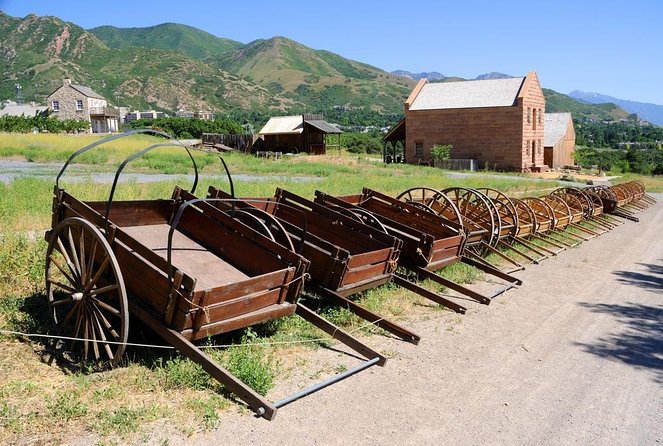
This next chunk is packed with architecture. Many stops are brief, but the guide keeps them meaningful with clear talking points.
Stop 13: Governor’s Mansion and Federal Heights views
You’ll see the Utah Governor’s Mansion, built in 1902 as a private residence and serving as the official governor’s home since 1937. The guide also describes the neighborhood setting in Federal Heights, perched above much of the city.
It’s a look-only stop, but the location tells you why political power landed here.
Stop 14: Salt Lake City Public Library by Moshe Safdie
The public library is a modern showstopper. Designed by Moshe Safdie and opened in 2003, it features a curved glass wall and a rooftop garden.
From street view, the dramatic angles and glass façade create a strong contrast with nearby older buildings. It’s an easy stop to appreciate even if you don’t normally care about modern architecture.
Stop 15: Beehive House and Brigham Young’s leadership center
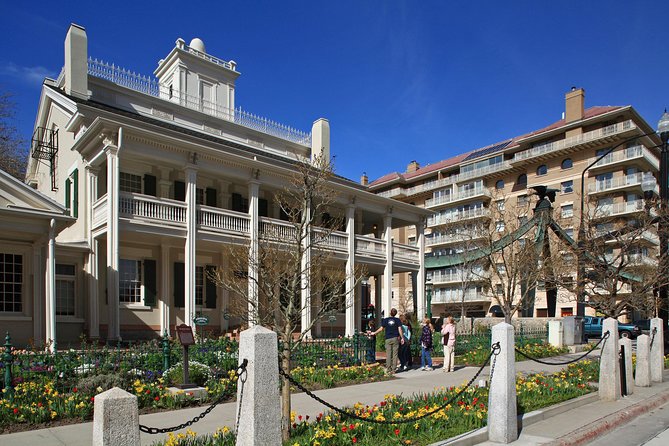
The Beehive House is one of the most important pioneer-era structures on the route. It served as Brigham Young’s official residence from 1854 to 1877. The building’s beehive symbol on the roof represents industry and cooperation.
The guide makes the point that this wasn’t just a home—it was part of the early social and territorial leadership network.
Stop 16: Council Hall and the brick-by-brick move
The Council Hall is a Greek Revival building that served as the Utah territorial capitol from 1866 to 1896. One highlight is how the entire structure was moved brick-by-brick in 1963 to save it from demolition.
That preservation choice is the story here. Even a quick look makes more sense once you know the building almost didn’t survive.
Stops 31–32, plus more Temple Square edges: visitors center and Assembly Hall
Your route later returns to Temple Square edges. You’ll see the Temple Square South Visitors’ Center and also the Assembly Hall.
The Assembly Hall, completed in 1882, was built from leftover granite from the Temple. The guide also points out it’s designed for worship and community gatherings and still hosts free concerts and cultural events.
Even if you don’t go inside every time, these stops help you see Temple Square as more than a single postcard view.
Stops 33–36: Eagle Gate, Brigham Young Monument, Meridian Marker, and the Deuel Log Home
These are quick but meaningful:
- Eagle Gate (built in 1859, rebuilt in steel in the 1960s) with a bronze eagle whose wings stretch over 20 feet.
- Brigham Young Monument and the Meridian Marker, tying the city’s leadership story to the exact point used for Utah land surveys.
- Deuel Pioneer Log Home, built in 1847, a hand-hewn cabin preserved and relocated near Temple Square.
This cluster works well because it shows how history was literally marked in the city’s layout.
Olympic-Era Salt Lake: Cauldrons, Arenas, and the Gateway
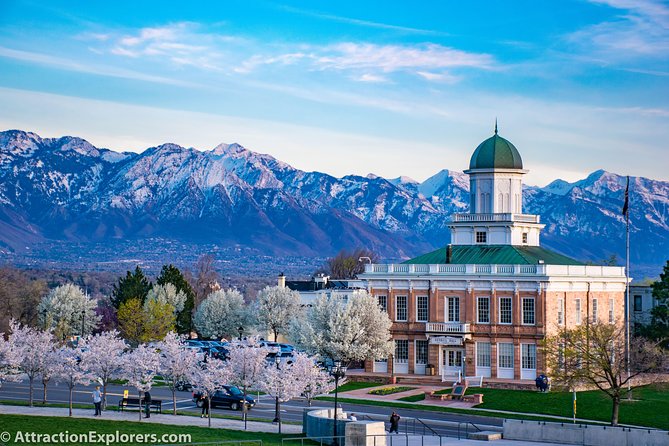
Salt Lake’s 2002 Winter Games left big physical footprints, and the tour makes sure you notice them.
Stop 17: Olympic Cauldron Park
You’ll gaze up at the Olympic Cauldron, a 72-foot structure in glass and steel. It remains a visible symbol of the year Utah hosted the world.
The guide connects the cauldron to the behind-the-scenes challenge: building venues, earning trust, and hosting athletes from 77 nations.
Stop 18: Delta Center and Utah Jazz pride
The Delta Center is the home of the Utah Jazz. Even from outside, you get the sense of how this arena shapes the skyline and community identity. The tour mentions its role in events tied to Olympic figure skating and concerts.
Stops 19–20: Joseph Smith Memorial Building and The Gateway
Next is Joseph Smith Memorial Building—the former Hotel Utah opened in 1911 as the city’s first luxury hotel, with visits from presidents and celebrities, later restored and repurposed.
Then you step into The Gateway, an open-air district that began as the Olympic gathering place for the Games. The guide points out the idea that rail yards used to occupy the area, and now you’ll find public art, dining, and energy in its place.
This is where you see Salt Lake’s shift from older infrastructure to a downtown that invites walking.
Library, Concert Halls, Stadium Ceremonies, and University Arts
The latter part of the route leans into modern institutions: concerts, universities, administration, and sports.
Stops 21–22: FamilySearch Library and FamilySearch Center
You’ll see both the FamilySearch Library and the FamilySearch Center. They’re described as major corners of Temple Square’s genealogical mission and as the world’s largest genealogy collection, with billions of ancestral records.
The guide connects the pioneer value placed on record-keeping to today’s family-history research technology. Even if your interest is light, it’s a reminder that Salt Lake City isn’t just about buildings—it’s about collecting and preserving memory.
Stops 23–24: Fort Douglas Military Museum and Post Theatre
At Fort Douglas, you glance across parade grounds tied to Colonel Patrick Connor. The guide explains the fort’s role in federal presence during the Civil War era and how it secured overland mail routes while overlooking Brigham Young’s pioneer settlement.
The museum and Post Theatre are both listed as short look-in stops, but the setting gives them weight: frontier defense, politics, and faith all intersect here.
Stop 25: Abravanel Hall and Utah Symphony culture
You’ll admire Abravanel Hall, home of the Utah Symphony. Opened in 1979, it’s modern with a glass façade and bronze décor, designed for strong acoustics.
This is a quick view-only stop, but it tells you something real about the city: music is treated as infrastructure, not decoration.
Stop 26: Church Office Building
The Church Office Building, completed in 1972, is a 28-story modern landmark rising beside the Temple. The guide describes it as worldwide administrative headquarters and ties it back to the Church’s growth from the frontier days into a global organization.
If you’ve been focusing on historic stone and pioneer-era labor, this is the shift into the modern machine.
Stop 27: McCune Mansion and the Gilded Age scale-up
The McCune Mansion was completed in 1901 for railroad magnate Alfred W. McCune. The building’s red sandstone estate cost one million dollars at the time, and the guide mentions imported marble and stained glass.
Even outside, you’ll see why it symbolizes Utah’s turn from outpost to prosperity.
Stop 28: Rice-Eccles Stadium and Olympic ceremonies
Next is Rice-Eccles Stadium, home of the University of Utah Utes. The tour highlights its connection to the 2002 Olympic Opening and Closing Ceremonies.
The stadium sits with the Wasatch foothills as a backdrop, which makes for a strong sense of place even without going inside.
Stop 29: Kingsbury Hall
Kingsbury Hall is the University of Utah performing arts venue, opened in 1930. The guide ties it to civic pride in arts and education, and points out it has hosted everything from university events to major performers.
Stop 30: Washington Square and the city’s civic heart
You’ll take in Washington Square, capped by the City and County Building you saw earlier. The tour calls out the Romanesque style, carved stone, gargoyles, and clock faces, plus the idea that this square helped run civic life during Utah’s transition from territory to statehood.
Stop 35: Salt Lake Masonic Temple
The Salt Lake Masonic Temple, completed in 1927, is neoclassical with columns and ornate carvings tied to Freemasonry symbolism. The guide frames it as a civic ideals landmark as well as a meeting place.
Stop 37: Trolley Square and the streetcar past turned present
Finally, Trolley Square shows up as a preservation success story. The guide explains it started as a streetcar hub in the early 1900s and now functions as a restored shopping and dining district.
The brick barns and ironwork give you that old-city feel without requiring you to chase down separate landmarks.
Price and Value: Why $69 Can Make Sense
At $69 per person for about 2.5 hours, this tour is priced like a “use my time for me” option. The value is not just the transportation. It’s that you’re paying for someone to connect the dots across a lot of sites that would otherwise take planning and backtracking.
Also, many listed stops are admission ticket free, which keeps the experience from turning into an add-on expense spree. The one “special event” feeling moment is the Tabernacle organ recital and the interior experience connected to the Tabernacle.
So who is it best for? People who:
- Want the main Salt Lake sites in one shot
- Don’t want to drive and navigate downtown
- Prefer live narration and Q and A over reading signs
It’s also a smart first step if you’re staying just a day or two. You’ll get a shortlist of what you’ll want to see again up close.
Quick Tips to Enjoy It Without Rushing
A few practical moves make the biggest difference:
- Bring a camera and be ready for short stops. Many views are one to five minutes.
- Dress in layers. Even in short window visits, you’re moving between bus and outdoor settings.
- If seat position matters, ask early. In smaller winter minibuses, where you sit can change your view.
- Use the guide’s ability to explain. When the guide calls out symbolism at the Temple or the design choices at the Capitol, you’ll notice more on your own after.
Should You Book This Salt Lake City Guided Bus Tour?
Book it if you want an organized overview of Salt Lake City in a short time, with live storytelling and a strong finish at the Tabernacle organ recital. It’s especially useful if you’d rather spend your energy on sightseeing than figuring out a route.
Skip it only if you’re already deep into Salt Lake City’s architecture and want a slower, longer, mostly walking experience. This is a “see a lot, learn why it matters” tour, not a long stay at one place.
FAQ
How long is the Salt Lake City Guided Bus Tour?
It runs for about 2 hours 30 minutes.
How much does the tour cost?
The price is $69.00 per person.
Where does the tour start?
The meeting point is the Radisson Hotel Salt Lake City Downtown at 215 W S Temple St, Salt Lake City, UT 84101.
What time options are available?
You can choose from a morning or afternoon tour time.
What language is the tour offered in?
The tour is offered in English.
Is the Salt Lake Temple interior included?
The tour focuses on the Temple exterior. The Temple interior is reserved exclusively for Church members.
Can I cancel for a refund?
Yes. You can cancel for a full refund up to 24 hours in advance of the experience start time. If you cancel within 24 hours, the amount paid is not refunded.
What is the maximum group size?
The tour has a maximum of 29 travelers.