REVIEW · SALT LAKE CITY
Tabernacle Choir Performance + Salt Lake City Guided Bus Tour
Book on Viator →Operated by City Sights, Inc. · Bookable on Viator
Choir music plus city history, fast. I like how Tabernacle Choir access pairs with an organized guided bus loop, so you’re not just watching, you’re understanding what you’re seeing. You’ll get the emotional hit of the music and the “how did this place become this place” context.
I also like the way the guides turn short stops into clear stories. When your narration is in good hands, the Capitol, Temple Square, and pioneer sites stop feeling like random photo ops and start making sense fast. One possible drawback: the schedule is busy, so a few sights get only a quick look, and the day can feel rushed if you’re hoping for long wandering.
In This Review
- Key things to know before you go
- Tabernacle Choir acoustics: the reason Salt Lake sounds different
- Thursday rehearsal vs Sunday concert: what changes your experience
- Bus tour pacing: how you’ll actually see so much in 3.5 hours
- Temple Square: your guide to the spiritual heart and the photo-famous skyline
- Mormon Pioneer history: from This is the Place to the trail markers
- Capitol Hill to city government: Utah State Capitol and the City and County Building
- Cathedral of the Madeleine: one of the few big Gothic moments downtown
- Modern Salt Lake City: Olympics, libraries, and the “new” that still fits
- Temple Square area extras: Eagle Gate, Meridian Marker, and pioneer leftovers
- Fort Douglas: when the frontier story meets the U.S. Army
- How the guide brings it to life (and why names keep coming up)
- Timing, transport, and what can trip you up
- Is this tour worth booking for you?
- Should you book the Tabernacle Choir performance plus the Salt Lake City bus tour?
Key things to know before you go
- Choir access: Thursday offers a rehearsal peek; Sunday brings a full live program at Temple Square.
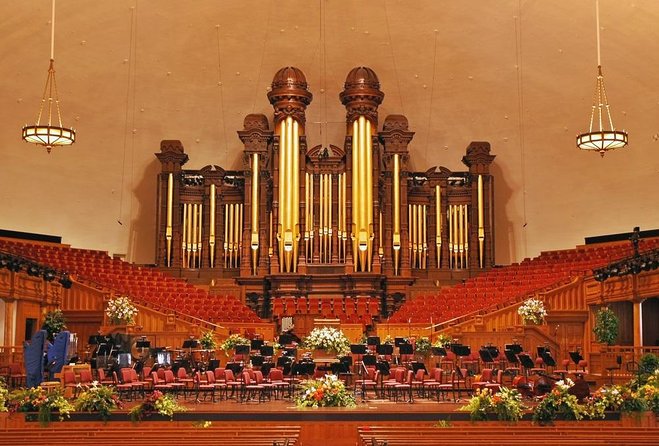
- Acoustics are the star: the Tabernacle’s dome and organ are talked about with real specifics like the pin-drop distance.
- Temple Square in multiple layers: temple exterior, historic Tabernacle, Assembly Hall, visitors center, and gardens, all in one area.
- A tight city orientation by bus: you’ll see far more than downtown if you’re short on time or traveling without a car.
- Guides can add insider flavor: some runs include extra perspective from choir people, including former members like Bob.
- Max 30 people on board: small enough to feel personal, big enough to run efficiently.
Tabernacle Choir acoustics: the reason Salt Lake sounds different
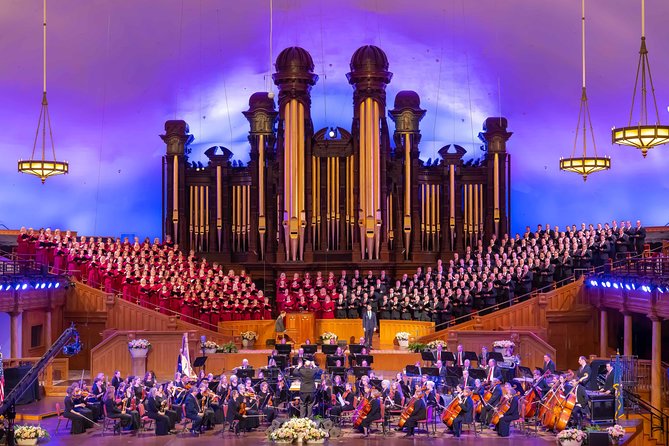
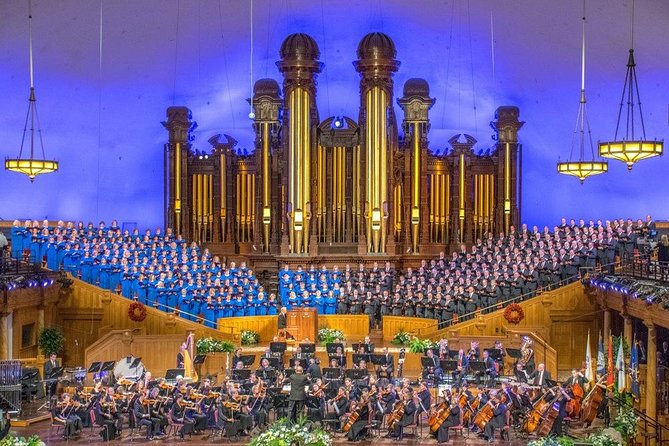
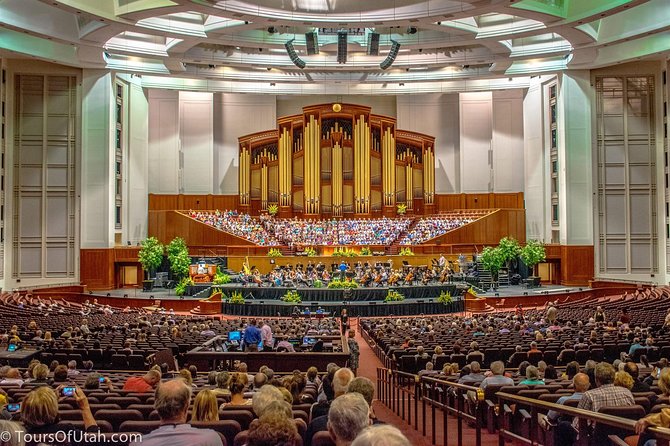
This tour isn’t just “watch a choir.” It’s built around a specific place where sound behaves in a special way. Temple Square’s historic Tabernacle is famous for its design: a huge, self-supporting dome with no interior pillars. That’s part of why people talk about hearing a pin drop from far back in the hall, and why organ-and-voice music lands with such clarity.
If you care about architecture, it’s worth paying attention before the singing starts. Your guide will point out the building’s pioneer construction story and explain how the acoustics worked before modern tech took over. You’re not going in blind.
And yes, the organ matters here. The Tabernacle is home to the 11,632-pipe organ, and that detail isn’t there just for trivia. You feel it in the way the sound carries and fills the space, especially when voices layer in with the orchestration.
You can also read our reviews of more tours and experiences in Salt Lake City.

Thursday rehearsal vs Sunday concert: what changes your experience
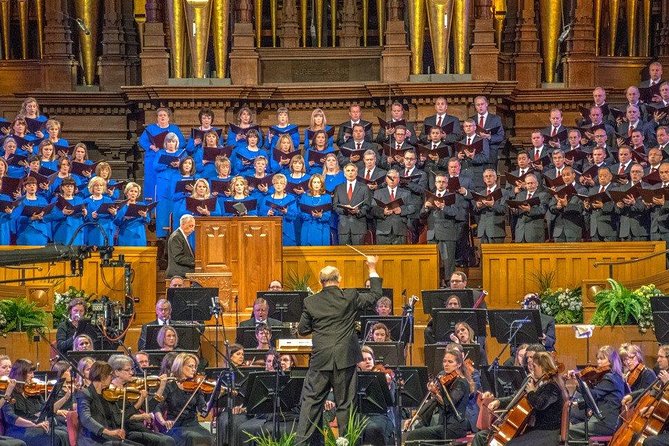
This tour comes in two main flavors depending on the day you book.
On Thursday, you go for an intimate evening-style rehearsal. You get time to watch the conductor work with the ensemble, hear multiple performances, and get that behind-the-scenes feel most visitors never see. It’s the best option if you like process—watching how a polished sound is made in real time.
On Sunday, you attend the live program at Temple Square: Music and the Spoken Word. This broadcast is the world’s longest-running continuous network broadcast, starting in 1929, and it’s performed by a 360-voice, all-volunteer choir. It’s also tied to presidential history: the choir has performed for six U.S. Presidents.
Venue swap note: depending on the season, the performance may happen in the LDS Conference Center instead of the historic Tabernacle. The key is that the experience is still anchored in the choir’s world-class sound.
Bus tour pacing: how you’ll actually see so much in 3.5 hours
Here’s the reality of a 3.5-hour guided loop: you’re not doing museum-style lingering. You’re doing smart stops—enough time to understand, enough time to photograph, and enough time to keep moving.
The bus portion gives you a “map in your head” feeling quickly. You’ll start around the Utah State Capitol area and make your way through the city’s major religious, civic, and pioneer-era sites. That matters because Salt Lake City is one of those places where everything connects—religion, government, and early settlement history are braided together in the layout.
The upside is clear: if you don’t have a car, you still get to see a lot. The downside is also real: some stops are intentionally short. If you expect deep time at every attraction, you might feel the pressure. The best move is to pick one or two places you want to revisit after the tour and treat everything else as “first look with a story.”
A practical tip from people who’ve done this well: bring water and a fully charged camera. Your best photos tend to happen when you’re not scrambling for supplies.
Temple Square: your guide to the spiritual heart and the photo-famous skyline
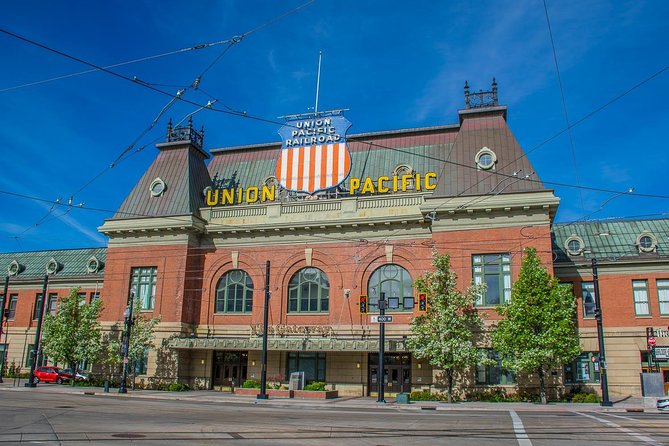
Temple Square is the hub of the whole experience, and the tour builds it in layers so you don’t just see the obvious stuff.
You’ll walk and look around the Temple Square complex, a large, landscaped downtown center that’s essentially the city’s anchor point. The guide typically frames it around pioneer-era intent and long construction effort, so the buildings aren’t just pretty—they’re meaningful.
From there, you’ll spend time around:
- Salt Lake Utah Temple: you’ll admire the exterior. The temple is famous for being photographed from nearly everywhere in the city, and the granite construction took decades. You’ll also learn the symbolism baked into the design, including the six spires and the Angel Moroni statue crowning the tallest section.
- Tabernacle: you’ll step into the historic hall and hear how the architecture supports those legendary acoustics. This is where the 11,632-pipe organ ties into the sound you’ll hear during the choir experience.
- Assembly Hall: a Gothic-style neighbor building made from leftover temple granite. It’s a quieter, smaller stop that helps you see how community worship and gatherings worked in early days.
- Temple Square South Visitors’ Center: helpful for context and orientation. Even if you don’t go deep inside everything, it helps you connect the grounds to the broader pioneer story.
There’s also an expectation-setting detail worth knowing: the temple interior is reserved for Church members. That means you’ll enjoy exterior views and the guide’s construction and symbolism explanations, but you should not plan on touring inside.
Mormon Pioneer history: from This is the Place to the trail markers
One reason this tour works so well for first-timers is that it doesn’t treat pioneer history like a single stop. It threads it through multiple viewpoints.
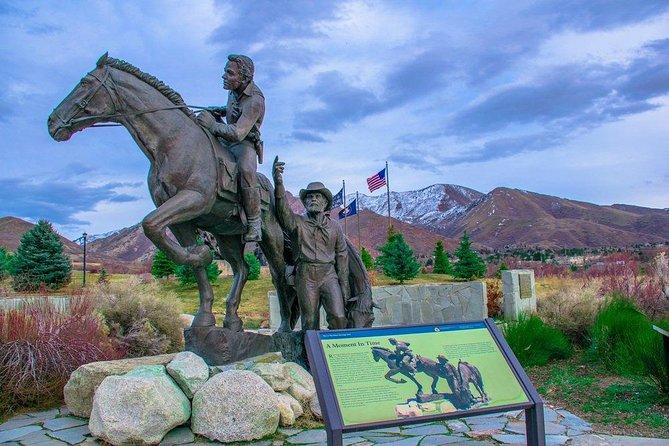
You’ll visit This is the Place Heritage Park, tied to the moment Brigham Young declared they had arrived. From that vantage, you’ll get panoramic views of the Salt Lake Valley, Wasatch Mountains, and in the distance the Great Salt Lake—exactly the kind of sight that makes settlement history feel real rather than textbook.
Then you’ll continue into the Mormon Pioneer National Historic Trail story. The tour focuses on the 1,300-mile migration concept and the hardship that came with crossing plains, rivers, and mountains with handcarts and wagons. Even when you’re only stopping briefly, the guide’s job is to give the emotional weight behind the markers so you know what you’re looking at.
Also on your route are several “people moments” that connect the big story to specific episodes:
- Mormon Battalion Monument: a tribute to the 500 Latter-day Saint volunteers who marched during the Mexican-American War. It’s a reminder that early migration and early U.S. history overlap in complicated ways.
- Deuel Pioneer Log Home: a humble 1847 cabin moved and preserved near Temple Square. It’s one of those stops where the scale change helps you understand what “starting from scratch” actually meant.
Capitol Hill to city government: Utah State Capitol and the City and County Building
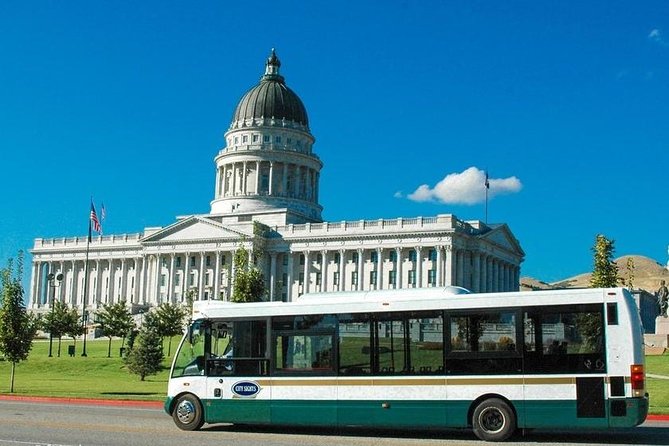
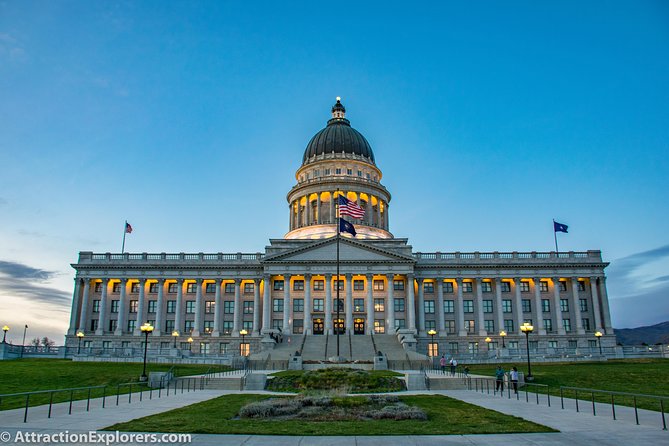
You’ll see the civic Salt Lake City too, and the contrast helps a lot. The area around the Utah State Capitol gives you a taste of the city’s ambition and the way government shows itself.
From Capitol Hill, you’ll admire:
- the Neoclassical building completed in 1916
- a copper dome rising to 285 feet
- the grand rotunda with marble columns
- murals that depict Utah history
- and a heavy chandelier detail the guide usually points out
Then, you’ll move to the City and County Building, one of the city’s most spectacular Romanesque Revival structures. Completed in 1894, it features a tall clock tower (256 feet) and lots of stonework detailing. Even from outside, it reads like a statement: this was a city that wanted to be taken seriously.
If you’re the type who hates rushing, these two stops are the ones you can use as your “mental reset.” They’re visual, and the architecture gives you something to look at even if your time window is short.
Cathedral of the Madeleine: one of the few big Gothic moments downtown
Salt Lake City isn’t only one faith tradition, and the tour shows that quickly with the Cathedral of the Madeleine. It’s the only Catholic cathedral in Utah, built in 1909. Expect to see a Spanish Gothic façade and twin spires, plus details about stained glass and restoration.
This stop is valuable because it expands the story. The guide’s framing helps you understand why a Catholic cathedral could rise in a predominantly Church-centered city—and how European craftsmen and later restoration work shaped what you see now.
You won’t be there for long, but the architecture is strong enough that a quick stop still lands.
Modern Salt Lake City: Olympics, libraries, and the “new” that still fits
After the pioneer emphasis, the tour shifts to more modern Salt Lake so you can see the city’s evolution.
A few high-impact stops include:
- Salt Lake City Public Library by Moshe Safdie: a six-story design with a curved glass wall and rooftop garden. Even if you only view it from the outside, it’s a striking contrast next to historic structures.
- City Creek Center: a large downtown retail and dining district that blends upscale shopping with landscaped outdoor areas, including the restored City Creek running through it. The guide usually ties it to how Salt Lake reworked downtown around pedestrian flow.
- Olympic Cauldron Park: the 72-foot glass-and-steel cauldron, still one of the most recognizable Olympic leftovers in town. The guide connects it to the 2002 Winter Games legacy.
- Delta Center: home arena of the Utah Jazz, a modern icon that also connects to Olympic-era history in the city’s broader sports story.
- Rice-Eccles Stadium and Kingsbury Hall: both are tied to the University of Utah, showing how school pride and culture live right inside the city fabric.
You’ll also see a mix of civic and cultural buildings:
- Abravanel Hall (Utah Symphony’s home)
- Church Office Building (worldwide administrative HQ for the Church)
- Church-linked heritage homes like the Beehive House and Governor’s Mansion style stops
- plus a scattering of Mansions and halls that reflect when Salt Lake City grew into a regional hub
These modern stops are more than “nice buildings.” They show you how the city built on its early foundation instead of replacing it.
Temple Square area extras: Eagle Gate, Meridian Marker, and pioneer leftovers
Even when your schedule is tight, Temple Square area details matter because they explain the city’s layout.
You’ll pass:
- Eagle Gate: an iconic pioneer-era entrance with the large bronze eagle on top. The guide explains it began as an earlier gate and evolved as the city grew.
- Brigham Young Monument and Meridian Marker: the bronze statue honors Brigham Young’s role in settlement. The Meridian Marker is the surveying reference point that signals how a remote outpost turned into an organized state.
- Masonic Temple: a neoclassical building completed in 1927, offering a different angle on community life and fraternal organizations.
- FamilySearch Library and the FamilySearch Center: a stop that helps you see Salt Lake’s global role in family history research, with the guide tying it back to pioneer record-keeping values.
The best part here is how the guide turns what could be a “pass-by” into a story you can carry. That’s what prevents the day from feeling like a checklist.
Fort Douglas: when the frontier story meets the U.S. Army
Fort Douglas is a useful tension point. It’s tied to the Civil War era and the overland mail routes, with Colonel Patrick Connor playing a role in setting up the fort. The guide’s framing focuses on federal presence and the frontier relationship with early settlers.
You’ll glance across the parade grounds and the surrounding fort buildings, including Fort Douglas Military Museum and Fort Douglas Post Theatre. Even if you don’t spend deep time inside, the location itself helps you picture the city’s edge-of-the-frontier era.
How the guide brings it to life (and why names keep coming up)
The tour works when the guide keeps momentum without turning facts into a blur. The narration is a big reason this gets high marks.
In particular, you’ll notice praise for guides like Todd, Matthew, and Mark for being organized and effective with storytelling. That shows up in the way stops connect: Temple Square ties into Capitol Hill. Pioneer trail ties into modern civic buildings. Choir performance ties into the architecture you just heard about.
There’s also an extra ingredient that makes some departures feel more personal: choir insiders on the bus. People have mentioned a choir singer and even a former Tabernacle Choir member such as Bob joining to answer questions and share behind-the-scenes context. If you get that kind of add-on, it’s a real advantage because you hear how the rehearsal feels from someone who’s lived it.
Timing, transport, and what can trip you up
This is an air-conditioned bus tour with a maximum group size of 30. That keeps it manageable, but you should still expect the “on and off the bus” rhythm.
A couple considerations to plan around:
- Temple Square stops are short: expect quick looks and photo opportunities rather than long independent exploration.
- Pace can feel tight: if you’re the type who likes to linger, pick a couple must-revisit locations after the tour.
- Sunday seating for kids under 8: the choir concerts on Sunday seat children under 8 in a separate location due to sensitive acoustics and sound recording equipment.
Finally, the choir part is timed to performance schedules. That’s the trade: you’re guaranteed the headliner, but you may not have control over minute-by-minute flexibility around everything else.
Is this tour worth booking for you?
Book this if you want:
- a strong first orientation to Salt Lake City without hiring a car
- the chance to experience the Tabernacle Choir in person, especially the rehearsal option on Thursday
- a guided story that connects pioneer settlement, Temple Square, civic buildings, and modern Olympic-era Salt Lake
Skip it or plan differently if:
- you want long independent time at every stop
- you’re traveling with kids who need one shared viewing spot at the Sunday concert
- you strongly dislike tight schedules and quick exits
Should you book the Tabernacle Choir performance plus the Salt Lake City bus tour?
If your time in Salt Lake City is short, this is one of the easiest ways to get both the emotional highlight and the context that makes it land. The choir venues, the Tabernacle acoustics, the Temple Square setting, and the guided loop through pioneer and civic sites all fit together well for a first-time visit.
If you’re willing to treat several stops as fast “see it, understand it, move on,” you’ll likely feel like you got a lot of city for your money. If you want slow travel, build in extra time afterward and come back to your favorite two stops.