
REVIEW · BOSTON HARBOR
Boston: City Cruises Whale Watching Cruise
Book on GetYourGuide →Operated by Boston Harbor City Cruises · Bookable on GetYourGuide
Whales show up off Boston’s coast. This Boston whale watching cruise turns the Stellwagen Bank search into a guided, eyes-on-the-water outing, with Naturalists from the New England Aquarium helping you spot what you’re actually looking at.
I like that the boat balances viewing comfort with speed: outdoor decks for the best sightlines and an indoor cabin with large windows when the wind picks up. One thing to plan around: the ride is not a fit if you’re prone to motion sickness, since conditions can get choppy once you head out.
In This Review
- Key highlights that matter on the water
- Boston harbor starts at Long Wharf, not some random dock
- The high-speed boat: how it improves your whale odds
- Castle Island and the Harbor Islands: a scenic buffer before whale time
- Stellwagen Bank National Marine Sanctuary: where the action happens
- What you might spot: humpbacks, fin whales, minkes, and white-sided dolphins
- New England Aquarium Naturalists: why the narration changes the whole cruise
- Weather and motion-sickness: the reality check you should not skip
- Food, snacks, and the $85 value question
- Itinerary flow: what to do during each stage
- Who this whale watching cruise fits best
- Should you book the Boston Harbor City Cruises whale watching cruise?
- FAQ
- How long is the Boston whale watching cruise?
- Where does the tour depart?
- What whales can you see on this cruise?
- Is there indoor seating and can you still view whales inside?
- Are food and drinks included in the price?
- Does the cruise have a live guide?
- Is this whale watching cruise wheelchair accessible?
- Is it okay if I get motion sick?
- What should I bring for the cruise?
- What is the cancellation policy?
Key highlights that matter on the water
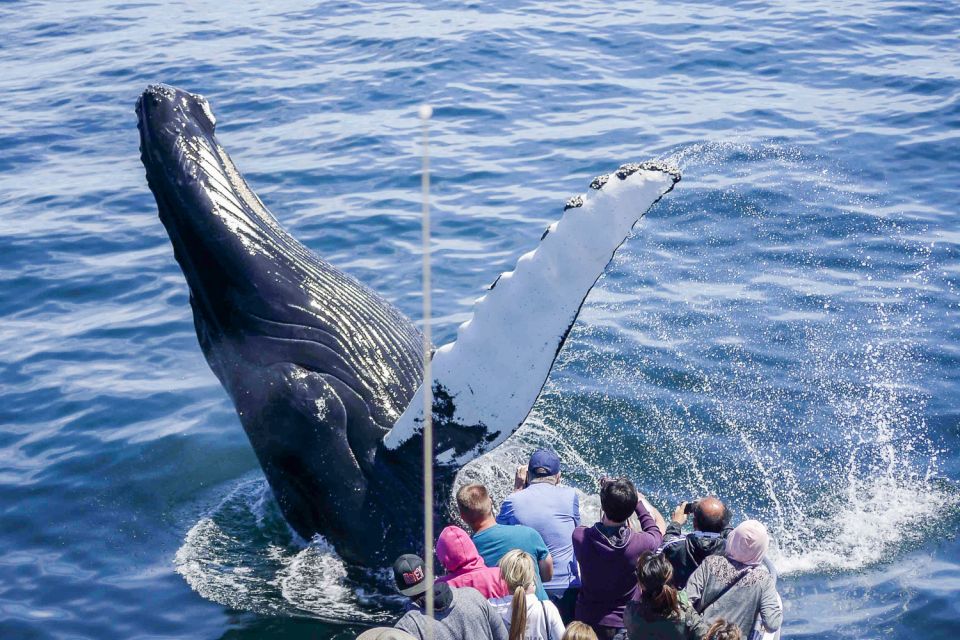
- New England Aquarium naturalists onboard, so the narration is tied to real whale behavior, not generic facts
- Indoor cabin + big windows plus outdoor viewing decks, which helps if weather changes mid-cruise
- Targeted whale time at Stellwagen Bank for about 1.5 hours of active searching
- Stellwagen Bank National Marine Sanctuary routing, including passes by Castle Island and the Boston Harbor Islands
- Built-in onboard tech and narration support, including sound and video systems for guidance
- Sightings can be impressive, with reports of multiple humpbacks and even rarer minke and white-sided dolphins
Boston harbor starts at Long Wharf, not some random dock
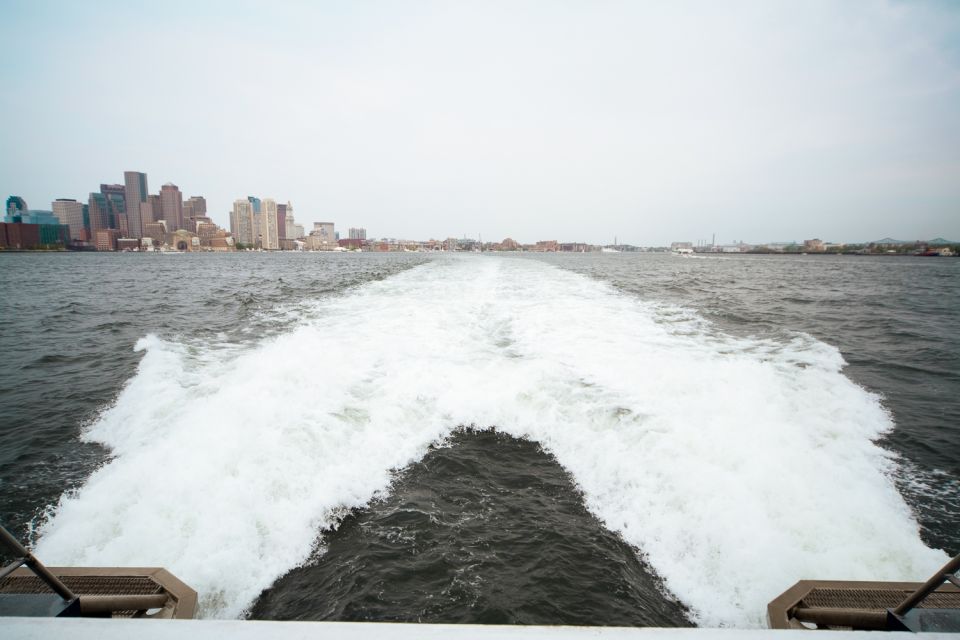
Your cruise departs from Boston Harbor City Cruises at One Long Wharf. It sits between the Long Wharf Marriott and the New England Aquarium, which is a big deal because you can usually pair this with a simple pre- or post-cruise walk instead of wrestling with messy transit.
The actual departure window is tied to where the whales are that day. You’re given a sense of timing, but you should also expect the boat to travel further if sightings are farther out, which can push the outing beyond a neat 3-hour block.
Then you head out and get an easy “warm-up” pass by Castle Island and the Boston Harbor Islands National and State Park. Even if you’re only there for whales, this section matters: it’s when you can get oriented, find your viewing spot, and settle in before the search phase.
You can also read our reviews of more tours and experiences in Boston Harbor.


The high-speed boat: how it improves your whale odds
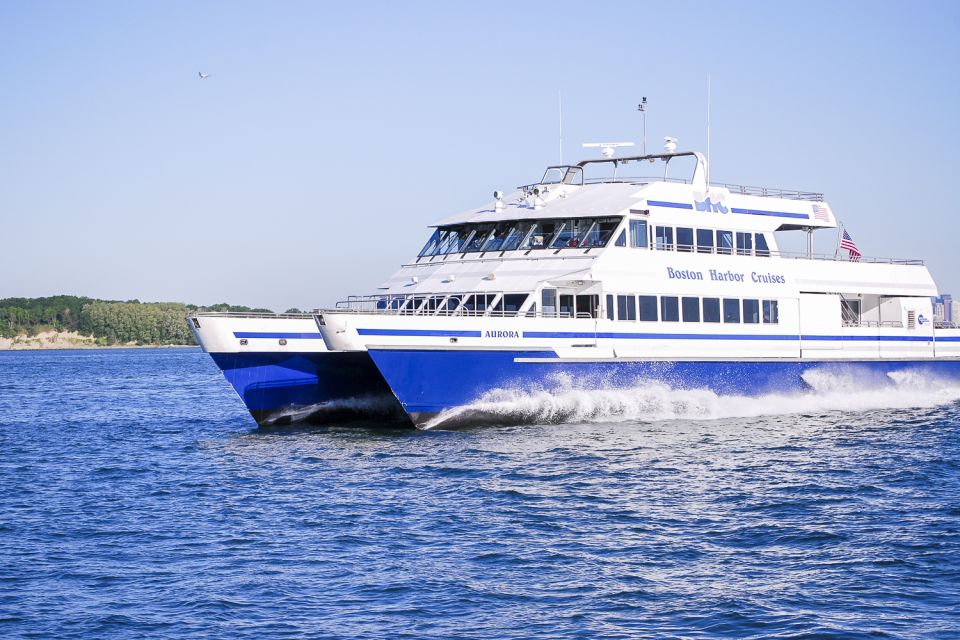
This is a comfortable, high-speed boat designed for maximizing where you can see. The key is the mix: you get climate-controlled indoor seating with cushioned options and tables, plus outdoor viewing areas for when a whale surfaces near the surface line.
The indoor cabin isn’t just “nice to have.” When Boston weather turns windy, cold, or damp, you’ll want the option to thaw while still tracking the water through large windows. State-of-the-art sound and video systems also support the guide’s calls, so you’re not stuck guessing what direction to look.
One practical note from real-world experience on boats like this: the front rail tends to be the best viewing. If you’re serious about photos or long looks, be ready for brief crowding around prime spots and plan to rotate when you need to see without stressing over line-of-sight.
Castle Island and the Harbor Islands: a scenic buffer before whale time
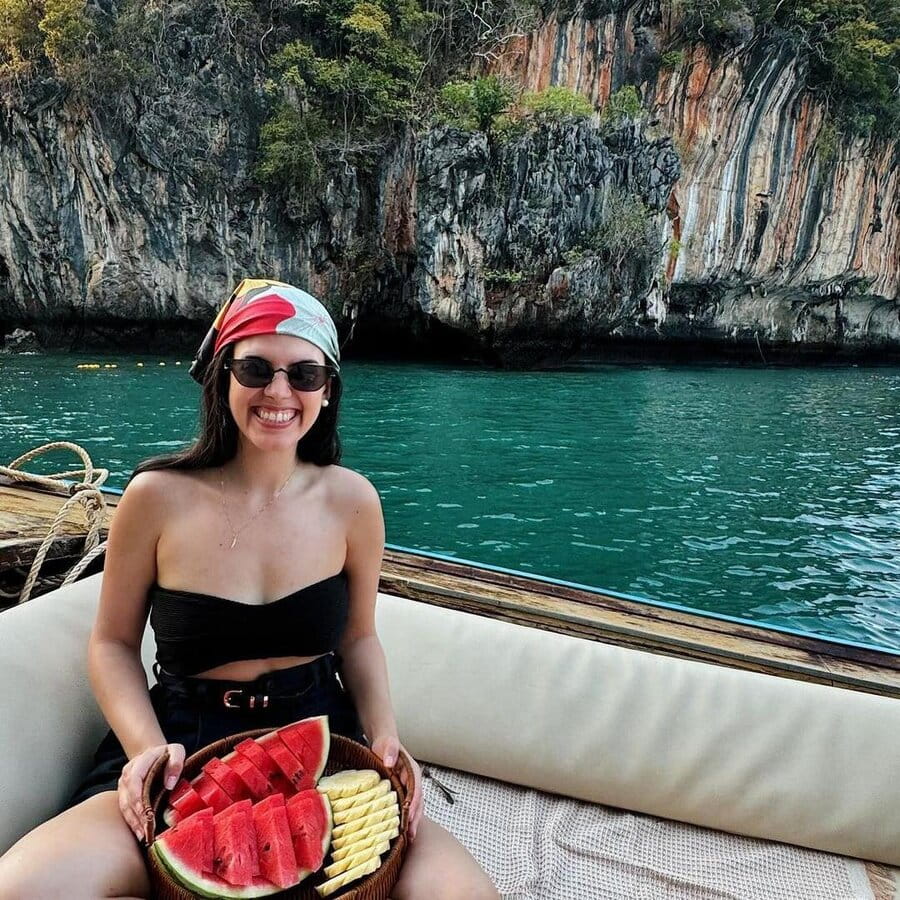
The route includes a pass by Castle Island and Boston Harbor Islands National and State Park before you reach the whale-watching zone. Think of this part as the cruise’s “setup”: it helps break up the day and gives you a smooth transition from city harbor into open coastal waters.
If you’re the type who likes photos, this stretch is where you can shoot Boston from the water without needing the exact moment a whale breaches. It’s also a good time to confirm you have everything you brought: sunglasses, sunscreen, a camera, and (if you’re smart) binoculars.
Even if you care only about whales, I’d treat this as your buffer period for settling in. By the time the crew points you toward the sanctuary area, you’ll be ready to track movement instead of trying to get your footing.
Stellwagen Bank National Marine Sanctuary: where the action happens
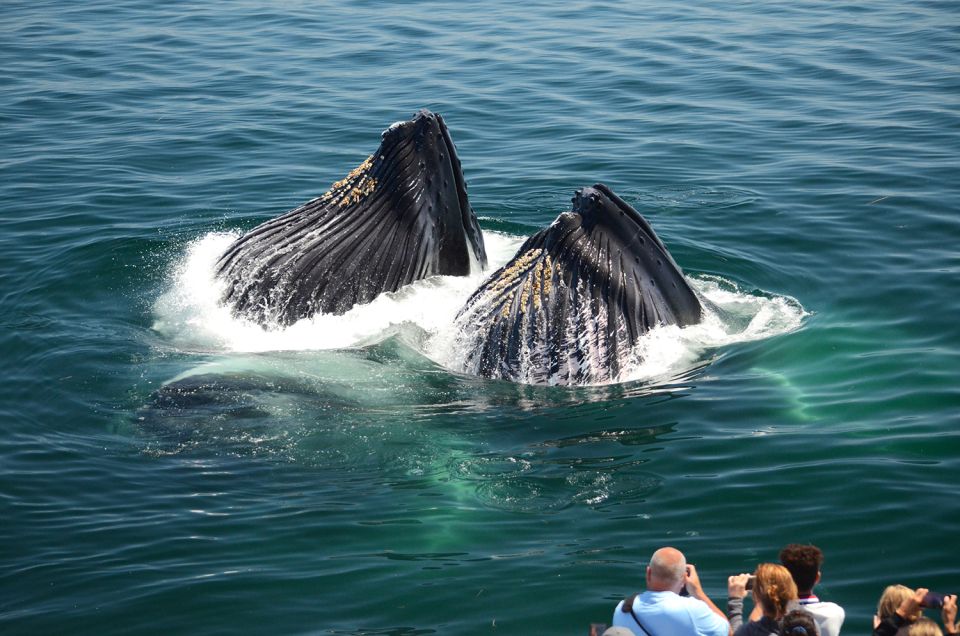
The main event happens at Gerry E. Studds/Stellwagen Bank National Marine Sanctuary, where you spend about 1.5 hours whale watching. That time window matters because whales don’t perform on a schedule; spending longer out there increases your chance of multiple surface events, not just a single brief sighting.
The sanctuary area is also where you should expect other wildlife to show up. Depending on conditions, that can include white-sided dolphins and other marine life hanging around the feeding grounds.
A detail that can throw off your timing: the location of the whales may require more travel time. In other words, the outing can run longer than the headline duration, because the captain follows the best chance for sightings, not a strict checklist.
What you might spot: humpbacks, fin whales, minkes, and white-sided dolphins
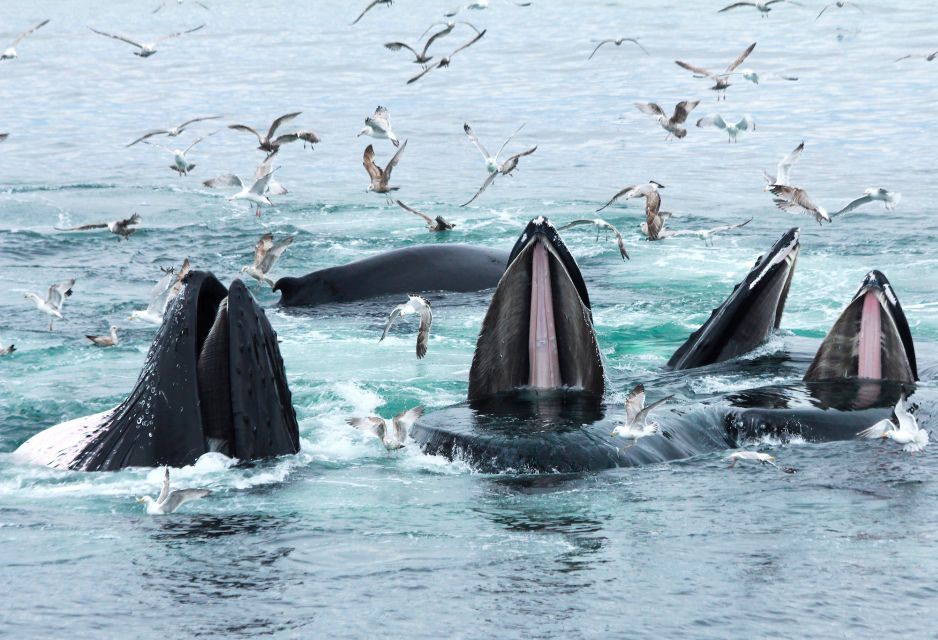
The cruise is set up for a classic North Atlantic mix of whale species. Based on what the outing targets, you should keep your eyes open for:
- Humpback whales: known for dramatic arching when they prepare to go under the surface
- Fin whales: massive animals, second only to blue whales in size
- Minke whales: smaller and often described as more abundant than other large whales worldwide
- White-sided dolphins: North Atlantic dolphins found in waters south of New England and north to Norway
One of the best parts of a naturalist-led tour is that it helps you recognize what you’re seeing quickly. When a naturalist is calling out species and behavior, you can shift from generic scanning to informed tracking. That’s how you end up with longer, better looks instead of constantly checking your phone for answers.
Also, some trips can include more than one whale type in the same outing. The most exciting moments tend to be the ones where you get repeated surface chances, not just a single quick glimpse.
New England Aquarium Naturalists: why the narration changes the whole cruise
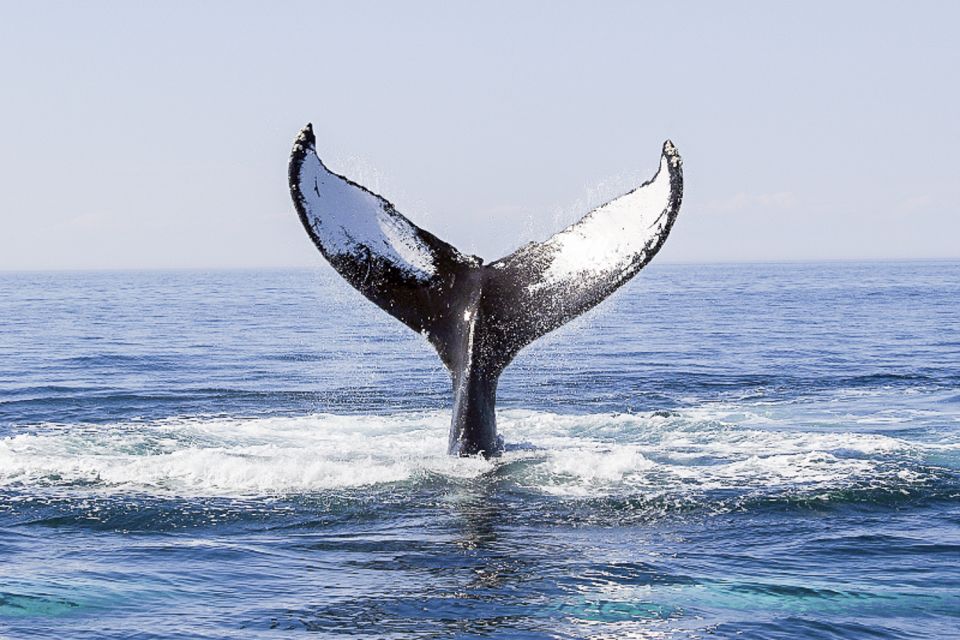
The on-board Naturalists from the New England Aquarium are a major reason this cruise feels more than just a boat ride. The guidance helps you understand the difference between a whale just surfacing versus a whale doing something more specific, like feeding behavior or recognizable motion patterns.
You’ll hear details that make you look smarter in the moment. In the information provided on this cruise, a naturalist can explain what makes humpbacks stand out, plus basic sizing context for fin whales, and why minke sightings are considered more common globally.
The human side counts too. Some onboard leaders are cited by name in accounts from this experience, including Andrew and Amanda, and their approach gets singled out for clarity and enthusiasm. Amanda, in particular, is associated with showing a piece of a humpback tooth, which is the kind of hands-on moment that turns facts into something you remember.
You can also treat the narration as a “forecast” for what to scan for next. When the guide tells you what to look for, you’re less likely to miss the brief surface moments that make whale watching feel magical.
Weather and motion-sickness: the reality check you should not skip
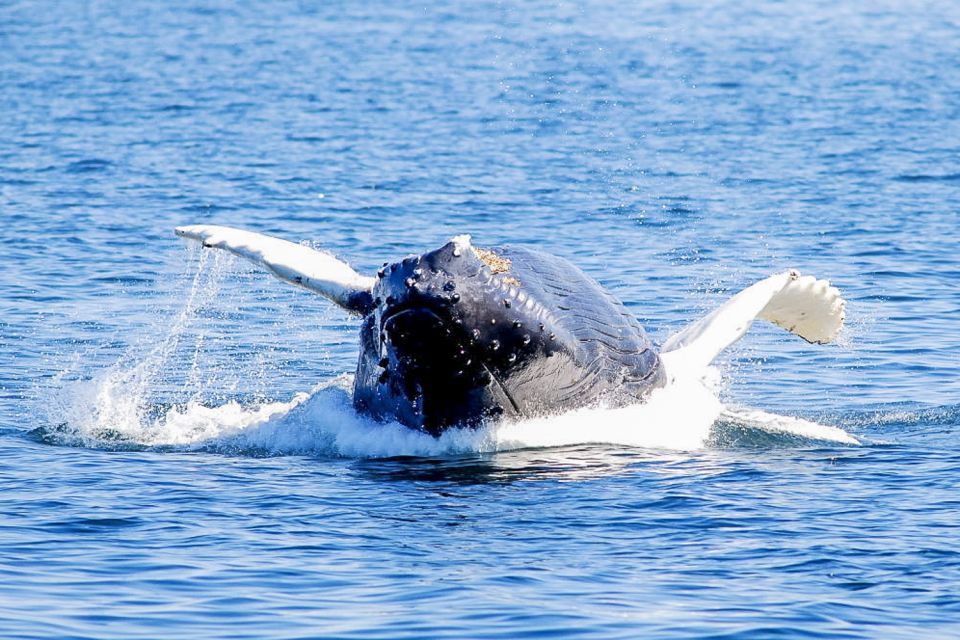
This is not a calm pond cruise. Boston Harbor conditions can change fast, and the trip out to the whale area can involve choppy water. The cruise is also explicitly not suitable for people with motion sickness, so if that’s you, be honest and choose another option.
If you’ve got a sensitive stomach and are still considering it, plan to take precautions. Several accounts point out that people felt better when they used prevention and positioned themselves where the boat motion is gentler. That’s practical advice: mid-boat often feels steadier on many vessels, and it’s worth asking staff where to stand or sit for less movement.
For everyone else, dress like it’s going to be cooler than you think. Even when the sky looks bright, wind on the deck can cut through quickly. Bring a jacket and layers, plus a sun hat and sunscreen if you’re out topside for the hunt.
Food, snacks, and the $85 value question
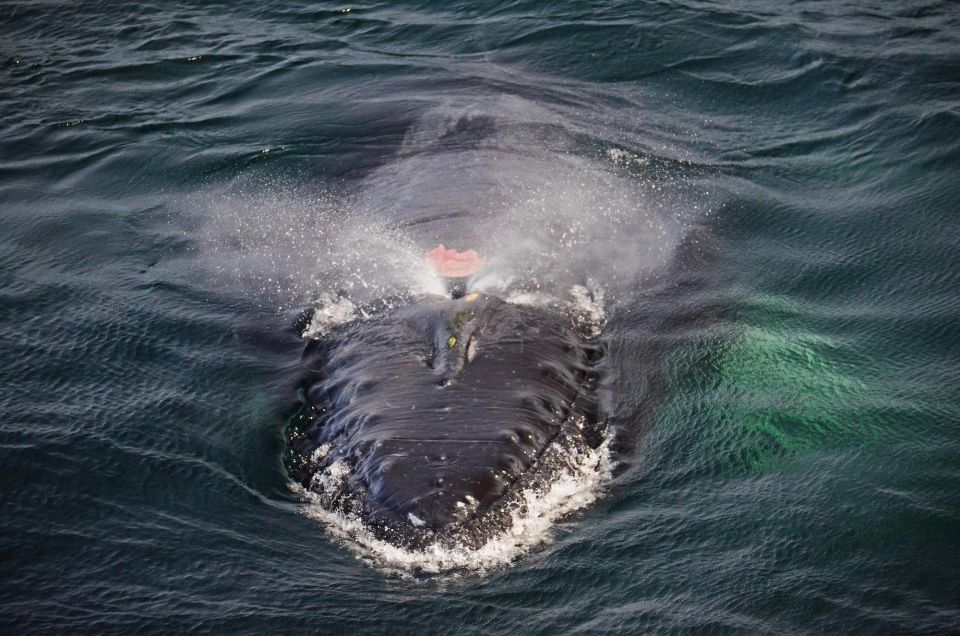
The ticket price is about $85 per person, and the value comes less from what you eat and more from what you’re paying for: a guided hunt plus time out on the water.
Food and drinks are available for purchase onboard, which means you shouldn’t expect the cruise to function like an all-inclusive meal. Still, you can grab snacks and beverages while you’re waiting for the crew to call sightings, and having that option reduces the stress of timing a meal on a busy day.
So is it worth it? If you want a guided outing with aquarium naturalists, access to both indoor and outdoor viewing, and enough time at the sanctuary to make sightings more likely, this price fits the experience. If you want a cheap activity with no crowds and no uncertainty, whale watching will always feel like a gamble because whales are wild.
One other value factor: the staff and crew support seem to matter. Clean bathrooms and an easy, friendly service setup show up in accounts, and that’s the difference between a stressful outing and one you can enjoy from start to finish.
Itinerary flow: what to do during each stage
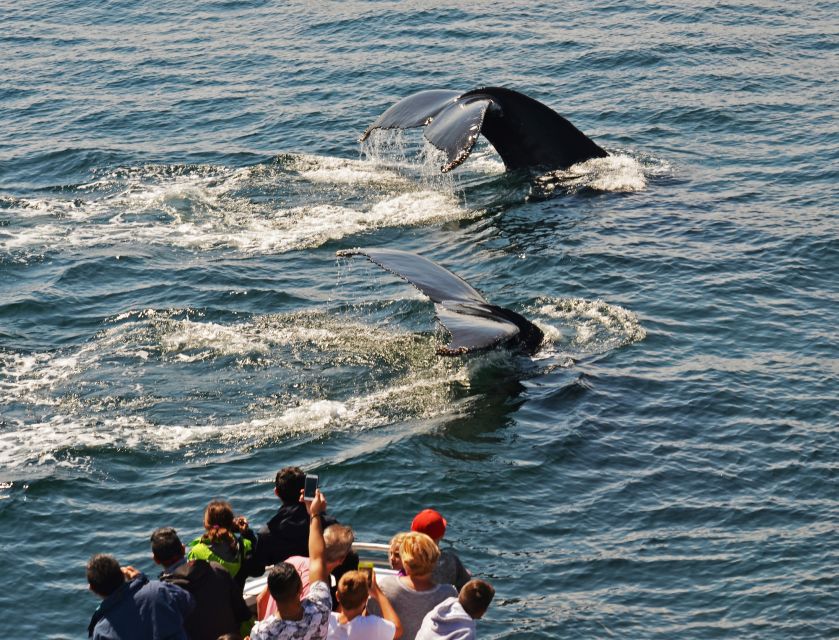
Here’s the practical rhythm of the day, in human terms.
Before you board (One Long Wharf): get your voucher ready and arrive with your layers. If you’re bringing binoculars, this is the moment to double-check them rather than reaching for them later.
Cruise out (passes Castle Island and the Harbor Islands): treat it as your warm-up. Find indoor seating if the wind is strong, and watch the crew’s announcements so you know what the whale-search phase will feel like.
Main whale-watching block (about 1.5 hours at the sanctuary): stay alert, move smart, and don’t freeze in one spot. If you see others crowding the rail, it can be hard to rotate without losing your angle, so pick an area you can access repeatedly.
Return to Long Wharf: keep your eyes up through the way back. Some accounts note surprise wildlife encounters and longer-than-expected observation when whales are actively surfacing nearby.
The big takeaway: this isn’t a “sit and stare for 3 hours” activity. It’s a guided search with moments that come fast, so you’ll enjoy it more if you stay flexible.
Who this whale watching cruise fits best
This is best for people who want guided wildlife viewing with expert commentary. If you like learning while you watch, the aquarium naturalists add real weight to the experience.
It’s also a good choice for couples, families, and anyone who wants a comfortable mix of options. The indoor cabin with large windows makes it easier to stick with the tour even when weather isn’t ideal.
Avoid it if motion sickness is a major concern for you, since it’s specifically not suitable. If you need something gentler, look for a different marine option on calmer water.
Should you book the Boston Harbor City Cruises whale watching cruise?
Book it if you want a whale-watching experience that’s built for spotting—indoor windows, outdoor decks, and aquarium naturalists all working together during active time at Stellwagen Bank. The $85 price feels more reasonable when you value guidance and viewing comfort as much as you value the whales themselves.
Skip it if you know your stomach won’t handle choppy conditions, or if you’d be upset by the wild uncertainty of whale sightings. Whale watching is never guaranteed, but this one gives you a strong shot thanks to the focused sanctuary time and the quality of onboard interpretation.
FAQ
How long is the Boston whale watching cruise?
The cruise duration is listed as 210 minutes (about 3.5 hours on average), though whale locations can affect travel time and extend the trip beyond 3 hours.
Where does the tour depart?
It departs from Boston Harbor City Cruises – Long Wharf, specifically One Long Wharf between the Long Wharf Marriott Hotel and the New England Aquarium.
What whales can you see on this cruise?
The cruise targets the chance to spot humpback whales, fin whales, minke whales, and white-sided dolphins.
Is there indoor seating and can you still view whales inside?
Yes. There is a climate-controlled cabin space with cushioned seating and large windows for viewing.
Are food and drinks included in the price?
Food and drinks are available to purchase onboard, rather than being included.
Does the cruise have a live guide?
Yes, it includes a live tour guide (English).
Is this whale watching cruise wheelchair accessible?
Yes, it is listed as wheelchair accessible.
Is it okay if I get motion sick?
The activity is not suitable for people with motion sickness.
What should I bring for the cruise?
Bring comfortable shoes, sunglasses, a sun hat, a camera, sunscreen, a jacket, weather-appropriate clothing, and binoculars.
What is the cancellation policy?
You can cancel up to 24 hours in advance for a full refund.