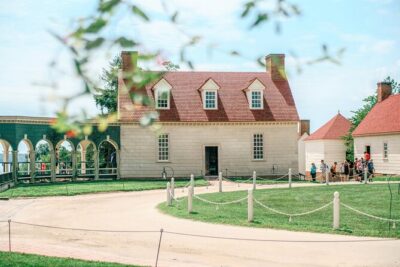
REVIEW · FREEDOM TRAIL
Boston: Official Freedom Trail® Walking Tour
Book on GetYourGuide →Operated by Freedom Trail Foundation · Bookable on GetYourGuide
Boston’s red line is short, but the stories pack a punch. I especially like the 18th-century costumed guides (they keep the tone fun without losing the facts) and the way you see the Freedom Trail’s big moments in a tight 1-mile, 90-minute route. One thing to plan for: it’s a walking tour with a set pace, so if you’re hoping for lots of slow standing around at every corner, you may feel a bit rushed.
The vibe is part theater, part history lesson on the street. Guides bring the setting to life around places like Faneuil Hall, the Boston Massacre area near the Old State House, and the Granary Burying Ground where Paul Revere is laid to rest. If you’re the type who learns best by hearing a chain of cause-and-effect, this format works well.
In This Review
- Key points at a glance
- Entering the Freedom Trail on Boston Common’s starting line
- Costumed guides who turn corners into cause-and-effect
- Stop-by-stop: Boston Common, then the Massacre site area
- Boston Common: a civic stage before the speeches
- Boston Massacre site: outside the Old State House area
- Faneuil Hall precinct stories with Samuel Adams and James Otis
- Granary Burying Ground and Paul Revere’s final resting place
- The Freedom Trail’s ticketed sites: what you do (and don’t) pay for
- Pacing, weather, and group size: what to watch for
- Reverse Walk Into History: a useful twist if you want a different order
- Price and value: is $18 worth it?
- Who should book this Freedom Trail tour (and who might skip it)
- Should you book the Boston Freedom Trail official walking tour?
- FAQ
- How long is the Boston Freedom Trail walking tour?
- How much does the tour cost?
- Does the tour cover the entire Freedom Trail?
- Which major stops are included?
- Are admission fees for indoor attractions included?
- What’s included in the price?
- What language is the tour guide?
- Is video recording allowed?
- Where do tours leave from?
- Do I need to specify a date/time when I book?
Key points at a glance
- Costumed, character-driven guides who tell the founding story with humor and room for questions
- 11 of the 16 official Freedom Trail sites covered in about 1 mile
- Boston Common gets your day off to a strong start in America’s oldest public park
- Faneuil Hall precinct stories tie speeches and protest energy to the streets you walk
- Boston Massacre / Old State House area is handled with somber reminders that stick
- Granary Burying Ground spotlights Paul Revere’s final resting place and the human side of the era
Entering the Freedom Trail on Boston Common’s starting line
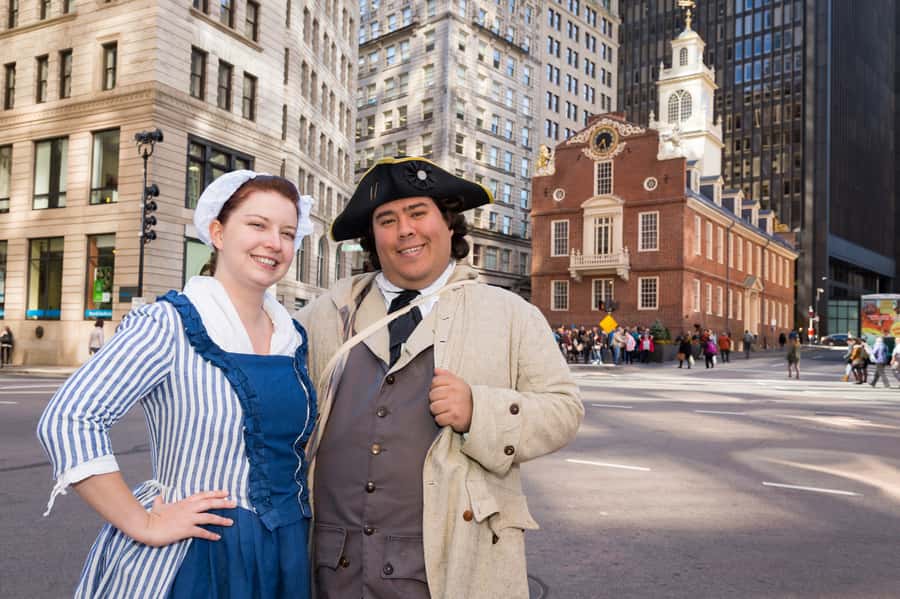
Most Freedom Trail tours are about ticking landmarks. This one is built to help you understand why those landmarks matter. You start near Boston Common Visitor Information Center, and you’ll follow the trail’s signature red line through central Boston at a steady walking pace.
Boston Common is a smart opening stop. It’s not just a green pause; it’s a reminder that public space has always been part of civic life. When you begin here, you get a sense of how the future arguments of the revolution were rooted in everyday places where people gathered, debated, and watched what leaders did.
From there, the tour keeps moving. You’re not shuffling through a museum. You’re walking down the same kinds of streets where the founding-era political arguments played out in public. That’s the real value: the tour doesn’t treat history like something behind glass. It treats it like something that happened in real neighborhoods, with real crowds and consequences.
The route is about 1 mile in 90 minutes, so it’s a manageable hit even if you’re doing other Boston stops that day. Still, bring comfortable shoes and water. You’ll thank yourself when the group keeps rolling.
You can also read our reviews of more tours and experiences in Freedom Trail.

Costumed guides who turn corners into cause-and-effect

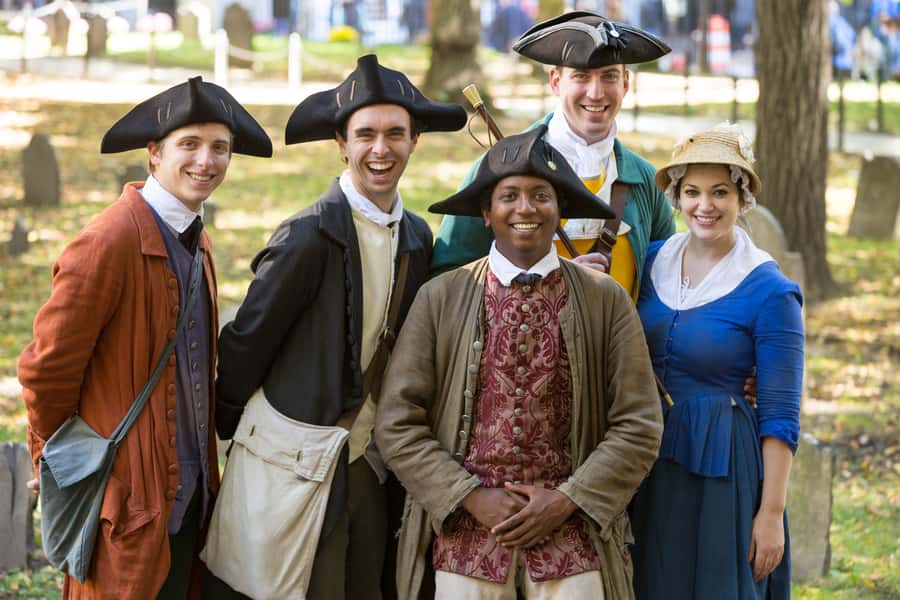
What makes this tour work is the way the guides pace the story. The best sessions I’ve seen on this Freedom Trail format don’t lecture at you. They set the scene, then let you connect the dots between people, places, and events.
In real tours, the difference often comes down to delivery. Many guides have clearly mastered performance while still staying practical. Names that show up often include Nate, Danielle, Jeremiah, Dr. Byles, James O’Sullivan, Hepzibah Swan, Shawn, Matt Prescott, Jerediah Poope, Rob Cream (also known as Isiah Thomas), and Sean. Across these, a common pattern stands out: humor plus clarity plus a willingness to answer questions.
You also get a sense that the guides are used to mixed groups. One reason you’ll hear so many comments about “fun but still informative” is that the guides are managing different ages and attention spans at once. If you’re traveling with teens, or you’re the one who normally says history is boring, the tour’s street-level storytelling approach helps.
Small practical note: your guide’s best work happens when you can hear them. That’s easier when you start toward the front rather than drifting to the back. If you get placed in a larger group, you might need to be more deliberate about where you stand so the jokes and context land.
Stop-by-stop: Boston Common, then the Massacre site area
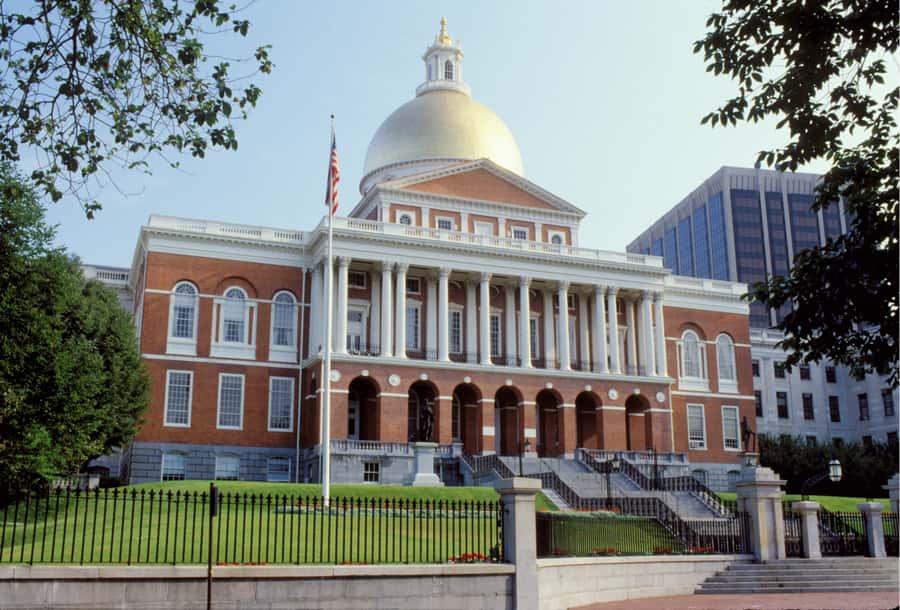
The highlights list tells you where the tour lands, and it makes sense as a learning arc.
Boston Common: a civic stage before the speeches
You’ll see Boston Common, America’s first public park. Think of it as the warm-up scene. Starting in a public gathering space helps you understand why political life wasn’t limited to private meetings. It was built around being in the same place as other people.
Boston Massacre site: outside the Old State House area
Next comes the heavier moment: you’ll pay respects to the victims at the Boston Massacre site. The guide also points you to the Old State House area and the brutal detail of what happened in the snow that night.
This isn’t one of those history stops where you rush past the emotional weight. Even if you’ve heard the term Boston Massacre before, the tour framing makes it feel less like a headline and more like an event that shocked a city.
If you prefer history with an atmosphere, you’ll probably like how the guide keeps you focused on the human side of the scene: outrage, fear, and the political fallout. That’s usually what turns this stop from “I’ve read this” into “I remember this.”
Faneuil Hall precinct stories with Samuel Adams and James Otis
One of the strongest parts of the tour is the way it handles the sound of political persuasion. You’ll spend time in the precincts of Faneuil Hall, and the guide brings in oratory from Samuel Adams and James Otis.
Here’s why that matters: the revolution wasn’t just about weapons and battles. It was about words that moved crowds. Faneuil Hall is famous for public speech, so when your guide ties those speeches to the streets around you, the place stops being a static monument. It becomes a stage.
The tour style also helps you follow the argument. Instead of memorizing names, you learn how people used public meetings to build pressure. If you like history that explains the mechanics of change, this is where it clicks.
Practical tip: this is also a good time to ask questions. Guides tend to handle questions well because they can refer back to what you’re seeing right there on the walk. If you’re the type who forgets questions until afterward, write down one or two quick ones before you reach this area.
Granary Burying Ground and Paul Revere’s final resting place
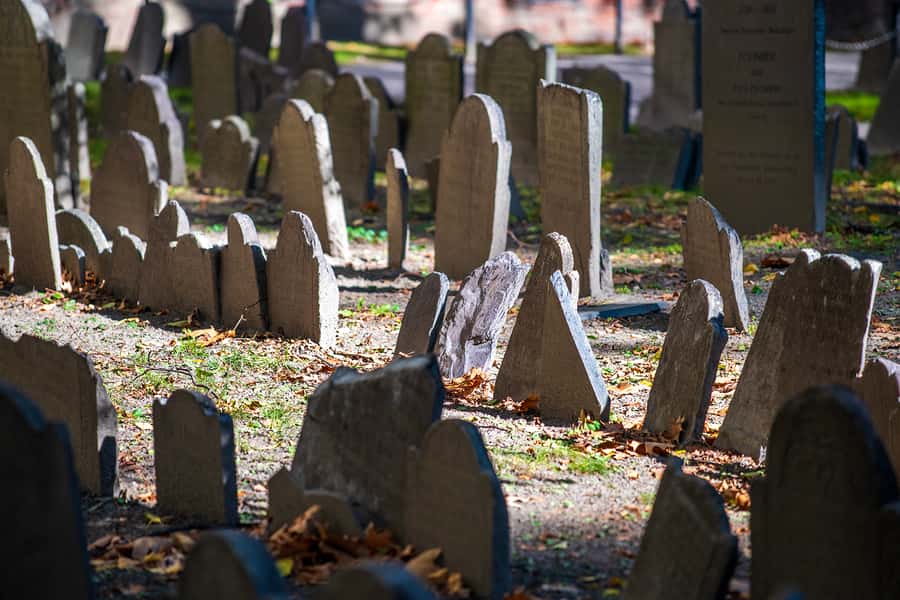
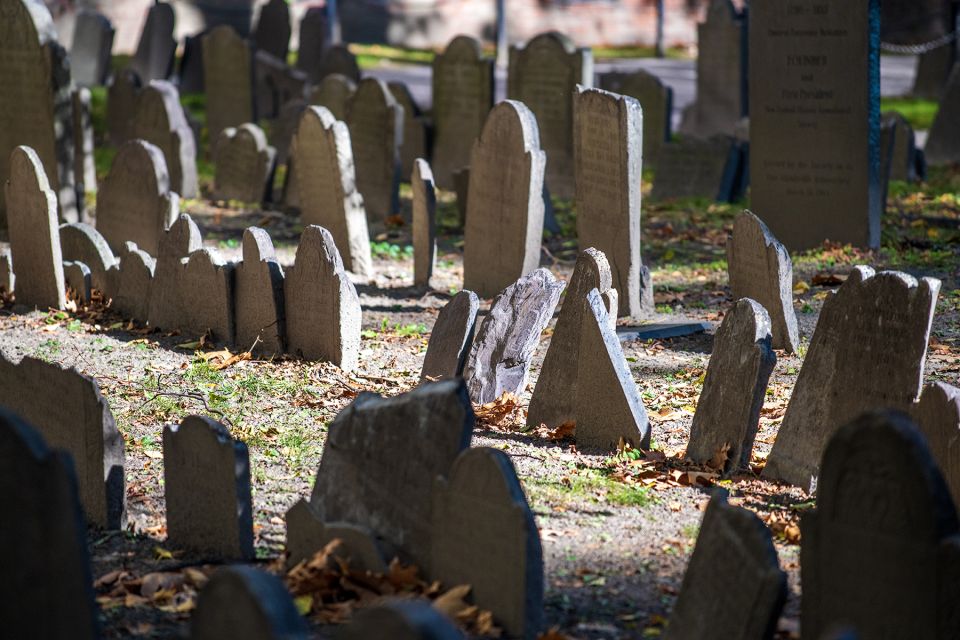
Then the tour turns personal again at Granary Burying Ground, including the final resting place of Paul Revere.
Cemeteries can feel like a detour on some itineraries. Here it works because you’re not just looking at a grave. You’re linking a specific figure to a broader story of revolution-era risk and cost. Paul Revere isn’t just a name from a worksheet. The tour frames him as part of a network of patriots and a lived reality where “doing the right thing” could be dangerous.
The guide’s pacing here matters, too. The best versions of this stop give you enough time to read what you can, take photos, and still stay with the story. Many comments highlight guides allowing time for photos and maintaining a good pace so nobody gets stuck behind while the group moves on.
If you care about taking photos, bring your phone battery into the tour with enough charge for a full 90 minutes. The route keeps moving, and the photo windows tend to be short but real.
The Freedom Trail’s ticketed sites: what you do (and don’t) pay for
The tour covers 11 of the 16 official Freedom Trail sites. That’s a smart balance: you get a meaningful sample without trying to force every paid location into one session.
Some Freedom Trail stops charge admission if you want to go inside, including places like the Old South Meeting House, Old State House, Old North Church, and Paul Revere House. The tour itself handles the guided walk, but entry to paid interiors isn’t automatically included.
So here’s the practical way to think about it:
- You’re paying about $18 per person for the guide, the story, and the visit to those 11 stops.
- If you want to step into specific buildings that charge, you’ll likely need to buy tickets at the door for those particular sites.
In other words, the value is in understanding what you’re looking at. Even if you don’t pay for every interior, the guided context makes the visible exterior stops feel less random.
Also, the tour is designed for momentum. It’s not the right choice if your plan is to linger at every paid site long enough to do a full museum-style experience.
Pacing, weather, and group size: what to watch for

The tour runs every hour on the hour from Boston Common Visitor Information Center, and every hour on the half-hour from the ArtsBoston booth at Faneuil Hall. That makes it easy to fit into your day without stress.
Duration is about 1.5 hours, usually morning and afternoon. With a walking route of about 1 mile, you’re dealing with city sidewalks, turns, and occasional pauses.
Weather matters. One consistent theme in the experience is that guides keep people engaged even when it rains. If it’s cold, wear layers. If it’s wet, bring a light rain layer so you’re not distracted by discomfort. The tour is short enough that smart clothing can make it painless instead of miserable.
Group size can vary. Some people have noted larger groups where it was harder to gather around the guide. If you get a bigger group, your best defense is simple: pick a spot where you can see and hear. Don’t be shy about adjusting where you stand at the start.
And one more practical note: video recording isn’t allowed, so plan on photos and notes instead.
Reverse Walk Into History: a useful twist if you want a different order
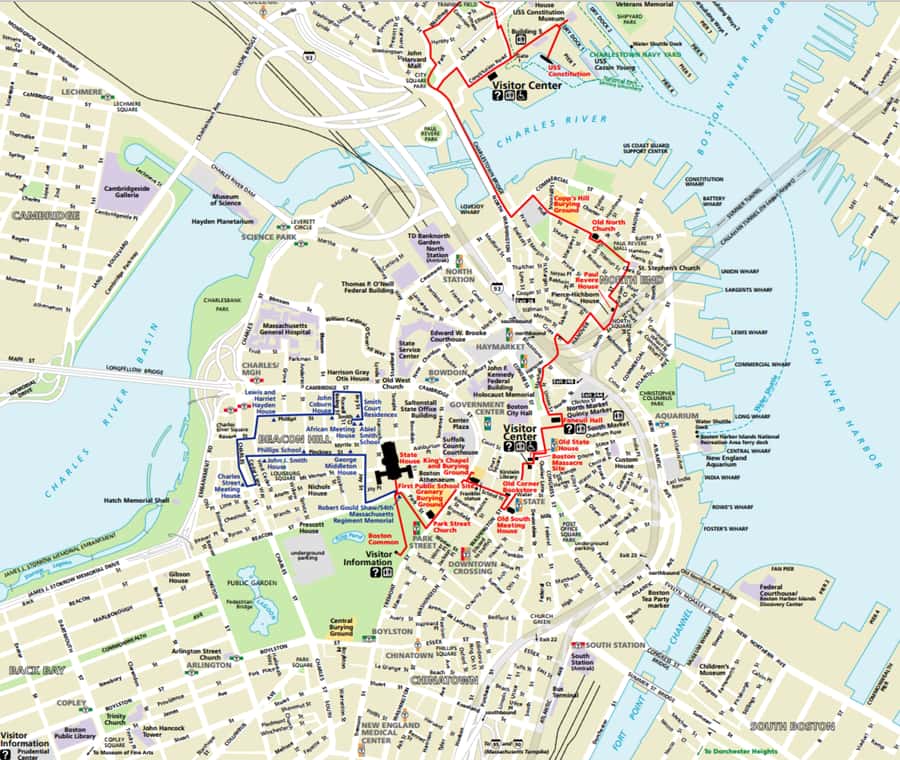
There’s an option called Reverse Walk Into History. The whole point is order. If you’ve got a preference for starting from a different end of the story, this can be a nice way to keep the same landmarks from feeling like a copy-paste of what you’ve read online.
Reversing the sequence can help you connect events in a different mental order, especially when you’re trying to understand how later actions grew out of earlier arguments. If you’re doing multiple walking tours in Boston, this kind of variation can also help keep your day from turning into repetitive storytelling.
Price and value: is $18 worth it?
At $18 per person for a 1.5-hour, 11-stop guided walk, the price feels fair when you look at what’s included: costumed guides and guided visits to the major trail stops on the route.
This is not an “every stop is inside” tour. Paid interiors are not included for certain buildings. But you aren’t paying for a museum entry list. You’re paying for a guide to connect the dots—why those meetings happened, why the anger mattered, and how the revolution’s public arguments turned into political momentum.
The best value is for people who want context fast. If you plan to do only one Freedom Trail-style activity in Boston, this guided approach is usually the most efficient way to get oriented and understand what you’re seeing.
If you already know the details and you’re comfortable reading plaques at your own pace, you could DIY parts of it. But you’d miss the performance-style explanations and the way the guide keeps the story coherent as you walk.
Who should book this Freedom Trail tour (and who might skip it)
This tour suits you if:
- You want the Freedom Trail explained in a manageable 90 minutes
- You like your history with humor and character, not just facts read off a page
- You enjoy asking questions while standing at the actual locations
It may not suit you as well if:
- You want long, quiet time inside every ticketed building
- You dislike guided groups and prefer completely independent wandering
- You’re very photo-focused and need extended time at each stop rather than brief windows
If you’re traveling with family, it’s also a good match. Many of the guides mentioned are good at keeping attention without talking down, and that can make a difference when the group includes teens or kids who normally lose interest in lectures.
Should you book the Boston Freedom Trail official walking tour?
Book it if you want a fast, memorable orientation to Boston’s revolutionary story. The costumed guides, the street-level storytelling, and the selection of major landmarks—Boston Common, the Boston Massacre site area, and Granary Burying Ground with Paul Revere—make it easier to understand the Freedom Trail instead of treating it like a checklist.
Skip it only if your ideal Boston day is slow and quiet, with lots of interior admissions and zero group pacing. Otherwise, this is one of the simplest ways to get the most meaning from the red line without spending your whole day doing it.
If you’re deciding late, aim for a time when you’re rested and can handle a brisk walk. Then let the guide do the connecting for you. You’ll come away seeing Boston differently, even if you only walked a mile.
FAQ
How long is the Boston Freedom Trail walking tour?
It’s about 1.5 hours (around 90 minutes).
How much does the tour cost?
The price is $18 per person.
Does the tour cover the entire Freedom Trail?
No. It features 11 of the 16 official Freedom Trail historic sites.
Which major stops are included?
You’ll see Boston Common, visit the Boston Massacre site, and go to Granary Burying Ground (Paul Revere’s final resting place). The tour also includes the site of the oldest public school in the United States.
Are admission fees for indoor attractions included?
Entrance to Freedom Trail sites that charge admission fees is not included (for example, Old South Meeting House, Old State House, Old North Church, and Paul Revere House).
What’s included in the price?
You get 18th-century costumed guides and a tour of 11 Freedom Trail sites.
What language is the tour guide?
The tour is offered in English.
Is video recording allowed?
No. Video recording is not allowed.
Where do tours leave from?
Tours leave every hour on the hour from the Boston Common Visitor Information Center, and every hour on the half-hour from the ArtsBoston booth at Faneuil Hall.
Do I need to specify a date/time when I book?
You generally do not need to specify a date/time. With your ticket, you are guaranteed a spot on one of the Freedom Trail Foundation tours any date and any time (tour times can change with little notice). You will need a printed voucher.