
REVIEW · WASHINGTON DC
Hop-on Hop-off Sightseeing Tour by Open-top Bus with 18 Stops
Book on Viator →Operated by Big Bus Tours - USA · Bookable on Viator
Washington DC can feel huge until you ride it. This 18-stop open-top bus tour is an efficient way to piece together the city’s layout, then jump off when something grabs you. I like that you can board at many stops and build your day around your own pace instead of a rigid itinerary.
The two things I really like are the freedom of unlimited hop-on hop-off during your pass window and the onboard recorded audio that helps you connect what you’re seeing to what it means.
One thing to consider: the bus schedule isn’t “everywhere, every minute.” In winter it runs about every 30–45 minutes, and a few people note timing and stop-finding can be frustrating if you rely on the app too blindly.
In This Review
- Key points I’d plan around
- Entering DC’s “Big Picture” Zone with 18 Stops
- Price and Value: Is $49 worth it?
- Timing, Frequency, and the Reality of DC Traffic
- What It Feels Like Onboard: Audio, Earphones, and Views
- Stop-by-Stop: From the Washington Monument to the White House
- Washington Monument and Natural History Museum (Stops 1–2)
- Union Station to the US Capitol at Garfield Circle (Stops 3–4)
- Air & Space Museum to Smithsonian Metro (Stops 5–8)
- Bureau of Engraving & Holocaust Museum to the Tidal Basin memorials (Stops 9–11)
- World War II, Lincoln, and the Big “One-Day DC” Challenge (Stops 12–13)
- Arlington Cemetery, Constitution Gardens, and Theater District Stops (Stops 14–18)
- The Included Extras That Often Matter More Than You Think
- Who This Bus Tour Suits Best (and Who Should Skip It)
- Should You Book the $49 Big Bus 18-Stop Tour?
- FAQ
- How many stops are on the Washington DC hop-on hop-off bus tour?
- How long is the tour?
- Can I start the tour at any stop?
- Does the tour include audio commentary?
- What other experiences are included or offered with the ticket?
- Is there a free photo option connected to the White House?
Key points I’d plan around
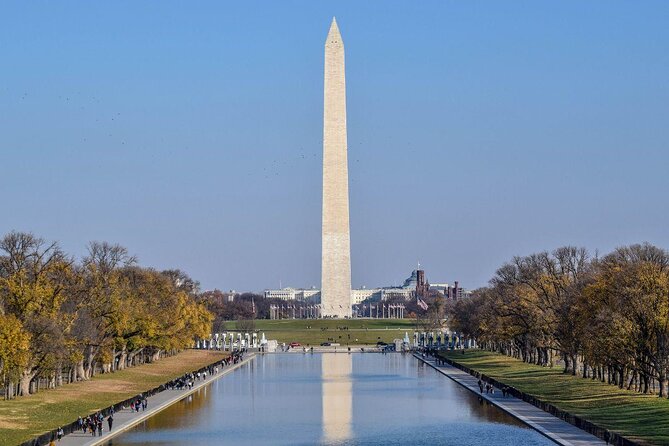
- 18 stops across the National Mall and downtown makes it easy to cover a lot without sprinting between landmarks.
- Recorded audio onboard keeps you learning while you ride, and it’s offered in English.
- Big Bus app with live tracking helps you time hop-ons, but don’t treat it as perfect.
- Optional Arlington National Cemetery walking tour adds a guided, human layer to a must-see stop.
- Extras included or offered with the ticket (audio tours, bike rental, and a free photo at the White House store) can increase your value.
Entering DC’s “Big Picture” Zone with 18 Stops
If you want Washington DC to make sense fast, a loop bus is a smart tool. The city is full of big monuments, wide boulevards, and museums that are spread out more than you’d expect. This hop-on hop-off setup helps you get your bearings fast, then zoom in on the parts you actually want to spend time with.
The big win here is you choose when to hop off. Your pass lets you keep getting on and off as long as your ticket is valid. That means you’re not stuck at a stop for 30 minutes because a group schedule says so. If you see a line, or you want to linger for photos, you can.
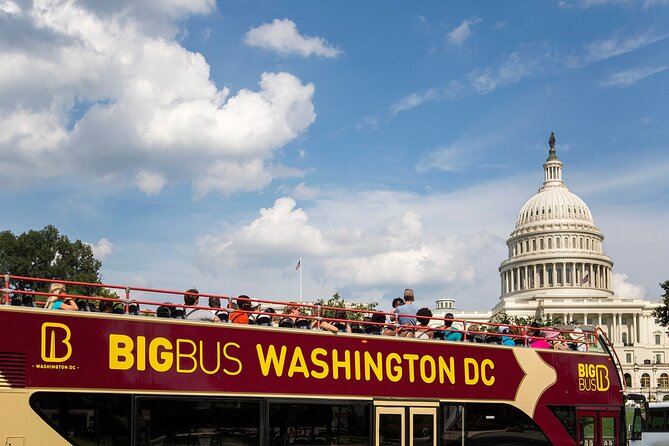
You’ll ride an open-top double-decker bus. The views are the point. If you’re sensitive to sun or cold, plan accordingly because the upper level isn’t climate controlled. On breezy days, a light layer is worth it.
You can also read our reviews of more tours and experiences in Washington DC.



Price and Value: Is $49 worth it?
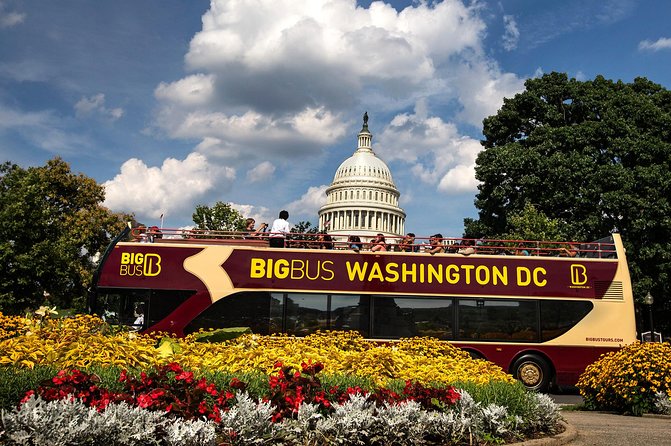
At $49 per person for the experience, the value depends on how you use it. If you treat it like transport between distant stops, you’ll feel like you got your money’s worth quickly. If you hop on once and mostly walk the rest, it can feel expensive for what you used.
Where this tour tends to score well is coverage. You’re not just seeing one “top attractions” strip. You pass by the White House area, the US Capitol, the Smithsonian museum zone, the Holocaust Museum/Bureau of Engraving area, and the major memorial stretch around the Tidal Basin. Even if you only jump off at a handful of stops, you’ll still learn how the city connects.
You also get small but fun value adds, like the free White House Oval Office digital photo when you present your ticket at White House Gifts (one photo per ticket). It’s a quick souvenir that doesn’t eat up your afternoon.
Timing, Frequency, and the Reality of DC Traffic
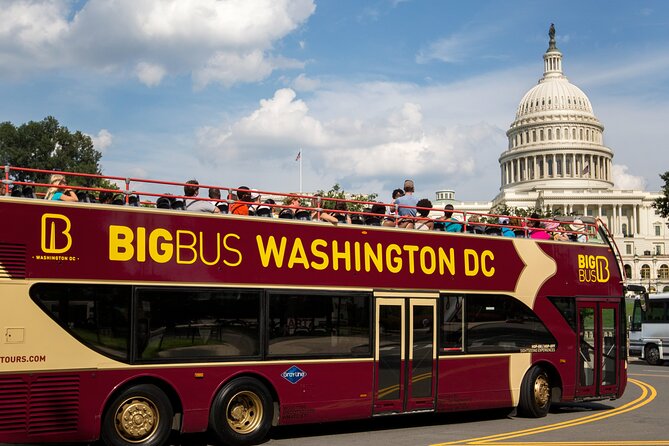
The tour duration is listed at about 1 hour 50 minutes (approx.), but the practical experience is longer because you’re expected to hop on and off. Think of it as a repeatable loop, not a one-and-done ride. In FAQ-style terms, the full circuit is roughly 1 hour for both the National Mall-focused Red Loop and the Blue Loop, but you’ll naturally spend more time because you’ll want to get out.
A key detail for planning: during winter season, buses run about every 30–45 minutes. That’s workable, but it’s not “blink and it’s here.” If you’re traveling with kids, or you’re doing a timed plan around sunset or a separate tour, build a buffer.
The Big Bus app can help you track buses in real time. That said, the guidance you’ll want is this: use the app to reduce guesswork, not to gamble your entire schedule. Some riders reported the on-screen timing didn’t match reality at their stop. So I’d still give yourself extra minutes, especially if you’re waiting for a connection to another attraction.
One more practical note: your comfort up top is great until the weather changes. In cold or windy conditions, plan to go inside at least occasionally. And if you’re traveling with a stroller, you’ll need it folded while aboard.
What It Feels Like Onboard: Audio, Earphones, and Views
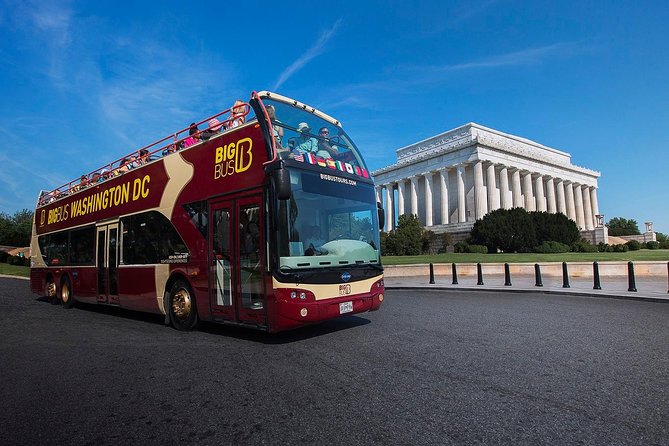
This is a recorded audio experience with digital commentary aboard the bus. The audio is designed to tell you what you’re looking at as you move between stops, which is perfect when you’d rather spend your “window time” learning than reading a map.
A small but important tip: when you board, confirm you have the audio setup ready. Some people ran into moments where the driver didn’t point out where to get earphones, and then they missed parts of the commentary. If you care about the narration, ask right away: where do I pick up the earphones, and when should I start listening?
For seat choice, if you want the classic DC photo angles, you’ll probably spend time upstairs near the front or side. When you’re rotating between landmarks, that open-air perspective is a big part of the reason to take an open-top bus instead of a smaller city shuttle.
Stop-by-Stop: From the Washington Monument to the White House

You’ve got 18 stops, and a lot of them cluster into a few “zones.” That’s convenient because you can jump off, spend time, then re-board without crisscrossing the city on foot.






Washington Monument and Natural History Museum (Stops 1–2)
Start near the Washington Monument area (Stop 1 at 1400 Jefferson Dr SW). It’s one of those landmarks that instantly tells you you’re in the center of DC’s story. Even if you don’t go inside, the surrounding views and the monument’s scale help you understand why the National Mall is laid out the way it is.
A short ride later, you hit the Natural History Museum area (Stop 2 at 10th Street NW & Constitution Ave NW). This stop is handy because you can bounce between the museum zone and the Mall memorials depending on what your day looks like. If you like museums but hate wasting time commuting, this is a good pairing.
Union Station to the US Capitol at Garfield Circle (Stops 3–4)
Stop 3 at Union Station (50 Massachusetts Ave NE) is one of the most practical “re-board points.” It’s a hub for getting around, and it’s easier to manage logistics when you know your transit anchor. Also, Union Station has a big-crowd energy, so it’s a convenient place to reset if you got turned around earlier.
Stop 4 at US Capitol at Garfield Circle (2436 Rayburn House Office Bldg) lands you in the heart of government buildings. This is where DC feels most formal and ceremonial. If you’re into architecture or politics, you’ll want to hop off here, even if just to walk the perimeter and take photos from the best angles you can find.
Air & Space Museum to Smithsonian Metro (Stops 5–8)
Stop 5 at Air & Space Museum (600 Independence Ave SW) is a magnet for anyone who likes aviation, space, or big indoor exhibits. Even if you only do a quick outside look, you’ll understand why this area is a top draw in DC.
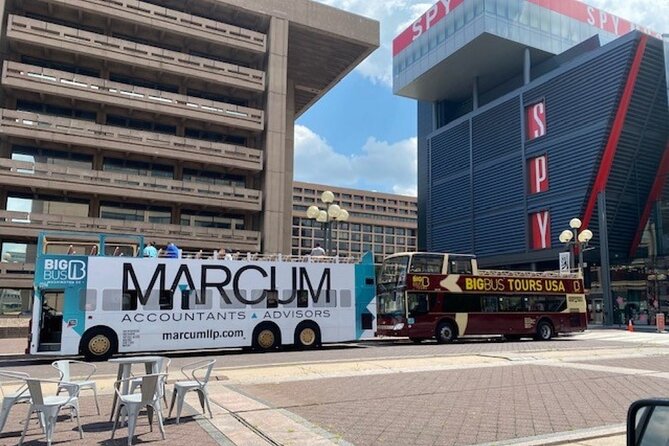
Stop 6 at L’Enfant Plaza & the International Spy Museum (700 L’Enfant Plaza SW) is a fun change of pace. It mixes a modern attraction with the grand DC city planning vibe. If you’re traveling with teenagers or you just want something lighter than memorials and museums, this is a good stop to consider.
Stop 7 at The Wharf & Potomac Boat Cruise (800 Maine Ave SW) is where you shift from monuments to waterfront energy. It’s a good re-board location if you want a meal or a break from sightseeing intensity.
Stop 8 at Smithsonian Metro (1200 Independence Ave SW) is a smart stop for planning. Even if you don’t use Metro that day, it’s a reminder that this area is linked to multiple transit options. That helps when you’re trying to time hopping on and off smoothly.
Bureau of Engraving & Holocaust Museum to the Tidal Basin memorials (Stops 9–11)
Stop 9 at Bureau of Engraving & Holocaust Museum (266 Raoul Wallenberg Pl SW) puts you in an emotionally powerful zone. It’s the kind of place you don’t want to rush. If you stop here, give yourself enough time to walk slowly and actually absorb what’s there.
Stop 10 at Jefferson Memorial (Thomas Jefferson Memorial) is the start of the memorial stretch. This area can be scenic in any season, and it’s one of the easiest places to understand the scale of DC’s ceremonial landscape.
Stop 11 at FDR and MLK Memorial (121 West Basin Dr SW) brings you two major figures in a walking-friendly zone. If you’re interested in civil rights and leadership history, this stop is often a highlight because it feels grounded and personal rather than only monumental.
World War II, Lincoln, and the Big “One-Day DC” Challenge (Stops 12–13)

Stop 12 at the World War II Memorial (1 Memorial Ave) is heavy and meaningful, and it’s a place where audio commentary can actually help. The narration gives you context as you pass, and then you can use your time on the ground to focus on what resonates with you most.
Stop 13 at Lincoln Memorial & Korean War Memorial (100 Daniel French Dr SW) is a classic DC “yes, I’m here” moment. Lincoln’s scale and the surrounding memorials make this one of the best areas for photos and reflection.
The practical challenge is time. Memorials are spread out, and the area attracts big foot traffic. If you only have one day, prioritize: pick two stops to explore deeply and treat the rest like quick check-in points from the sidewalk.
Arlington Cemetery, Constitution Gardens, and Theater District Stops (Stops 14–18)
Stop 14 is the Arlington Cemetery stop. This is where your ticket can expand into something more guided. The experience includes an optional Arlington National Cemetery walking tour, and one guide name you may hear mentioned is Josh, who is described as friendly and very knowledgeable. If you want the cemetery to feel more than just a list of gravestones, this walking tour layer can be a big upgrade.
Stop 15 at Constitution Gardens (18th Street NW & Constitution Ave NW) is a nice “in-between” zone. It can help you re-balance your day when you’ve gone hard on memorials or museums.
Stop 16 at The White House (1615 H St NW) is the DC stop most people plan around first. Even if you can’t go far into restricted areas, the surrounding streets and sightlines are still part of the experience. If you want that souvenir photo, this is also your cue to plan the White House Gifts stop for the free Oval Office digital photo.
Stop 17 at Ford’s Theater (610 10th St NW) adds another layer of DC history—more story-based than scenic. If you like political history and real-world events, hopping off here can make your day feel less like a sightseeing checklist and more like a connected narrative.
Stop 18 at The Willard Hotel/US Treasury (1401 Pennsylvania Ave NW) is a strong finale point. It’s another “DC feels classic” stop, where the architecture and setting add texture to the day.
The Included Extras That Often Matter More Than You Think
Beyond the bus ride, the ticket gives you access to several additional experiences. This is where the pass can feel more like a value bundle than just transportation.
One included piece is an exclusive audio guide tour option for Arlington Cemetery, Tidal Basin, and Georgetown. If you like having a structured way to experience areas you might otherwise wander through, audio guidance can help you stay oriented.
You also get access to an optional panoramic sunset tour. Sunset can be a payoff time in DC because the lighting changes how memorials and monuments look. If you’re choosing between a museum block and an outside moment, sunset is often the one that gives you the biggest visual reward per hour.
There’s also an included 1-hour bike rental offer with Unlimited Biking. The setup includes a bike, helmet, basket, lock, roadside assistance, and an illustrated map featuring key routes and attractions. In a city with long sightlines, biking can be a faster way to connect your bus stops to nearby areas without adding extra walking time.
Who This Bus Tour Suits Best (and Who Should Skip It)
This tour is a great fit if you’re new to Washington DC or if your itinerary is packed. It’s also smart if you’re juggling adults, teens, and varying interests because you can tailor the time at each stop.
It’s especially good for people who want to see a lot quickly and then return later on foot. The bus gives you the “first draft” of DC, and once you know what you loved, you can plan deeper visits.
Where you should think twice is if you’re highly schedule-bound. The hop-on hop-off rhythm depends on frequency, and in winter it’s not continuous. If you have a strict appointment at a specific time and you can’t build buffer, consider pairing the bus with something that’s flexible rather than rigid.
Also, if audio is your main attraction, confirm you’re set up to listen when you board. The narration is one of the biggest benefits, and missing early segments hurts the experience.
Should You Book the $49 Big Bus 18-Stop Tour?
I’d book it if your goal is to get oriented and hit the core DC landmarks without spending your whole day commuting between far-apart spots. For $49, the value is strongest when you use the hop-on hop-off freedom and combine it with at least one deeper stop like the museums or the memorial zone.
I’d hesitate only if you’re the kind of traveler who needs clockwork timing with no waiting. The buses run about every 30–45 minutes in winter, and real-world stop timing can vary. If you’re traveling during peak season, you’ll likely have a smoother experience; if you’re going off-season or during weather extremes, plan extra slack.
If you do book, keep it simple: pick your priority stops first, hop off, and don’t try to conquer everything in one go. Use the app for direction, but give yourself time to breathe.
FAQ
How many stops are on the Washington DC hop-on hop-off bus tour?
The tour includes 18 stops across Washington DC.
How long is the tour?
The duration is listed as about 1 hour 50 minutes (approx.).
Can I start the tour at any stop?
Yes. You can hop on at any of the available stops, and then ride as your ticket duration allows.
Does the tour include audio commentary?
Yes. There is digital commentary aboard the bus with recorded facts and stories (English).
What other experiences are included or offered with the ticket?
The package includes access to optional add-ons such as an Arlington National Cemetery walking tour and a panoramic sunset tour. It also includes an exclusive audio guide tour option for Arlington Cemetery, Tidal Basin, and Georgetown.
Is there a free photo option connected to the White House?
Yes. You can get a free Oval Office digital photo by presenting your ticket at White House Gifts, 701 15th St NW (one photo per ticket).