
REVIEW · NEW YORK CITY
New York: Hop-on Hop-off Sightseeing Tour by Open-top Bus
Book on GetYourGuide →Operated by Big Bus Tours - New York · Bookable on GetYourGuide
New York is easier with a bus loop plan. This open-top, hop-on hop-off ride gives you a fast skyline and landmark sweep with digital audio commentary, so you know what you’re seeing as you go. I love the way it turns the city into a simple route you can repeat, and the way you can jump off for museums, memorials, and viewpoints without wrestling subway transfers. One thing to watch: the “best” stretch feels strongest early, so you may want to plan your must-dos around when your loop is freshest.
You’ll ride through major areas like Battery Park, Wall Street, SoHo, Greenwich Village, Chelsea, and up toward the Upper East Side. The Downtown and Uptown loops are short enough to be manageable, but long enough to build confidence—especially on a first trip when everything feels far apart. Expect a chill, sightseeing pace with stops close to big names like the Statue of Liberty viewing area, the 9/11 Memorial, and the Empire State Building.
If you’re the type who wants everything on your own schedule, the hop-on hop-off format is perfect. If you want a single, nonstop highlight montage, this might feel like you’re choosing your own adventure more than watching a strict script. Still, it’s one of the most practical ways to get your bearings fast without spending your whole day planning.
In This Review
- Key things to know before you buy
- A practical way to start: what a 3-hour Big Bus ride really gives you
- Downtown vs Uptown loops: timing, flow, and where confusion can happen
- Lower Manhattan on the Downtown Loop: Battery Park, Wall Street, and the waterfront mood
- SoHo, NoHo, Greenwich Village, and Chelsea: shopping streets with real sightseeing breaks
- The 9/11 Memorial and One World Trade Center: how to pace a heavy stop
- Empire State Building and Midtown energy: classic views without the subway math
- Museum Mile on the Upper East Side: where the bus turns into a museum map
- Grand Central and St. Patrick’s Cathedral: big city landmarks that reward a quick stop
- Hudson Yards and The Edge: add one high point for skyline payoff
- Audio, earbuds, and the Big Bus app: the tech part that actually matters
- Included digital walking tours: how to use them without turning your day into homework
- Value at about $44: when it’s worth it and when you may skip it
- Who this tour suits best (and who should think twice)
- Should you book this Big Bus hop-on hop-off tour?
- FAQ
- How long is the New York Hop-on Hop-off bus tour?
- What does the ticket include?
- Which areas and attractions can I see from the route?
- What time do the Downtown and Uptown loops run?
- Is there audio in multiple languages?
- Does the tour include walking tours?
- Is hotel pickup included?
- Can I cancel for a refund?
Key things to know before you buy

- You control the day: hop off at stops for museums, views, and memorials, then hop back on.
- Digital audio does the heavy lifting: the bus includes souvenir earbuds and commentary in multiple languages.
- Two loop styles: Downtown runs a longer circuit than the Uptown loop, and each covers different neighborhoods.
- Museum Mile access on the Upper East Side: Frick Collection and the Met show up on the route.
- 9/11 Memorial is close: you can get to the memorial area right from the tour.
- There are small friction points: headset plug issues and missed-stop confusion show up in feedback, so use the app and keep an eye out.
A practical way to start: what a 3-hour Big Bus ride really gives you
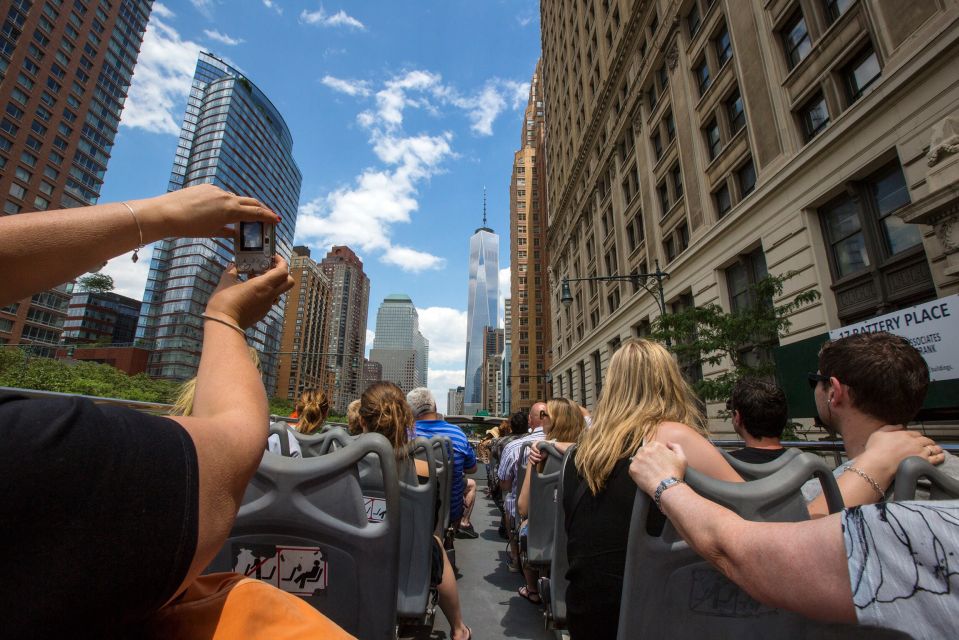
The tour is listed as a 3-hour experience, and that’s a good match for New York. You get enough time to see the city’s big themes—waterfronts, landmarks, neighborhoods, and memorials—without burning a full day. If you’re short on time, that matters.
What I like about this format is that it’s not just scenic. The bus uses digital commentary timed to what you’re passing, so your photos come with context. You’re not guessing whether you’re looking at a historic site, a modern district, or a place worth stepping off for.
The other big plus is flexibility. You’re not trapped in one location for hours. If you want the view now and the museum later, you can build a day that feels less like a checklist and more like a path.
You can also read our reviews of more tours and experiences in New York City.



Downtown vs Uptown loops: timing, flow, and where confusion can happen

New York is huge, so the loop split matters. The Downtown Loop runs from 9:30 AM to 4:30 PM, and it includes a 90-minute circuit. The Uptown Loop runs 10:00 AM to 4:00 PM with a 75-minute circuit.
Here’s how to think about it. Downtown is ideal for Lower Manhattan icons and neighborhoods with dense, walkable energy. Uptown is the better pick if your priority is Museum Mile and Midtown anchors like Grand Central and the St. Patrick’s area.
One consideration: the route coverage can make people assume everything is connected. For example, if you’re expecting to reach Brooklyn on an Uptown day, you may find that the route choices don’t match that expectation. My advice is simple: decide which area you want most on day one—Lower Manhattan or the Upper East Side—and treat the other loop as your follow-up.
Lower Manhattan on the Downtown Loop: Battery Park, Wall Street, and the waterfront mood

Downtown gives you a strong first pass through some of New York’s most recognizable street-level scenes. You’ll get in the orbit of Battery Park, where you can admire the Statue of Liberty area. The tour also sets you up for a Liberty Island cruise option from that general harbor zone, so you’re not just looking from afar.
Wall Street is another highlight zone. You’ll pass by the famous Stock Exchange and Charging Bull, which are exactly the kind of quick stop that pays off when your legs are tired from walking. Even if you only stay a short while, you’ll have the landmarks placed in your mental map.
The big practical win here is proximity. The route is built so stops are near attractions you’d actually want to enter—so you’re not hopping off into empty blocks just for views. If you’re visiting with mixed interests (history + shopping + food), this is where the route works best.
SoHo, NoHo, Greenwich Village, and Chelsea: shopping streets with real sightseeing breaks
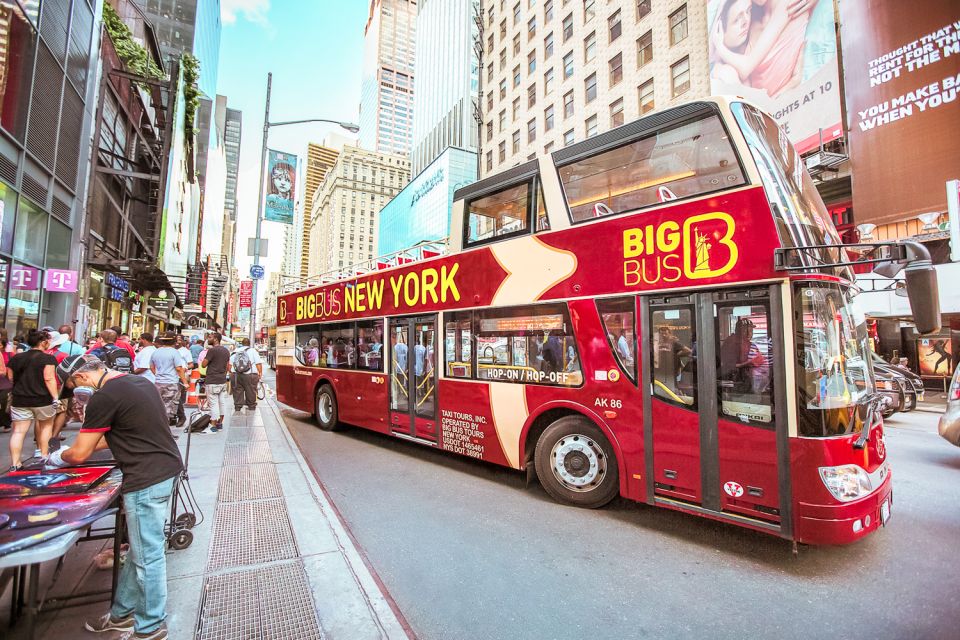
Once you’re off the bus for a neighborhood wander, that’s where New York turns from landmarks into lived-in streets. The Downtown Loop includes SoHo & NoHo and also Greenwich Village & East Village, which is a nice mix if you want architecture, casual browsing, and classic neighborhood vibe in one loop.
SoHo is an easy place to get sidetracked, so plan your hop-off window. If you’re trying to see a lot, choose one main stop to walk from and don’t try to cover the whole neighborhood in the same hour you’re doing everything else.
Chelsea also shows up on the route, which helps if you want a steadier, slightly less chaotic stretch than the busiest core blocks. It’s also a good area to step off for photos without feeling like you’re fighting crowds the whole time.
The 9/11 Memorial and One World Trade Center: how to pace a heavy stop

Some stops carry emotional weight, and the tour gets you close. You can pay tribute at the 9/11 Memorial, and you can also explore the original Twin Tower sites area. From a planning point of view, that proximity is huge—you don’t want to waste time figuring out the logistics when the day already feels intense.
Right near this zone, the route includes One World Trade Center, including the chance for a 360-degree skyline viewpoint. If you want the best of both worlds—reflection below and skyline drama above—this area can do it in a tight radius.
How to pace it: don’t over-schedule right after a memorial visit. If you’re hop-on hop-off hopping, you can keep moving, but give yourself a little buffer to reset. Even if you’re not a museum person, this is one place where your body appreciates a slower rhythm.






Empire State Building and Midtown energy: classic views without the subway math

Midtown shows up with one of the most photo-friendly stops in the city: the Empire State Building. You’ll see it from the route, and it’s described as famous for its Art Deco style. Whether you go inside or just admire it from street level and bus height, it’s a great anchor for your skyline photos.
This is also where you start seeing New York’s “systems” in action: traffic, avenues, the busy rhythm that makes the city feel like a living machine. The bus is actually useful here because it lets you watch the geometry of the streets from above without you getting stuck in the middle of it.
If you want to combine views with less walking, Midtown is one of your safest bets. The bus keeps you near the big hitters, which reduces that constant sense of, Where do I go next?
Museum Mile on the Upper East Side: where the bus turns into a museum map
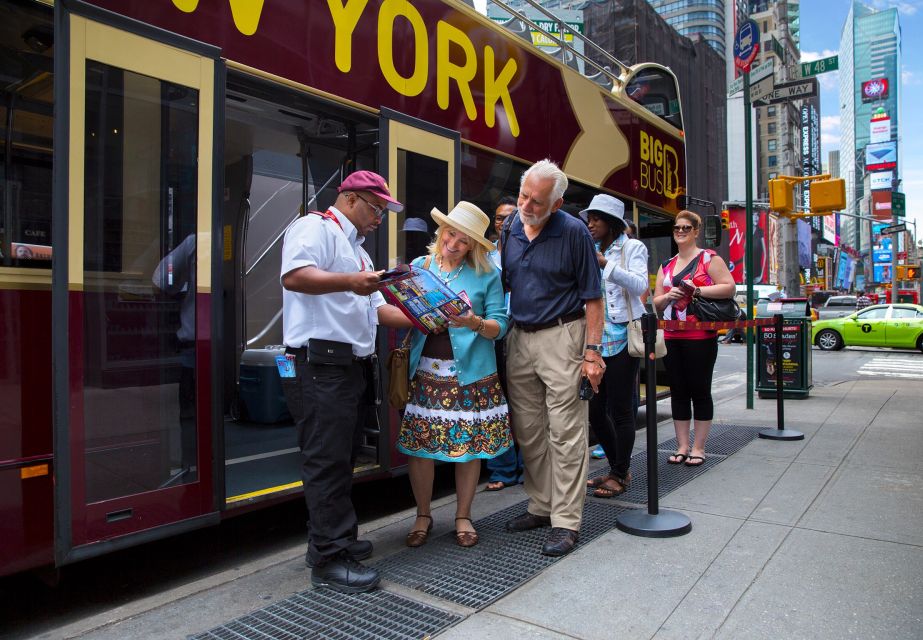
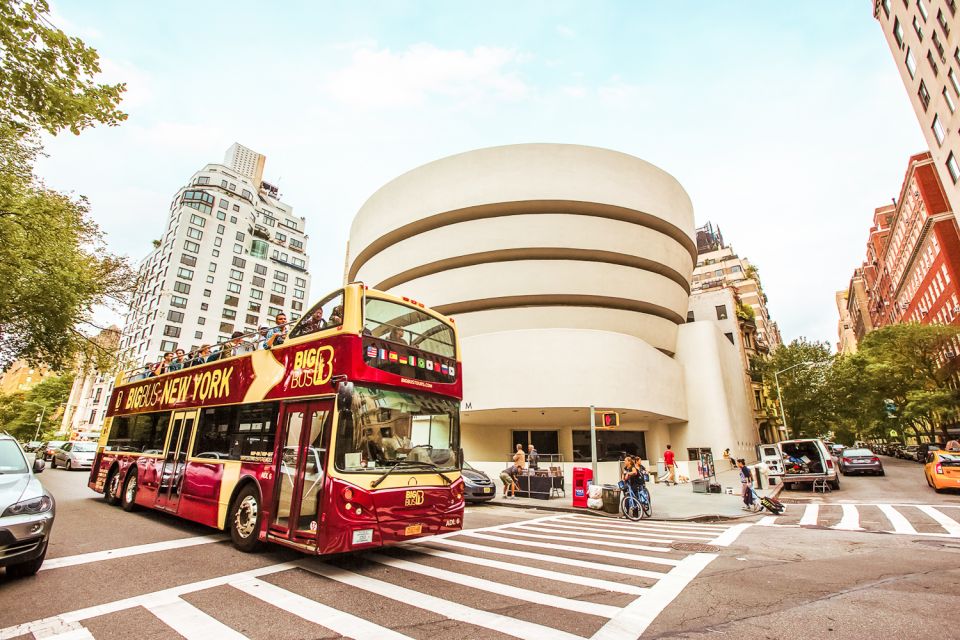
The Upper East Side is where the tour feels most purpose-built. It includes the Frick Collection and the Metropolitan Museum of Art (the Met), which are major, and both are often high on first-time visitors’ lists. When a bus route makes these accessible, it instantly becomes more than sightseeing—it becomes a planning tool.
Museum Mile also pairs well with your hop-on hop-off strategy. You can spend one chunk of time focused and then move on before fatigue hits. If you hop off and decide to stay longer, you’re not trapped because you can get back on later.
One practical tip: the Met can swallow half your day if you let it. If you only have limited time, pick one section to prioritize and use the bus ride as the rest of your “museum context” for the day.
Grand Central and St. Patrick’s Cathedral: big city landmarks that reward a quick stop
Midtown doesn’t just bring views. It also brings major architecture and transit drama. The route passes Grand Central Terminal and St. Patrick’s Cathedral, and these are the kind of places where even a quick look changes your whole understanding of the city.
Grand Central is useful because it’s both landmark and navigation reference. If your day includes shopping, museums, or evening plans nearby, seeing it early helps you move with confidence later.
St. Patrick’s is another stop that makes a short pause feel meaningful. You don’t need a long visit to absorb why it’s a classic draw. If you’re moving fast, still hop off for a few minutes and reset your eyes.
Hudson Yards and The Edge: add one high point for skyline payoff

Hudson Yards appears on the route with a highlight stop tied to The Edge, the open-air observation deck. Even if you don’t go up, the area gives you a modern contrast to the older Manhattan you’ll see elsewhere on the tour.
The observation-deck idea works well because it gives you a vertical perspective. New York photographs better when you can see how neighborhoods stack and stretch, and this kind of viewpoint helps connect the dots.
If you’re planning your day, consider pairing The Edge with a slightly quieter window. Once you’ve had a few big landmark stops, this adds something different without requiring the museum-level time commitment that some attractions demand.
Audio, earbuds, and the Big Bus app: the tech part that actually matters
The bus includes digital commentary with souvenir earbuds, plus audio guide languages in English, French, German, Italian, Portuguese, and Spanish. That means you can get context without needing cell service for directions to the next stop.
The Big Bus app is also a real benefit because it offers real-time bus tracking and city information. When you’re juggling hop-offs and re-boarding, knowing which direction the next bus is headed saves time and reduces stress.
One caution: audio equipment can be finicky. Some headset plug issues show up, so I’d keep an eye on the connection and bring a backup plan if the sound cuts out. It’s also worth paying attention to stop signage and the stop number, because confusion can happen if you only rely on the audio.
In cold weather, open-top seating can be delightful but only if you dress for it. If you’re visiting in winter, you’ll want real layers before you commit to sitting up top for long stretches.
Included digital walking tours: how to use them without turning your day into homework
If you choose the 48/72-hour access options, you also get exclusive digital walking tours with 4 tour options. This is a nice way to convert a bus ride into actual on-foot exploration, especially if you’ve chosen to hop off near a cluster of attractions.
The trick is to use walking tours as guidance, not as a strict itinerary. Pick one tour that matches your interests, then stay flexible if you get pulled toward a shop, café, or park stop that wasn’t on your original plan.
This is also where the bus route shines for first-time visitors. It gives you a rough map in your head, and the walking tours help turn that map into a walk you can manage.
Value at about $44: when it’s worth it and when you may skip it
The price is listed at $44 per person, and that’s where the value question is real. A hop-on hop-off bus isn’t automatically a bargain in any city. The deal is whether you’ll actually use the hopping.
If you’re staying just a day or two, this tour can be worth it because it compresses planning time. Instead of piecing together taxis or trying to coordinate multiple subway lines while you’re tired, you get one continuous loop option that keeps you near the big attractions.
If your schedule is light and you already know exactly which museums you want on what days, you might choose a different approach. But even then, many people still use a bus loop on day one to get oriented, then switch to walking and transit once they understand the geography.
My take: this is best value when you combine it with one or two real stops. For example, see the skyline and landmarks from the bus, hop off for a memorial or museum, then re-board for the next cluster. If you only ride without stepping off, the cost feels harder to justify.
Who this tour suits best (and who should think twice)
This works well for:
- First-time New York visitors who need a simple orientation.
- People who want open-air views with less walking fatigue.
- Groups with mixed interests, like museums plus neighborhoods plus a quick landmark photo run.
- Anyone who likes structure but still wants freedom.
It may feel less ideal if:
- You plan to do everything by private schedule and don’t want repeat riding.
- You hate flexible plans and prefer fixed, timed entries.
- You want long, single-attraction visits without breaks. In that case, build the day around your main site and use the bus for transfers, not as the whole event.
Should you book this Big Bus hop-on hop-off tour?
Yes, if you want a low-stress New York orientation that touches the biggest icons and also gets you near museums and memorials. It’s especially compelling for the first day because it gives you a mental map and a set of easy jumping-off points.
Skip it only if you’re traveling with very specific, already-booked plans that don’t connect to the areas on the route. If your day is mostly already solved, you might not need the bus.
If you do book, choose your loop intentionally (Downtown for Lower Manhattan, Uptown for Museum Mile and Midtown). Then commit to stepping off at least a couple of stops. That’s when the $44 price turns from ride into strategy.
FAQ
How long is the New York Hop-on Hop-off bus tour?
The experience is listed as 3 hours.
What does the ticket include?
It includes unlimited hop-on hop-off access for 24, 48, or 72 hours (depending on the option you choose), digital audio commentary aboard the bus with souvenir earbuds, access to the Big Bus app for info and real-time bus tracking, and digital walking tours if you choose a 48/72-hour ticket option.
Which areas and attractions can I see from the route?
The route includes major stops and sights such as the Statue of Liberty viewing area (from Battery Park), the 9/11 Memorial, One World Trade Center (with a 360-degree viewpoint), the Empire State Building, the Broadway area, the Brooklyn Bridge area, Wall Street, Little Italy and Chinatown, and stops around the Museum Mile area including the Frick Collection and the Met.
What time do the Downtown and Uptown loops run?
Downtown runs 9:30 AM to 4:30 PM, and Uptown runs 10:00 AM to 4:00 PM.
Is there audio in multiple languages?
Yes. Audio commentary is provided in English, French, German, Italian, Portuguese, and Spanish.
Does the tour include walking tours?
Walking tours are included as part of the 48/72-hour ticket options, with 4 tour options available.
Is hotel pickup included?
No. Hotel pickup and drop-off are not included.
Can I cancel for a refund?
Yes. There is free cancellation up to 24 hours in advance for a full refund.