REVIEW · SAN FRANCISCO
San Francisco Chinatown Walking Tour
Book on Viator →Operated by All About Chinatown Tours · Bookable on Viator
Chinatown’s best stories come from a sidewalk walk. This 2-hour guided loop takes you past herbal remedies, a fortune cookie factory, and the alleyways where Chinatown’s old and new feel side by side. You start at Old St. Mary’s Cathedral and end near Grant Avenue, so it’s easy to keep exploring after the tour.
I love the stop at the herbal pharmacy, where you’ll hear the medicinal uses behind items like ginseng root, pearl pills, and even gecko lizards. I also like that you’ll get to sample fortune cookies made on-site and watch how they’re produced. One drawback to consider: at $59 per person, you’ll want to enjoy a walking-and-stops style tour (markets, shop fronts, and quick interior peeks), not a sit-down museum format.
In This Review
- Key Things Worth Your Time
- How This 2-Hour Chinatown Walk Feels in Real Life
- Starting at Old St. Mary’s Cathedral: Getting Oriented Before You Wander
- Portsmouth Square: Chinatown’s Outdoor Living Room
- Stockton Street Food Markets: Seafood, Dried Goods, and What You Might Be Seeing
- Herbal Pharmacy Stop: Ginseng Root, Pearl Pills, and Gecko Lizards
- Waverly Place and the Street of the Painted Balconies
- Golden Gate Fortune Cookies Co: Watching Wise Crackers Get Made
- Grant Avenue: Pagoda-Style Details and a Store Tour You’ll Actually Use
- Pace, Group Size, and Why the Experience Works for Families and Couples
- Value Check: Is $59 Worth It for a Chinatown Walking Tour?
- Practical Tips Before You Go (So You Enjoy Every Stop)
- Should You Book This San Francisco Chinatown Walking Tour?
- FAQ
- How long is the Chinatown walking tour?
- What is the price per person?
- Where do I meet the guide?
- What will I do and see during the tour?
- Is the tour offered in English?
- Does the tour run in bad weather?
- What’s the cancellation rule?
- How big are the groups?
Key Things Worth Your Time
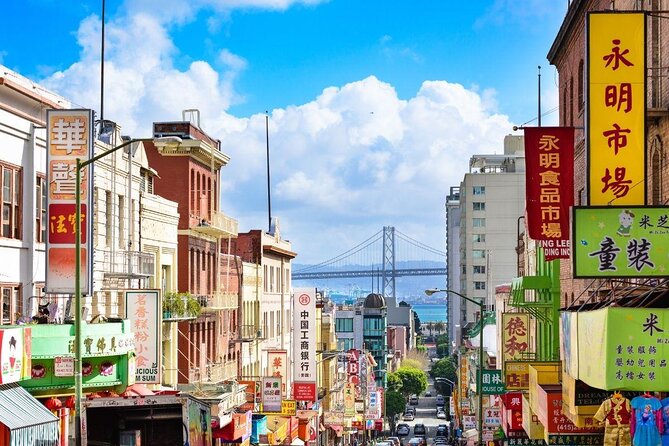
- Herbal pharmacy stop with unusual items and medicinal stories (ginseng root, pearl pills, gecko lizards)
- Golden Gate Fortune Cookies Co where you watch production and try a sample
- Stockton Street food markets with seafood and specialty dried goods you won’t see in regular supermarkets
- Waverly Place and the Street of the Painted Balconies for architecture plus talk about private clubs and temples
- Grant Avenue variety stores that explain what they sell and why (stationery/party goods)
- Small group size (max 15) plus an English-speaking guide who keeps the pace manageable
How This 2-Hour Chinatown Walk Feels in Real Life
San Francisco’s Chinatown can be fun to wander on your own, but this tour works because it gives you a map made of stories. You’ll be guided through historic landmarks, market streets, and side alleys where the details matter—like signs, storefronts, and religious architecture you’d otherwise speed past.
The format is also practical. You’re walking for about 2 hours, in an area that’s lively and full of visual clues. You’ll learn the “why” behind what you’re seeing, from neighborhood history to cultural practices tied to everyday life.
And the group size is small, capped at 15 travelers. That matters. A smaller group usually means you get more attention when questions come up, and the guide can keep the route and timing from turning into a crowded shuffle.
You can also read our reviews of more tours and experiences in San Francisco.


Starting at Old St. Mary’s Cathedral: Getting Oriented Before You Wander
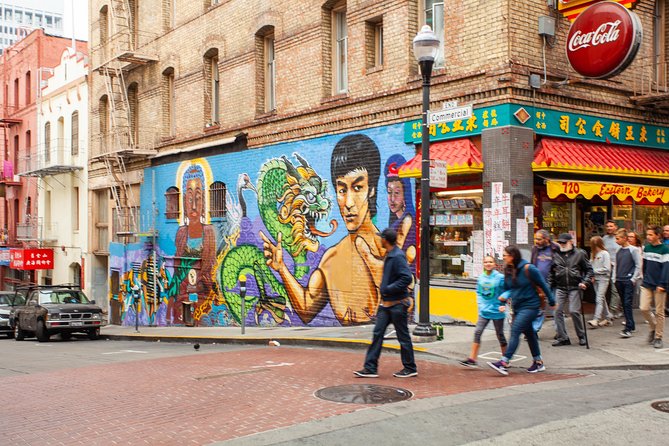
Your tour begins at Old St. Mary’s Cathedral, 660 California St. The meeting spot is smart because it places you right at the edge of Chinatown’s main streets, where you can quickly orient yourself before you head deeper.
At this first stop, you’ll get a short overview of Chinatown—its cultural identity, how traditions have been preserved, and what makes the neighborhood feel authentic to repeat visitors. It’s the kind of setup that pays off later when you notice details like decorations on storefronts and street-level symbols.
If you’re the kind of traveler who likes to “get bearings fast,” this opening helps you read the neighborhood instead of just looking at it. You can also use this time to settle in—bring water, and wear shoes that can handle uneven sidewalk patches.
Portsmouth Square: Chinatown’s Outdoor Living Room
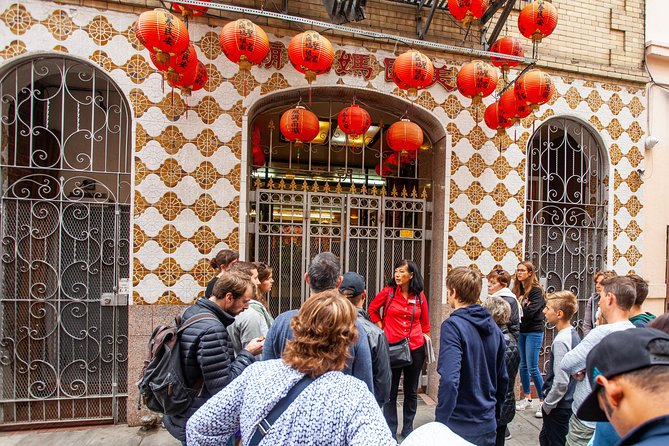
Next up is Portsmouth Square, described as Chinatown’s outdoor living room. This stop isn’t just scenic; it’s tied to early civic history in San Francisco.
You’ll hear about the square as the birthplace of the first American flag, the first public school, and the first cable car line. That context does two useful things: it reminds you that Chinatown is part of the city’s broader story, and it frames how quickly the area became a hub for community life.
Even if you’ve seen Portsmouth Square before, you’ll likely see it differently once you know the historic anchors behind it. It’s a good pause in the route before you move back into streets where you’ll be surrounded by shops and food stalls.
Stockton Street Food Markets: Seafood, Dried Goods, and What You Might Be Seeing
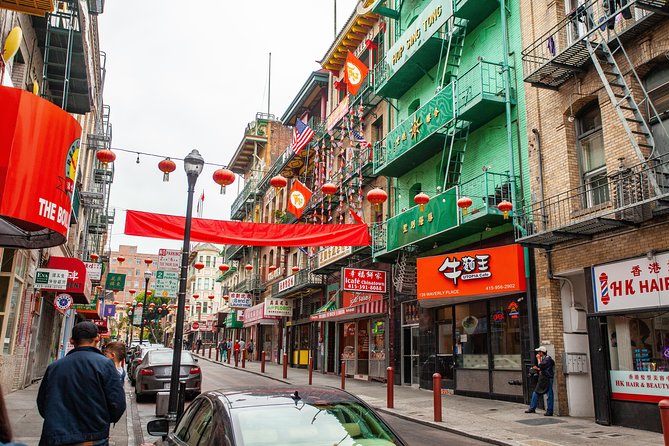
One of the main “wow” zones is Stockton Street. Here, you’ll stroll among busy food markets where seafood and specialty ingredients are part of the everyday scene, not a rare tourist display.
You’ll get a guided look at foods and goods that feel exotic if you’re not used to the dried-ingredient aisle world. The key value: the guide doesn’t treat these items like curiosities. You’ll hear what they are and why they show up on local shelves.
Two practical tips help you enjoy this stop:
- Don’t rush the sights. Some products are unfamiliar just because you haven’t learned the names yet.
- Treat smelling and tasting as optional. You’ll be sampling later with fortune cookies, but markets can be crowded and some items have strong scents.
If you love food culture, this portion is where the tour becomes more than sightseeing. It’s a window into daily commerce, neighborhood rhythms, and how ingredient knowledge travels with people.
Herbal Pharmacy Stop: Ginseng Root, Pearl Pills, and Gecko Lizards
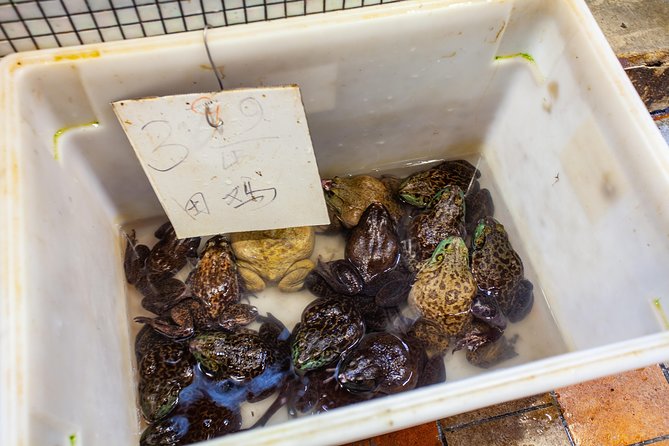
The tour’s most memorable technical stop is the herbal pharmacy. This is where you’ll learn medicinal uses behind unusual items, including ginseng root, pearl pills, and gecko lizards. You’ll also see a store world that looks more like an apothecary museum of everyday remedies than a modern pharmacy.
Why it works (for you, not just for curiosity seekers): it gives context. Instead of walking by jars and boxes with no interpretation, you get the framework that explains how traditional wellness ideas connect to specific ingredients.
A good way to handle this stop is to stay open and a little skeptical at the same time. You’re learning stories and cultural meanings here, not passing a science test. If you keep that mindset, you’ll come away with respect for the knowledge tradition—and also a clearer sense of how Chinatown businesses operate within their communities.
One more practical note: stores can be warm and crowded. If you have mobility limits, keep an eye on your pace and take short breaks when needed. The tour is designed to move you in small segments, but you’ll still be standing in shop lines at street level.


Waverly Place and the Street of the Painted Balconies
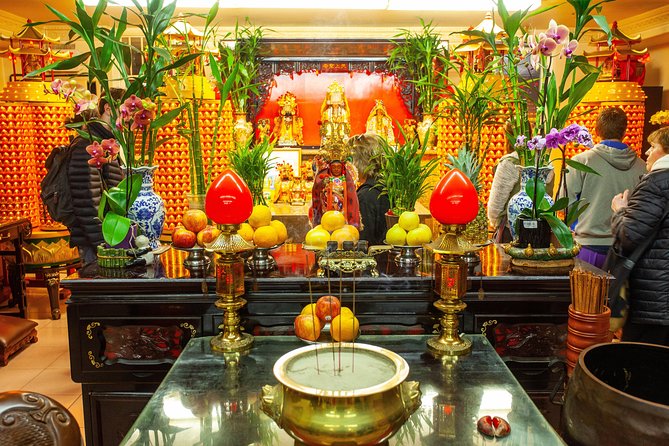
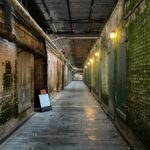
When you reach Waverly Place, you’re looking at a narrow two-block alley lined with temples and talk about private clubs. This stop is special because it shifts your perspective from mainstream Chinatown signage to the more layered, location-specific side of the neighborhood.
You’ll also spend time at the Street of the Painted Balconies, where the architecture plays a big role in the experience. The guide connects architectural details to how the neighborhood grew and how private institutions shaped parts of Chinatown’s identity.
Time permitting, you may also visit a secluded Buddhist temple. Because it’s conditional, I’d go in expecting that the exterior and street-level viewing will be the consistent part, with any interior visit depending on access and timing.
This is a good moment to slow down. The alleyways and balconies are made for close looking. Even if you’re not an architecture fan, the guide’s explanations help you notice why these buildings look the way they do.
Golden Gate Fortune Cookies Co: Watching Wise Crackers Get Made
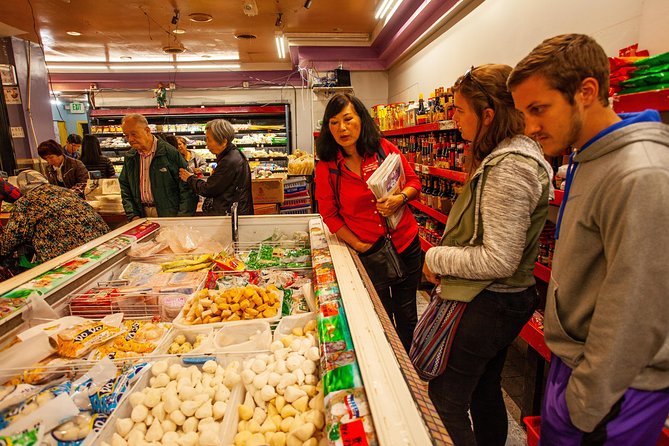
Then comes the fun part: Golden Gate Fortune Cookies Co. You’ll sample the fortune cookies, and you’ll also watch how they’re made.
This stop hits two traveler needs at once:
- It’s hands-on. You get a sample, not just photos.
- It’s cultural through production. The cookie factory is a story about how Chinatown traditions and American customs blend in one popular item.
If you’re bringing kids, this is usually the easiest sell. If you’re an adult, it still works because the factory is quick, visual, and connects food to community life.
Practical advice: fortune cookies are light, so don’t rely on them as a full meal. They’re a taste, not lunch. If you’re hungry, plan to grab something afterward based on the guide’s restaurant suggestions—though those recommendations won’t be included in the tour cost.
Grant Avenue: Pagoda-Style Details and a Store Tour You’ll Actually Use
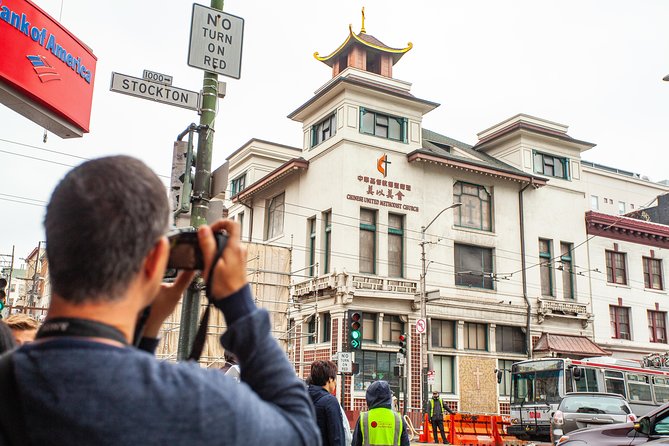
On Grant Avenue, you’ll see how Chinatown shops serve specific needs, not just tourist browsing. One stop focuses on what a store sells—think stationery and party goods—then you’ll understand why those items matter in local life.
Another stop points out pagoda-style architecture using the East West Bank building as an example. The guide also talks about what was there before the bank and explains how Chinese language complexity shows up in both spoken and written forms.
This is one of those segments that can feel abstract if you’re rushing. But when the guide ties it to what you’re literally standing in front of—street layout, building style, signage—it turns into a useful way to read Chinatown beyond the obvious.
If you care about language, writing systems, or how culture shows up in signage, this is a standout. If you don’t, you’ll still benefit because you’ll leave with a sharper eye for how Chinatown communicates at street level.
Pace, Group Size, and Why the Experience Works for Families and Couples
The tour runs for about 2 hours, with short stops that keep the route moving. Each stop is typically around 10 to 15 minutes, which is a real advantage in a neighborhood like Chinatown—where your attention can drift if you’re not anchored to a sequence.
The group maximum is 15 travelers, so it’s not a mass-coach situation. That small-group vibe is what lets the guide tailor the experience and keep people engaged, from families to couples to young adults.
It’s also a good fit if you like a guide who remembers you. A recurring theme in accounts of this tour is that the guide learns names and connects the stories to different audiences. That kind of attention can make the difference between a forgettable walk and one you actually remember.
Value Check: Is $59 Worth It for a Chinatown Walking Tour?
Let’s talk value. $59 for about 2 hours is not a bargain price, but it isn’t outrageous either—especially for a guided route that includes:
- a professional guide
- visits to multiple meaningful stops
- a fortune cookie factory with a sample
- time spent at a herbal pharmacy
- street-level interpretation that helps you see what you’d otherwise miss
Where value swings for you is how you like to travel. If you enjoy food culture, architecture details, and cultural explanations you can’t easily piece together from a map, the cost can feel fair.
If you’re hoping for a super-fast overview with minimal stops, you might feel the price more strongly. One way to make it a better deal: go hungry for stories, not snacks. Then plan a meal nearby after the tour so the time feels fully used.
Practical Tips Before You Go (So You Enjoy Every Stop)
Here are the move-that-matters basics:
- Wear comfortable walking shoes. You’ll be on sidewalks and moving through market areas.
- Dress for rain or shine. The tour runs in both conditions.
- Bring a little patience for shop-front stops. Some are quick visual entries; some are more conversational.
- Plan your schedule. The tour ends near Grant Avenue, about two blocks from the starting cathedral, so it’s easy to extend your day in Chinatown.
If you like to take photos, do it—but don’t let the camera steal your attention from the guide’s explanations. The best photos often come right after you understand what you’re looking at.
Should You Book This San Francisco Chinatown Walking Tour?
Yes, I’d book it if you want a guided way to understand Chinatown beyond the postcard streets. The pairing of a herbal pharmacy stop with a fortune cookie factory sample gives you both cultural context and a fun takeaway. And the small-group size keeps the experience from feeling like a line item.
I’d think twice if you’re price-sensitive and prefer tours that are more like a single long attraction, instead of a walking route with several short stops. Also, if you dislike market environments or inside shop time, you might want to choose a different style of Chinatown experience.
FAQ
How long is the Chinatown walking tour?
The tour lasts about 2 hours (approximately).
What is the price per person?
The price is $59.00 per person.
Where do I meet the guide?
Meet at Old Saint Mary’s Cathedral, 660 California St, San Francisco, CA 94108.
What will I do and see during the tour?
You’ll walk through Chinatown with stops that include Portsmouth Square, Stockton Street food markets, an herbal pharmacy, the Golden Gate Fortune Cookies Co where you sample fortune cookies and see how they’re made, plus Waverly Place and Grant Avenue.
Is the tour offered in English?
Yes, it is offered in English.
Does the tour run in bad weather?
Yes. The tour operates rain or shine, so dress appropriately.
What’s the cancellation rule?
You can cancel for a full refund if you cancel at least 24 hours before the experience’s start time.
How big are the groups?
The tour has a maximum of 15 travelers.