
REVIEW · LAS VEGAS
Valley of Fire Guided Hike from Las Vegas
Book on Viator →Operated by Love Hikes · Bookable on Viator
Ancient carvings under red rock, just outside Vegas. This guided hike is a great way to see petroglyphs and famous formations without playing desert map app roulette. I especially like the hotel pickup that makes the day feel easy, and I love that you can choose easy, moderate, or difficult so the pace matches your comfort level. One thing to keep in mind: even the easier walks involve uneven ground, and the moderate or difficult routes can include hands-on rock scrambling.
At $128.99 per person, you are paying for a guide, transport, and “stop-for-the-good-stuff” routing—not just a ticket to the park. The group stays small (max 12), and the tour includes snacks and bottled water, plus a quick Visitor Center visit when time allows.
In This Review
- Key things to know before you go
- First Taste of Valley of Fire: what this hike gets right
- Picking easy, moderate, or difficult without overthinking it
- Hotel pickup, drive timing, and the best start for your energy
- Arriving at the park: geology, petroglyphs, and Native stories
- Trail highlights: Fire Wave, White Domes, Elephant Rock, Mouse’s Tank, Rainbow Vista
- Fire Wave: the red rock “signature” shape
- White Domes Trail: a different look inside the same park
- Elephant Rock: a landmark you can orient around
- Mouse’s Tank: hands-and-knees desert fun (without the chaos)
- Rainbow Vista: the final color payoff
- The Visitor Center stop you can actually use
- What’s included, and what you should bring anyway
- Guides and pace: why small groups feel easier here
- Price and value: does $128.99 make sense for your day
- Should you book this Valley of Fire guided hike?
- FAQ
- How far is Valley of Fire from Las Vegas?
- How long does the hike last?
- Is hotel pickup included?
- What should I bring and wear?
- Does the tour provide snacks and water?
- What does the easy hike include?
- What does the moderate or difficult hike involve?
- Will we stop at the Visitor Center?
- What if the weather is bad?
- Are pets allowed?
Key things to know before you go
- Three hike levels mean you can pick your challenge instead of forcing your body into someone else’s idea of fun.
- Hotel pickup and drop-off keeps your day simple, especially if you do not want to drive on desert roads.
- Petroglyph spotting is the point: your guide helps you find the ancient rock art and interpret the setting.
- Fire Wave, White Domes, Elephant Rock, Mouse’s Tank, Rainbow Vista are the kind of stops you remember after the trip.
- You get snacks and water, which matters more in the desert than it sounds like on paper.
First Taste of Valley of Fire: what this hike gets right
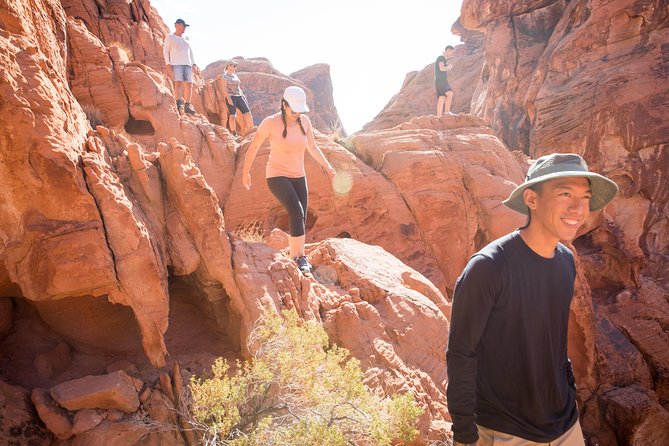
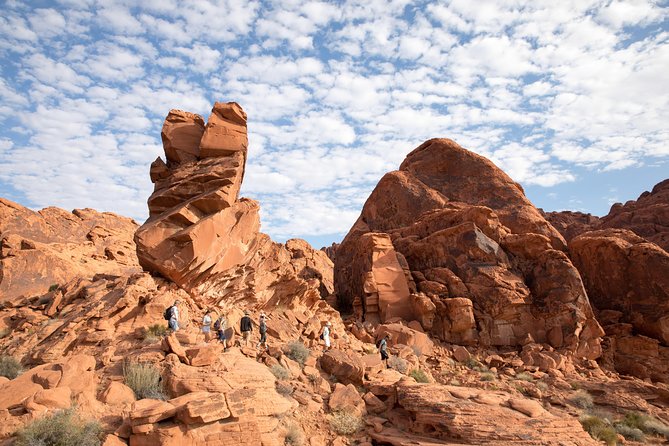
Valley of Fire State Park sits a little over 45 miles from Las Vegas, and that short distance is the whole appeal. You trade neon lights for red rock formations, gray-and-tan limestone, and that quiet desert feeling fast.
What makes this experience work is the structure. You do not just wander. You start with an on-the-ground introduction to the park, then you hike a guided route built around major features and petroglyphs. I like that the guide handles navigation, so you can focus on your footing and the scenery instead of constantly checking where you are supposed to go next.
The tour also gives you a built-in way to learn. You hear how erosion and seismic fault lines shaped the rugged terrain, and you get context about Native American life in this area. Even if you are not usually into geology, it helps you understand why the rocks look the way they do—like the park is one big, readable story.
You can also read our reviews of more tours and experiences in Las Vegas.



Picking easy, moderate, or difficult without overthinking it
One of the best parts is that you choose your hike level ahead of time. This is not just marketing language. The guide adapts route choices and pacing based on the difficulty you select, and your group should match the effort level you signed up for.
Here’s how I’d think about it before you book:
- Easy is for people who want scenic walking plus petroglyph time. You’ll still be on uneven desert ground, but you should expect fewer scrambling moments.
- Moderate is where things get more physical. Think boulders, crevices, brushy sections, and some uphill/downhill climbing over rocks.
- Difficult is for avid hikers who are comfortable with more intense terrain and longer, tougher stretches for bigger views.
If you are newer to hiking or you want a low-stress day, I’d lean easy. I’ve seen enough desert hikes to know that “easy” is not the same thing as smooth pavement. If you pick moderate or difficult, wear the right shoes and plan for a few moments where you use your hands to steady yourself.
Guides in this program have also been praised for working with different comfort levels. Some guests specifically called out that their guides adjusted their route and took the time to make them feel steady on scrambling sections. That matters when the terrain is uneven and there’s no “easy bypass” unless your guide knows how to handle it.
Hotel pickup, drive timing, and the best start for your energy
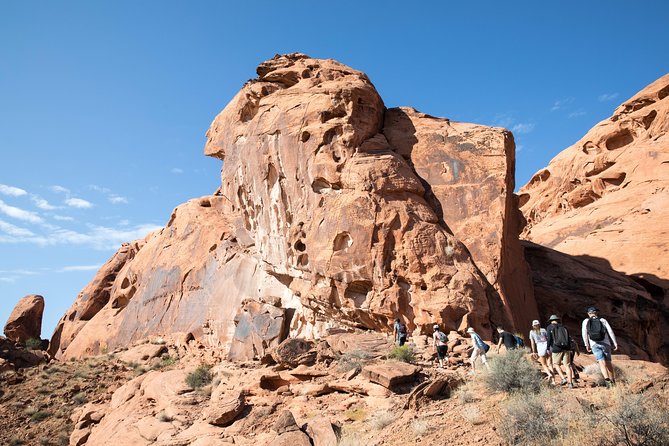
This is a half-day style trip at roughly 5 hours total. The exact schedule depends on the option you book. You can depart around sunrise, late morning, or early afternoon.
Why that matters:
- A sunrise start helps you beat the heat and often means the park feels quieter.
- Late morning and early afternoon can still be great, but you’ll want to stay on top of water and sun protection.
Pickup is straightforward. You get collected at your hotel (or a nearby hotel) in Las Vegas. If you’re not staying right on the Strip or downtown, the pickup point may be at the nearest Strip or downtown hotel property. The operator confirms your pickup timing and exact location 1–2 days before.
Small group size (max 12) helps a lot here. You are not stuck in a huge lineup on narrow trails, and it’s easier for the guide to keep an eye on everyone’s footing.
If you hate slow car time, here’s a practical note: the drive is part of the day. You can make it work by bringing something to focus on (music, a podcast, even just people-watching at the Vegas exits). One guest even noted the drive timing well enough to catch sunrise while traveling, which is a nice bonus if you booked early.
Arriving at the park: geology, petroglyphs, and Native stories
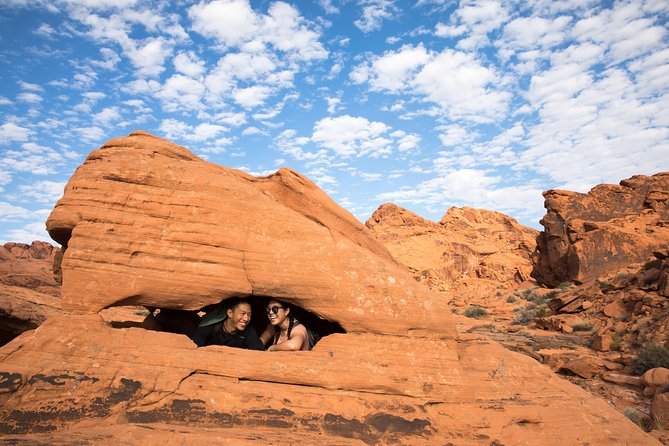
When you enter Valley of Fire State Park, your guide explains what you’re about to see. Expect a mix of desert “how it formed” and human history.
You’ll hear about:
- Erosion and seismic fault lines that shaped the rock formations
- The way Native American tribes lived and survived in this landscape over long stretches of time
- Petroglyphs believed to be around 3,000 years old (the guide will point them out as you hike)
This is one of the reasons the guided format is worth it. Petroglyphs can look like random scratches if you’re just walking past. With a guide, you get the context and better chances to actually see them, rather than missing the best parts because you didn’t know where to look.
Also, your guide’s approach can make the day feel more alive. Multiple guests highlighted guides such as Sarah, Halle, Nick, and Brayden/Bradyn for giving clear explanations and keeping the pace comfortable. Some guests even mentioned their guides offering helpful tips on where to place hands and feet when rock scrambling showed up.
If you want the day to feel like more than just photos, this is the section that turns it into a real experience.
Trail highlights: Fire Wave, White Domes, Elephant Rock, Mouse’s Tank, Rainbow Vista
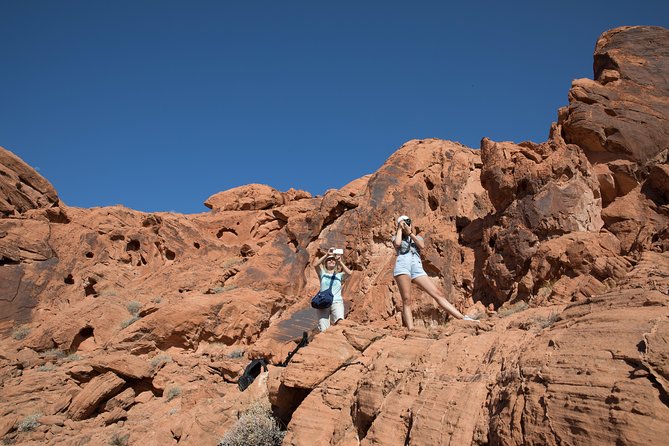
The route through Valley of Fire is built around major stops. Which exact trail features you cover depends on the hike level you chose, but these named spots are the backbone of the experience.





Fire Wave: the red rock “signature” shape
Fire Wave is famous for its banded, wave-like red rock look. When you reach it, take a second before moving on. The formations shift color with the light, and a guide’s timing can help you see the layers clearly. This is a great first “wow” moment of the day.
White Domes Trail: a different look inside the same park
White Domes brings contrast. Instead of the strong, sweeping red you get at Fire Wave, you’ll see lighter, dome-like rock shapes that change how the whole park feels. It’s one of those stops that reminds you Valley of Fire isn’t just one kind of view.
Elephant Rock: a landmark you can orient around
Elephant Rock is a natural landmark that helps you understand where you are in the park. It’s also the kind of stop where you can pause and take a few photos without feeling rushed. If your guide points out the way the formation sits in the broader geology, it’s easier to appreciate why it looks the way it does.
Mouse’s Tank: hands-and-knees desert fun (without the chaos)
Mouse’s Tank is where you often feel the park’s energy under your feet—rocky, uneven, and very “walk carefully.” This is a spot where closed-toe shoes really matter, and where a guide’s route choices can keep you moving safely while still feeling adventurous.
Rainbow Vista: the final color payoff
Rainbow Vista is the finish-style wow. You get a strong sense of the park’s color range—red, pink, white, and all the subtle tones between. This is the part that makes it feel worth doing early or making the effort even if you planned a low-key day.
One more practical tip: your tour is designed with a “stop and hike” rhythm. If you want more photo time, ask the guide at a natural pause point. Guides are used to taking pictures for people, and some guests even mentioned their guides being good at capturing moments.
The Visitor Center stop you can actually use
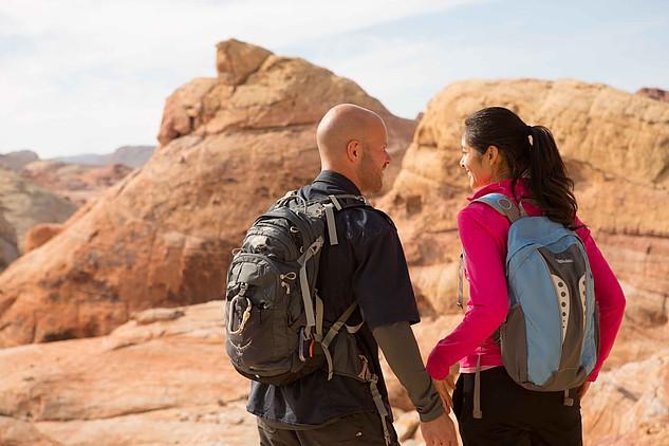
Time permitting, you get a short tour of the Valley of Fire State Park Visitor Center after the hike. This is not just a quick bathroom break (though yes, plan your bathroom needs). It’s a chance to turn what you saw on the trails into a clearer mental map.
Even a brief stop helps you connect:
- the petroglyph stories you heard outside
- the geology explanations you got on the ground
- the major features you walked between
If you’re the type who likes to leave with a few solid facts, this part is worth it. It also adds comfort because you’re no longer hiking when you’re standing there reading and looking at exhibits.
What’s included, and what you should bring anyway
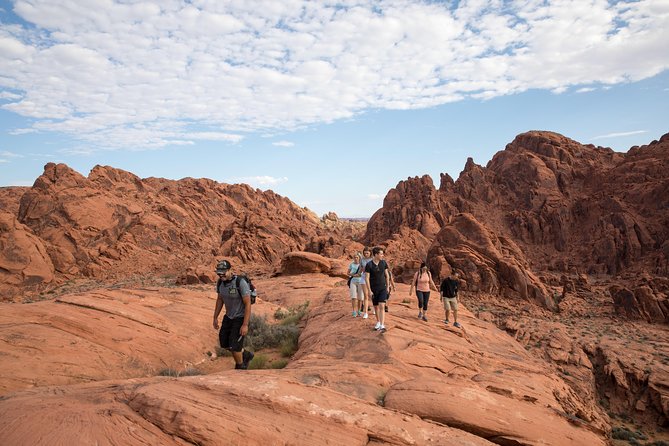
This tour includes:
- A guided hike (based on the level you pick)
- Professional guide
- Snacks and bottled water
- Hotel pickup and drop-off
- Visitor Center time when possible
So you’re not starting the day empty-handed. Still, I strongly recommend you show up prepared for desert sun and dusty conditions.
Bring or wear:
- Closed-toe shoes (required)
- Sunscreen and lip balm
- Sunglasses
- Hat
- Water-friendly layers if mornings feel chilly and afternoons warm up fast
If you pick moderate or difficult, boots tend to be the safer move for scrambling. One guest noted that regular sneakers can work for easier routes, but boots are better if your hike level includes more climbing.
Also, pack light. You’ll be on a moving schedule, and you do not want a heavy backpack that turns into a weight you regret halfway through.
Guides and pace: why small groups feel easier here
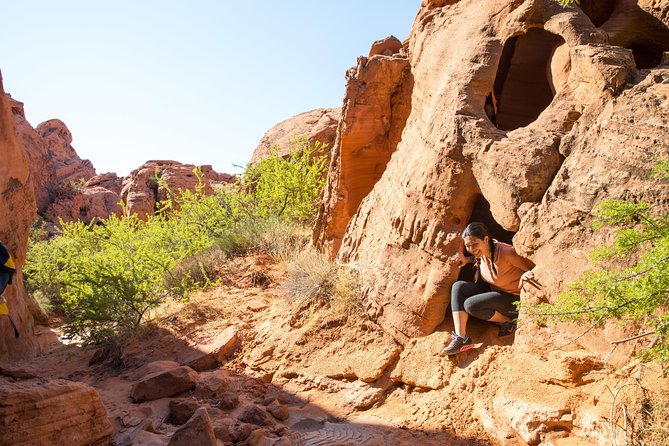
Maximum group size is 12, and that changes the whole vibe. You’re more likely to:
- hear what the guide says without competing with a loud crowd
- move at a pace that matches your group’s fitness level
- get help if you’re nervous about footing
Several guests praised specific guides for pacing and safety. People mentioned guides slowing down when needed, taking time to make new hikers comfortable, and guiding with confidence through rock scrambling sections. Others highlighted guides who also acted as a photographer and offered “side quest” style detours to see less-visited angles.
It’s also worth noting that you’re told what to expect upfront: hiking time varies by route choice, and the general range is 4–6 hours for the overall hike option in the program. But the actual walking effort you’ll feel is typically a chunk of that day, with breaks and stops built in.
If you like your nature time calm but structured, this format hits a sweet spot.
Price and value: does $128.99 make sense for your day
Let’s be honest: $128.99 is not “cheap,” especially if you’re comparing it to self-driving and doing a hike on your own. But this tour is priced like an all-in guided day.
You’re getting:
- Hotel pickup and drop-off, which can be a big deal if you’d otherwise need a cab or rental logistics
- A guide who handles navigation and helps you find the petroglyphs
- Snacks and water so you don’t waste your first hour buying supplies
- A Visitor Center stop when time allows
To me, the value comes down to one question: do you want to spend your time hiking and looking, or do you want to spend your time planning? If you want a smooth day with someone else doing the route decisions, this is a strong fit.
The trip length is also workable. You get a satisfying chunk of time in the park without turning your Vegas vacation into a full-day production.
Should you book this Valley of Fire guided hike?
Book it if you want an easy-to-manage way to see Valley of Fire’s top features and you care about petroglyphs beyond just snapping a picture. The combination of small group size, guide-led navigation, and included snacks/water is exactly what makes this kind of desert outing feel safe and fun rather than stressful.
Skip it or rethink your hike level if:
- you have trouble with uneven terrain
- you want a totally smooth, no-scramble hike
- you’re expecting a luxury-relax nature day with minimal walking
If you’re in reasonable hiking shape and you dress for desert sun, this is one of the better “off the Strip” half-day options. It’s scenic. It’s educational. And it gets you out there early enough to feel like you escaped Vegas for real.
FAQ
How far is Valley of Fire from Las Vegas?
The Valley of Fire is a little over 45 miles outside of Las Vegas.
How long does the hike last?
Depending on the level you select, you will spend between 2 and 4 hours hiking through the Valley of Fire.
Is hotel pickup included?
Yes. Hotel pickup and drop-off in Las Vegas are included, and you can usually choose your pickup location when confirming.
What should I bring and wear?
Closed-toe shoes are required. Sunscreen, lip balm, sunglasses, and hats are advised. Dress for the weather.
Does the tour provide snacks and water?
Yes. The tour includes snacks and bottled water.
What does the easy hike include?
On the easy option, you can see many petroglyphs in the park, and your guide will explain the geological forces behind the distinctive red rock formations.
What does the moderate or difficult hike involve?
Moderate includes scrambling and climbing through boulders, crevices, brush, peaks, and plateaus. Difficult is more intense and is recommended for avid hikers, covering more challenging terrain for the most captivating views.
Will we stop at the Visitor Center?
Following your hike, you may take a short tour of the Valley of Fire State Park visitor center to learn more, time permitting.
What if the weather is bad?
This experience requires good weather. If it’s canceled due to poor weather, you’ll be offered a different date or a full refund.
Are pets allowed?
Traditionally, animals are not allowed on these experiences, but an exception can be made if you book a private tour.